


Table of Contents
What is ISM Band? Understanding ISM Radio Frequency Bands and Their Importance
- Posted by:Retevis
If you’ve ever used a wireless device—whether it's a Bluetooth speaker, a microwave, or even a wireless printer—you’ve likely interacted with an ISM radio band. But what exactly is an ISM band and why does it play such an important role in wireless communication today?
In short, ISM bands refer to a set of radio frequency bands that are designated for Industrial, Scientific, and Medical (ISM) purposes. These bands are typically unlicensed, meaning that any individual or company can use them for specific applications without needing a license from regulatory authorities, as long as they comply with power restrictions and other guidelines.
But there's more to it than just using these bands for general wireless communication. Let's dive deeper into ISM bands and how they shape the modern wireless landscape.
Understanding the ISM Band Frequency Range
The ISM band is not just a single frequency; it's actually a range of frequencies set aside by international standards for industrial, scientific, and medical applications. These bands are used by various devices that require wireless communication, including radios, sensors, and microwave ovens.
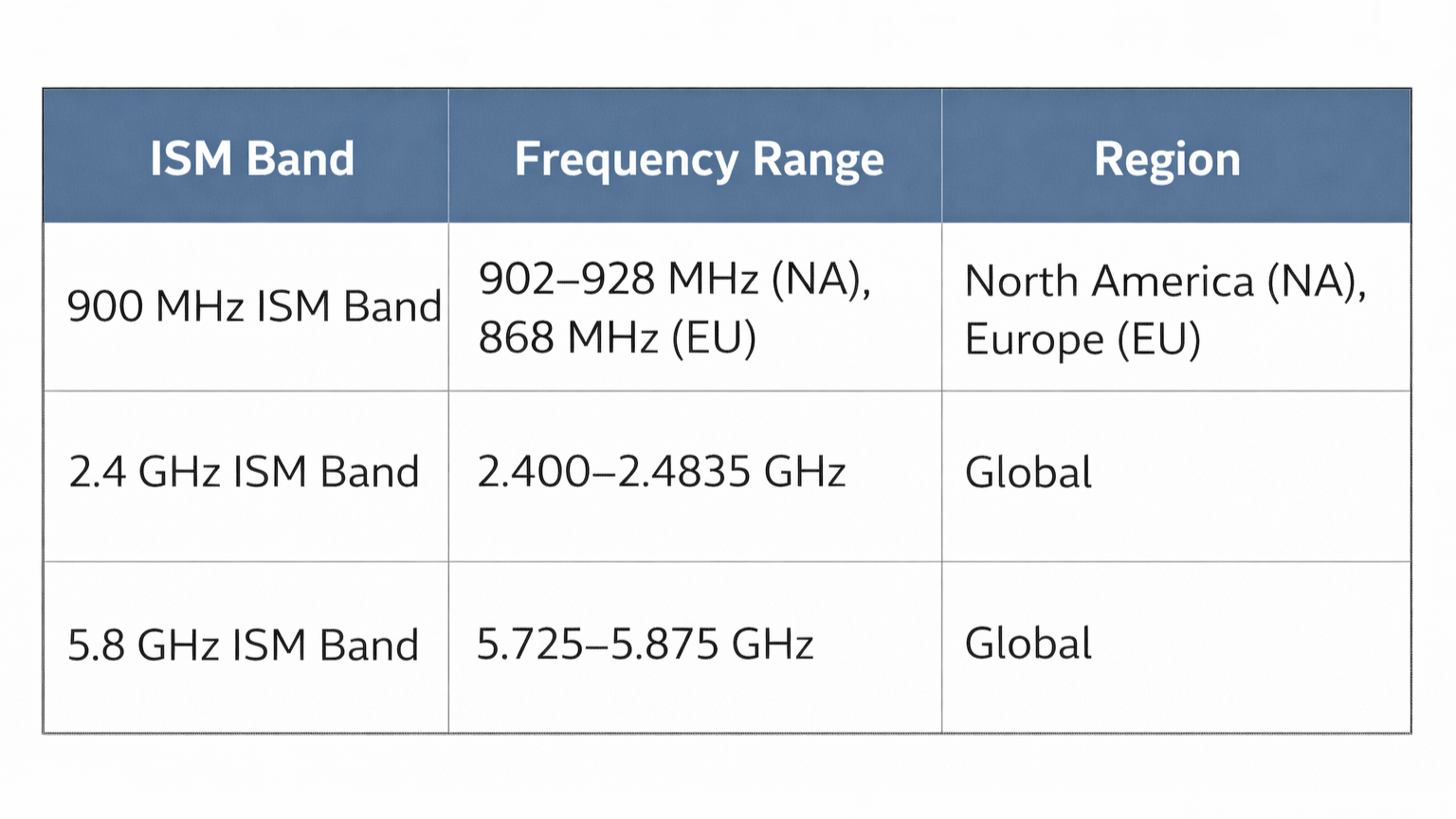
The ISM band frequency range varies depending on the region, but some common frequencies used around the world include:
- 900 MHz ISM Band: A widely used frequency range, especially for industrial equipment, sensors, and RFID tags.
- 2.4 GHz ISM Band: One of the most common frequencies used for Bluetooth, Wi-Fi, and other wireless communication devices.
- 5.8 GHz ISM Band: Often used for wireless video transmission and more specialized communication systems.
Each of these frequencies has its own unique properties that make them suitable for certain applications. For example, the 900 MHz ISM band is great for long-range communication, while the 2.4 GHz ISM band is perfect for high-speed data transmission over short distances.
Global ISM Radio Frequency Allocation
While the ISM bands are intended for unlicensed use, the exact frequency ranges are regulated differently depending on the country or region. For instance, in the United States, the 900 MHz ISM band is used for various wireless communication systems, while Europe uses different parts of the frequency spectrum for the same purposes.
These variations can sometimes make things complicated for global manufacturers, but international bodies like the International Telecommunication Union (ITU) work to standardize as much as possible, ensuring that devices and applications using ISM radio bands work worldwide.
Common Applications of ISM Bands
ISM bands are integral to many aspects of our modern technological world. Here are some common ISM band applications:
1. Wireless Communication Systems
Perhaps the most well-known use of ISM radio bands is in wireless communication. Devices like Wi-Fi routers, Bluetooth, and even ZigBee smart home devices use the 2.4 GHz ISM band for seamless connectivity. These ISM band radios help connect everything from laptops to home automation systems, making them a crucial part of our daily lives.
2. Industrial and Scientific Applications
ISM bands are also used in a wide range of industrial and scientific applications. For example, RFID systems, which are used for inventory management, typically operate within the 900 MHz ISM band. Scientists also use ISM bands for remote sensing and environmental monitoring where traditional communication methods are not practical.
3. Medical Equipment
In the medical field, ISM bands are used in a variety of devices that require wireless data transmission. For instance, wireless heart rate monitors and patient telemetry systems often rely on ISM radio band transceivers to send data to central monitoring stations without the need for wires, making patient care more efficient.
4. Automotive and Consumer Electronics
In the automotive industry, ISM bands are used for vehicle-to-vehicle communication systems, ensuring vehicles can interact with each other to avoid accidents and improve road safety. Similarly, many consumer electronics like microwave ovens, cordless phones, and wireless speakers use ISM bands to function.
How ISM Band Radios Work
An ISM band transceiver works by sending and receiving signals over specific frequencies allocated to the ISM band. For example, a 900 MHz ISM band radio may be used in industrial settings for long-range communication between devices such as inventory scanners and data management systems. The transceiver captures the data from the sensors or equipment, converts it into radio signals, and transmits it over the airwaves to a receiving unit.
Devices operating in the ISM band are typically designed to be power-efficient, since many of them need to operate in remote areas or on battery power. Power limitations, along with the frequency range, dictate how far and how fast data can be transmitted.
Advantages and Challenges of Using ISM Bands
Advantages:
- Cost-Effective: ISM bands are unlicensed, which reduces operational costs since you don’t need to pay for spectrum licenses.
- Wide Availability: ISM bands are available globally, making them ideal for international devices.
- Versatile: ISM bands are used for a wide range of applications, from industrial to medical, consumer electronics, and wireless communication.
Challenges:
- Interference: Since ISM radio bands are unlicensed, there can be interference from other devices, especially when multiple devices use the same frequencies. This can reduce signal quality and reliability.
- Power Restrictions: Devices using ISM bands are subject to power output limits, which can restrict the distance and range of transmissions.
The Future of ISM Bands in Wireless Communication
The ISM band plays a crucial role in shaping modern communication technologies. As the world becomes more connected, the ISM radio band will continue to power wireless communication, from industrial automation to everyday consumer electronics. Despite its limitations, the ISM band remains a vital resource for countless applications, thanks to its global availability, cost-effectiveness, and versatility.
Looking ahead, we can expect more innovation and growth in the ISM band applications, particularly as new technologies emerge and demand more efficient use of the radio spectrum. Understanding what is ISM band and how it works will be essential for anyone interested in the future of wireless communication and technology.
Leave a Reply


$749.99
$426.99






© 2026 RETEVIS, Inc. All rights reserved.
 Google
 Amazon
Comments
No data Yet