

Table of Contents
How to Deploy Radio Repeaters on Construction Sites: A Practical Guide to Coverage, Grounding, and Waterproofing
- Posted by:Lucky
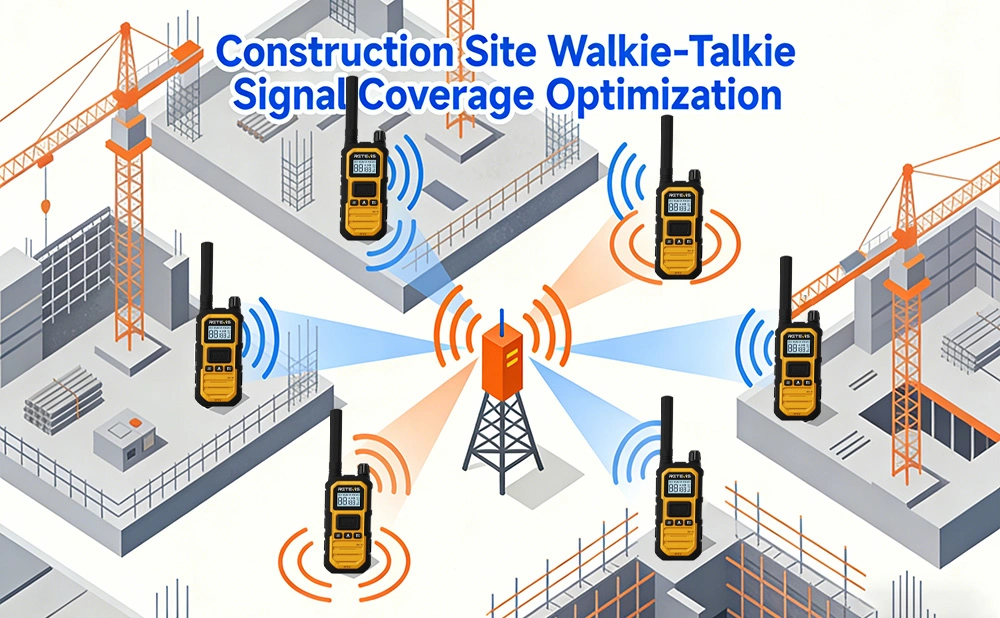
I understand your struggle
On large or multi-level construction sites, it's common for two-way radios to lose signal between floors, steel frames, or across wide open areas. Workers experience cut-offs, supervisors can't reach the far end of the site, and productivity slows.
Here's why it matters
Poor radio coverage on a job site isn't just an inconvenience—it can compromise safety, coordination, and even compliance. Reliable communication is the backbone of site management, especially where heavy machinery and complex operations are involved.
The good news
A properly deployed radio repeater can drastically improve site coverage, even across reinforced structures or distant zones. But success doesn't only depend on the repeater's power rating—it's also about where and how you install it.
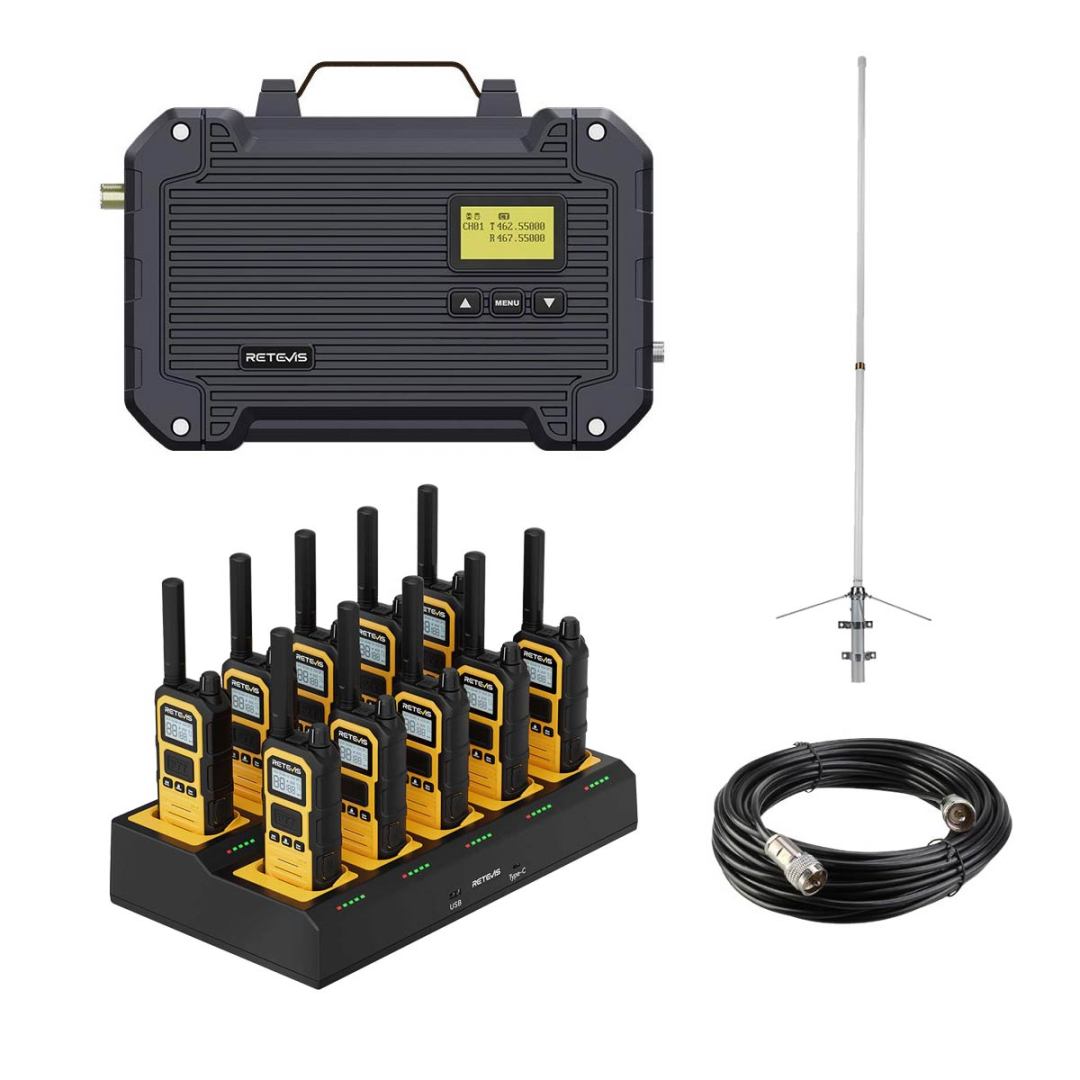
Understanding the Types of Repeaters Used on Job Sites
Not all repeaters are built alike. Before installation, you need to know what you're working with:
|
Category |
Typical Frequency |
Power Output |
Best For |
|
VHF/UHF/GMRS |
10–50 W |
Simple voice coverage; legacy systems |
|
|
Digital Repeater (DMR/P25/NXDN) |
VHF/UHF |
25–50 W |
Large-scale sites, clearer audio, multi-group calling |
|
UHF (400–480 MHz) |
5–25 W |
Temporary or mobile construction projects |
|
|
Commercial/Enterprise Repeater |
VHF/UHF |
50 W+ |
Permanent site infrastructure or multi-building coverage |
In practice, UHF repeaters (400–480 MHz) are preferred on construction sites because they perform better through concrete, scaffolding, and steel environments. VHF (136–174 MHz) options, by contrast, are better suited for wide, open-terrain projects such as road or pipeline construction.
Site Survey: Where Your Repeater Should Go
Elevation and Line-of-Sight
Mount the antenna as high as possible. Even a 10 m elevation gain can expand the effective coverage radius by 20–30 %, based on typical ERP calculations under open-site conditions (source: [RadioReference engineering discussions, 2024]).
Centralized Coverage
For multi-building or multi-floor projects, place the repeater near the geometric center of the work area—ideally in a clear line to the key communication zones (e.g., crane operator area, foreman's office, delivery gate).
Avoid Electromagnetic Interference (EMI)
Keep the repeater at least 3–5 m away from large power cables, welding machines, and heavy electrical motors. EMI can distort both analog and digital transmissions.
Grounding and Lightning Protection
Proper grounding is not optional—it's essential for both equipment safety and communication reliability.
Grounding Guidelines
Copper Ground Rod: Use a copper-clad steel ground rod at least 2.4 m (8 ft) deep.
Ground Wire: Use 6 AWG copper or thicker cable between the repeater chassis and the ground rod.
Bonding: Connect all metallic structures (antenna mast, cabinet frame, and power supply) to the same grounding point.
Testing: Ground resistance should ideally measure below 5 Ω, verified with an earth ground tester.
Lightning Arrestors
Install a coaxial surge protector between the antenna and feed line entry. This small, inexpensive device prevents surges from lightning strikes or static buildup from damaging the repeater.
Waterproofing and Environmental Protection
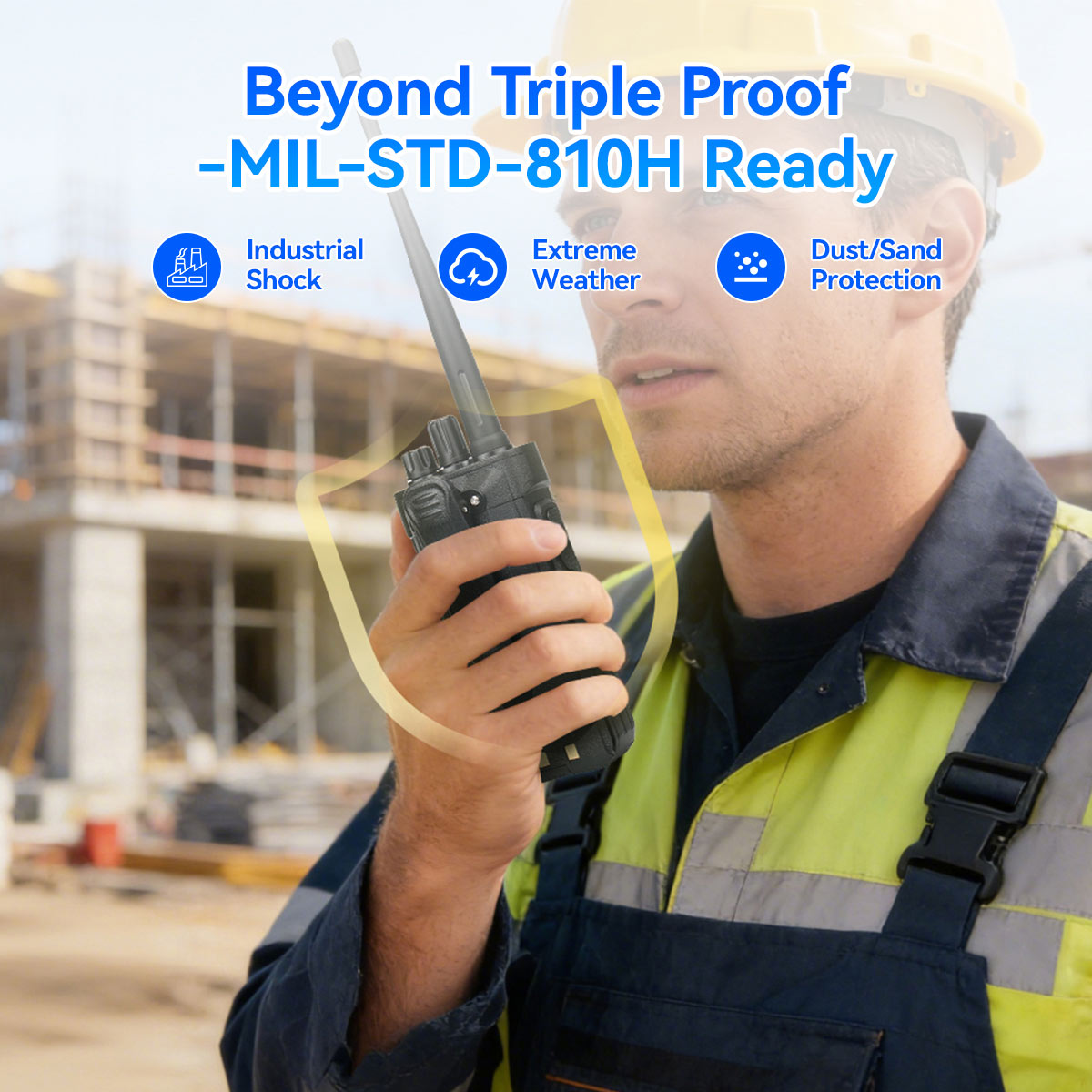
Construction sites are unpredictable—rain, dust, and debris are constant threats. Your repeater must withstand them.
Best Practices
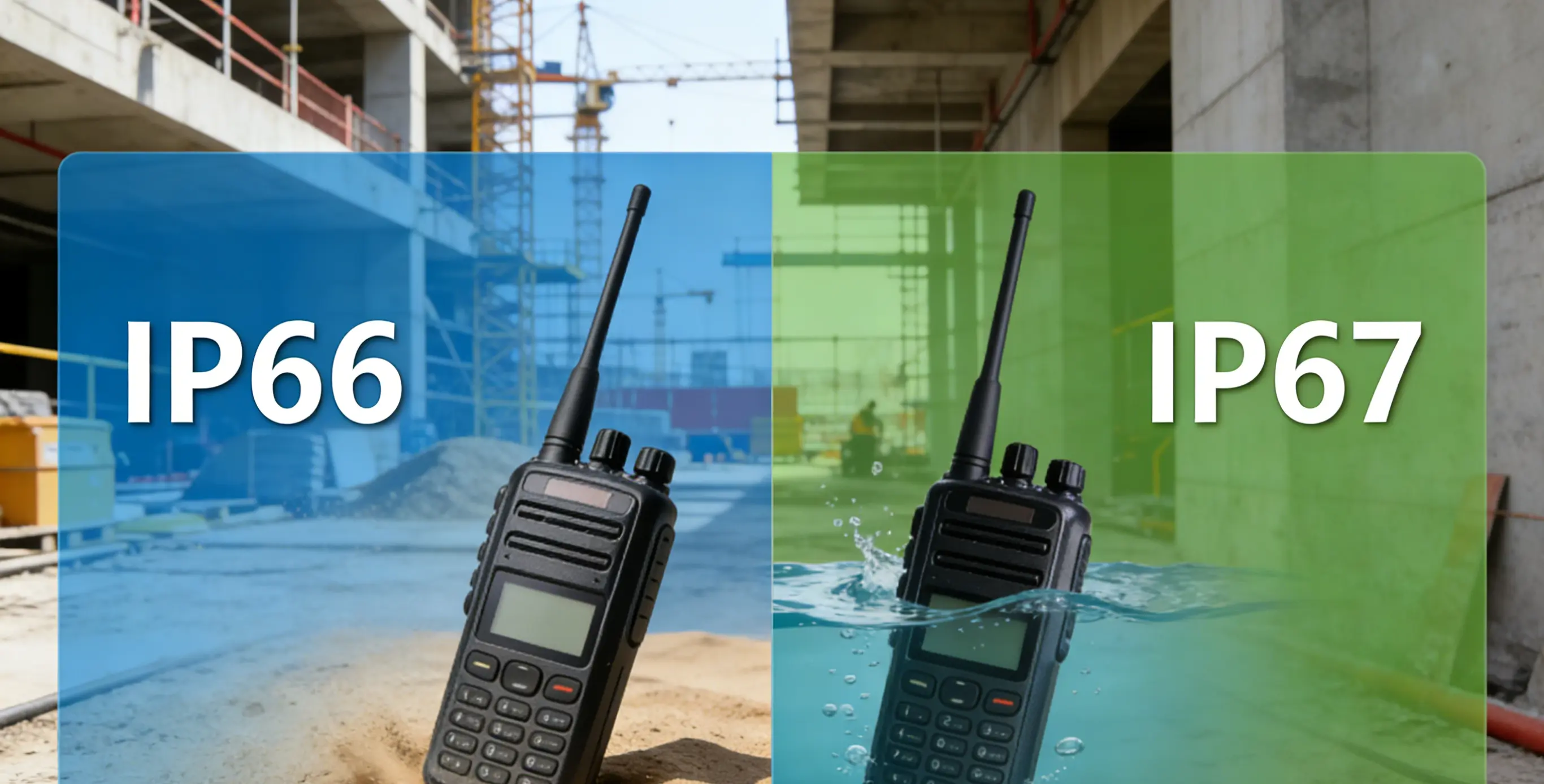
Use an IP65-rated or higher housing if the repeater is placed outdoors or in semi-open structures.
Seal cable entries with weatherproof grommets and UV-resistant tape.
Install a drip loop in the coaxial cable to prevent water from entering the connector.
Ensure ventilation for heat dissipation—especially for 25 W or higher units operating continuously.
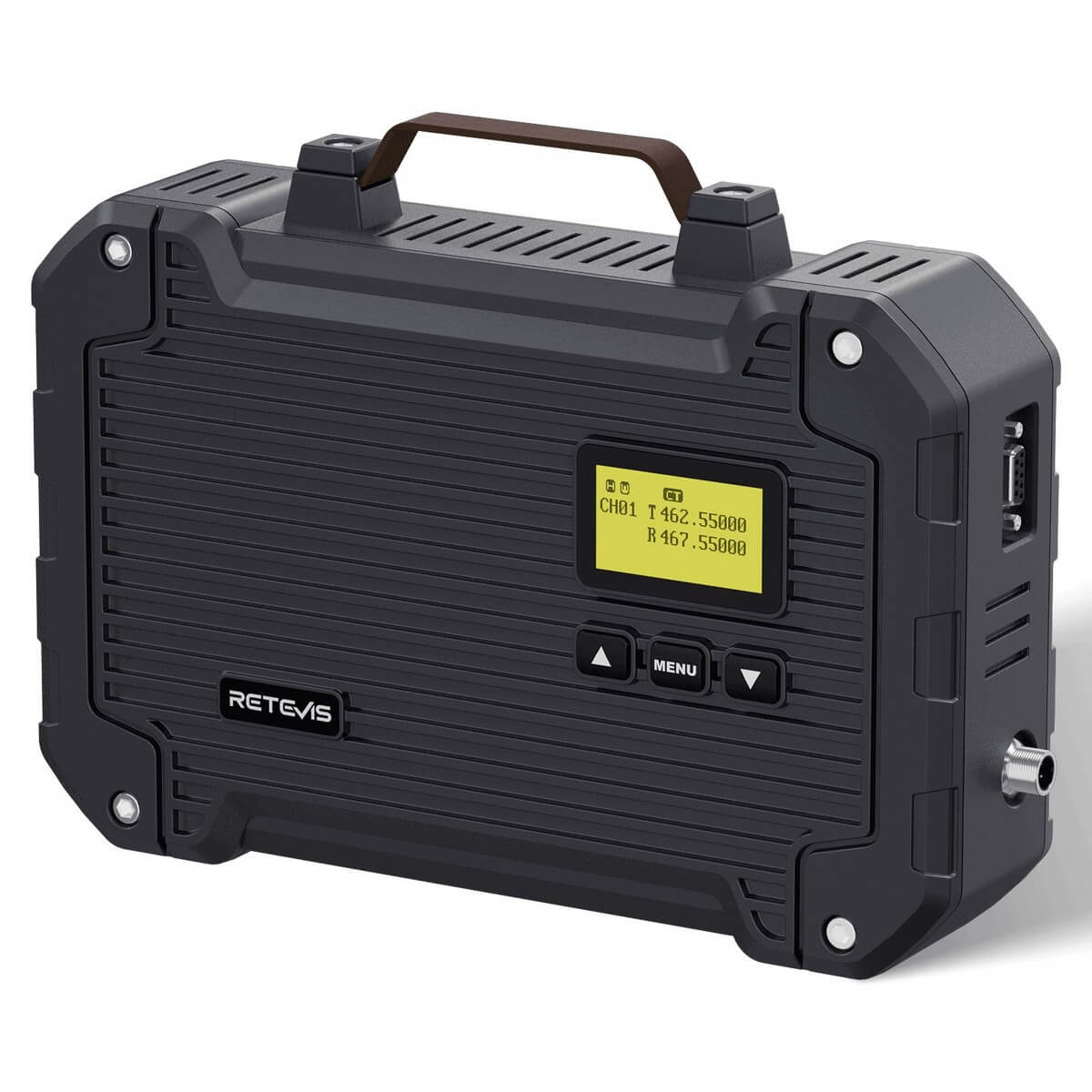
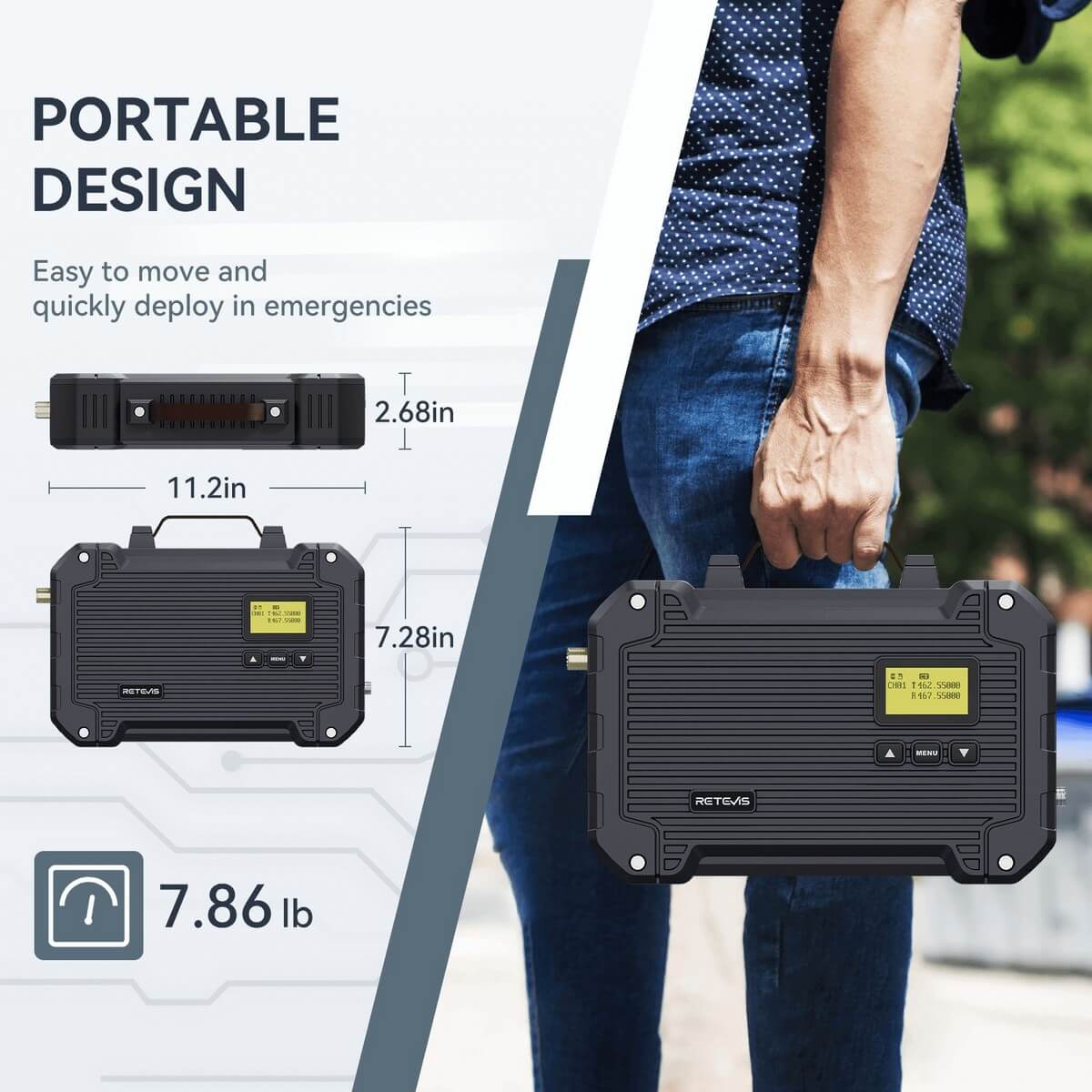
For example, many compact repeaters such as the Retevis RT97L come in a weather-sealed aluminum shell with fanless heat dispersion, allowing reliable outdoor operation with minimal maintenance.
(Note: Mentioned for illustration purposes; principles apply universally to similar repeaters.)
Power Supply and Backup
Primary Power: A stable AC 110/220 V or DC 12/24 V regulated source.
Backup Option: Add a deep-cycle battery or UPS that provides at least 2–3 hours runtime.
Surge Protection: Integrate inline fuses or surge arrestors on both DC and AC sides.
For critical sites, consider using a solar-assisted setup—some portable repeaters allow solar integration through DC input terminals.
Typical Cost Breakdown (Real-World Reference)
|
Repeater Type |
Example Model |
Power Output |
Approx. Price |
|
Entry-level Portable GMRS |
Midland MXR10 |
10 W |
$600 ± |
|
Compact UHF Repeater |
Retevis RT97S/RT97L |
10–25 W |
$480–550 ± |
|
Professional VHF/UHF Digital |
Icom FR5300 |
50 W |
$1,400 ± |
|
Enterprise/Industrial |
Motorola SLR5700 |
50 W+ |
$3,600 ± |
Prices vary by frequency band, output power, and configuration, but these ranges give a realistic market baseline. For temporary or medium-scale sites, 10–25 W units often deliver excellent ROI when properly installed and tuned.
Testing and Optimization
Once installed:
Measure RSSI (signal strength) across all key areas of the site.
Log dead zones and adjust antenna height or orientation.
Fine-tune duplexer separation if applicable (typically 5–10 MHz spacing for UHF).
Record baseline SWR (Standing Wave Ratio) below 1.5:1 for efficient performance.
Routine inspection every few weeks—especially after storms or heavy construction shifts—keeps the system stable.
Conclusion: Build Reliability into Your Site Communication
Deploying a repeater with walkie talkie long range at a construction site isn't just about adding range—it's about creating dependable communication flow under tough conditions.
From grounding and waterproofing to antenna placement, each step contributes to safety and coordination efficiency. A well-planned installation will outlast weather, dust, and structural changes—keeping every worker within reach.
Whether you choose a compact portable repeater or a high-power fixed system, what matters most is a disciplined approach to deployment. And if you're exploring rugged yet portable options, Retevis RT97L serves as one practical reference point among many—lightweight, weather-sealed, and field-ready.
Leave a Reply





 Google
 Amazon
Comments
No data Yet