
GMRS Repeaters for Extended-Range Communication
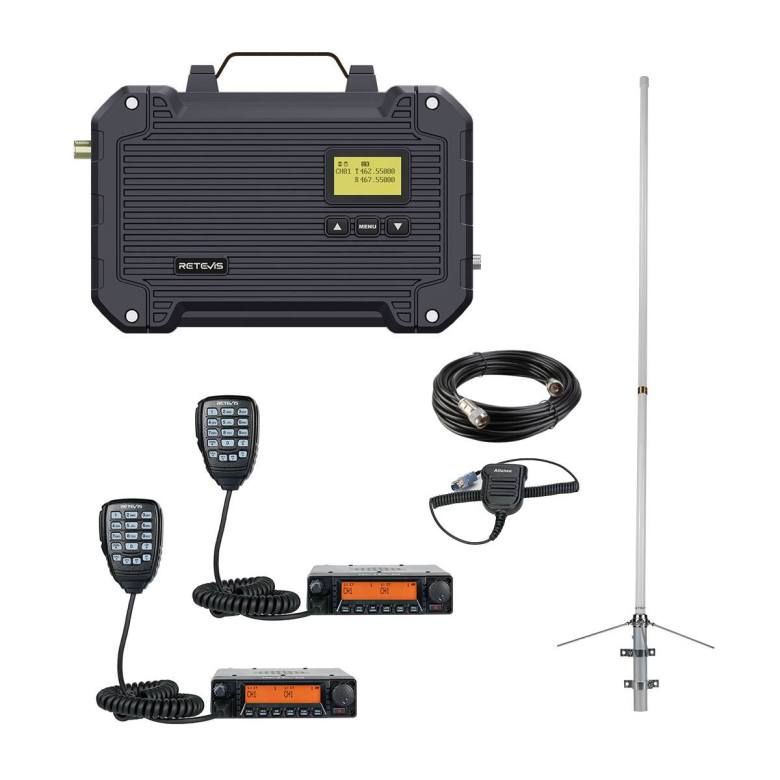
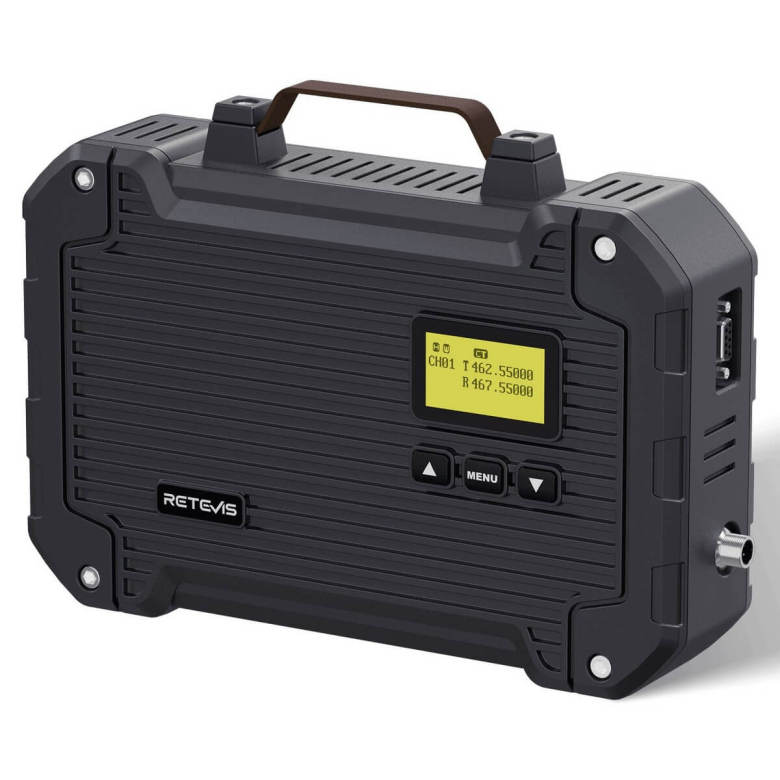
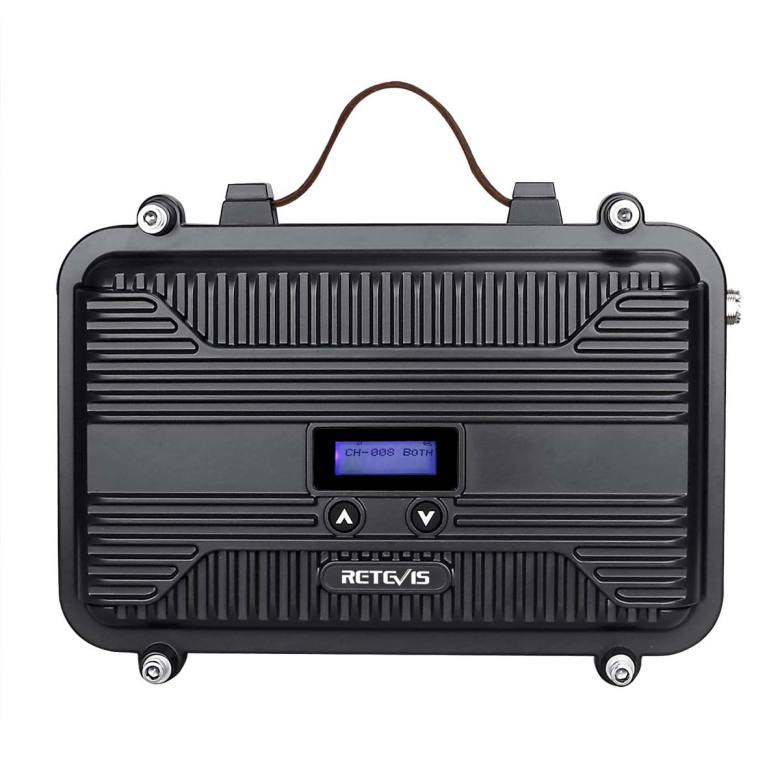
Boost your GMRS communication range with our plug-and-play portable repeaters—RT97, RT97S, and the 25W IP66 waterproof RT97L. This upgraded series delivers stronger coverage, compact size, and simple setup for farms, ranches, outdoor events, off-grid trips, and emergency use. Designed for reliable long-distance performance, each repeater offers easy deployment, stable signal extension, and the power you need to stay connected anywhere.
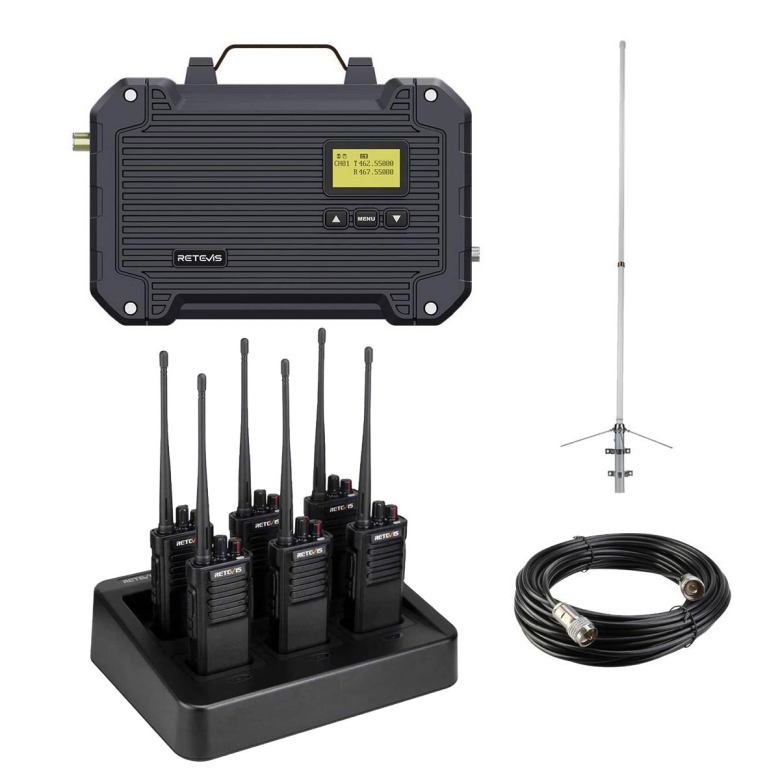
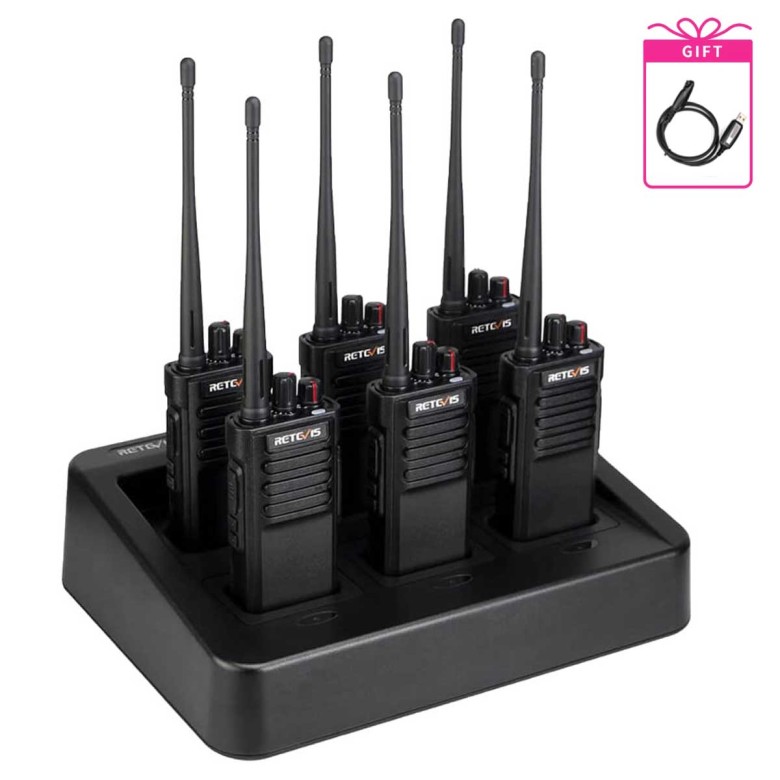

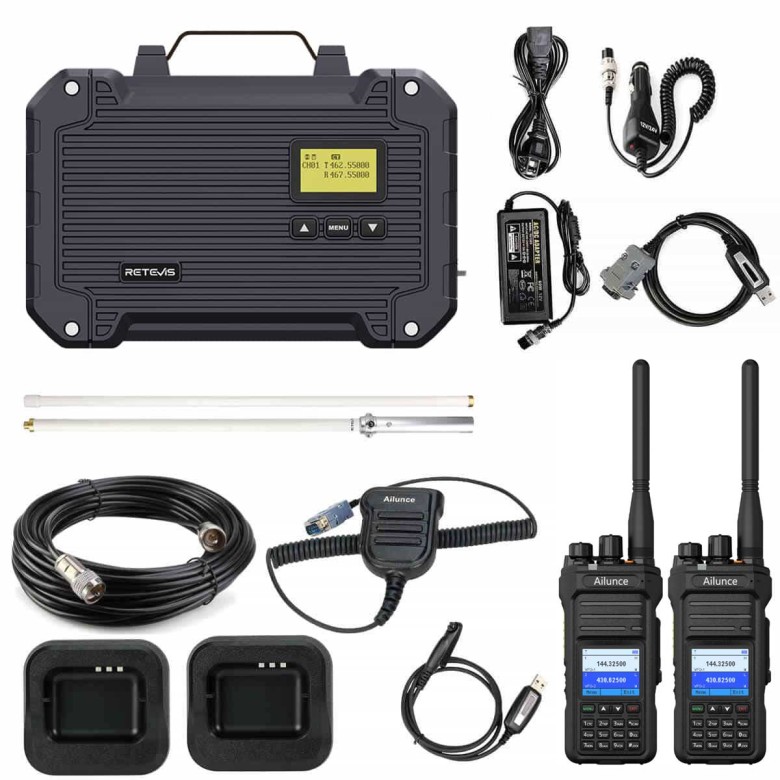
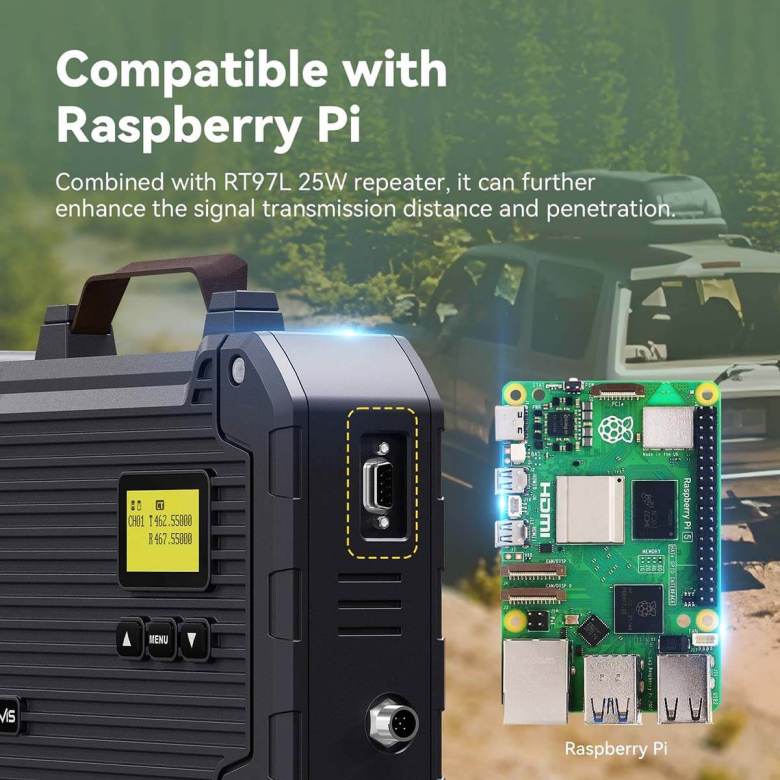
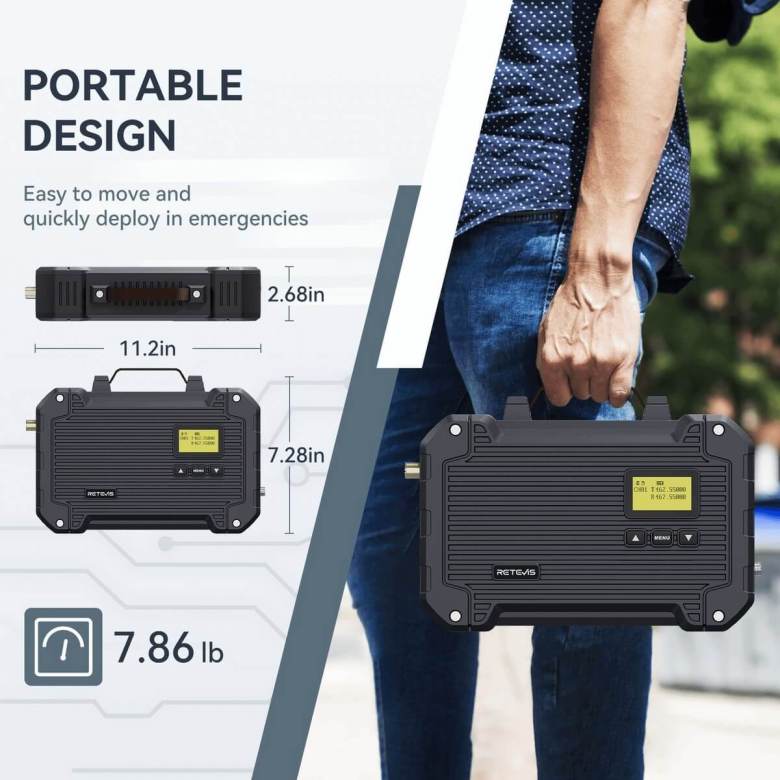
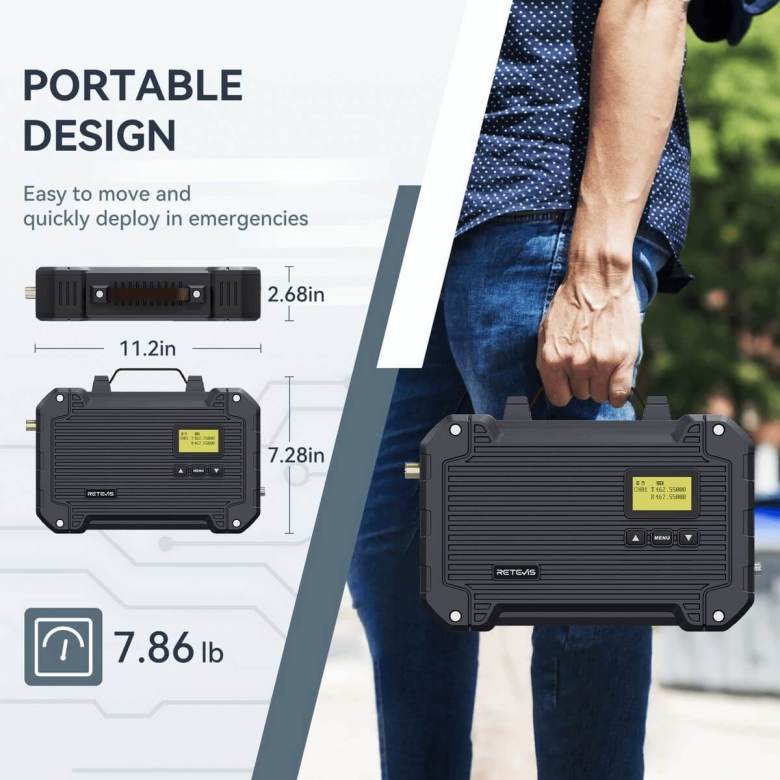
[{"Title":"Extended Communication Coverage","Content":"RT97L\u0027s 25W high power output and FRP antenna amplify signals in valleys, forests, and minimize dead zones."},{"Title":"Weatherproof Durability for Harsh Environments","Content":"HA1G\u0027s IP67 waterproofing ensures uninterrupted operation in heavy rain, snow, or dust. Perfect for emergency responders or outdoor activities."},{"Title":"Quick Deployment and Portable Design","Content":"RT97L is lightweight and one-handed, and HA1G is compact for quick setup in dynamic scenarios. Rescue teams can easily move equipment between checkpoints, ensuring agile communications during fast-paced operations."},{"Title":"Ultra-Long Battery Life and Real-Time Monitoring","Content":"HA1G\u0027s 2800mAh battery provides more than 24 hours of standby time, while RT97L\u0027s LCD screen displays key indicators such as signal strength and power level."},{"Title":"Rapid Emergency Response","Content":"HA1G\u0027s one-touch PTT button and VFO programming enable instant communications during a crisis."}]
Hot
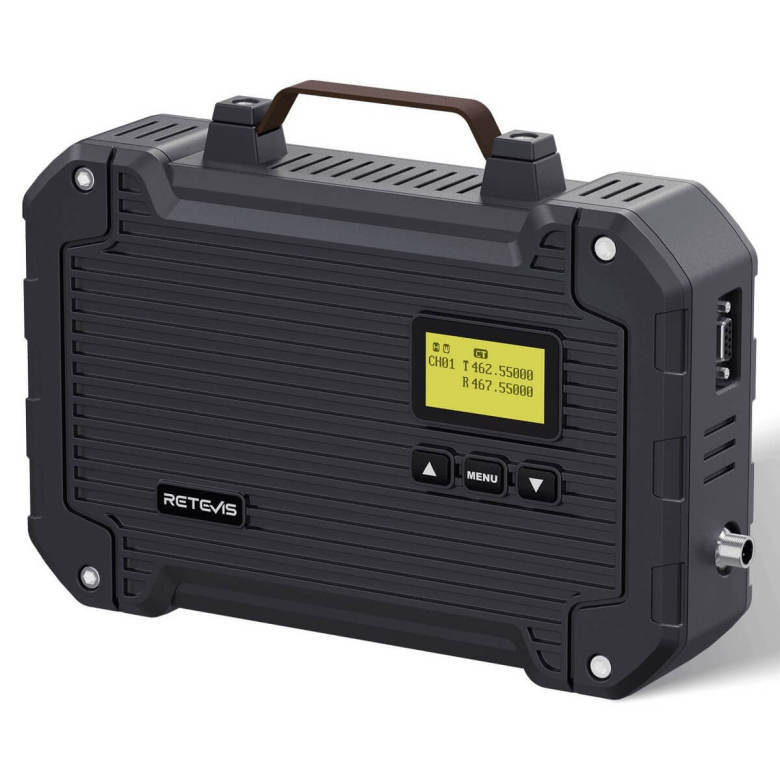
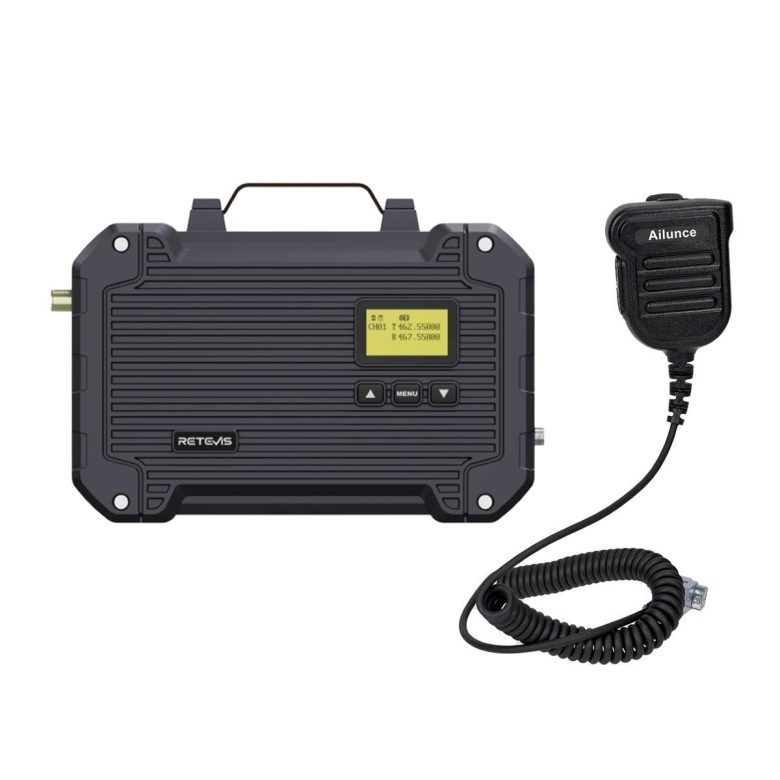
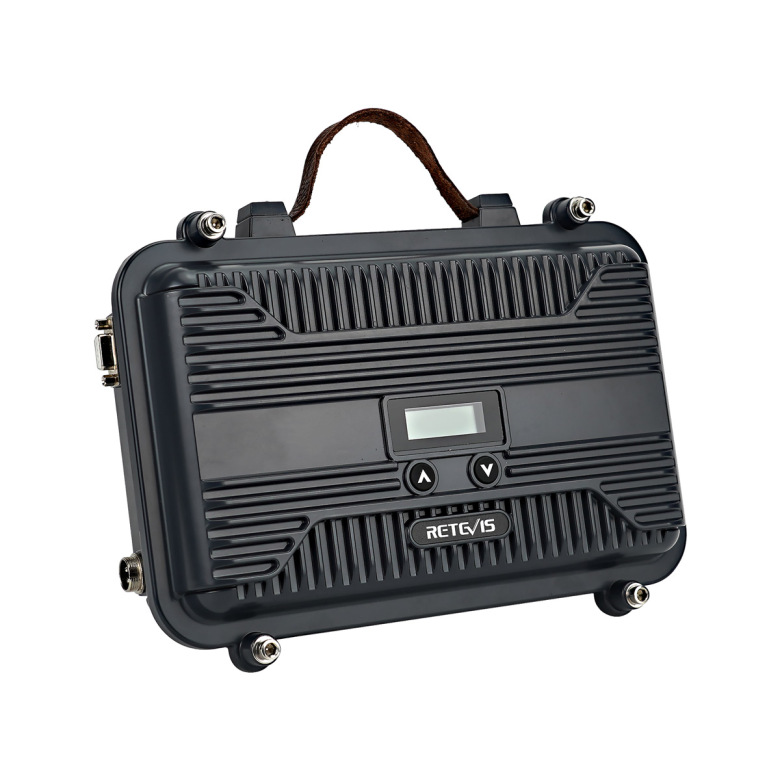
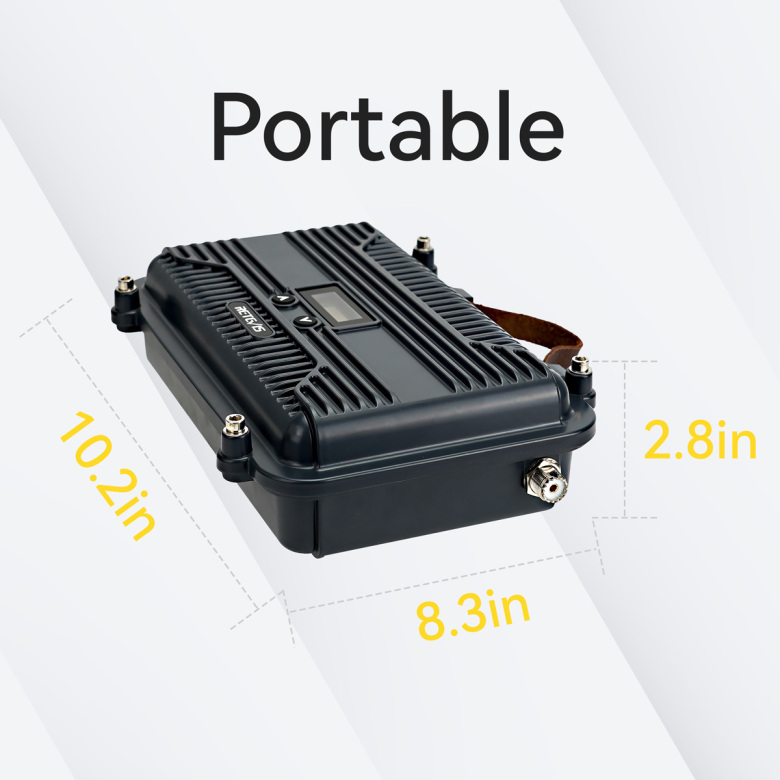
[{"Title":"Adjustable Power Modes","Content":"Switch between 25W high and low power to match your coverage needs while conserving energy"},{"Title":"Low-Temperature Operation","Content":"A built-in heating system activates automatically at -15\u00B0C to prevent freezing and ensure reliable performance in cold weather"},{"Title":"Rugged \u0026 Weatherproof Design","Content":"All-aluminum alloy casing with an IP66 rating provides excellent heat dissipation and stands up to heavy rain, dust, and outdoor elements"},{"Title":"Portable \u0026 Flexible Charging","Content":"Compact and lightweight design supports in-vehicle, direct, and solar charging for convenient use anywhere"},{"Title":"User-Friendly Interface","Content":"The LCD display enables easy channel switching, volume control, encryption, and scanning directly on the device\u2014no software needed"}]
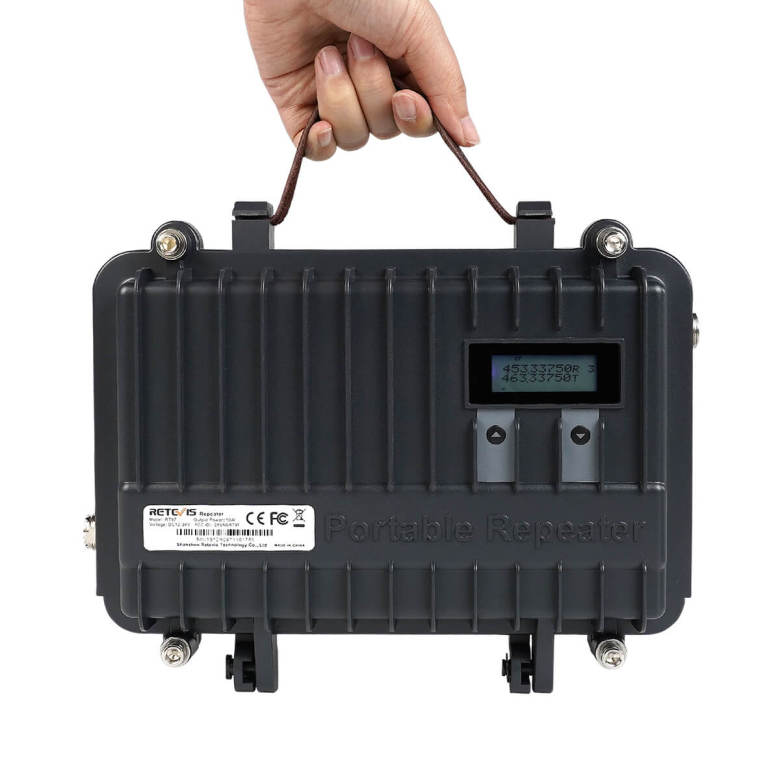
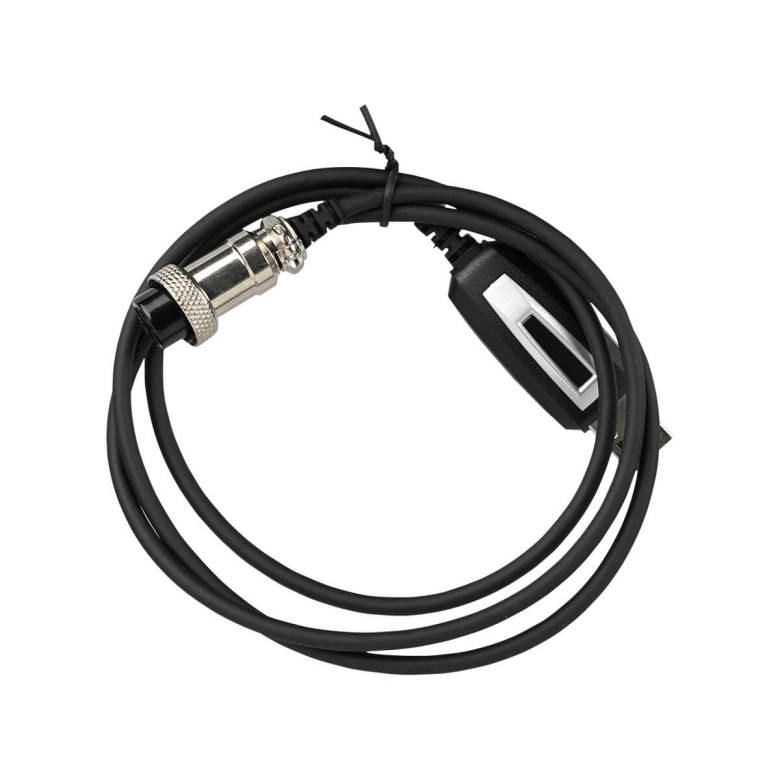
Find the Right Retevis GMRS Repeater
The GMRS radio repeater receives a transmission from one radio and retransmits it through a separate frequency, allowing compatible GMRS radios to communicate across a larger area. Retevis provides GMRS mobile repeater options ranging from compact portable systems to higher-power weather-resistant models.
- RT97: Compact GMRS repeater for mobile and portable deployments.
- RT97S: Portable GMRS repeater designed for extended communication coverage.
- RT97L: 25 W GMRS repeater with IP66 protection for demanding outdoor environments.
The best GMRS repeater is ultimately the one that matches your terrain, coverage requirements, installation conditions, radio fleet, and operating environment. The current Retevis GMRS repeater for sale is designed around practical deployment, with options for portable operation, vehicle power, outdoor use, and larger-area coverage.
FAQ About GMRS Repeaters
A GMRS repeater is a radio repeater station that receives a GMRS transmission on one frequency and automatically retransmits it on another frequency. This two-frequency arrangement allows handheld and mobile GMRS radios to communicate beyond the distance they could normally cover directly.
The main advantage of a repeater is typically antenna elevation. A repeater installed at a high and unobstructed location can "see" a larger area than a handheld radio carried at ground level.
For example, two handheld radios may struggle to communicate across a valley because a hill blocks the direct path. A GMRS repeater positioned on higher ground can receive the signal from one radio, retransmit it, and make communication between the two locations much more practical.
Retevis recommends thinking of a repeater as a coverage infrastructure component, rather than simply a higher-powered walkie-talkie. The repeater, antenna, feedline, location, programming, and power system all contribute to performance.
In the United States, GMRS repeater operation uses eight primary channel pairs.
| Repeater Channel | Repeater Output | Repeater Input |
| GMRS 15 | 462.5500 MHz | 467.5500 MHz |
| GMRS 16 | 462.5750 MHz | 467.5750 MHz |
| GMRS 17 | 462.6000 MHz | 467.6000 MHz |
| GMRS 18 | 462.6250 MHz | 467.6250 MHz |
| GMRS 19 | 462.6500 MHz | 467.6500 MHz |
| GMRS 20 | 462.6750 MHz | 467.6750 MHz |
| GMRS 21 | 462.7000 MHz | 467.7000 MHz |
| GMRS 22 | 462.7250 MHz | 467.7250 MHz |
The repeater receives on the corresponding 467 MHz input and transmits on the 462 MHz output, creating a 5 MHz separation between the two sides of the repeater pair. The FCC lists these eight 462 MHz main channels for repeater/base/fixed use and the associated 467 MHz channels for communications through repeaters.
Users should not assume that selecting the correct frequency alone is enough. A specific repeater may also require a particular CTCSS or DCS access tone, depending on how the system is configured.
A GMRS repeater uses two related frequencies. The basic communication sequence is:
Radio A → repeater receiver → repeater transmitter → Radio B
For example:
- Radio A is configured for a GMRS repeater channel.
- Radio A transmits on the repeater input frequency.
- The repeater receives that signal.
- The repeater retransmits the communication on the corresponding output frequency.
- Radio B receives the retransmitted signal.
A repeater therefore allows two radios that may not have a strong direct path between them to communicate through a better-positioned relay station.
Yes, GMRS repeater systems can potentially be interconnected, but repeater linking is more complicated than simply connecting two repeaters together.
A linked system may use an additional communications path to connect separate repeater sites. This can extend coverage between locations that are too far apart for a single repeater.
However, linking requires careful consideration of:
- Frequency coordination
- Interference
- Repeater configuration
- Control methods
- Network infrastructure
- Coverage overlap
- FCC rules
- System ownership and access control
For most individual GMRS users, a single well-positioned repeater is the simpler starting point.
Retevis also offers repeater configurations designed for more advanced coverage requirements, including RT97L systems capable of dual-repeater/daisy-chain configurations.
Before building a linked GMRS system, verify that the complete configuration complies with current FCC requirements.
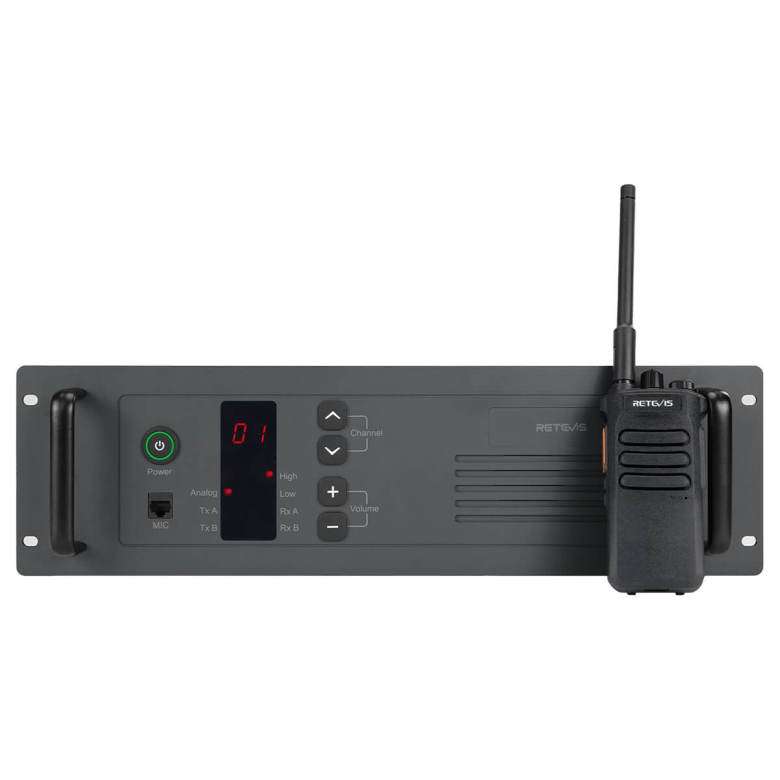
The Retevis RT97L, for example, supports 16 channels and provides CTCSS/DCS configuration, squelch adjustment, repeater delay, channel scanning, and high/low power switching. These controls allow the system to be configured for different operating environments.
The FCC has noted that GMRS repeaters can greatly extend the range of mobile and portable units, with large-area communications possible under suitable conditions. GMRS repeater coverage and range depends on:
- Repeater antenna height
- Terrain
- Buildings and other obstructions
- Antenna gain and efficiency
- Coaxial cable loss
- Repeater power
- Radio antenna performance
- Receiver sensitivity
- Local interference
A repeater installed on high ground with a good antenna system can cover substantially more area than a repeater located inside a building or behind a hill.
Retevis therefore recommends evaluating system placement rather than wattage alone. For example, the RT97L can operate at up to 25 W with extended max 15 km range , but its real-world coverage will still depend heavily on the antenna system, feeder, terrain, and installation location.
Building a GMRS repeater requires more than connecting a radio to an antenna.
A typical system includes:
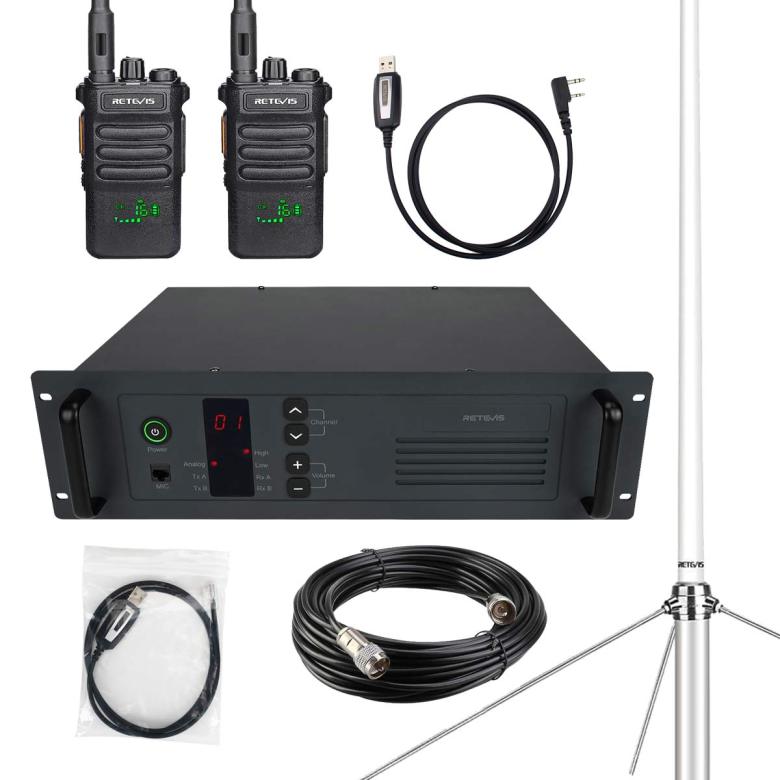
- GMRS repeater
- Appropriate repeater antenna
- Coaxial feeder cable
- Suitable connectors
- Power supply
- Mounting hardware
- Compatible GMRS radios
- Correct repeater frequency configuration
The basic installation process is:
1. Define the coverage area
Identify the buildings, fields, roads, valleys, work zones, or other areas that need coverage.
2. Select the repeater location
Choose a location that provides good elevation and a clear radio path.
3. Select an appropriate antenna system
A good antenna and low-loss feeder can have a major impact on system performance.
4. Configure the repeater frequencies
Use the appropriate GMRS repeater frequency pair.
5. Configure access tones if required
CTCSS or DCS can help prevent unwanted users or interference from opening the repeater.
6. Test coverage
Walk or drive through the intended coverage area and test both transmission and reception.
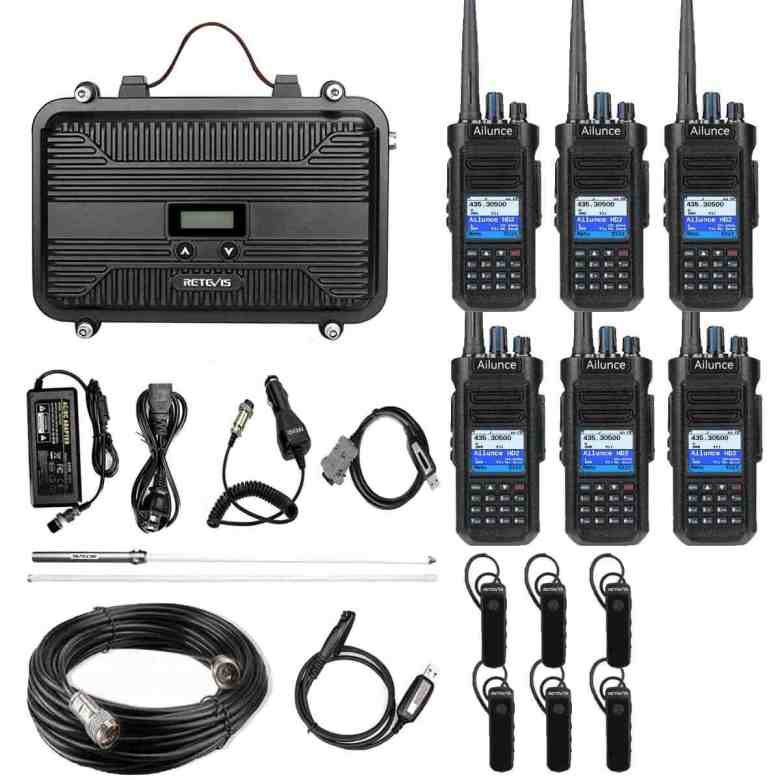
Retevis offers complete repeater solutions and kits that can simplify this process. For users who do not want to assemble every component independently, a matched GMRS repeater kit can reduce installation complexity.
There are several ways to find GMRS repeaters in your area.
Start by checking:
- Local GMRS clubs
- GMRS community directories
- Repeater databases
- Regional radio groups
- Local emergency communication organizations
- Online GMRS communities
When you find a repeater, record its:
- Repeater output frequency
- Repeater input frequency
- CTCSS or DCS tone
- Coverage area
- Access requirements
- Whether it is open or privately controlled
Note: FCC rules allow a GMRS licensee to permit general use of a repeater or restrict access to specified users.
A practical GMRS repeater setup involves four main areas: location, antenna, frequency configuration, and radio programming.
Step 1: Choose the Location
Place the repeater where it has the best possible radio visibility. Higher locations generally provide better line-of-sight coverage.
Step 2: Install the Antenna
Use an appropriate GMRS antenna and quality coaxial cable. Keep the feedline as short and efficient as practical because cable loss reduces the power reaching the antenna.
Step 3: Configure the Frequency Pair
Select an authorized GMRS repeater channel. The repeater's receive and transmit frequencies must be correctly paired.
Step 4: Program the Radios
Program each mobile or handheld gmrs radio with the corresponding repeater channel and access tone if one is required.
Step 5: Test the System
Test the repeater from different locations, including the edges of the expected coverage area and locations where dead zones are likely to occur.
The RT97L provides features such as channel lock, scanning, squelch adjustment, repeater delay, CTCSS/DCS configuration, and high/low power selection to facilitate system configuration.
Using a GMRS repeater is straightforward once the radio has been programmed correctly.
1. Select a Repeater Channel
In the United States, GMRS repeater operation uses the eight 462 MHz main-channel pairs:
Channel 15: 462.550 / 467.550 MHz
Channel 16: 462.575 / 467.575 MHz
Channel 17: 462.600 / 467.600 MHz
Channel 18: 462.625 / 467.625 MHz
Channel 19: 462.650 / 467.650 MHz
Channel 20: 462.675 / 467.675 MHz
Channel 21: 462.700 / 467.700 MHz
Channel 22: 462.725 / 467.725 MHz
The first frequency in each pair is the 462 MHz repeater output, while the corresponding 467 MHz frequency is used as the repeater input. The FCC specifies these main-channel frequencies in §95.1763.
2. Set the Correct CTCSS/DCS Tone
If the repeater requires an access tone, program the correct CTCSS or DCS code into the radio. Without the correct tone, the repeater may not respond even when the frequency is correct.
3. Listen Before Transmitting
Make sure the channel is clear before pressing PTT. This helps avoid interfering with another conversation.
4. Press PTT and Speak Clearly
Once the repeater is accessed, speak normally and leave a short pause after pressing PTT if the system requires repeater delay or if users need time to respond.
5. Release PTT and Listen
The repeater retransmits your signal on its output frequency, allowing other radios within coverage to hear you.
Remember that GMRS is a regulated radio service. In the United States, a valid individual GMRS license is required to operate a GMRS station, subject to the FCC's rules and exceptions.
A publicly accessible repeater may not charge users a usage fee, but GMRS itself is a licensed radio service with costs in the United States. The FCC has stated that a license is required to transmit on GMRS channels.
Before using a specific repeater, check the operator's published access rules and verify the current FCC requirements that apply to your location and operating situation.
Before using a specific repeater, check the operator's published access rules and verify the current FCC requirements that apply to your location and operating situation.


© 2026 RETEVIS, Inc. All rights reserved.
 Google
 Amazon