Tunnel Radio Communication System
Contact Sales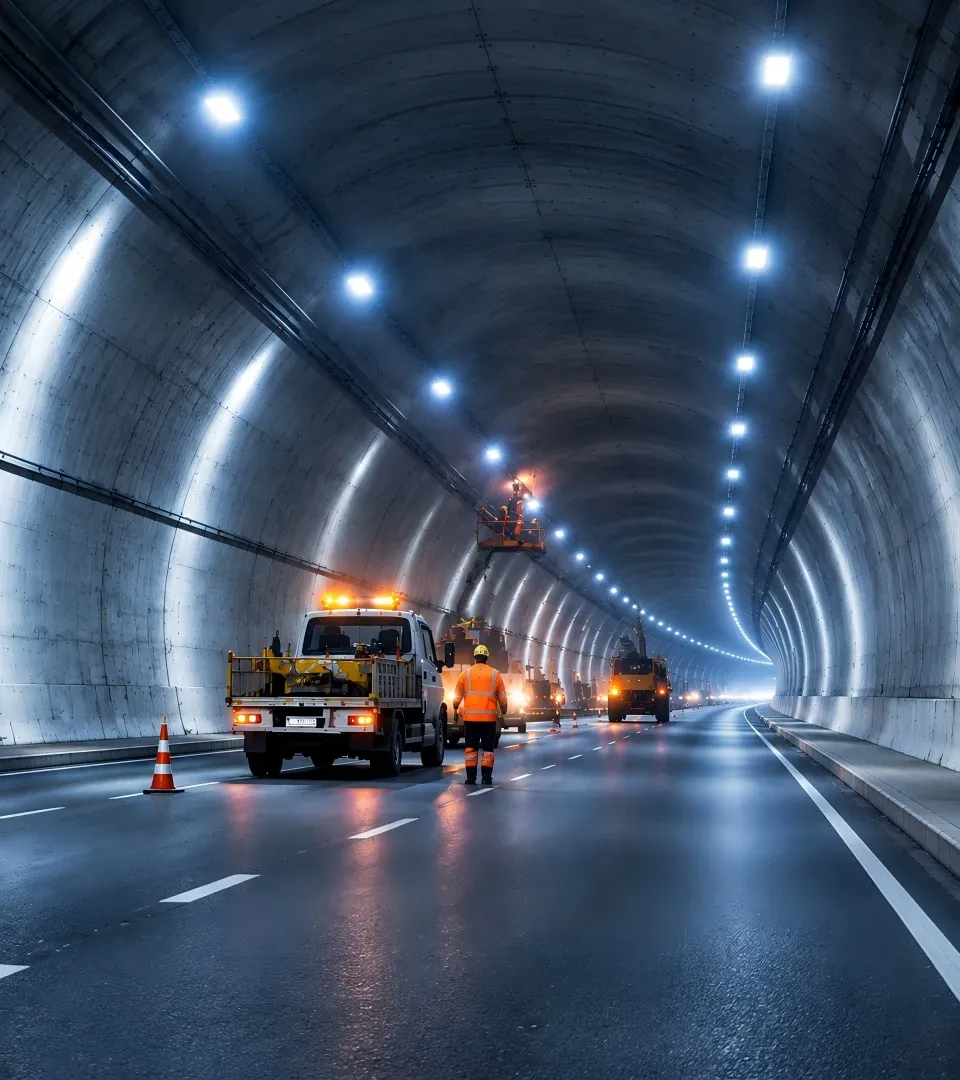
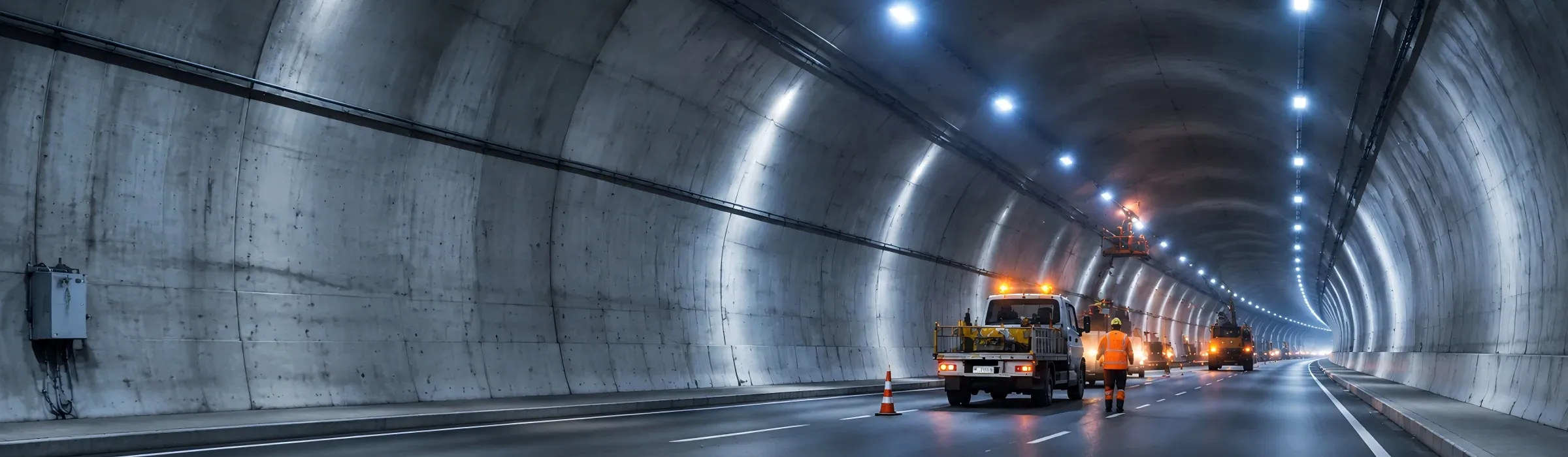
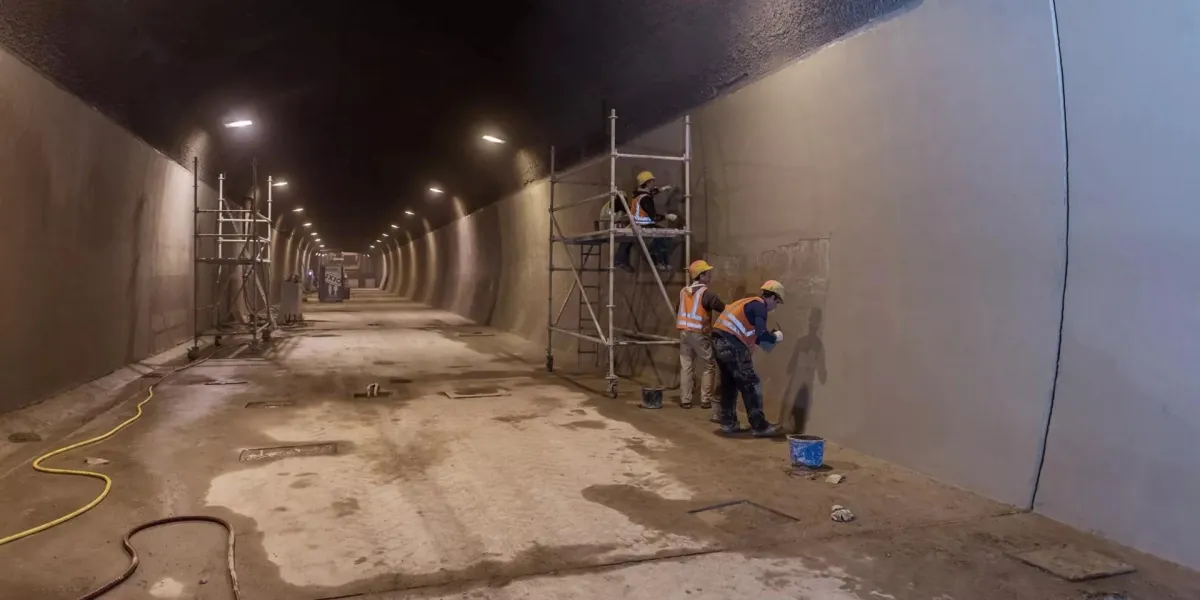
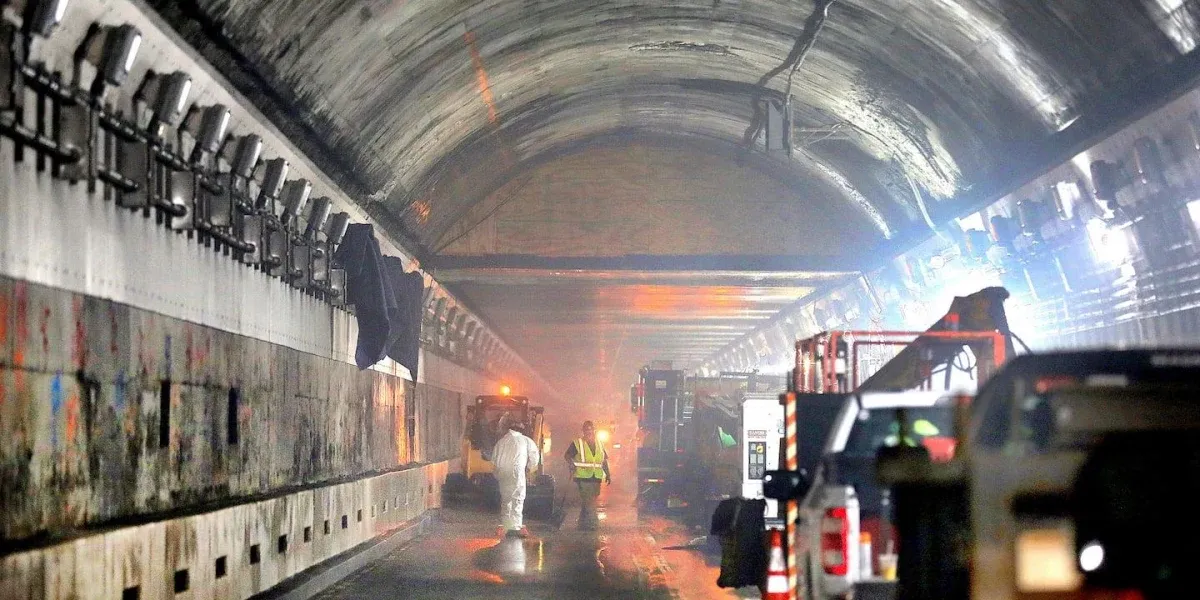
A tunnel rehabilitation project covering two existing tunnels, each approximately 1,500–2,000 ft (457–610 m) long, required a reliable communication solution for underground construction operations. In this project, a tunnel radio system — a portable DMR repeater, fiber extension, and distributed antennas — that kept crews connected inside both tunnels and across the surface yard.
Construction moved in phases, with one tunnel repaired before the next began, so the tunnel communication system had to be portable, reusable, and quick to redeploy between project stages.
The site also included a 225,104 sq. ft. (20,913 m²) laydown yard, requiring reliable surface communication. With no existing communication infrastructure and limited cellular coverage underground, the customer needed a dedicated radio system to connect underground workers and surface teams.
The solution needed to:
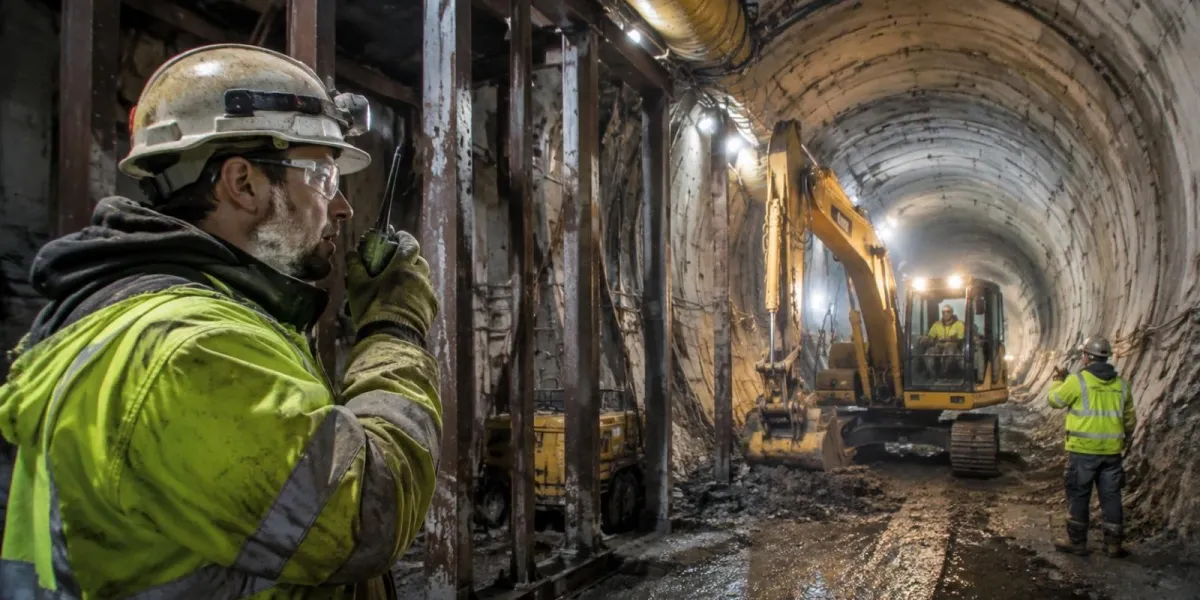
No cellular coverage was available inside the tunnels, requiring a dedicated communication network for reliable operations.
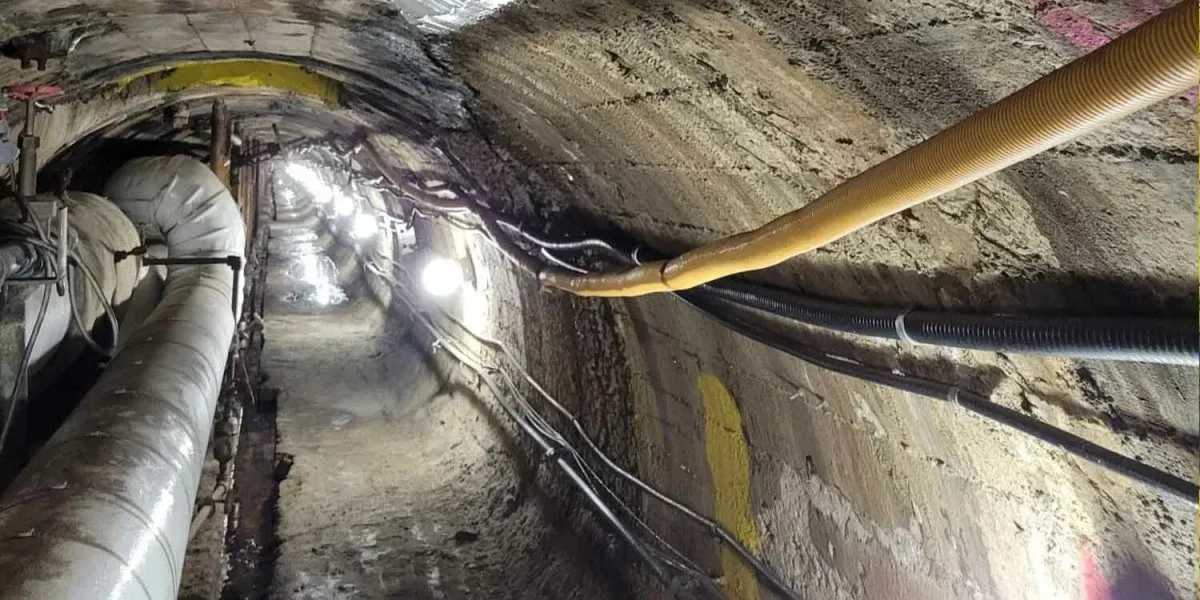
Long underground structures and signal attenuation created potential communication blind spots.
The communication system needed to move between tunnels without rebuilding the entire infrastructure.
Workers and supervisors required reliable communication for daily coordination and emergency response.
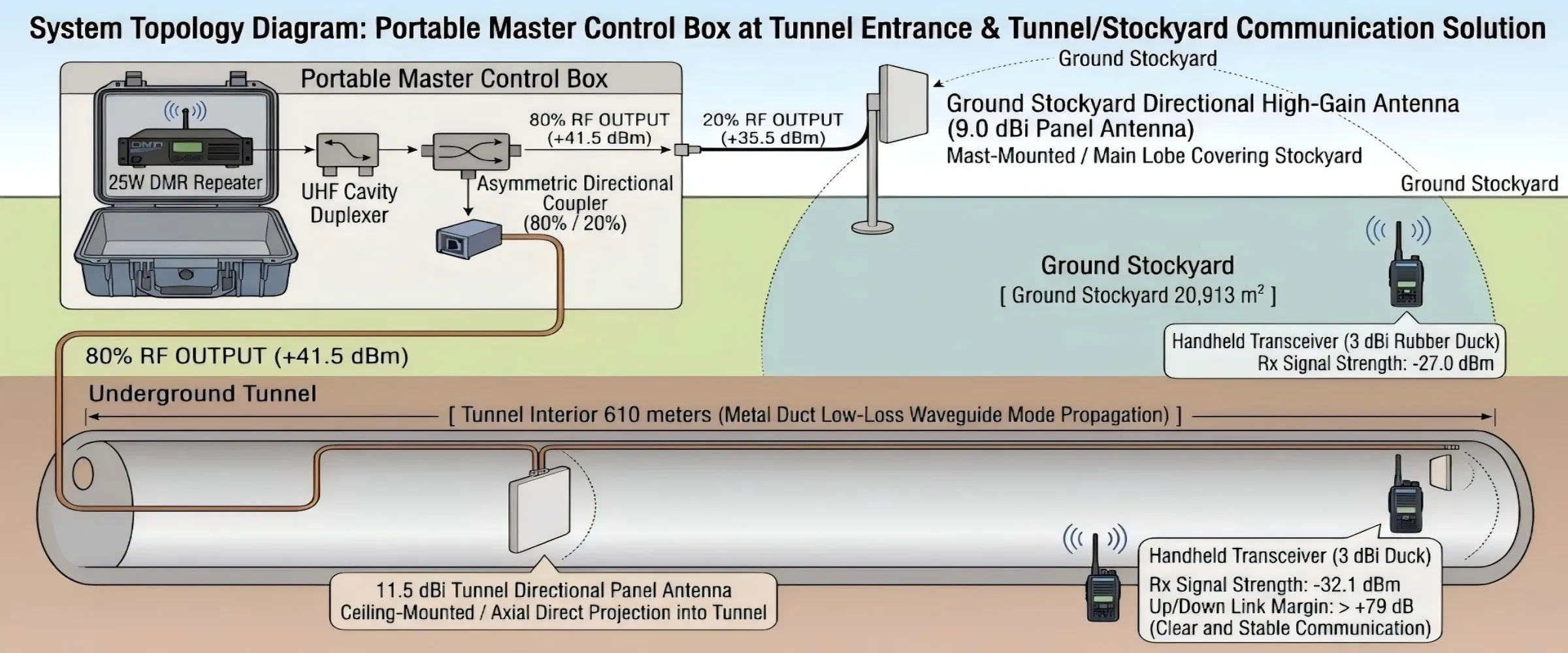
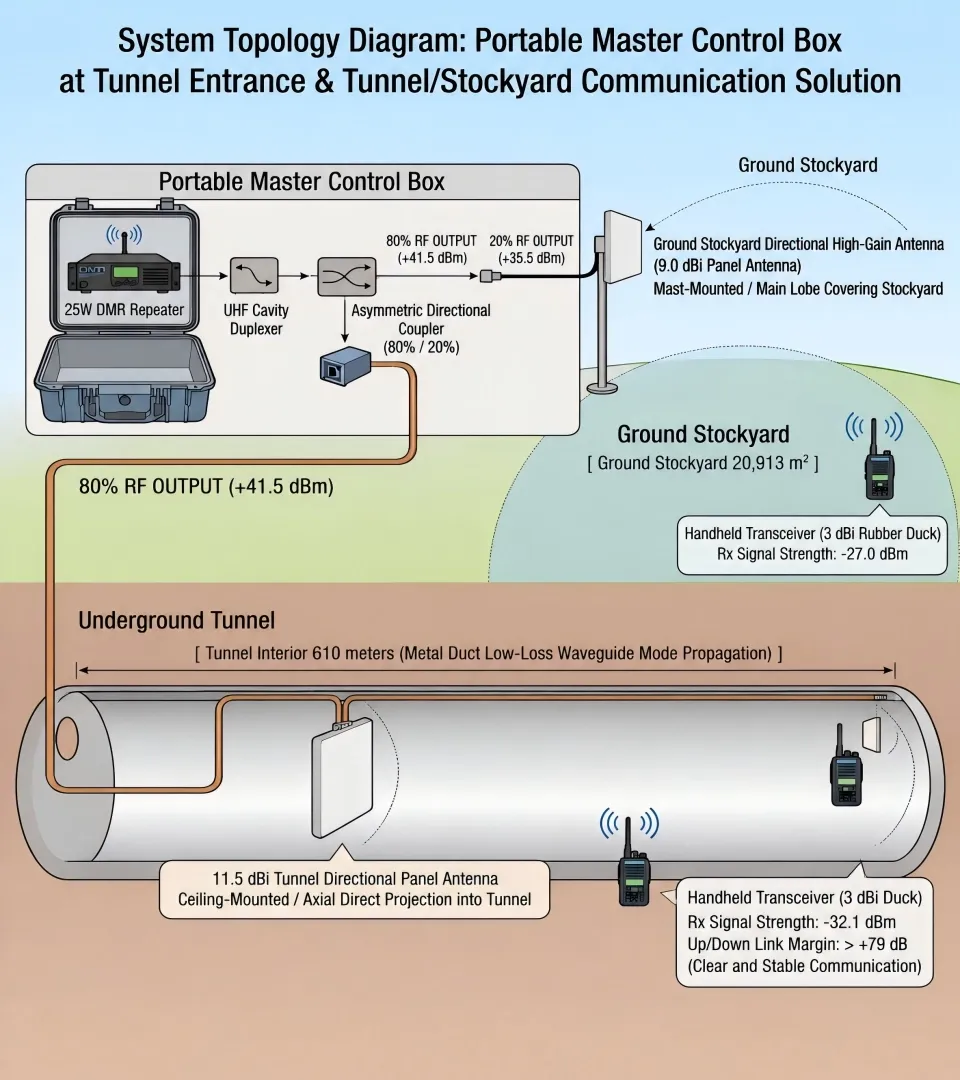
A modular DMR Tier II communication system was deployed to connect underground tunnel operations with the surface work area.
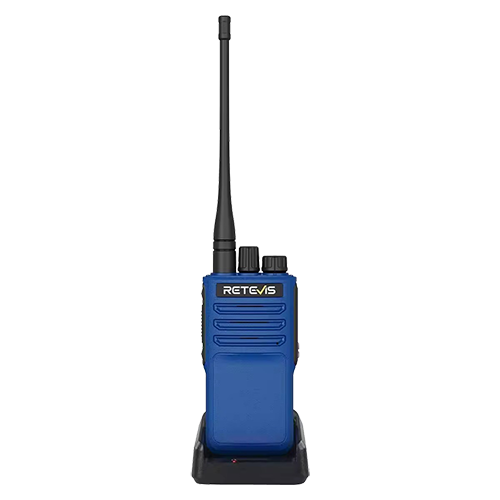
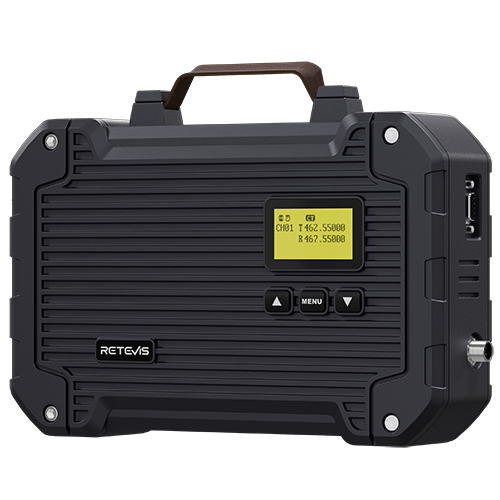
The solution integrates Retevis E1 DMR radios, RT97L Portable DMR Repeater System, fiber extension units, and distributed antenna coverage to provide reliable communication across both underground and surface environments.
The modular architecture supports wide-area coverage, stable underground connectivity, and rapid relocation as construction moves between tunnel phases.
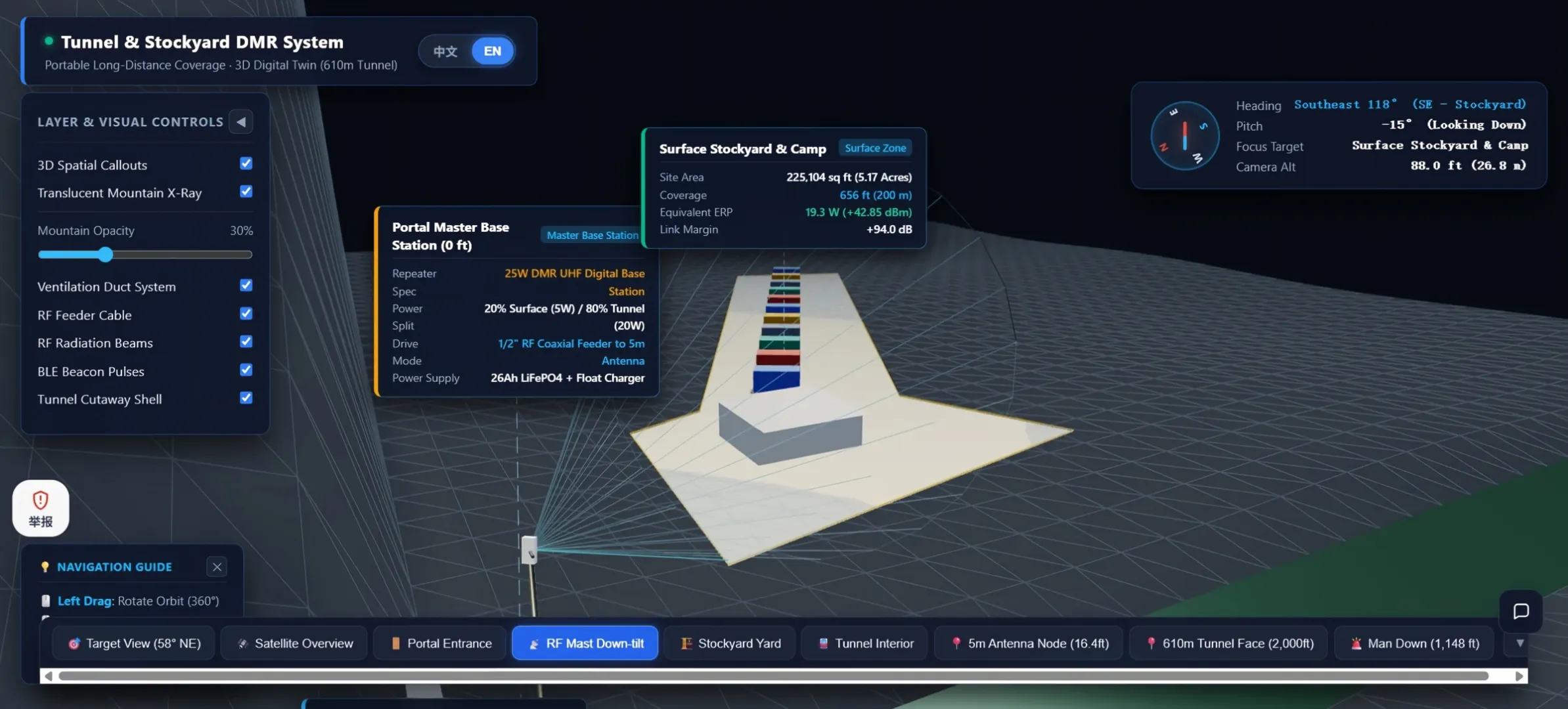
The RT97L repeater system serves as the central communication hub near the tunnel entrance, while a directional antenna extends coverage across the outdoor work area.
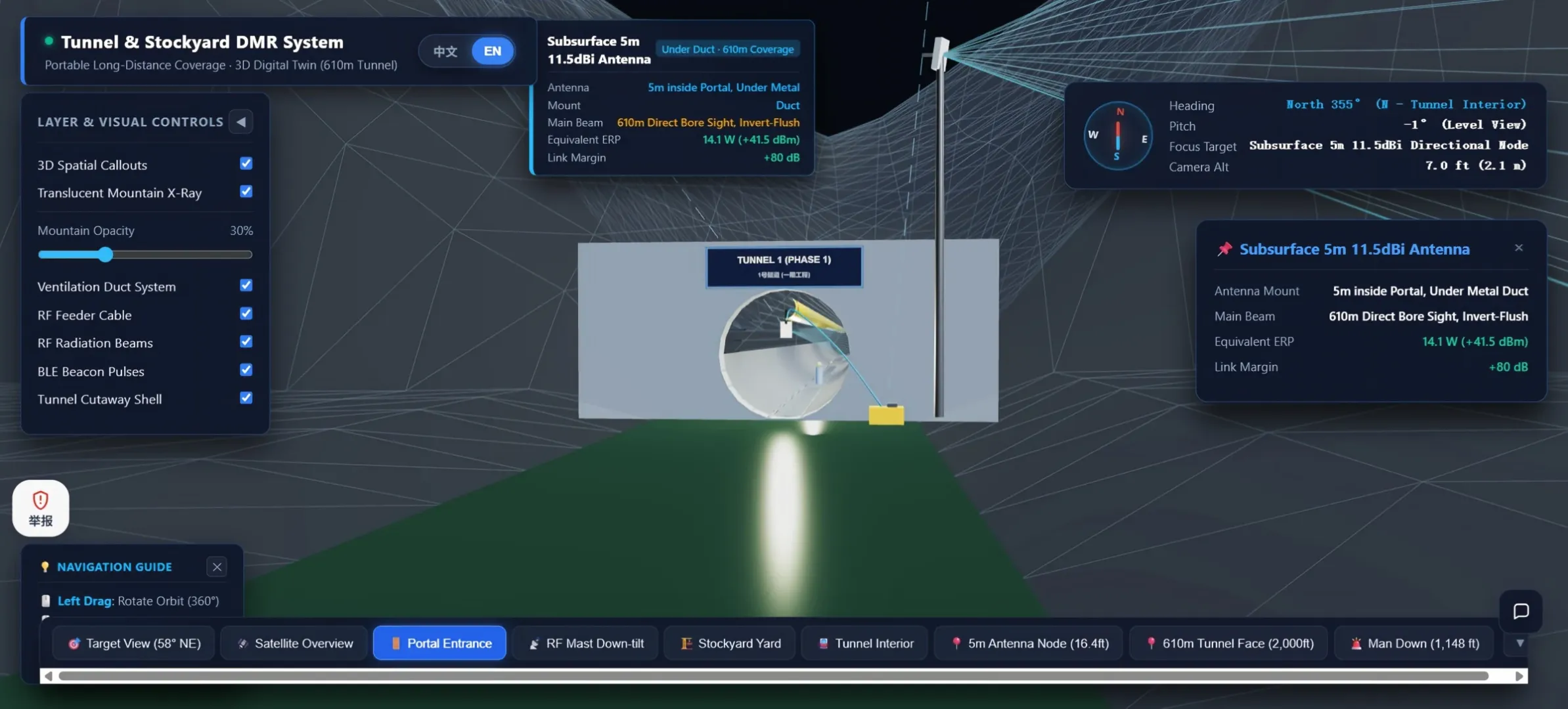
Fiber extension units deliver RF signals deeper into the tunnel and connect to distributed directional antennas along the working area.
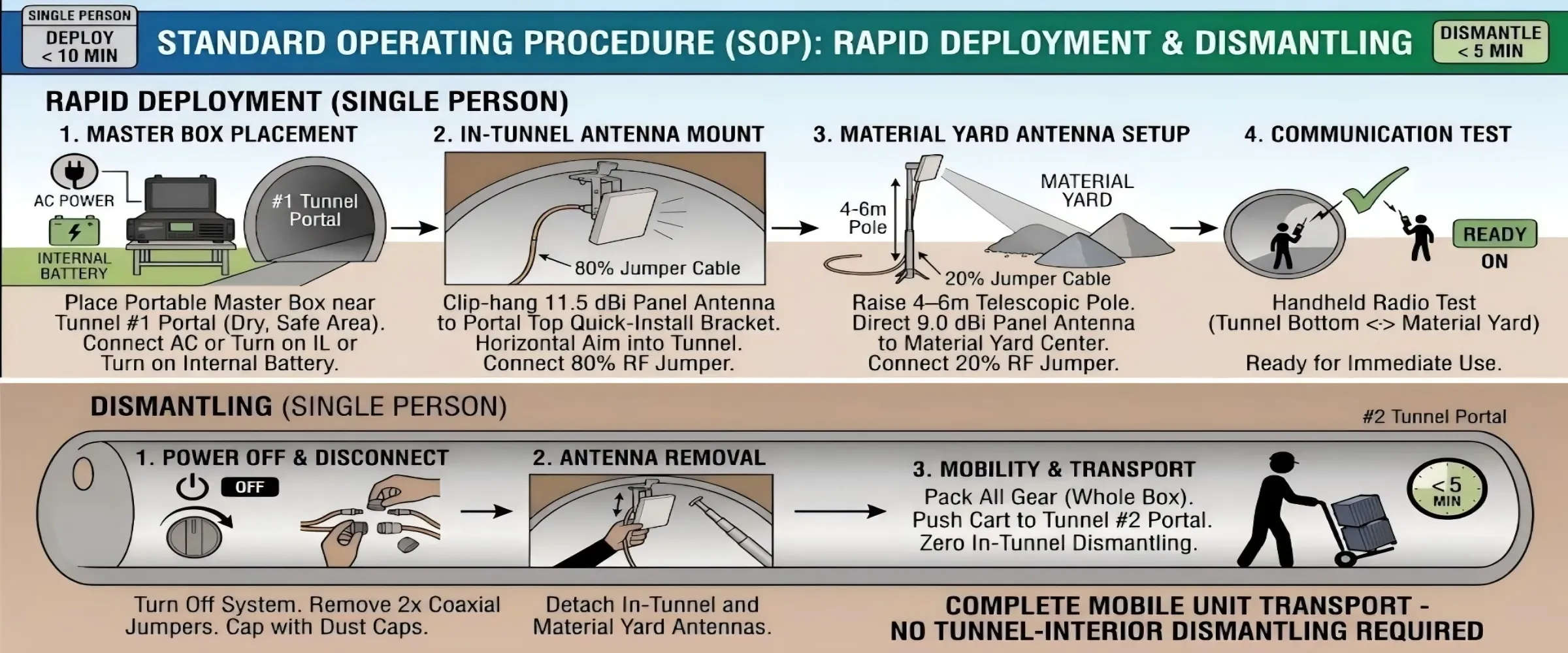
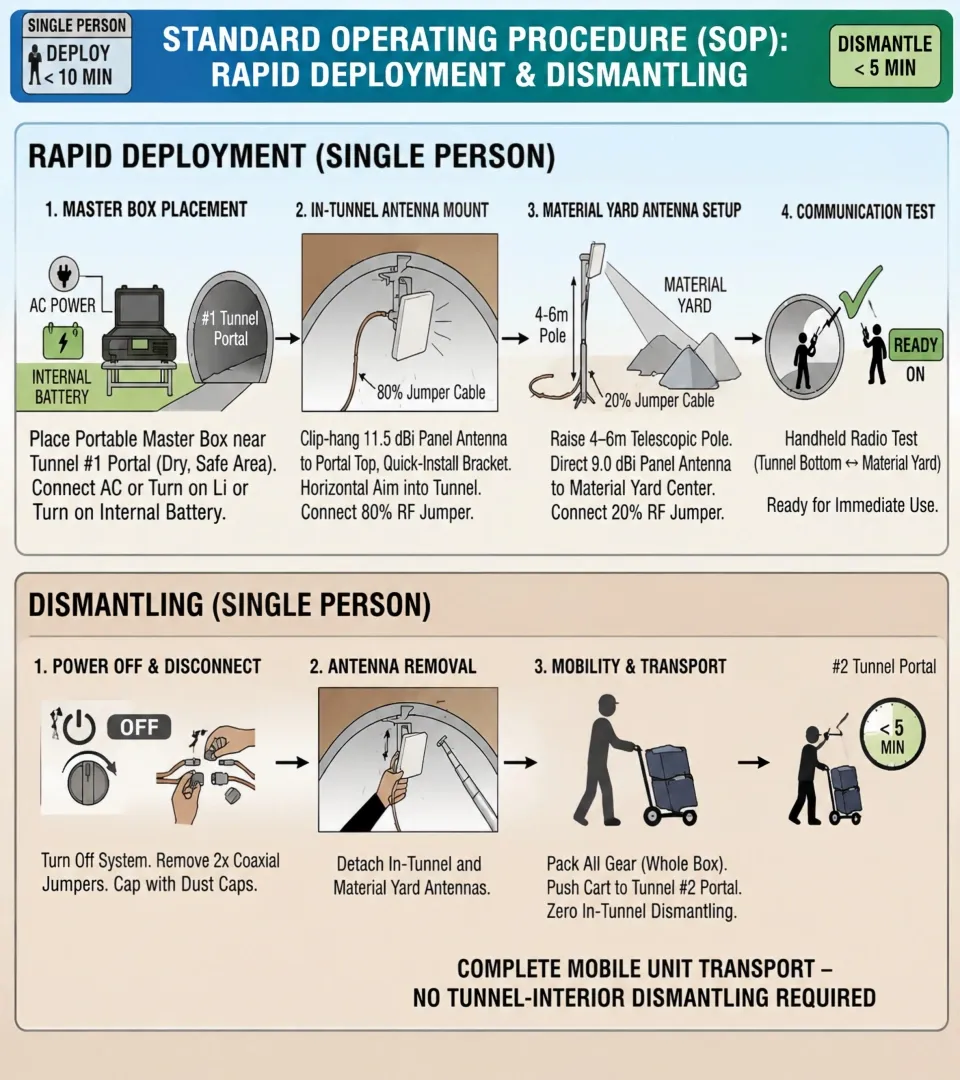
The modular system is designed for phased tunnel rehabilitation and can be installed, removed, and redeployed as work moves from one tunnel to another.
View 3D System Architecture → Access Code: 5566
The DMR system supports critical communication functions for safer underground operations.
| Feature | Benefit |
|---|---|
| Emergency Call | Enables priority alerts during critical situations |
| Man Down Alert | Automatically sends alerts when abnormal worker conditions are detected |
| Dedicated Channels | Separates operation, rescue, and safety communication |
Connect underground workers and surface teams with reliable voice communication across the entire project area.
Move the same communication system between tunnels and construction phases without rebuilding infrastructure.
Support emergency response and daily coordination with DMR safety features.
Add more radios and extend coverage as project requirements grow.
Our solution team will review your project requirements and provide a customized communication recommendation within one business day.


 Google
 Amazon