Llegaron en tiempo y bien embalados, la calidad de los equipos es la esperada (manufactura) solo el funcionamiento no es tan
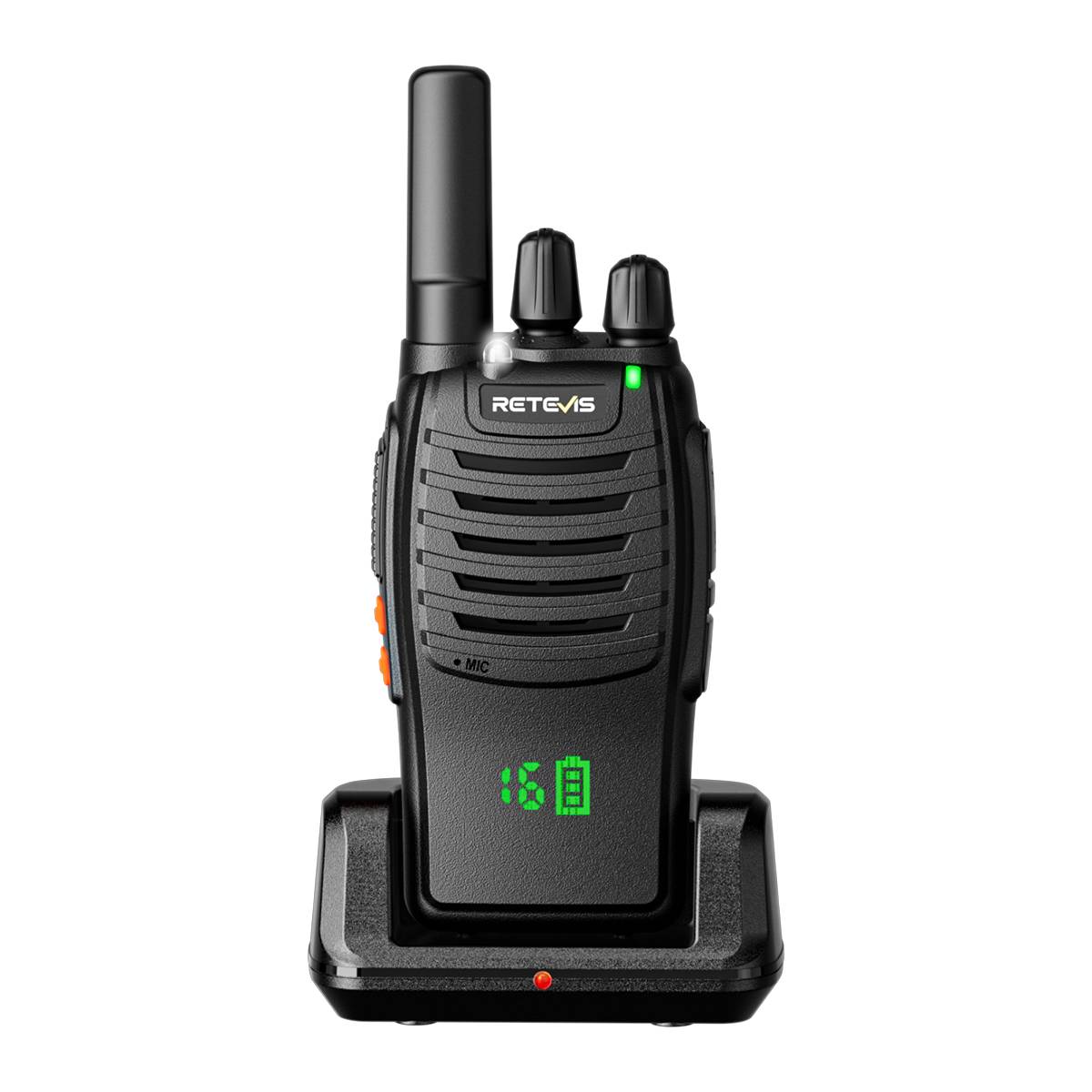
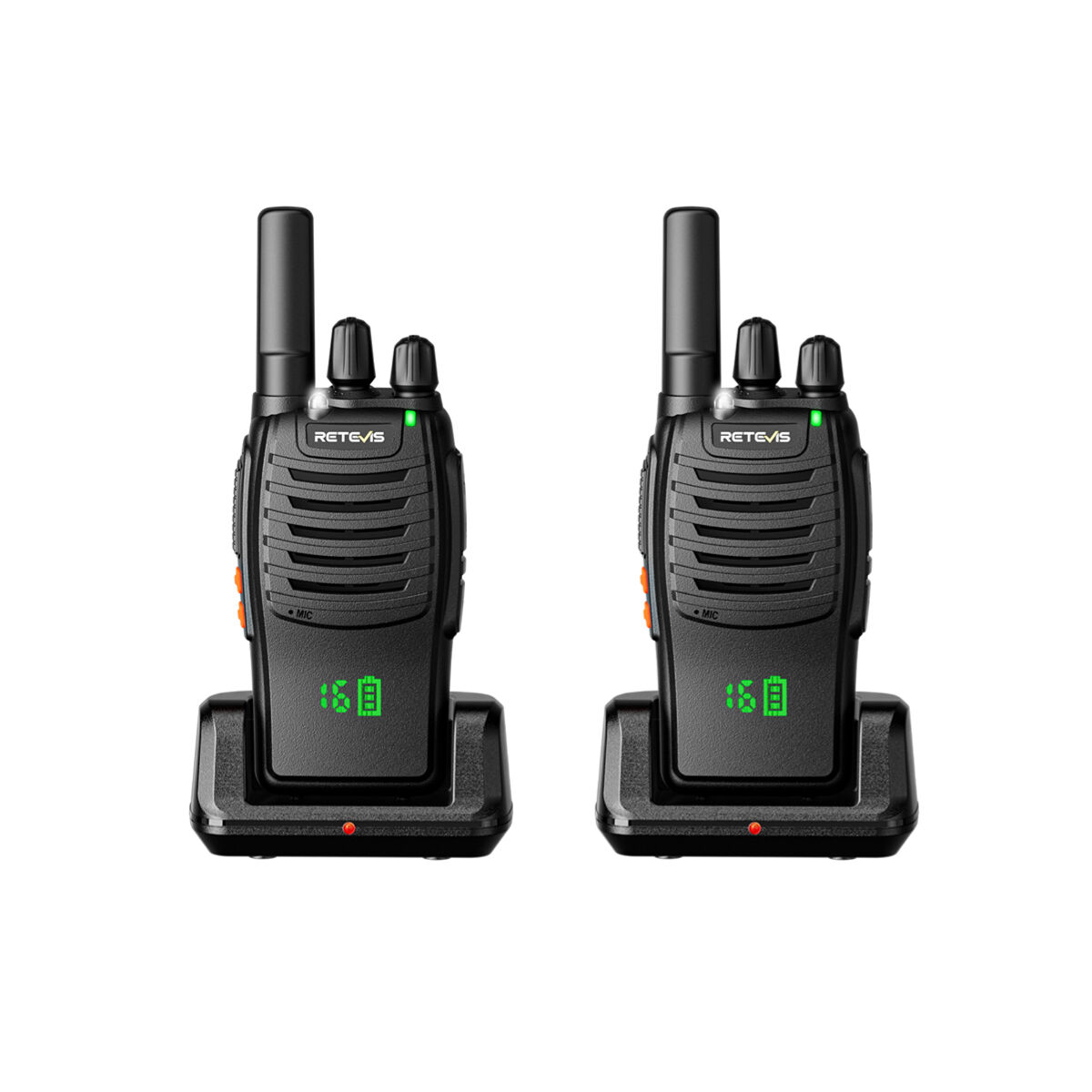
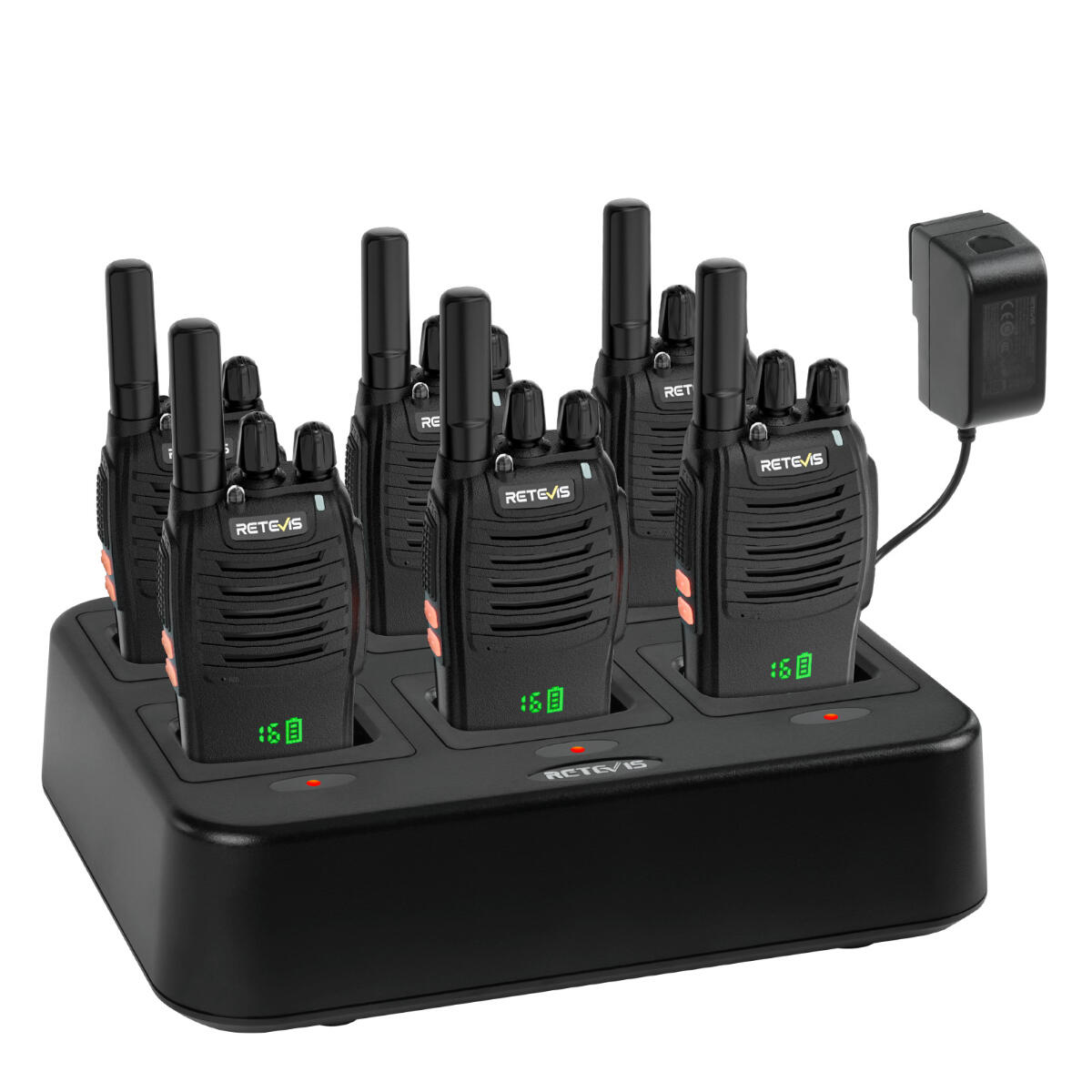
Brief content visible, double tap to read full content. Full content visible, double tap to read brief content. Bottom line up front: these are great license-free FRS radios with a few quirks. They have a long range, good audio quality, appear to be reasonably durable, are easy to operate, have a good battery life, and can be reprogrammed, but have a few drawbacks. Read on for details. Background: I purchased these radios to enable communications with a group (e.g. family, scouts, etc.) when cell service is either unavailable or calls are inconvenient (e.g. when skiing, hiking in remote areas, etc.). My key requirements were ease of use, reasonable cost per-radio, durability, and size, a channel lock, interoperability with other types of radios, and not require the user to have a license. Those requirements ruled out GMRS (easy license and can be easily used within a family group, but not a scout group) and ham radio (I'm licensed, but the requirement for everyone to be licensed was a deal-breaker) and essentially left FRS and MURS. FRS radios are more common, so being able to easily interoperate with others tilted the scale to FRS. I have previous experience with Retevis radios and have been generally satisfied, so I chose these radios. Unlike many other FRS radios where the user can see and change all the various options (e.g. CTCSS tones, DCS codes, roger beep, power output, etc.) using on-radio controls, these radios are intended to either use the factory-default settings (which work fine if you're using all H777Hs) or be programmed using the programming software and a cable. The main user-operable controls are volume and channel -- all other settings require programming. This is great for groups like a worksite, school, church, scout troop, etc. where the user doesn't need to know the details or be able to change various settings beyond "turn the radio to channel 2" (or whatever). Box Contents: - Radio - Battery - Manual - Belt Clip - Charging stand - USB-A to USB-C cord - AC adapter with USB-A port Pros: - The radios are no-license-required FRS radios and can interoperate with other FRS radios, but require the use of the programming software and a programming cable to set the CTCSS tones/DCS codes to match that of other radios. - The plastic of the radios reminds me of Motorola pagers circa 1990. It seems durable and reasonably resistant to drops, bumps, etc. - The batteries can be charged by either connecting a USB-C cord to the radio itself or placing the radio into the USB-powered charging stand. - The controls are sensible and easy to use: an on/off/volume knob, a channel-select knob, a push-to-talk button, and two small, orange additional buttons. The upper of the additional buttons enables or disables the channel lock with a short press (very handy, as it prevents changing the channel if the knobs are bumped) or sounds an alarm tone locally and transmits the alarm tone continuously over the radio channel (a bit gimmicky). The second button can have other functions like scanning channels, monitoring a second channel, etc. that can be changed using the programming software (either the Retevis-provided software or a third-party software like CHIRP). - The radio includes a white LED "flashlight" that provides a reasonable amount of light. I wouldn't use it as my main source of illumination, but it's handy to have regardless. - There's a small, beefy plastic loop on the back of the radio body for attaching a user-supplied lanyard, dummy cord, etc. to prevent losing it. - Voice quality is quite reasonable and typical for analog FM FRS radios. - Rubber flaps cover the standard K1 (two-pin) headphone connector and the USB-C connector for charging. - The radios have good range: I was able to communicate with someone clearly 550 meters (1800 ft, about 1/3 of a mile) in a suburban environment with many houses, a school, etc. between the two radios. Range in open, outdoor environments is even greater. - The radios have a default power setting of 2W, the maximum legal limit for FRS. The Retevis software or CHIRP can adjust the power output (0.5W or 2W) individually on each channel if you wish to reduce the transmission power. - All 16 channels come factory-programmed with CTCSS tones or DCS codes to prevent nuisance interruptions. These can only be changed using the Retevis programming software or third-party programming software like CHIRP. - The "roger beep" is disabled by default, but if enabled in the programming software the beep is just a quick, short beep that is not particularly distracting or annoying. I've enabled it so scouts using the radios clearly understand when the speaker is done transmitting. - The radios support busy channel lockout (where they won't transmit if someone is already transmitting on the same channel, even if they're using a different CTCSS tone/DCS code), but this is disabled by default and needs to be enabled in the Retevis programming software on a per-frequency basis. CHIRP doesn't support turning this feature on or off yet so you need to use the Retevis programming software. - The battery life is good: with the radio turned on and idle (not actively receiving any signals) the battery is 90% after 48 hours. Obviously transmitting and actively receiving uses a bit more power, but my testing shows they'll easily last at least a day or two without getting low. Cons: - The radios only support 15 of the 22 FRS channels. Specifically, they support channels 1-7 and 15-22, but not 8-14. The attentive reader will note that the Retevis H777H has 16 channels but only supports 15 FRS channels. The radio uses FRS channel 22 twice (H777H channels 7 and 16) with different CTCSS/DCS settings. - The channel numbers on the radios do not always correspond to FRS channels (see attached tables that show the channels, what FRS channels they correspond to, and CTCSS/DCS settings for the radios). For example, FRS channel 1 is also channel 1 on the H777H, but channel 8 on the H777H is FRS channel 6. This makes it more challenging to interoperate with other FRS radios that use the standard channel numbering. (I'm purely speculating, but the 16-channel limit seems to be due to the H777H FRS model being the same hardware as the H777H PMR446 model, but using the FRS frequencies instead of the PMR446 frequencies. PMR446 is similar to FRS and is used in many countries outside North America [PMR446 is not legal to use in North America], and has 16 channels instead of FRS' 22.) - The radios are not waterproof. That wasn't one of my requirements, but I figured I'd mention it. - The alarm functionality of the upper orange button cannot be disabled. - The voice announcements don't apply to everything. The radio will tell you "Power on!" when turned on, the channel number, but it won't tell you -- for example -- if the channel lock feature is enabled or not. - The English used in the manual has some weird translation issues that make it a bit unclear at times. For example, in the section about charging, it says "First, plug the fire bull output adapter into the socket behind the charger. Then plug the Fire Bull adapter into AC 110-220V power." (It's saying to plug the USB-C cord into the USB-C port on the back of the charging stand, then plug the USB-C cord into the AC wall adapter and plug the AC wall adapter into an electrical socket.) - The belt clip is plastic and the clip attaching it to the radio is plastic and doesn't appear very robust. - The busy channel lockout feature is disabled by default. - The Retevis programming software is generally straightforward to use, but is poorly documented and some options are not entirely clear. I've contacted them with some questions and will update this review with additional information when I hear back. Other comments: - The large metal contacts on the back of the battery are directly connected to the battery terminals and the battery voltage is always present on them. Although the plastic trim of the battery stops the terminals from getting shorted if they're set on a metal surface, it's unclear if the terminals and the battery have internal short-circuit protection. (Update: Retevis has confirmed the battery has a DW01A battery protection chip that provides short-circuit protection, and I
Brief content visible, double tap to read full content. Full content visible, double tap to read brief content. Bottom line up front: these are great license-free FRS radios with a few quirks. They have a long range, good audio quality, appear to be reasonably durable, are easy to operate, have a good battery life, and can be reprogrammed, but have a few drawbacks. Read on for details. Background: I purchased these radios to enable communications with a group (e.g. family, scouts, etc.) when cell service is either unavailable or calls are inconvenient (e.g. when skiing, hiking in remote areas, etc.). My key requirements were ease of use, reasonable cost per-radio, durability, and size, a channel lock, interoperability with other types of radios, and not require the user to have a license. Those requirements ruled out GMRS (easy license and can be easily used within a family group, but not a scout group) and ham radio (I'm licensed, but the requirement for everyone to be licensed was a deal-breaker) and essentially left FRS and MURS. FRS radios are more common, so being able to easily interoperate with others tilted the scale to FRS. I have previous experience with Retevis radios and have been generally satisfied, so I chose these radios. Unlike many other FRS radios where the user can see and change all the various options (e.g. CTCSS tones, DCS codes, roger beep, power output, etc.) using on-radio controls, these radios are intended to either use the factory-default settings (which work fine if you're using all H777Hs) or be programmed using the programming software and a cable. The main user-operable controls are volume and channel -- all other settings require programming. This is great for groups like a worksite, school, church, scout troop, etc. where the user doesn't need to know the details or be able to change various settings beyond "turn the radio to channel 2" (or whatever). Box Contents: - Radio - Battery - Manual - Belt Clip - Charging stand - USB-A to USB-C cord - AC adapter with USB-A port Pros: - The radios are no-license-required FRS radios and can interoperate with other FRS radios, but require the use of the programming software and a programming cable to set the CTCSS tones/DCS codes to match that of other radios. - The plastic of the radios reminds me of Motorola pagers circa 1990. It seems durable and reasonably resistant to drops, bumps, etc. - The batteries can be charged by either connecting a USB-C cord to the radio itself or placing the radio into the USB-powered charging stand. - The controls are sensible and easy to use: an on/off/volume knob, a channel-select knob, a push-to-talk button, and two small, orange additional buttons. The upper of the additional buttons enables or disables the channel lock with a short press (very handy, as it prevents changing the channel if the knobs are bumped) or sounds an alarm tone locally and transmits the alarm tone continuously over the radio channel (a bit gimmicky). The second button can have other functions like scanning channels, monitoring a second channel, etc. that can be changed using the programming software (either the Retevis-provided software or a third-party software like CHIRP). - The radio includes a white LED "flashlight" that provides a reasonable amount of light. I wouldn't use it as my main source of illumination, but it's handy to have regardless. - There's a small, beefy plastic loop on the back of the radio body for attaching a user-supplied lanyard, dummy cord, etc. to prevent losing it. - Voice quality is quite reasonable and typical for analog FM FRS radios. - Rubber flaps cover the standard K1 (two-pin) headphone connector and the USB-C connector for charging. - The radios have good range: I was able to communicate with someone clearly 550 meters (1800 ft, about 1/3 of a mile) in a suburban environment with many houses, a school, etc. between the two radios. Range in open, outdoor environments is even greater. - The radios have a default power setting of 2W, the maximum legal limit for FRS. The Retevis software or CHIRP can adjust the power output (0.5W or 2W) individually on each channel if you wish to reduce the transmission power. - All 16 channels come factory-programmed with CTCSS tones or DCS codes to prevent nuisance interruptions. These can only be changed using the Retevis programming software or third-party programming software like CHIRP. - The "roger beep" is disabled by default, but if enabled in the programming software the beep is just a quick, short beep that is not particularly distracting or annoying. I've enabled it so scouts using the radios clearly understand when the speaker is done transmitting. - The radios support busy channel lockout (where they won't transmit if someone is already transmitting on the same channel, even if they're using a different CTCSS tone/DCS code), but this is disabled by default and needs to be enabled in the Retevis programming software on a per-frequency basis. CHIRP doesn't support turning this feature on or off yet so you need to use the Retevis programming software. - The battery life is good: with the radio turned on and idle (not actively receiving any signals) the battery is 90% after 48 hours. Obviously transmitting and actively receiving uses a bit more power, but my testing shows they'll easily last at least a day or two without getting low. Cons: - The radios only support 15 of the 22 FRS channels. Specifically, they support channels 1-7 and 15-22, but not 8-14. The attentive reader will note that the Retevis H777H has 16 channels but only supports 15 FRS channels. The radio uses FRS channel 22 twice (H777H channels 7 and 16) with different CTCSS/DCS settings. - The channel numbers on the radios do not always correspond to FRS channels (see attached tables that show the channels, what FRS channels they correspond to, and CTCSS/DCS settings for the radios). For example, FRS channel 1 is also channel 1 on the H777H, but channel 8 on the H777H is FRS channel 6. This makes it more challenging to interoperate with other FRS radios that use the standard channel numbering. (I'm purely speculating, but the 16-channel limit seems to be due to the H777H FRS model being the same hardware as the H777H PMR446 model, but using the FRS frequencies instead of the PMR446 frequencies. PMR446 is similar to FRS and is used in many countries outside North America [PMR446 is not legal to use in North America], and has 16 channels instead of FRS' 22.) - The radios are not waterproof. That wasn't one of my requirements, but I figured I'd mention it. - The alarm functionality of the upper orange button cannot be disabled. - The voice announcements don't apply to everything. The radio will tell you "Power on!" when turned on, the channel number, but it won't tell you -- for example -- if the channel lock feature is enabled or not. - The English used in the manual has some weird translation issues that make it a bit unclear at times. For example, in the section about charging, it says "First, plug the fire bull output adapter into the socket behind the charger. Then plug the Fire Bull adapter into AC 110-220V power." (It's saying to plug the USB-C cord into the USB-C port on the back of the charging stand, then plug the USB-C cord into the AC wall adapter and plug the AC wall adapter into an electrical socket.) - The belt clip is plastic and the clip attaching it to the radio is plastic and doesn't appear very robust. - The busy channel lockout feature is disabled by default. - The Retevis programming software is generally straightforward to use, but is poorly documented and some options are not entirely clear. I've contacted them with some questions and will update this review with additional information when I hear back. Other comments: - The large metal contacts on the back of the battery are directly connected to the battery terminals and the battery voltage is always present on them. Although the plastic trim of the battery stops the terminals from getting shorted if they're set on a metal surface, it's unclear if the terminals and the battery have internal short-circuit protection. (Update: Retevis has confirmed the battery has a DW01A battery protection chip that provides short-circuit protection, and I
Brief content visible, double tap to read full content. Full content visible, double tap to read brief content. Bottom line up front: these are great license-free FRS radios with a few quirks. They have a long range, good audio quality, appear to be reasonably durable, are easy to operate, have a good battery life, and can be reprogrammed, but have a few drawbacks. Read on for details. Background: I purchased these radios to enable communications with a group (e.g. family, scouts, etc.) when cell service is either unavailable or calls are inconvenient (e.g. when skiing, hiking in remote areas, etc.). My key requirements were ease of use, reasonable cost per-radio, durability, and size, a channel lock, interoperability with other types of radios, and not require the user to have a license. Those requirements ruled out GMRS (easy license and can be easily used within a family group, but not a scout group) and ham radio (I'm licensed, but the requirement for everyone to be licensed was a deal-breaker) and essentially left FRS and MURS. FRS radios are more common, so being able to easily interoperate with others tilted the scale to FRS. I have previous experience with Retevis radios and have been generally satisfied, so I chose these radios. Unlike many other FRS radios where the user can see and change all the various options (e.g. CTCSS tones, DCS codes, roger beep, power output, etc.) using on-radio controls, these radios are intended to either use the factory-default settings (which work fine if you're using all H777Hs) or be programmed using the programming software and a cable. The main user-operable controls are volume and channel -- all other settings require programming. This is great for groups like a worksite, school, church, scout troop, etc. where the user doesn't need to know the details or be able to change various settings beyond "turn the radio to channel 2" (or whatever). Box Contents: - Radio - Battery - Manual - Belt Clip - Charging stand - USB-A to USB-C cord - AC adapter with USB-A port Pros: - The radios are no-license-required FRS radios and can interoperate with other FRS radios, but require the use of the programming software and a programming cable to set the CTCSS tones/DCS codes to match that of other radios. - The plastic of the radios reminds me of Motorola pagers circa 1990. It seems durable and reasonably resistant to drops, bumps, etc. - The batteries can be charged by either connecting a USB-C cord to the radio itself or placing the radio into the USB-powered charging stand. - The controls are sensible and easy to use: an on/off/volume knob, a channel-select knob, a push-to-talk button, and two small, orange additional buttons. The upper of the additional buttons enables or disables the channel lock with a short press (very handy, as it prevents changing the channel if the knobs are bumped) or sounds an alarm tone locally and transmits the alarm tone continuously over the radio channel (a bit gimmicky). The second button can have other functions like scanning channels, monitoring a second channel, etc. that can be changed using the programming software (either the Retevis-provided software or a third-party software like CHIRP). - The radio includes a white LED "flashlight" that provides a reasonable amount of light. I wouldn't use it as my main source of illumination, but it's handy to have regardless. - There's a small, beefy plastic loop on the back of the radio body for attaching a user-supplied lanyard, dummy cord, etc. to prevent losing it. - Voice quality is quite reasonable and typical for analog FM FRS radios. - Rubber flaps cover the standard K1 (two-pin) headphone connector and the USB-C connector for charging. - The radios have good range: I was able to communicate with someone clearly 550 meters (1800 ft, about 1/3 of a mile) in a suburban environment with many houses, a school, etc. between the two radios. Range in open, outdoor environments is even greater. - The radios have a default power setting of 2W, the maximum legal limit for FRS. The Retevis software or CHIRP can adjust the power output (0.5W or 2W) individually on each channel if you wish to reduce the transmission power. - All 16 channels come factory-programmed with CTCSS tones or DCS codes to prevent nuisance interruptions. These can only be changed using the Retevis programming software or third-party programming software like CHIRP. - The "roger beep" is disabled by default, but if enabled in the programming software the beep is just a quick, short beep that is not particularly distracting or annoying. I've enabled it so scouts using the radios clearly understand when the speaker is done transmitting. - The radios support busy channel lockout (where they won't transmit if someone is already transmitting on the same channel, even if they're using a different CTCSS tone/DCS code), but this is disabled by default and needs to be enabled in the Retevis programming software on a per-frequency basis. CHIRP doesn't support turning this feature on or off yet so you need to use the Retevis programming software. - The battery life is good: with the radio turned on and idle (not actively receiving any signals) the battery is 90% after 48 hours. Obviously transmitting and actively receiving uses a bit more power, but my testing shows they'll easily last at least a day or two without getting low. Cons: - The radios only support 15 of the 22 FRS channels. Specifically, they support channels 1-7 and 15-22, but not 8-14. The attentive reader will note that the Retevis H777H has 16 channels but only supports 15 FRS channels. The radio uses FRS channel 22 twice (H777H channels 7 and 16) with different CTCSS/DCS settings. - The channel numbers on the radios do not always correspond to FRS channels (see attached tables that show the channels, what FRS channels they correspond to, and CTCSS/DCS settings for the radios). For example, FRS channel 1 is also channel 1 on the H777H, but channel 8 on the H777H is FRS channel 6. This makes it more challenging to interoperate with other FRS radios that use the standard channel numbering. (I'm purely speculating, but the 16-channel limit seems to be due to the H777H FRS model being the same hardware as the H777H PMR446 model, but using the FRS frequencies instead of the PMR446 frequencies. PMR446 is similar to FRS and is used in many countries outside North America [PMR446 is not legal to use in North America], and has 16 channels instead of FRS' 22.) - The radios are not waterproof. That wasn't one of my requirements, but I figured I'd mention it. - The alarm functionality of the upper orange button cannot be disabled. - The voice announcements don't apply to everything. The radio will tell you "Power on!" when turned on, the channel number, but it won't tell you -- for example -- if the channel lock feature is enabled or not. - The English used in the manual has some weird translation issues that make it a bit unclear at times. For example, in the section about charging, it says "First, plug the fire bull output adapter into the socket behind the charger. Then plug the Fire Bull adapter into AC 110-220V power." (It's saying to plug the USB-C cord into the USB-C port on the back of the charging stand, then plug the USB-C cord into the AC wall adapter and plug the AC wall adapter into an electrical socket.) - The belt clip is plastic and the clip attaching it to the radio is plastic and doesn't appear very robust. - The busy channel lockout feature is disabled by default. - The Retevis programming software is generally straightforward to use, but is poorly documented and some options are not entirely clear. I've contacted them with some questions and will update this review with additional information when I hear back. Other comments: - The large metal contacts on the back of the battery are directly connected to the battery terminals and the battery voltage is always present on them. Although the plastic trim of the battery stops the terminals from getting shorted if they're set on a metal surface, it's unclear if the terminals and the battery have internal short-circuit protection. (Update: Retevis has confirmed the battery has a DW01A battery protection chip that provides short-circuit protection, and I
Great upgrade and great price.
Great upgrade and great price.
Great upgrade and great price.



 Google
 Amazon