
Table of Contents
Best Radios for the Oil and Gas Industry
- Posted by:Retevis
- 0 Comments
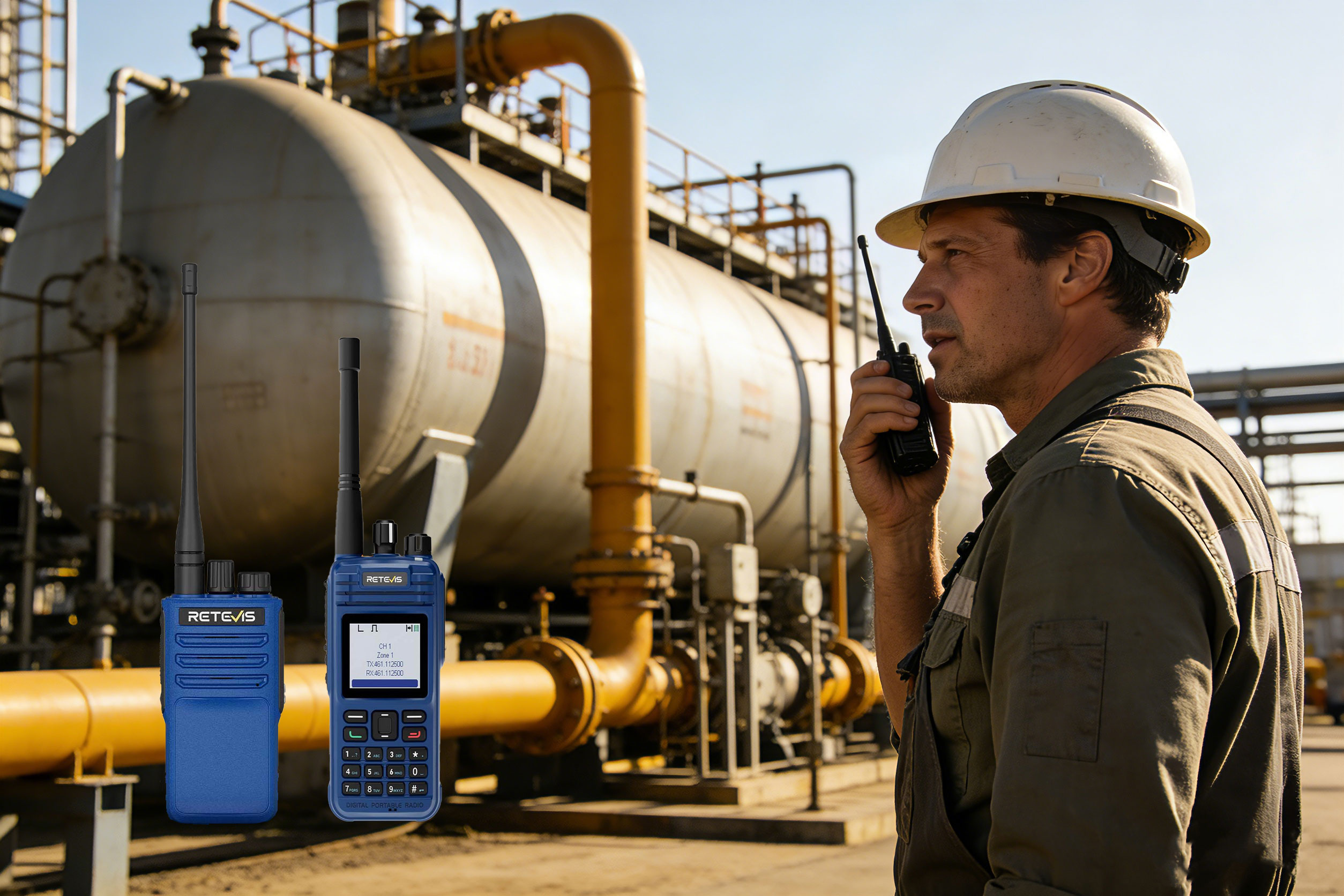
The oil and gas industry operates in some of the most demanding and dangerous environments. From offshore platforms to chemical plants and refineries, the need for clear, reliable, and secure communication is paramount. Workers are often exposed to extreme conditions, such as explosive gases, dust, and high-pressure operations, making effective communication not only essential for productivity but also for ensuring the safety of everyone on site.
Communication Challenges in Oil and Gas Industry
In the oil and gas sector, communication faces several challenges that can hinder smooth operations and worker safety:
Hazardous Environments: Many oil and gas sites are classified as hazardous due to the presence of explosive gases and flammable dust particles. Traditional communication devices are not designed to withstand such conditions and may even pose ignition risks.
Noise: Oil and gas facilities are often noisy, with equipment running at full capacity. This background noise can interfere with communication, making it difficult to hear and understand messages.
Remote Locations: Whether it's an offshore drilling rig or a remote pipeline site, workers are often far from civilization. Ensuring communication over vast distances or through obstructions is a challenge.Safety Concerns: Safety is always a top priority in the oil and gas industry. Emergencies such as gas leaks, fires, or accidents can occur at any moment, and workers must have quick and reliable means to call for help and alert others.
Reliability and Durability: Equipment is subjected to tough environmental conditions such as extreme temperatures, water, dust, and vibrations. Standard radios may not withstand these tough conditions, leading to potential breakdowns at critical moments.
Safety Concerns: Safety is always a top priority in the oil and gas industry. Emergencies such as gas leaks, fires, or accidents can occur at any moment, and workers must have quick and reliable means to call for help and alert others.
The Role of DMR Radios in Oil and Gas Communication
In response to these challenges, Digital Mobile Radios (DMR) have become an essential tool for communication in hazardous environments. DMR radios are digital two-way radios that offer superior sound quality, reliability, and extended range. They have several key advantages that make them an ideal choice for the oil and gas industry:
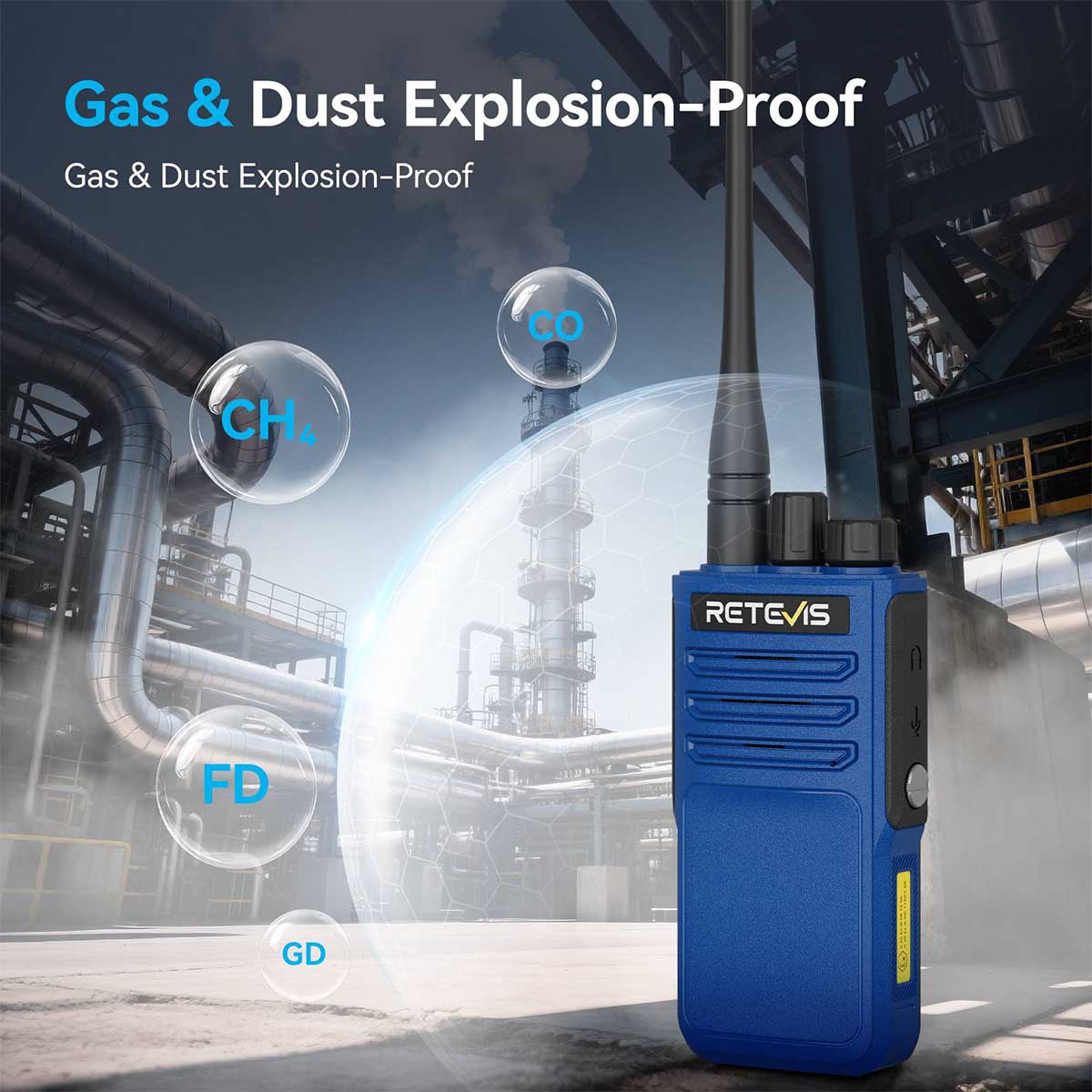
Explosion-Proof Design: DMR radios like the Retevis MateTalk E1 and MateTalk E2 are designed with explosion-proof certifications such as ATEX and IECEx, ensuring that they are safe to use in environments where flammable gases and dust are present.
Clear, Stable Communication: The digital nature of DMR technology reduces interference and provides clearer voice communication, even in noisy industrial environments. This is crucial for effective team coordination in high-stress situations.
Long Battery Life: In the field, especially in remote locations, battery life can be a significant concern. DMR radios are known for their long battery life, with models like the Retevis E1 offering up to 24.5 hours of continuous use. This ensures that workers can rely on their communication devices throughout long shifts without worrying about power failure.
Enhanced Safety Features: Many DMR radios come with built-in safety features, such as lone worker protection, emergency alarms, and GPS tracking, which can help prevent accidents and improve response times in case of an emergency.
Secure Communication: Sensitive operations in the oil and gas industry require secure communication to protect both the workforce and the company. DMR radios are equipped with advanced encryption standards such as AES128 and AES256, ensuring that all communications remain private and secure.
RETEVIS Customized Solutions
For oil and gas companies looking for a reliable and safe communication solution, the Retevis MateTalk E1 and MateTalk E2 are two excellent options.
Retevis MateTalk E1: The Explosion-Proof Workhorse
The MateTalk E1 is an explosion-proof DMR radio designed specifically for use in hazardous environments such as refineries, chemical plants, and fuel transport operations. Here’s what makes it stand out:
Explosion-Proof and Rugged: With ATEX and IECEx certifications, the MateTalk E1 is built to withstand explosive environments, ensuring safety even in the most volatile settings.
IP68 Rated: This radio is dustproof, waterproof, and shockproof, making it perfect for rough and extreme conditions, where other radios may fail.
Triple Alarm Safety: The MateTalk E1 offers emergency, lone worker, and man-down alarms, ensuring that workers are protected in the event of an emergency.
Long Battery Life: With over 24 hours of continuous use on a single charge, the MateTalk E1 ensures uninterrupted communication for long shifts.
Dual Mode (DMR/NXDN): This dual-mode functionality ensures clear and reliable communication, even in noisy industrial sites, allowing seamless coordination between teams.
Retevis MateTalk E2: A Safe Two-Way Radio for Extreme Environments
For more demanding operations, the MateTalk E2 provides the additional benefit of intrinsic safety and rugged design, making it perfect for chemical plants, offshore rigs, and hazardous transportation areas. Key features include:
ATEX/IEC Ex Certification: Designed for the most hazardous environments, the E2 boasts both intrinsic safety and explosion-proof certifications.
Enhanced Durability: With an IP68 protection rating and compliance with MIL-STD-810G military standards, the E2 can withstand extreme temperatures, shocks, and water immersion, ensuring reliable communication under various conditions.
Single-Person Protection and Emergency Alarm: The MateTalk E2 is equipped with multiple functions to protect single operators and provide emergency alerts when assistance is needed. It can even transmit operator location information for rapid response.
Long Battery Life: The E2 offers up to 45 hours of standby time and over 14 hours of talk time in analog mode, perfectly meeting the needs of high-intensity, multi-shift operations.
AES256 Encryption: The E2 employs advanced encryption technology to ensure secure communications and protect sensitive information during critical operations.

Conclusion
In conclusion, the oil and gas industry requires reliable, clear, and secure communication solutions. The Retevis MateTalk E1 and Retevis MateTalk E2 radios possess all these features, making them ideal for communication in hazardous environments. With their explosion-proof design, advanced safety features, long battery life, and secure encryption, these radios ensure workers remain connected and safe, no matter how harsh the conditions.
Whether you manage a refinery, chemical plant, or offshore operations, the Retevis E1 and E2 DMR radios are the ideal communication tools for enhancing safety, productivity, and operational efficiency in the oil and gas industry.



Comments
No data Yet