
Table of Contents
How MIL-STD-810H Military-Grade Radio Performance in Industrial Construction Scenarios
- Posted by:Retevis
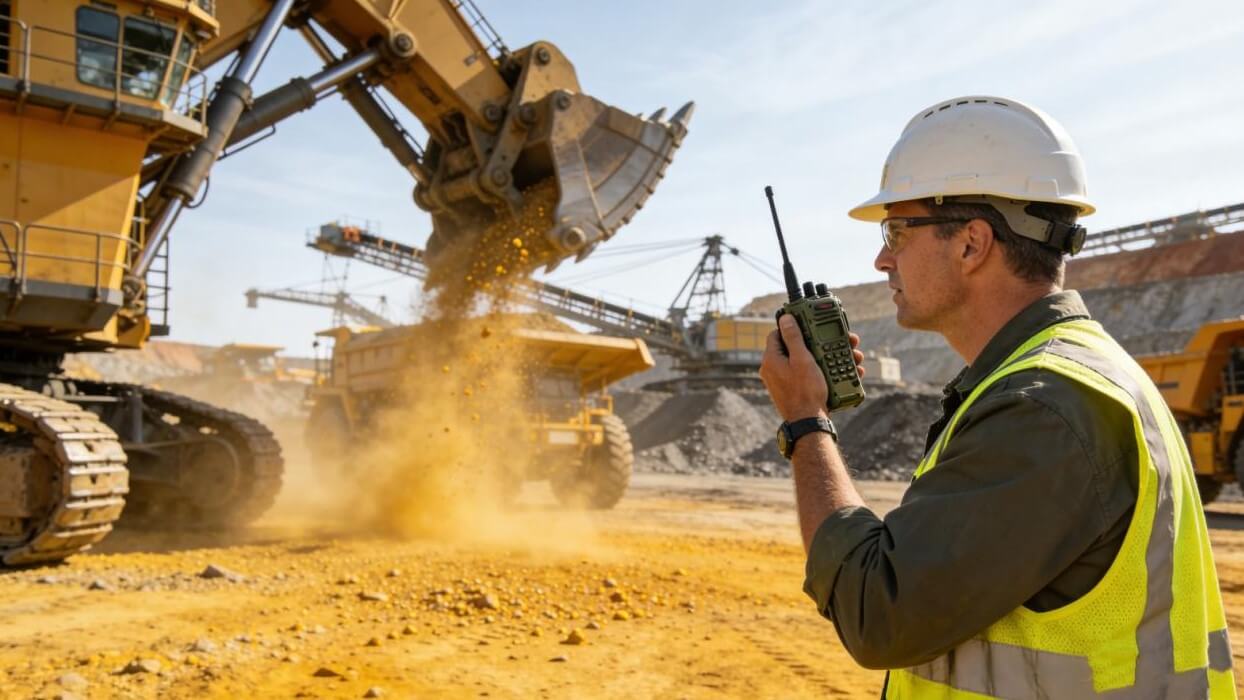
At the top of a 100-meter-high steel scaffold, a steelworker's walkie-talkie slipped from his waist and fell to the concrete ground. This happens every day at industrial construction sites. If the walkie-talkie didn't have MIL-STD-810H certification, this one-second accident could have resulted in half a day of work stoppage, forcing the worker to endure the physical exertion of climbing 22 floors, as well as the cost of replacing the equipment.
Industrial building environments are a combination of five major factors: vibration, dust, drops, extreme temperatures, and high humidity. In such environments, the average lifespan of a consumer-grade two-way radio typically does not exceed three months. This is the fundamental reason why the MIL-STD-810H military standard has been extended from the battlefield to construction sites.
Understanding MIL-STD-810H: A "Guardian" for Industrial Communications
When was MIL-STD-810H released?
Released on January 31, 2019, MIL-STD-810H is the latest environmental engineering and laboratory testing standard of the U.S. Department of Defense. Compared with the 2008 version (810G), version H introduces more realistic comprehensive environmental testing, such as temperature cycling testing under vibration conditions, simulating the situation where equipment is subjected to mechanical stress and temperature changes simultaneously in real-world applications.
What are the differences between MIL-STD-810H and MIL-STD-810G?
|
Comparison Dimensions |
MIL-STD-810G(2008) |
MIL-STD-810H(2019) |
|
Drop height |
1.22 meters (26 drops) |
Retain 1.22 meters, but the assembly sequence requirements must be met. |
|
Vibration test |
Single axis, executed sequentially |
Emphasis is placed on performing three-axis synchronous or sequential simulation of real-world paths. |
|
Temperature shock |
single-temperature transition |
Multi-cycle + Functional Monitoring |
|
Core Methodology |
"Passing the exam grants qualification" |
"Engineering First" emphasizes environmental adaptability throughout the entire life cycle. |
The main difference between version H and version G is that version H requires the equipment to undergo vibration testing before drop testing—this reflects the real-world logic of industrial construction: the equipment is first released by a hydraulic breaker and then dropped from a height.
What is a design that conforms to the MIL-STD-810H standard?
1. PCB board reinforcement: Multi-point fixing + potting process to prevent solder joint cracking.
2. Shell structure: Key corners are reinforced with ribs and buffer air chambers.
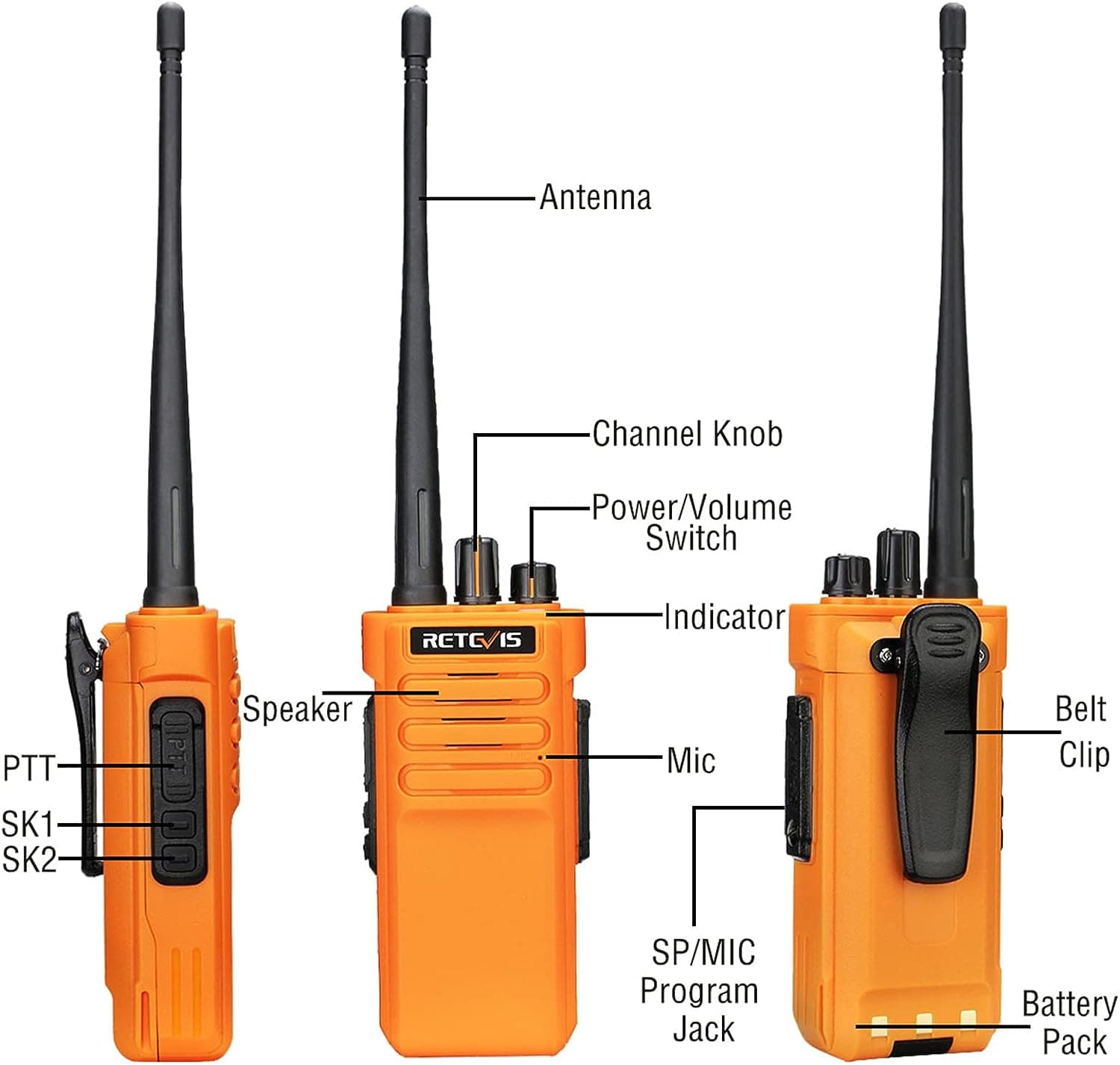
3. Interface sealing: Knobs, buttons, and contacts employ double solid seals.
4. Battery compartment latch: reinforced with metal and features a secondary anti-fall-off design.
Rigorous tests in industrial buildings
What problems can MIL-STD-810H certification solve?
Equipment falls are common in high-rise building operations. Method 516.8 in the standard requires equipment to be dropped from a height of 1.22 meters onto a steel plate or concrete surface in different directions a total of 26 times. This method cannot guarantee that the equipment will be undamaged after a drop from 50 meters, but it can ensure that the equipment will still be able to communicate normally after experiencing multiple everyday accidental drops (such as from waist height, the first floor of scaffolding, or a transport vehicle).
Is the MIL-STD-810H standard good?
For industrial buildings, the answer is "sufficient, but conditional." It cannot guarantee that the equipment will be undamaged after a fall from a height of 50 meters, but it can guarantee that the equipment will still be able to communicate normally even if there are multiple accidental falls every day. On a construction site, being able to call for rescue is far more important than whether the casing has scratches.
How strong is MIL-STD-810H?
The continuous low-frequency vibrations generated by pile drivers, crushers, and vibrating screens are a "slow killer" of electronic products. Method 514.8 (Vibration Test) in the standard requires the equipment to operate continuously for several hours under a random vibration spectrum of 5-500Hz, with a test time of no less than 60 minutes for each axis. Military-grade two-way radios that pass this test can operate continuously for an entire shift in the crusher cab without any internal loosening.
A double whammy of dust and water splashes
Cement dust and mineral powder are ubiquitous. Here, we need to clarify a common misconception: what is the difference between IP68 and MIL-STD-810H? IP68 refers to static dust and water resistance (immersion in 1.5 meters of water for 30 minutes); MIL-STD-810H refers to dynamic durability (functioning normally after drops, vibrations, and temperature shocks). IP68 ensures dust cannot enter; MIL-STD-810H ensures that even if dust enters, knobs can still be turned, speakers can still produce sound, and PTT buttons can still be pressed. They complement each other and are not interchangeable. The optimal combination is: IP68 + MIL-STD-810H.
What is the difference between IP68 and MIL-STD-810H?
|
aspect |
IP68 |
MIL-STD-810H |
|
Test object |
Antistatic, dustproof and waterproof |
Functional reliability in dynamic environments |
|
Dust prevention methods |
Completely dustproof (no dust can enter). |
Dust is allowed to enter, but it does not affect functionality. |
|
Dust test |
8-hour negative pressure dust removal |
Dust blowing test (adjustable wind speed, lasting for several hours) |
|
Water quality testing |
Water depth 1.5 meters, for 30 minutes (static) |
Simulated high-pressure spraying, rain, and immersion |
|
Core differences |
Preventing "Intrusion" |
Preventing "failure" |
The value of MIL-STD-810H lies in its deterministic redundancy for the "uncertainty" in industrial environments. For consumer products, it is not an "icing on the cake" feature, but a "basic guarantee" for industrial communication.
MIL-STD-810H is the third line of defense on construction sites, second only to safety helmets and safety ropes.
Quick Q&A
Q: Is the MIL-STD-810H standard good?
A: Yes. But for industrial buildings, the focus should be on the specific test levels and order of Method 514.8 (vibration) and Method 516.8 (drop), rather than just the icons.
Q: What is the difference between MIL-STD-810H and IP68?
A: IP68 protection focuses on static dust and water resistance (can be submerged in 1.5 meters of water for 30 minutes); MIL-STD-810H military standard focuses on dynamic durability (can still function normally after drop, vibration and temperature shock). The two complement each other and cannot replace each other.
Q: What is a design that conforms to the MIL-STD-810H standard?
A: This refers to a comprehensive structural engineering approach, from the internal PCB board potting compound to the external knob metal reinforcement, and the multi-point buffer ribs on the outer shell—not just adding a silicone protective shell.
Q: What is the strength of the vibration test in MIL-STD-810H?
A: Method 514.8 requires the equipment to operate continuously for several hours within a random vibration spectrum of 5-500 Hz to simulate the stress experienced by a truck driving on rough roads or heavy machinery operating in such environments. This stress level is far higher than standard consumer electronics testing.




Comments
No data Yet