
Table of Contents
PTT (Push-to-Talk) Two-Way Radio Guide: Why PTT Matters?
- Posted by:Retevis
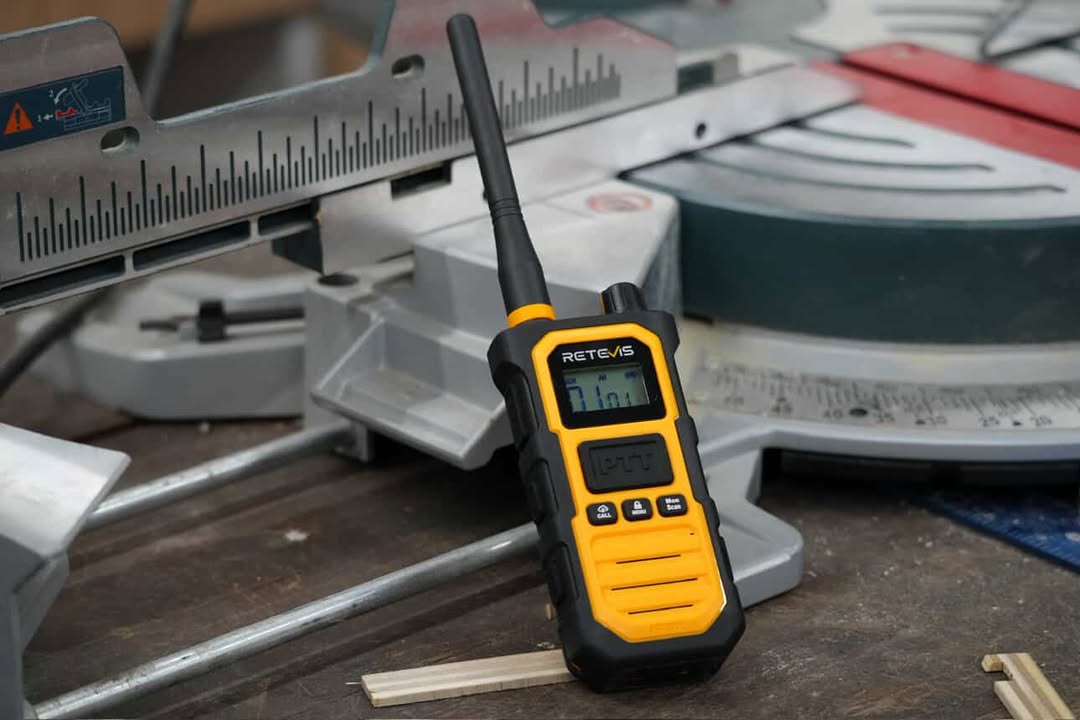
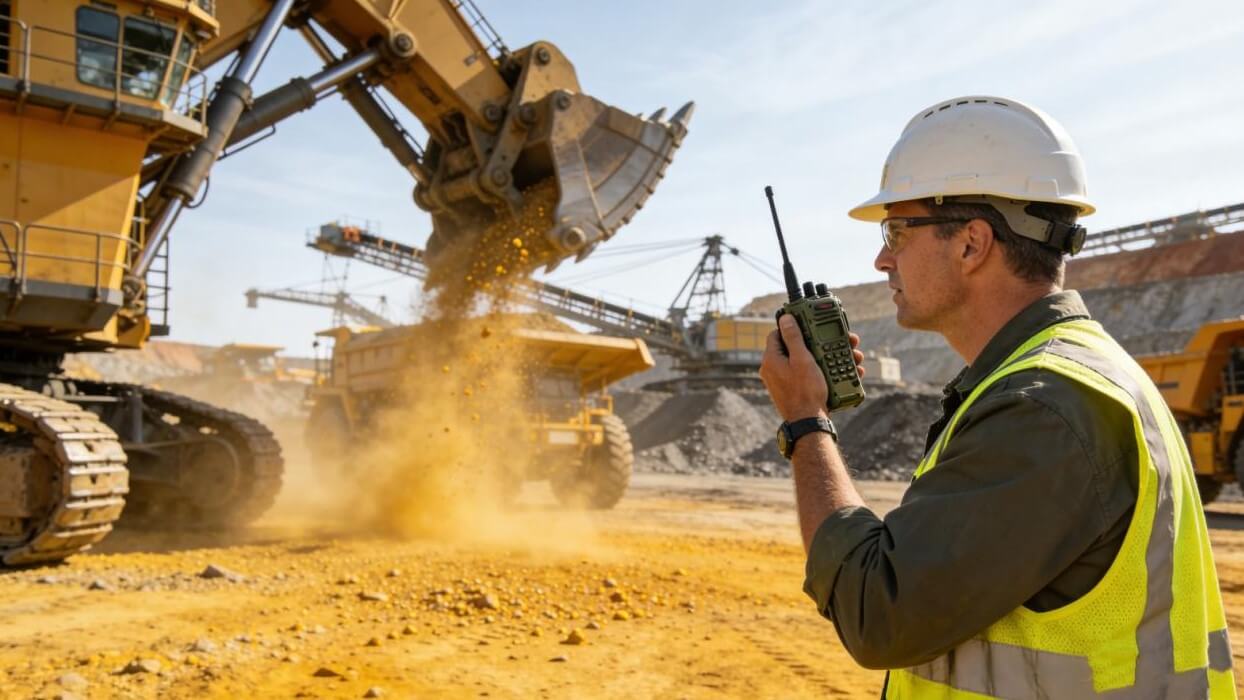
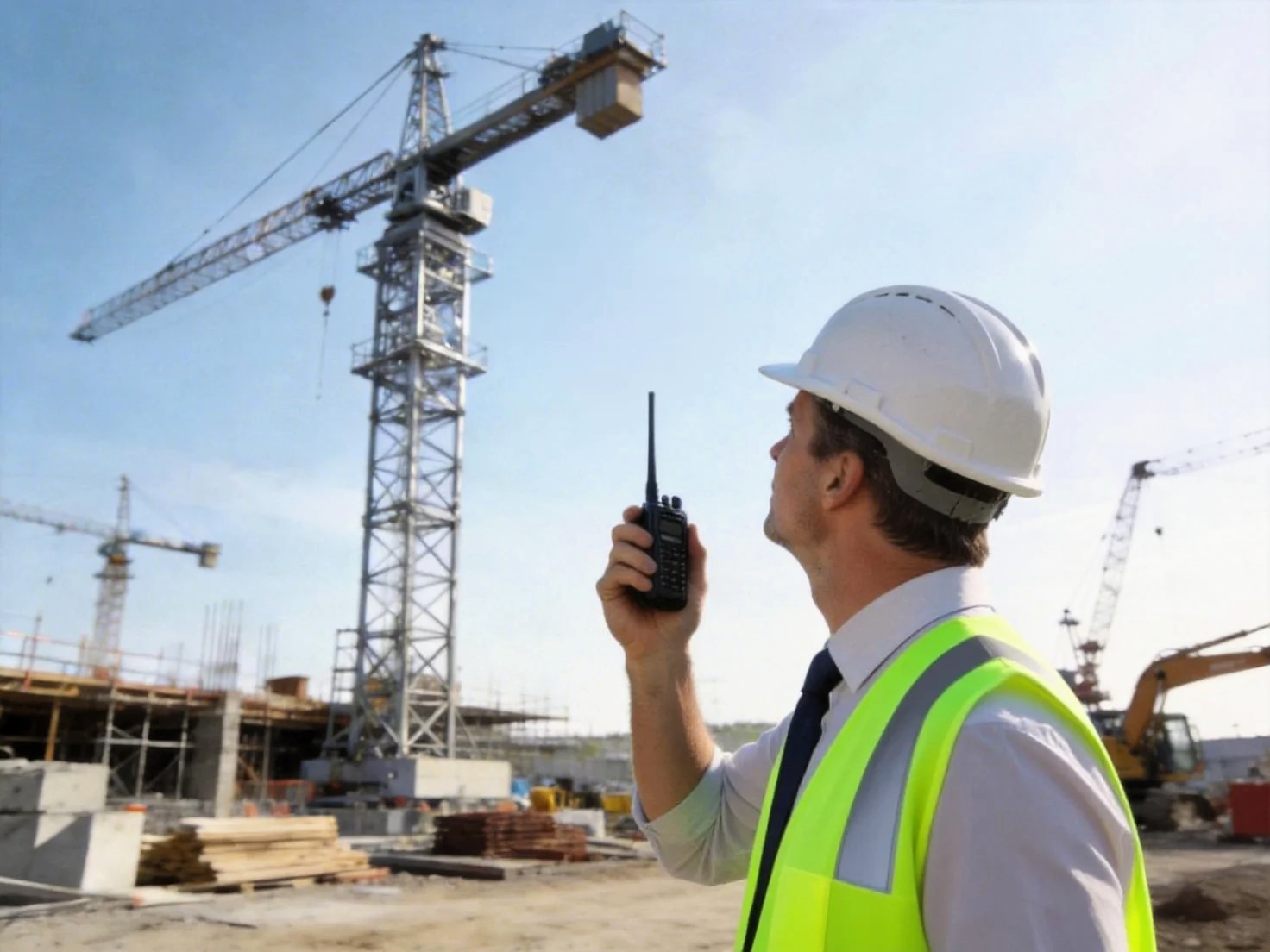
In fast-paced factory floors, while coordinating logistics in vast warehouses, or on active construction sites, instant, clear, and efficient communication is crucial. In noisy construction environments, smartphones may not perform well due to the cumbersome nature of touchscreen operations, the limitations of mobile signal strength, and the fact that phones are often kept in pockets during work—all of which fail to meet the need for immediate communication; In such situations, push to talk walkie talkies offer a faster, more reliable alternative for instant communication. With the press of a single button on the device, teams can communicate in real time. Push-to-talk(PTT) walkie-talkies are becoming the preferred method for real-time team communication in industries such as healthcare, energy, manufacturing, construction, and logistics.
So, what is Push-to-Talk? Why has it become a cornerstone of modern communication across so many industries? We will delve into this technology, from the basic physical principles of the signal to the rugged, durable devices that keep critical industries running.
What is Push to Talk?
Push-to-Talk (PTT) is a form of instant voice communication where, on a communication device, you simply press a button to start talking, and your message is immediately transmitted to the receiving device. In modern applications, PTT application technology has been fully integrated into the walkie-talkie sector. Unlike traditional telephones, push to talk walkie talkies do not require dialing; instead, pressing the button actively occupies the radio channel until the user finishes talking. Furthermore, PTT applications have expanded to include PTT headsets, smartphones, and nationwide PTT communication networks.
How Does Push to Talk Work?
In reality, the technologies used to implement PTT applications vary across different devices. Emerging electronic devices such as smartphones utilize satellite and 5G technologies; when you press the PTT button on the device, it begins receiving voice information, which is converted into binary digital data and transmitted via network protocols to the receiving device.
Unlike smartphones, PTT two-way radios operate on dedicated radio frequencies and typically do not rely on cellular networks, unless they are the latest POC models(Push-to-Talk over Cellular radio). When the PTT button is pressed, the microphone activates, capturing voice data and converting it into radio signals within a designated frequency band. All radios within the same group or frequency band receive these radio waves and convert them back into clear voice messages. With wireless devices such as PTT walkie-talkies, teams can move freely while staying connected, thereby enhancing real-time collaboration without missing any critical information.
What is the PTT Button on A Walkie-talkie?
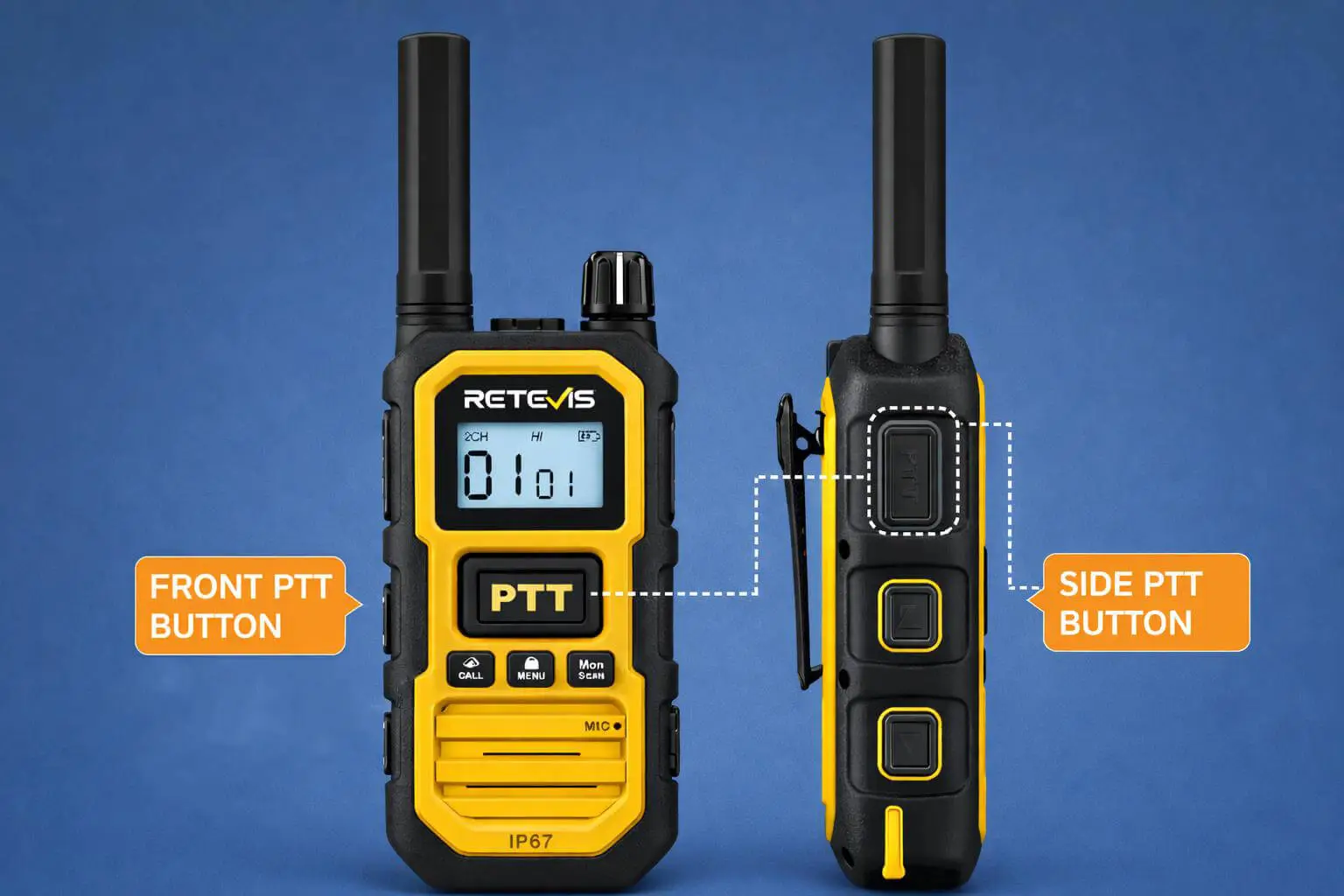
What does PTT button mean on walkie-talkies? Typically, the ptt button on the side of the device serves as the power button. However, some designs place the PTT button on the front of the walkie-talkie to facilitate efficient and simple communication in specific work environments. This prominent placement is intended to allow users to locate the button by touch alone, even in complete darkness or during emergencies.
PTT application technology has made significant strides in two-way radio communication, with Push-to-Talk over Cellular radios being the most frequently mentioned. These wireless push to talk walkie talkies utilize 4G LTE, 5G, or Wi-Fi networks instead of traditional radio frequencies. Such PTT radio devices offer near-nationwide or even global coverage and support instant voice, video, and GPS location features.
Applications and Use Cases of Push-to-Talk Walkie-Talkies
PTT Walkie-Talkies for Large Warehouses
Real-time order picking and inventory coordination are high-frequency operations in large warehouses; managers need to collaborate efficiently with pickers and forklift drivers responsible for loading and unloading goods to maintain smooth internal communication and ensure rapid cargo movement.
Push to Talk Radios for Transportation and Logistics
In the logistics industry, efficiency is key. Drivers, warehouse staff, and dispatchers rely on PTT two-way radios to coordinate deliveries, track shipments, and manage routes. Using instant-communication radios reduces delays and ensures smooth operations.
Best Push to Talk Radios for Utilities
The PTT radio communication is also used in the utilities sector. The utility workers are responsible for managing electricity, water, and gas networks across vast areas. Push to talk radios enable workers to coordinate maintenance, monitor operations, and respond quickly to service issues—even in remote areas. For example, at power plants, cellular signals are often disrupted; teams require reliable, real-time communication to monitor equipment, coordinate maintenance, and respond to emergencies, ensuring the safety of personnel and operations. The walkie talkie radios for utility provide clear and efficient communication in these high-risk environments.
Best Push to Talk Radios for the Healthcare Sector
PTT radio walkie-talkies are also widely utilized in healthcare settings. For instance, hospital logistics or security departments rely on walkie-talkies for instant communication to address sudden emergencies and ensure public safety within the hospital environment—a critical factor in creating a positive healthcare experience for patients and their families.
Push To Talk Manufacturing Walkie-Talkie Radios
Factory environments are noisy and chaotic, making it difficult to communicate effectively via regular phones. PTT two way radios for factories can cut through the noise, ensuring that production line managers, operators, and maintenance personnel can communicate clearly and promptly. At the same time, push to talk manufacturing radios help teams coordinate assembly lines, manage workflows, and respond quickly to equipment issues.
Push To Talk Radios for Industrial Use
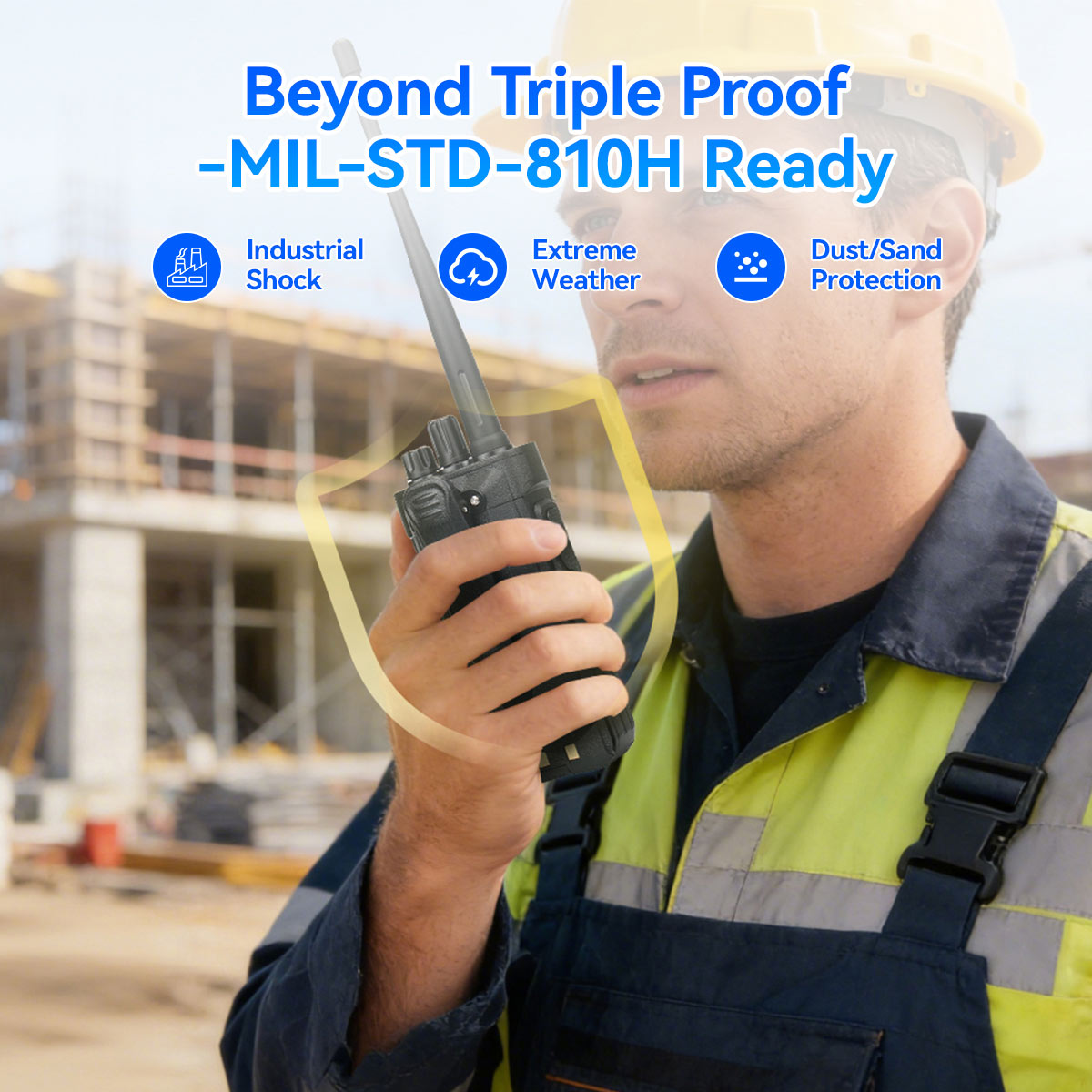
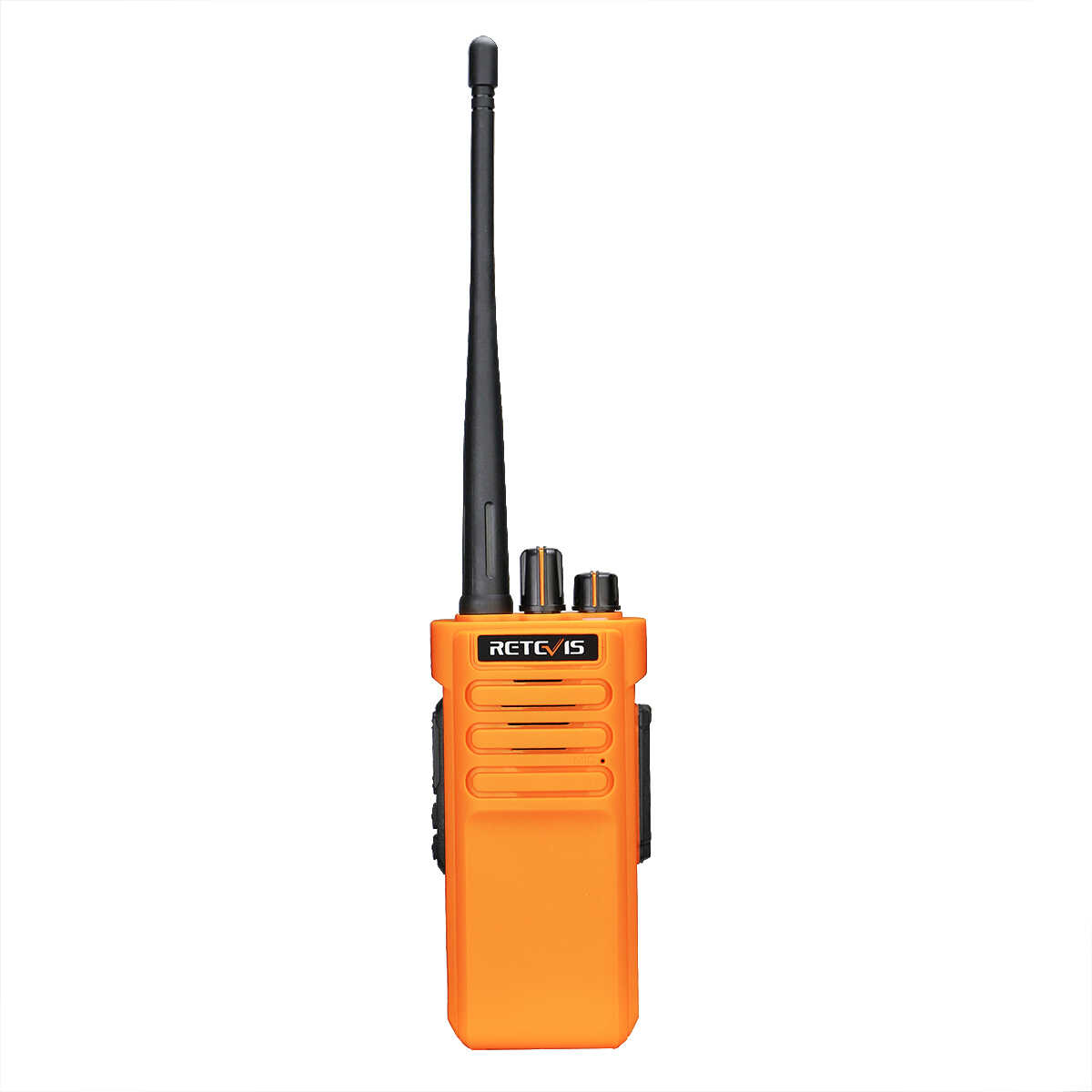
Industrial environments such as refineries and chemical plants require reliable and rugged&durable two-way radios. push to talk industrial two-way radios can withstand harsh conditions while providing instant communication, thus ensuring safety and improving production efficiency.
Recommended Push-to-Talk (PTT) Radios
Choosing the right PTT device depends on your work environment and workflow. Here are two recommended options:
1. RB48 Plus Industrial Radio
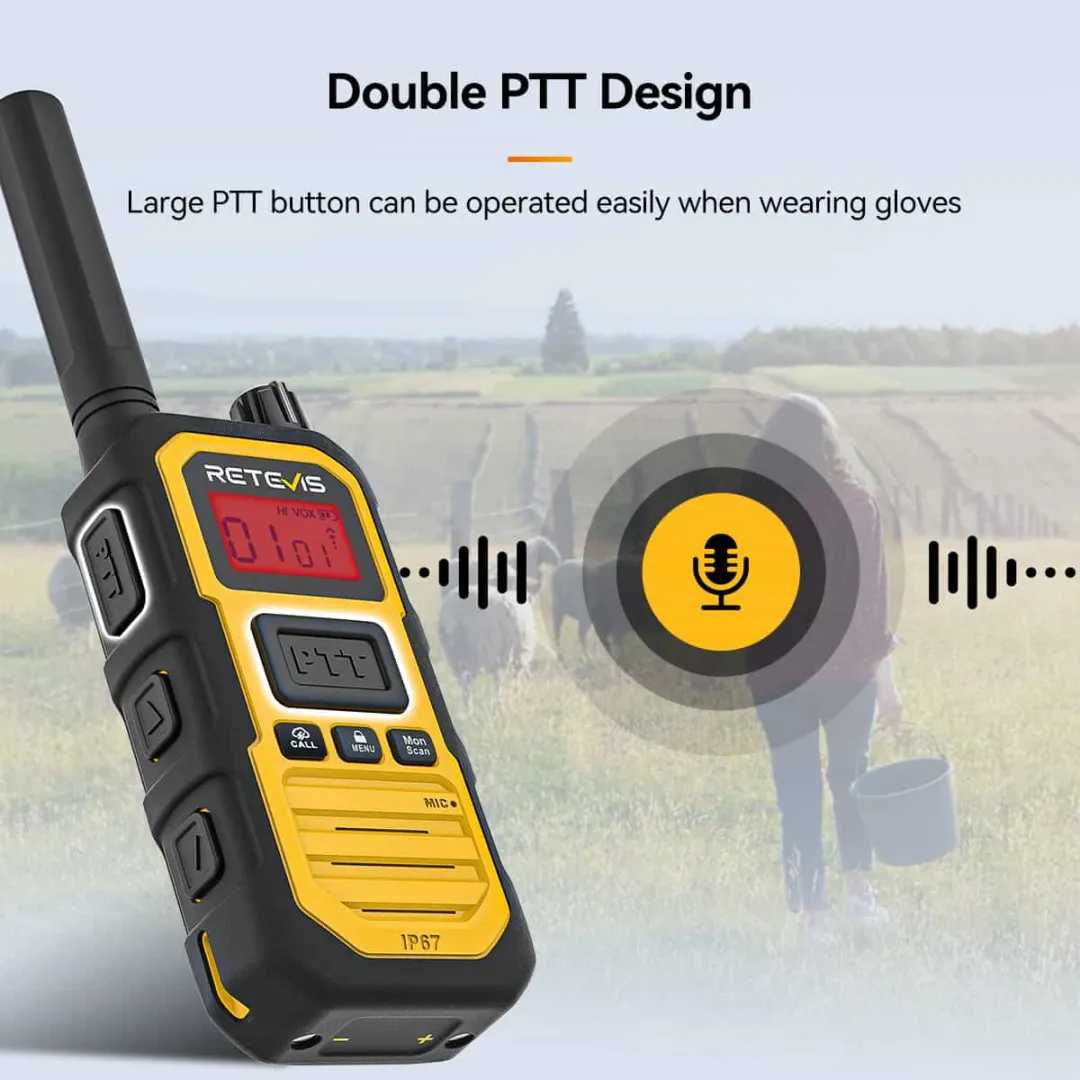
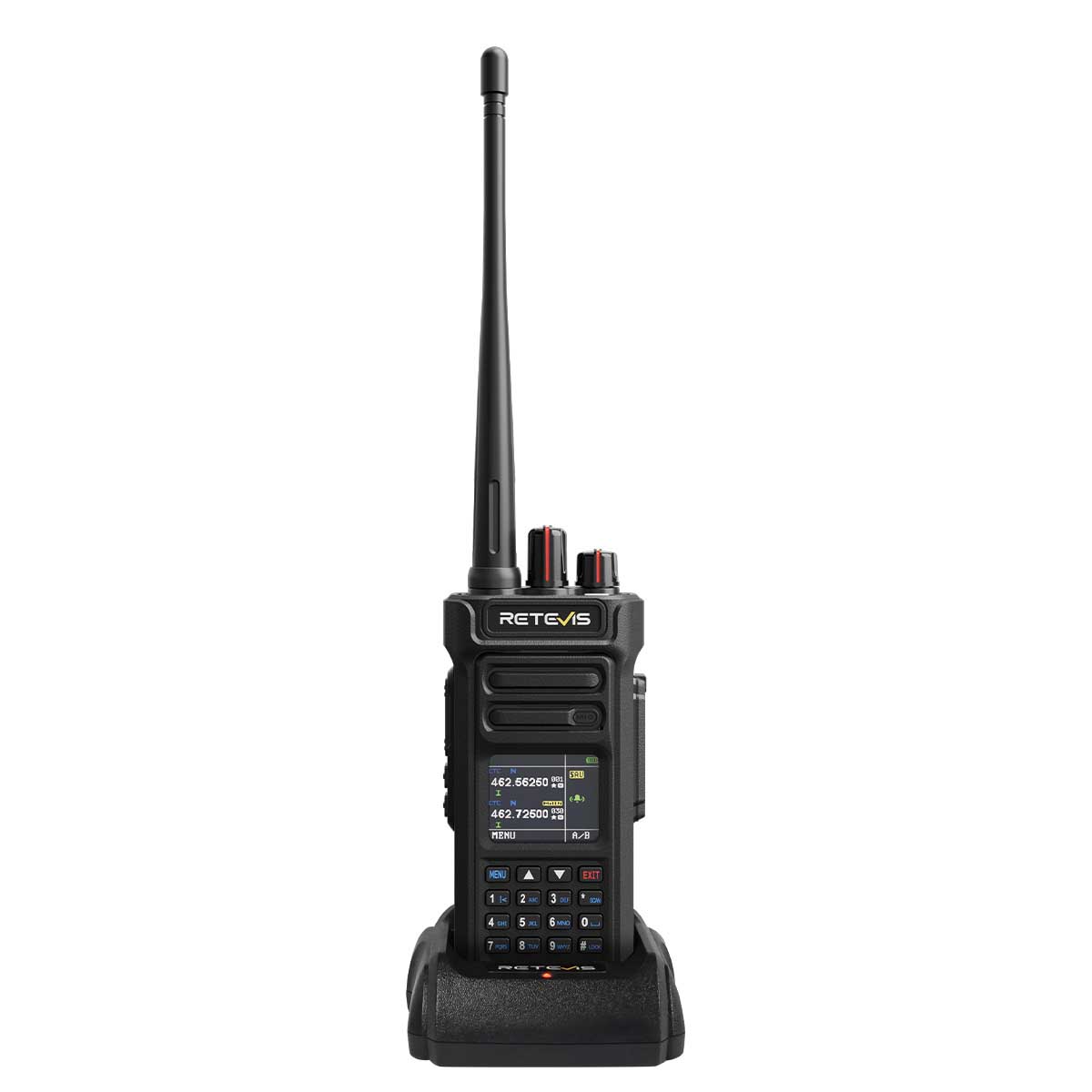
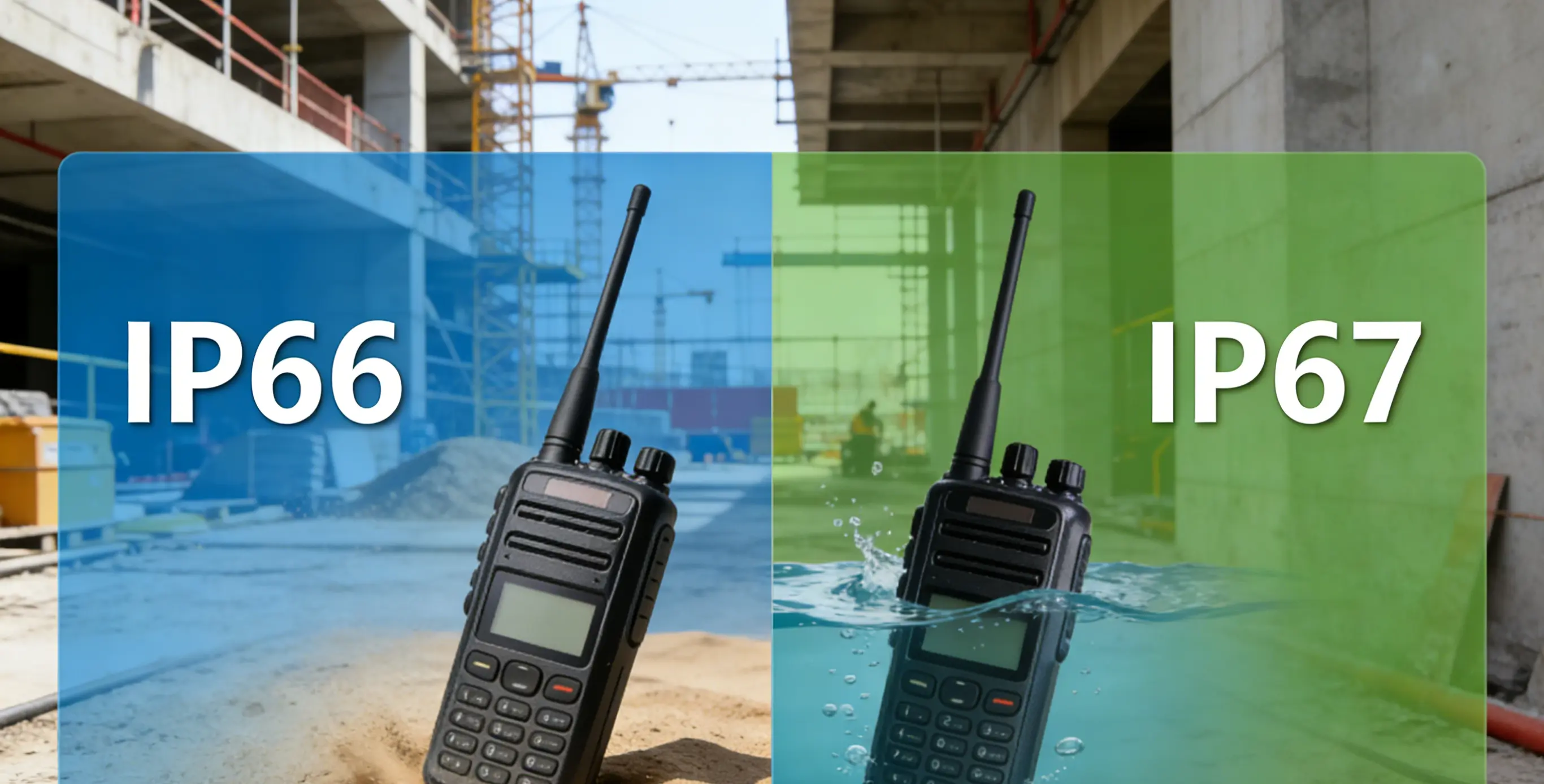
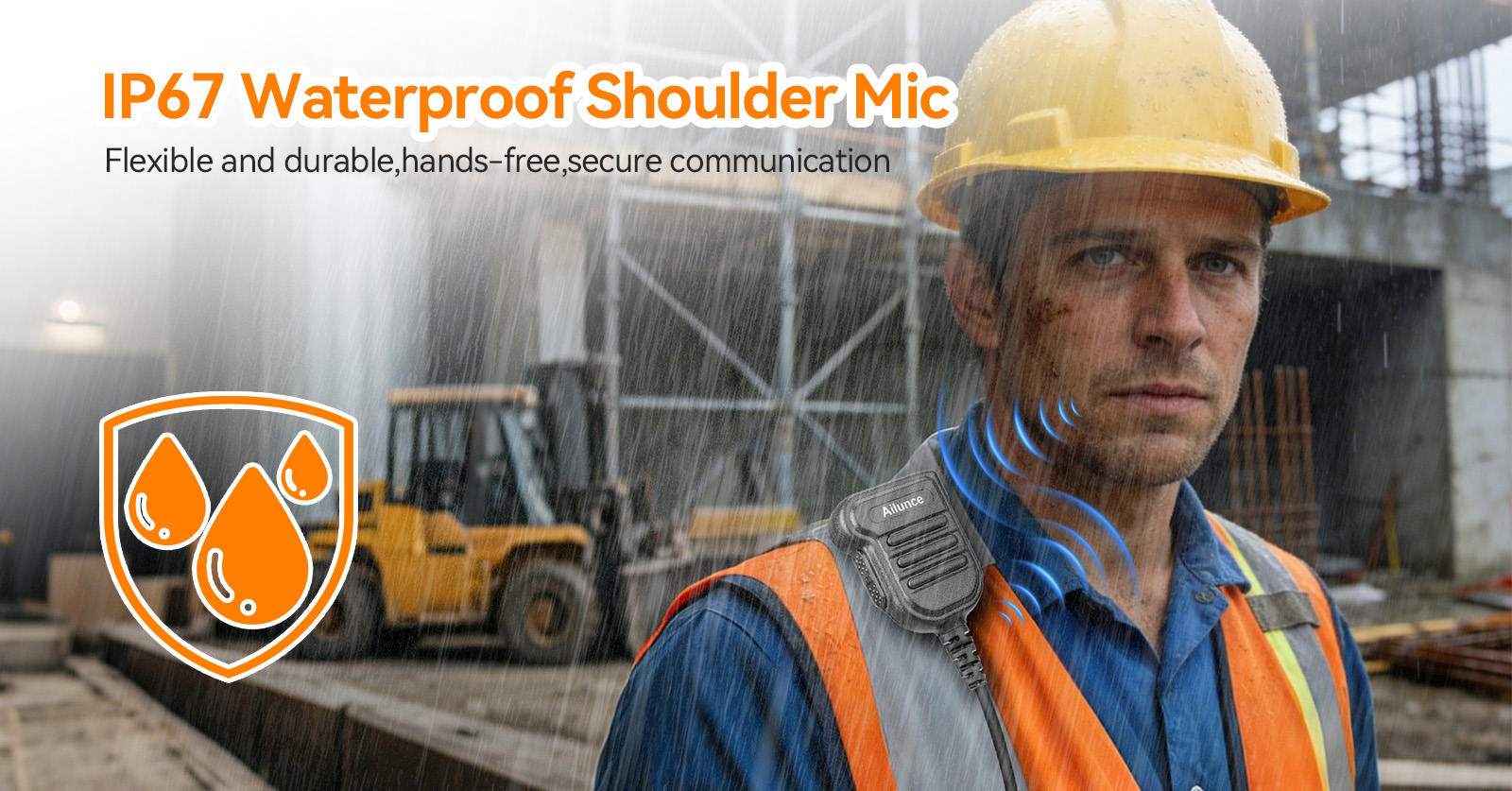
The RB48 Plus is ideal for industrial construction environments, featuring PTT buttons on both the handset and headset. Its IP67 waterproof rating ensures durability, and the headset supports hands-free communication—perfect for noisy, fast-paced industrial workshops.
2. RT29 Rugged Two-Way Radio
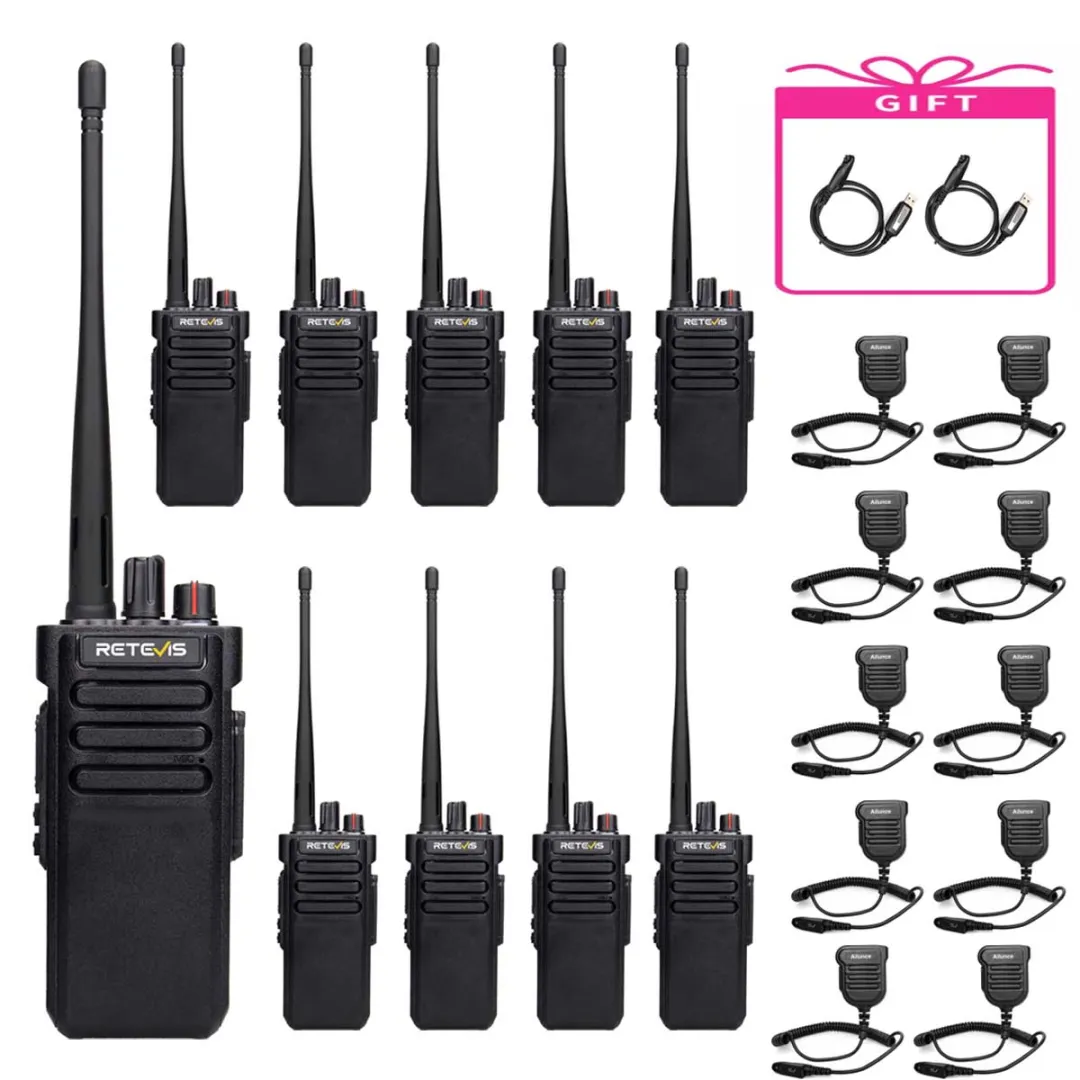
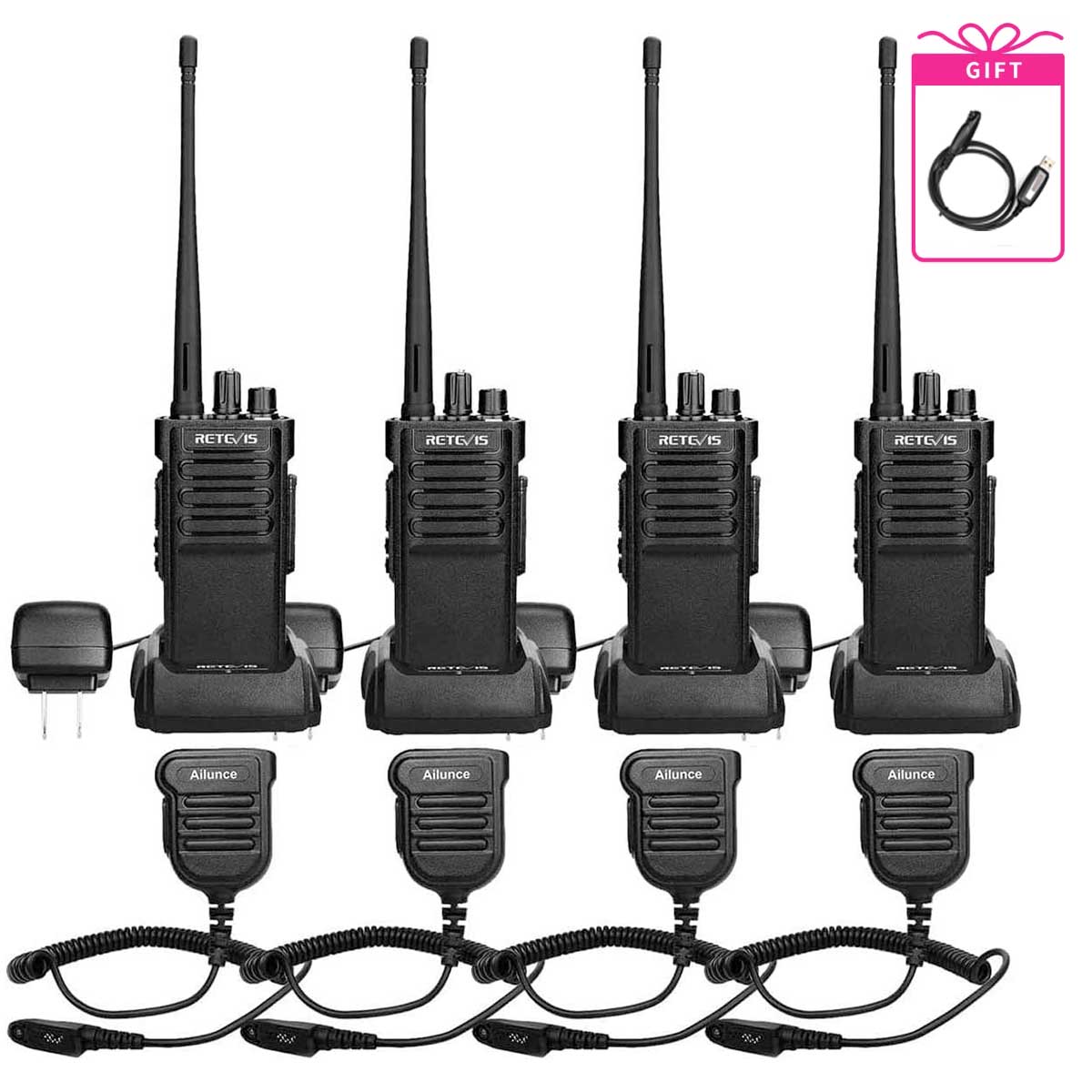
Designed specifically for the construction, manufacturing, and warehouse logistics industries, the RT29 features a shoulder-mounted PTT button and a push-to-talk microphone, enabling hands-free communication while working. Its long-range communication capabilities and rugged design make it an ideal choice for dynamic environments.
The Power of Push-to-Talk Communication
By understanding the definition of Push-to-Talk (PTT) technology, how it works, and the various solutions available—from PTT headsets to nationwide PTT radios—we can see that using push to talk radios allows teams to reduce response times, enhance safety, and improve overall workflow efficiency. From industrial construction sites to healthcare facilities, transportation networks, and factory production floors, PTT radios have proven to be reliable communication devices that enable efficient, real-time communication.



 Google
 Amazon
Comments
No data Yet