
Table of Contents
What is CTCSS and DCS?
- Posted by:Connie
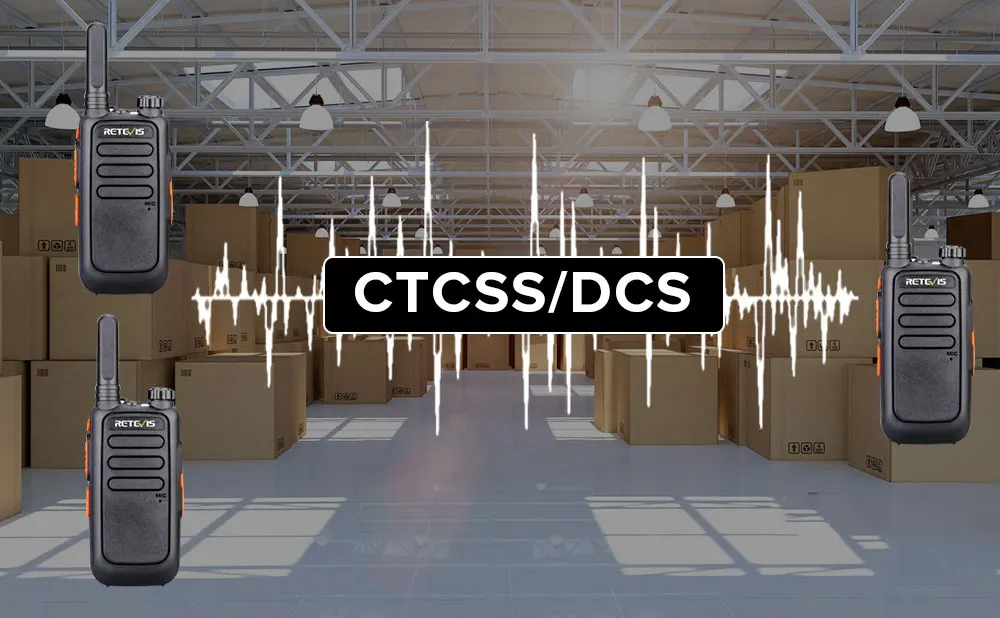
When using a walkie talkie or two way radio, you may see settings such as CTCSS, DCS, or Privacy Codes. Many users ask what is CTCSS, what is DCS on a walkie talkie, and what is the difference between CTCSS and DCS.
In simple terms, CTCSS and DCS are features that help reduce unwanted conversations from other users who are using the same radio channel. They do not create additional channels or provide real privacy, but they help make communication clearer and easier to manage.
CTCSS: Continuous Tone Controlled Squelch System
Basically what it does is this: it adds a tone into your transmission at a certain frequency. Other radios must have the same CTCSS tone or code set to hear the transmission. It will also be heard if the radio has CTCSS and DCS off.
Different CTCSS codes have different frequencies, and this is how it filters out other people - as long as they have a different CTCSS, or no CTCSS, then your radio will not pass any audio to the speaker. A radio with CTCSS enabled will only pass audio for the tone it has set.
What Does CTCSS Mean on a Walkie Talkie?
CTCSS meaning refers to a system that uses a low-frequency analog tone to control when a walkie talkie's speaker opens.
A CTCSS walkie talkie only allows communication when the receiving radio detects the correct CTCSS tone. This helps users sharing the same channel avoid hearing unwanted transmissions from other groups.
DCS: Digitally Controlled Squelch
It stands for Digitally Coded Squelch. It sends a number repeatedly encoded in digital as you speak, in the low frequencies so you do not hear it. If someone else transmits on the channel with a different or no DCS, the radio will not unmute. If they transmit with the same DCS as you, then your radio will unmute. DCS is newer than CTCSS, and has more codes. This gives a lower chance of picking the same code as someone else.
What Is DCS on a Walkie Talkie?
DCS meaning refers to a digital coded squelch system used in walkie talkies and two way radios.
Unlike CTCSS, which uses an analog tone, a DCS walkie talkie uses a digital code. The radio only opens the speaker when it detects the correct DCS code.
You may also see the term DTCS on some radios. In most cases, DTCS refers to the same digital coded squelch technology as DCS.
CTCSS vs DCS: What Is the Difference?
A common question from radio users is CTCSS vs DCS or DCS vs CTCSS. Both are designed to reduce unwanted transmissions on the same channel, but they work differently.
|
Feature |
CTCSS |
DCS |
|
Type |
Analog tone |
Digital code |
|
Full name |
Continuous Tone Controlled Squelch System |
Digitally Controlled Squelch |
|
Signal method |
Uses low-frequency tones |
Uses digital codes |
|
Available options |
Fewer codes |
More code combinations |
|
Common use |
Widely used in analog radios |
Popular in modern radio systems |
CTCSS vs DCS: Which Is Better?
There is no universal answer to CTCSS vs DCS which is better.
- CTCSS is a good choice when compatibility with many analog radios is important.
- DCS provides more code options and may be useful in areas with many radio users.
The most important thing is that all radios use the same channel and the same CTCSS tone or DCS code.
Privacy Codes on Retevis Radios
Retevis calls both of these features “Privacy Codes”.
Privacy Codes are not extra channels. They allow multiple users to share the same channel while reducing unwanted conversations or cross talk.
Even when using the same frequency, your radio will only open the speaker for transmissions using the same CTCSS tone or DCS code.
However, CTCSS and DCS are not encryption. They do not make communication private or secure. They only filter unwanted audio from other users.
FAQ About CTCSS and DCS
What Does CTCSS Stand For?
CTCSS stands for Continuous Tone Controlled Squelch System.
What Is CTCSS on a Walkie Talkie?
CTCSS on a walkie talkie is an analog tone system that allows the radio speaker to open only when the correct tone is detected.
What Is DCS on a Walkie Talkie?
DCS is a digital coded squelch system that uses digital codes to control when the radio receives audio.
What Is the Difference Between CTCSS and DCS?
The main difference between CTCSS and DCS is that CTCSS uses analog tones, while DCS uses digital codes.
Are CTCSS and DCS Privacy Codes?
Yes. Many radios refer to CTCSS and DCS as Privacy Codes, but they only filter transmissions and do not provide true privacy.
Conclusion
CTCSS and DCS are important features found in many walkie talkies and two way radios.
CTCSS uses analog tones, while DCS uses digital codes. Both help reduce unwanted transmissions and improve communication efficiency when multiple users share the same radio channel.
When choosing between CTCSS and DCS, the best option depends on your radio system, compatibility needs, and communication environment.




 Google
 Amazon
Comments
No data Yet