

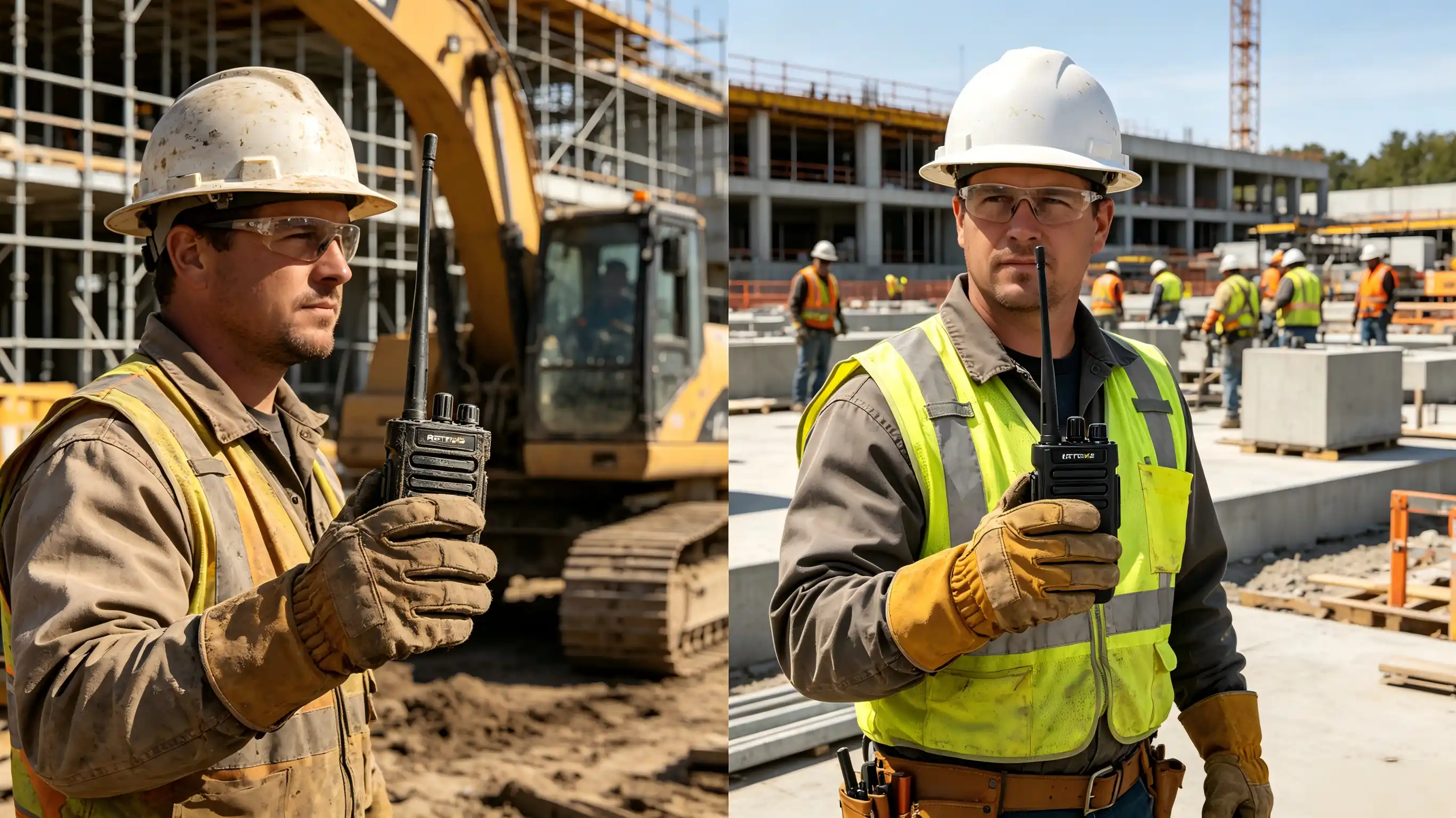
On a busy construction site, communication has to be fast, clear, and reliable. When teams are working around heavy equipment, concrete pumps, steel structures, and delivery traffic, even a short misunderstanding can slow down progress or create safety risks. That is why many contractors are now taking a closer look at DMR vs analog construction radios.
For years, analog radios were the default choice on jobsites. They are simple, familiar, and cost-effective. But as projects become larger, noisier, and more complex, many companies are moving to digital radios for construction to improve voice clarity, battery life, and overall coordination.
This guide explains the key differences between analog and digital systems, and how to decide which one makes sense for your site.
Why Construction Teams Still Depend on Two-Way Radios
Even with smartphones and apps everywhere, radios remain one of the most practical tools on construction sites.
Why? Because they offer:
- Instant push-to-talk communication
- Group coordination across crews
- Reliable use in noisy, fast-moving environments
- Fewer distractions than phones
- Better control for safety-sensitive tasks
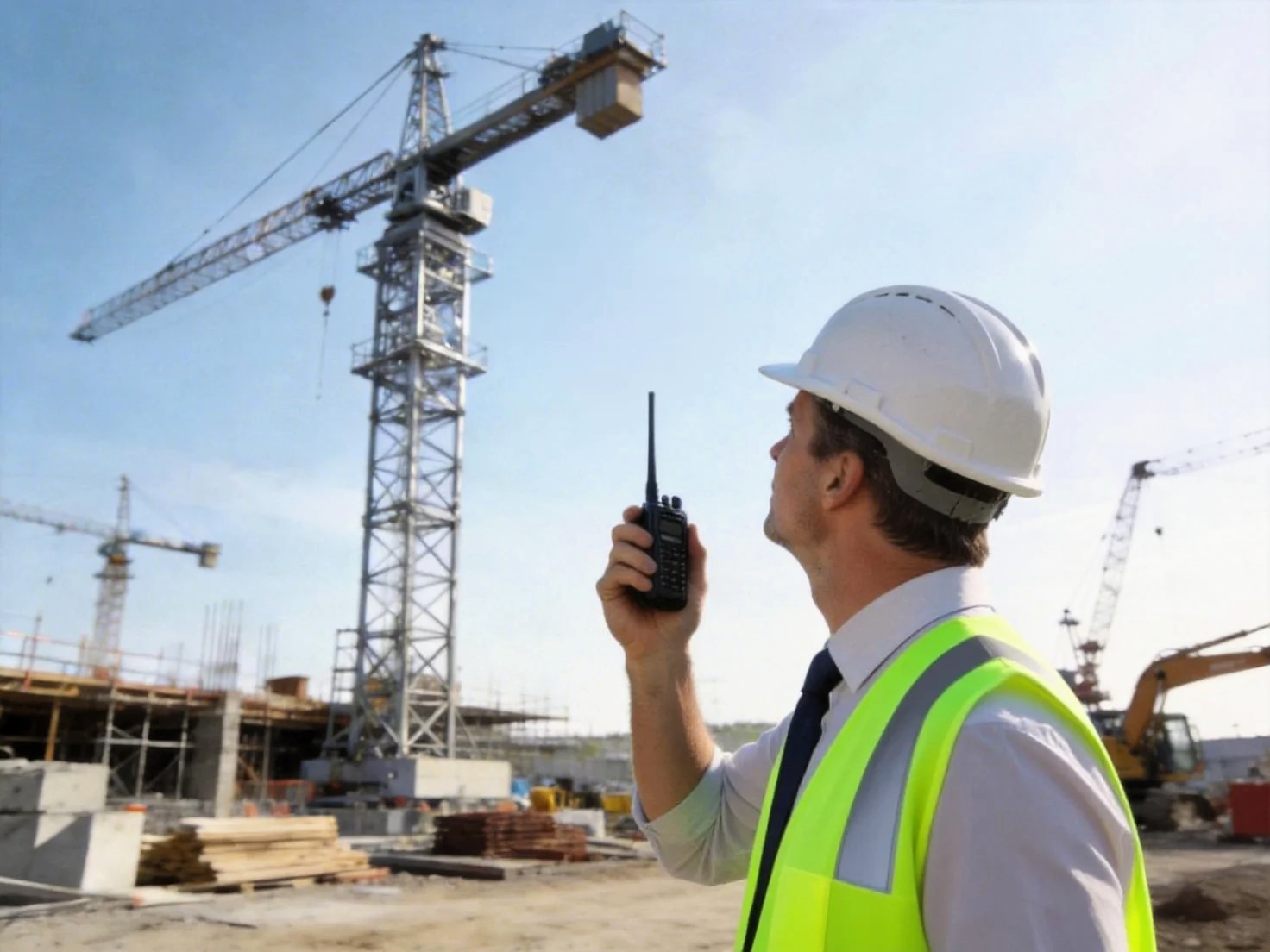
From crane operators and ground crews to site supervisors and logistics teams, two-way radios are still a core part of daily operations.
On construction sites, communication is not just about convenience. It directly affects productivity, timing, and safety.
What Is an Analog Radio?
An analog radio sends voice as a continuous signal. This has been the standard radio technology used in construction for decades.
Why analog radios are still used
Analog systems remain popular because they are:
- Easy to operate
- Lower in upfront cost
- Widely available
- Familiar to many crews
For small jobs or short-term projects, the best two way radio for construction site analog radio setups may still do the job well.
Where analog starts to struggle
The main issue with analog is that as the signal weakens, audio quality drops gradually. Users hear more static, more background noise, and more repeated calls.
This can become a real problem on sites with:
- Heavy machinery noise
- Large coverage areas
- Multi-level structures
- Multiple subcontractors sharing channels
If you are searching for a two way radio for construction site analog radio for sale, analog may still be suitable for basic communication needs—but it is no longer the best fit for every project.
What Is DMR and How Does a Digital Walkie Talkie Work?
DMR stands for Digital Mobile Radio. A digital walkie talkie converts voice into digital data, which helps deliver clearer and more consistent communication.
In simple terms:
- Analog gets noisier as the signal weakens
- Digital stays clearer for longer within the usable coverage area
That is why many contractors now consider a DMR radio for construction when upgrading their communication systems.
Why digital works well in construction
A DMR two way radio for construction is especially useful in environments where noise, distance, and coordination demands are high.
Common benefits include:
- Clearer voice audio
- Better performance in noisy areas
- Longer battery life
- More efficient channel use
- Support for advanced features such as emergency alerts, private calls, or worker safety functions
For growing contractors, a DMR walkie talkie for construction often offers a better long-term platform than a basic analog fleet.
DMR vs. Analog Construction Radios: Key Differences
Here is a simple side-by-side comparison:
|
Feature |
Analog Radio |
DMR Digital Radio |
|
Audio quality |
Degrades with static |
Clearer and more consistent |
|
Performance in noisy environments |
More background noise |
Better voice intelligibility |
|
Battery efficiency |
Standard |
Often better |
|
Coverage experience |
Gradual signal fade |
Clear audio until signal limit |
|
Advanced features |
Limited |
More options available |
|
Scalability |
Basic |
Better for growing fleets |
|
Upfront cost |
Lower |
Higher |
|
Long-term value |
Good for basic use |
Better for demanding operations |
What this means in practice
If your project is small and communication is simple, analog can still be enough. But if your crews regularly deal with noise, distance, or repeated transmissions, digital usually delivers a noticeable improvement.
Why Audio Clarity Matters More on Construction Sites
Not all industries challenge radios in the same way. Construction is particularly demanding because of three factors:
1. Constant background noise
Engines, drills, saws, lifts, and compressors all compete with voice traffic.
2. Team separation
Workers may be spread across multiple floors, zones, or structures.
3. Time-sensitive communication
Instructions often need to be understood immediately, especially during lifts, deliveries, pours, or safety events.
This is where digital radios for construction can make a real difference. The goal is not just louder sound—it is better voice intelligibility, meaning speech is easier to understand the first time.
On a jobsite, fewer repeated messages can mean faster workflows and lower risk.
When Analog Radios Still Make Sense
To be clear, analog is not outdated in every situation.
Analog may still be a good choice if:
- You run small crews on compact sites
- Your communication needs are basic
- Budget is the main concern
- Your existing analog fleet is still performing well
- You do not need advanced safety or fleet features
In these cases, the best two way radio for construction site analog radio option may provide solid value.
When It Is Time to Upgrade to DMR
A move to digital becomes easier to justify when communication problems start affecting operations.
Strong signs it is time to upgrade
- Workers often ask others to repeat messages
- Static is common in key work zones
- Your site is large, multi-building, or multi-level
- Multiple teams need to coordinate at once
- You need better battery life for long shifts
- Safety features are becoming more important
- Your company is growing across multiple sites
If these issues sound familiar, a DMR radio for construction may be a practical upgrade rather than a luxury.
What to Look for in the Best Two-Way Radio for Construction Site Use
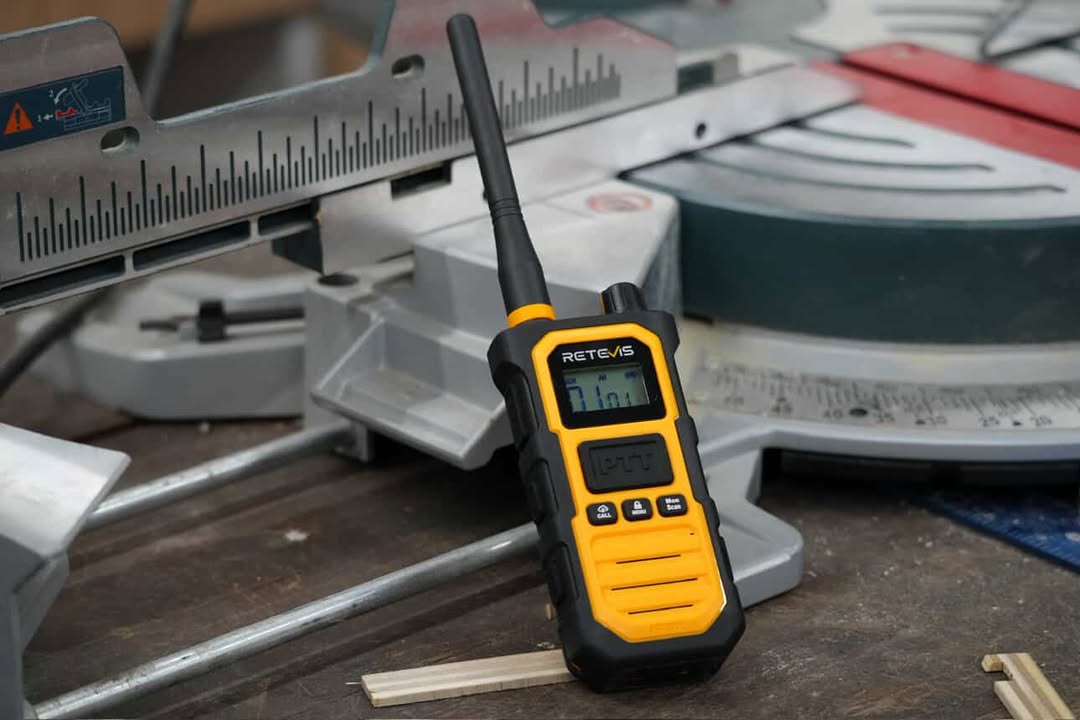
Whether you choose analog or digital, not all radios are built for construction conditions.
Focus on these features:
Essential buying checklist
|
What to Look For |
Why It Matters on Site |
|
Rugged housing |
Helps withstand drops, dust, and rough handling |
|
Loud, clear audio |
Important around machinery and PPE |
|
Long battery life |
Supports full-shift or multi-shift use |
|
Easy controls |
Better for gloves and quick operation |
|
Reliable coverage |
Reduces dead zones and repeated calls |
|
Safety features |
Useful for emergencies and lone workers |
|
Mixed analog/digital support |
Helps with gradual upgrades |
If you are comparing the best two way radio for construction site digital radios, do not focus only on specs. Think about how the radio performs during real site activity: noise, movement, weather, dust, and long working hours.
If you are reviewing two way radio for construction site digital radios for sale, the best choice is usually the one that balances durability, clarity, and ease of deployment.
Cost: Upfront Price vs Long-Term Value
One reason companies stay with analog is simple: lower purchase cost.
That is understandable. However, radio decisions should not be based only on the unit price.
Analog may save money upfront, but digital can save in other ways:
- Less repeated communication
- Better shift efficiency
- Improved crew coordination
- Fewer misunderstandings
- More room to grow without changing systems again soon
For many contractors, the real question is not “Which radio is cheaper?” but “Which system supports smoother site operations?”
Can You Upgrade Gradually?
Yes. In many cases, moving from analog to digital does not need to happen all at once.
Some systems support both analog and digital modes, allowing companies to:
- Replace radios in phases
- Keep part of the old fleet active
- Train teams gradually
- Spread out the investment
This makes digital adoption more realistic for contractors who want better performance without a full immediate replacement.
Quick Decision Guide
Use this simple framework:
Choose analog if:
- Your site is small
- Your budget is tight
- Your teams need only basic voice communication
- Your current system works well enough
Choose DMR digital if:
- Your site is noisy or complex
- Audio clarity is a daily issue
- You need stronger battery efficiency
- You want better scalability and features
- Safety and coordination are higher priorities
Final Thoughts
In the DMR vs analog construction debate, there is no one-size-fits-all answer. Analog radios still work well for simple, low-demand environments. But for many modern jobsites, digital is becoming the smarter long-term choice.
A digital walkie talkie system offers clearer voice communication, stronger performance in noise, and better support for growing site operations. If your team is losing time to static, repeated calls, or inconsistent coverage, upgrading to a DMR two way radio for construction may be one of the most practical improvements you can make.
When evaluating the best two way radio for construction site digital radios or reviewing two way radio for construction site analog radio for sale, focus on what matters most on the job: clarity, durability, safety, and day-to-day usability.



 Google
 Amazon
Comments
No data Yet