

Table of Contents
GMRS Radio for Overlanding & Frequency Chart for Overlanding, Off-Roading, and Backcountry Adventures
- Posted by:Retevis
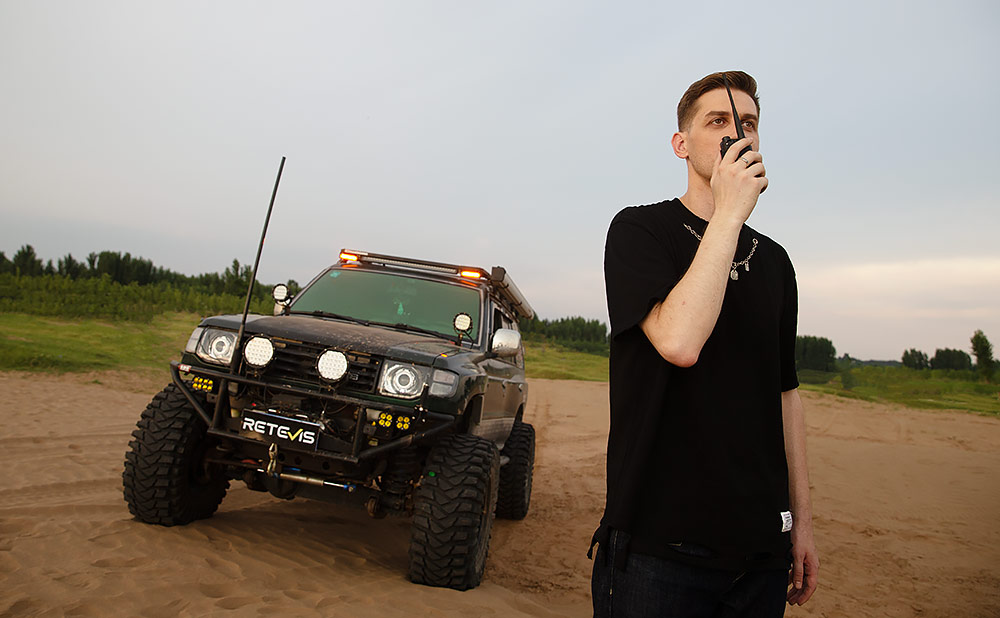
When embarking on overlanding, off-roading, or backcountry adventures, having reliable communication is crucial. In remote areas where cell phone reception is limited or nonexistent, a GMRS (General Mobile Radio Service) radio can be a game-changer. This post aims to provide an overview of GMRS radio, its popularity, signal range, frequency chart and channel differences, and the best GMRS channel options for outdoor enthusiasts.
What is GMRS radio?
GMRS radios are two-way radios that allow users to communicate with one another. They have become increasingly popular in overlanding and offroading, where they are most often used to communicate among vehicles. There are two types of GMRS radios: handheld and mobile.
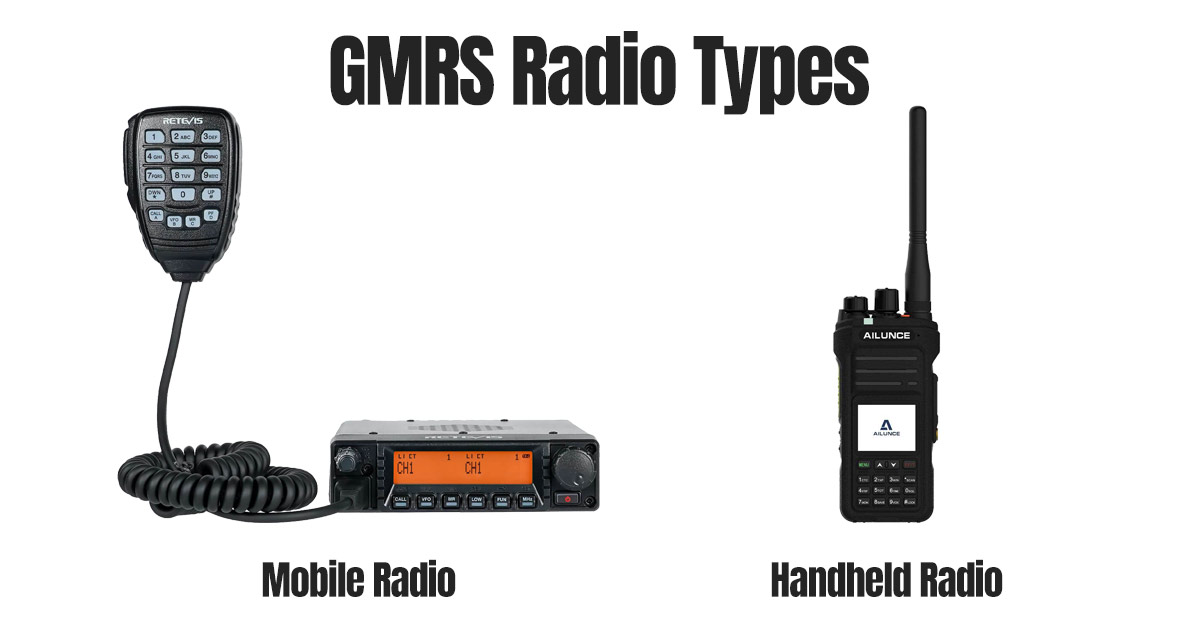
The term used in the amateur radio community to reference ham radios used in vehicles that typically rely on the vehicle’s battery to provide power.(As opposed to stationary units in homes).
The handheld gmrs radios look like classic walkie-talkie, have an integrated battery, and are less powerful (had thus have less range) than the mobile units.
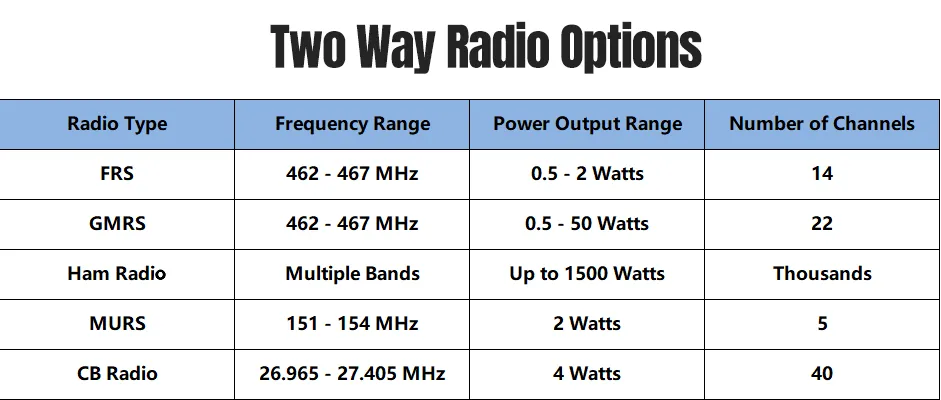
Meanwhile, GMRS frequency is one of several radio technologies that operate on frequency bands that the government has set aside for civilian use. Others in the category include Amateur Radio (ham), Citizens Band (CB), Family Radio Service (FRS), and Multi-Use Radio Service (MURS). The Federal Communications Commission refers to these types of radios collectively as “personal radio services.”
GMRS operates on 30 frequency channels in the ultra-high frequency (UHF) range around 462 MHz and 467 MHz. I’ll include more detail on these frequency bands below, but for now, I’ll just say that GMRS overlaps with FRS radios on 22 bands, which comes in handy out on the trail.
Why Has GMRS become so popular?
To understand why GMRS frequency has been so rapidly adopted for off-road, overlanding and other backcountry pursuits, it helps to compare it to the other technologies that preceded it.
Broad Compatibility
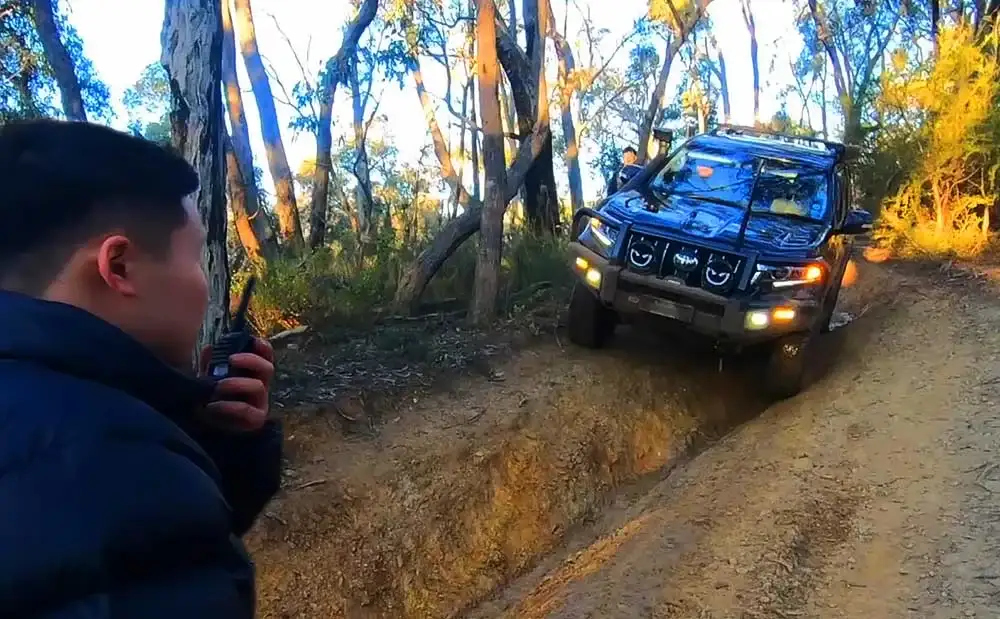
GMRS radios operate on both GMRS and FRS frequencies, so mobile and handheld GMRS units can communicate with each other and with FRS radios. One of the reasons GMRS frequency has gotten so popular is the availability of these two types of radios
Handheld GMRS frequency and FRS units are cheap and relatively easy to use (no complicated vehicle install or test to study for and pass, as with ham radio). Nowadays, people who have CBs and ham radios in their rigs often also have a GMRS or FRS handheld so they can communicate with the group.
This low barrier to entry is a major reason that many overlanding clubs have adopted GMRS frequency as the club radio technology. Ham radios, which offer vastly greater range than other technologies, require studying for a test, which prevents a lot of people from getting their licenses.
A GMRS frequency license, in contrast, is easy to purchase from the FCC and requires no test. There’s a bit of a network effect going on, where the more people who adopt GMRS, the more it makes sense to get one.
Better Range and Signal Quality
The primary competitor for GMRS for overlanding and off-roading has long been CB radio. While in theory, CB radio could have a longer range than GMRS due to its radio frequency, in practice, GMRS radios often perform better. There are several reasons for this.
Signal Power
While the power output of different mobile GMRS units varies, the maximum power output can range up to 50 watts under FCC guidelines. In contrast, CB radios are limited to a maximum power output of 4 watts, which limits their range.
Handheld GMRS units typically operate at a maximum of 5 watts, which is double the power of FRS units, the other primary style of walkie-talkie used for overlanding and off-roading. They can also operated on 0.5-watt channels (see below).
Solar Weather
Another advantage of GMRS is that, unlike CB signals, GMRS signals are less impacted by the solar cycle, which peaks every 11 years or so and affects the “weather” on the sun’s surface. This solar activity can cause significant noise and interference, making it difficult to communicate with units only a mile away.
Signal Repeaters
GMRS radios get another boost in range through the ability to use signal repeaters. These are devices that receive and amplify weak radio signals and then re-transmit them to a larger area, increasing the range of two-way radio communication. GMRS repeaters typically have a broadcast range of around 25 miles. So if you can hit a repeater, you can reach other GMRS users within that distance.
Because GMRS radios are digital technology, they can utilize signal repeaters to extend their range and improve the clarity of no internet communication. This point is particularly important when using GMRS frequencies for off-roading. CB radios are analog technology and cannot use signal repeaters. Ham radio can use repeaters, but the lack of adoption of the technology has it ham-strung. Hehe.
The UHF radio waves GMRS units produce can easily travel through small spaces, so the radios may work better than CBs in forested areas. For a detailed explanation, check out our guide to using GMRS repeaters.
More Channels and Privacy
One of the downsides to CB and FRS radios is that the channels can often be crowded. The chatter can make it difficult to communicate with your group and the competing signals can cause interference, degrading the signal. This is another area where it’s GMRS for the win.
GMRS radios offer more channels than CBs, providing users with more options for finding a clear channel to use. Also, GMRS radios offer the ability to use privacy codes, also known as sub-audible tone codes or privacy tones.
These codes reduce interference from other GMRS frequency users on the same channel by adding a tone to the radio signal that is inaudible to the human ear, but can be detected by the receiving radio.
FRS radios can also use privacy codes, but CBs cannot, as an analog technology. Using a shared privacy code, you can ensure that only your team’s radios receive your transmissions, increasing privacy and reducing the chances of interference.
What is the signal range of GMRS radios ?
The question of how far a GMRS radio signal will transmit clearly is not one of them.
Due to the frequency range at which they operate, GMRS radios use “line of sight” transmission, meaning that the radio signals travel in a straight line for a certain distance. If the receiving and transmitting antennas are not in line of sight of each other, the signal will be weakened or lost completely, reducing the range of the GMRS radio.
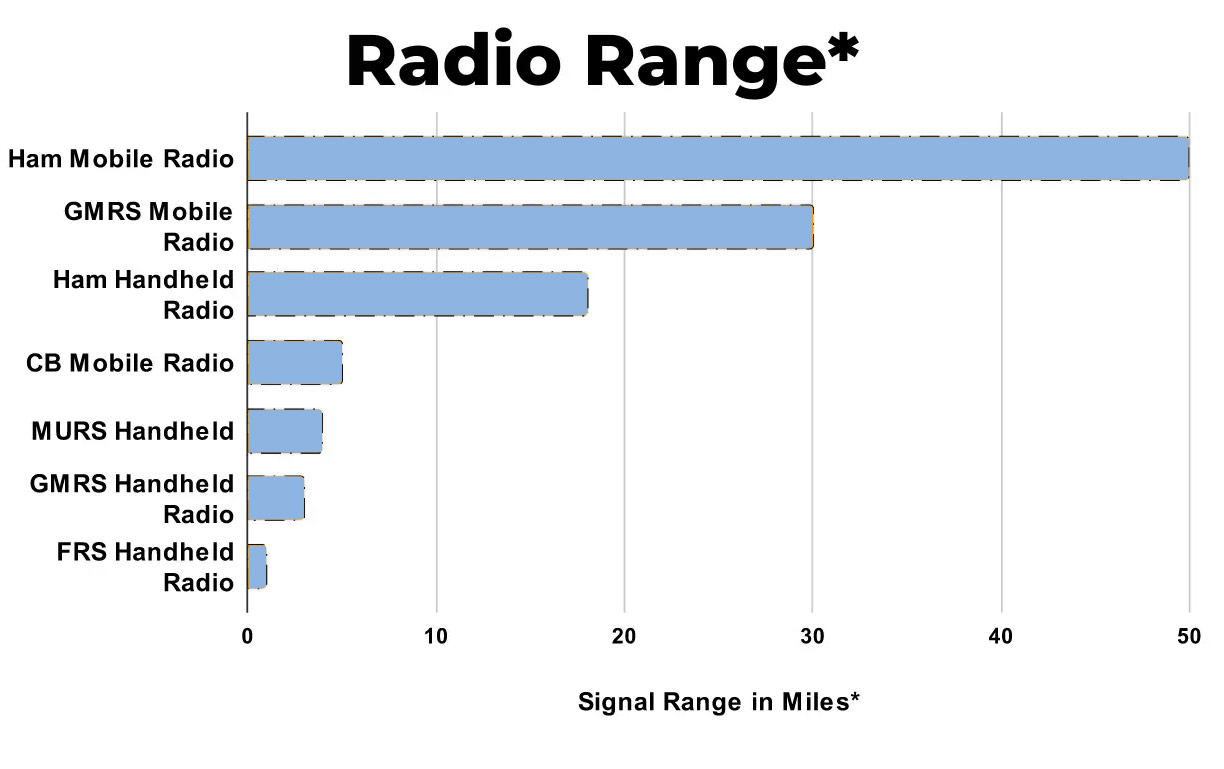
This chart shows the estimated maximum range of various two-way radios, assuming they are transmitting from a vehicle on flat ground with no obstructions. These are very rough estimates and depend upon many factors, but will give you a sense of the potential of each technology.
In broad strokes, GMRS frequency radios will transmit anywhere from half a mile to 30 miles depending on a number of factors. These factors include:
Factors Impacting Signal Range
- Antenna height: The higher the antenna, the greater the range as the signal has a clearer path to travel.
- Power output: The higher the power output, the greater the range of the radio.
- Terrain: Hills, mountains, and other obstructions can reduce the range of the radio, which is a common issue when traveling in the backcountry.
- Weather conditions: Rain, fog, and other weather conditions can affect the signal quality and reduce the range.
- Interference: Other electronic devices, such as other radios or cell phones, can cause interference and reduce the range.
- Frequency: The frequency of the radio signal can also impact the range.
So, the range of a GMRS radio can vary greatly depending on the environment and the specific conditions. Handheld GMRS radios operate at lower power than mobile units, and so have a shorter range.
In the backcountry, on open, level terrain, two handheld GMRS radios could be expected to have a range of 2-3 miles, while two mobile GMRS units might be able to communicate at 15-20 miles. In mountainous areas, you lose a signal on any GMRS unit as soon as they round a corner or drop out of sight over a hill.
What is the difference between GMRS channels and frequencies?
When you first take a GMRS unit out of the box and turn it on, you’ll probably be confronted with two different modes: channel mode and frequency mode. So what is the difference between channels and frequencies?
Channel mode
Most GMRS users will default to channel mode, in which the radio is pre-programmed with specific “channels” that correspond to certain frequencies. In some ways, it’s just a way of simplifying the names of frequencies so they can be identified more easily. It’s a lot easier to remember “Channel 16” than “462.5750 MHz,” the corresponding frequency. This mode is simpler to use, as the user does not need to know the exact frequency of communication.
Frequency mode chart
In this mode, the user manually tunes the radio to a specific frequency. However, it requires a higher level of knowledge of radio frequencies and may require the user to program the frequency manually. Frequency mode is more flexible and is used by those who need to communicate on specific frequencies or in more advanced settings.
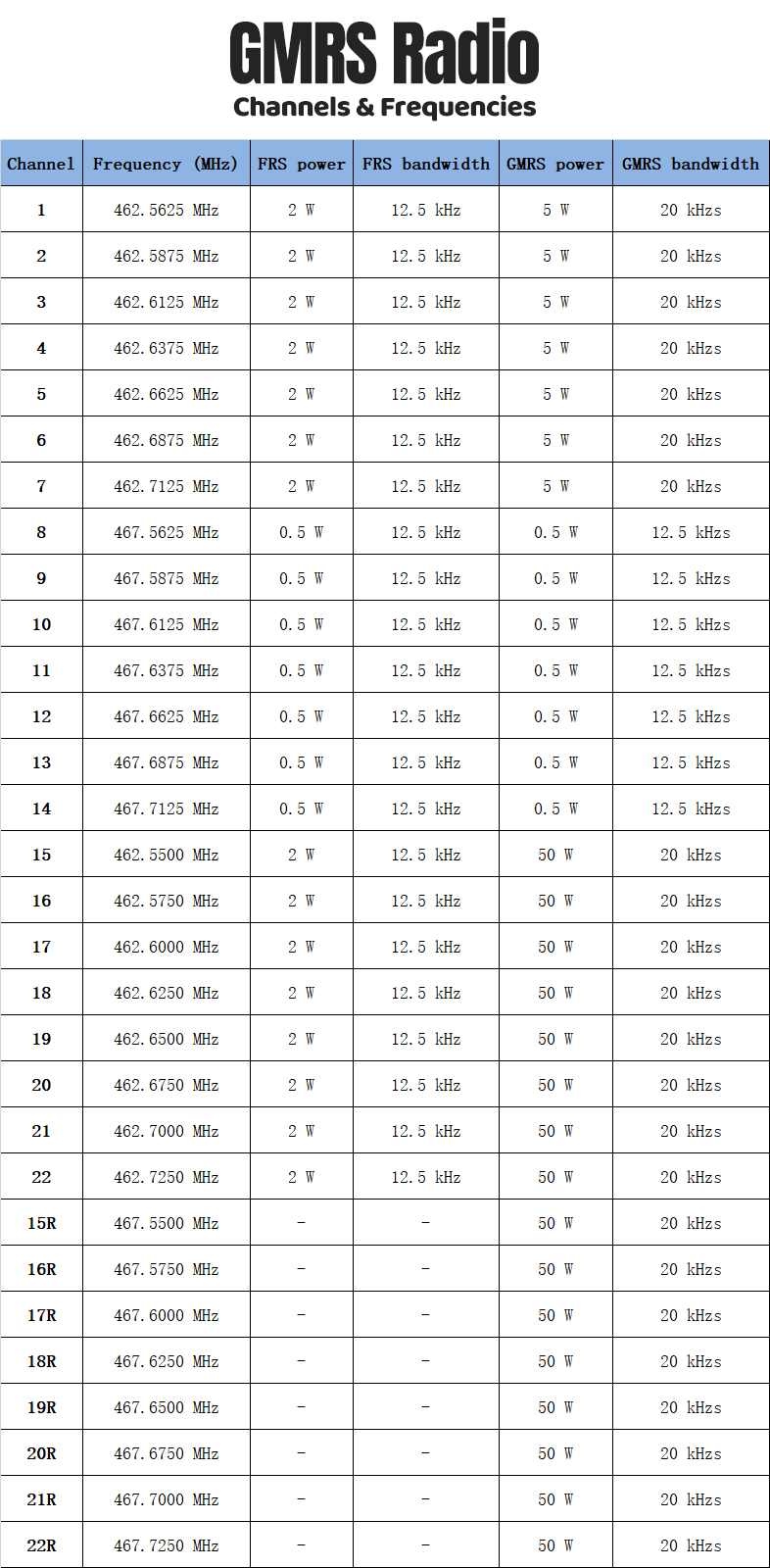
Below is a chart that shows the various channels and their corresponding frequencies. It shows what channels frequency chart are shared by FRS and GMRS, and the maximum transmission power allowed at each of those frequencies. You might notice that the last eight channels in the table have an “R” after the number. These are channels used by GMRS repeaters.
Which is the best GMRS channel?
If you looked at the table above carefully, you might have noticed that the primary qualitative difference between the GMRS channels is the limits on how much power can be used to transmit the signal.
The channels (and corresponding frequencies) break down into three groups:
Channel 8-14: Low Power = Short Range
Channels 8 through 14 allow a maximum transmission power of .5 watts, and thus have the shortest range.
Channel 1-7: Medium Power = Mid-Range
Channels 1 through 7 allow a maximum transmission power of 5 watts and thus are best for medium-range communications.
Channel 15-22: High Power = Long Range
Channels 15 through 22 allow a maximum transmission power of 50 watts, and will transmit the furthest.
So what’s the best channel to use? The one that matches your needs. If you’ll mostly be communicating within a short distance, use one of the low-power channels. Handheld GMRS units will typically switch between
If you need to reach someone 10 miles away, use one of the 50-watt channels.
Also, remember that you can always adjust the power you use for a given channel. It’s courteous to use the least power you need to make a clear connection. So even if you are operating on a 50-watt channel, you may not need all of that to reach your friend who’s 50 yards down the trail. Turn down the power to use what you need.
What is the difference between repeater channels and simplex channels?
GMRS radios can use repeaters, which can boost their signal. The channel chart above showed a list of “normal” channels, which are referred to as simplex channels, and repeater channels (which had the R next to them).
A repeater channel is a radio frequency that is used to receive and then retransmit radio signals to extend the range of communication. It is typically located on a tower or high location and requires a license to operate.
A GMRS simplex channel, on the other hand, is a direct radio-to-radio communication without the use of a repeater. It operates on a single frequency and communication can only occur in one direction at a time.
The details of repeater use are a bit beyond the scope of this guide. I’d recommend you practice in simplex mode first, before experimenting with repeaters. I’ll cover how to connect with repeaters in another topic.
Conclusion
GMRS radio has become the go-to no internet communication solution for overlanding, off-roading, and backcountry adventures. With its extended range, increased power, and multiple channels, GMRS radios provide a reliable means of communication in remote areas. Whether you're exploring the wilderness or embarking on an outdoor adventure, having a GMRS radio by your side ensures that you can stay connected and safe.
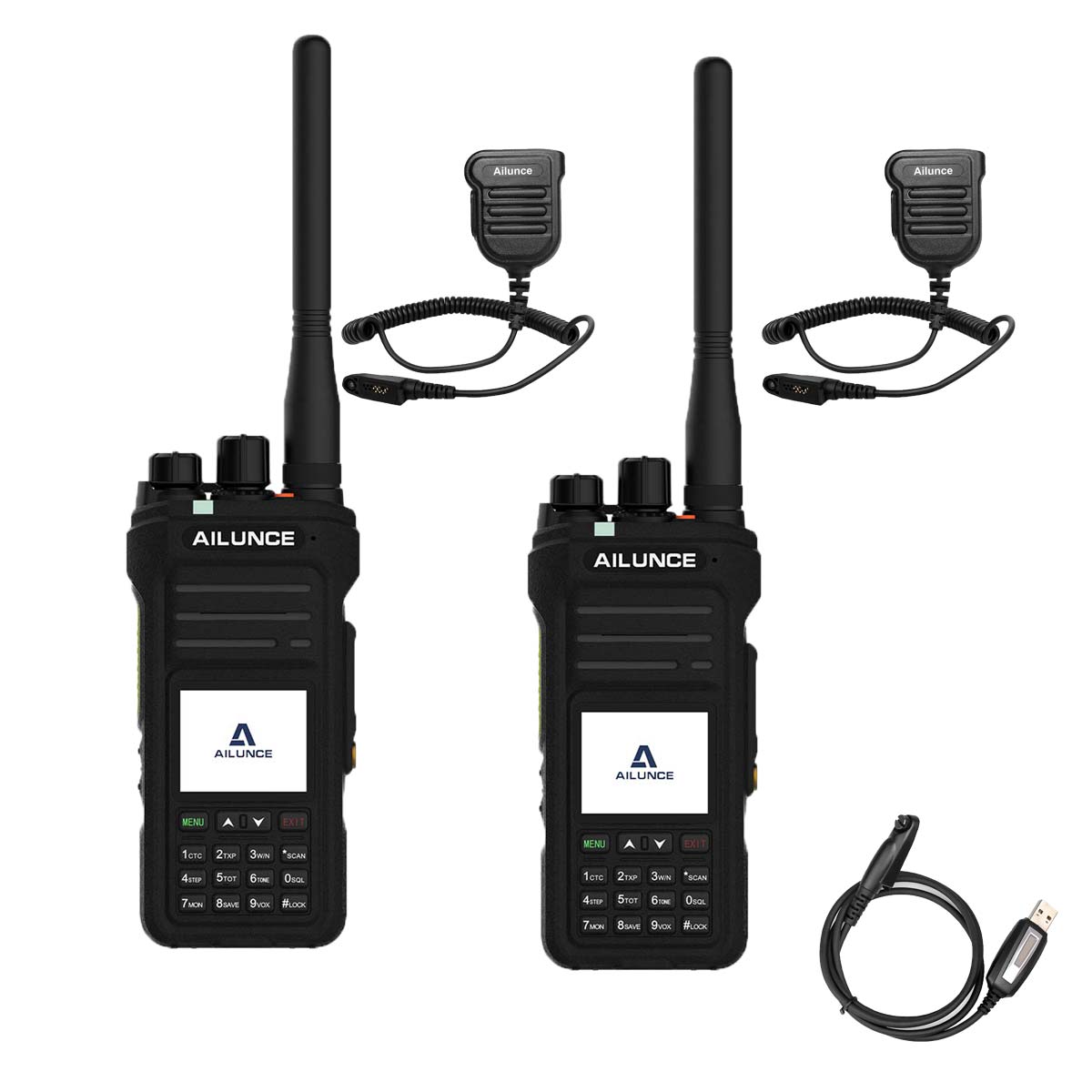
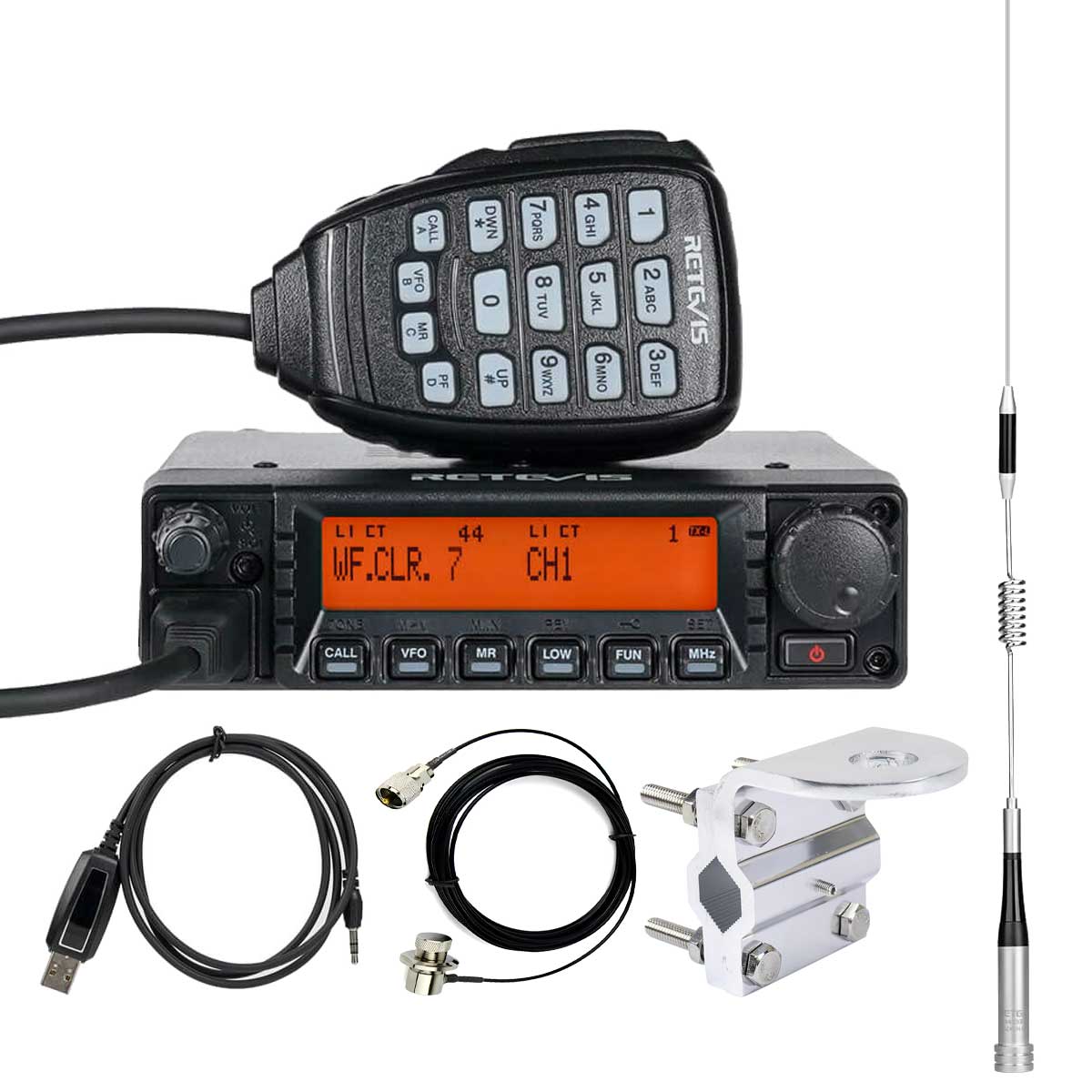
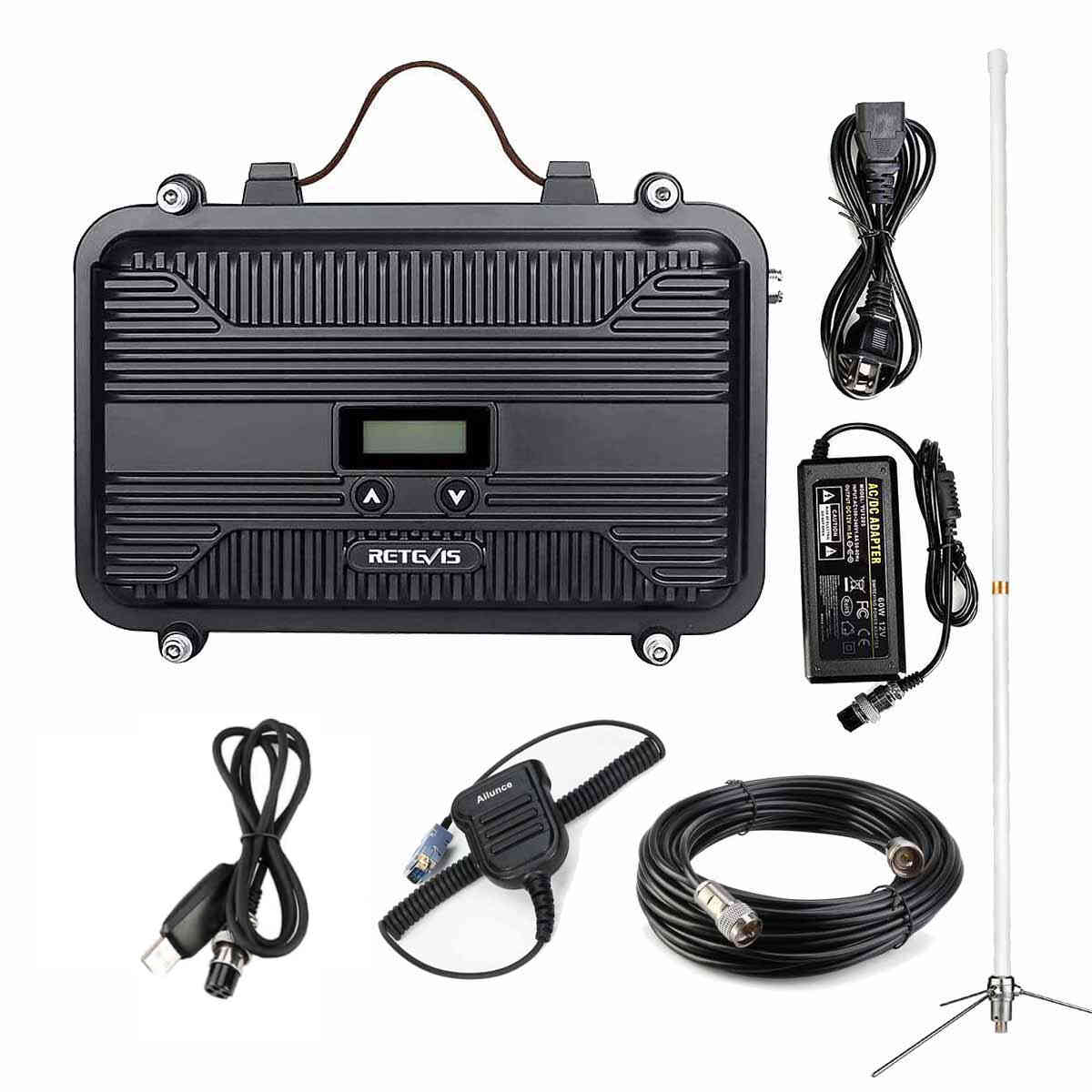
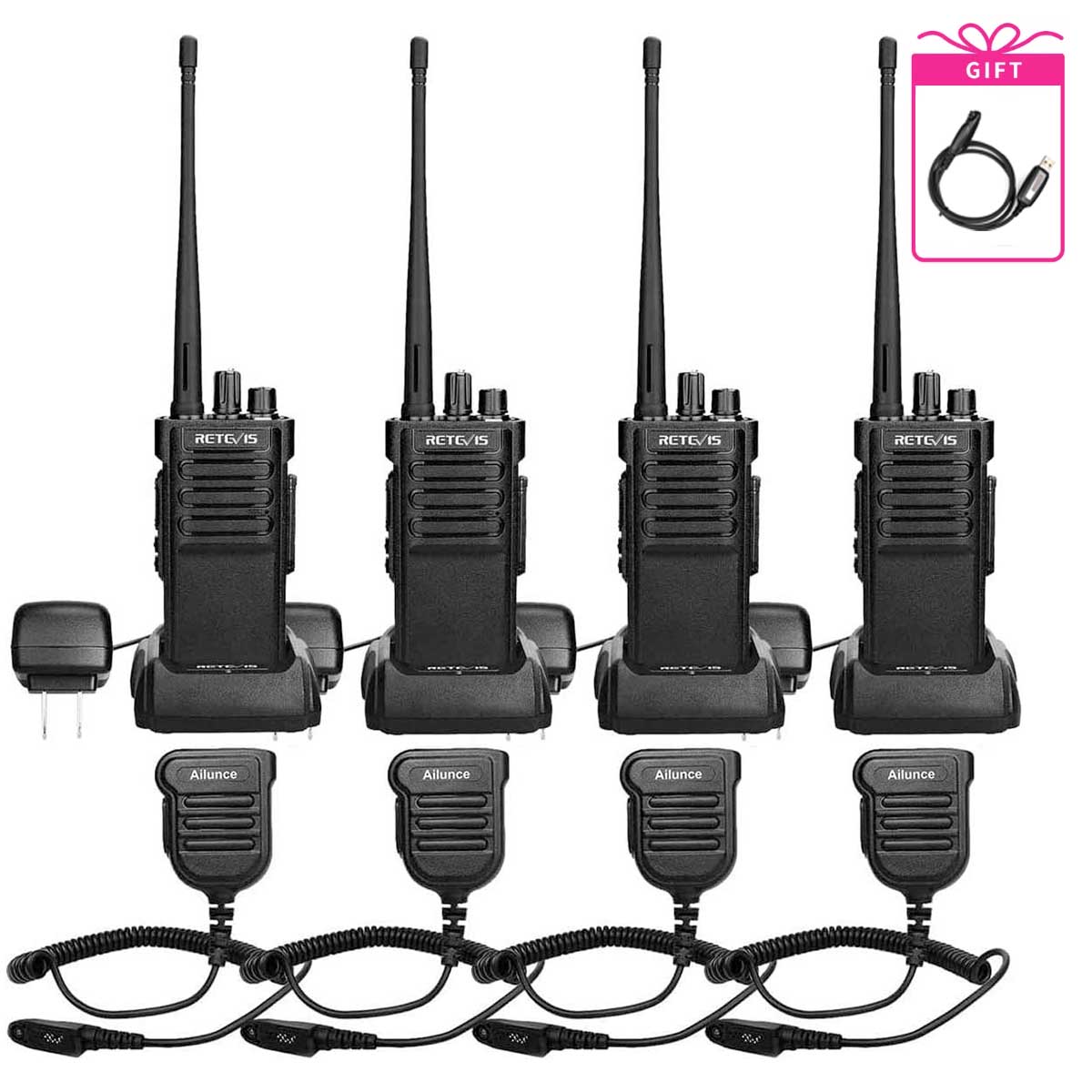
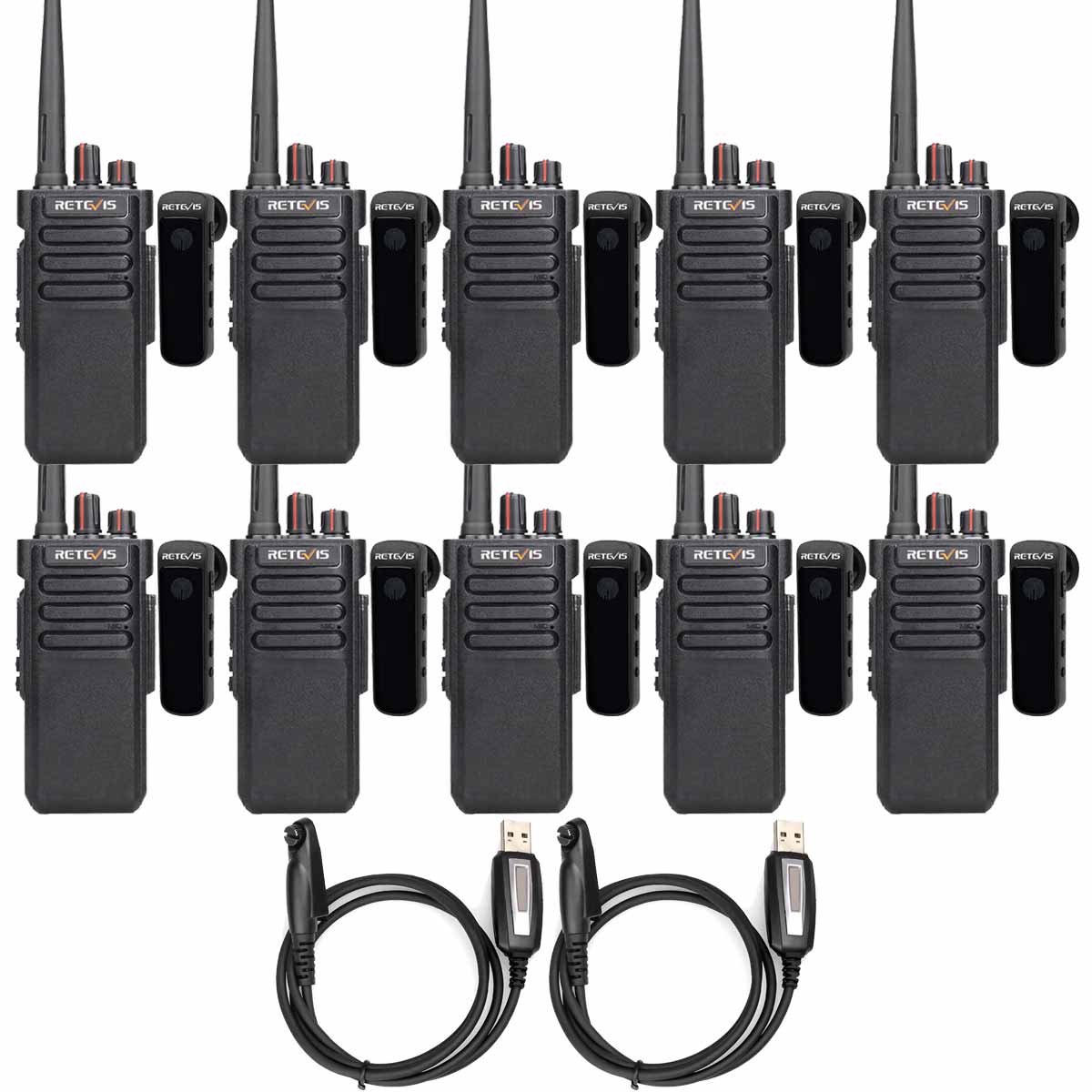
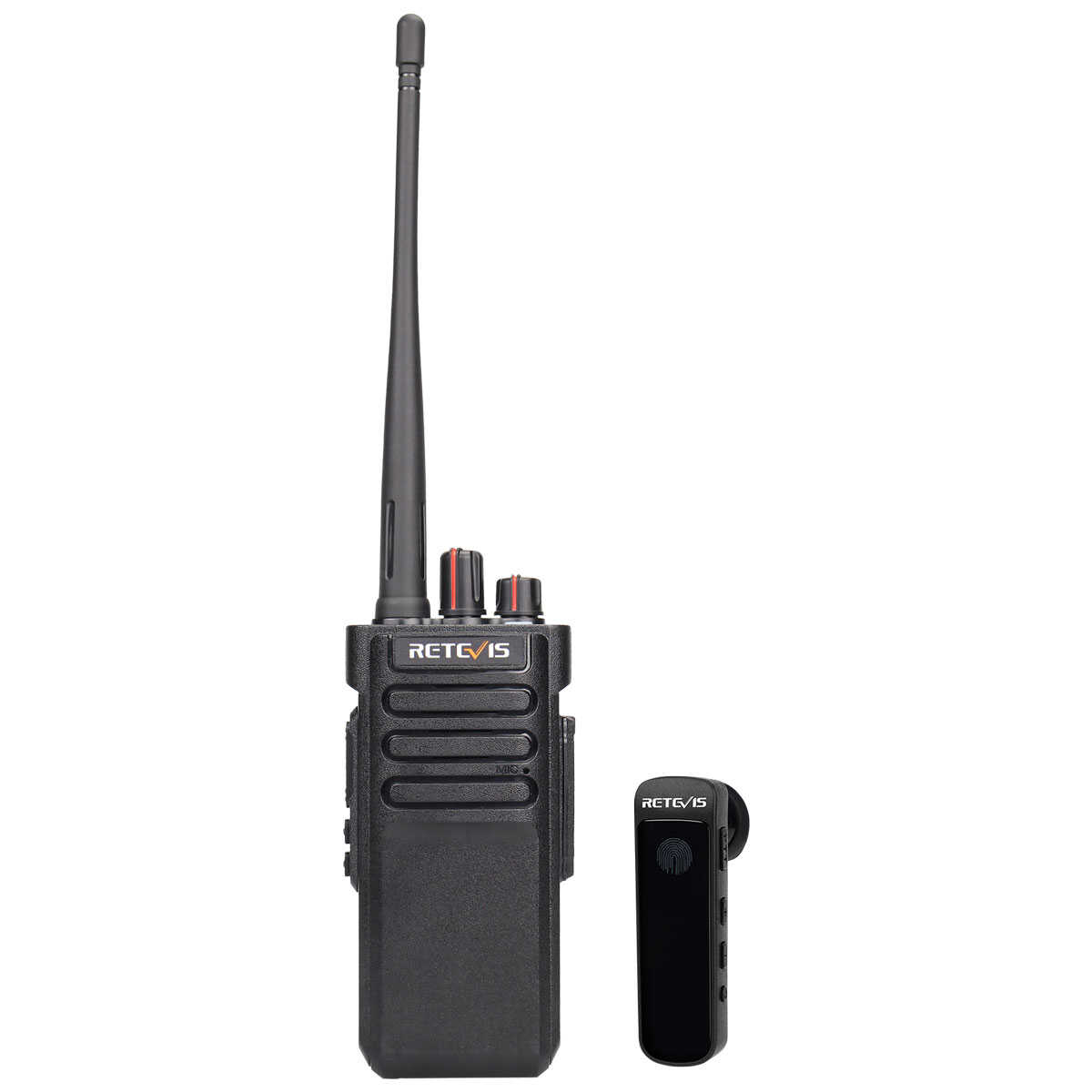
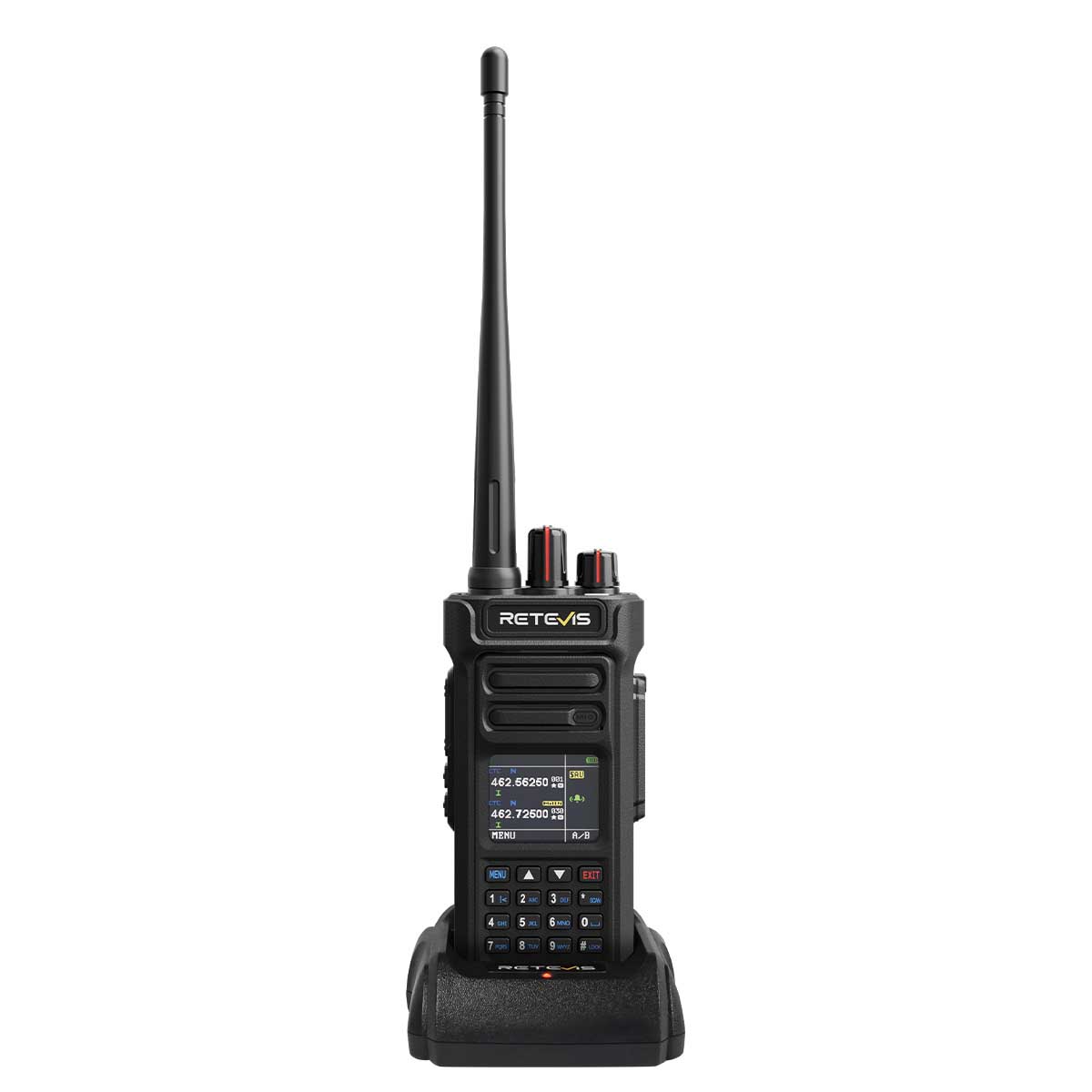
Consider investing in reliable GMRS radios like the Retevis HA1G, RA87, or RT97S to enhance your outdoor experience and ensure seamless communication during your next adventure.
Frequently Asked Questions About GMRS Radios
What is a GMRS radio used for?
A GMRS radio is used for two-way voice communication when you need a dependable no internet communication. GMRS is particularly useful for overlanding, off-roading, camping, backcountry travel, vehicle-to-vehicle coordination, and outdoor group communication. Handheld radios are convenient for people on foot, while mobile GMRS radios can provide higher power and better coverage from a vehicle.
How far can a GMRS radio reach?
Actual GMRS communication range varies with transmitter power, antenna height, terrain, obstructions, interference, and whether a repeater is used. Under open, level conditions, Retevis handheld GMRS walkie talkie radios can provide approximately 2–3 miles of range, while mobile GMRS radios may reach around 15–20 miles in favorable conditions. Hills, mountains, forests, buildings, and other obstacles can significantly reduce real-world coverage.
What is the GMRS frequency range?
GMRS operates in the UHF spectrum around 462 MHz and 467 MHz. The service uses 30 designated channels, including simplex channels and repeater channel pairs. Because the channels are distributed across these portions of the UHF band, GMRS does not use one continuous block of frequencies.
How do you use a GMRS radio?
For a typical overlanding group, everyone can agree on a GMRS channel and, when needed, the same CTCSS or DCS tone/code. Most users operate in channel mode, where the radio is already programmed with the appropriate frequency. After selecting the same channel, press and hold the PTT button while speaking, then release it to listen. More advanced users can use frequency mode or a repeater when their radio and the local repeater support those functions. In the United States, GMRS operation requires the appropriate FCC authorization.
What GMRS channel do truckers use?
There is no official GMRS channel specifically assigned to truckers. The familiar highway channel for truckers is CB Channel 19 (27.185 MHz) , which belongs to the Citizens Band service rather than GMRS. Truckers using GMRS should instead agree on a GMRS simplex channel with their group or use a compatible local repeater according to its published settings.
How do you use GMRS repeater channels?
A GMRS repeater receives a transmission from a radio and retransmits it on another frequency, allowing communication beyond normal simplex coverage. GMRS repeater operation uses paired input and output frequencies, and the repeater may also require a CTCSS or DCS access tone/code. To use one, the radio needs to be programmed with the repeater's channel pair and access settings, or have those settings already available as a programmed repeater channel.
What is the best GMRS handheld radio?
The best GMRS handheld radio depends on how you plan to use it. For overlanding and backcountry travel, useful factors include transmitter power, antenna performance, battery capacity, durability, weather resistance, repeater compatibility, audio clarity, and ease of programming. A compact handheld such as the Retevis HA1G can be a practical choice when portability is important, while a mobile GMRS radio can make more sense when maximum vehicle-based coverage is the priority. The Retevis article already identifies the HA1G as one of its recommended GMRS radios.
How do GMRS radios differ from other radios?
GMRS radios are part of the U.S. personal radio services but differ from FRS, CB, MURS, and amateur radio in their operating rules, frequency allocations, power limits, equipment options, and licensing requirements. GMRS is particularly attractive for outdoor groups because it combines handheld and mobile options, supports repeater operation, and provides more power potential than FRS. Unlike amateur radio, GMRS does not require an operator examination, although a GMRS license is required in the United States.
How can I set up a long-distance radio communication system for cross-country travel?
For cross-country travel, a practical GMRS setup can combine vehicle-mounted GMRS radios, handheld radios, a suitable external antenna, and access to compatible GMRS repeaters along the route. Before departure, travelers can identify repeater locations, confirm their frequencies and access tones, program commonly used channels, and keep a backup simplex channel for areas without repeater coverage. Because terrain and infrastructure vary from region to region, a cross-country system should be designed around route-specific coverage rather than relying on one advertised maximum range.
For travelers who need communication that is not limited to GMRS coverage, a POC (Push-to-Talk Over Cellular) radio can complement the GMRS setup. POC uses cellular data rather than direct RF radio-to-radio coverage, so it can be useful when cellular service is available across widely separated locations. It should be treated as a complementary communication method rather than a replacement for GMRS in areas without cellular coverage.

Leave a Reply



 Google
 Amazon
Comments
No data Yet