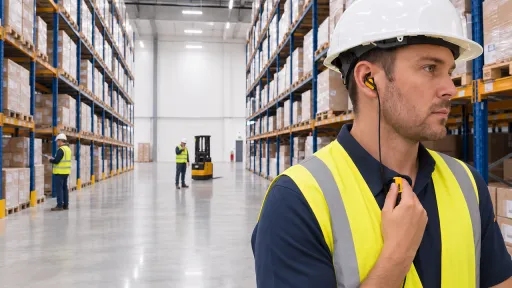
On a busy job site, communication problems do not always start with the radio. Sometimes the weakest part is the headset.
A worker misses part of an instruction because the speaker is not clear enough. A cable gets pulled while moving through a tight work area. An earpiece slips during a long shift. A team leader repeats the same message because the first one did not come through cleanly. These are small moments, but they add friction to the workday.
That is why a headset should not be treated as a minor accessory. In construction, logistics, inspection, patrol, and similar field environments, it becomes part of the communication chain itself. If it fails under noise, dust, sweat, or constant movement, the result is not just discomfort. The result is slower, less reliable coordination.
Industrial and commercial teams work in conditions that put more pressure on headsets than many buyers expect. The challenge is not only one thing. It is the combination of noise, wear, long shifts, and fast-paced operation.
Many worksites are loud by default. Construction equipment, warehouse traffic, loading movement, crowd noise, and nearby machinery all compete with incoming voice communication. In this setting, it is not enough for a headset to produce sound. It needs to deliver speech clearly enough to be understood the first time.
When instructions are repeated too often, work slows down. When instructions are partly understood, mistakes become more likely.
Cables take constant abuse in active work. They bend, twist, rub against clothing and tools, and get pulled during movement. This is common on construction sites, in logistics yards, and in commercial operations where staff are always walking, turning, lifting, or leaning.
A weak cable may not fail on day one. It usually wears down over time. That is why cable structure matters just as much as connector compatibility.
A headset may seem acceptable at first, then become irritating after hours of use. If the earpiece feels unstable, workers will keep adjusting it. If it causes discomfort, they may stop using it properly. In both cases, communication becomes less consistent.
For inspections, patrols, dispatch-heavy shifts, and site coordination work, a stable fit helps reduce fatigue and distraction.
Noise levels change throughout the day. A worker may move from a quieter corridor to a much louder loading area or work zone in minutes. If the only way to adjust audio is to pull out the radio and stop what they are doing, that creates delay.
In active environments, small control details matter. A headset should make communication easier to manage, not harder.
Choosing the right Industrial Radio Headset starts with knowing what actually matters in the field.
Good communication depends on both hearing and speaking. The incoming voice must be clear enough to understand in a noisy setting. The microphone must also transmit speech in a way that sounds clean to the other side.
In field use, intelligibility matters more than impressive-sounding specifications.
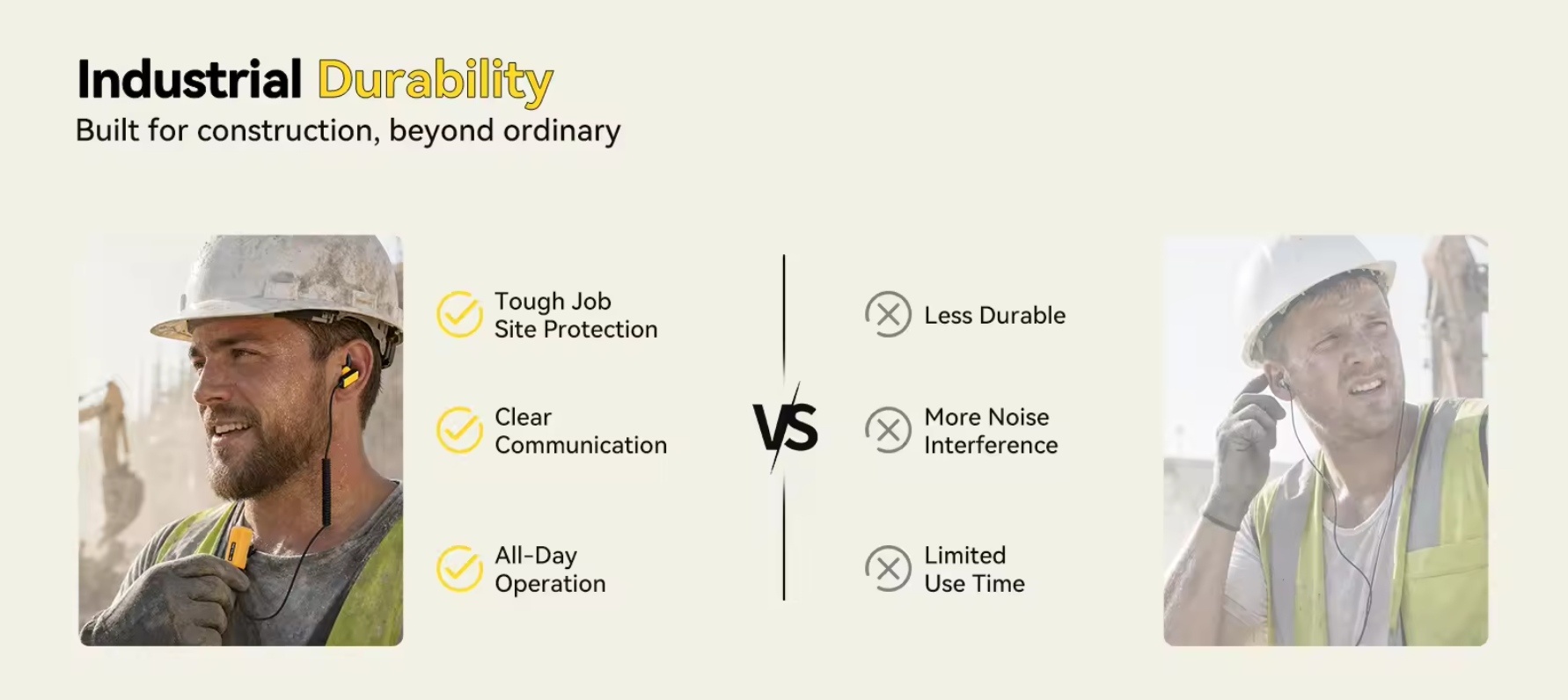 Cable failure is one of the most common weak points in daily headset use. Buyers should look for designs that are better prepared for bending, pulling, friction, and repeated movement.
This is especially important for workers who are constantly on the move or regularly work around equipment, belts, ladders, pallets, or narrow walkways.
A secure fit matters because it affects continuity. If the headset stays in place and remains comfortable, workers are less distracted and more likely to use it correctly throughout the shift.
A fit that works for one person may not work for another. That is why adjustability or multiple ear tip sizes can make a real difference.
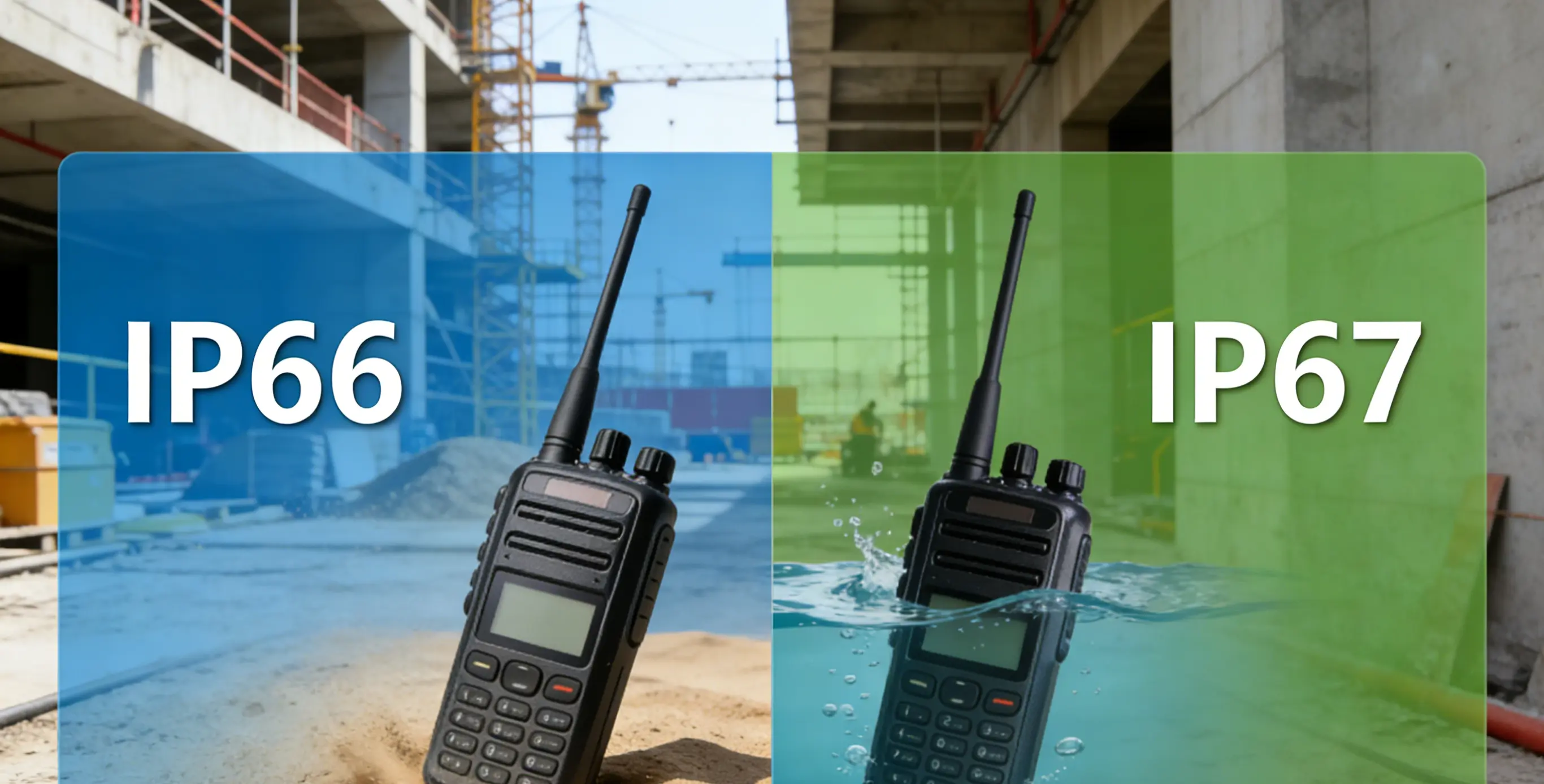
In jobsite conditions, dust and moisture exposure are part of normal use. A headset should offer a practical level of protection against those conditions.
Protection ratings can help buyers compare products, but they should be understood realistically. A better rating improves survivability in normal work exposure. It does not make a device indestructible.
When background noise changes, workers need to adapt quickly. Volume control that is built into the headset can save time and reduce the need to reach for the radio constantly.
That is a small feature with very practical value.
The EES048 is a useful example because its design responds directly to the kinds of problems described above.
The headset includes a built-in quality speaker and a high-sensitivity microphone. This helps with both sides of the conversation: incoming audio remains easier to follow, and outgoing speech is transmitted more clearly.
In active work environments, that matters because instructions often need to be understood quickly and without repetition.
One of the most important parts of the EES048 is its cable construction. The cable includes an internal Kevlar-reinforced layer, which helps improve tensile strength and abrasion resistance. This makes it better suited to environments where cables face regular pulling, rubbing, and movement.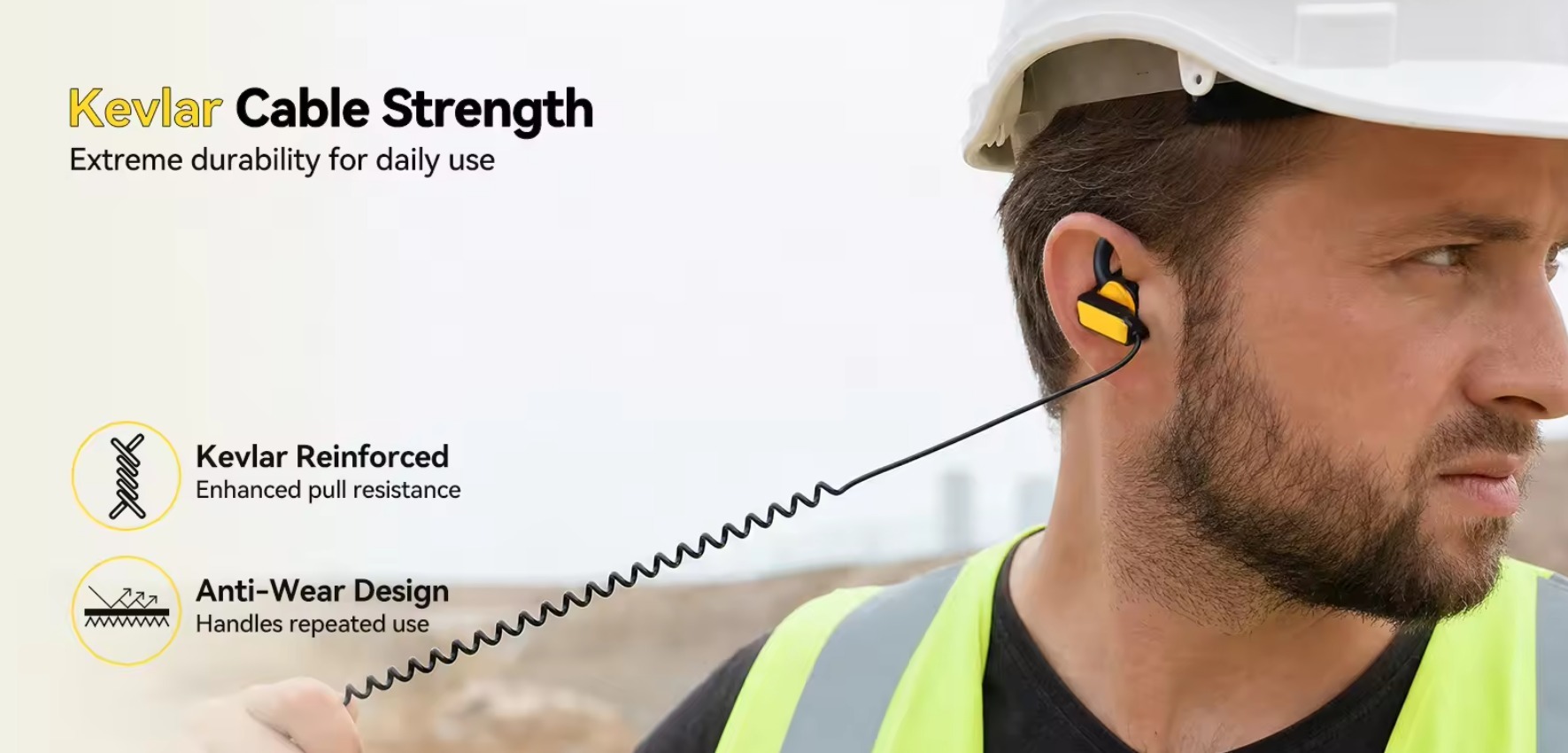
It also uses an elastic coiled cable, which helps the cable handle frequent bending and stretching more effectively. In construction, logistics, and other busy environments, that added flexibility can improve long-term durability.
The EES048 uses soft silicone eartips in multiple sizes. This helps different users achieve a more stable and more comfortable fit. That is especially useful during long inspection rounds, mobile patrols, and shift-based communication roles where the headset may be worn for hours at a time. 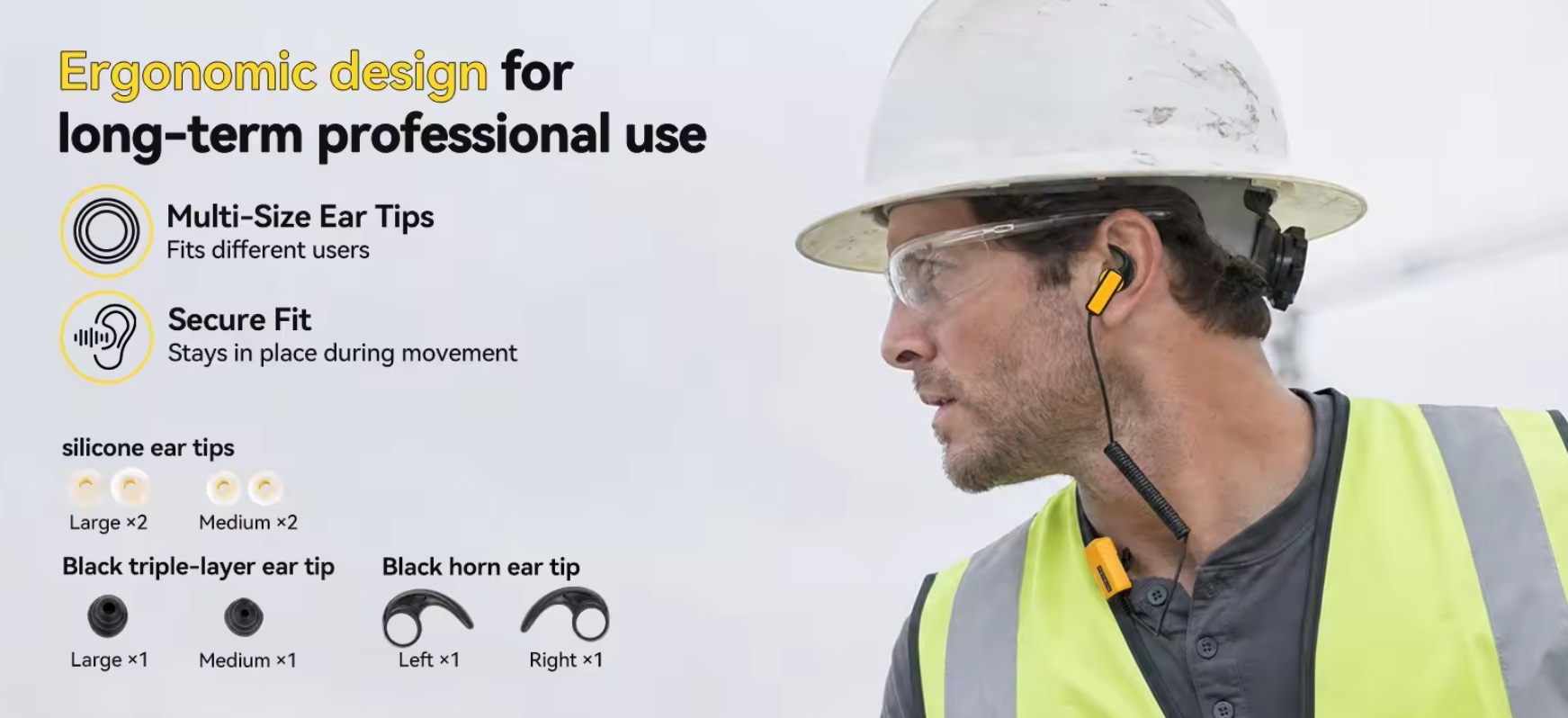
A better fit does not just improve comfort. It helps reduce readjustment and keeps communication more consistent through movement.
The headset carries an IP54 water resistance rating, which makes it more suitable for construction and other demanding work settings than a basic consumer-style earpiece.
This level of protection is useful for dust exposure, sweat, and everyday jobsite conditions. It should be understood as practical protection for active work, not as a claim for extreme abuse tolerance.
The EES048 includes volume control on the headset itself. This helps workers respond more quickly when background noise changes, without needing to remove the radio or stop to make manual adjustments elsewhere.
That kind of simple control is valuable in environments where conditions shift often. 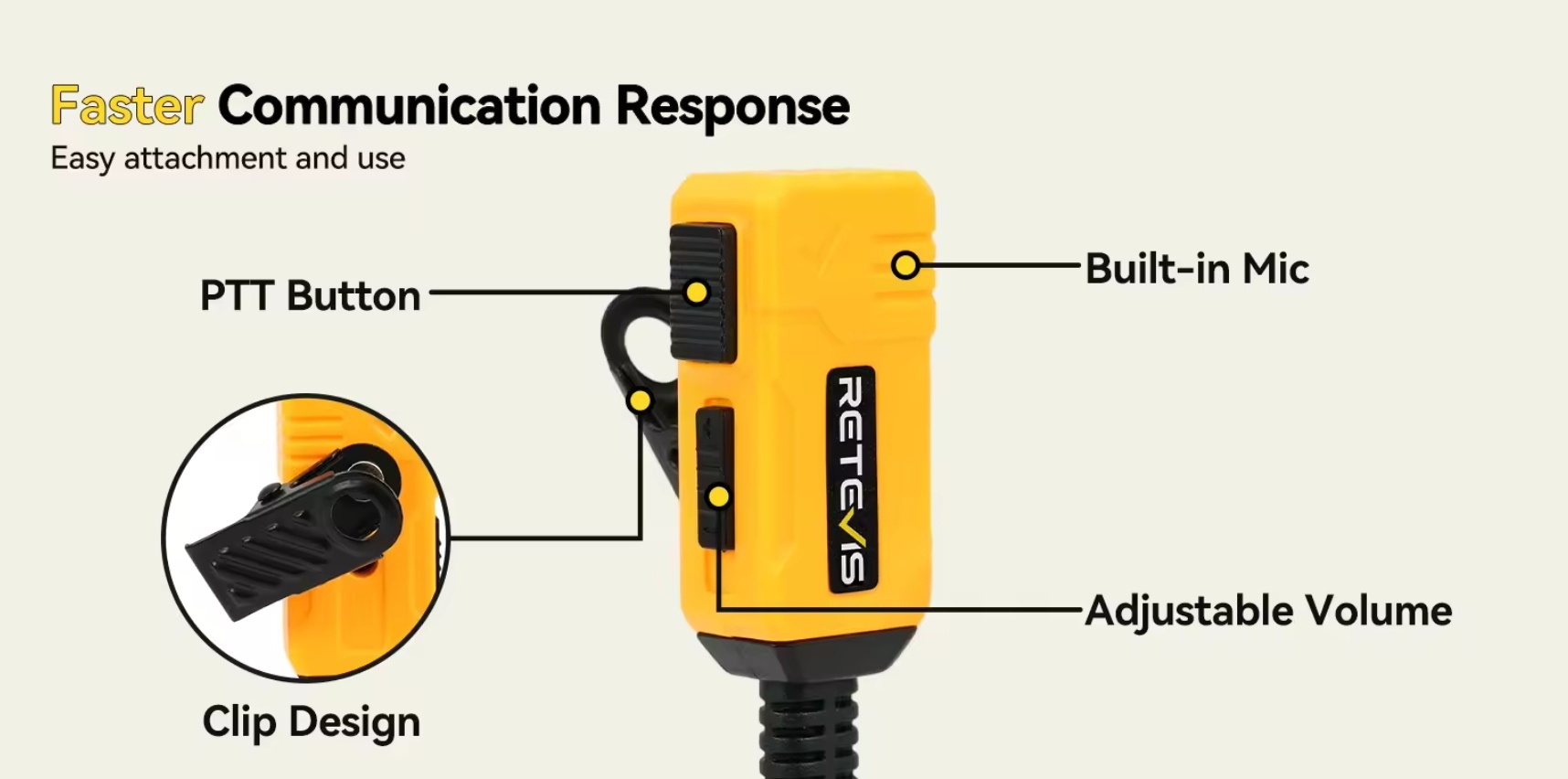
The black-and-yellow safety color scheme also serves a purpose. In construction zones, warehouses, and event operations, it makes the headset easier to spot and identify quickly in a busy environment.
It is a small design choice, but one that fits the practical needs of active worksites.
The EES048 is especially well suited to environments where workers need clear radio communication while moving through noisy or physically demanding spaces.
These teams deal with dust, movement, cable wear, and changing sound conditions every day. A more durable cable structure, practical protection, and stable wear design are highly relevant here.
These environments often involve long shifts, frequent radio updates, and constant movement between louder and quieter areas. Fast volume adjustment and wearing comfort become especially useful in this kind of workflow.
Patrol staff and mobile security teams need a headset that stays in place, delivers instructions clearly, and stands up to daily use. Stable wear and clear communication support matter more than unnecessary complexity.
The right headset does more than make a shift easier to get through. It supports clearer voice communication. It reduces distractions caused by poor fit or weak controls. It helps teams receive and relay instructions more smoothly in active environments.
That does not mean a headset alone transforms operations. But it can remove common communication friction that slows teams down during the day.
Seen that way, an Industrial Radio Headset is not only about wearability. It is also about communication consistency.
A headset that connects to the radio is not always a headset that fits the job.
In noisy, dusty, high-movement work settings, buyers should look beyond simple compatibility and focus on clarity, cable durability, fit stability, practical protection, and ease of use. Those are the factors that shape real performance in the field.
The EES048 is a strong match because its design aligns with the actual demands of industrial and commercial communication. Its reinforced cable, coiled structure, stable fit, IP54 protection, clear audio, and on-headset controls all reflect real work conditions.
When communication matters, the headset matters too.
No data Yet





 Google
 Amazon