




Table of Contents
Your Step-by-Step Two Way Radio Maintenance Checklist for Autumn Construction Restart
- Posted by:Retevis

Across construction sector, the annual summer shutdown marks a full pause on residential and commercial building sites as teams take their August holidays. When work resumes in early autumn, site foremen and safety managers face a common hidden risk: two-way radios left idle for weeks can develop faults that go unnoticed until a critical on-site moment.
Dead batteries, dust-clogged microphones, loose antennas, and corroded charging contacts can derail morning workflows, create communication blind spots on lifting or high-altitude tasks, and put your team at odds with French BTP safety regulations. This guide provides a printable, step-by-step two way radio maintenance checklist designed specifically for post-summer shutdown site reopening. Follow it to complete a full fleet inspection in 15 minutes, reduce unplanned downtime, and keep your site communication reliable from day one of the restart.
Why Pre-Reopening Radio Checks Are Non-Negotiable for Building Sites
On residential and commercial construction sites, two-way radios are classified as essential safety equipment, not just productivity tools. Under EU occupational health and safety rules and French BTP sector guidelines, all on-site communication devices must be verified as functional before work recommences after a prolonged shutdown.
Skipping a pre-reopening inspection carries three core risks:
l Reduced operational efficiency: Unidentified radio faults force teams to rely on phone calls or in-person messages, slowing task handovers, material deliveries, and progress updates across multi-zone building sites.
l Elevated safety hazards: Communication gaps during lifting operations, facade work, or electrical installations increase accident risk, especially during the busy restart period when teams are readjusting to site routines.
l Compliance gaps: Inspectors conducting post-reopening safety audits can issue penalties if site communication equipment is not properly maintained and verified as fit for use.
For site foremen, a short pre-start inspection is a low-effort, high-impact step to protect both your team and your project timeline.
Pre-Inspection Preparation: What You’ll Need
Before working through the construction radio pre-use checklist, gather these basic supplies to complete every step efficiently:
l Clean, dry microfibre cloths for wiping dust and moisture from casings and contacts
l A small soft-bristled brush for clearing debris from speaker grilles and button gaps
l Fully charged spare batteries to test device power performance
l One known-working reference radio to verify signal and audio clarity
l A compatible charging base to confirm charging functionality
Step-by-Step Two Way Radio Maintenance Checklist for Site Reopening
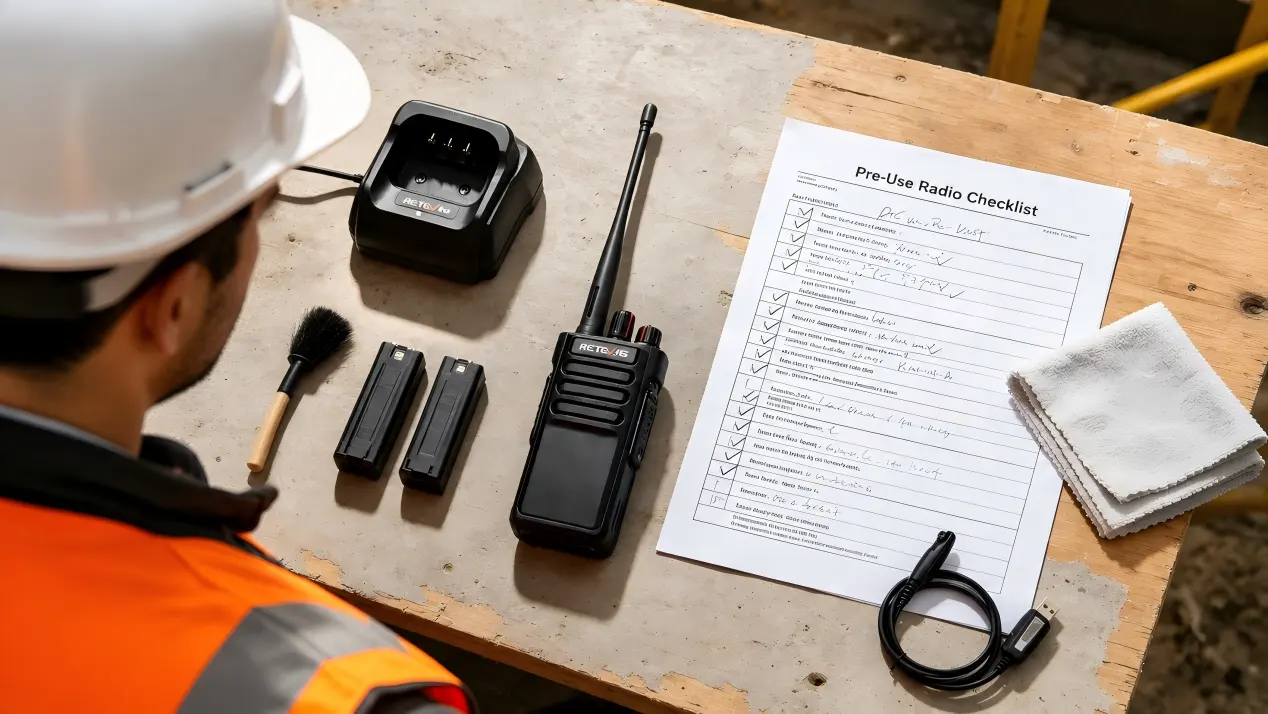
Work through this building site two way radio maintenance process for every device in your fleet. We recommend checking radios one day before your full team returns to resolve issues ahead of restart.
1. Physical & Exterior Check
Start with a visual and physical inspection to catch damage that occurred during storage or last-season use:
l Inspect the outer casing for cracks, deep scratches, or signs of water ingress that could compromise internal components
l Test all buttons, knobs, and the PTT (push-to-talk) key to confirm they press and release smoothly without sticking
l Check the antenna for bends, cracks, or loose connections; tighten firmly if loose, as a damaged antenna drastically reduces range
l Examine the charging port and battery contacts for visible dirt, corrosion, or bent pins
l Verify the belt clip and any accessory ports are securely attached and free of debris
2. Battery & Power System Check
Battery degradation is the most common post-holiday issue for idle construction radios. Follow these steps:
l Insert a charged battery and power on the device; confirm the battery level indicator shows a full charge
l Test the device on standby and in active use for 5–10 minutes to rule out sudden power drops
l Inspect battery contacts on both the radio and the battery pack for oxidation or dirt; gently clean with a dry cloth if needed
l Place the radio on its charging base and confirm the charging indicator activates correctly
l Test spare batteries alongside active units to ensure your backup fleet is ready for deployment
Note: If a battery fails to hold a charge after a full charging cycle, replace it to avoid mid-shift failures.
3. Audio & Signal Performance Test
l Clear audio and reliable signal are non-negotiable for noisy construction environments:
l Pair the test unit with your reference radio on a standard site channel
l Test both transmit and receive audio quality; listen for static, muffled sound, or cutting out during PTT use
l Verify the speaker and microphone are free of dust blockages that cause muffled audio
l Test range by walking to the far edges of your site to confirm signal remains consistent across all work zones
l Adjust volume controls to ensure they function smoothly across all levels
4. Function & Compliance Verification
For sites operating in France and the wider EU, regulatory alignment is a critical part of your post-holiday walkie talkie inspection guide:
l Cycle through all programmed channels to confirm they are correctly configured for your site’s operation
l Test any additional features: scan function, privacy codes, emergency alert buttons, and keypad lock
l Confirm the device carries a valid CE marking, verifying compliance with the EU RED Directive (2014/53/EU)
l For PMR446 licence-free radios, confirm all channels operate within the 446 MHz band; these units require no operating licence for use on French residential and commercial building sites
l Remove any unauthorised frequency programming that could violate spectrum regulations
5. Accessories & Fleet Inventory Check
Finish your inspection by accounting for your full communication fleet and supporting gear:
l Test all compatible accessories: headsets, earpieces, remote speaker mics, and multi-unit chargers
l Verify charging cables and power adapters are undamaged and deliver a stable charge
l Update your site equipment log to note any faulty units, replaced batteries, or missing accessories
l Label any devices that require repair or replacement to avoid accidental use on the first day back
l Confirm you have enough working units for every on-site team member, plus 10–15% spares
Common Post-Holiday Radio Issues & Quick Fixes
Even with regular care, radios left in storage for 3–4 weeks over summer can develop predictable issues. Here are the four most common faults and on-site fixes you can apply without specialised tools:
1. Dead battery that won’t power on
First, clean the battery and device contact points with a dry cloth to remove surface oxidation. If the unit still won’t turn on, try a fully charged spare battery to isolate whether the fault is with the battery or the radio itself. Batteries that have fully discharged during long storage may need 30–60 minutes on charge before they power on. If a battery fails to hold a charge after a full cycle, replace it.
2. Muffled or crackling audio from the speaker or mic
Dust and fine construction debris often settle in speaker grilles during shutdown. Use a soft-bristled brush to gently clear debris from the speaker and microphone openings. Do not use compressed air, as this can push dust deeper into the unit. If audio remains distorted after cleaning, the internal speaker may require replacement.
3. Weak signal or reduced range
A loose or damaged antenna is the number one cause of poor signal on construction sites. First, confirm the antenna is screwed on tightly and shows no visible cracks or bends. If signal is still weak, test the radio on a different channel to rule out local interference. For consistent range issues across multiple units, check for new on-site structures or equipment that may be blocking signal.
4. Charging contacts that don’t connect
Corrosion or dust on charging pins can prevent the battery from charging properly. Gently wipe both the radio and charger contacts with a clean, dry cloth. For light oxidation, a cotton swab with a small amount of isopropyl alcohol can be used (ensure the unit is fully powered off and dry before recharging). If charging remains unreliable, replace the charging base.
How Retevis Construction Radios Simplify Post-Holiday Maintenance
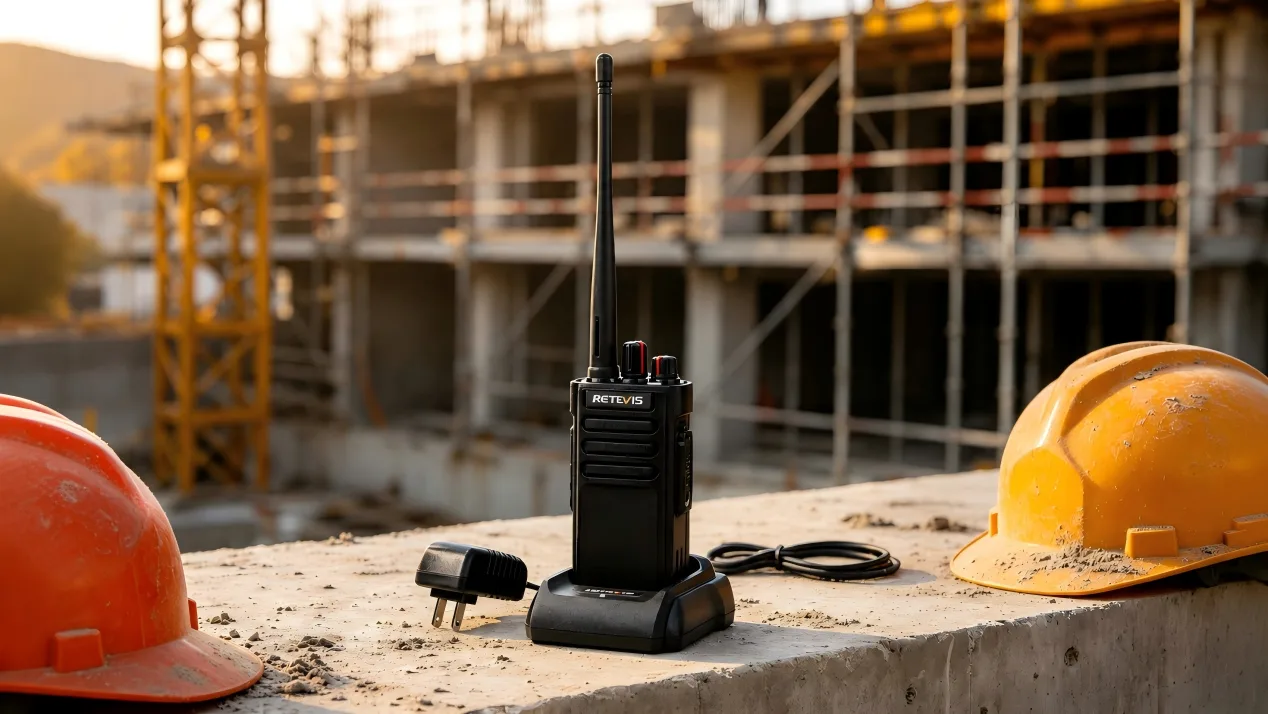
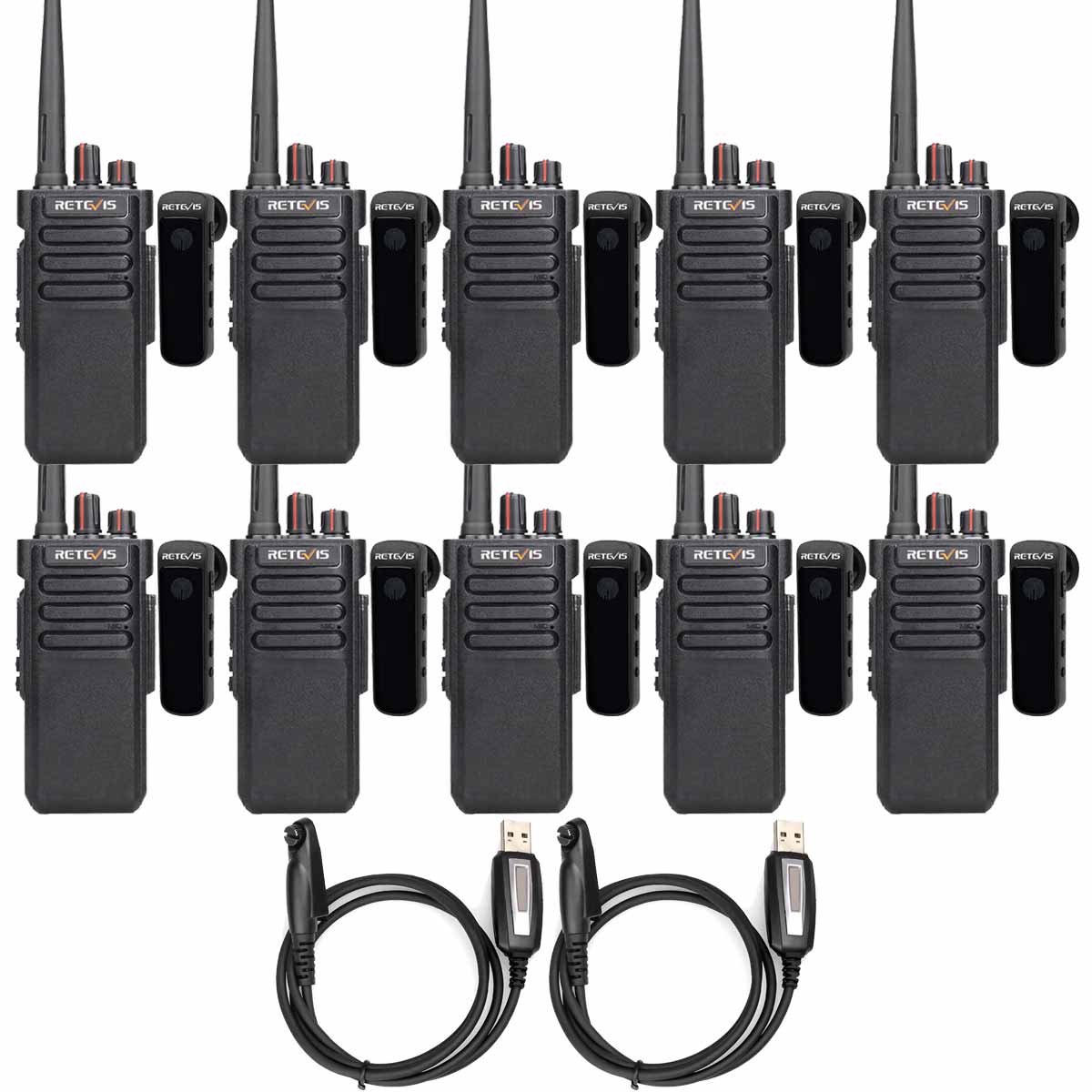
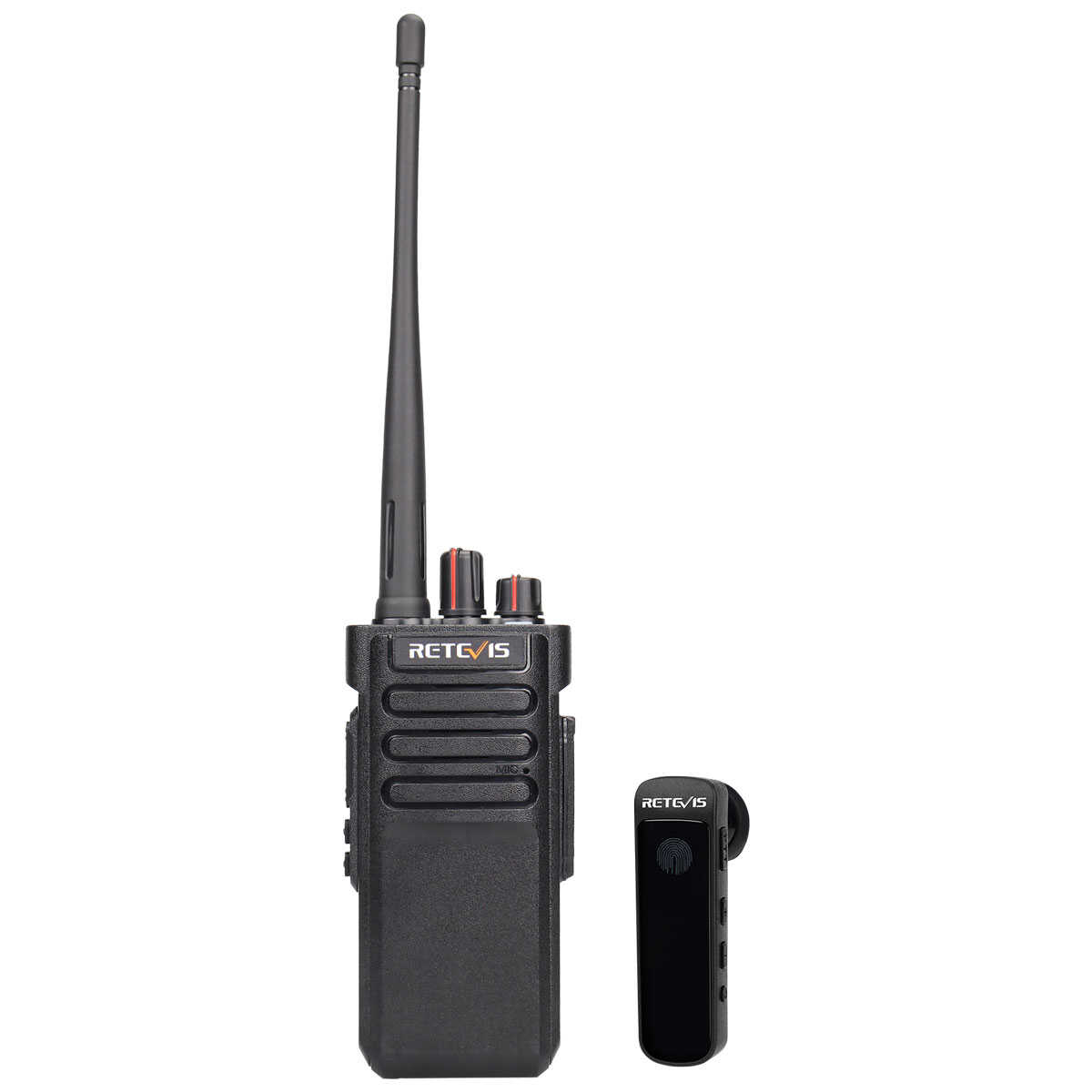
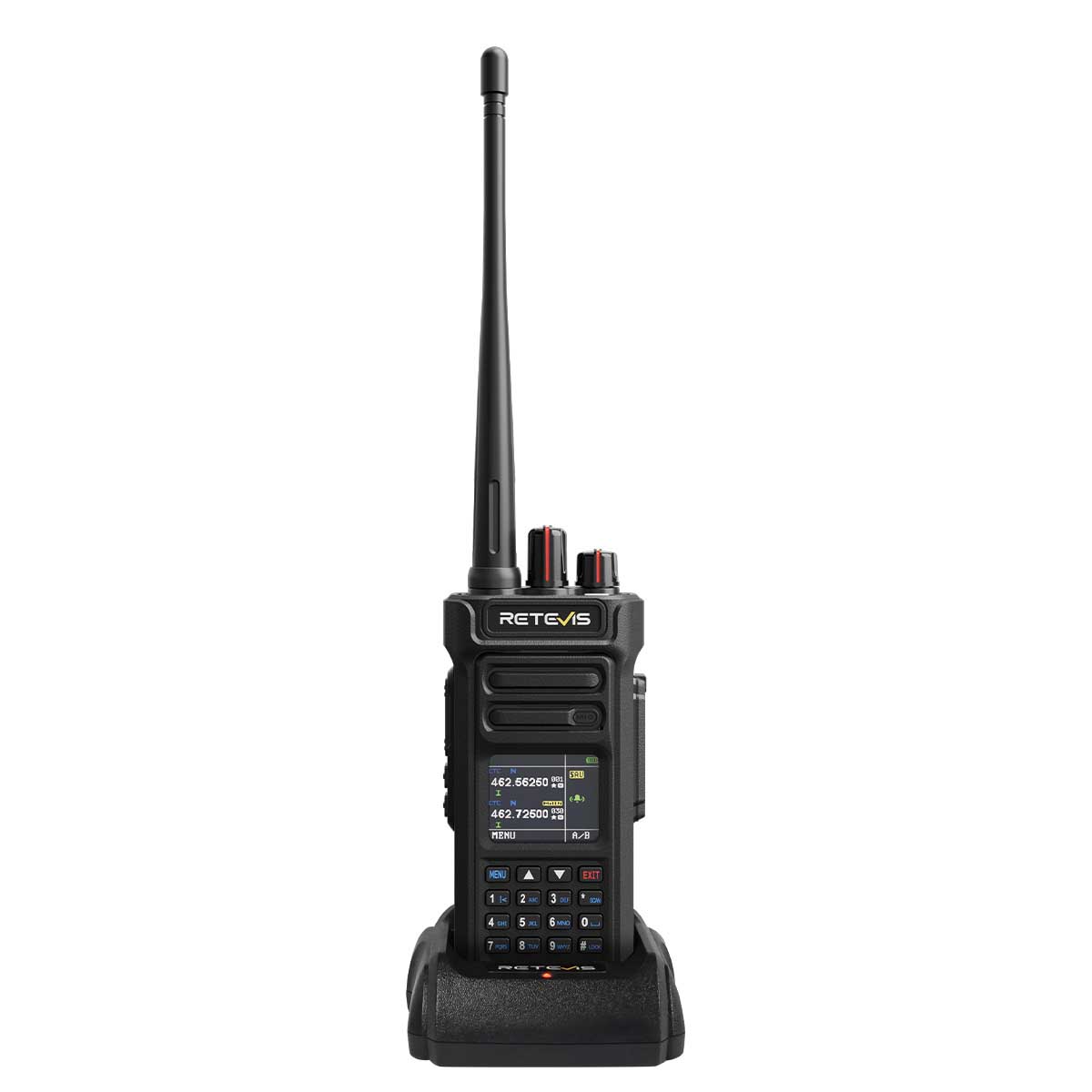
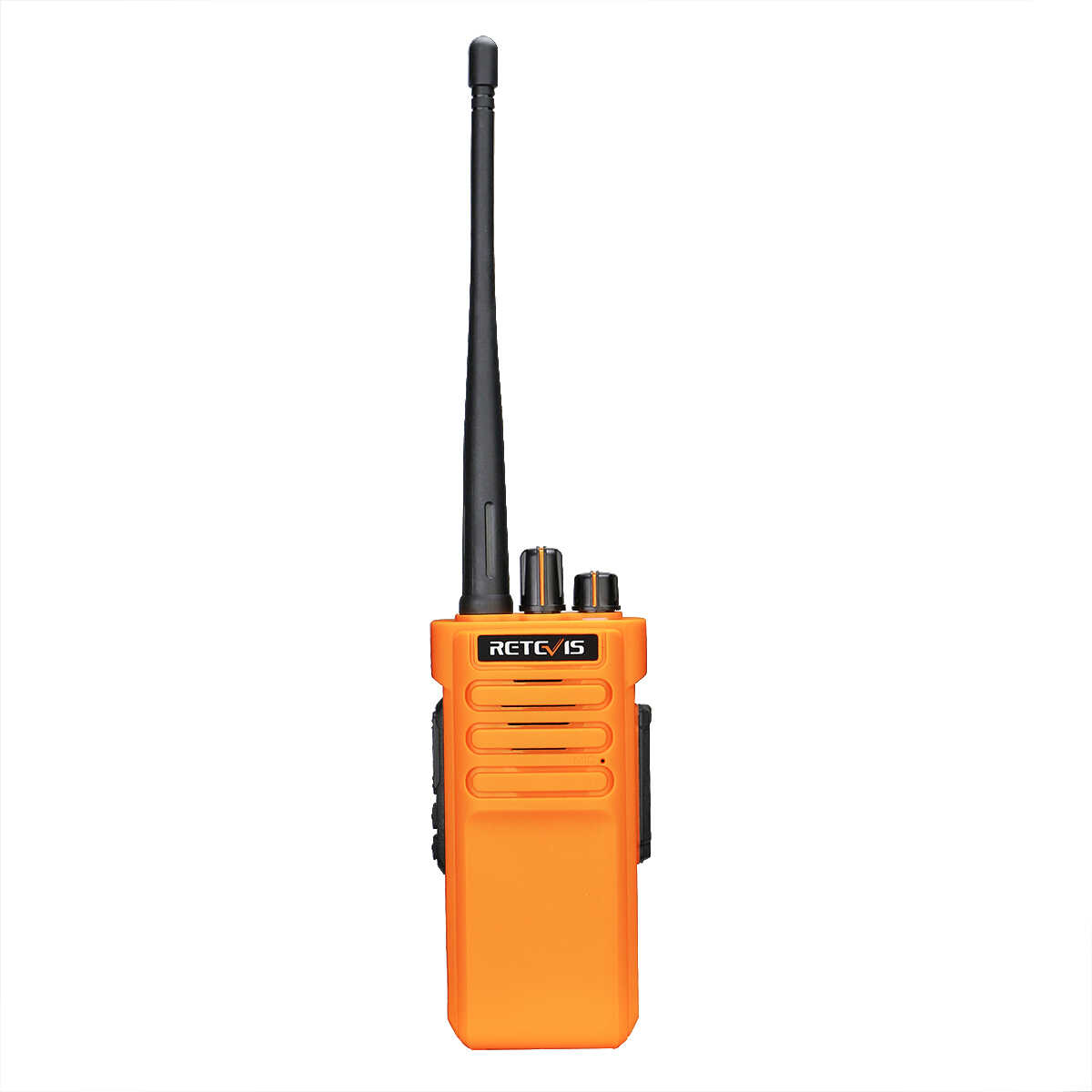
For site foremen managing fleets across Europe residential and commercial building projects, Retevis construction radios are engineered to reduce post-shutdown maintenance work and extend service life, even in dusty, high-use site conditions.
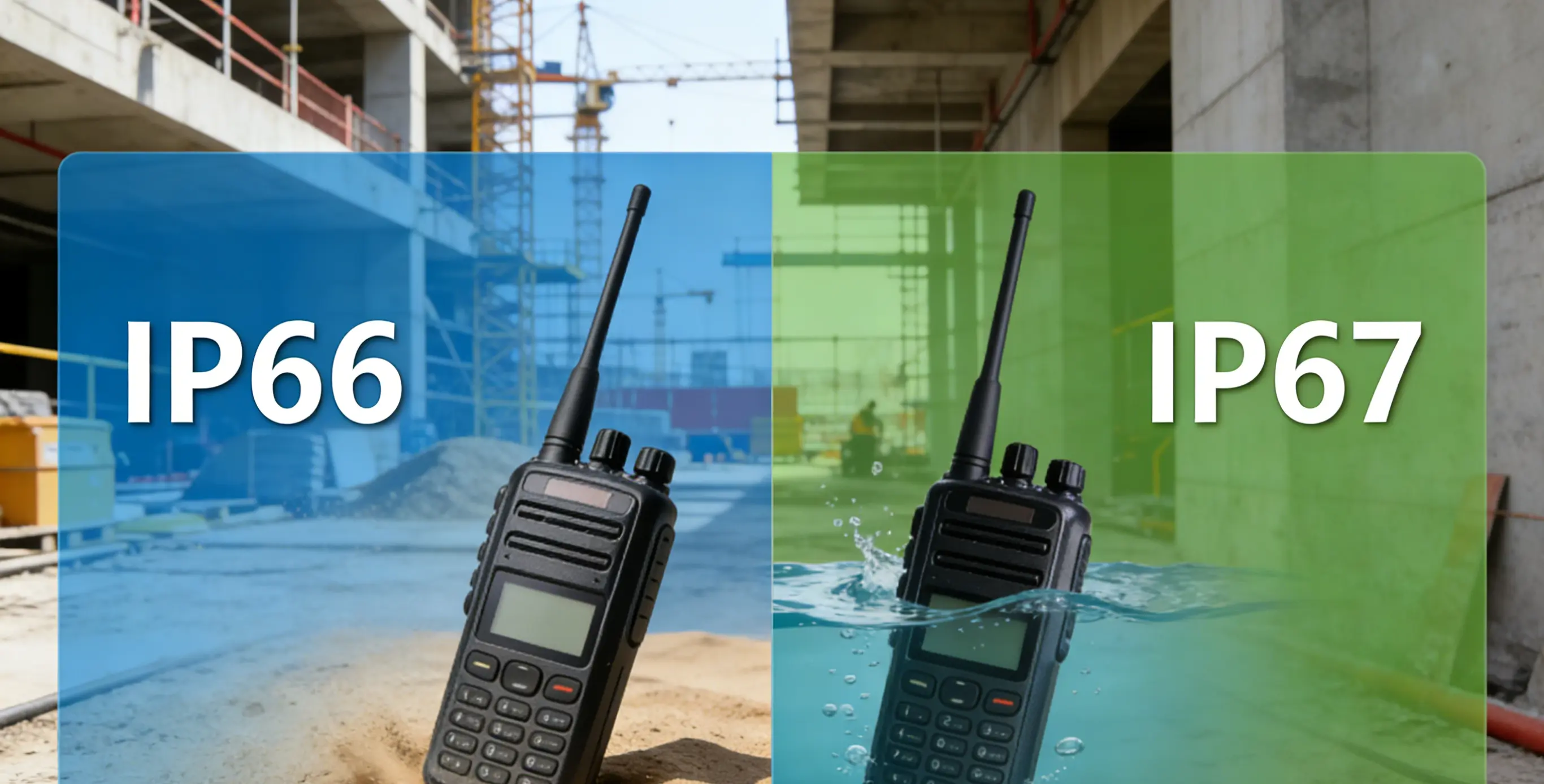
Built with IP-rated dust and water resistance, Retevis units block fine construction debris from entering speaker grilles and internal components during both active use and storage. This drastically reduces the risk of post-holiday audio faults and cuts down on pre-reopening cleaning time. The rugged, impact-resistant casing also stands up to being stored in toolboxes or moved around site storage areas over the shutdown period, reducing casing and button damage.
Long-cycle lithium-ion batteries used in Retevis construction radio models also hold their charge better during extended idle periods compared to standard consumer radio batteries, reducing the rate of full discharge and premature battery failure during summer shutdowns.
For teams scaling up for autumn project restarts, these design features translate to less time spent on maintenance and more reliable communication from day one of the build.
Ongoing Maintenance Tips to Extend Radio Lifespan
A thorough post-summer inspection sets a strong foundation, but consistent routine care will keep your two-way radio fleet reliable for years. Follow these four site-friendly practices:
Wipe down each radio with a dry cloth at the end of every shift to remove dust, mortar splatter, and moisture before it settles into components
Remove batteries from radios that will be stored for more than a week, and store them in a cool, dry place at approximately 50% charge to preserve battery health
Run a full fleet performance check at the start of each month, not just after long shutdowns, to catch small issues before they cause on-site failures
Keep all chargers, spare batteries, and accessories in a dedicated, dust-free storage station on site to reduce exposure to construction debris
Final Takeaway
Your post-summer site restart sets the tone for the entire autumn construction season. A structured two way radio maintenance checklist takes just 15 minutes to complete per fleet, but it eliminates one of the most common preventable causes of on-site delays and safety gaps.
By working through the physical, power, audio, compliance, and accessory checks outlined above, you can ensure every device on your site is ready for reliable service from the first shift back. For teams looking to upgrade their fleet ahead of autumn projects, purpose-built Retevis construction radios are designed to minimise maintenance work and deliver consistent performance in demanding building site environments.
Ready to upgrade your site communication fleet? Explore the full range of Retevis construction two-way radios, or get in touch with our team for a custom communication recommendation tailored to your residential or commercial building project.










 Google
 Amazon
Comments
No data Yet