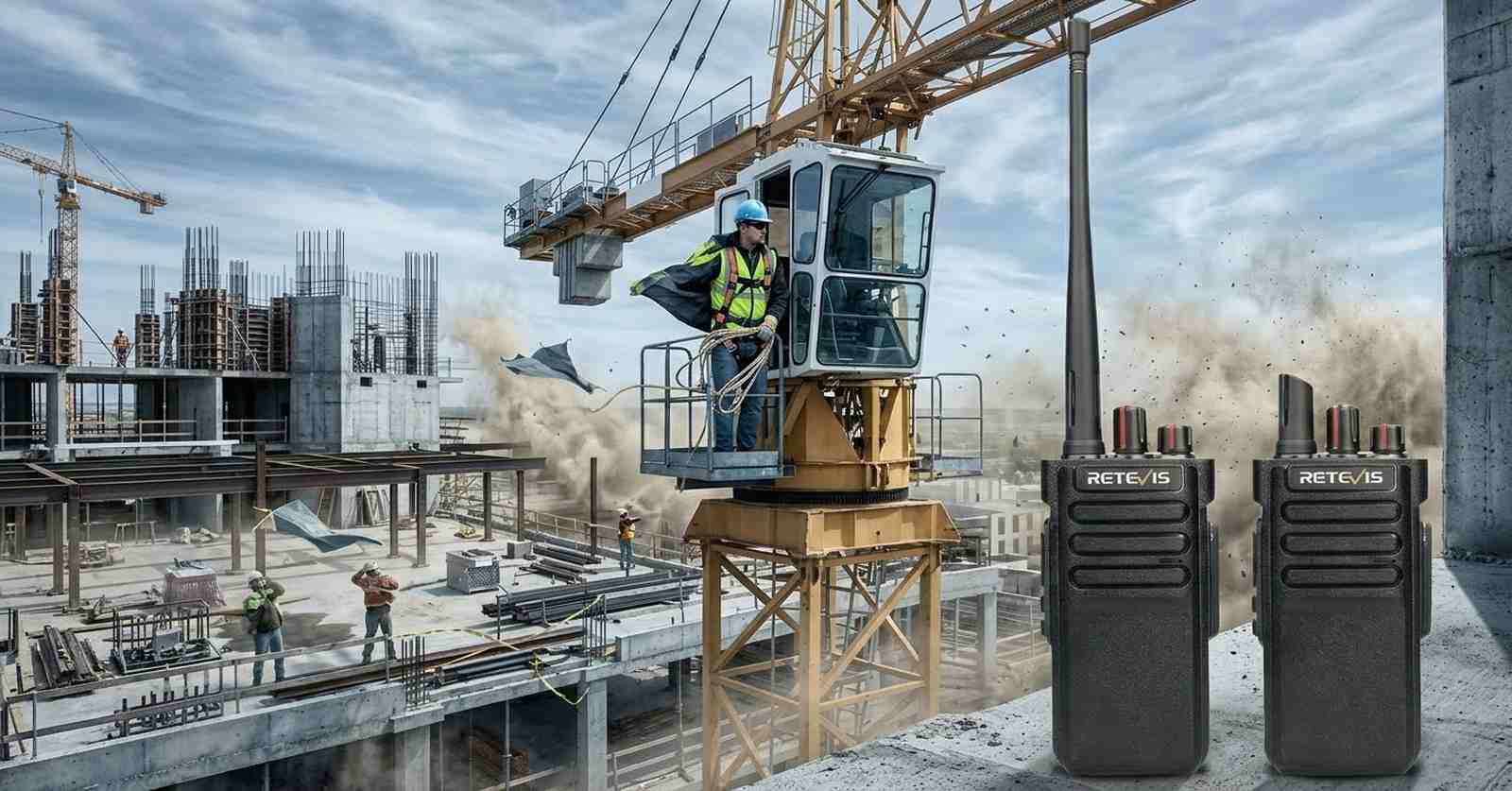
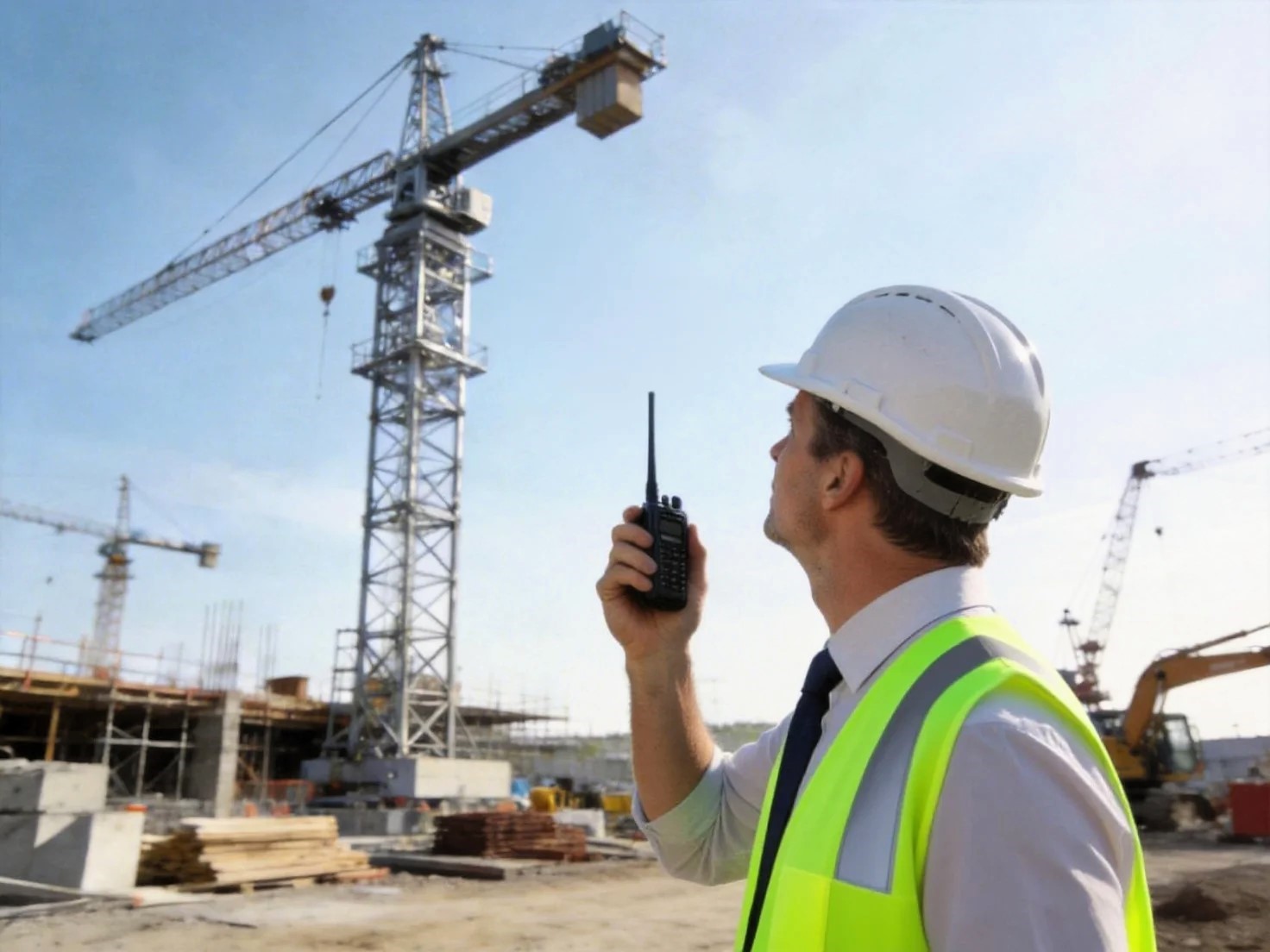
Last winter on a 16-story build in Houston, crane operator David lost voice contact with his signal person for nine minutes during a steel lift. His phone showed no bars on the twelfth floor, and the crew below couldn't hear hand signals over the wind. Nobody got hurt, but the near-miss cost the project a half-day of re-staging.
A month later, David's superintendent moved the crew to the RT29 with its high-gain antenna and emergency alarm. "We stopped guessing," David told me. "Push-to-talk, everyone hears it, and the SOS button means I'm never alone up there."
Construction is one of the most injury-prone industries in the U.S. Safety research cited by OSHA and NIOSH indicates that communication failures and delayed hazard reporting contribute to a meaningful share of worksite incidents, and that rapid emergency notification can shrink response times by up to 40%. Reliable radio communication is not a luxury on a jobsite—it's a safety system that pays for itself in avoided delays.
Not every radio belongs on a jobsite. When you're buying for a crew, these five features separate equipment that survives a season from equipment that quits in a week.
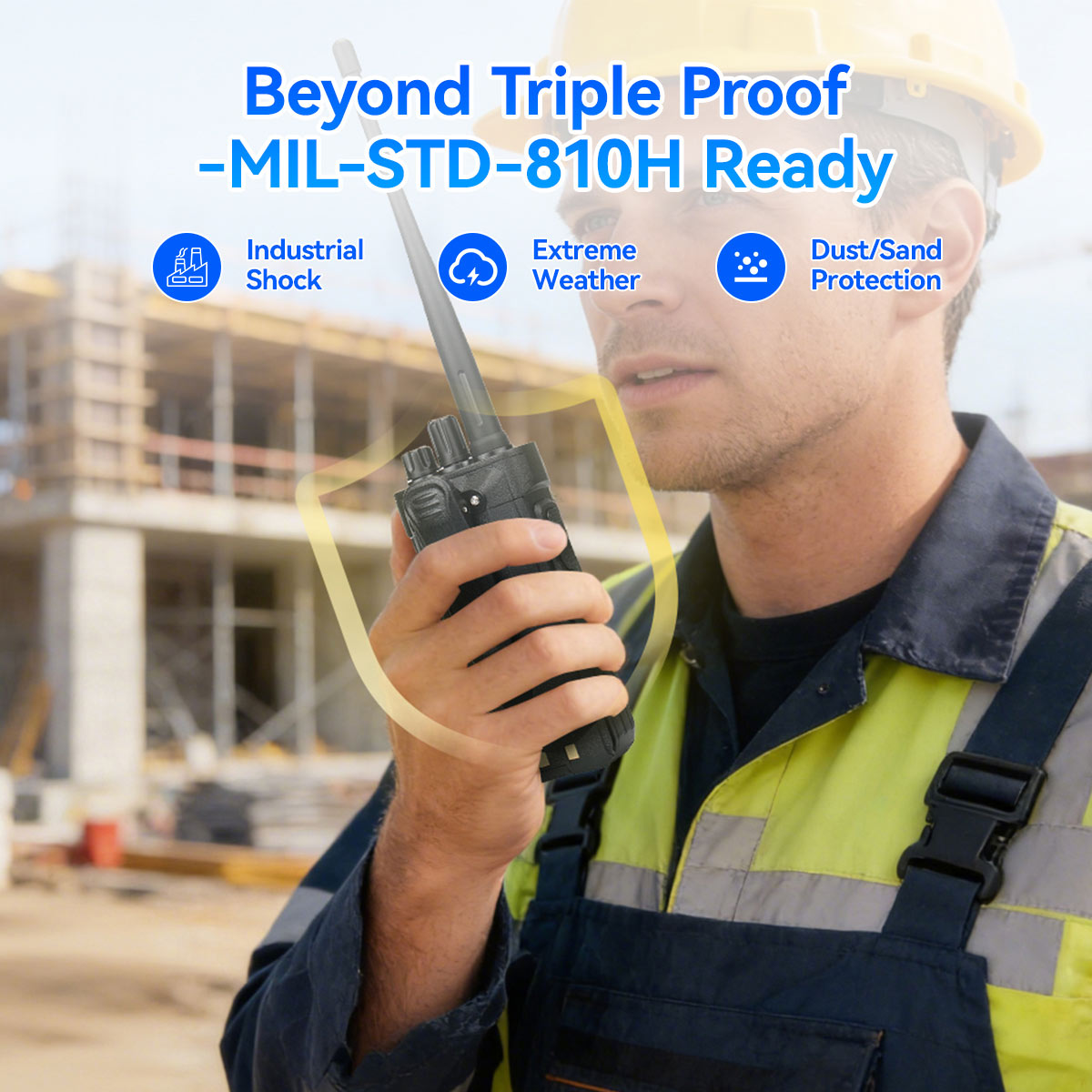
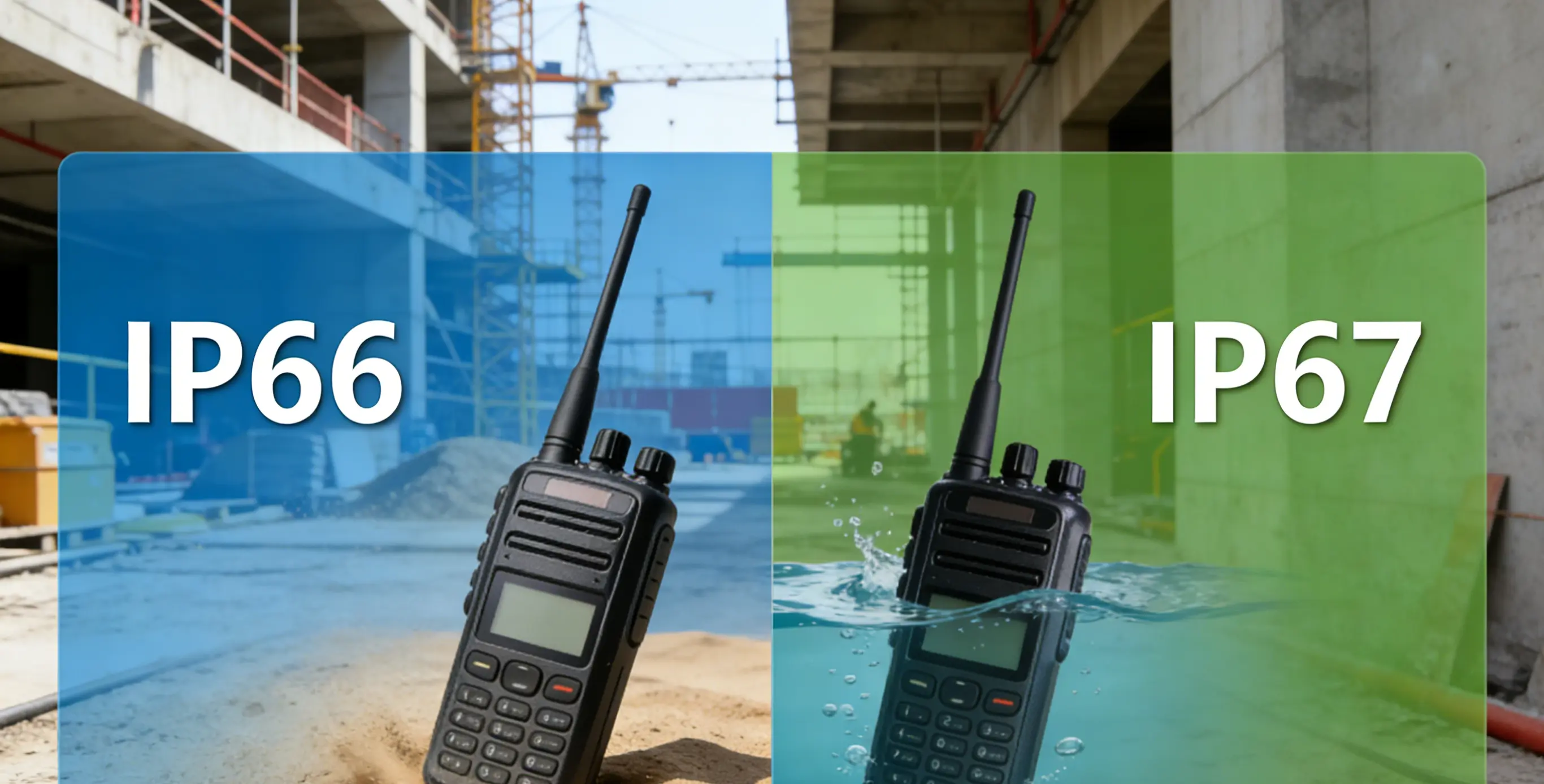
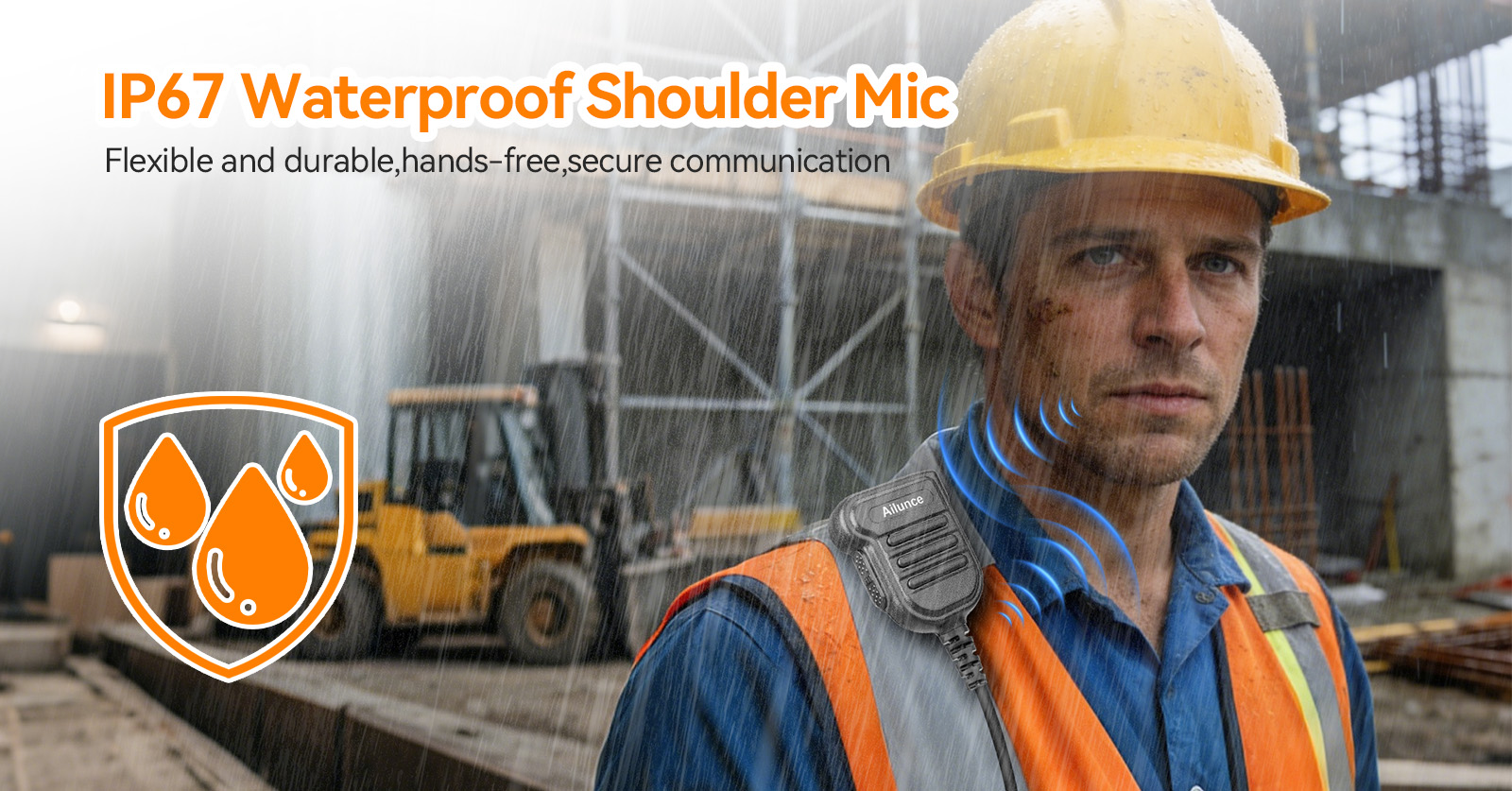
Dust, drops, and weather are daily realities. Look for an IP rating that means something: IP67 protects against dust and against immersion in water for a limited time, so a rainstorm or a dropped radio in a puddle won't end your shift. Pair that with a non-slip, shock-tolerant body and the radio stays in hand and in service.
A radio that dies at 2 p.m. is worse than no radio—it creates false confidence. Target a battery rated for a full shift of real use, not just standby. The RT29's 3200mAh cell runs about 24 hours of active use and roughly 250 hours on standby, so a single charge covers the longest workday.
A jobsite is loud. Your radio has to cut through saws, compressors, and wind. Look for strong, clear audio output and noise handling so instructions don't get lost. "Clear audio in noise" isn't a marketing phrase—it's the feature that prevents a misunderstood "stop" from becoming an incident.
The best radios for construction include a one-touch emergency alarm and privacy codes like CTCSS/DCS so your channels aren't crossed by neighboring crews. An SOS function turns every worker into someone the whole team can hear the moment something goes wrong.
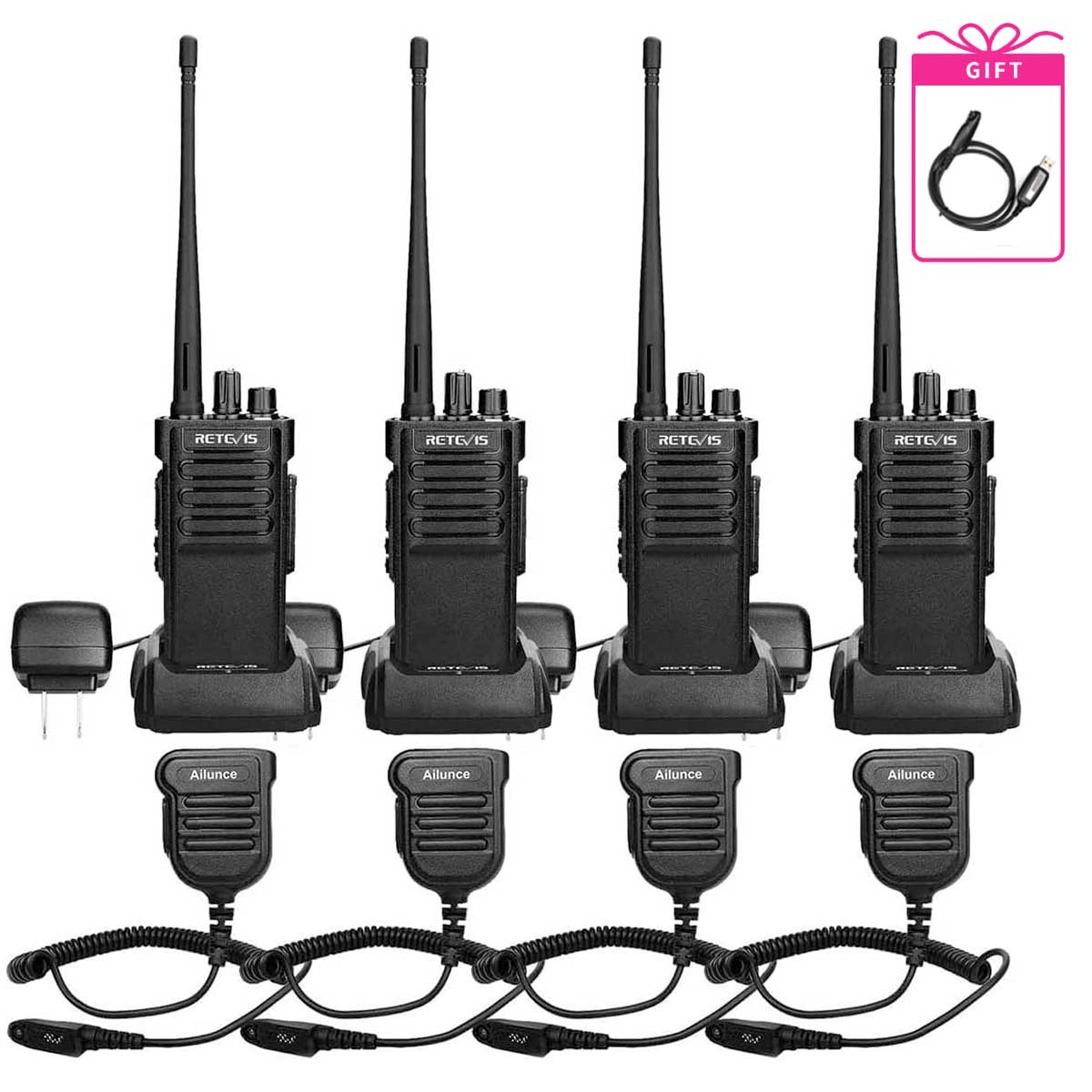
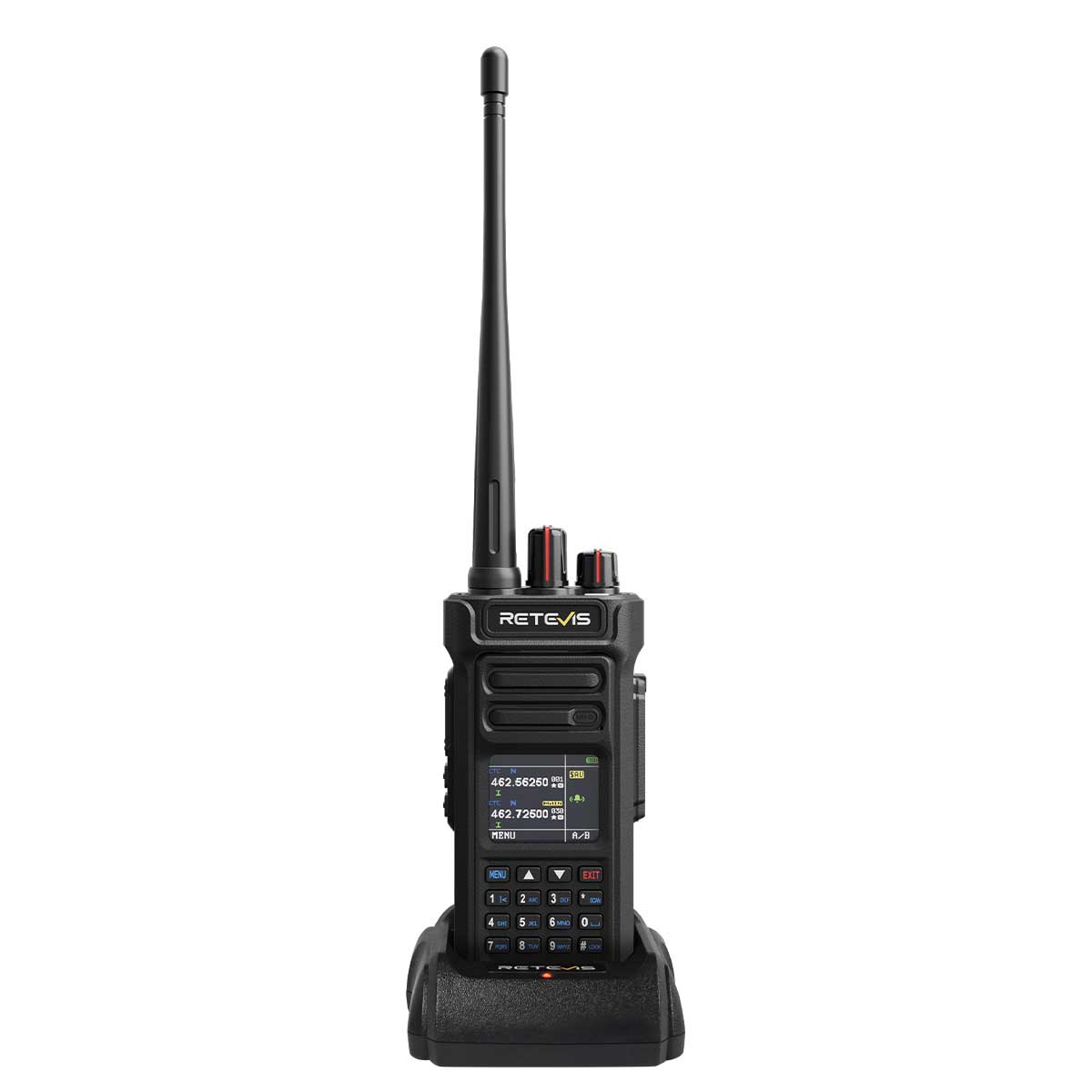
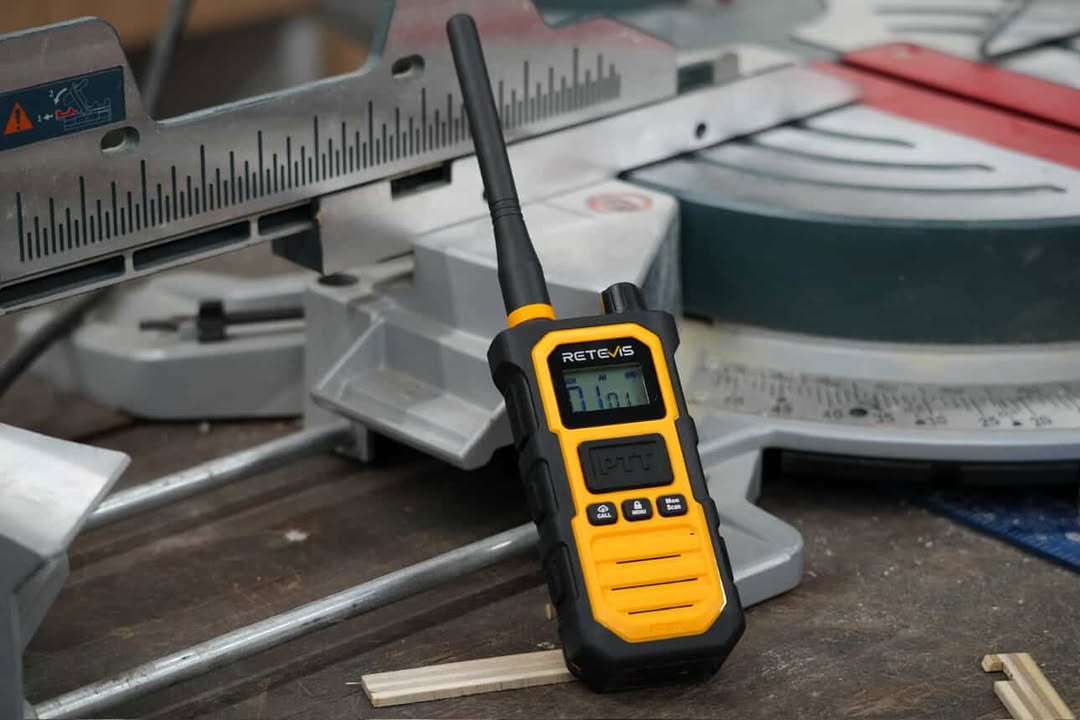
The Retevis RT29 is the best radio for construction sites because it pairs a rugged, IP67 waterproof body with 10W high-power transmission, selectable VHF and UHF bands, and a 3200mAh battery that runs a full shift—plus a one-touch emergency alarm built for jobsite safety. If you need a walkie talkie for construction sites that works when cell networks don't, a construction walkie talkie like the RT29 is the two-way radio to put on every belt.
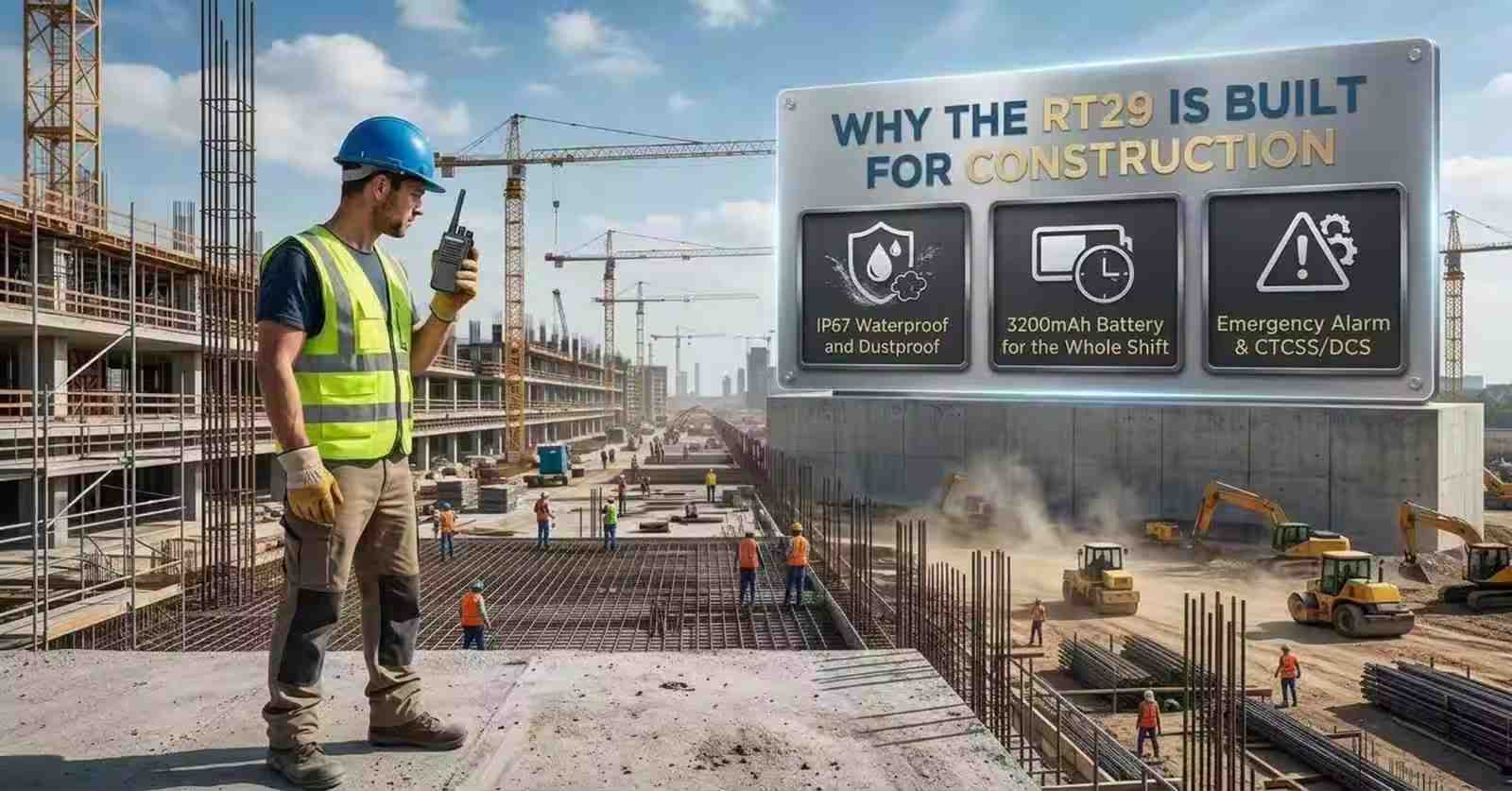
The RT29's IP67 rating means it shrugs off rain, job-site dust, and short-term immersion if it takes a dip in a puddle or a trench. That's not a claim about surviving a swimming pool—IP67 covers limited immersion, and that's the honest limit. For a radio that lives in mud, mist, and concrete dust, it's the protection that matters.
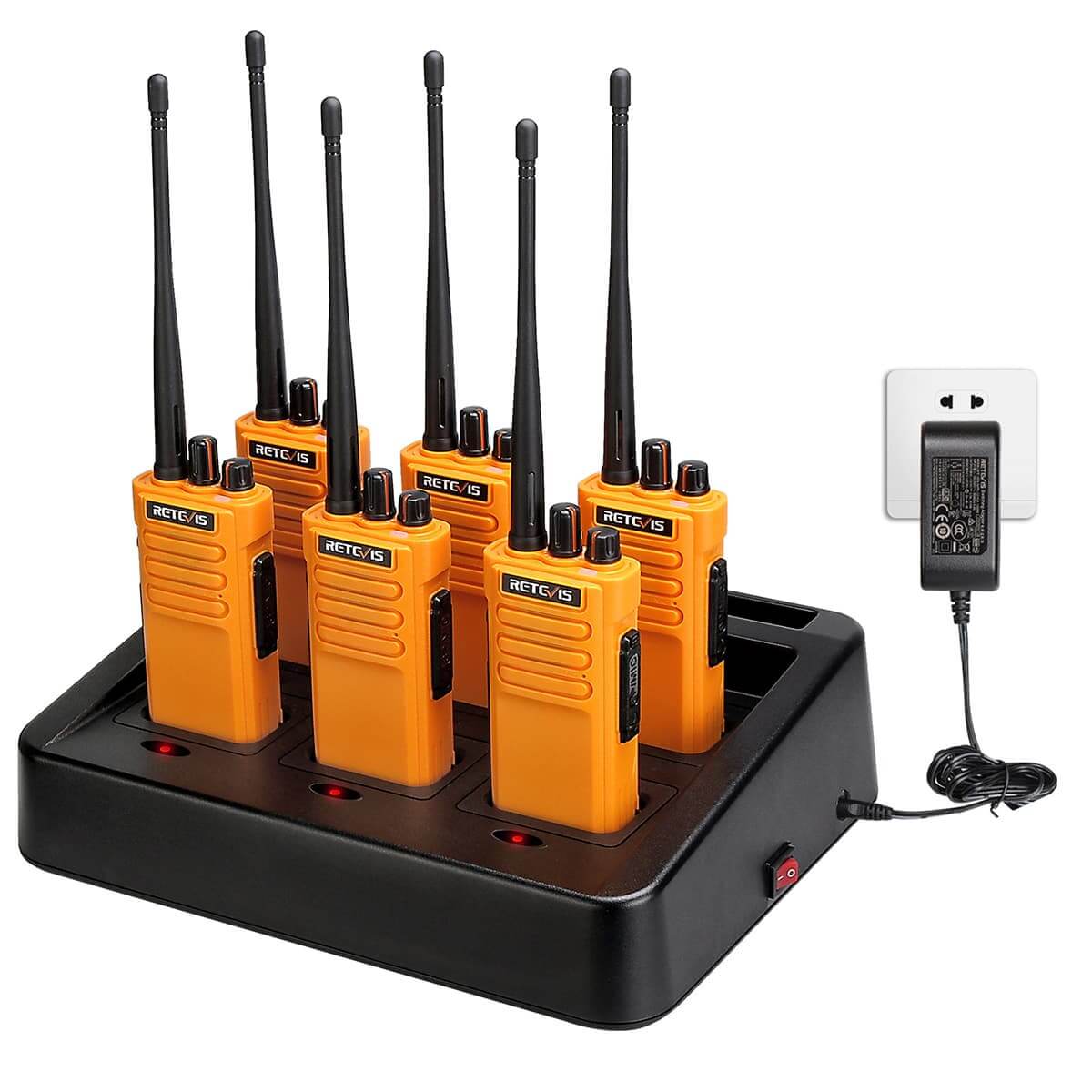
A 3200mAh battery delivering about 24 hours of use and ~250 hours of standby means the radio outlasts the people using it. Charge overnight, run all day, and keep spares in the gang box for double shifts or weekend pushes.
The one-touch Emergency Alarm sends an SOS to the channel instantly—no menu diving, no unlocked screen. CTCSS/DCS privacy codes keep your traffic private and free of crossover from adjacent crews on the same frequency. Together, they turn a basic radio into a real safety tool.
This is the question that decides whether your radio sings or struggles. The RT29 ships in two versions, and the right one depends on what's between you and the person you're calling.
VHF (136–174 MHz) travels farther in the open and bends around fewer obstacles because its longer wavelength carries well across clear lines of sight. Choose VHF for highways, open lots, rural builds, agriculture-adjacent sites, and any job where most communication happens outdoors with few walls.
UHF (400–470 MHz) has a shorter wavelength that penetrates walls, floors, and steel far better. If your work involves multi-story structures, concrete cores, metal framing, or a dense urban block, UHF is the safer bet for consistent in-building coverage. Most modern commercial and residential construction leans UHF for exactly this reason.
If you're weighing the best two way radios for construction sites, it helps to see the RT29 next to its Retevis siblings.
The Retevis RT29 earns its place as the best radio for construction sites by doing the unglamorous things perfectly: surviving the weather, outlasting the shift, reaching across the site, and sounding the alarm when it counts. With >5W high power, IP67 waterproofing, VHF or UHF options, a 3200mAh battery, and a built-in emergency alarm, it's the construction walkie talkie that works when nothing else will.
Pick your band, plan your channels, charge overnight, and put one on every belt. Your crew's coordination—and their safety—will thank you.
Learn more:
No data Yet




 Google
 Amazon