

Table of Contents
Best Walkie Talkies for Hiking, Camping and Outdoor Adventures
- Posted by:Retevis
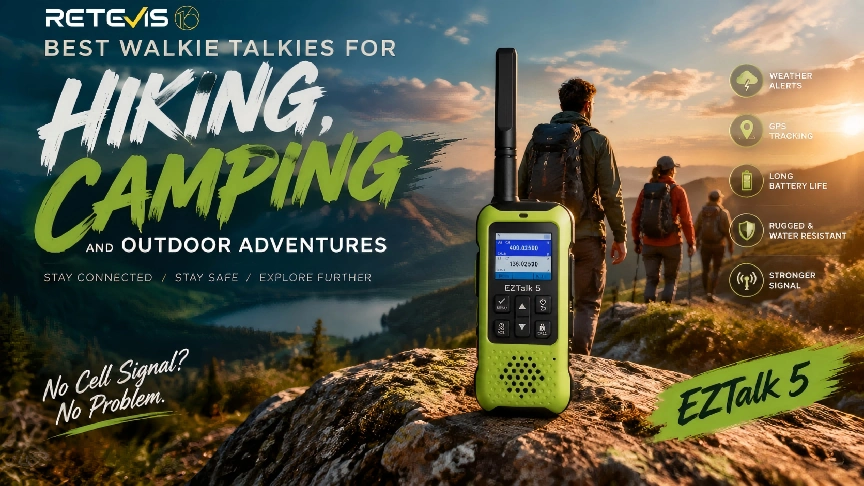
The National Park Service reports that less than five percent of national park land has reliable cellular coverage. At Canyonlands, park officials warn that "cellular service diminishes greatly" once visitors leave the pavement. At Natural Bridges National Monument, no cell service has existed inside the park since 2018.
This is not a "maybe I'll get a bar" situation. It is a "plan like you will have no service" situation. For hikers and campers, the question is not whether your phone will work in the backcountry — it is what tool you will use instead. A hiking walkie talkies retevis setup provides that tool, but not all outdoor radios are built the same. Seven things actually matter when you are miles from the nearest cell tower.
Seven Things That Actually Matter Outdoors
Staying Connected When the Group Splits
Group separation happens constantly. The faster hikers pull ahead. Someone stops to filter water. The leader takes a wrong turn at an unmarked junction. By the time anyone notices, the group can be spread across a mile of trail with no way to call back.
A phone call requires signal, which does not exist. Shouting wastes energy and does not carry through dense forest or around canyon walls.
What teams need is instant push-to-talk communication — one button, no dialing, no waiting for someone to answer, and the entire group hears the message at once.
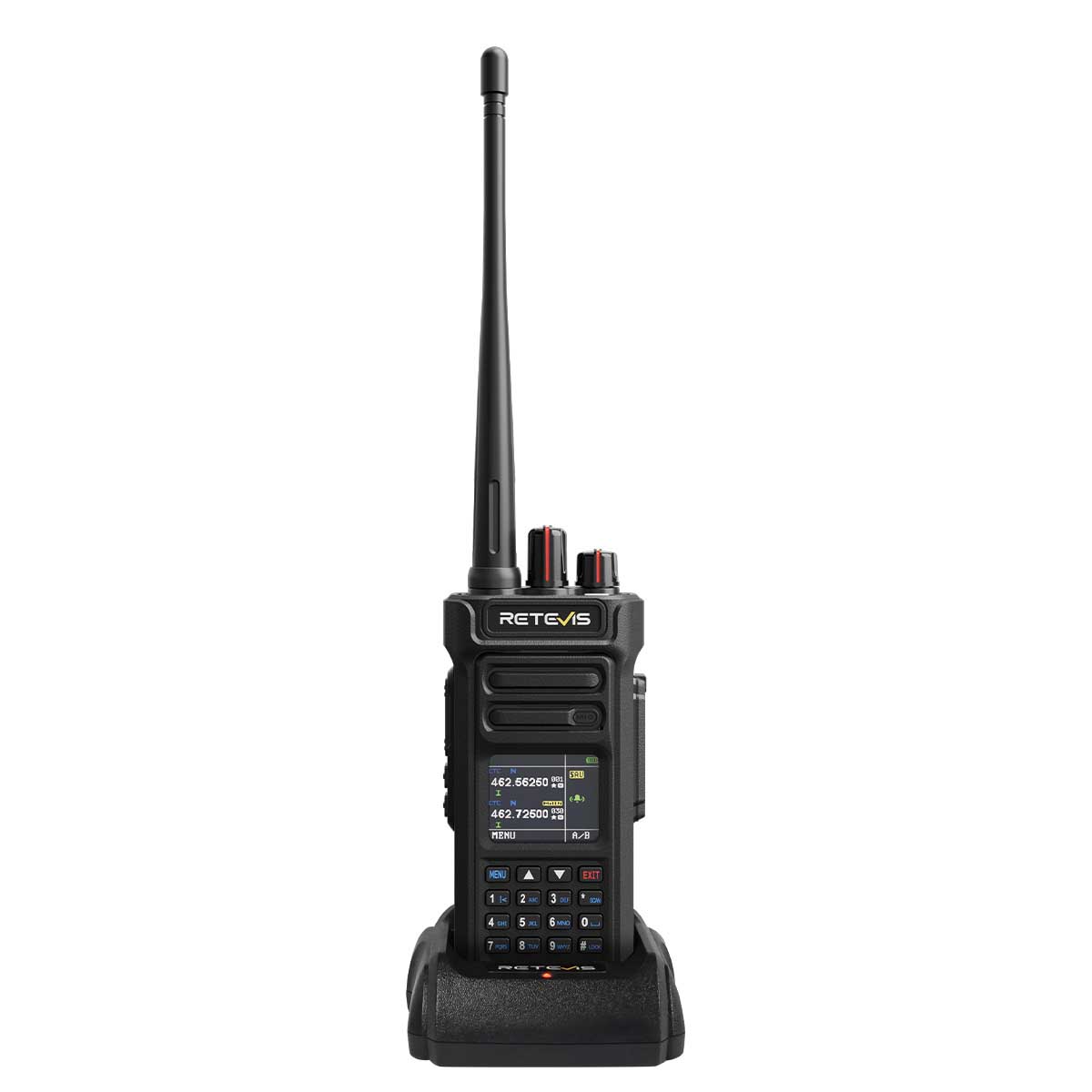
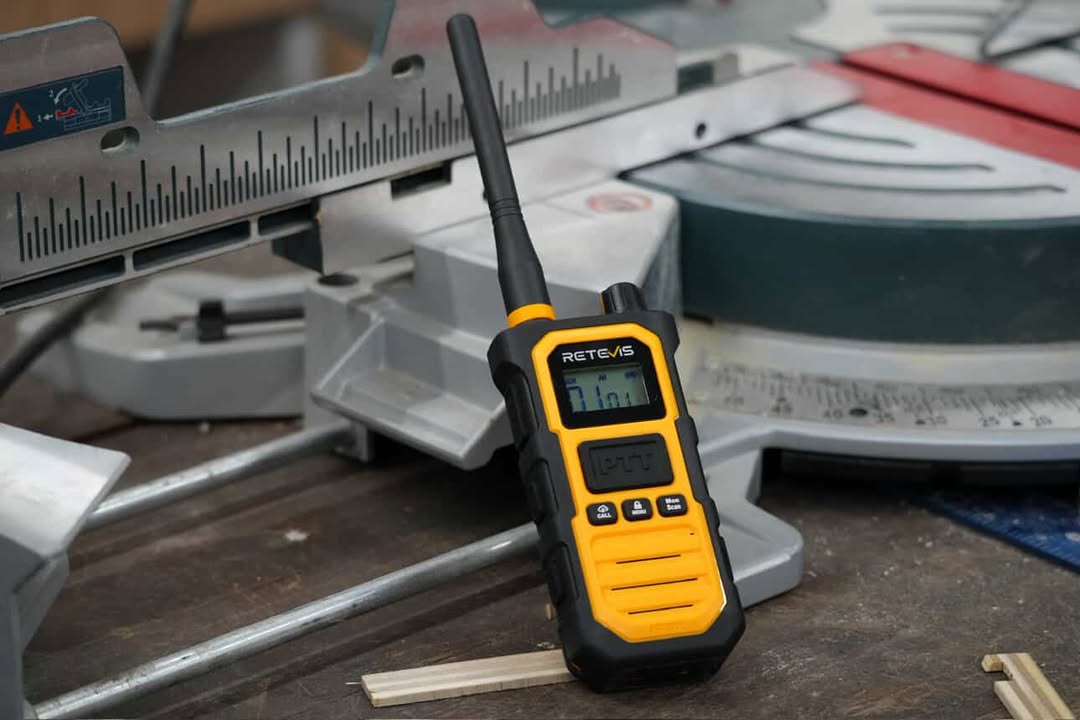
The Retevis EZTalk 5 delivers this with five watts of power and one-button cloning. When a new hiker joins the group mid-trip, their radio can copy all team settings in about thirty seconds — no laptop, no data cable, no manual channel programming.
Outdoor reviewers at Gagadget confirmed this feature works as advertised, noting that simultaneous remote broadcast means the full team receives an alert without relay delay.
Getting Warning Before the Storm Hits
Mountain weather changes faster than most hikers expect. A clear morning can turn into a thunderstorm by early afternoon, and lightning on an exposed ridge is a genuine safety risk.
Phones cannot deliver weather alerts without signal, and by the time you see the storm coming, it may be too late to move to safe ground.
What hikers need is a radio that receives official weather broadcasts directly, independent of cellular networks. NOAA weather radio operates on dedicated frequencies that reach remote areas where phones cannot.
The EZTalk 5 includes built-in NOAA weather alerts for the US version. Gagadget's testing team described this as "a meaningful safety layer in remote terrain" because it delivers storm information on the radio rather than relying on cellular coverage.
For multi-day trips where the forecast can shift overnight, this feature gives hikers time to adjust plans before severe weather arrives.
Surviving Rain, Dust, and Drops
Outdoor equipment gets wet. It gets dusty. It gets dropped on rocks. A phone that slips out of a pocket during a river crossing is likely done for the trip. Even a sudden rainstorm can damage a device that is not sealed against moisture.
What hikers need is a radio built to handle the conditions they will actually encounter — not a device that needs a separate waterproof case or careful handling every time the weather turns.
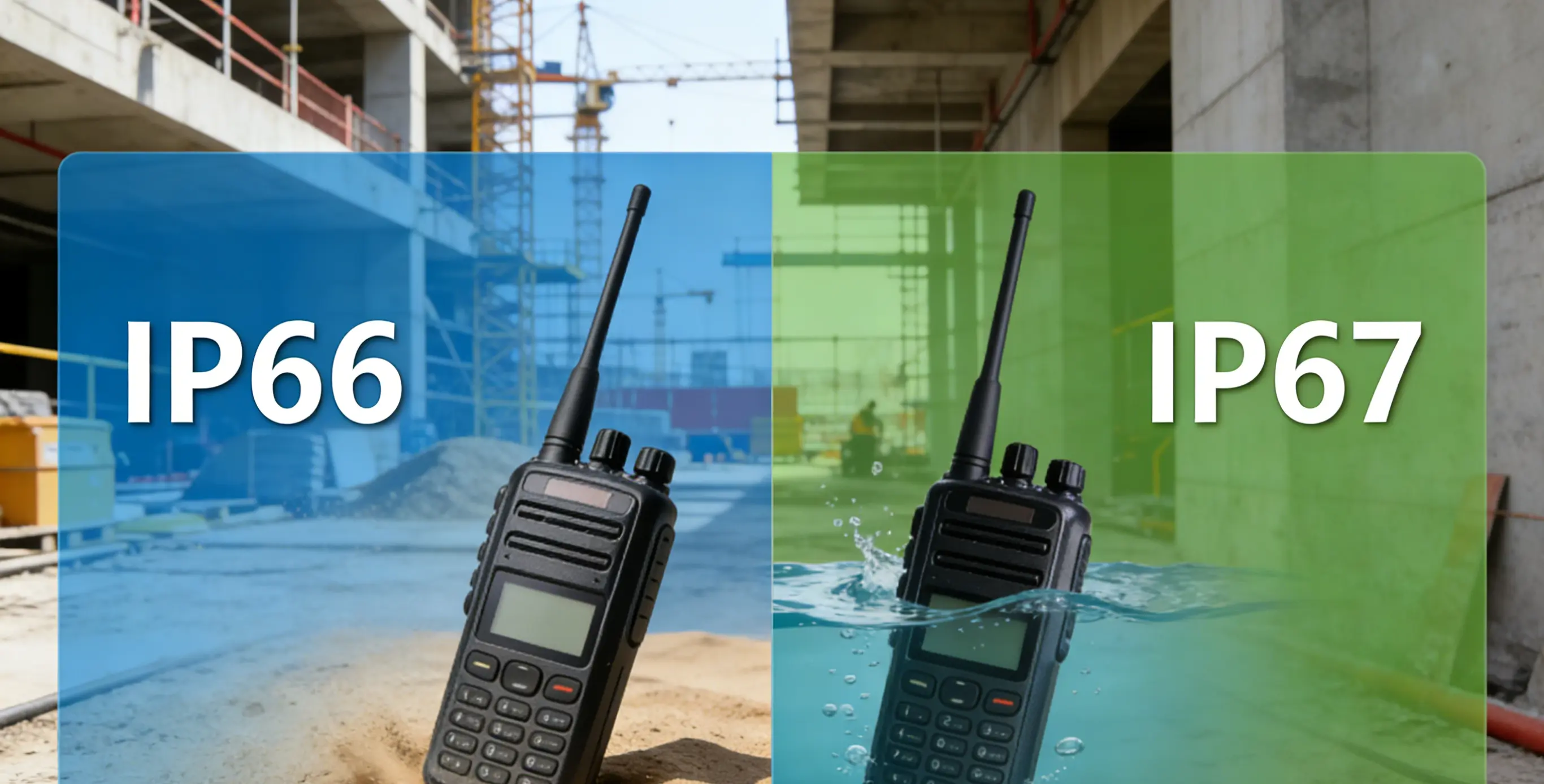
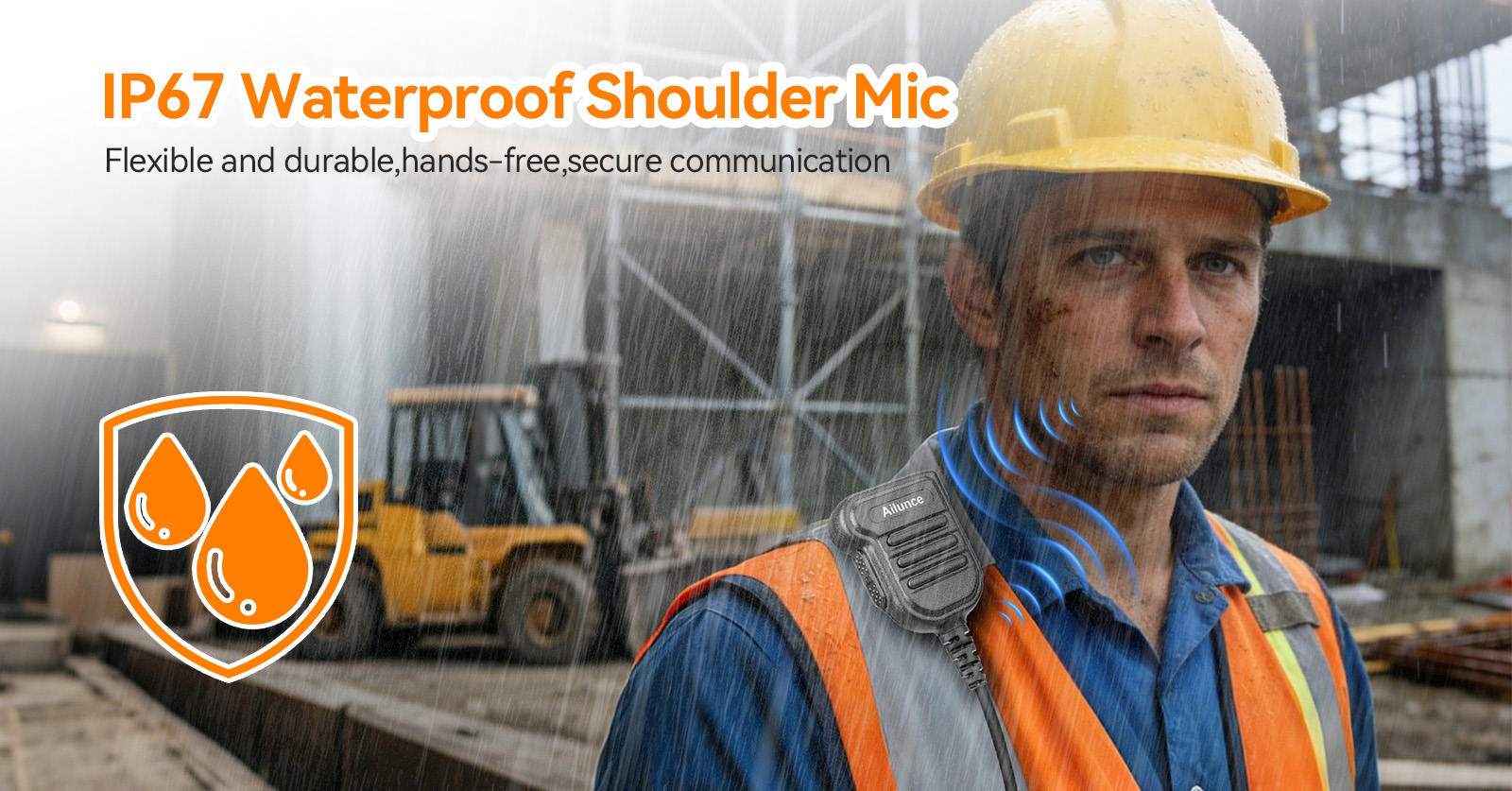
The EZTalk 5 carries an IP54 rating, which means it is protected against dust ingress and water splashes from any direction. This is not a submersible rating — it will not survive sitting at the bottom of a lake — but it handles the rain, trail dust, and accidental splashes that happen on normal hiking and camping trips.
The oversized tactile buttons work with gloved or wet hands, which matters when you are trying to communicate during a downpour.
Lasting Through Multi-Day Trips
A smartphone battery lasts a day, maybe a day and a half with airplane mode and low brightness. On a three-day backpacking trip, that means the phone is dead by the second morning — right when you might need it most.
Even a portable power bank runs out eventually, and carrying extra weight for phone charging cuts into the gear you can bring for food and safety.
What hikers need is a radio with a battery that lasts the entire trip, not just the first day. Efficient power management matters more than raw capacity, because a radio that sips power will outlast one that drains quickly.
The EZTalk 5 uses a 2000mAh battery with intelligent power-saving modes that extend battery life significantly. This is enough capacity for a standard multi-day weekend trip without needing to recharge mid-journey.
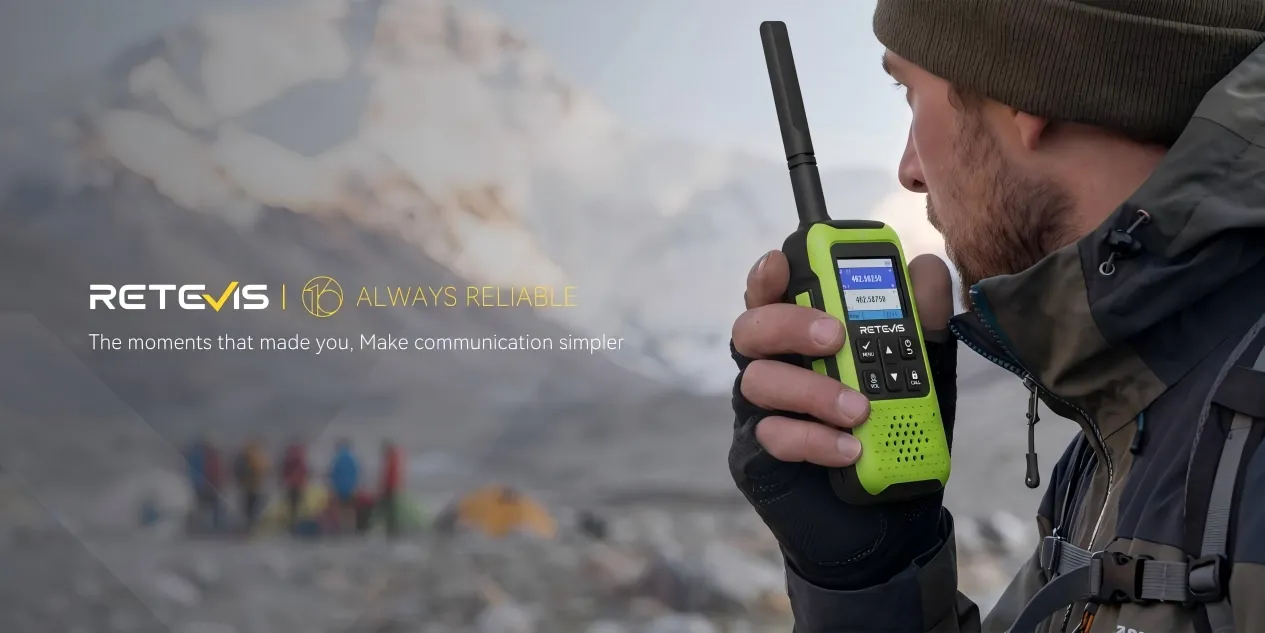
For longer expeditions, the USB-C charging port works with any portable power bank, so hikers do not need to carry a proprietary charger.
Reaching Across Rugged Terrain
Distance on a trail is not the same as distance in a field. A radio that claims a 30-mile range in perfect line-of-sight conditions may only reach half a mile in a dense forest or narrow canyon.
Trees absorb signal. Ridges block it. Canyon walls reflect it in confusing patterns.
What hikers need is enough power to cut through the terrain they actually hike in — not a theoretical maximum range that only works on a flat desert with no obstacles.
The EZTalk 5 transmits at five watts, which is the practical maximum for a handheld GMRS radio. This power level provides reliable communication across canyons, through forest canopy, and over rolling terrain where lower-power radios struggle.
It will not reach 30 miles through a mountain, but it will keep a hiking group connected across the kinds of distances that actually matter on the trail.
Charging Without a Wall Outlet
Trailheads do not have power outlets. Campsites do not have power outlets. The only way to recharge electronics in the backcountry is a portable power bank, a solar panel, or a vehicle charger at the trailhead.
If your radio uses a proprietary charging cable and you forget it at home, the radio becomes dead weight for the entire trip.
What hikers need is a radio that charges with the same cable they already carry for their other devices — a standard USB-C cable that works with power banks, solar panels, and car chargers.
The EZTalk 5 charges through USB-C, the same standard used by most modern phones and headphones. This means hikers can carry one cable for everything and recharge from any power source they already bring.
No proprietary adapter, no special cable, no dead radio because the wrong charger got left on the kitchen counter.
Knowing Where Everyone Is
When a group spreads across a trail, the leader cannot see who is behind them. The slower hikers cannot see how far ahead the group has gotten. If someone steps off the trail for a bathroom break or to take a photo, they can fall behind without anyone noticing until it is time to set up camp.
What hikers need is a way to see where everyone in the group is at any given moment — not just to talk to them, but to know their actual position on the map.
The EZTalk 5 includes GPS and BeiDou dual-satellite positioning, which locks onto coordinates faster than GPS alone in deep canyons and under thick forest cover.
Through the Retevis app, hikers can see each team member's real-time location on a map, track who is ahead and who is behind, and set electronic fences around a campsite to alert the group if someone wanders too far.
For parents hiking with children, this location awareness provides a level of safety that voice communication alone cannot match.
Choosing the best walkie talkie for hiking and camping comes down to these seven factors, not an advertised range number on a product box. A camping walkie talkie that handles group separation, weather alerts, rain and dust, multi-day battery life, rugged terrain, universal charging, and location tracking will serve hikers better than one that only claims a long range.
The Retevis EZTalk 5 addresses all seven of these needs in a single 302-gram unit. It operates on GMRS frequencies, which requires an FCC GMRS license in the United States — the license covers the entire organization and is valid for ten years, and handhelds used with the system must be GMRS-capable.
For teams evaluating the best walkie talkies for camping or a regular outdoor walkie talkie for backcountry use, the EZTalk 5 provides the features that actually matter when the cell signal disappears.




 Google
 Amazon
Comments
No data Yet