

Table of Contents
How to Extend Two-Way Radio Coverage Across Large Buildings and Worksites
- Posted by:Retevis
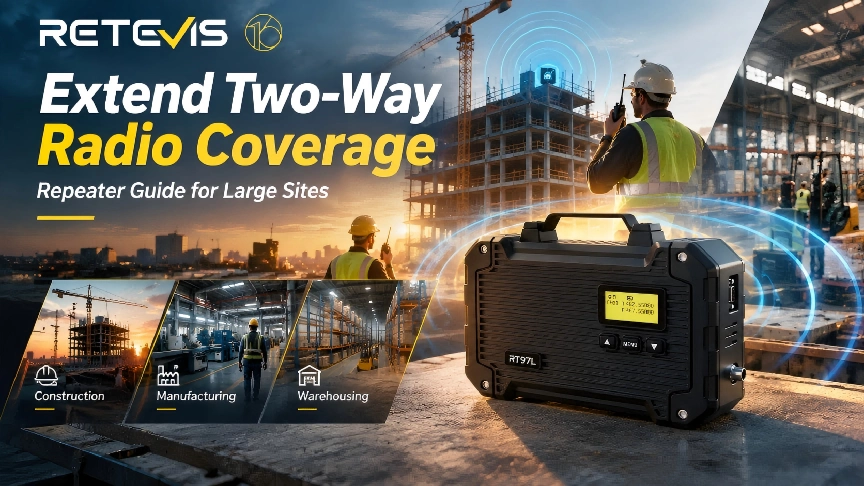
"Our radios work in one area but lose signal in another. What can we do?" This is the most common question from teams operating in large buildings, construction sites, and warehouses.
The answer is almost never "buy more powerful handhelds." Dead zones are caused by physical obstacles — concrete walls, steel racking, heavy machinery — that no handheld radio can punch through alone. A retevis two way radio repeater solves this by placing a higher-power transmitter above the obstacles and relaying signals across the entire site.
Why Handhelds Alone Create Dead Zones
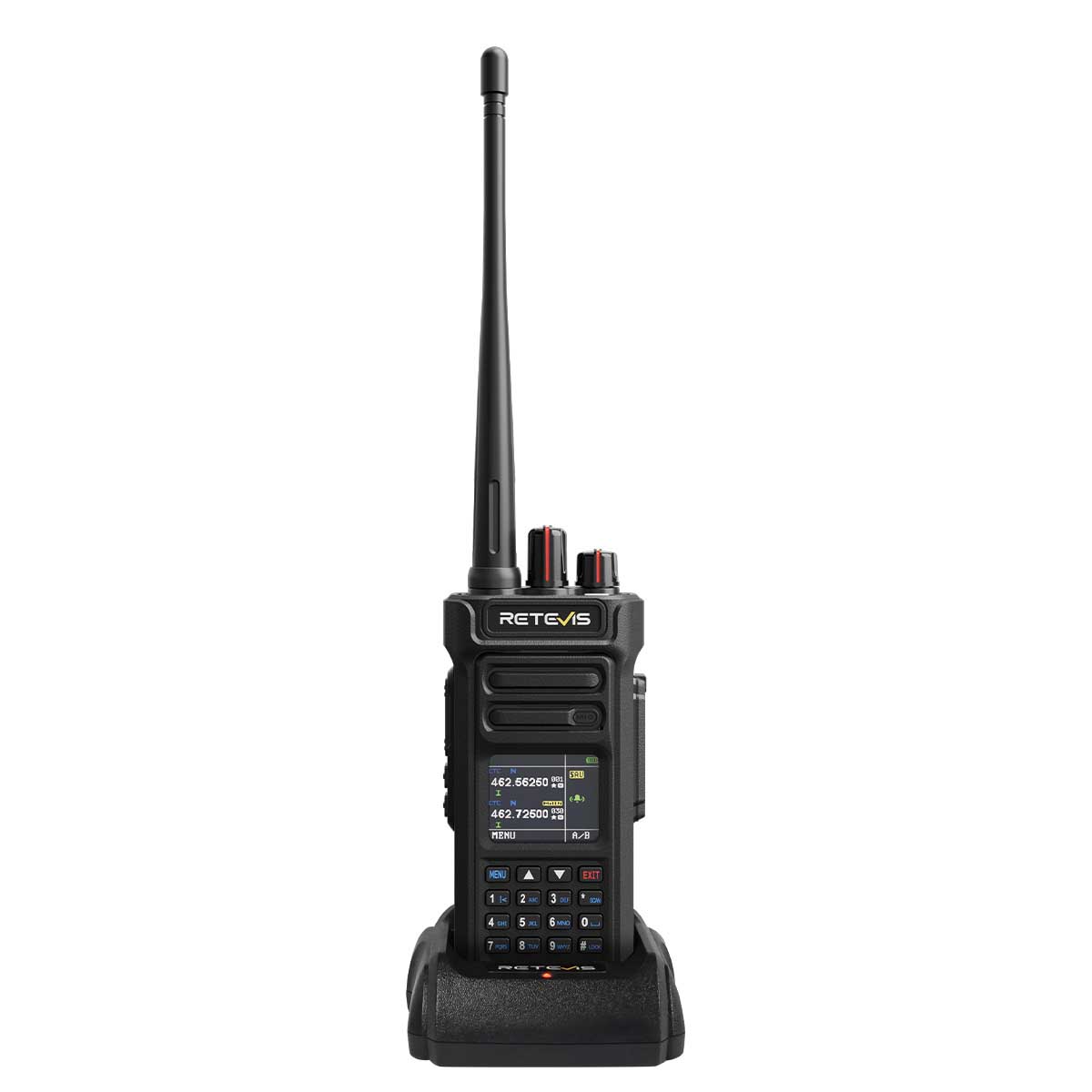
A handheld radio transmits at 2 to 5 watts. That power works for line-of-sight communication across an open field, but drops sharply when the signal passes through dense materials.
Reinforced concrete absorbs radio frequency energy. Each concrete wall can reduce signal strength by 10 to 20 decibels, meaning a 5-watt signal may arrive at less than 0.5 watts after passing through just two walls. Steel reinforcement bars inside the concrete make this worse by reflecting and scattering the signal.
Metal racking in warehouses creates deep signal shadows behind each row. A worker in aisle 3 may have perfect communication, while a worker 20 feet away in aisle 5 cannot transmit or receive at all. This is why metal racking is consistently identified as the number one signal killer in warehouse environments.
Underground areas are nearly impossible for handhelds to cover. Basements, underground parking garages, and construction pits are surrounded by earth and concrete that block almost all radio energy.
Upgrading to a more powerful handheld does not fix these problems. A 10-watt handheld still has to pass its signal through the same concrete walls and steel racking. The obstacle remains between the two radios. The solution is to move the transmitter above and around the obstacles — which is exactly what a repeater does.
How a Repeater Extends Coverage
A walkie talkie repeater receives a radio signal on one frequency, amplifies it, and retransmits it on a second frequency — all in real time. Instead of two handhelds trying to reach each other directly through walls and equipment, both handhelds communicate with the repeater, which sits at an elevated, central location and relays the transmission across a much wider footprint.
The process works in four steps:
- A worker presses push-to-talk and the handheld transmits at 2 to 5 watts on the repeater's input frequency.
- The repeater, mounted on a rooftop or high interior point, receives that weak signal even when the receiving handheld cannot.
- It immediately amplifies the signal and retransmits it at higher power on a separate output frequency.
- All handhelds on the system then receive the clear, amplified signal regardless of where they are on the site.
The system uses two separate frequencies so the repeater can receive and transmit simultaneously without interfering with itself. This full-duplex design allows the repeater to relay a signal the instant it arrives, with no delay or gap.
The physical placement of the repeater is what makes it effective. A repeater mounted 30 feet above the floor has a clear line of sight to most of the site. The signal from a handheld on the ground only has to travel upward to the repeater, passing through fewer obstacles than it would if it had to travel horizontally through walls and racking to reach another handheld.
Three Scenarios Where a Repeater Solves Coverage Gaps
Construction: Multi-Story Concrete and Dynamic Sites
On a construction site, dead zones appear as the building rises — on lower floors, in stairwells, in elevator shafts, and in underground foundations. Tower crane operators working 100 feet above the ground struggle to communicate with ground controllers.
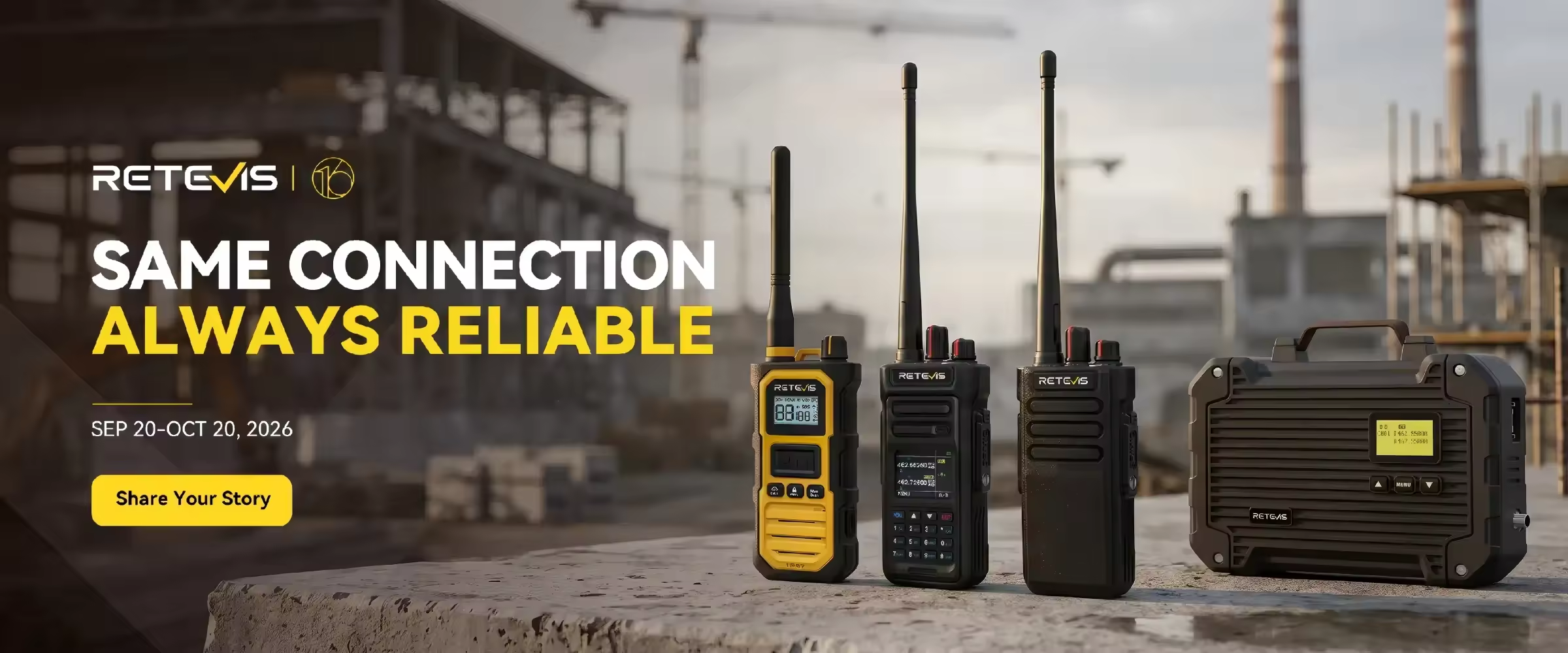
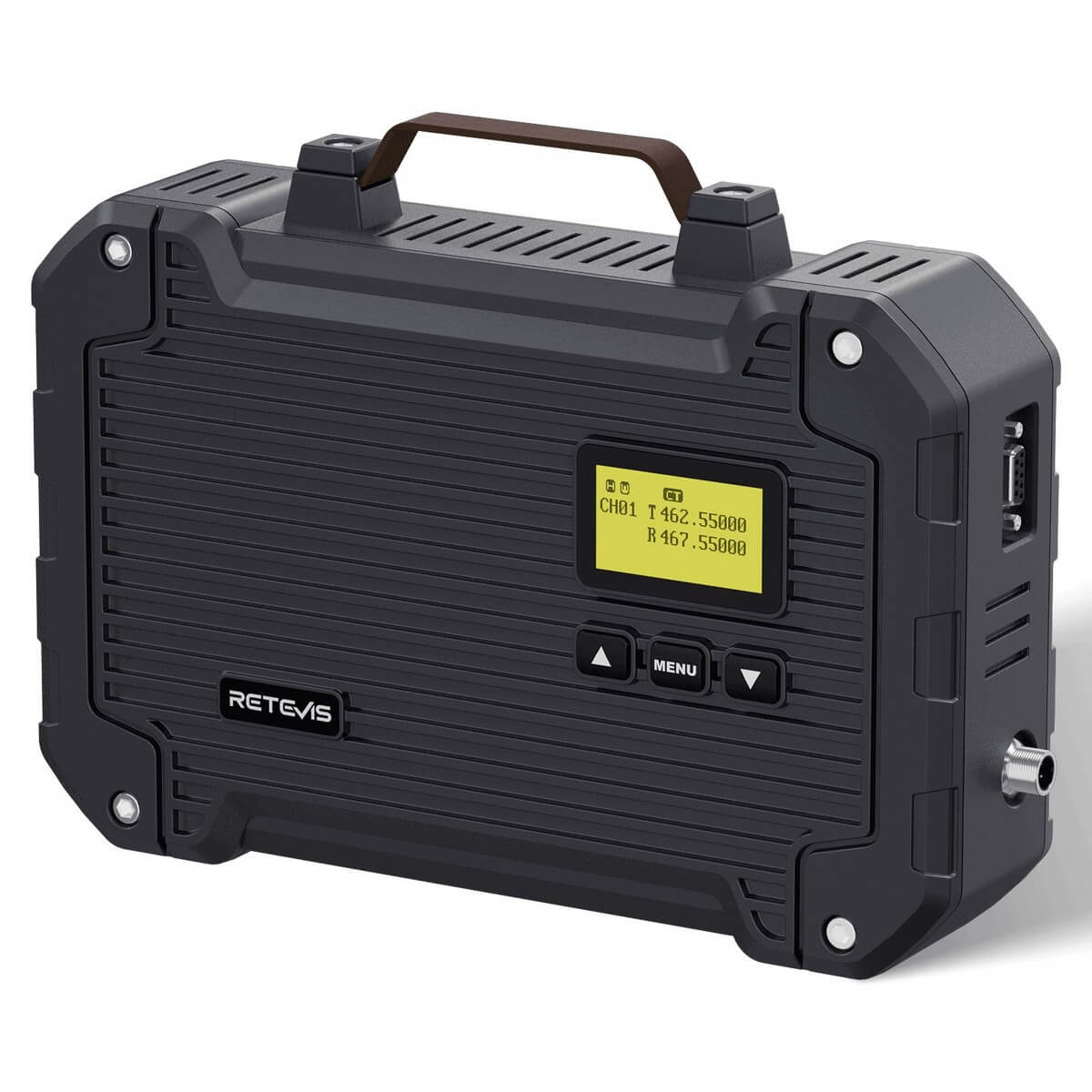
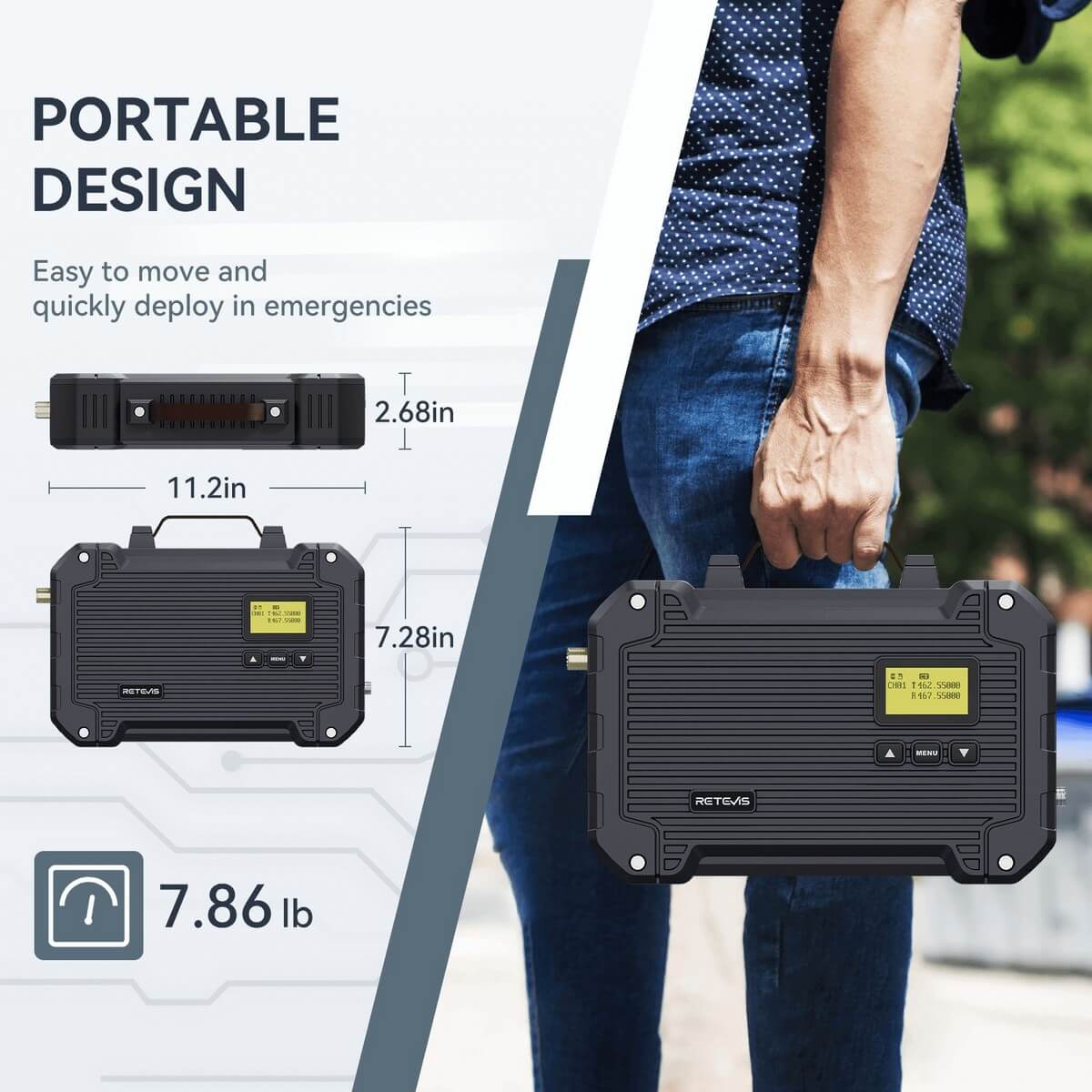
The Retevis RT97L repeater addresses this with 25 watts of output power — 5 to 12 times more than a typical handheld. That additional power is what allows the signal to penetrate concrete floors and reach workers in underground areas. Mounted on the tower crane or the highest available temporary structure, the repeater sits above the concrete and steel, giving it a clear line of sight to both the crane operator and workers on lower levels.
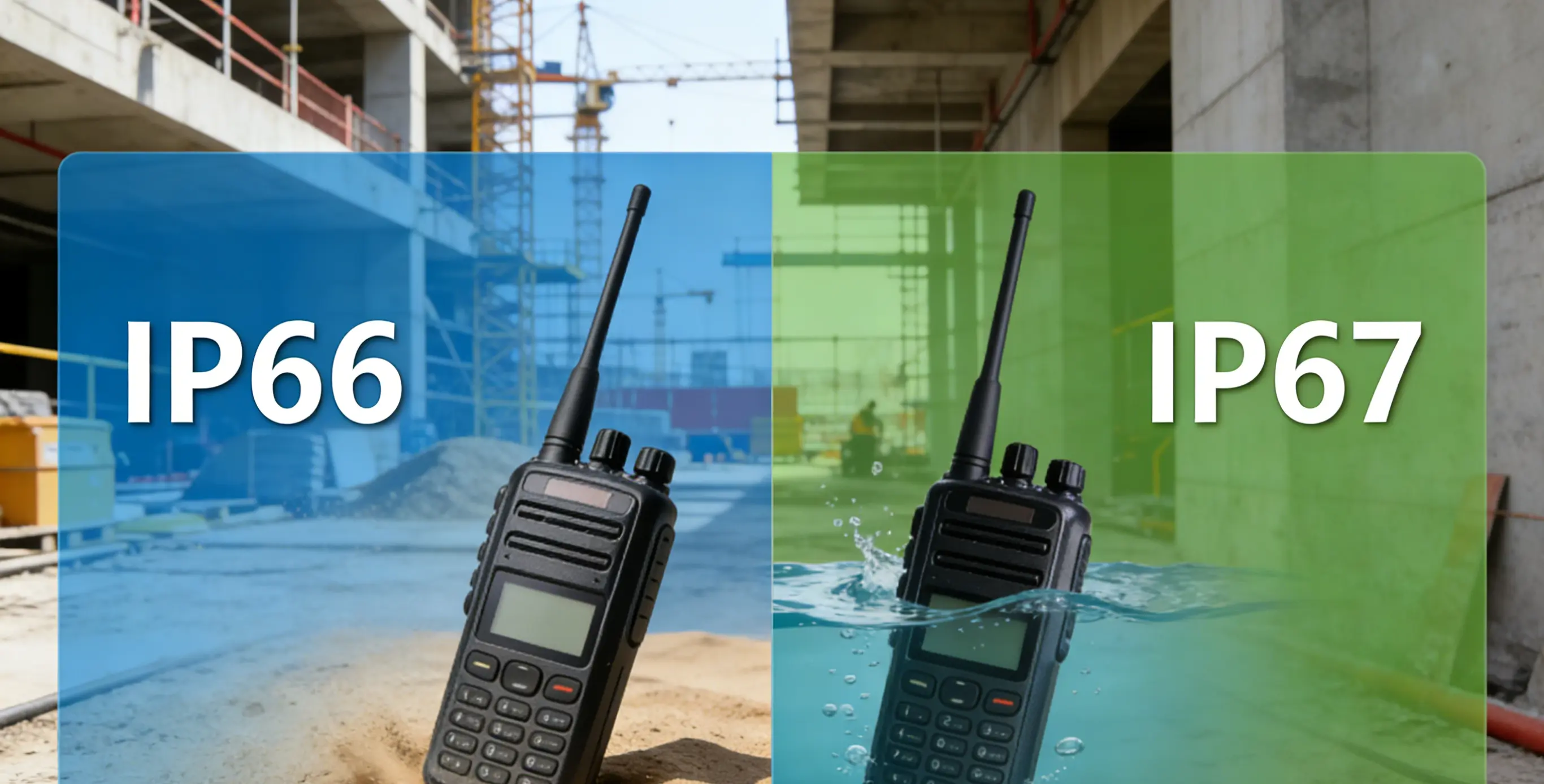
The 16 customizable channels allow separate communication for crane operations, concrete pours, steel erection, safety, and electrical work — so teams do not interfere with each other. The IP66 rating means the unit can be installed outdoors on a tower or temporary trailer without weather damage, and the DC 12V to 24V power input lets it run from a vehicle battery or portable solar panel when permanent power is not available.
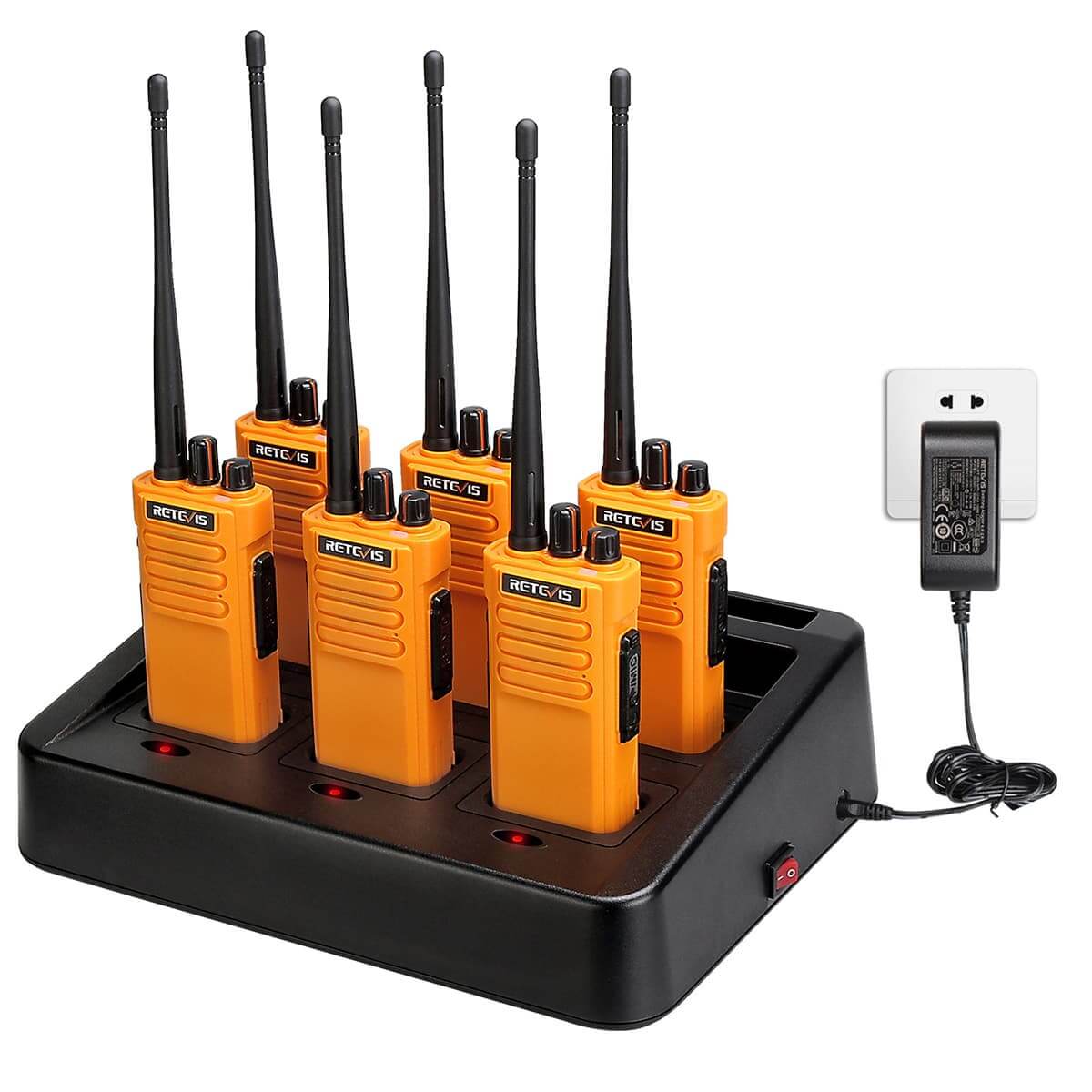
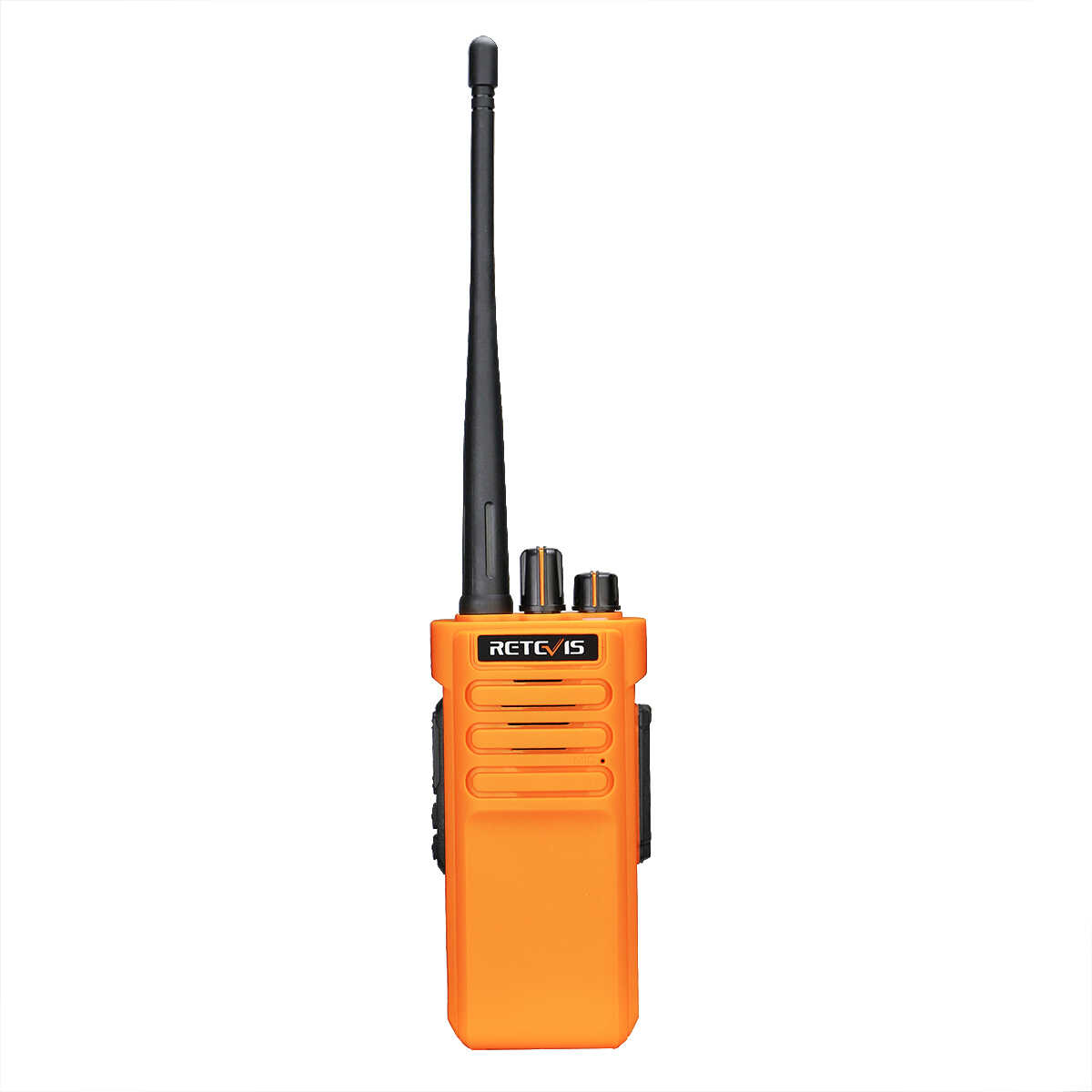
Retevis has documented this type of deployment with ALL Family of Companies, a commercial construction firm that equipped crane operators and loading crews with RB48 radios paired with the RT97L repeater, eliminating the dead zones that had previously separated crane operators from ground crews.
One operational note: the RT97L operates on GMRS frequencies, which requires an FCC GMRS license in the United States. The license covers the entire organization and is valid for 10 years. Handhelds used with the RT97L must also be GMRS-capable — standard FRS license-free handhelds cannot transmit through a GMRS repeater.
Manufacturing: Equipment, Multiple Buildings, and Loading Docks
A manufacturing plant is a collection of coverage environments. The open assembly floor may have adequate handheld coverage, but enclosed equipment rooms filled with heavy machinery attenuate signals significantly. Multi-story logistics buildings require floor-by-floor signal distribution, and outdoor loading docks create an indoor-to-outdoor transition where signals drop.
Installing the RT97L on the factory roof or the highest interior beam provides central coverage across all of these environments. The 25-watt signal reaches into equipment rooms that handhelds cannot penetrate, covers multiple floors of the logistics building, and extends to the outdoor loading dock and yard.
The 16 channels can be assigned to production, maintenance, quality control, logistics, and safety teams. The all-aluminum alloy casing serves as a heat sink, allowing the unit to dissipate heat without a fan — particularly valuable in manufacturing environments where airborne dust and metal shavings can clog fan intakes and cause overheating.
Warehousing: Metal Racking and Cold Storage
Warehouses present the most consistent dead zone problem because of floor-to-ceiling metal racking. Each row of steel shelving creates a signal shadow behind it, so a worker in one aisle may have perfect communication while a worker two aisles away is completely cut off. High-rack warehouses with aisles extending 50 meters or more deep are especially problematic.
Cold storage areas add another layer of difficulty, with insulated walls and metal doors blocking signals.
Mounting the RT97L on the warehouse exterior wall at the highest available point, or on the roof, gives the repeater a position above the metal racking where it can broadcast down into the aisles. The 25-watt signal penetrates deeper into racking aisles than a 5-watt handheld can, and the elevated position reduces the shadow effect that each row of shelving creates.
For cold storage areas, the repeater's signal can reach through insulated walls more effectively than handheld signals because of the higher power and elevated position. The IP66 rating protects the unit from the dust and moisture common in warehouse environments.
Deployment Choices That Determine Coverage Quality
A repeater is only as effective as its installation. The same unit can deliver complete site coverage or marginal improvement depending on where and how it is deployed.
Mounting Height
Mounting height is the single most important deployment decision. A repeater installed at ground level will not significantly outperform handhelds because its signal still has to pass through the same walls and racking.
Mounting the repeater on a rooftop, tower, or the highest available interior beam puts it above the obstacles. Every 10 feet of additional mounting height expands the coverage radius significantly because the signal can clear more obstacles. On a construction site, this means moving the repeater up as the building rises.
Antenna Selection
Antenna selection matters because the wrong antenna can leave parts of the site uncovered. An omnidirectional antenna broadcasts equally in all directions, which works well when the repeater is at the center of the site.
A directional antenna focuses the signal in a specific direction, which is useful when the coverage need is concentrated in one area.
Power Reliability
Power reliability determines whether the repeater is available when it is needed most. On a construction site with temporary power, electrical outages are common.
Connecting the repeater to a backup battery or a vehicle electrical system ensures it continues operating through power interruptions.
Channel Planning
Channel planning prevents the communication chaos that happens when too many teams share one channel. Before deploying, map out the teams that need communication and assign each a dedicated channel.
Programming each channel with a privacy code ensures that teams only hear communications intended for them.
Handheld Compatibility
Handheld compatibility is the final deployment check. If the repeater operates on GMRS frequencies, every handheld on the system must be GMRS-capable and programmed to the same frequencies and privacy codes as the repeater.
Using FRS-only handhelds with a GMRS repeater will not work because FRS radios are limited to lower power and cannot access GMRS repeater channels.
If your team is dealing with dead zones in a large building, construction site, or warehouse, the problem is not your handheld radios — it is the physical environment between them. A 2 way radio repeater like the RT97L moves the transmitter above the obstacles, amplifies the signal to higher power, and relays communications across areas that handhelds alone cannot reach.
The right deployment — high mounting position, correct antenna, reliable power, planned channels, and compatible handhelds — determines whether the system delivers complete coverage or marginal improvement. For teams evaluating long range radios for large-site communication, a repeater provides a practical, deployable solution that grows with the site.



 Google
 Amazon
Comments
No data Yet