

Table of Contents
Rugged Two-Way Radios for Construction and Industrial Work: What Really Matters?
- Posted by:Retevis
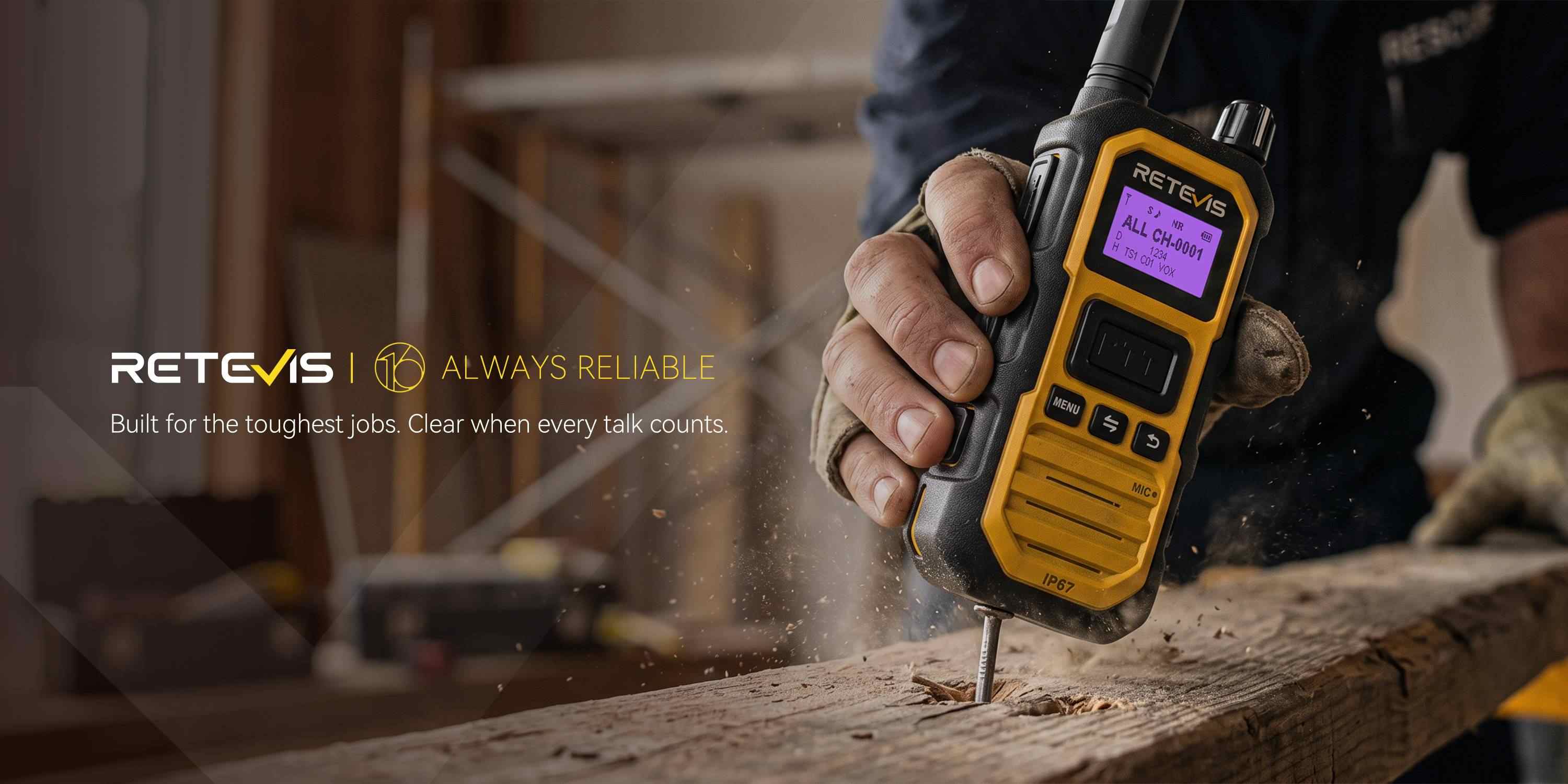
On a construction site, a broken radio is not an inconvenience. It is a safety risk. Ordinary consumer radios die within weeks because they are not built for jobsite conditions.
For teams evaluating retevis rugged two way radio options, the real question is what actually matters — and what does not. When choosing a rugged two way radio for construction, three things matter more than everything else: protection rating, battery life, and glove-friendly controls.
What Really Matters: Three Core Requirements
1. Protection Rating: IP67 + Two-Meter Drop Resistance Is the Baseline
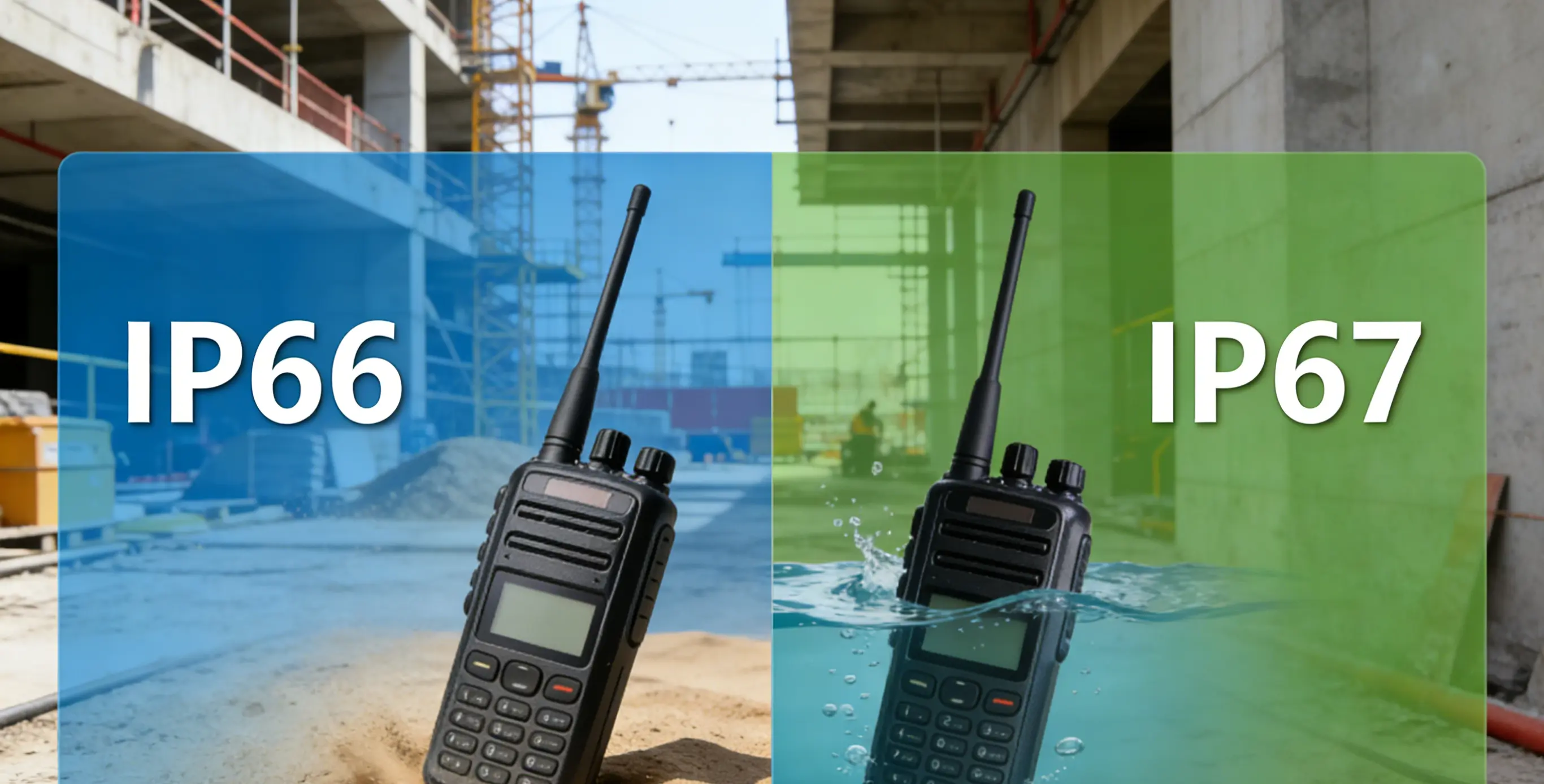
Construction sites expose radios to three things that destroy ordinary devices: dust, water, and drops.
Dust is the silent killer. Concrete dust, silica particles, and cutting debris are finer than 0.1 micrometers. They enter speaker grilles, button gaps, and charging contacts. Over weeks, they cause stuck buttons, poor electrical contact, and reduced speaker volume. Cement dust is also mildly corrosive, accelerating internal component failure.
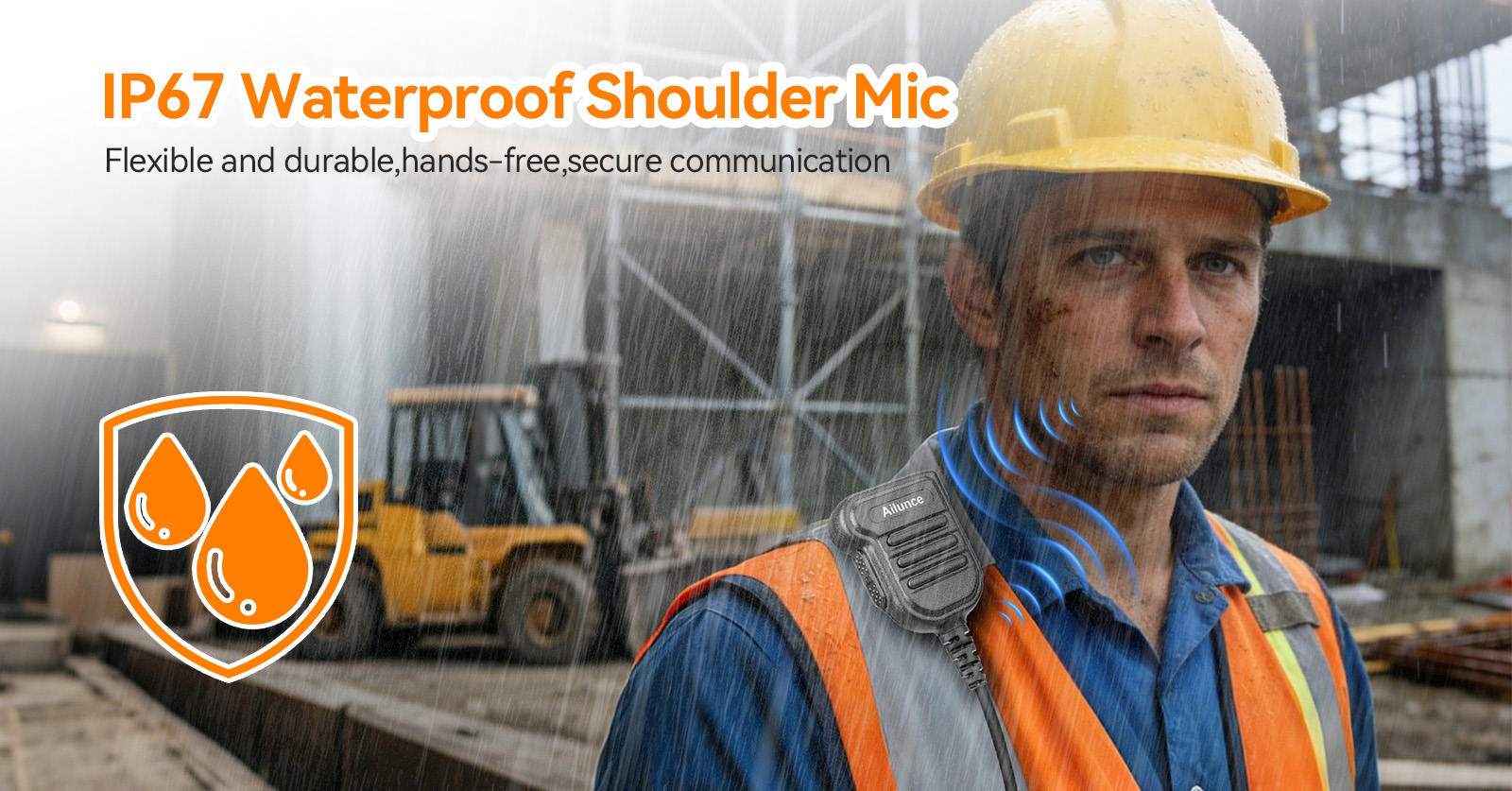
Water is the sudden killer. Outdoor sites get sudden rain, mud, and concrete slurry. A radio dropped in a puddle or exposed to sustained rain stops working exactly when coordination matters most.
Drops are the daily killer. A radio slips from a belt while climbing a ladder or operating equipment and hits concrete. Most consumer radios crack their shells or lose button function after a single one-meter drop. On a site where drops happen daily, this means constant replacement costs and communication gaps.
The minimum standard is IP67 + two-meter drop resistance. IP67 means total protection against dust ingress (particles as fine as 0.1 micrometers cannot enter) and survival in one meter of water for 30 minutes. Two-meter drop resistance, verified through repeated testing, means the radio survives daily jobsite abuse. Anything below this standard will fail on a real construction site.
2. Battery Life: 12+ Hours Is the Baseline
A standard construction shift is 10 to 12 hours. Most consumer radio batteries last 4 to 6 hours under actual use, which means they die before lunch.
Workers forget to charge them. Multi-crew rotations create battery management chaos. A radio dead for half the shift is useless for the team that depends on it. In high-risk environments — high-altitude work, heavy equipment operation, electrical tasks — a dead radio is not just inconvenient. It is a safety hazard.
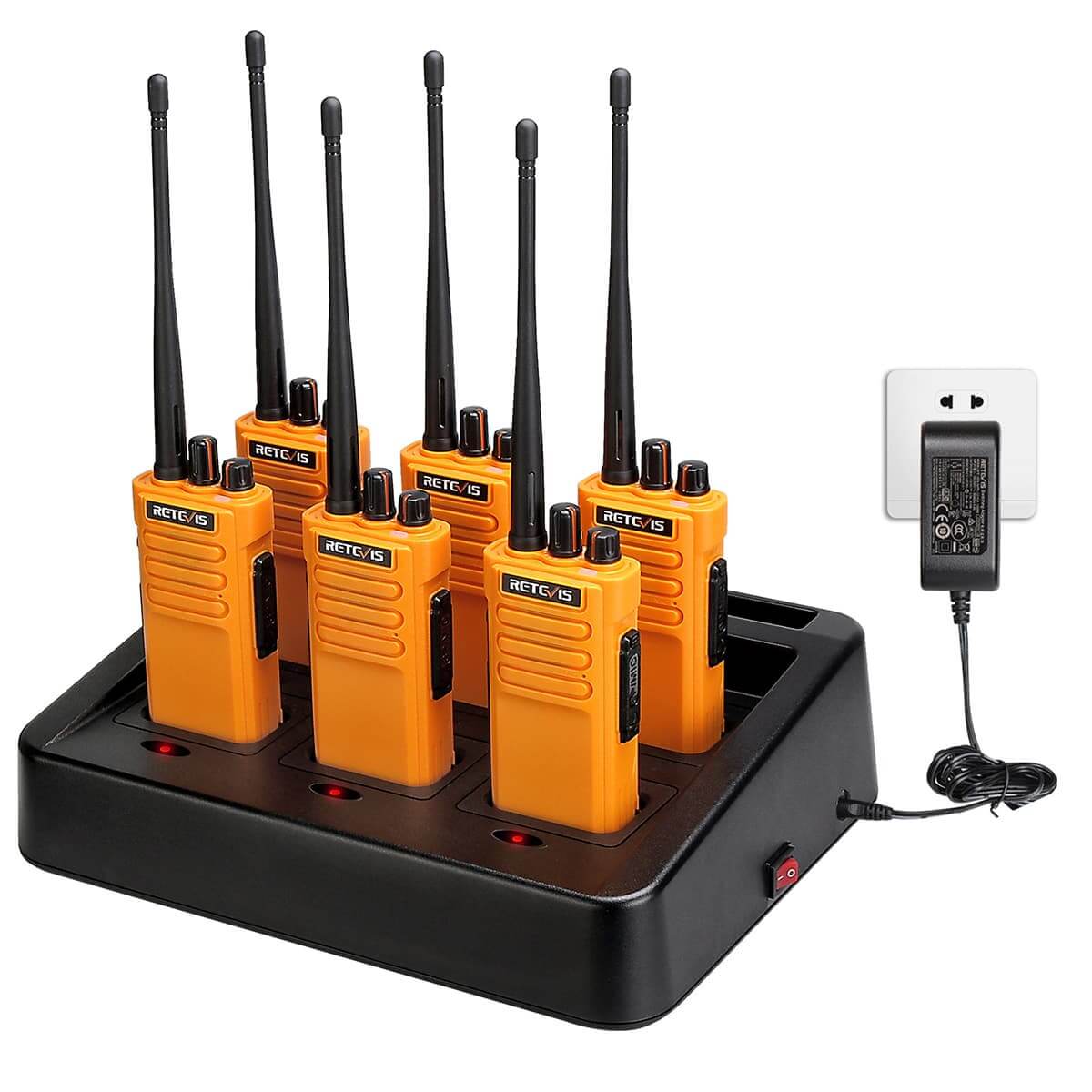
The minimum standard is a 2000mAh or larger battery with 12+ hours of continuous use. USB-C charging allows flexible on-site charging. Multi-unit chargers — six-way or ten-way — let an entire crew charge overnight in one place. Low battery alerts give advance warning instead of sudden shutdowns. Anything below 8 hours of real-world use will not last a full shift.
3. Glove-Friendly Controls: Oversized Dual PTT Is the Baseline
Construction workers wear thick work gloves, insulated gloves, or electrical safety gloves. Most consumer radios have small, flush buttons impossible to operate without removing gloves.
Taking off gloves on a cold day or during a critical task is slow and unsafe. Accidental channel changes happen when gloved fingers fumble for the PTT key. In an emergency, a worker who cannot press the talk button because of gloves is in real danger.
The minimum standard is oversized dual PTT buttons with tactile key design. Large, raised PTT buttons can be pressed through thick work gloves. Silicone button covers provide grip and tactile feedback. A key lock function prevents accidental channel changes when gloved fingers brush the keypad. Small, flush buttons are not acceptable for construction use.
What Does Not Matter: Avoid These Marketing Traps
When evaluating rugged walkie talkie options, some advertised features sound impressive but do not matter on a real construction site.
Advertised range numbers are meaningless. A radio that claims "30 miles" will not reach 30 miles on a construction site. Concrete walls, steel reinforcement, and dense building materials block signals. The real question is not "how far does it claim to go" but "does it penetrate the walls and floors of my site."
High channel counts are unnecessary. Most construction teams use only a few channels — one for each crew or task. A radio with 100 channels offers no practical benefit over one with 16 channels, and the extra complexity can cause confusion.
Color screens are a liability. Color screens look nice in a store but are hard to read in direct sunlight. They also drain battery faster. A simple, high-contrast display is more practical for outdoor construction work.
Focus on the three core requirements — protection rating, battery life, and glove-friendly controls — and ignore the rest.
How the Retevis RB48 Series Meets These Requirements
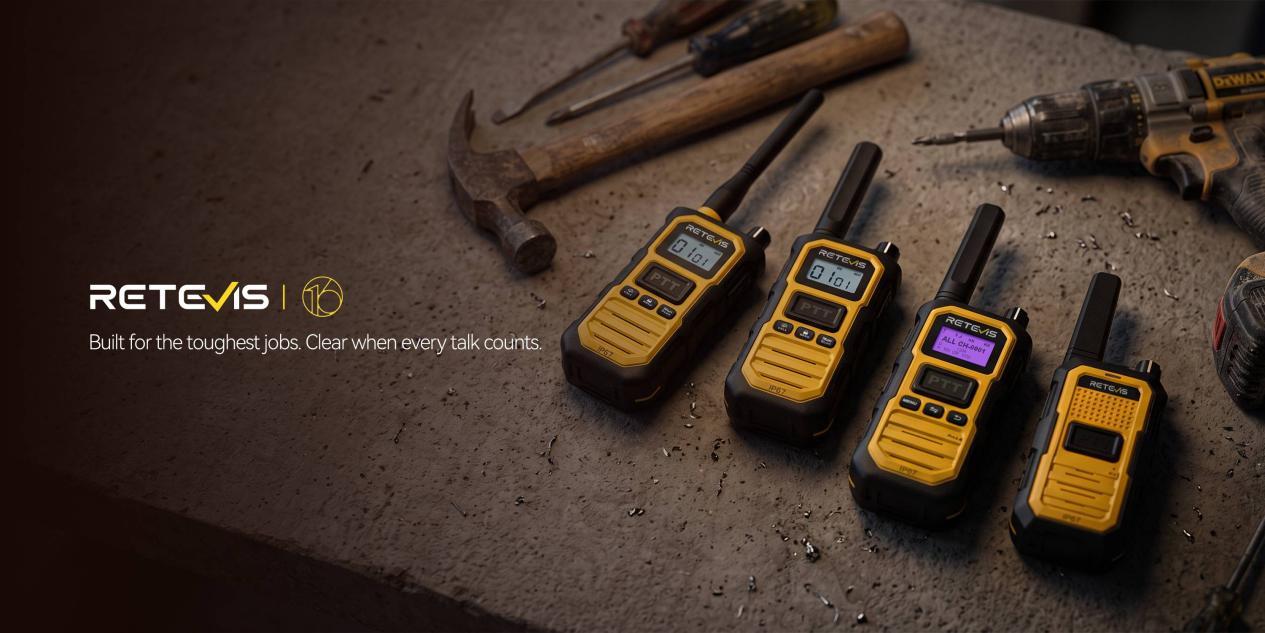
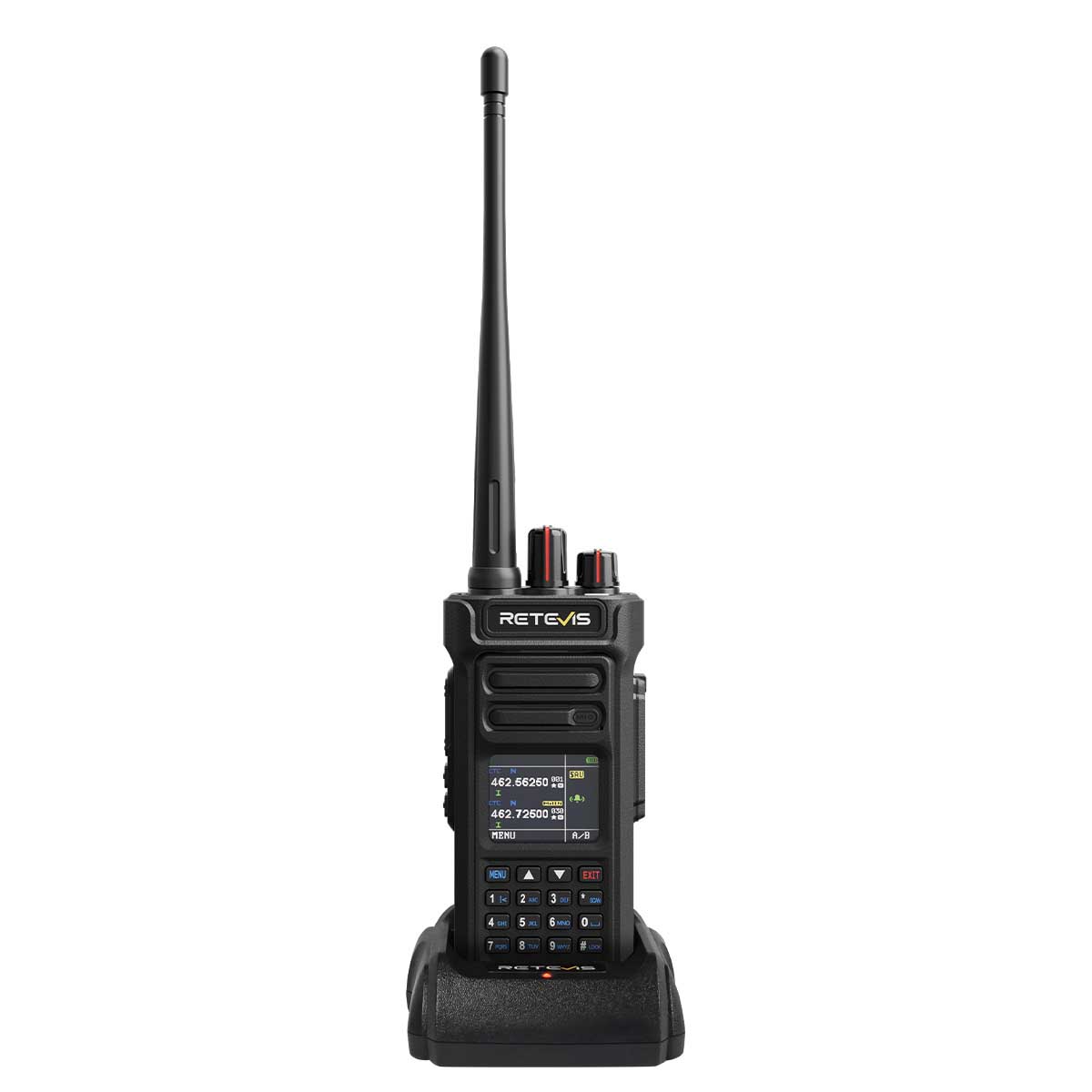
The Retevis RB48 series is a family of industrial walkie talkie devices built specifically for construction and industrial environments. All models share the core rugged foundation — IP67, two-meter drop protection, MIL-STD-810H, and 2000mAh batteries — while adding features for specific work scenarios.
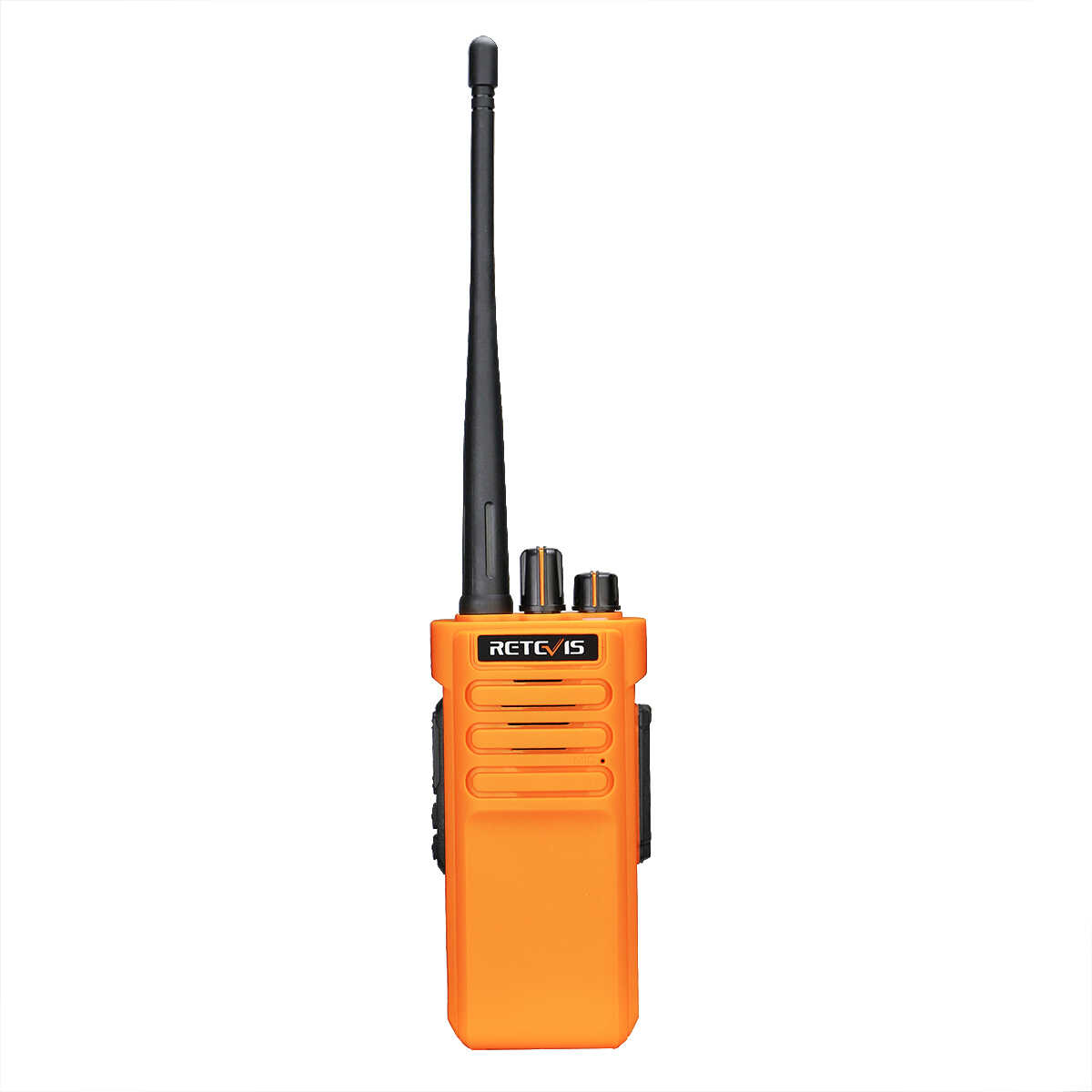
RB48: The Foundation of Rugged FRS Communication
The RB48 is the base model, built for teams that need reliable, license-free communication on standard construction sites. It operates on FRS frequencies — no FCC license, no monthly fees, works out of the box.
It meets all three core requirements: IP67 protection handles dust and rain; two-meter drop protection, verified through 1000 test drops, survives daily jobsite abuse; the 2000mAh battery delivers 12 hours of continuous use, covering a full shift; dual PTT buttons are large enough for gloved hands.
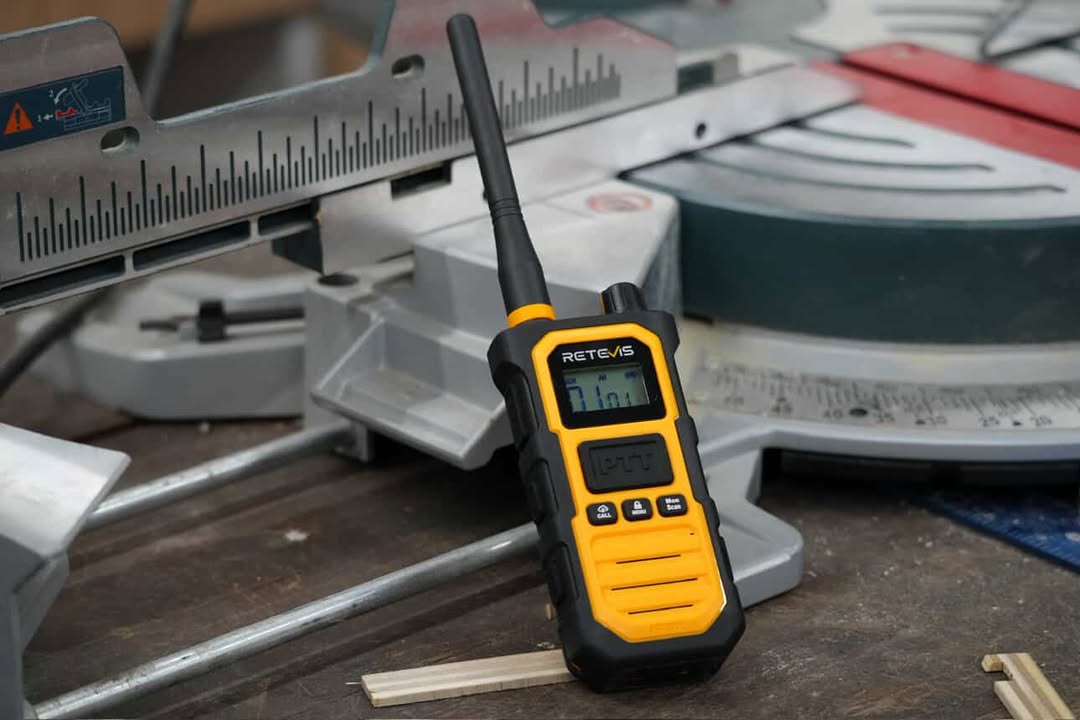
Additional safety features include NOAA weather alerts and SOS emergency alarm for outdoor work. The high-visibility yellow casing makes the radio easy to find in smoke, fog, or debris.
For small to mid-sized contractors and general construction crews that need a dependable rugged walkie talkie without complexity, the RB48 is the practical starting point.
RB48 Plus: High-Power for Large Sites and High-Rise Work
The RB48 Plus addresses the limitation of standard FRS power on large construction sites. Its higher GMRS output power penetrates concrete walls, steel reinforcement, and dense building materials that weaken lower-power signals.
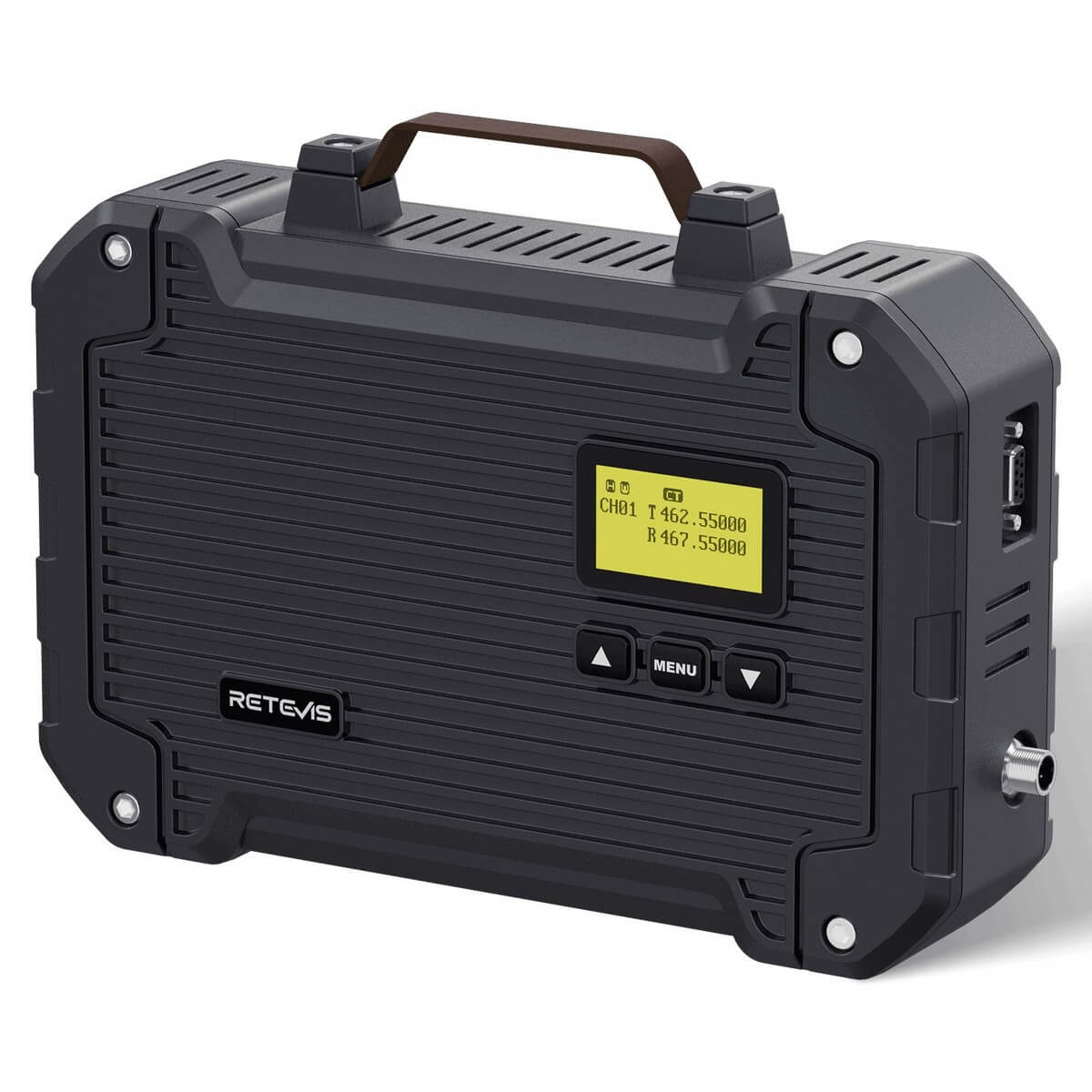
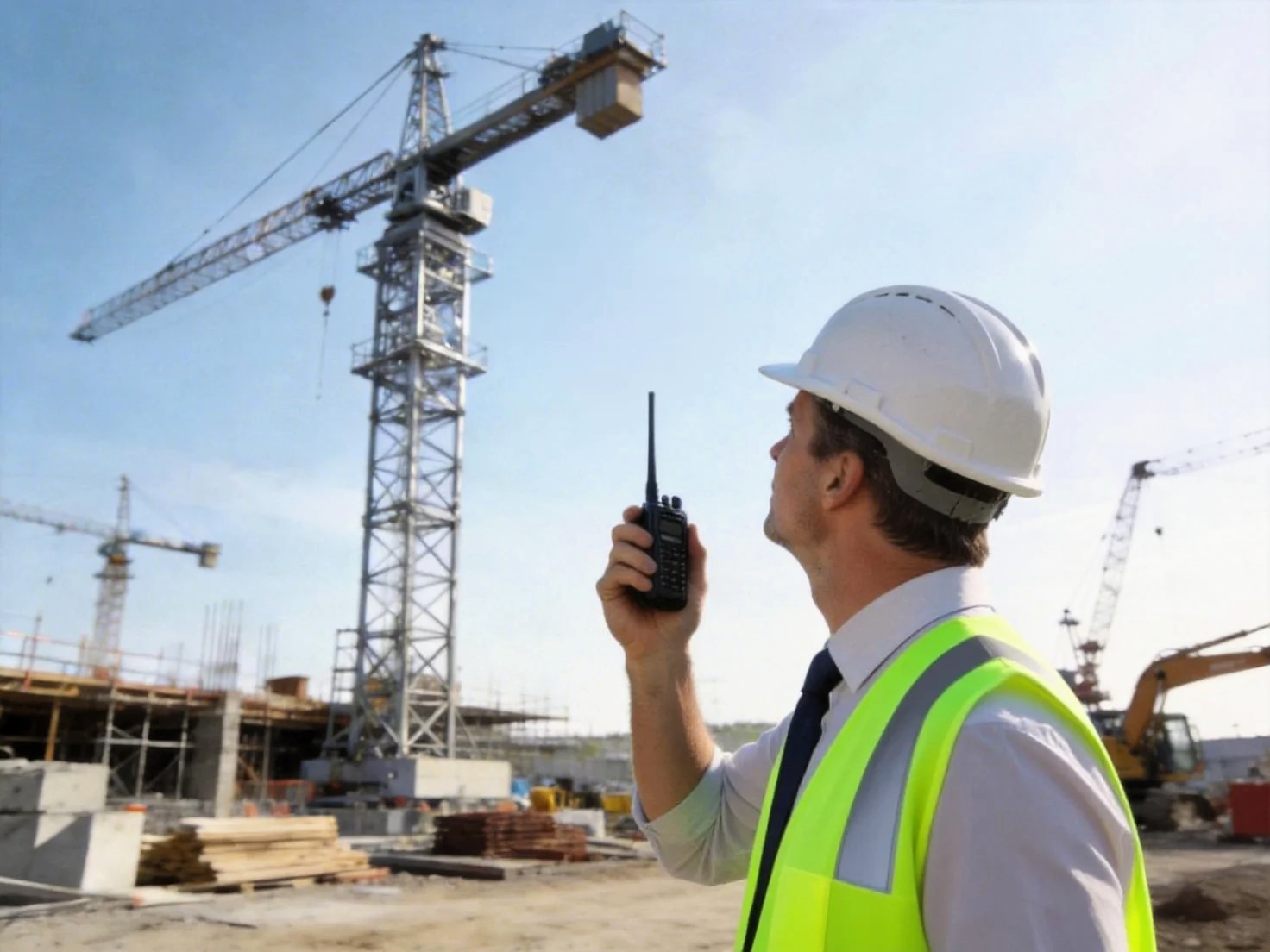
When paired with the Retevis RT97L repeater, the RB48 Plus delivers coverage up to 30 stories — essential for tower crane operators, ground controllers, and high-altitude workers coordinating across vertical distance. One-touch group call reaches the entire team simultaneously, critical for lifting operations and safety alerts. Adjustable power lets workers optimize range versus battery life based on their current task.
For large construction projects, multi-floor buildings, and high-rise work that needs an industrial two way radio with the power to penetrate structural barriers, the RB48 Plus is the appropriate choice.
RB48A: Noise-Canceling for Loud and Lone-Worker Environments
The RB48A is designed for the two most dangerous communication scenarios on a construction site: extreme noise and solo work.
Its dual noise cancellation system filters the background roar of heavy equipment, saws, and generators so the speaker's voice comes through clearly. In a 95dB environment, a worker does not have to shout or repeat instructions — the other party hears the command the first time. This directly reduces the misunderstanding errors that cause accidents.
For lone workers — electricians in panel rooms, workers in isolated stairwells, night-shift security — the one-touch SOS alarm sends an immediate alert to the entire team. NOAA weather alerts provide advance storm warning. The glove-friendly dual PTT buttons work with thick work gloves, so a worker does not have to remove hand protection to call for help.
For teams in high-noise environments, with solo workers, or that prioritize safety communication, the RB48A is the industrial walkie talkie that addresses those specific risks.
RB48D: Digital-Ready for Evolving jobsites
The RB48D extends the RB48 platform into digital communication for teams transitioning from analog to digital systems, or operating in markets where digital standards are required.
It shares the same rugged foundation as the rest of the series — IP67 sealing, two-meter drop protection, MIL-STD-810H, and 2000mAh battery — so it survives the same jobsite conditions. Digital communication offers clearer audio, better security through encryption, and more efficient spectrum use, which matters on large sites with many simultaneous users.
For construction firms standardizing on digital industrial radios, or needing interoperability with existing digital systems, the RB48D provides a migration path without sacrificing jobsite ruggedness.
All four models can communicate with each other when configured to the same frequencies and settings. This means a firm can equip tower crane operators with RB48 Plus units, foremen with RB48 units, electricians with RB48A units, and digital teams with RB48D units — and everyone stays connected.
Real-World Verification
These specifications are not theoretical. They have been tested on actual construction sites by major firms.
Fluor Corporation, one of the largest engineering and construction companies in the world, deployed Retevis RB48, RB48 Pro, and RB648 series radios across its large construction sites. The challenge was coordinating between high-altitude workers and ground-level teams — tower crane operators, ground controllers, and upper-floor workers all needed reliable communication across vertical distance and structural barriers.
Fluor equipped tower crane operators and high-altitude workers with RB48 Plus radios, delivering coverage up to 30 stories. The result was always-on connectivity between teams that had previously struggled with dropped signals and misunderstood instructions.
In a separate elevator installation project in Houston, a project manager reported that using RB48 professional radios for synchronized lift installation reduced misalignment errors by 40 percent. "With instant communication between teams, we were able to verify measurements and make adjustments on the spot, which kept everything on track and minimized errors," he explained. Electricians working on elevator control panels used the RB48 to confirm power shutoffs before starting repairs.
These are documented results from real construction sites. The RB48 series does what ordinary radios cannot: it keeps working through drops, dust, water, noise, temperature extremes, long shifts, and gloved hands.
Choosing the Right RB48 for Your Team
The right RB48 model depends on the specific conditions your team faces every day.
For small to mid-sized construction sites and general contractors that need license-free, dependable communication, the RB48 provides the core rugged foundation — IP67, two-meter drop protection, 12-hour battery, and glove-friendly controls — without unnecessary complexity.
For large projects, multi-floor buildings, and high-rise work that needs signal penetration through concrete and steel, the RB48 Plus delivers higher power and up to 30-story coverage when paired with a repeater.
For high-noise environments, teams with solo workers, and sites where safety communication is the top priority, the RB48A adds dual noise cancellation and one-touch SOS alarm.
For firms standardizing on digital systems or needing digital interoperability, the RB48D provides that capability on the same rugged platform.
Because all models interoperate, many firms mix them across roles — the right tool for each worker, all on one connected system.
If your team is replacing broken radios every few months, or struggling to hear each other over jobsite noise, the right rugged two way radio system can solve these problems. The Retevis RB48 series is built to survive the realities of construction work and to keep communicating when ordinary radios fail.
Part of Retevis's 16th anniversary commitment to building reliable connections that hold up in the toughest work environments.



 Google
 Amazon
Comments
No data Yet