

Table of Contents
Best Walkie Talkies for Business: What Should Your Team Look For?
- Posted by:Retevis

Cell phones are designed for personal communication. Team communication is different. When a restaurant kitchen needs to tell the front desk a table's order is ready, when a retail stockroom needs to confirm an item is on the shelf, when a school administrator needs to reach the entire staff during an emergency — a phone call is too slow, too private, and too unreliable.
This guide explains why two way radios solve these specific problems, what to look for when choosing a system, and how retevis business walkie talkie options match the needs of restaurants, retail stores, and schools.
The Problem With Cell Phones for Team Communication
Cell phones have four fundamental limitations in a team setting.
First, they are slow. A phone call requires unlocking the phone, finding the contact, dialing, and waiting for the other person to answer. In an emergency or a fast-paced shift, those seconds matter.
Second, they create privacy and management problems. Using personal phones for work means employees share their private mobile numbers. Shift changes require collecting numbers from new staff and removing numbers from departing staff. A business has no control over who has which number.
Third, they depend on cellular networks. Basement stockrooms, concrete-walled kitchens, and large school buildings often have weak or no signal. During large events or emergencies, networks get overloaded and calls fail to connect.
Fourth, they cost more over time. Every phone line means a monthly fee. A 20-person team pays for 20 lines every month, year after year. Phone batteries drain quickly because they run multiple apps and constantly search for signal. Broken screens and lost devices add replacement costs.
How Radios Solve Each of These Problems
The advantages of radios directly correspond to the limitations of phones.
PTT instant communication solves the speed problem. Press one button and speak. No dialing. No waiting for an answer. No dropped calls. The entire team hears the message at the same time.
Device-based communication solves the privacy and management problem. Radios belong to the business, not the employee. A new worker picks up a radio, turns it to the team channel, and is connected. No phone numbers are shared. When someone leaves, the business takes back the radio. No contact list updates needed.
Direct radio frequency solves the reliability problem. Radios communicate directly with each other through radio waves. No cell tower. No Wi-Fi. No internet. If two radios are within range, they work — even in a basement, a concrete kitchen, or a school building during a power outage.
No monthly fees solve the cost problem. A business buys the radios once and uses them for years. No per-line charges. No data plans. Radio batteries last a full shift on one charge because the device does only one thing: communicate.
This is the core logic: every advantage of a business radio is a direct solution to a specific limitation of cell phones for team communication.
What to Look For When Choosing Business Radios
Once a business decides to use radios, the selection process follows a clear priority order: from most basic to most advanced.
1. License-Free Operation
This is the first decision. License-free FRS radios work right out of the box — no FCC license, no frequency fees, no paperwork. A small business can buy a set, charge them, and use them the same day. Licensed radios offer more power and range but require paperwork and ongoing fees. For most restaurants, retail stores, and schools, license-free FRS is the practical choice.
2. Durability and Battery Life
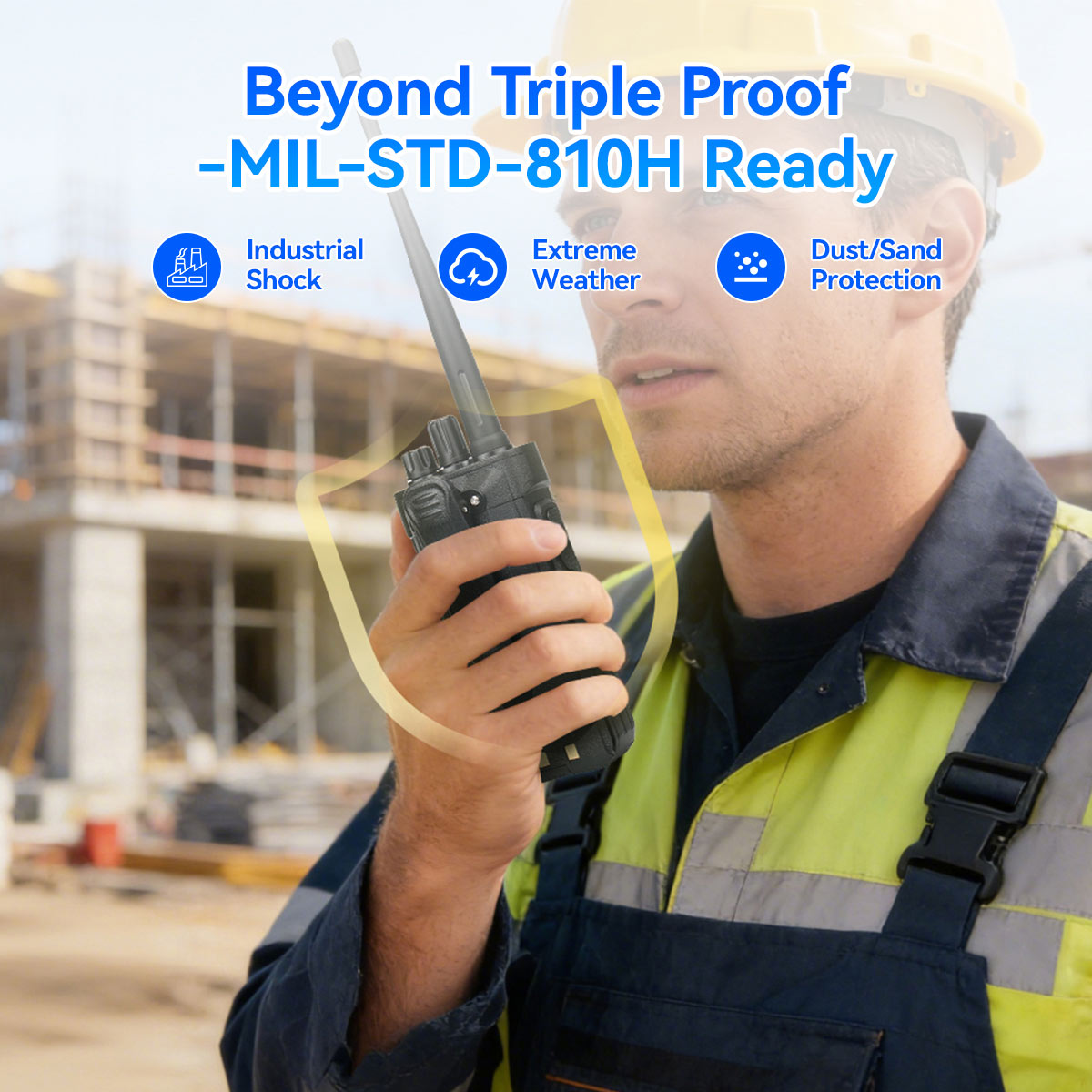
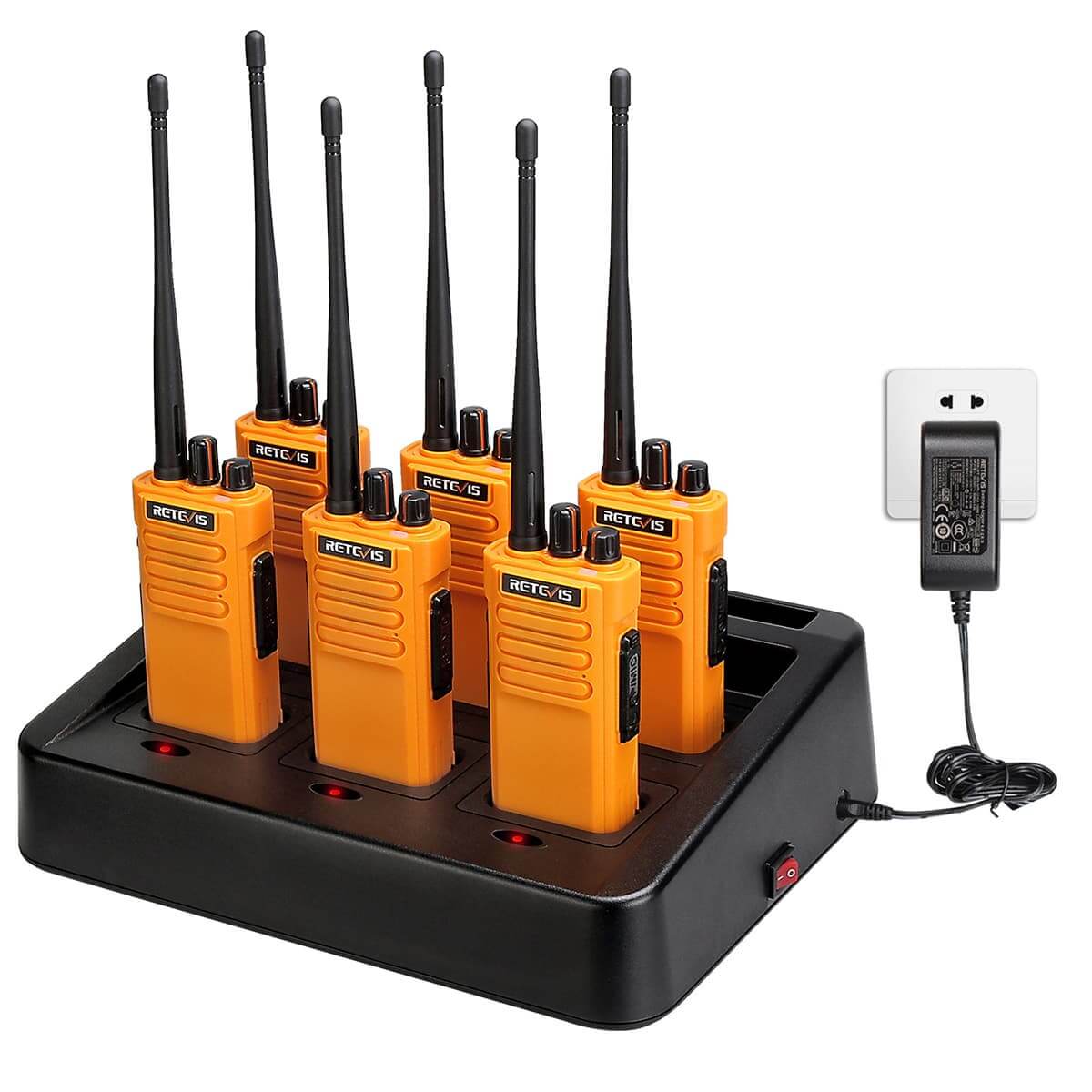
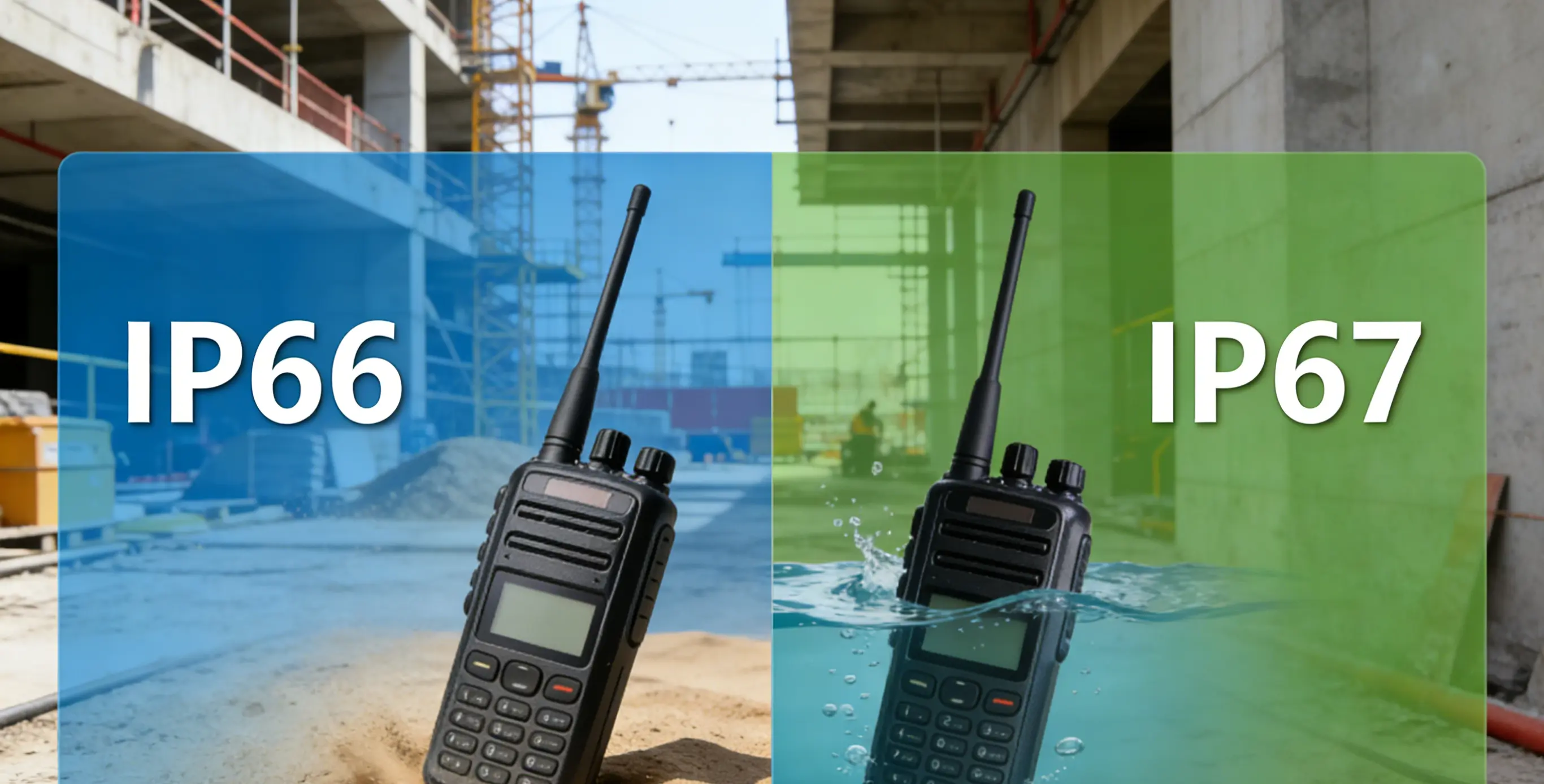
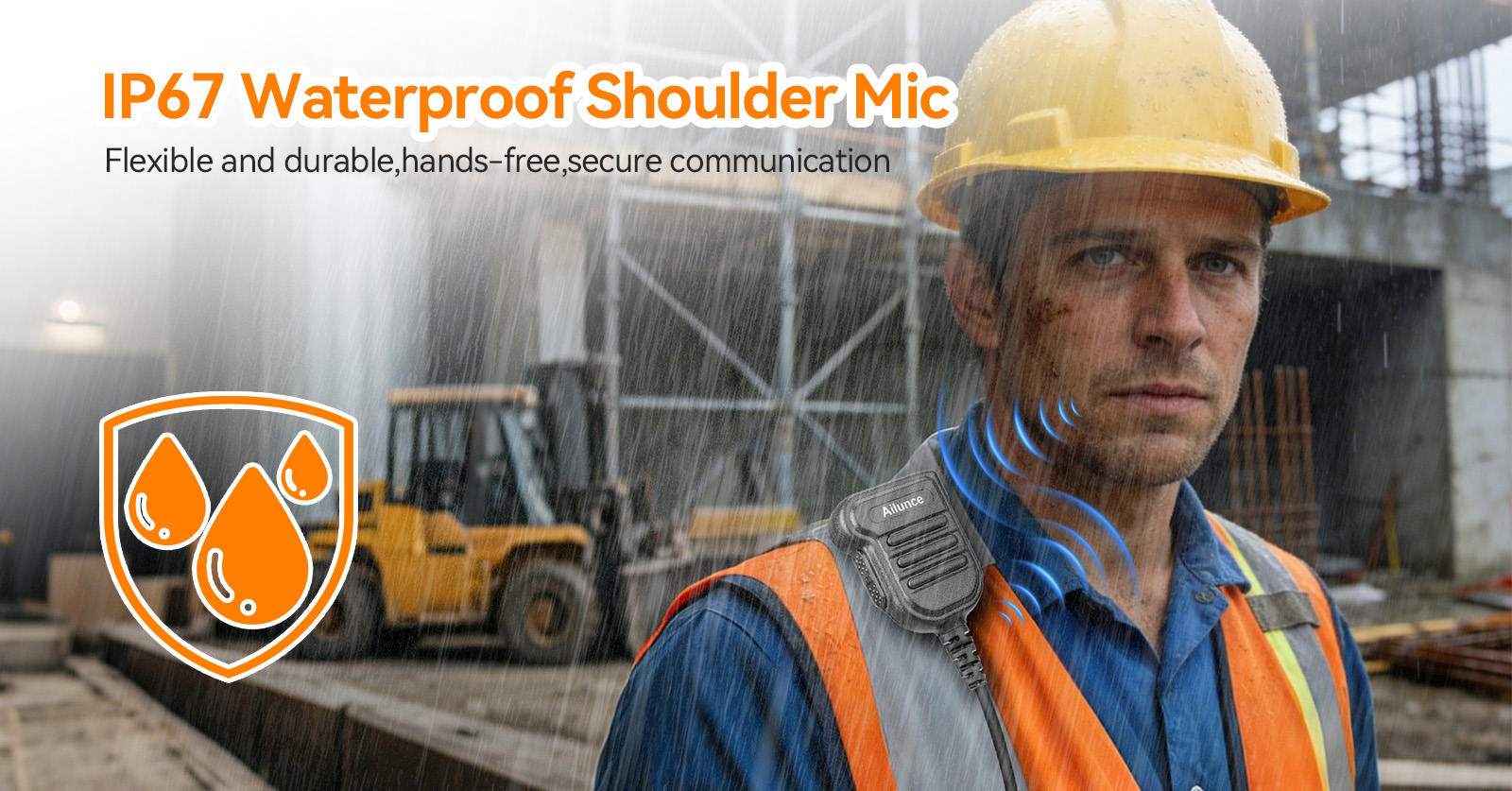
A radio that breaks after a month is a waste of money. Look for IP ratings — IP67 means fully dust-tight and water-resistant enough for kitchen splashes and outdoor use. Battery capacity should support a full shift: 2000mAh or larger typically delivers 8 to 12 hours of use. Multi-unit chargers (six-way or ten-way) let a team charge all devices overnight in one place.
3. Clear Audio in Noisy Environments
A radio is useless if no one can understand what is said. Restaurant kitchens run blenders, fryers, and dishwashers simultaneously. Retail stores have music and customer chatter. School hallways echo between classes. Noise-canceling microphones filter background sound. Earpiece support lets staff hear messages privately. VOX (voice-activated transmission) enables hands-free use when both hands are busy.
4. Multi-Channel Group Communication
Most businesses have multiple teams that need separate conversations. A restaurant has front-of-house, kitchen, and management. A retail store has sales floor, stockroom, and loss prevention. A school has administration, maintenance, and security. Multiple channels let each group talk without interfering with others. A manager's radio can scan all channels to stay aware of everything. One-touch group calls reach everyone at once during emergencies.
These four criteria follow a logical order: can you use it legally and immediately? Will it survive the work environment? Can people hear each other in that environment? Can multiple teams coordinate without interference?
Matching Radios to Specific Business Scenarios
Different businesses face different communication problems. The right radio depends on which problems matter most.
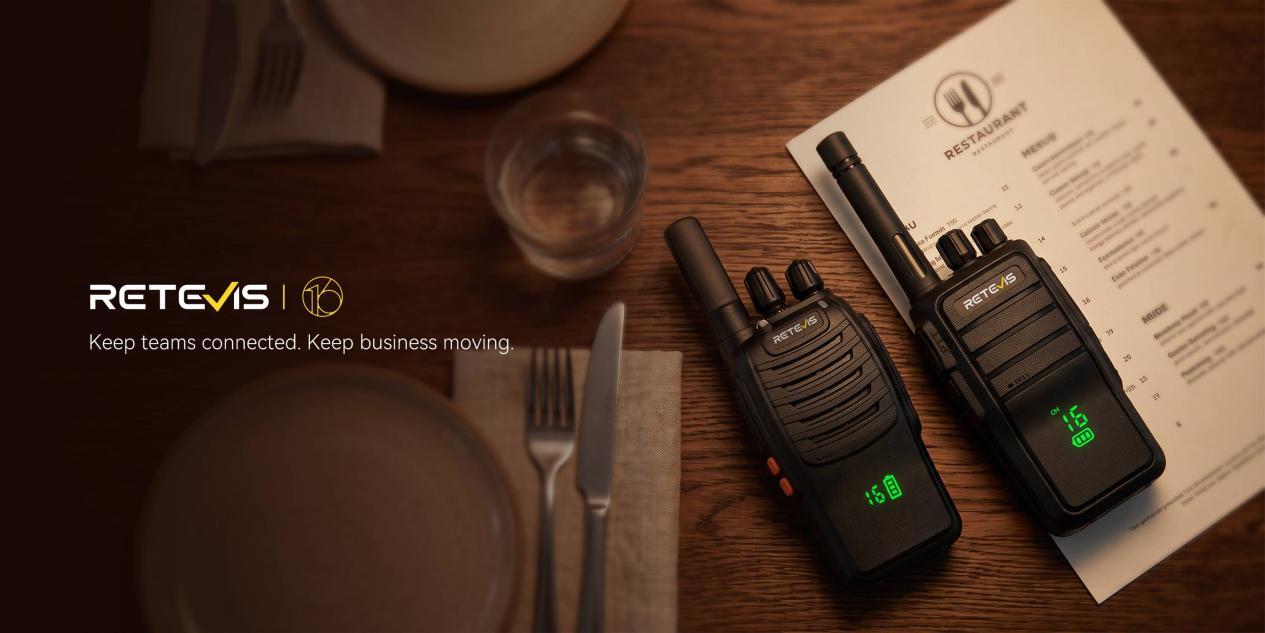
Restaurants: Noise, Speed, and Appearance
The core problem in restaurants is coordinating between a noisy kitchen and a customer-facing dining room. The kitchen needs durable radios that handle water and oil. The front of house needs compact, discreet radios that do not disturb customers.
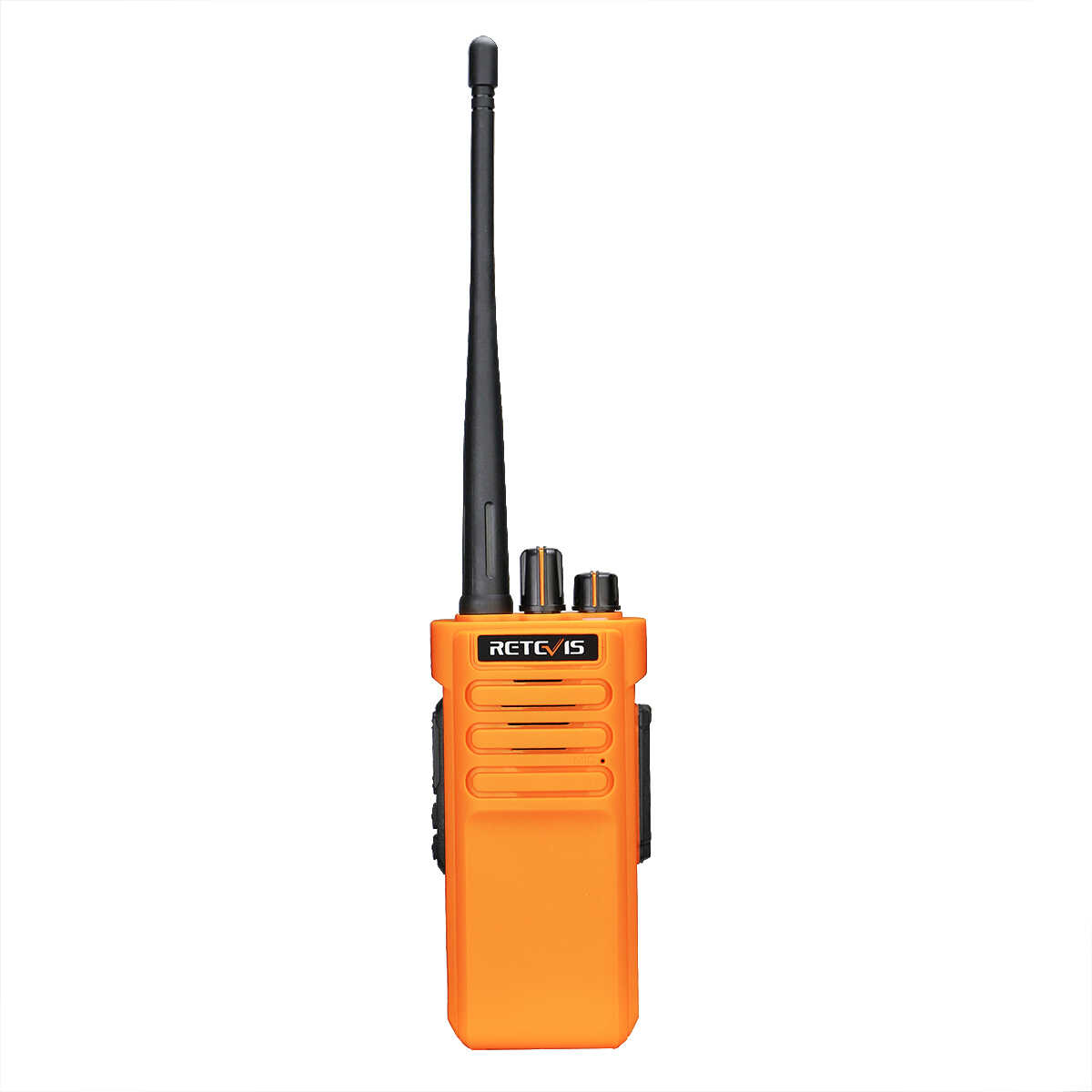
For the kitchen, the Retevis RB48 offers IP67 water and dust resistance — enough for splashes, spills, and daily cleaning. Its 22 channels support separate groups for kitchen line, dish area, and expeditor. For the front of house, the Retevis RT22 is compact enough to clip to an apron and supports earpieces so customers do not hear internal conversations. For teams that need to charge many radios at once, the Retevis RT27 includes a six-way charger and is compatible with other FRS radios including the RB48.
Retail: Coverage, Durability, and Cost
The core problem in retail is connecting the sales floor to the stockroom across walls and distance, while keeping costs manageable for large teams.
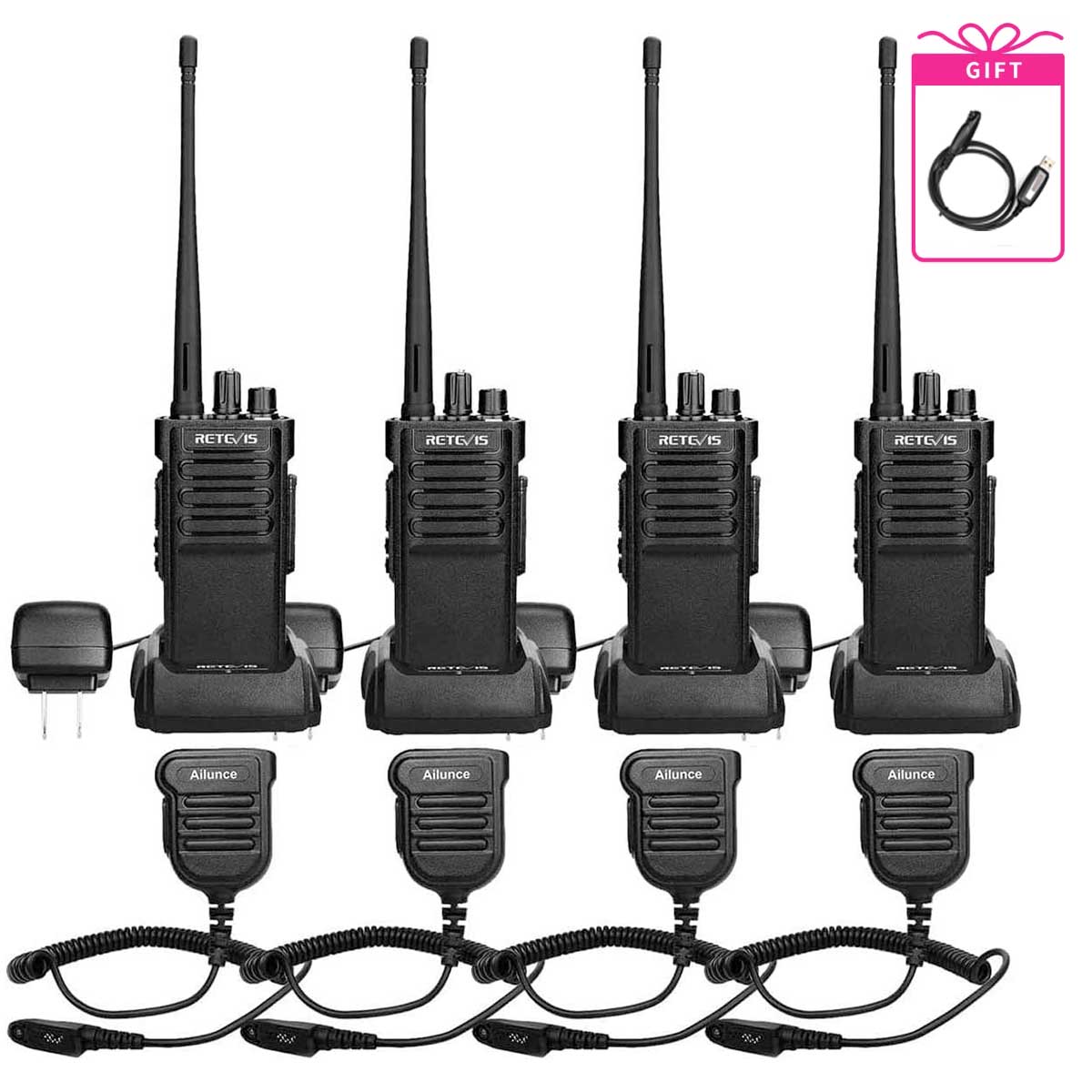
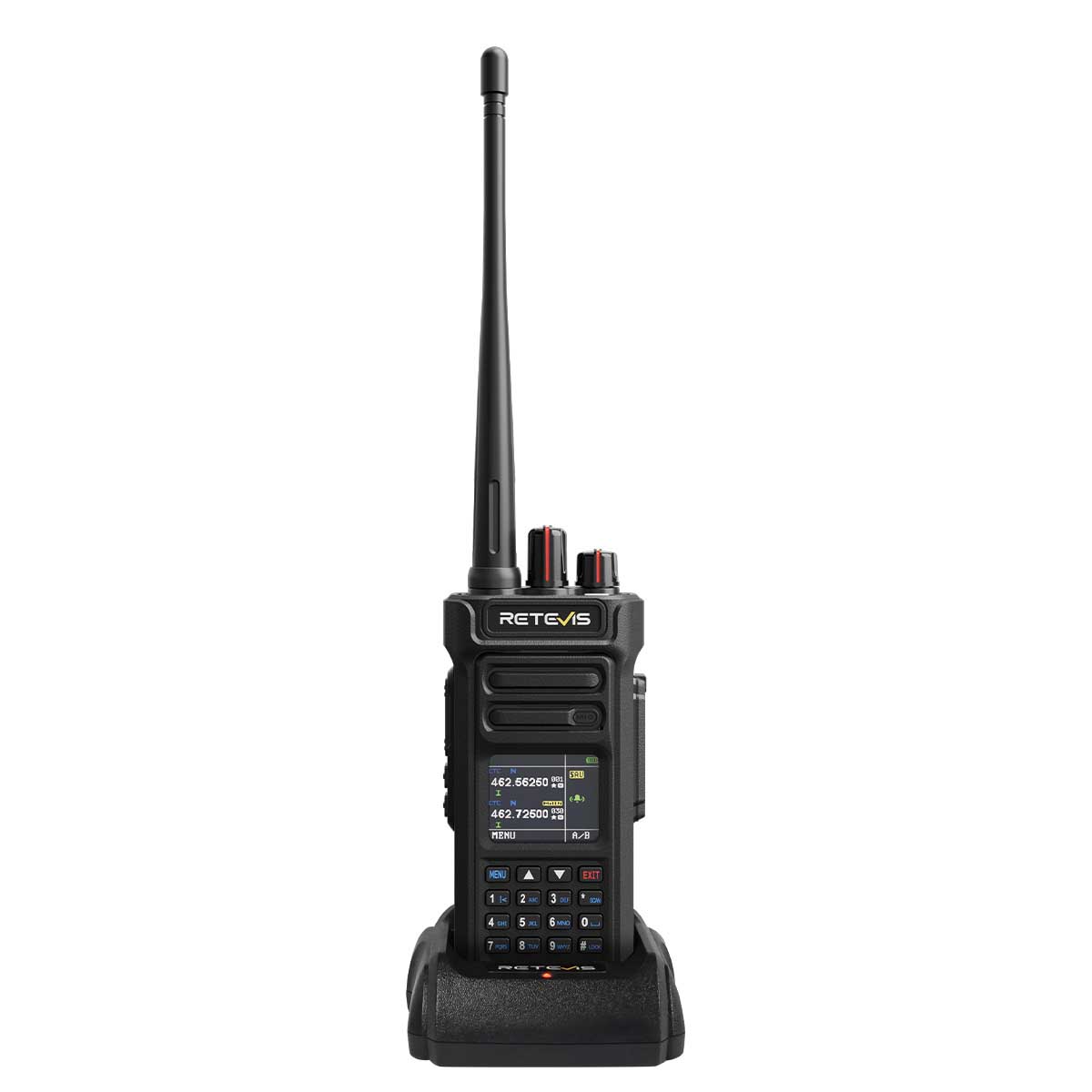
For small stores with simple needs, the Retevis H777 is an affordable entry point — license-free FRS, USB-C charging, and works right out of the box. For larger stores with more staff, the Retevis RT68 offers a rugged build and a ten-way charger for charging an entire shift's worth of radios overnight. For stores with wet areas — garden centers, seafood counters, floral departments — the Retevis RT47 adds IP67 waterproofing.
Schools: Coverage, Safety, and All-Day Use
The core problem in schools is reaching staff spread across multiple buildings, athletic fields, and outdoor spaces — especially during emergencies.
For general staff use, the Retevis RT22 is small and light enough to carry all day. Teachers and office staff can clip it to a lanyard without feeling burdened. Its 16 channels support separate groups for administration, maintenance, cafeteria, and security. For facilities and grounds crews working outdoors, the Retevis RB48 offers IP67 protection and a 2000mAh battery that supports a full school day. For schools deploying many radios at once, the Retevis RT68's ten-way charger simplifies charging for an entire team.
All FRS Retevis radios work together on the same channels, so a school can equip different departments with different models — compact RT22s for office staff, rugged RB48s for facilities — and everyone can still communicate.
Compatibility: Are All Retevis Walkie Talkies Compatible?
One of the most common questions businesses ask is whether new radios will work with ones they already own. The short answer: radios using the same frequency band work together.
FRS-to-FRS compatibility is straightforward. All Retevis FRS radios communicate with each other when set to the same channel and privacy code. A Retevis RB48 can talk directly to a Retevis RT22, RT21, or H777 on channels 1 through 5. The Retevis RT27, with 22 channels, is compatible with most other FRS radios including the RB46, RB47, RB48, and RB67. This compatibility extends to other brands — FRS is a standardized band, so any FRS radio from any manufacturer works with any other FRS radio when settings match.
Three settings must be identical for two FRS radios to communicate: the channel number, the privacy code (CTCSS or DCS, or both off), and the bandwidth (narrowband 12.5 kHz or wideband 25 kHz). Some Retevis radios include a one-touch pairing feature that detects and matches these settings automatically, which helps businesses adding new radios to an existing system avoid manual configuration errors.
Different frequency bands do not work together. FRS and GMRS share some channels (1 through 7), so partial communication is possible, but a GMRS radio on a GMRS-only channel cannot talk to an FRS radio. Different wavelength bands — such as UHF and VHF — cannot communicate at all. Digital and analog radios must be set to the same mode. For businesses building a business two way radio systems, the practical advice is simple: choose one band — FRS for most business use — and stay within it.
The Right Radio for Your Team
Choosing a business radio comes down to matching the device to the specific problems your team faces. Small teams in small spaces need affordable, easy-to-use FRS radios like the H777 or RT22. Larger teams need durable radios with multi-unit chargers like the RT68 or RT27. Wet or dirty environments need IP67-rated radios like the RB48 or RT47.
What matters is not the number of features or the wattage on the spec sheet. What matters is whether the radio solves the communication problems your team actually faces — slow response times, phone privacy issues, dead zones, and unreliable cellular coverage. Retevis offers a range of license-free 2 way business radios built for reliable daily use across restaurants, retail stores, and schools.





 Google
 Amazon
Comments
No data Yet