

Table of Contents
How Far Do Walkie Talkies Really Work? A Guide to Real-World Range
- Posted by:Retevis

Walkie talkie range is not a fixed number. It depends entirely on where the radio is used. The same radio can deliver reliable communication across an open field and fail completely inside a steel warehouse. For anyone researching long distance walkie talkie options, the real answer depends less on the radio and more on where it will be used. This guide breaks down what actually determines long range walkie talkies retevis performance, and how the right infrastructure — like the Retevis RT97L repeater — turns limited handheld coverage into site-wide reliable communication.
What Determines Whether a Signal Gets Through
Radio waves travel in straight lines. Anything solid between two radios — a wall, a hill, a row of steel shelving — absorbs, reflects, or blocks that signal. The more obstacles, the shorter the effective range. Five factors determine how well a signal gets through.
1. Terrain
Hills and ridges block signals almost completely. Valleys trap them. Even a single rise in elevation between two radios cuts usable coverage dramatically. Open, flat country with no obstructions is where radios perform at their best.
2. Building Materials
Concrete walls, steel frames, metal roofing, and brick absorb and reflect radio signals. A radio that works clearly across an open parking lot may fail between two floors of a steel-frame building.
Dense urban environments with multiple concrete and steel structures shorten range further because signals must pass through wall after wall.
3. Frequency
VHF radios use longer wavelengths that travel farther in open, unobstructed environments and can bend slightly around hills and trees. UHF radios use shorter wavelengths that penetrate buildings more effectively, making them the better choice for indoor use, warehouses, and construction sites.
4. Power
More watts help push a signal farther in open conditions, but inside buildings or around obstacles, doubling the power does not double the range. The signal still must pass through the same walls and steel.
A 10W radio inside a concrete warehouse will not cover ten times the area of a 2W radio — the building limits the range, not the wattage.
5. Antenna Height
Raising an antenna higher extends range because it clears obstacles and improves line of sight. Each doubling of antenna height can increase effective range by roughly 40 percent.
This is why repeaters mounted on towers, rooftops, or high points inside facilities work — they take the signal above the obstacles that block handheld-to-handheld communication.
Inside Buildings, Handheld Radios Hit a Wall
Inside a warehouse, manufacturing plant, or construction site, radios face obstacles that no handheld alone can fully overcome.
Warehouses
Floor-to-ceiling steel shelving blocks line-of-sight propagation and creates deep signal shadows behind each row. Workers in certain aisles cannot transmit or receive, even when they are only a short distance from other team members.
Concrete tilt-up walls attenuate signals severely with each wall crossing. Deep inside a large warehouse, signal strength drops abruptly, creating dead zones where communication fails entirely.
Communication failures account for a significant share of operational delays in modern distribution centers. A worker who cannot reach a supervisor because of a signal shadow must walk across the facility, wasting time and slowing down the entire operation.
Manufacturing
Metal surfaces, thick concrete walls, and heavy equipment create signal blind spots. Forklifts, cranes, and conveyor systems reflect and scatter signals.
Refrigeration rooms and high-density metal storage areas absorb radio energy. Even the best long distance two way radio struggle to maintain consistent communication across a large manufacturing floor without infrastructure support.
Construction Sites
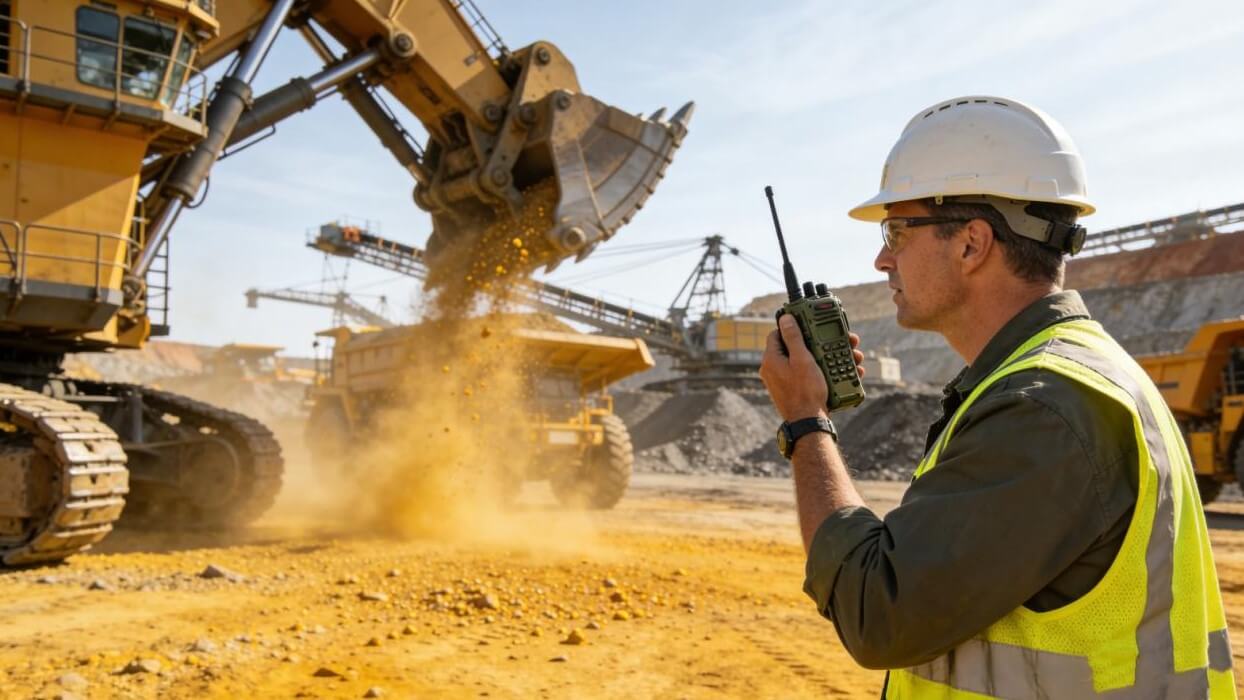
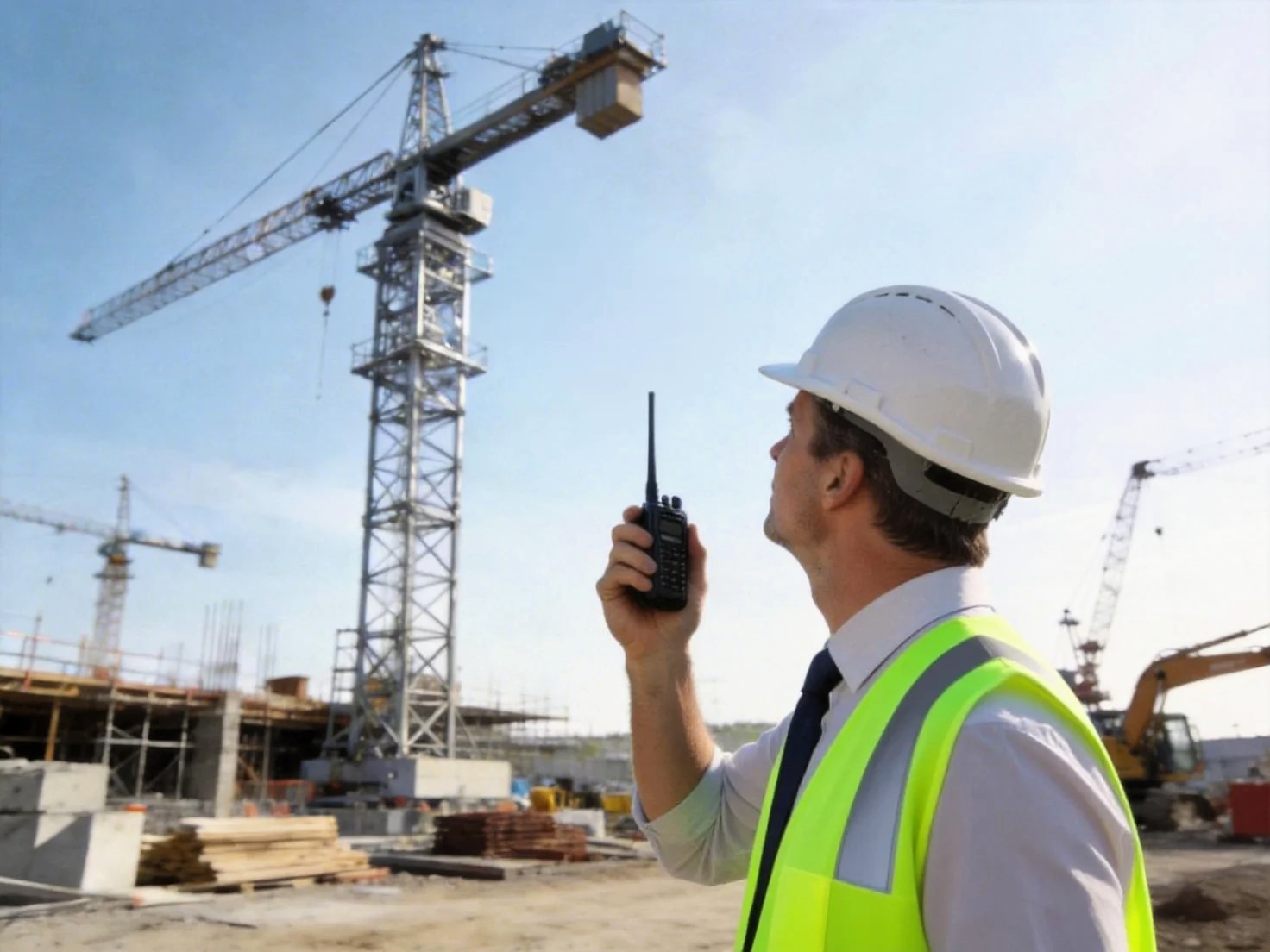
Steel rebar and structural steel attenuate signals. Multi-story buildings create floor-by-floor coverage gaps. Heavy machinery runs at high decibel levels, making clear audio as important as signal strength.
Workers move constantly between open areas and enclosed structures, and a radio that works in one spot may fail in the next.
The building itself is the obstacle. A radio held at waist height cannot overcome walls, steel shelving, and multiple floors on its own.
Repeaters Solve Building-Induced Coverage Gaps
How a Repeater Works
A repeater listens for signals on one frequency, amplifies them, and retransmits them on another frequency at higher power from an elevated position. It acts as a central relay that every handheld on the system communicates through.
Instead of radio A trying to reach radio B directly through walls and steel shelving, radio A sends its signal to the repeater. The repeater, mounted high above the obstacles, receives that signal even when radio B cannot.
It then amplifies and retransmits the signal from its elevated position, reaching every radio on the site — including ones deep inside aisles, on different floors, or behind concrete walls.
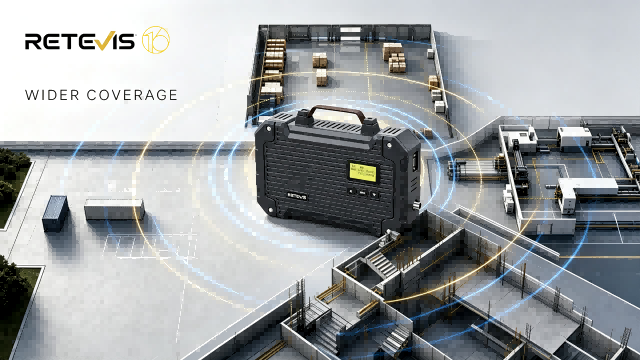
Retevis RT97L: 25W Portable Repeater
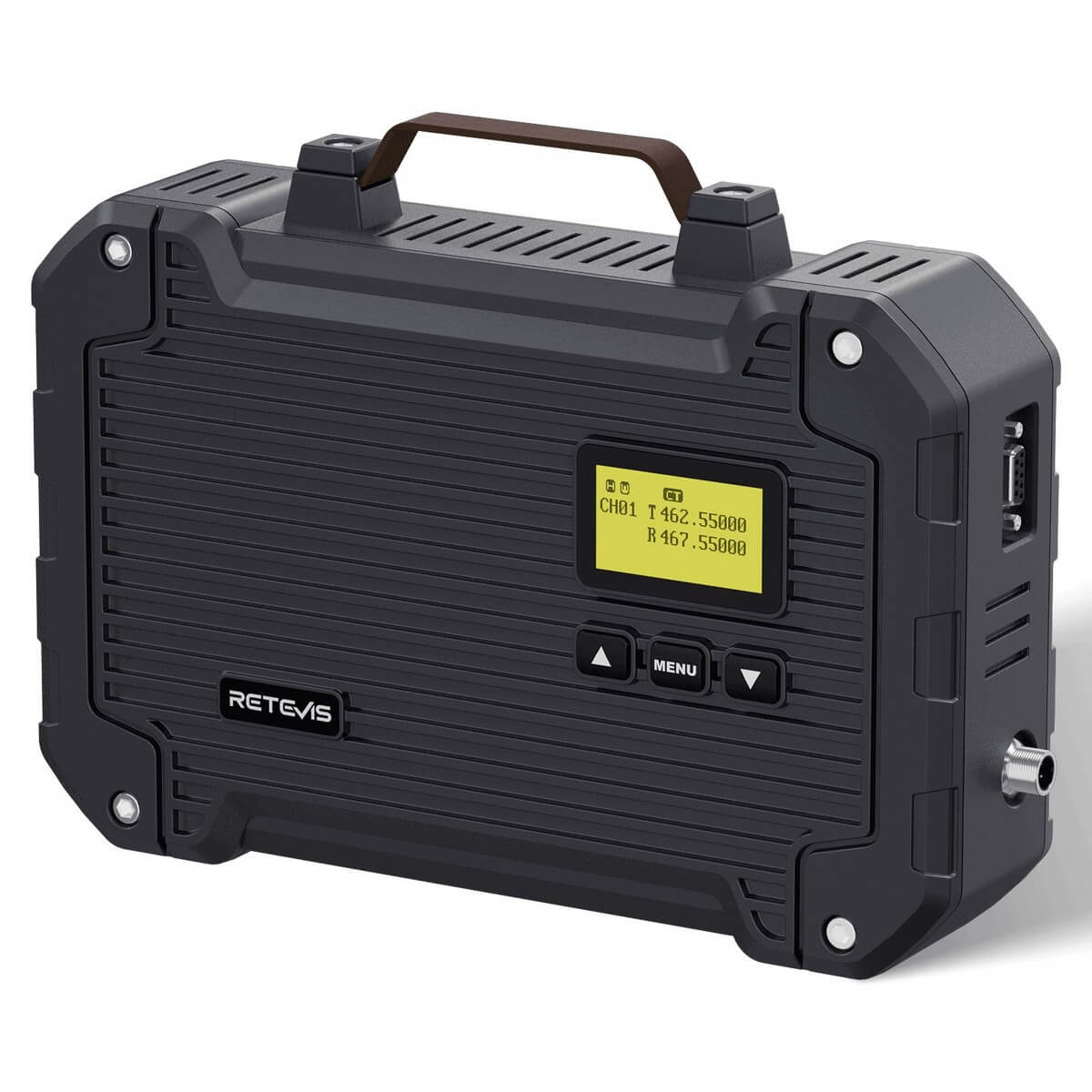
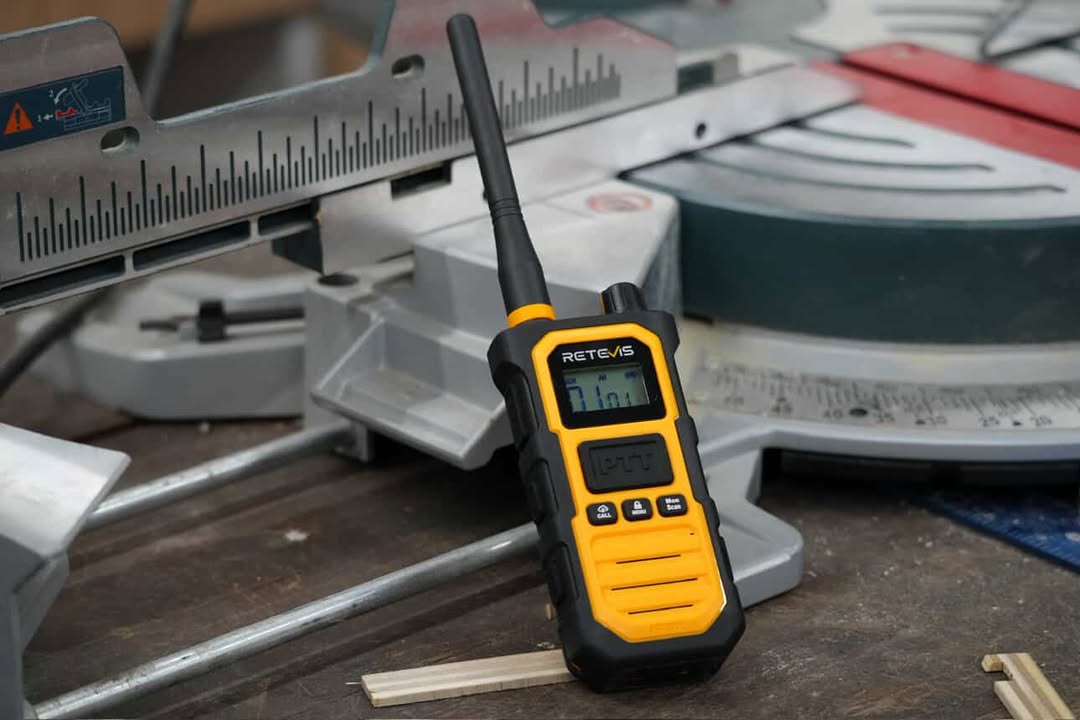
The Retevis RT97L is a 25W portable repeater built for these environments. Its 25W output power delivers significantly stronger transmission than standard handheld radios, ensuring signals penetrate deep into large facilities and across wide outdoor areas.
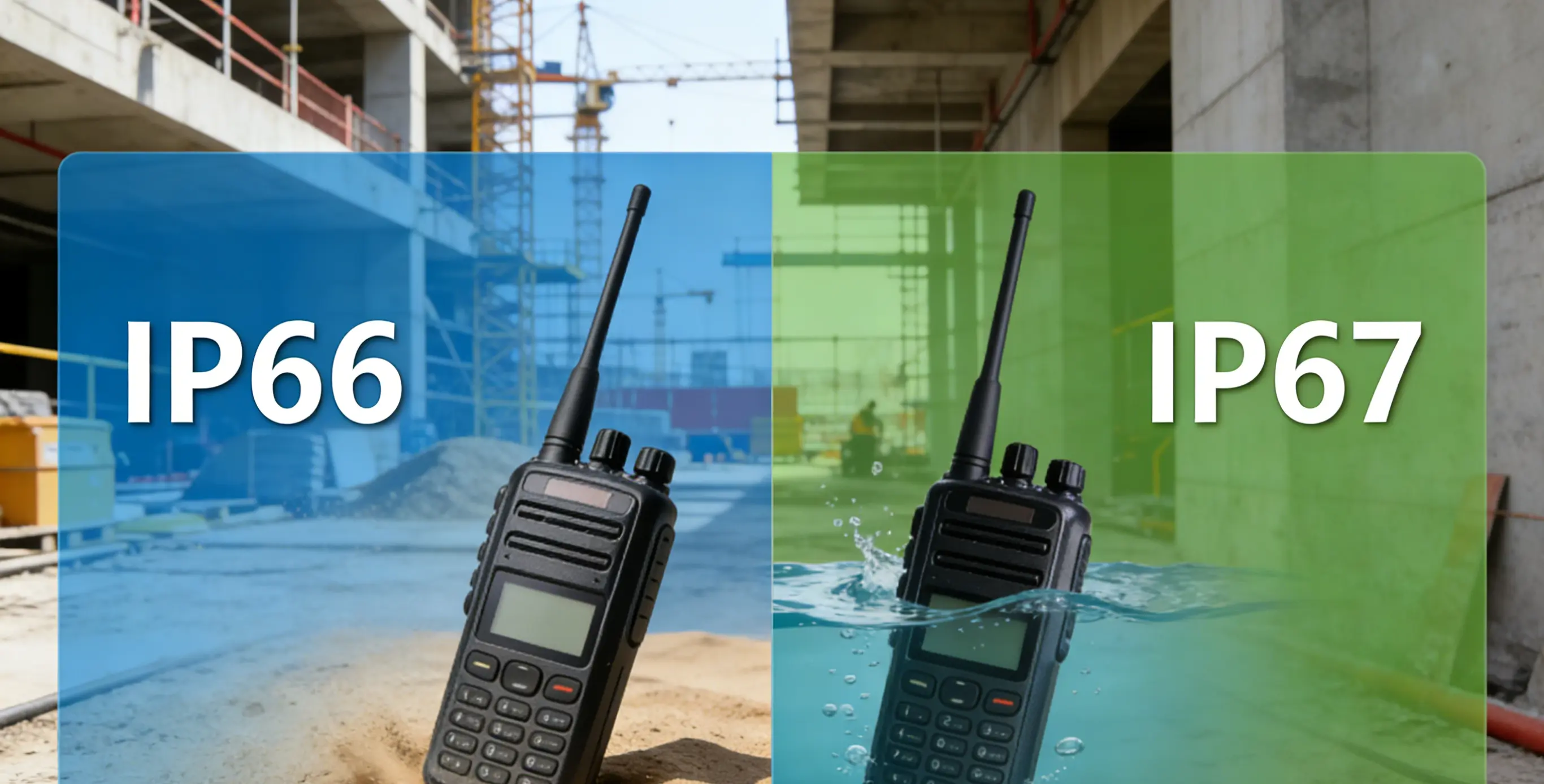
IP66 waterproof and dustproof certification means it can be deployed in harsh industrial conditions — construction sites, manufacturing floors, outdoor yards — without concern for dust, rain, or temperature variation.
The RT97L supports customizable frequencies across 16 channels, making it compatible with mainstream UHF and GMRS two way radios including the Retevis RT29 and RB48 series.
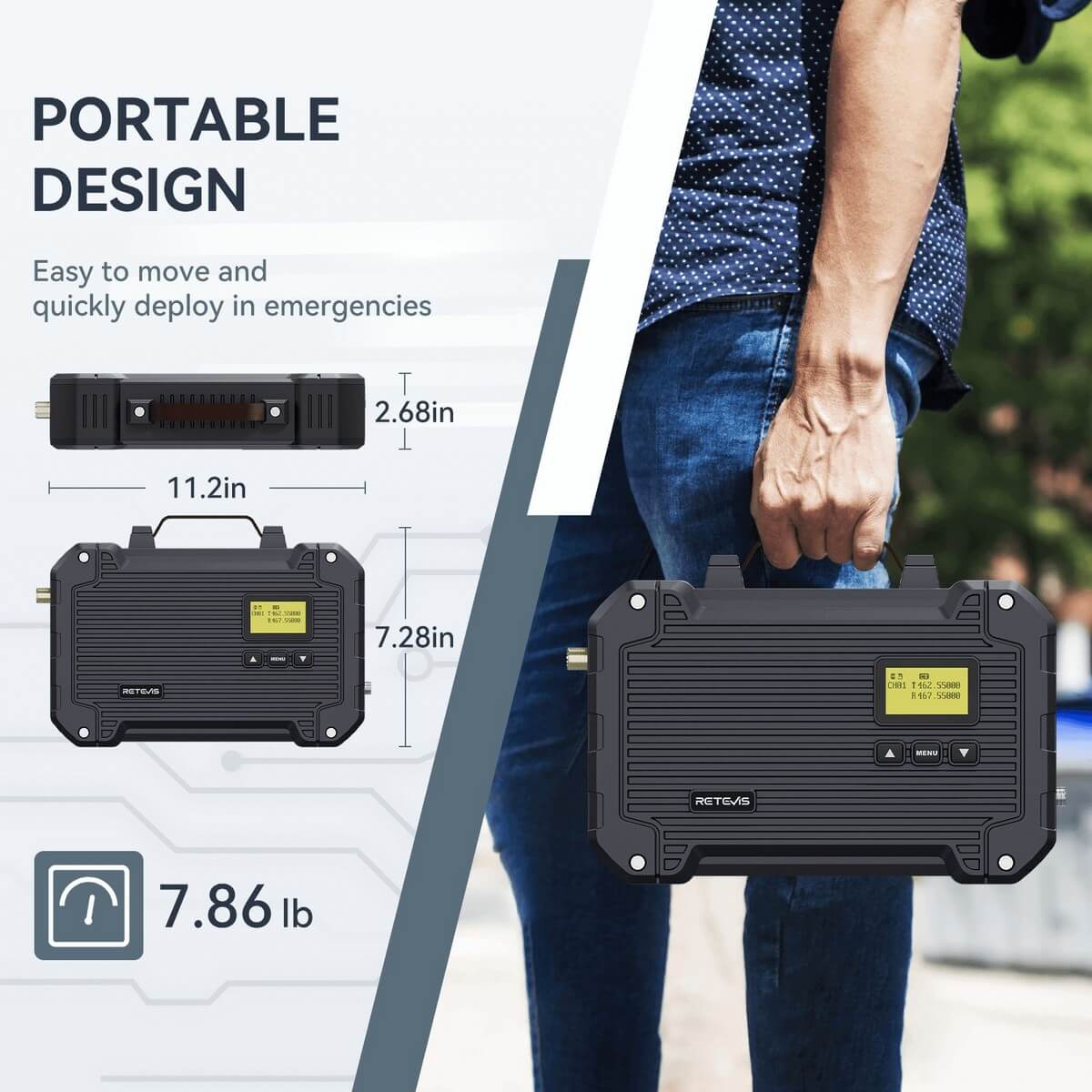
Its compact, portable design — 11.22 × 7.28 × 2.68 inches and 7.86 pounds — allows it to be mounted on towers, trailers, or temporary structures, or used as a fixed installation. It supports DC 12V–24V power and car battery connections, making it suitable for both permanent and temporary deployments.
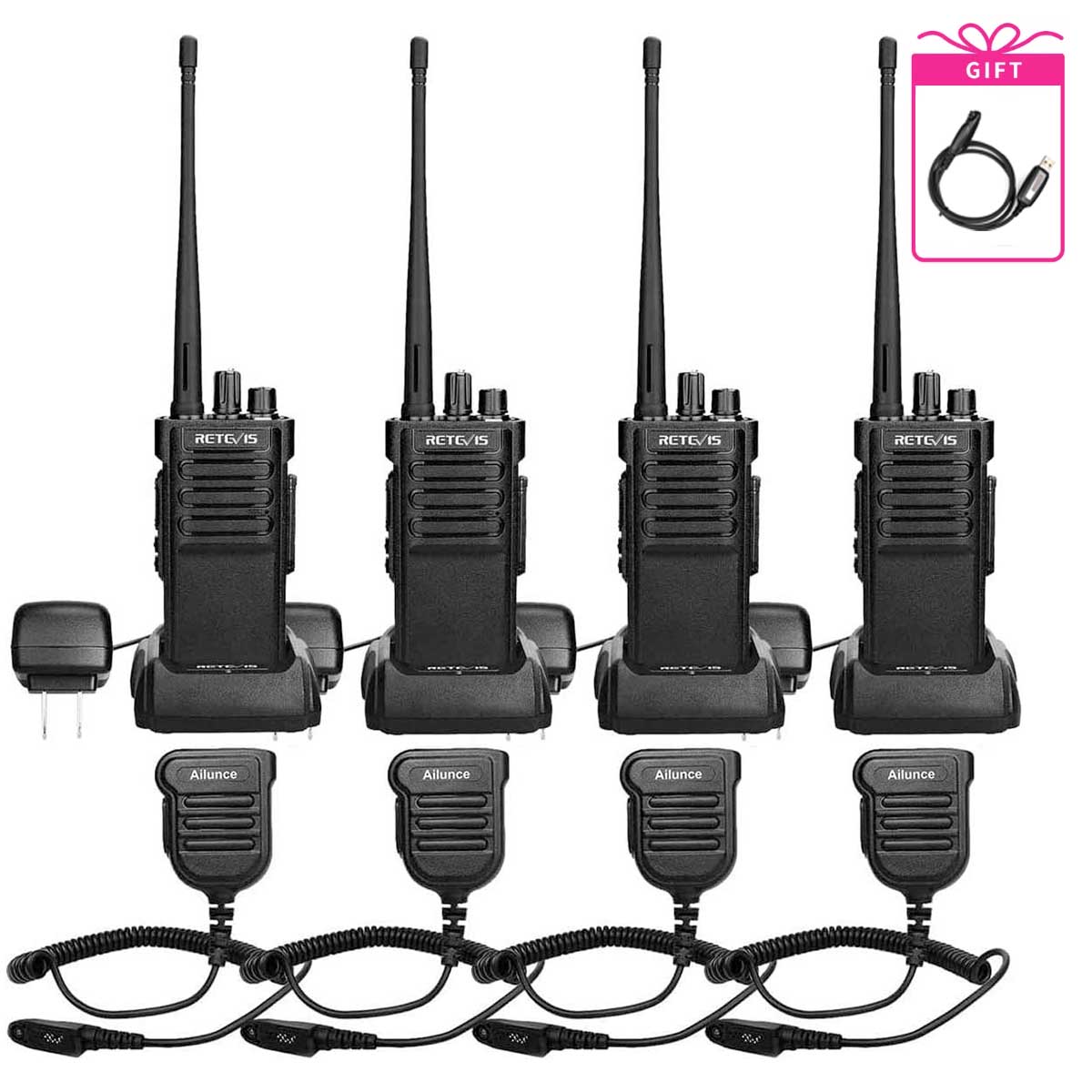
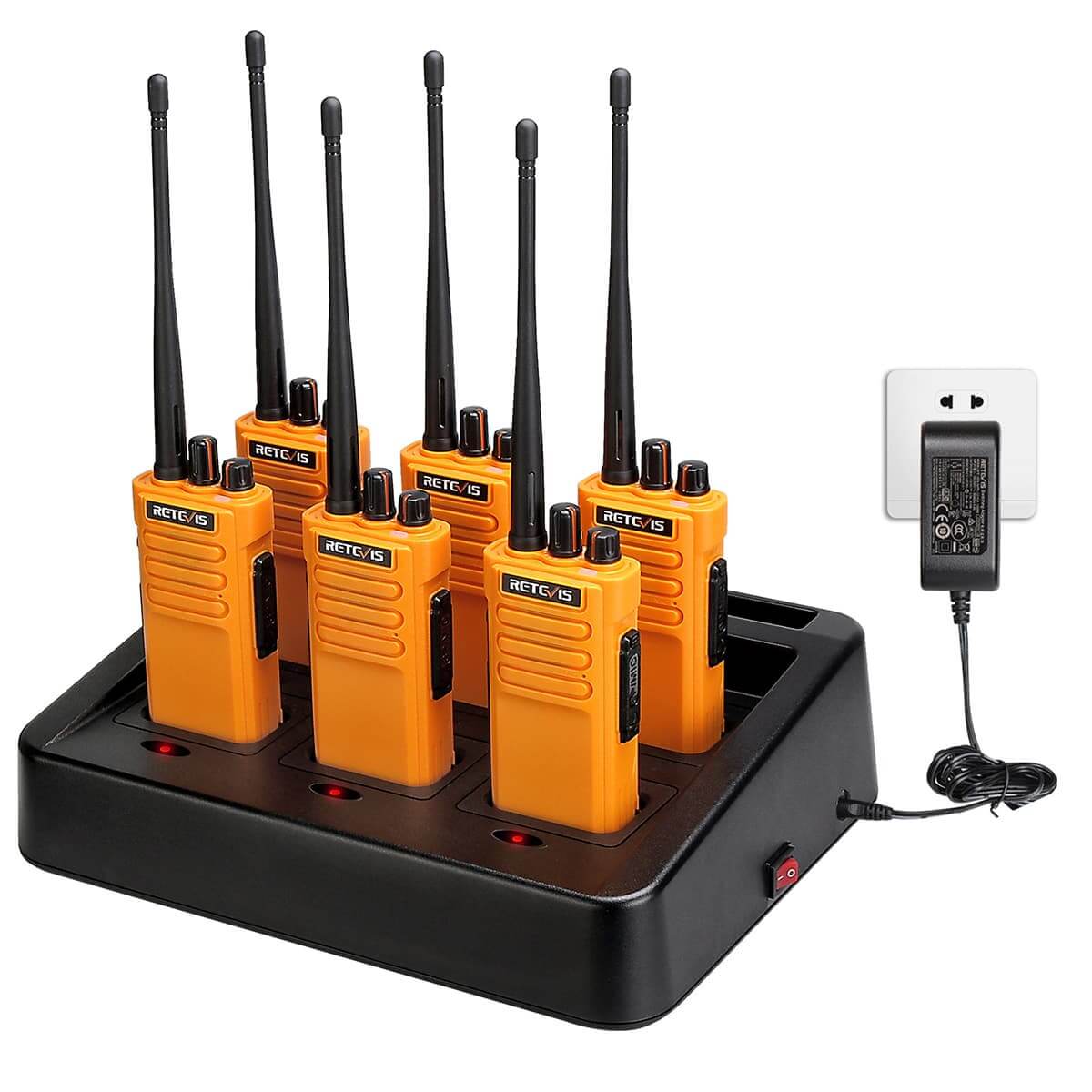
Complete RT97L kits include matched handheld radios, multi-unit chargers, antennas, cables, and programming software — everything needed to stand up a site-wide communication system in an afternoon.
RT29 Handhelds + Documented Deployments
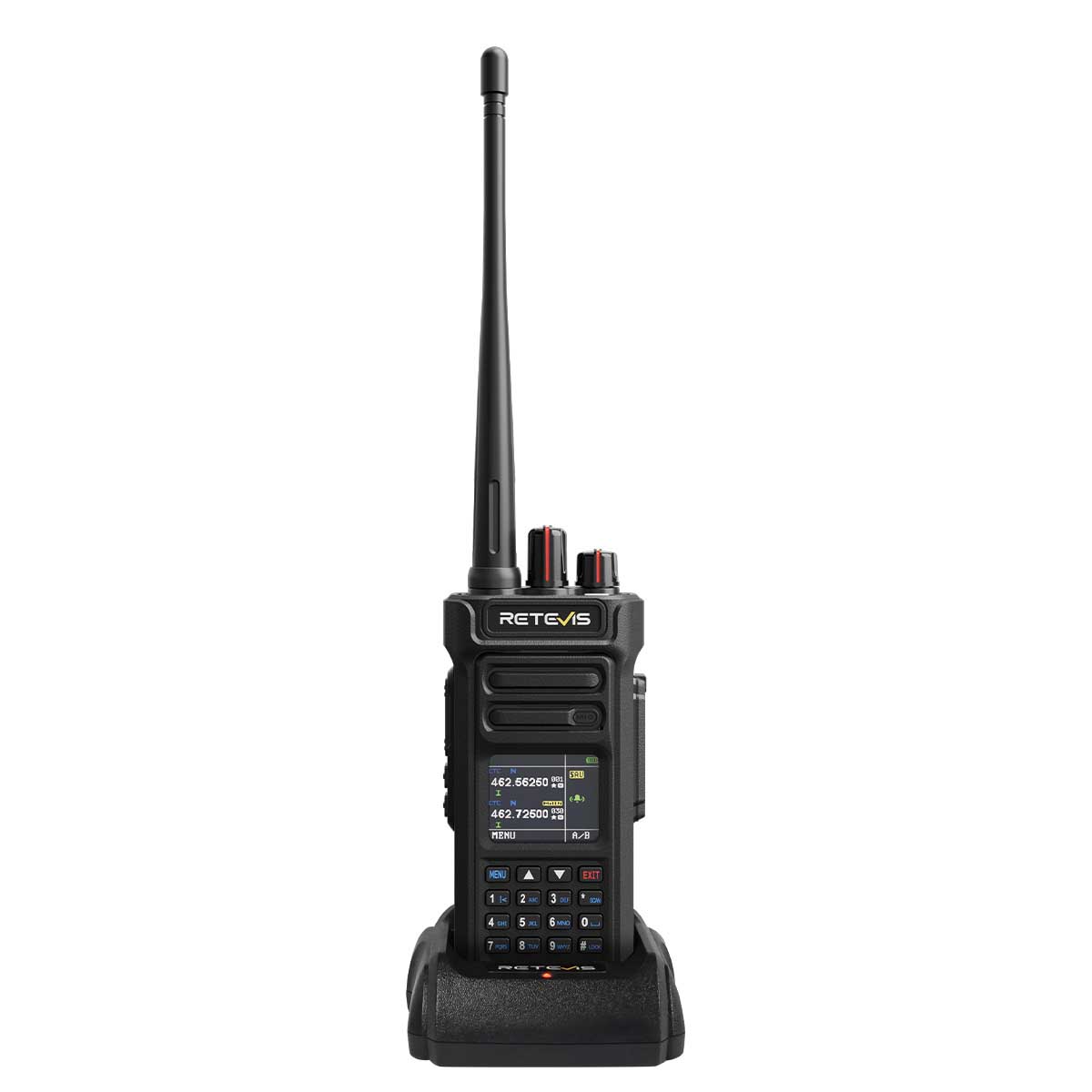
Retevis RT29: 10W UHF Handheld
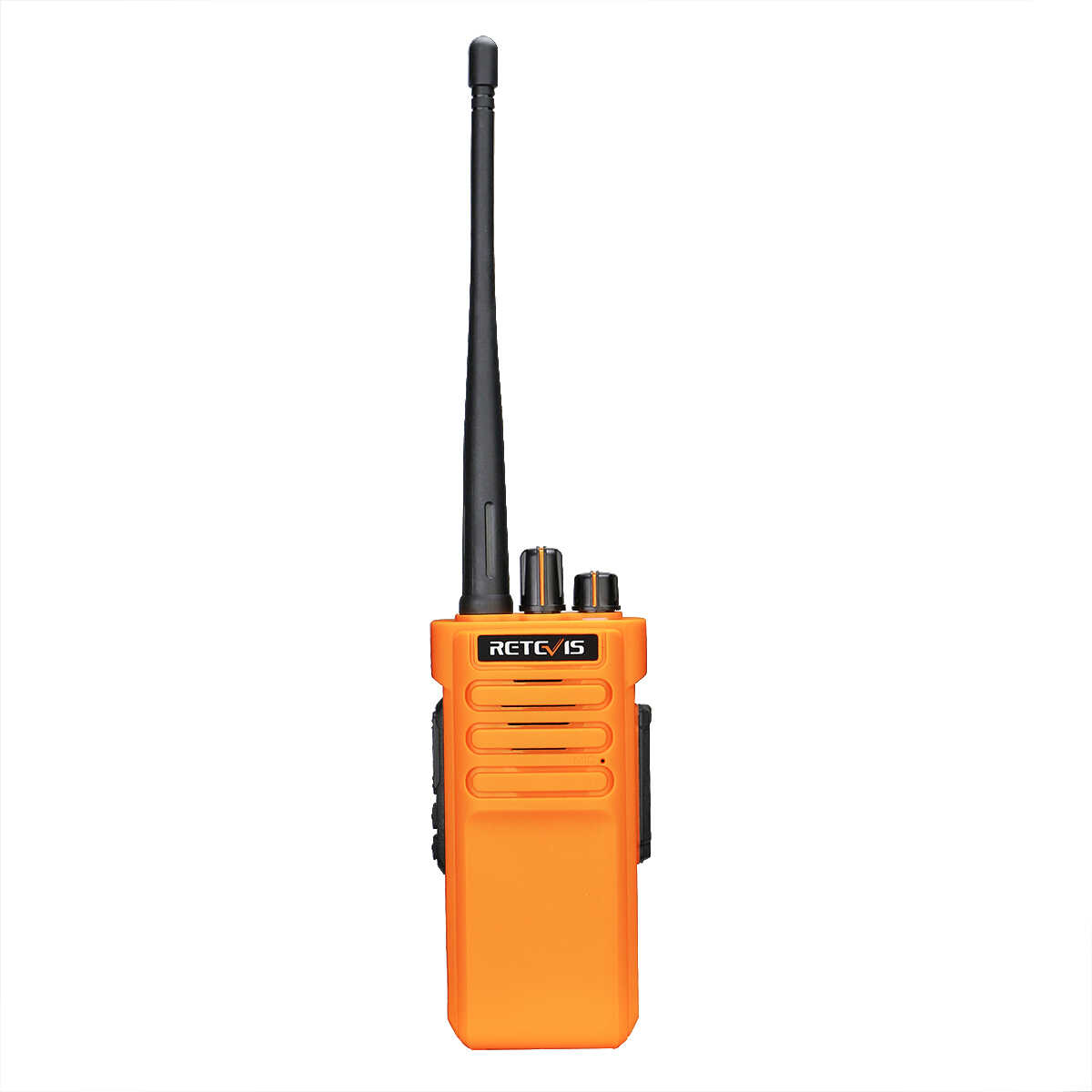
The Retevis RT29 is the handheld companion to the RT97L repeater system. This 10W UHF radio is built for high-power, long-distance communication in challenging environments.
UHF frequency (400–480MHz) provides strong building penetration, making it well-suited for warehouses, manufacturing plants, and construction sites where signals must pass through walls and steel structures.
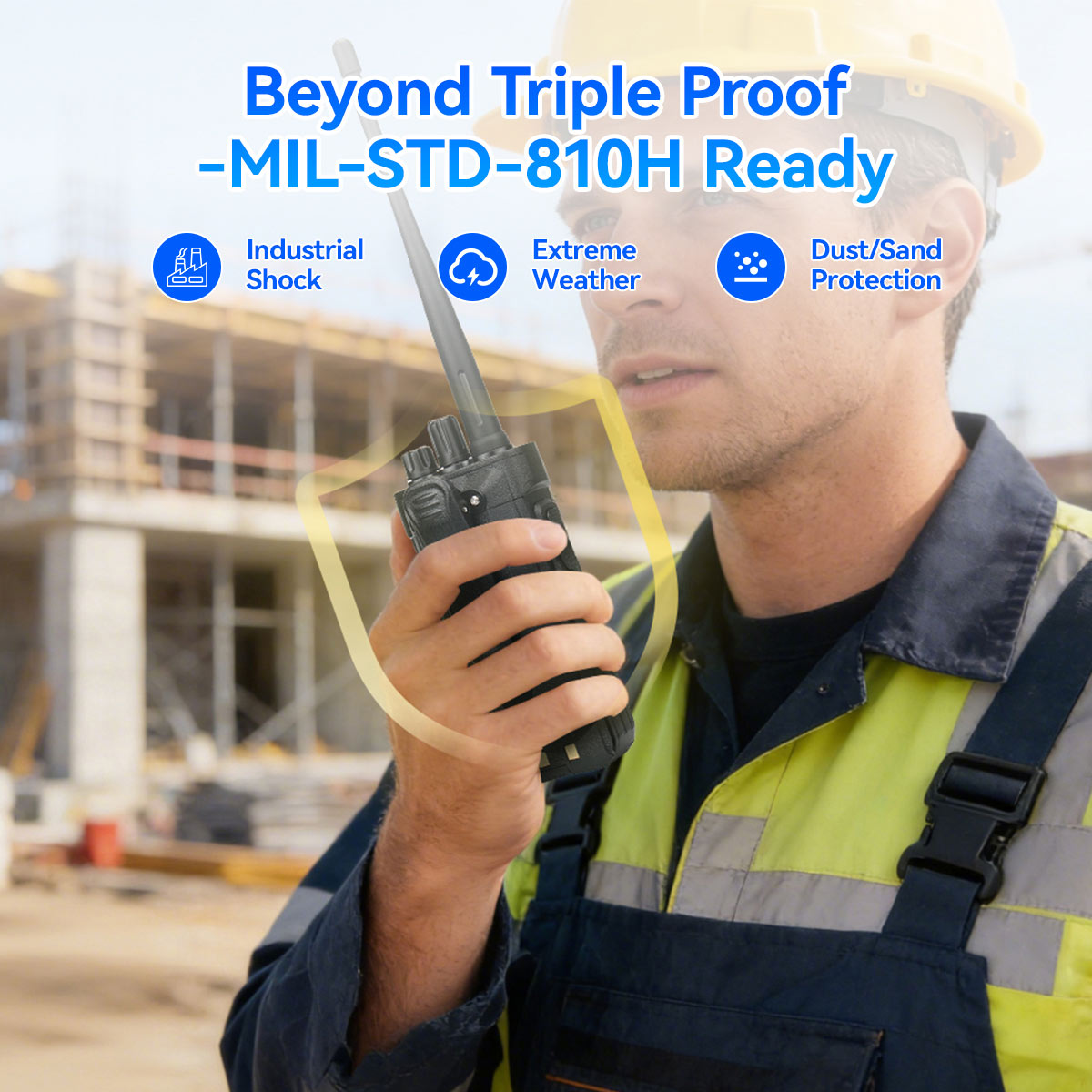
The RT29 carries a 3200mAh lithium-ion battery for extended shift use, and IP67 waterproof models are available for wet or dusty environments. At 335 grams with battery and antenna, it is rugged enough for daily industrial use while remaining portable enough for workers moving across large sites.
Sixteen channels allow teams to organize communication by department, work zone, or function.
Documented Deployments
Retevis has published documented deployments that demonstrate this capability.
A farm in rugged terrain installed a Retevis repeater system and achieved reliable communication across 1,000-foot elevation changes, connecting canyon floor to hilltop where direct handheld communication had been impossible.
An off-road event at SMORR's 900-acre park placed a repeater antenna at a high vantage point and covered the entire property, reaching every vehicle on the trails.
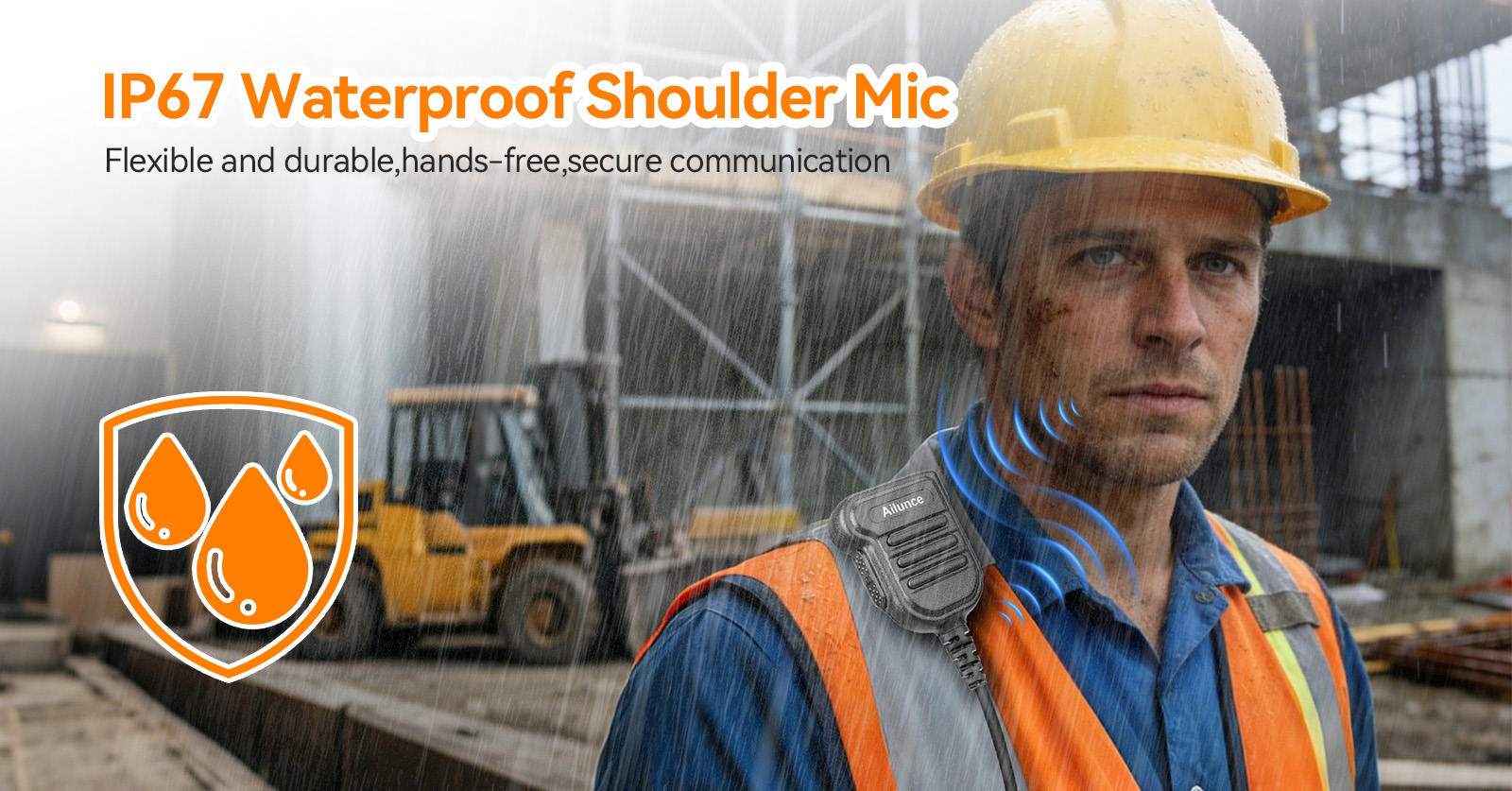
Fluor Corporation deployed Retevis RB48 and RB648 radios across a large construction site, where IP67 sealing, drop resistance, and glove-friendly controls kept crews connected through dust, rain, and drops.
Match the Equipment to the Environment
A 2W FRS radio may perform perfectly in a small retail store. A 10W UHF radio may be the right choice for a manufacturing floor. A 25W repeater system may be necessary for a multi-building construction site or a large warehouse with steel shelving.
The right answer depends on the obstacles, the building materials, the size of the site, and the number of users.
The question "how far do retevis walkie talkies reach?" has no single answer. It depends on the environment, the infrastructure, and the match between equipment and site.
What matters is whether the person at the far end of the warehouse can hear and respond clearly. Whether the foreman on the third floor can reach the equipment operator on the ground. Whether the team across a large site stays connected without dead zones.
For teams struggling with dead zones and unreliable communication inside buildings, the answer is the right infrastructure — a repeater mounted high, matched to the environment's frequency needs — that turns limited handheld coverage into site-wide reliable communication.
Retevis long range radios and repeater solutions are built around that reality: from 10W UHF handhelds like the RT29 to 25W portable repeaters like the RT97L, the product line solves real coverage problems in real environments.



 Google
 Amazon
Comments
No data Yet