

Table of Contents
How to Choose the Right Walkie Talkies for Work, Hams and Outdoor Communication?
- Posted by:Retevis

Most people buy the wrong walkie talkie. They compare specs — wattage, channel count, range — then get it home and discover it cannot cut through construction noise, cannot reach across a farm canyon, or requires a programming cable just to change a channel. It ends up in a drawer.
The wrong radio does not just frustrate. It slows a job down. It creates a safety gap. It wastes money.
Retevis has spent 16 years building reliable two way radios that actually work in the real world. Not radios that look good on a spec sheet.
Radios that deliver reliable connections when concrete dust clogs the air, when rain pours down, when the nearest cell tower sits 20 miles away. The company has sold 40 million radios across 170 countries.
This guide covers five communication worlds. Most people live in one of them. Find yours, and skip the rest.
Find Your World First
Before comparing wattage and channel counts, identify the actual use case. Most buying mistakes start with choosing a radio for the wrong scenario. Learning how to use retevis walkie talkie features begins with matching the device to the environment.
|
World |
Core Problem |
Retevis Product Line |
|
Business & Daily Operations |
License-free simplicity, cost control |
License-free FRS/PMR radios |
|
Heavy Industry & Extreme Environments |
Noise, dust, explosion risk, drops |
RB48 Series + MateTalk E2 |
|
Professional Communication & Solutions |
Large-area coverage, signal blind spots |
Long-range + RT97 repeater solutions |
|
Outdoor Adventures & Family Leisure |
Easy setup, weather-ready, safety |
EZTalk Series |
|
Amateur Radio & Technical Exploration |
DMR digital, dual band, global networks |
Ailunce Series |
Business & Daily Operations: When the Team Just Needs to Talk
A restaurant manager spots a customer with a nut allergy at table 12. She grabs her radio. The kitchen needs to know now. Not in three minutes when she walks back there. Now.
Small operations run on these small moments. A retail floor lead needs stock checked without leaving a customer. A hotel supervisor needs to know which rooms are ready across four floors. A school campus supervisor needs to reach maintenance across three buildings.
Most of these teams do not need a commercial license or premium-priced radios. They need something that works out of the box.
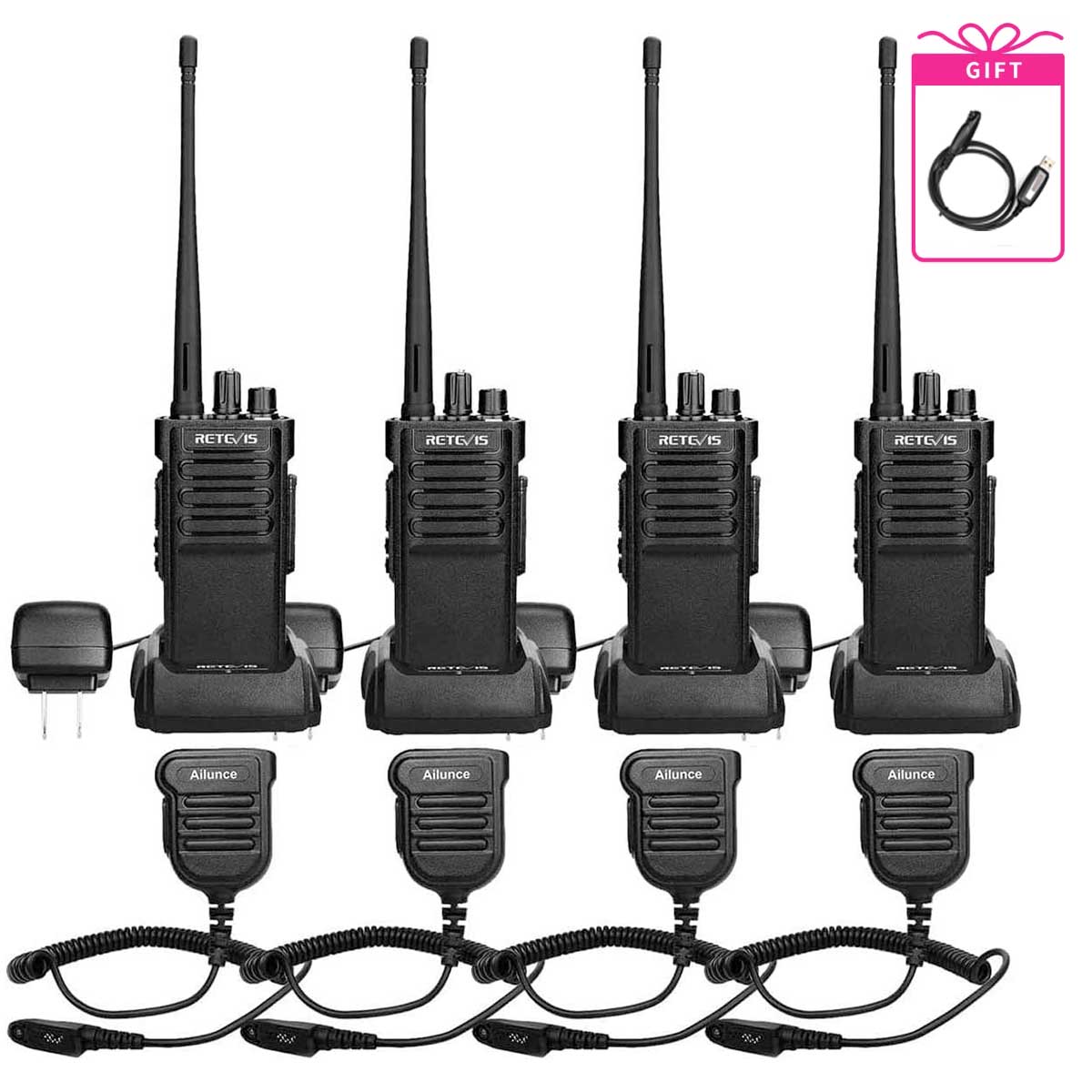
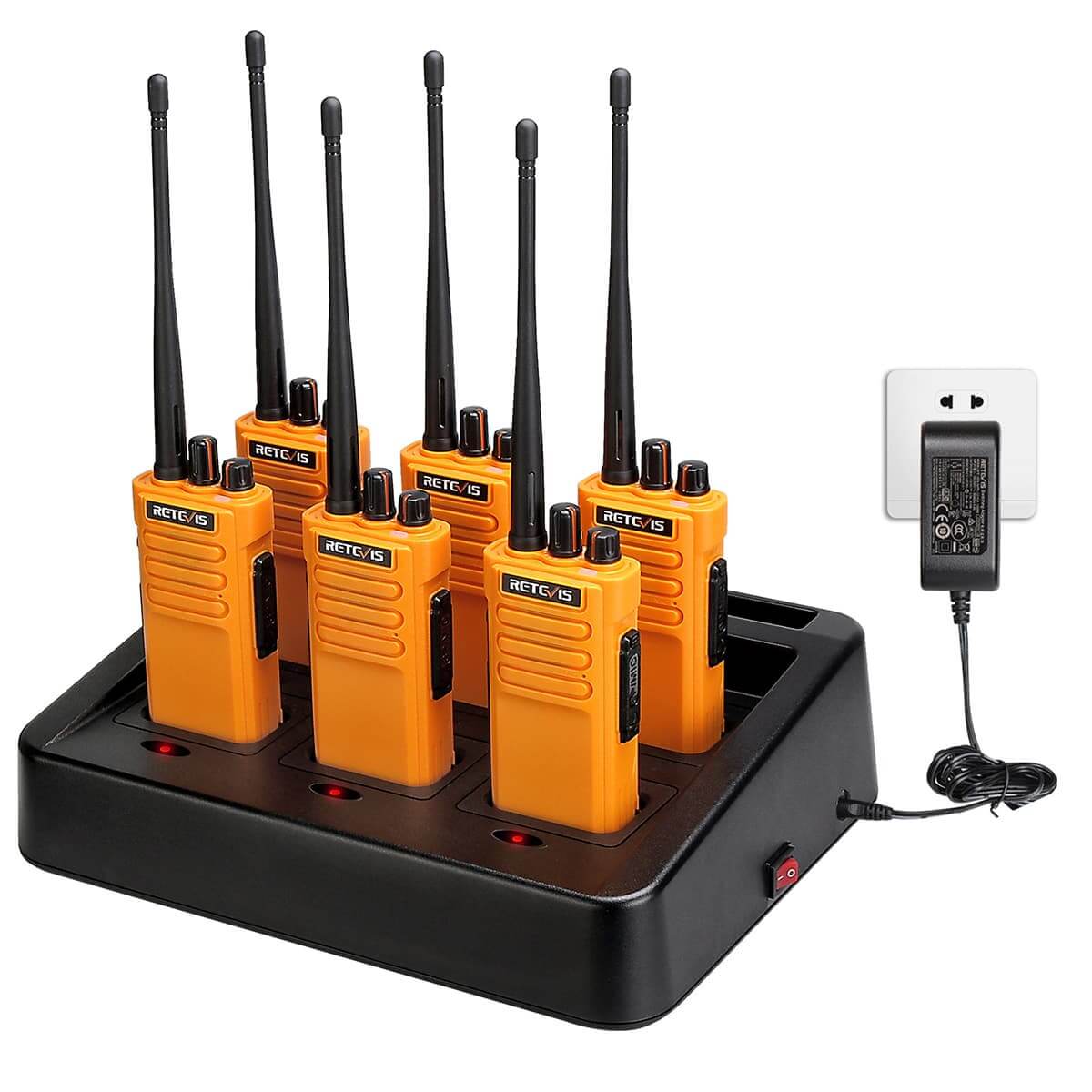
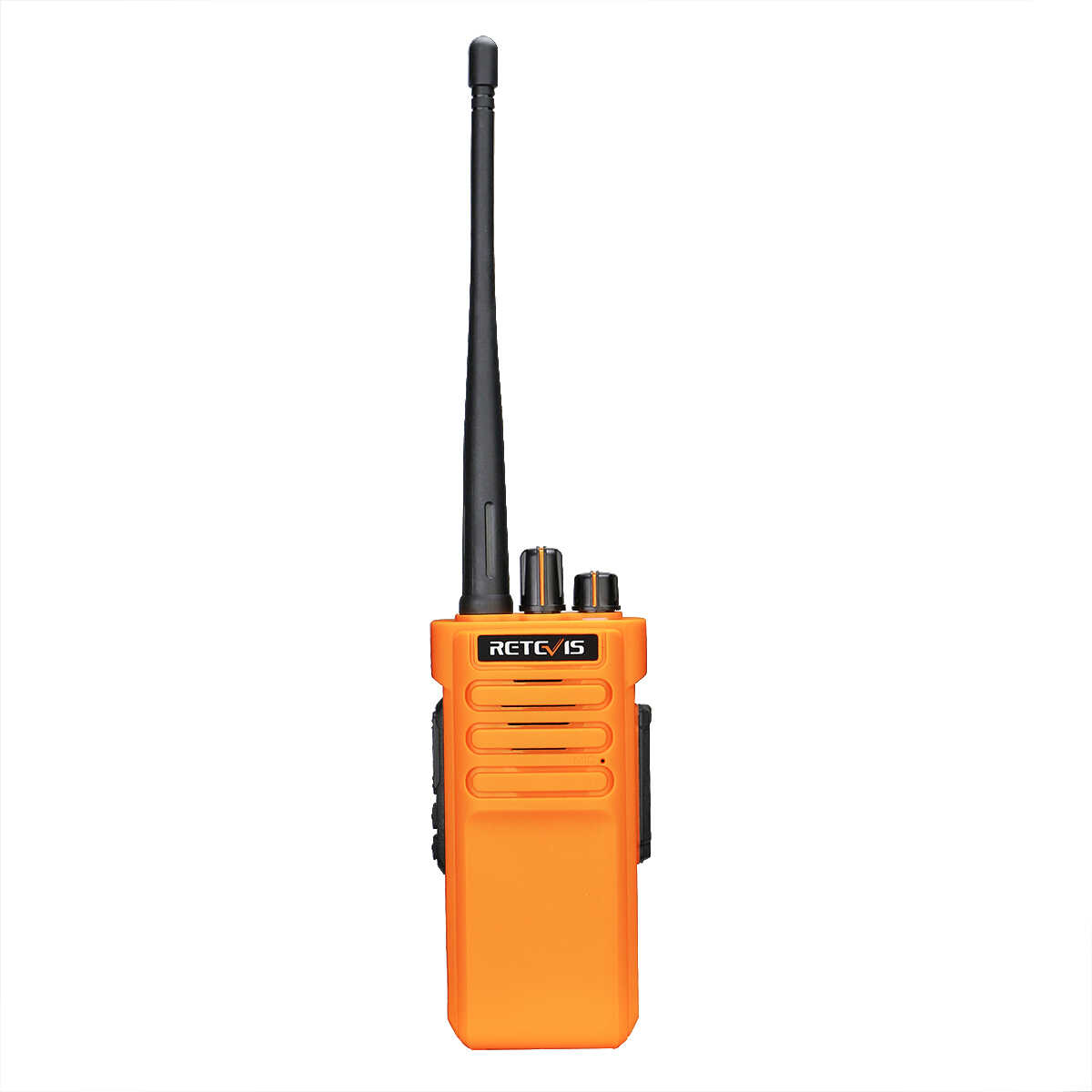
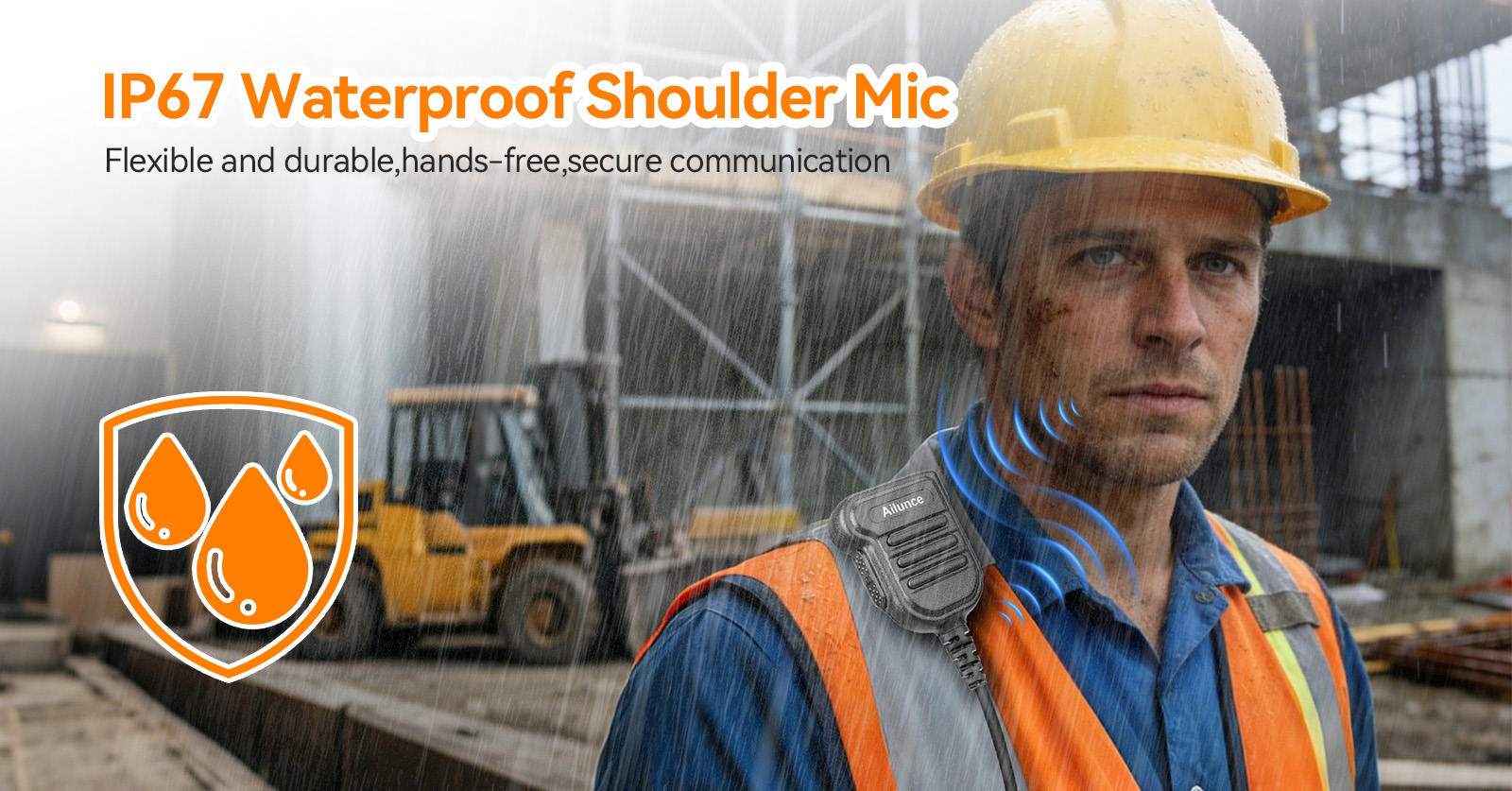
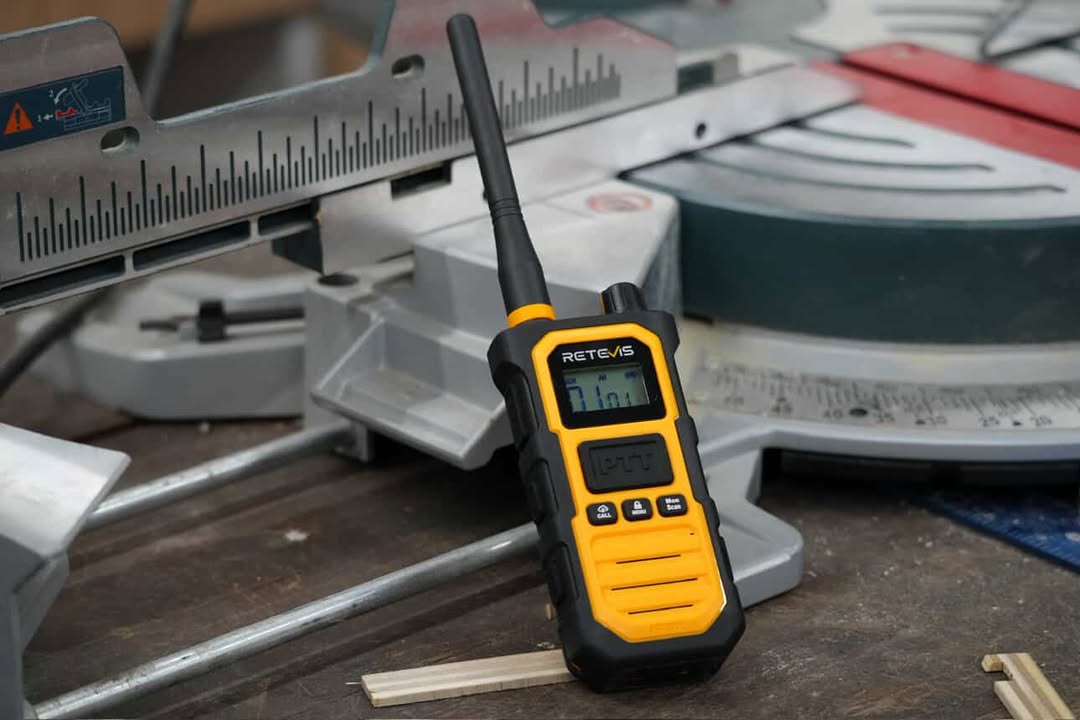
The Retevis RB48 is the everyday workhorse. FRS operation means no license in the US. IP67 waterproof means spilled drinks and rain do not kill it. MIL-STD-810H durability and a speaker mic handle rougher use.
Workers wearing gloves press the large PTT button without looking down. Bundles come in 2-packs, 6-packs, and 20-packs. 2W output covers up to 20 floors, and the battery runs 12 hours straight.
A 20-person team stays connected for less than one premium commercial radio brand's starter kit. No license paperwork. No frequency coordination. Just charge, press, and talk.
Heavy Industry & Extreme Environments: When the Air Itself Can Be Dangerous
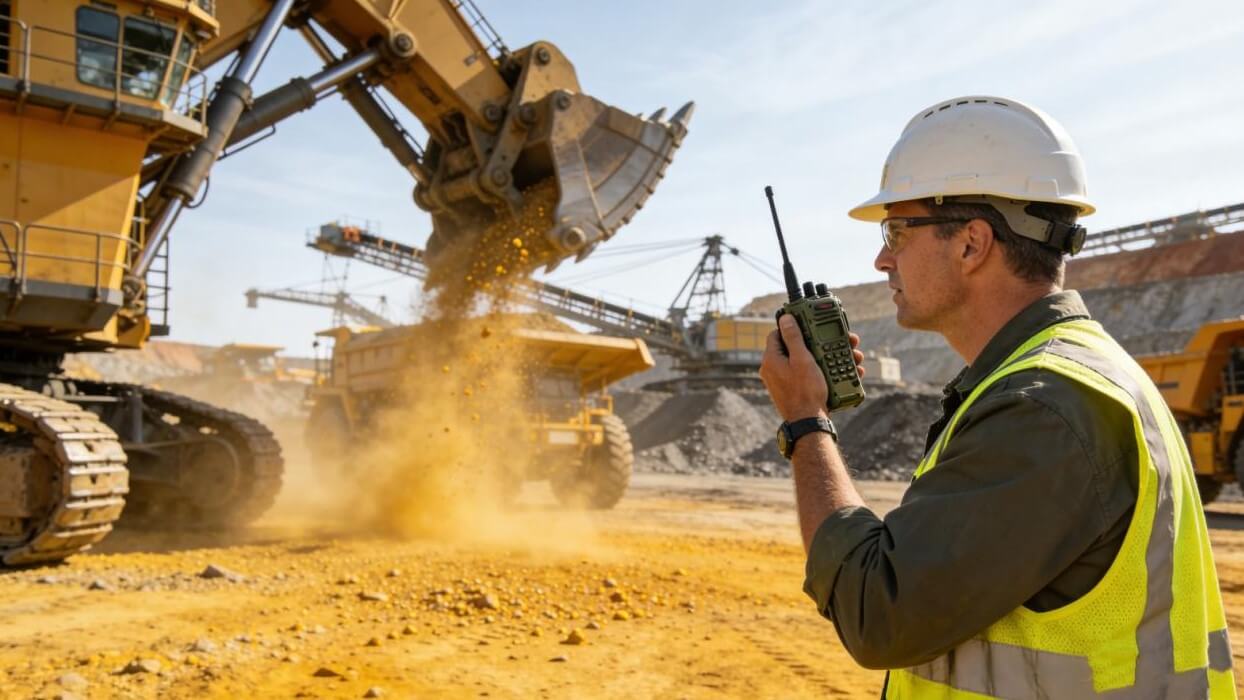
Concrete dust gets into everything. After three months on a job site, a consumer radio sounds like it talks through a pillow. After six months, it does not turn on at all.
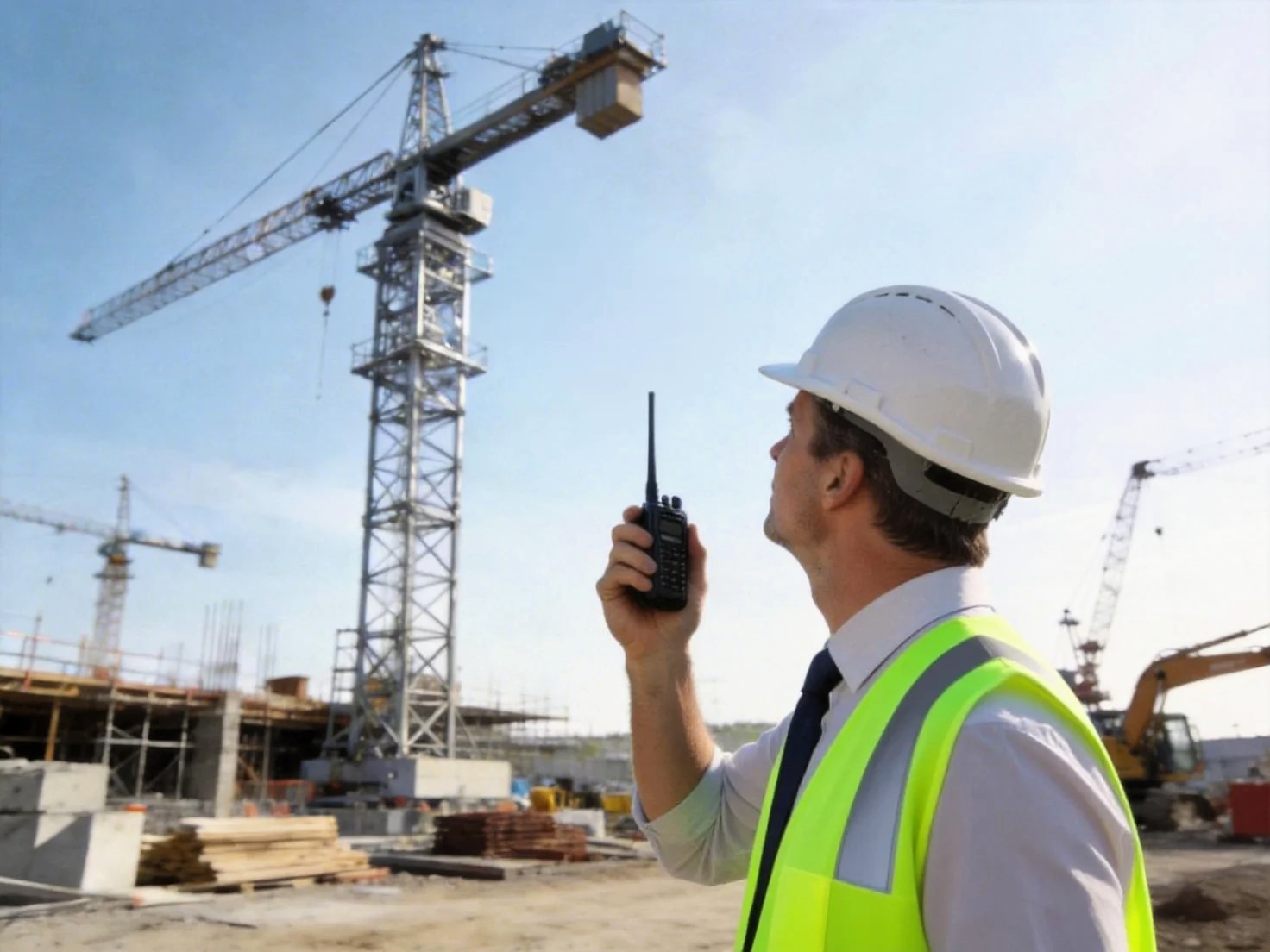
Industrial sites add more challenges. Steel rebar attenuates signals — a radio that works across a parking lot may fail between two steel-frame floors. Heavy machinery runs at 90+ decibels, and a standard speaker cannot cut through. Workers drop radios from scaffolds. Rain and mud are daily realities.
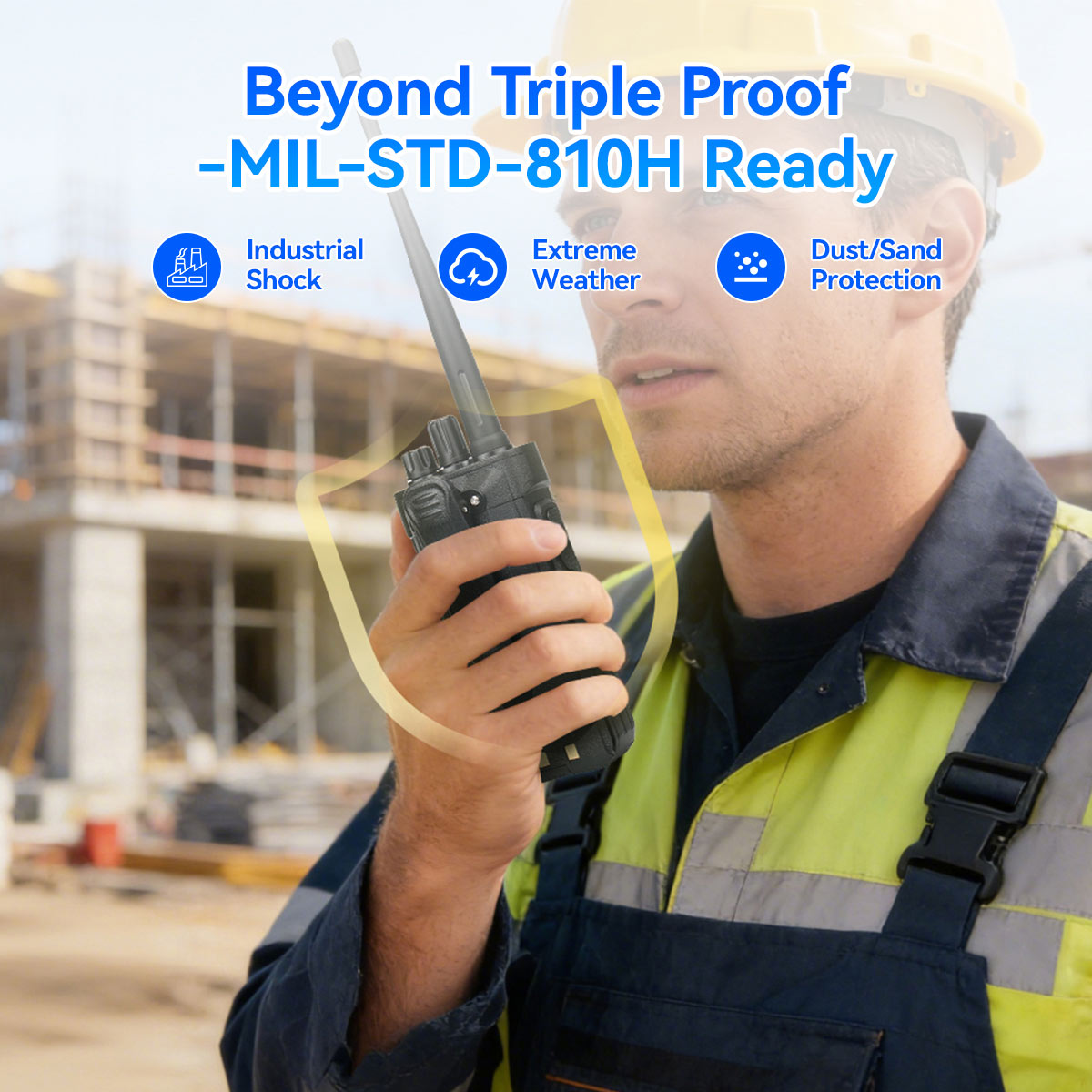
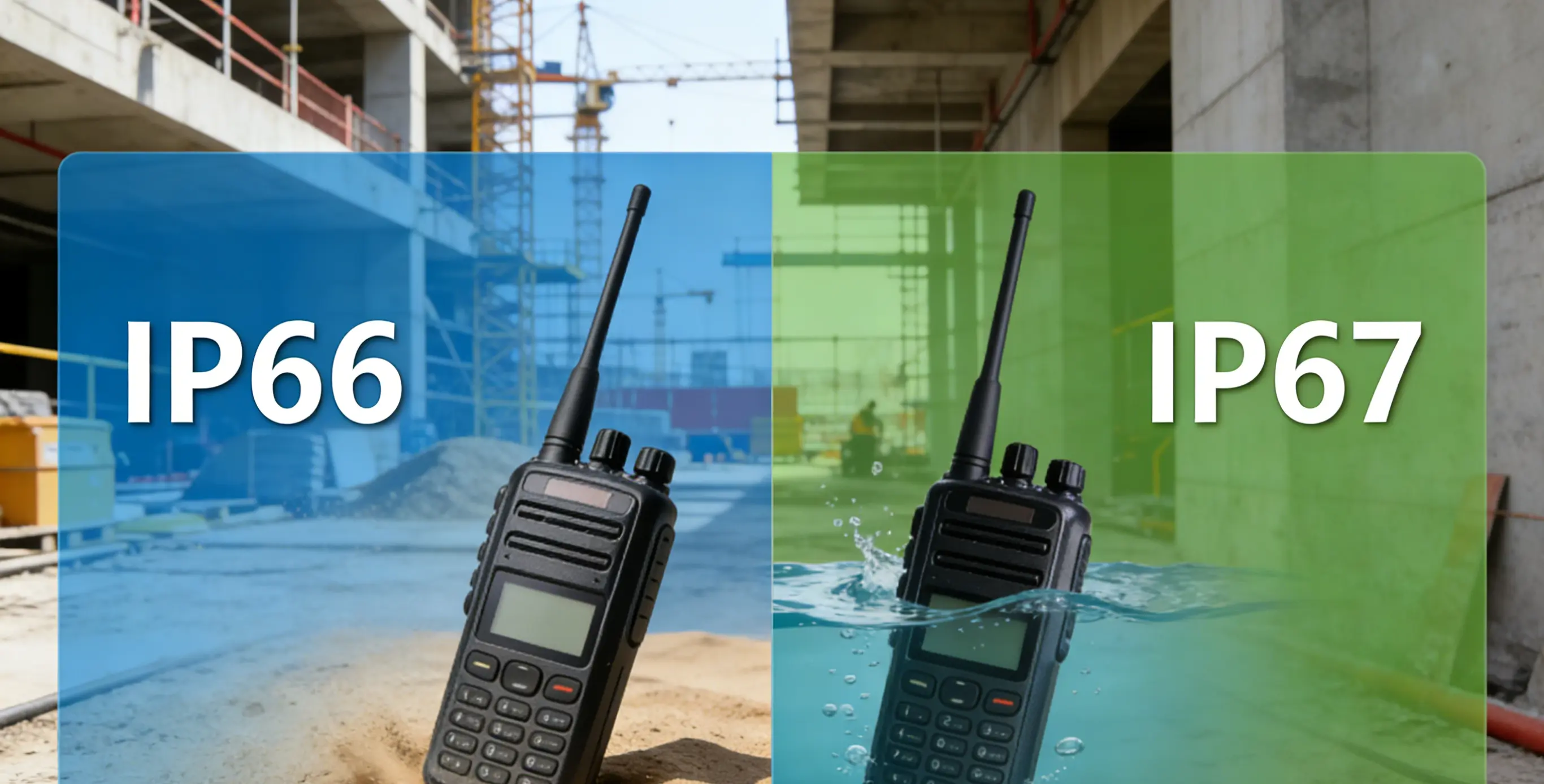
The Retevis RB48 series exists for this world. All models share IP67 waterproof and dustproof, 2-meter drop resistance, 1000-drop tested, and PC+TPE material that does not crack in cold weather.
The lineup scales by need. The base RB48 runs on FRS, license-free. The RB48P steps up to GMRS 5W.
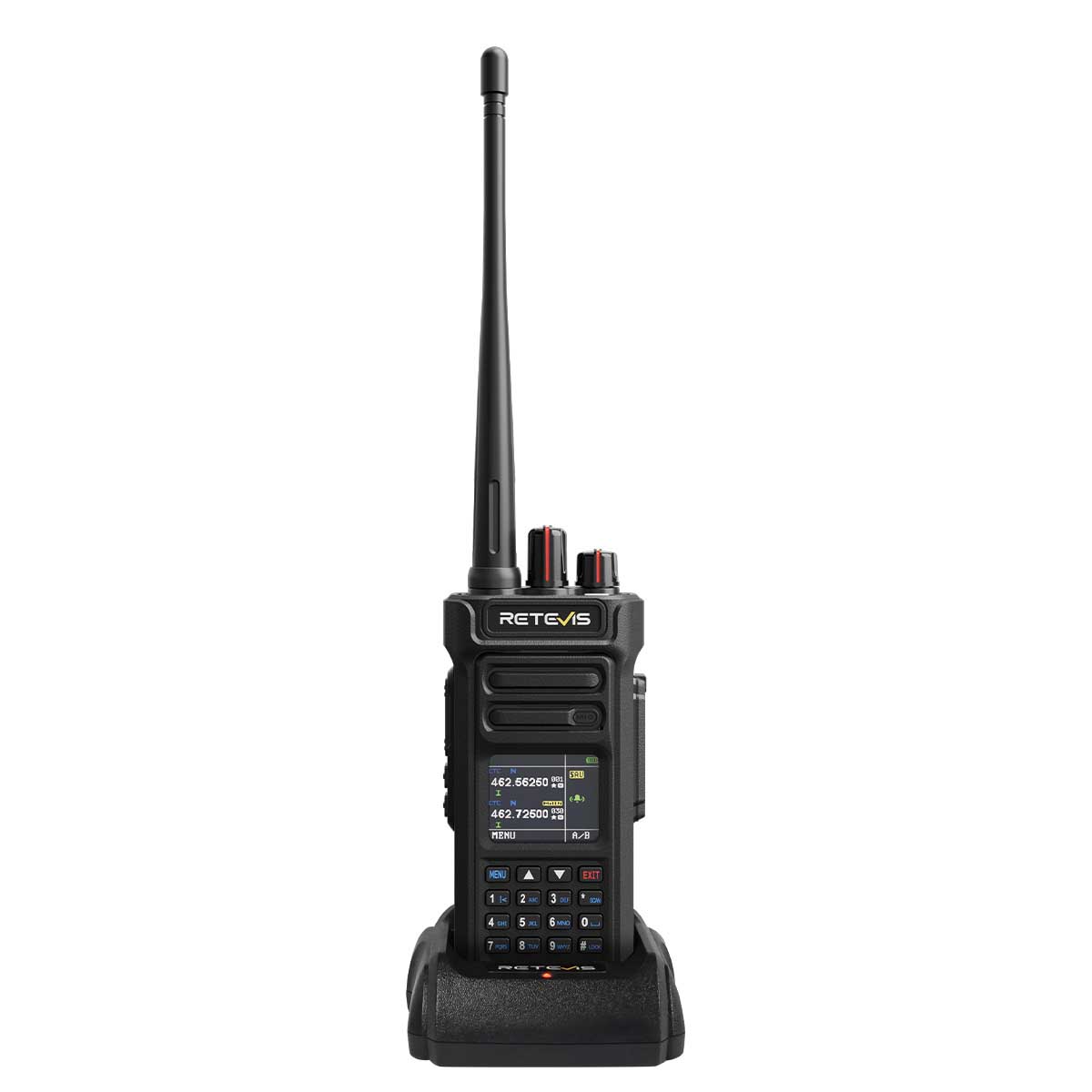
The RB48 Pro pushes to 10W, covers up to 700,000 square feet or 50 floors, and adds AI noise cancellation that filters machinery noise, with 18+ hour battery. The RB648P uses UHF for better steel and concrete penetration.
Some industrial environments go beyond dust and noise. Oil rigs, chemical plants, refineries — the air itself can ignite. A standard radio is not just unsuitable here. It is dangerous.
The Retevis MateTalk E2 solves that. Launched during Retevis's 15th anniversary, it holds ATEX and IECEx dual certification, meaning it is intrinsically safe — it cannot spark an explosion even in flammable gas or combustible dust.
IP68 and MIL-STD-810G protection go beyond standard industrial radios. DMR digital audio with AES 256 encryption keeps conversations clear and private. In Retevis's published testing, digital noise cancellation in a 92 dB automotive environment delivered 94% first-time message understanding (vs. 67% analog) and 100% emergency call recognition.
A construction foreman hears "stop" over a concrete saw because the RB48 Pro filters the noise. An offshore rig worker carries a radio that will not ignite the air around him because the MateTalk E2 holds ATEX/IECEx certification.
Professional Communication & Solutions: When Handheld Range Is Not Enough
A 500-acre farm sits in canyon terrain. The ranch hand at the bottom cannot reach the house on the ridge. A 900-acre off-road park spreads across hills and trees. A festival covers multiple fields. Handheld radios alone cannot cover any of these.
Cell networks fail in these places — remote areas have no towers, large events overload local towers, natural disasters take them down entirely. Traditional commercial repeater systems cost thousands and require professional installation.
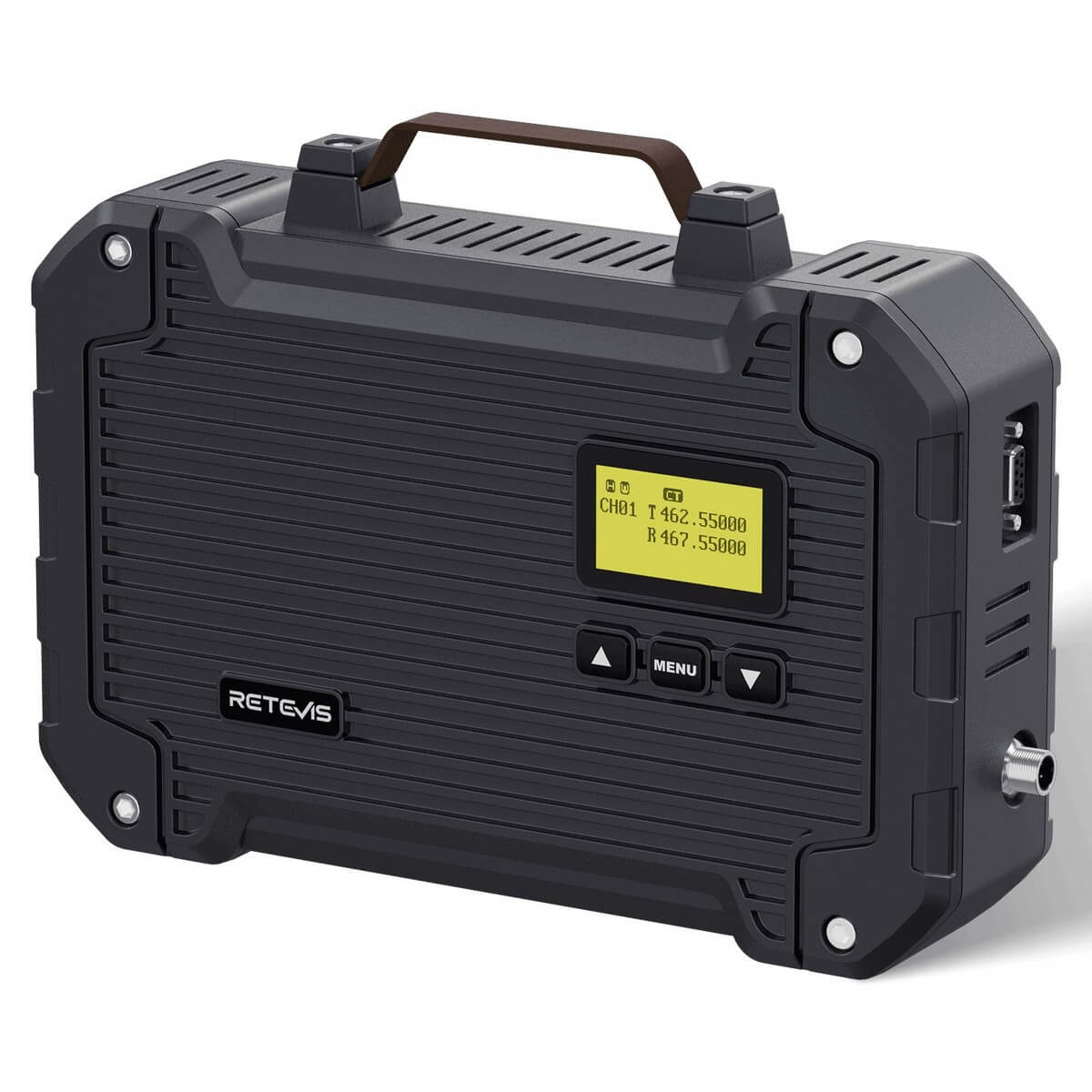
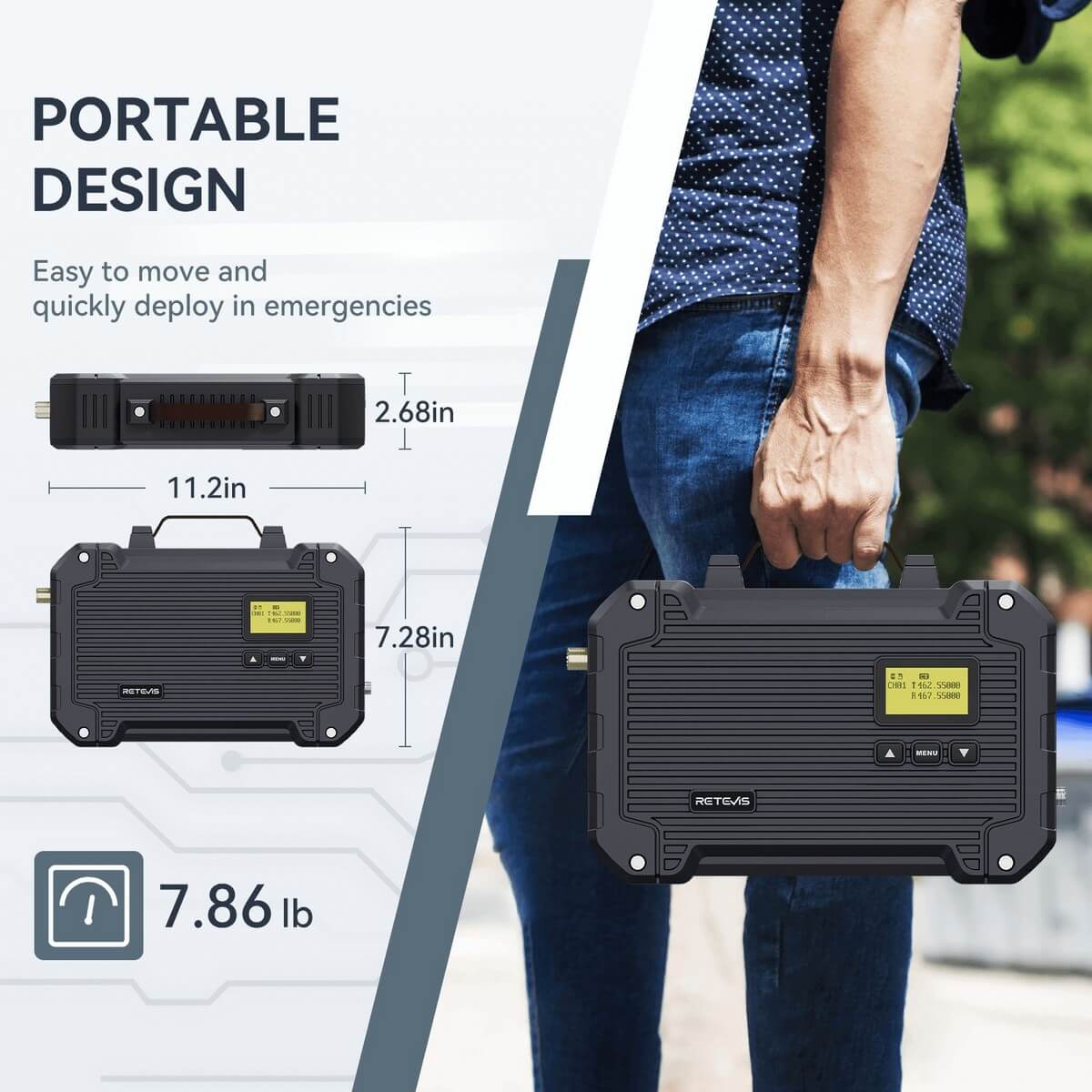
The Retevis RT97 portable repeater line builds complete communication systems. The RT97S runs on GMRS, full-duplex, 10W output, with a built-in duplexer.
Add an antenna and feeder cable, connect to wall power, car battery, or solar panel, and the network is live. It fits in a backpack. Eight pre-configured GMRS channels mean no complex setup.
The RT97L bundles with RB48 Plus and RB648 Plus handhelds for construction sites. The RT97P is a DMR digital repeater that pairs with MateTalk E2 radios for hazardous-area networks. Complete kits include everything needed to stand up a network in an afternoon.
Retevis has published case studies from real deployments. One farm installed an RT97S and got 12–14 miles of coverage across 1,000-foot elevation changes.
SMORR's 900-acre off-road park placed the antenna at a high point and covered the entire property. An emergency response team deployed one with solar power in hilly terrain and got 7.2km of range with 24-hour operation.
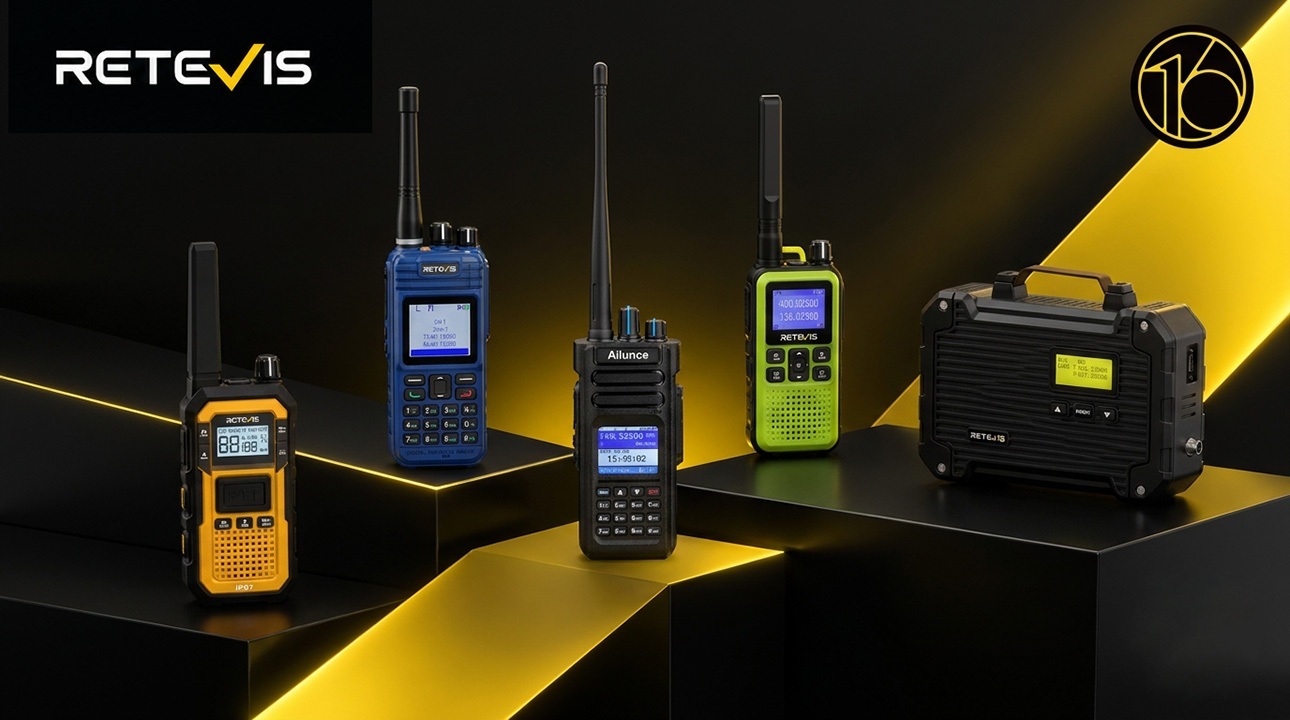
Outdoor Adventures & Family Leisure: When the Radio Should Disappear Into the Experience
A family packs for a camping trip. The last thing anyone wants to do is read a 50-page radio manual. A group of skiers spreads across a mountain. The temperature drops to -20°C. A hiking group splits at a junction. Cell bars disappear.
Outdoor radios face a unique constraint. The radio is a tool, not the activity. It should work invisibly. The moment it requires attention, it has failed.
The Retevis EZTalk line targets specific outdoor activities rather than trying to make one radio for everything.
The EZTalk 61 is the entry point for families. PMR446 license-free, small, light, rechargeable. Kids use it without a lesson. VOX hands-free mode means hands stay busy with camping tasks.
The EZTalk 2S targets skiing and cold weather. IP67 waterproof, NOAA weather alerts, 5W GMRS power, automatic wind noise cancellation. Certified to work at -30°C, when a generic radio's battery would die in minutes.
The EZTalk 4S handles water sports. Splash-proof and buoyant — if it goes overboard, it floats. Built for kayaking, canoeing, paddleboarding, and fishing.
The EZTalk 5 is the comprehensive hiking model. Bluetooth APP programming means a smartphone handles all configuration. GPS + BeiDou dual-satellite positioning. A 1.77-inch color LCD readable in sunlight. Oversized buttons work with gloves or wet hands. IP54 protection.
A family uses the EZTalk 61 because nobody needs to read a manual. A backcountry skier carries the EZTalk 2S because it works at -30°C when every other device has died. A hiker carries the EZTalk 5 because GPS and weather alerts live in the same device.
Amateur Radio & Technical Exploration: When Getting Licensed Is Just the First Step
A new ham passes the Technician exam on a Friday. By Saturday morning, he has bought a radio.
By Saturday afternoon, he stares at a programming screen that might as well be written in another language. DMR codeplugs. Contact databases. Color codes. Time slots. The excitement drains away into a weekend of frustration.
Ham radio rewards depth. New operators need a radio that grows with them — from local analog repeater contacts to DMR worldwide networks.
The Ailunce HD1 is Retevis's answer for serious hams. It has become a well-established favorite in the DMR community, with years of active firmware development and a large user base sharing codeplugs and third-party firmware.
Dual-band VHF/UHF covers the 2m and 70cm bands. DMR Tier II works with MOTOTRBO systems and major DMR networks like Brandmeister, which connects over 5,500 repeaters and 16,000 hotspots worldwide. 200,000 contact capacity.
IP67 waterproof means it goes on hikes, field days, and emergency deployments. GPS enables APRS. Front panel programming allows field changes without a computer. Up to 10W output (VHF 10W, UHF 8W).
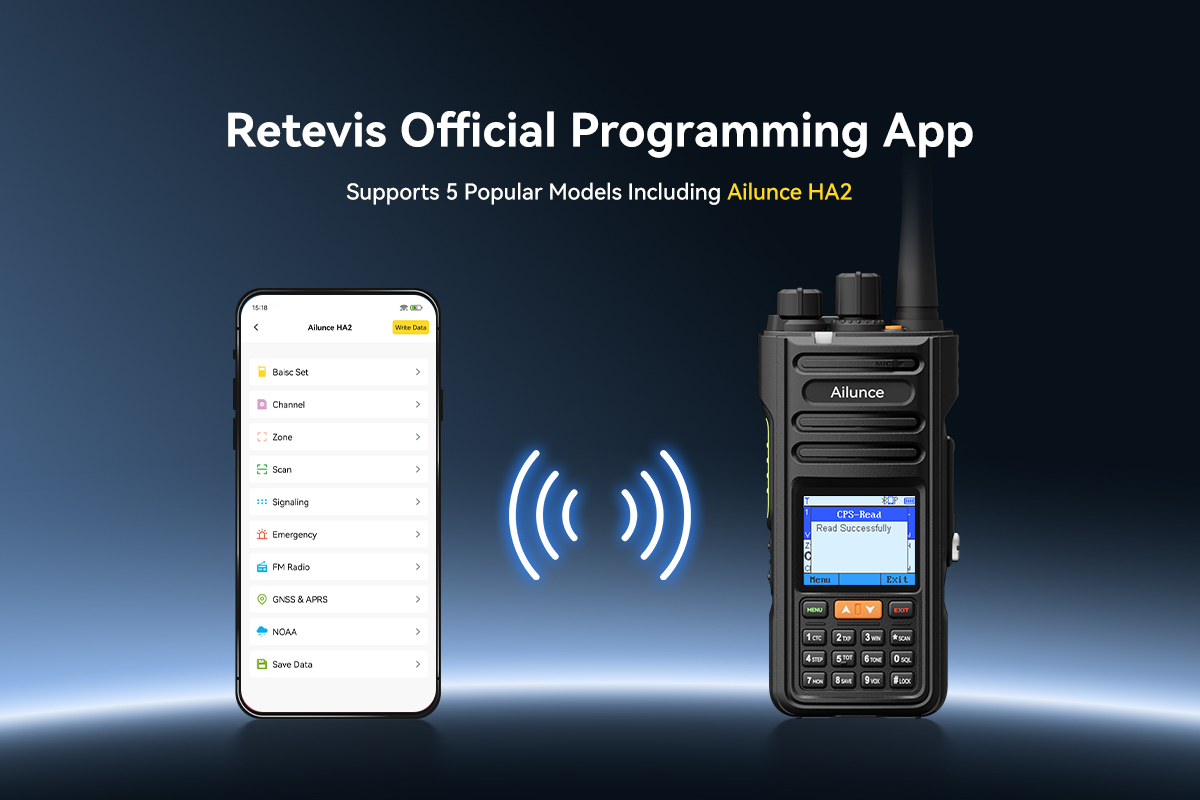
For hams who want the newest hardware, the Ailunce HA2 offers dual-band GPS/APRS in a more recent design, and Retevis's official smartphone app supports both models for wireless programming.
A new ham starts with analog local contacts on day one. Months later, he makes DMR contacts with operators on other continents. The radio did not become obsolete when his skills grew. It grew with him.
16 Years, Five Worlds, One Promise
2026 marks Retevis's 16th year. Since 2010, the company has sold 40+ million 2 way radios across 170 countries, serving 3.5 million users. The numbers matter less than the documented deployments behind them.
Retevis publishes real case studies from real users. A farm installed an RT97S repeater and achieved 12–14 miles of coverage across 1,000-foot elevation changes.
Fluor Corporation deployed RB48 and RB648 radios across a large construction site, keeping crews connected through dust, rain, and drops. The MateTalk E2 delivered 94% first-time message understanding in a 92 dB automotive environment (vs. 67% analog) and 100% emergency call recognition.
These are published case studies from Retevis. Five worlds. One reliable promise. The radio works when it matters most.
Three Questions to Choose Faster
Still unsure where to start? Ask yourself these three questions.
Does the use case need a license? FRS and PMR446 need none. GMRS requires a license in the US. Ham radios require an amateur license.
What is the biggest challenge? Water and dust point to IP67 models. Noise points to the RB48 Pro or MateTalk E2. Explosion risk points to the MateTalk E2. Distance and terrain point to an RT97 repeater system. Cold weather points to the EZTalk 2S.
Who uses it? Business teams need license-free simplicity. Industrial sites need the RB48 family or MateTalk E2. Large-area deployments need RT97 solutions. Families and outdoor users need the EZTalk line. Licensed hams need the Ailunce HD1 or HA2.
Start with the scenario, not the spec sheet. A 2 way radio with 100 features that nobody can operate is worse than a radio with 10 features that everyone uses correctly.
Every Retevis radio ships with a 30-day money-back guarantee, extended warranty options, 24/7 support, and lifetime technical assistance. FCC and CE certification covers all applicable models.
For 16 years, one question has guided every product decision. Will this radio work when the user needs it?
Across five worlds and 170 countries, the answer stays the same. Yes.



 Google
 Amazon
Comments
No data Yet