

Table of Contents
FRS VS GMRS Radios Explained: A Simple Guide for Families and Outdoor Groups
- Posted by:Retevis
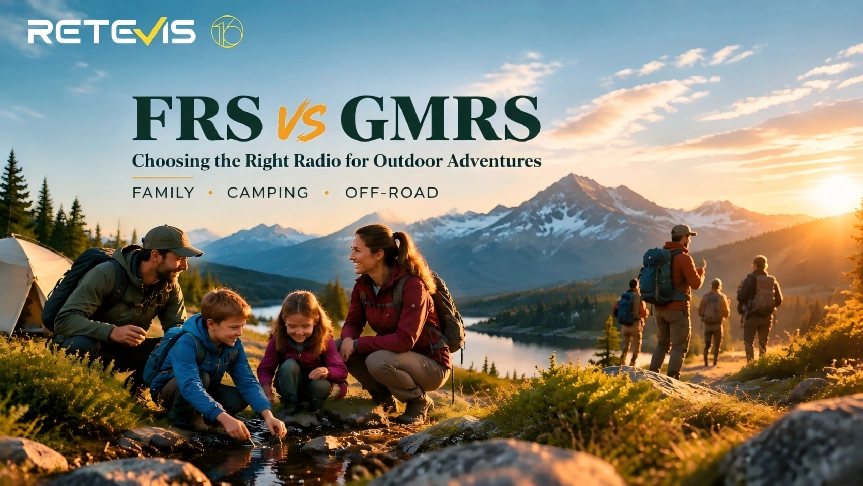
"Which radio service should I choose for my family or outdoor group?" This question comes up every time someone starts shopping for walkie talkies. The answer usually comes down to two options: FRS and GMRS. Both are personal radio services regulated by the FCC, both operate on similar UHF frequencies, and both can keep a group connected when cell phones fail. But they serve different users with different needs.
FRS stands for family radio service radios, and GMRS stands for General Mobile Radio Service. FRS radios are built for simple, license-free family communication. GMRS radios offer more power, more channels, and access to repeaters for groups that need longer distances. This guide breaks down the differences in plain language and helps you decide which one fits your group.
FRS vs GMRS: The Quick Comparison
Six differences matter most. The table below summarizes them at a glance.
|
Feature |
FRS |
GMRS |
|
License |
None required |
$35 FCC license, 10 years, covers entire family |
|
Max Power |
2 watts (most channels) |
5 watts handheld, 50 watts mobile/base |
|
Typical Range |
1–2 miles open terrain |
2–5 miles direct, 20+ miles with repeaters |
|
Repeaters |
Not allowed |
Allowed, 8 dedicated repeater channels |
|
Channels |
22 |
30 (22 shared + 8 GMRS-only) |
|
Best For |
Short-range, simple use |
Groups that spread out, off-road, repeater access |
FRS is the simpler choice. You buy the radios, charge them, and start talking. No paperwork, no waiting, no extra cost.
GMRS requires a one-time license application, but that license covers every member of your household for a full decade. The tradeoff is more power, more channels, and access to a national network of over 25,000 repeaters that can turn a two-mile handheld signal into a twenty-mile connection.
Both services can communicate on shared channels, so a GMRS walkie talkie can talk to an FRS two way radio as long as both are set to the same channel and privacy code.
If your group stays within a mile or two and values simplicity, FRS is enough. If your group spreads across miles of trail, travels off-road, or may want repeater access, GMRS is worth the license fee.
When FRS Is Enough
Some people do not need more power or repeaters. They need a simple radio that everyone can pick up and use. If that sounds like your group, FRS is probably the right choice.
Family Trips and Everyday Use
Family walkie talkies are the classic FRS scenario. Parents want to keep track of kids at a zoo, a theme park, a beach, or a shopping mall. Everyone gets a radio, everyone stays on the same channel, and no one needs to learn anything complicated.
The two-watt power is enough for these short-range environments. The license-free status means no paperwork, no waiting, and no extra cost.
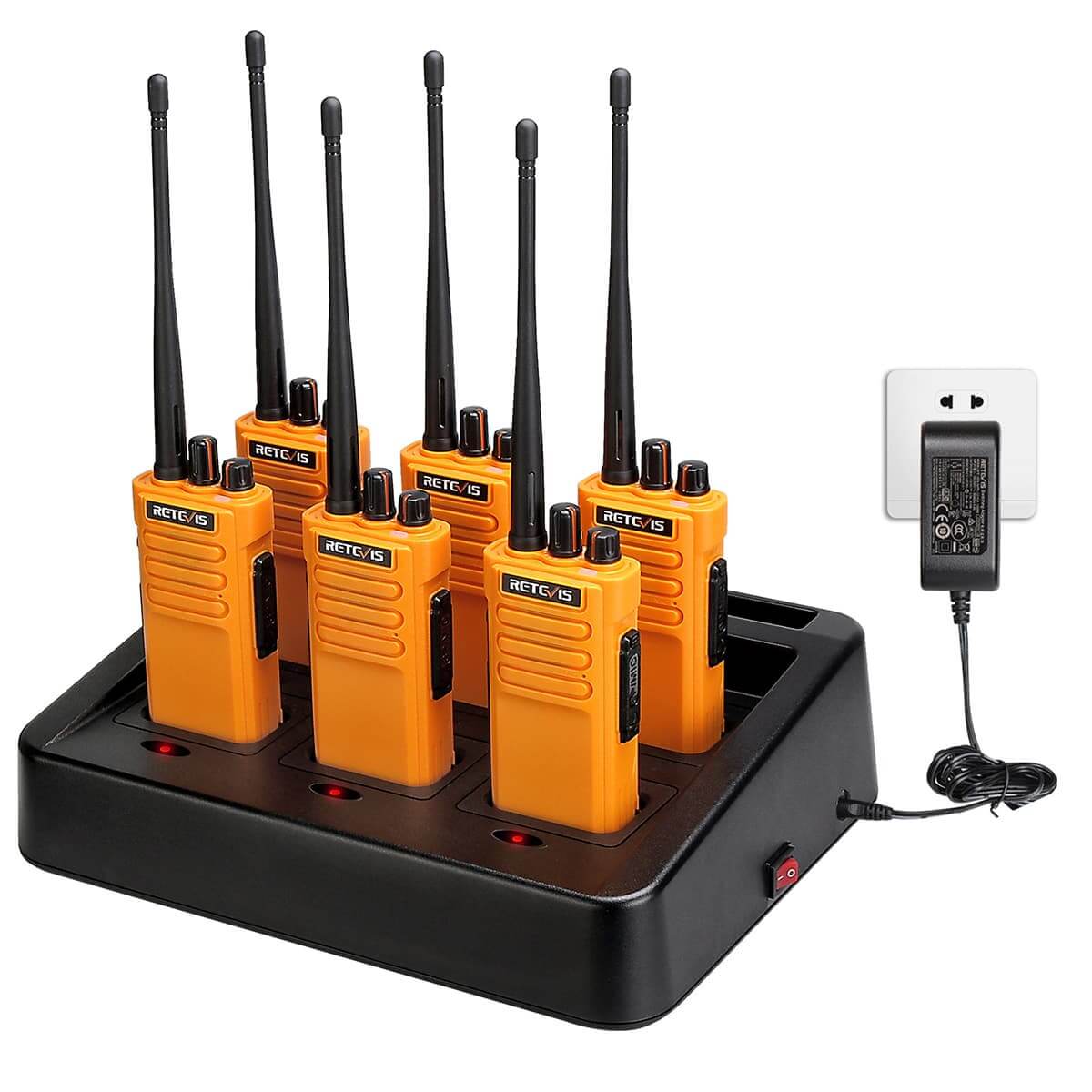
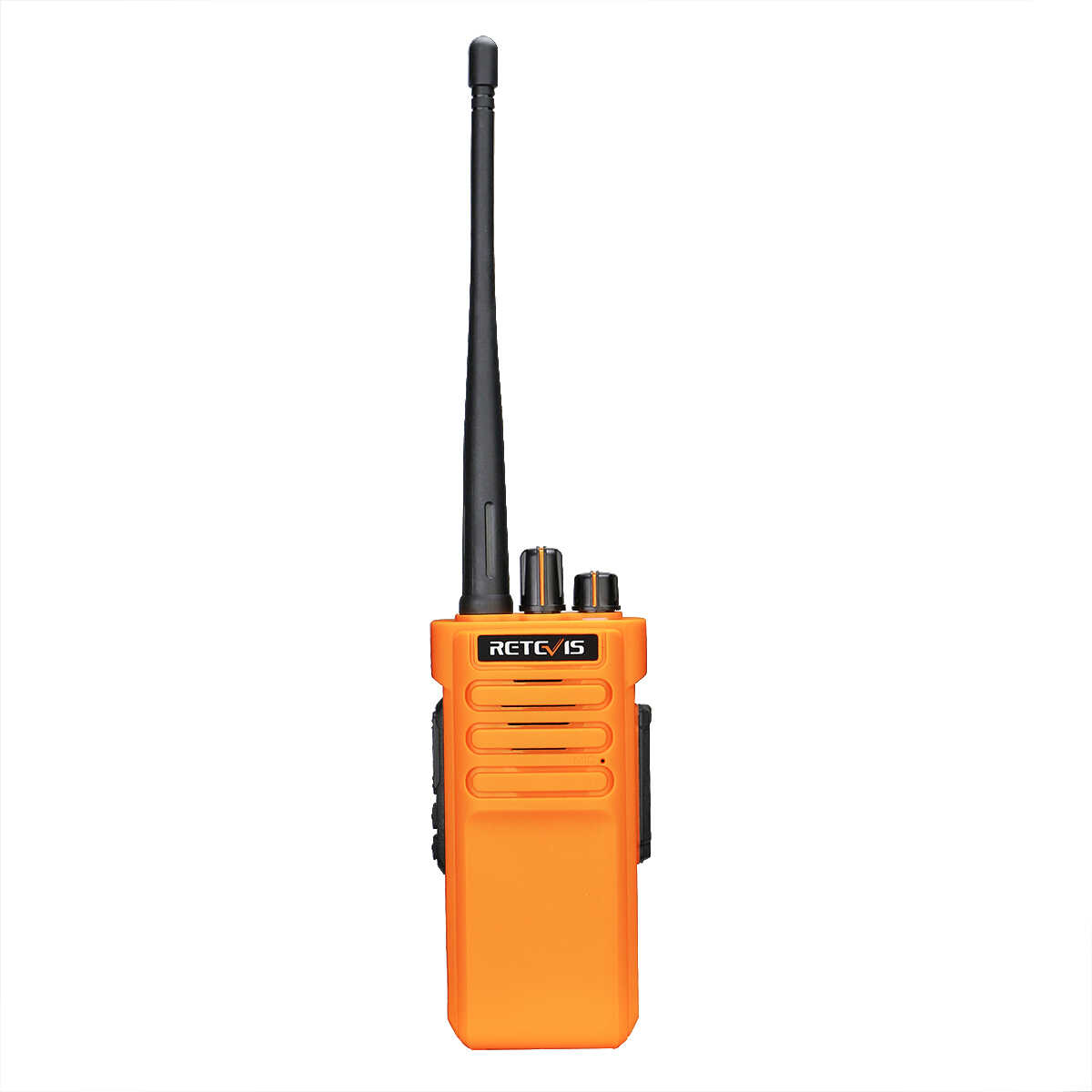
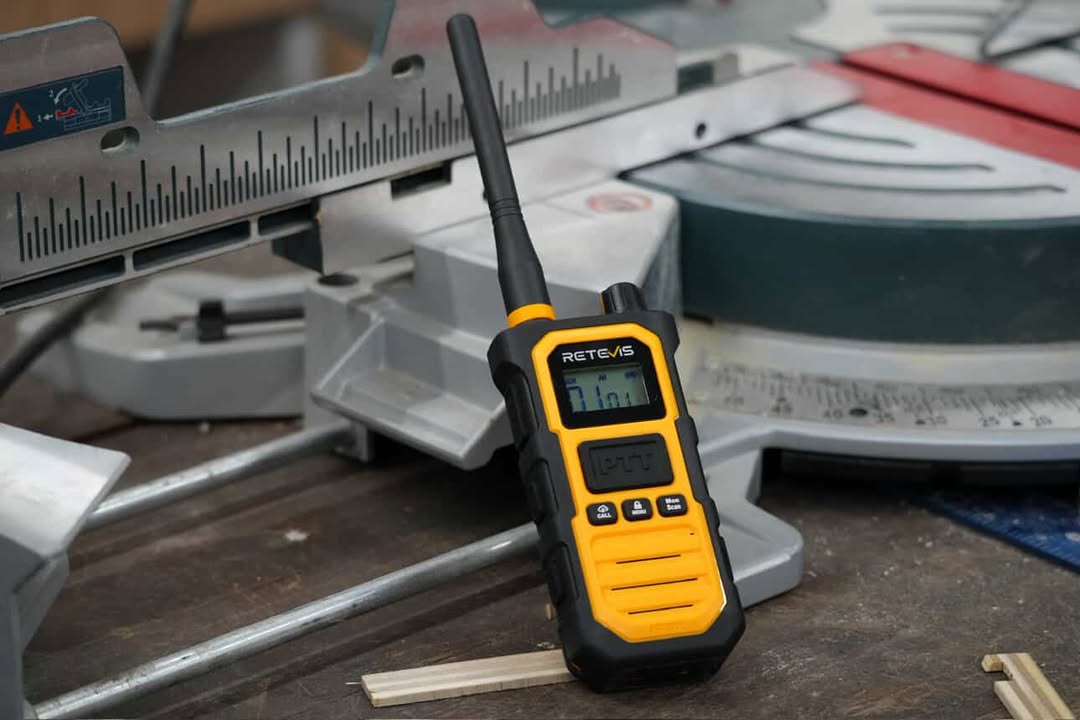
Reliable FRS walkie talkie options include the RT22, which is compact enough for a shirt pocket and charges through USB-C. The H777 is an affordable choice for families that want a basic, dependable radio. The RT47 adds IP67 waterproofing for families that spend time near water or in rainy weather.
Campsites and Short-Range Outdoor Use
Campsites are another place where FRS radios work well. A campground might span a few acres, but everyone is usually within a mile of everyone else.
Parents at the campsite can reach kids at the playground or the lake. Neighboring campsites can coordinate meals or activities.
The key advantage here is simplicity. No one needs to study a manual. No one needs to apply for a license. You hand out the radios, set everyone to channel one, and you are connected.
For groups that stay within a mile or two, FRS radios deliver reliable communication without the complexity of licensing or repeater programming.
When Should You Consider GMRS?
FRS works well for many groups, but it has limits. When those limits start to matter, GMRS becomes the better choice. Four signals usually indicate that it is time to upgrade.
"Our Group Is Spread Farther Apart"
When a hiking group stretches across several miles of trail, two-watt FRS radios start to lose contact. The lead hiker might be at the top of a ridge while the sweep hiker is still a mile back in a valley. FRS cannot bridge that gap reliably.
A GMRS handheld radio at five watts gives you more than twice the transmitting power of an FRS radio. That extra power translates directly into more range in rugged terrain.
The EZTalk 5 adds GPS and BeiDou dual-satellite positioning on top of GMRS range. This means not only can you reach farther across the trail, you can also see where every team member is on a map through the Retevis app.
For adventure hiking groups that spread out across miles of trail, this combination of extended range and location awareness solves the exact problem that FRS cannot.

"We Go Off-Road Where Cell Service Is Unreliable"
Off-road and overlanding trips take you places where cell towers do not reach. A group of vehicles spread across a trail needs constant communication — to warn about obstacles, coordinate stops, or call for help if someone gets stuck.
FRS radios might work when vehicles are close, but once the group spreads across miles of trail, the signal drops.
GMRS radios are the standard for off-road communication for two reasons. First, the higher power reaches farther between vehicles. Second, GMRS repeater networks exist in many popular off-road areas — Utah, Colorado, and California have active club-run repeater systems that cover hundreds of square miles.
A retevis gmrs radio like the RB48 Plus or a long range model can access these repeaters, turning a two-mile handheld range into 20 miles or more. For groups that regularly travel off-road, this repeater access is the reason to choose GMRS.
"We Want More Flexibility for Outdoor Communication"
Some groups start with FRS and eventually want more. They add members. They take longer trips. They visit places with more challenging terrain. They want the option to add a mobile radio to a vehicle or set up a base station at a large campsite.
FRS cannot grow with them because the power cap and the no-repeater rule are fixed by regulation.
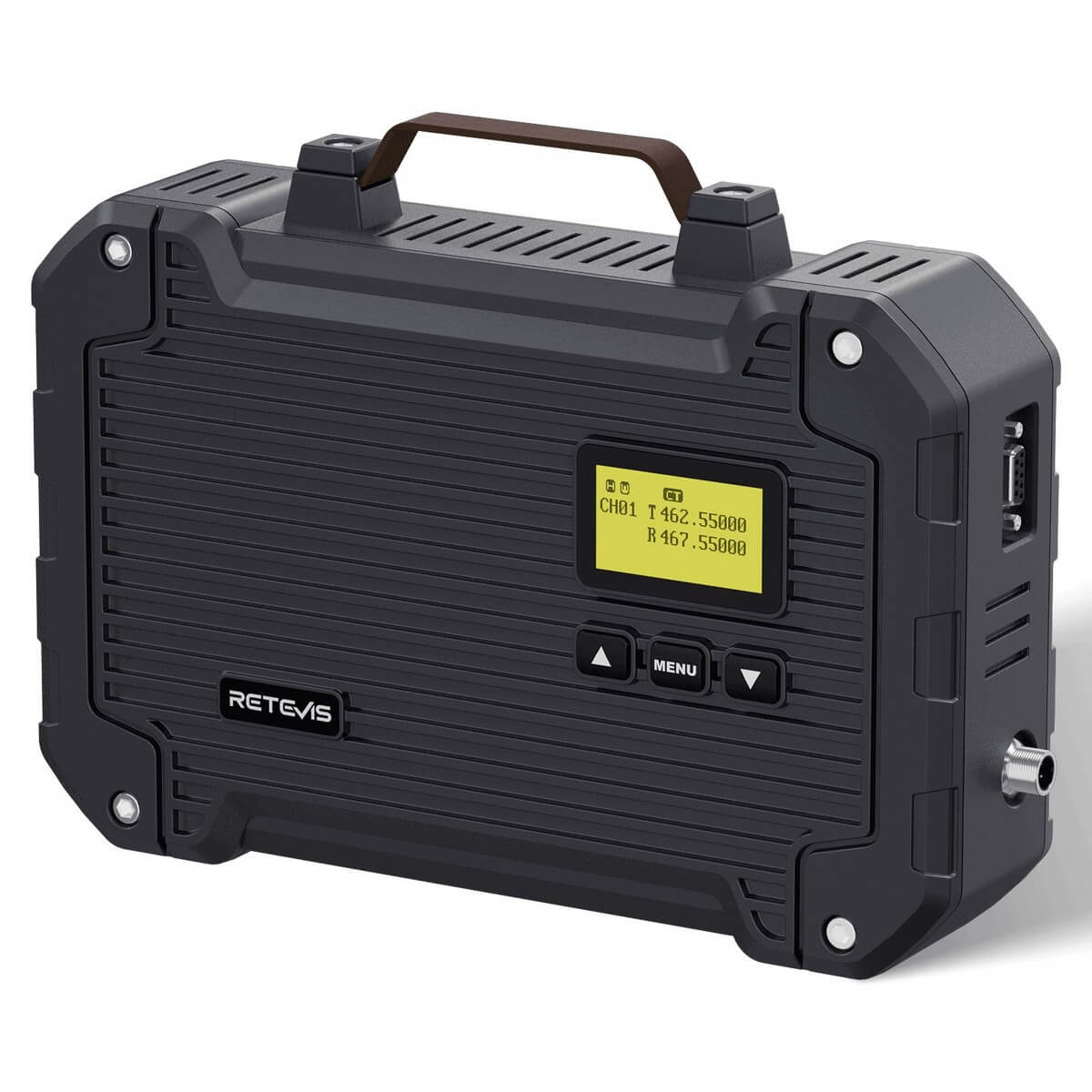
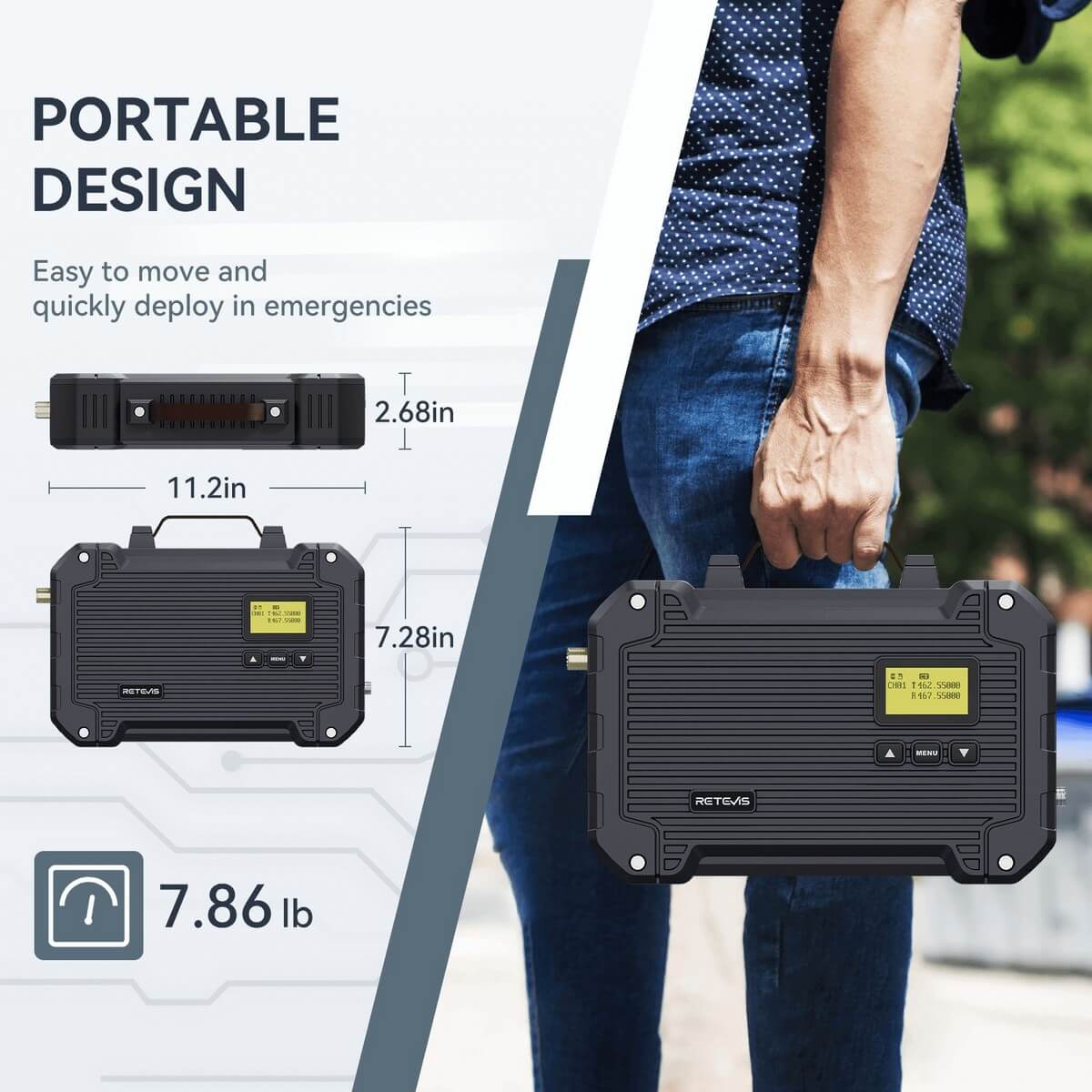
GMRS gives you room to grow. You can start with handheld radios. Later, you can add a mobile radio to your vehicle. You can set up a portable GMRS repeater like the RT97L at a large group campsite to cover the entire campground and surrounding trails.
Every step of this upgrade path is legal under the same GMRS license, and all your radios can communicate with each other.
"We May Need Repeater Capability"
This is the deciding factor for many groups. If there is any chance you will want to use a repeater — now or in the future — FRS is not an option. FRS radios are legally prohibited from using repeaters. GMRS radios are built for it.
A repeater does not just extend range. It changes the kind of communication you can have.
With a repeater, a group at a large campsite can reach members who are miles away on a trail. A convoy of off-road vehicles can stay connected across an entire trail system.
If repeater capability is even a possibility for your group, GMRS is the only choice that leaves that door open.
Choosing between FRS and GMRS comes down to one question: how far and how flexibly do you need to communicate?
If your group stays within a mile or two and values simplicity above all else, FRS radios are the right tool — no license, no learning curve, no extra cost.
If your group spreads out, travels off-road, wants room to grow, or may need repeater access, GMRS is worth the $35 license.
Retevis builds both FRS and GMRS radios, so whichever service fits your group, there is a reliable radio designed for it. FRS models like the RT22 and H777 serve families and campsites. GMRS models like the EZTalk 5, RB48 Plus, and RT97L repeater serve adventure hikers, off-road groups, and large outdoor gatherings.
Leave a Reply





 Google
 Amazon
Comments
No data Yet