

Table of Contents
Clear Audio in High-Noise Environments: Best Noise-Canceling Site Radios
- Posted by:Retevis
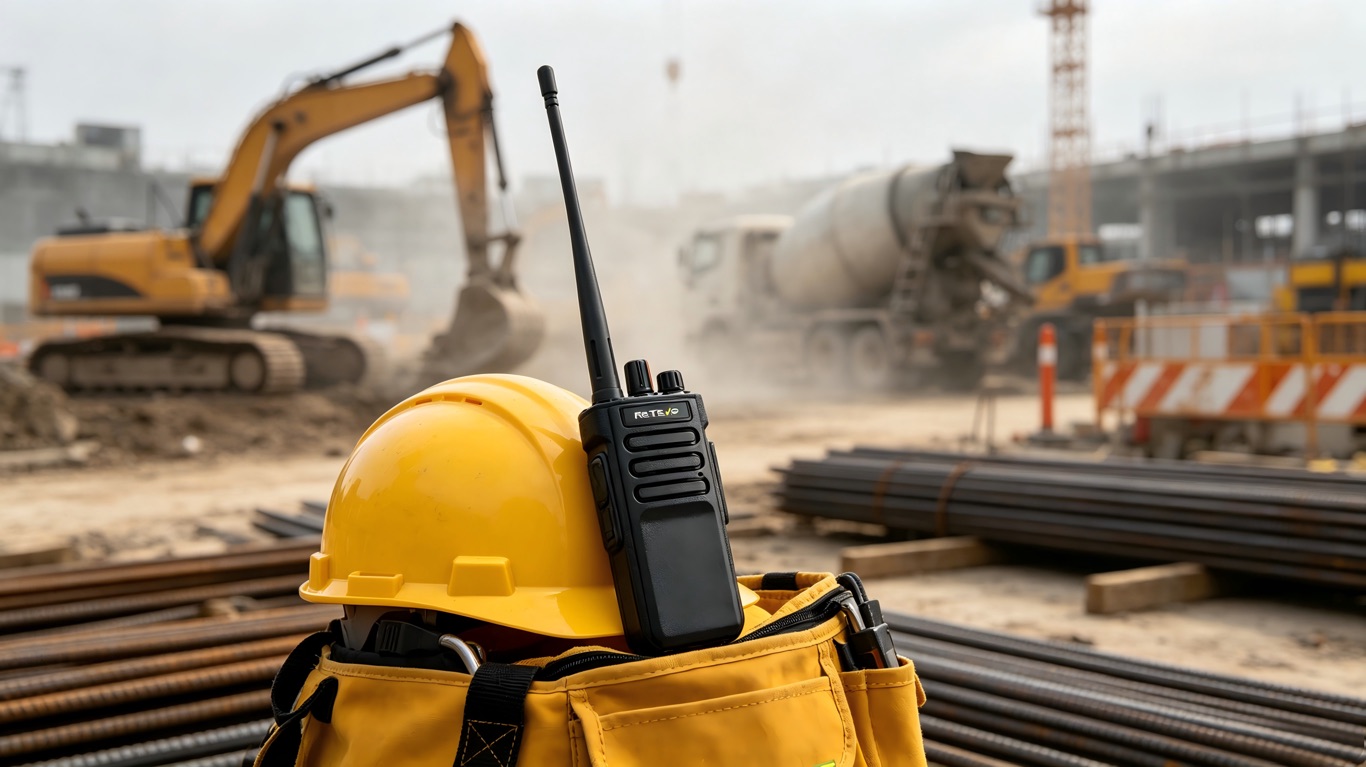
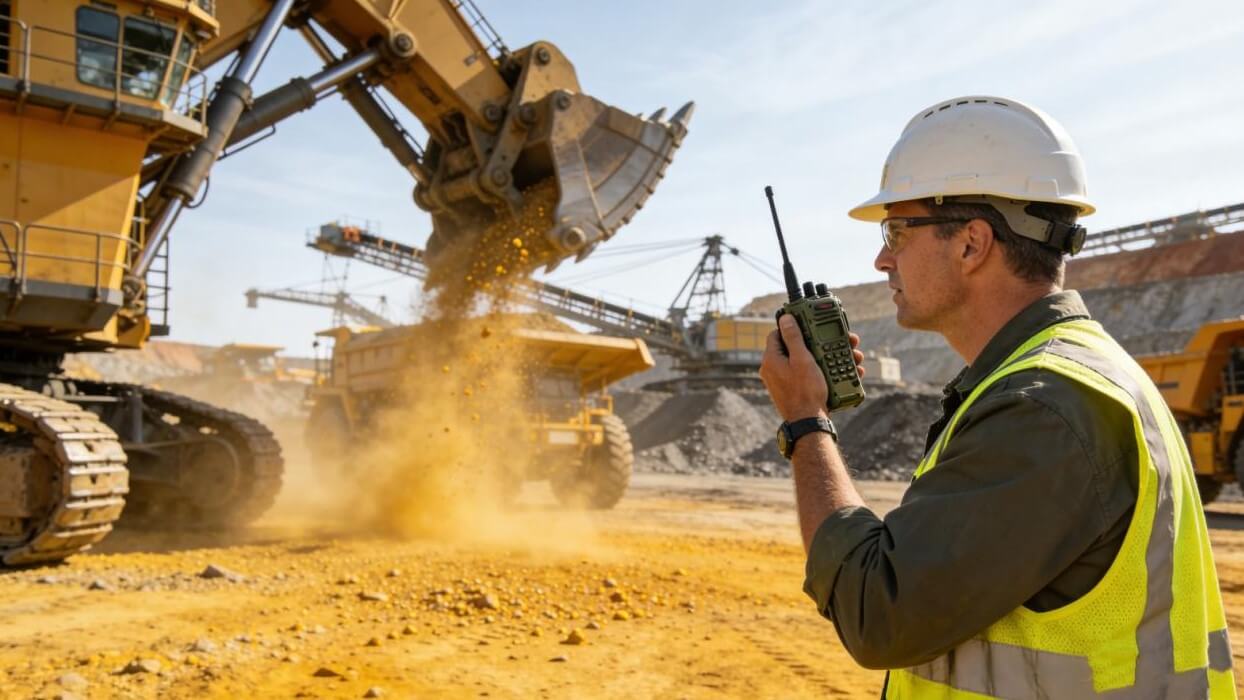
On a busy construction site, communication does not fail because crews stop talking. It fails because people cannot hear the message clearly over machinery, cutting tools, traffic, wind, and PPE.
That is why clear audio in noisy environments is a real jobsite requirement, not just a convenience. The right walkie talkie with noise canceling can reduce repeat calls, improve coordination, and help crews work more safely and efficiently.
In this guide, we’ll look at why construction sites are so challenging for radios, how noise-canceling technology works, and what features matter most when choosing the best two way radio for construction site audio quality.
Why Clear Audio Matters on Construction Sites
On modern jobsites, communication affects almost everything:
- crew coordination
- delivery timing
- lift and equipment support
- trade sequencing
- safety response
If a message has to be repeated several times, productivity drops fast. In high-noise areas, even a short misunderstanding can cause delays or mistakes.
The key issue is not just loudness — it is speech intelligibility. A radio should help workers understand instructions immediately, even in a loud environment. That is what makes a real construction site radio with clear audio different from a basic consumer device.
Why Radios Struggle in Noisy Environments
Construction and industrial sites create some of the hardest conditions for voice communication.
Common challenges include:
- Continuous machine noise from generators, compressors, pumps, and heavy equipment
- Sudden impact noise from cutting, drilling, grinding, and demolition
- Echo in enclosed spaces such as basements, plant rooms, and concrete interiors
- Wind and outdoor exposure on civil and road projects
- PPE interference from hard hats, earmuffs, respirators, and gloves
These conditions make it difficult for both microphones and speakers to perform well. That is why a normal radio may sound loud but still fail to deliver clear audio for noisy site communication.
How Noise Cancellation Works in Two-Way Radios
When people hear “noise canceling,” they often think of consumer headphones. But in professional radios, the focus is usually on improving voice clarity, especially during transmission.
The main technologies are:
|
Technology |
What It Does |
Why It Matters |
|
Noise-canceling microphone |
Reduces surrounding noise while prioritizing speech |
Helps others hear your voice clearly |
|
Digital signal processing (DSP) |
Filters and enhances voice frequencies |
Improves intelligibility in loud settings |
|
Passive noise reduction |
Uses physical design to block outside noise |
Supports better listening with headsets and accessories |
In practice, the most important feature in a walkie-talkie for noisy environments is often the microphone. If the radio picks up more machine noise than human speech, communication breaks down quickly.
What to Look for in the Best Noise-Canceling Site Radios
Not every radio marketed for construction will perform well in real-world noise. Here are the features that matter most.
Key buying factors
|
Feature |
Why It’s Important |
|
Noise-canceling mic |
Improves outgoing voice clarity near equipment |
|
Loud, clear speaker |
Helps users hear speech without distortion |
|
Rugged design |
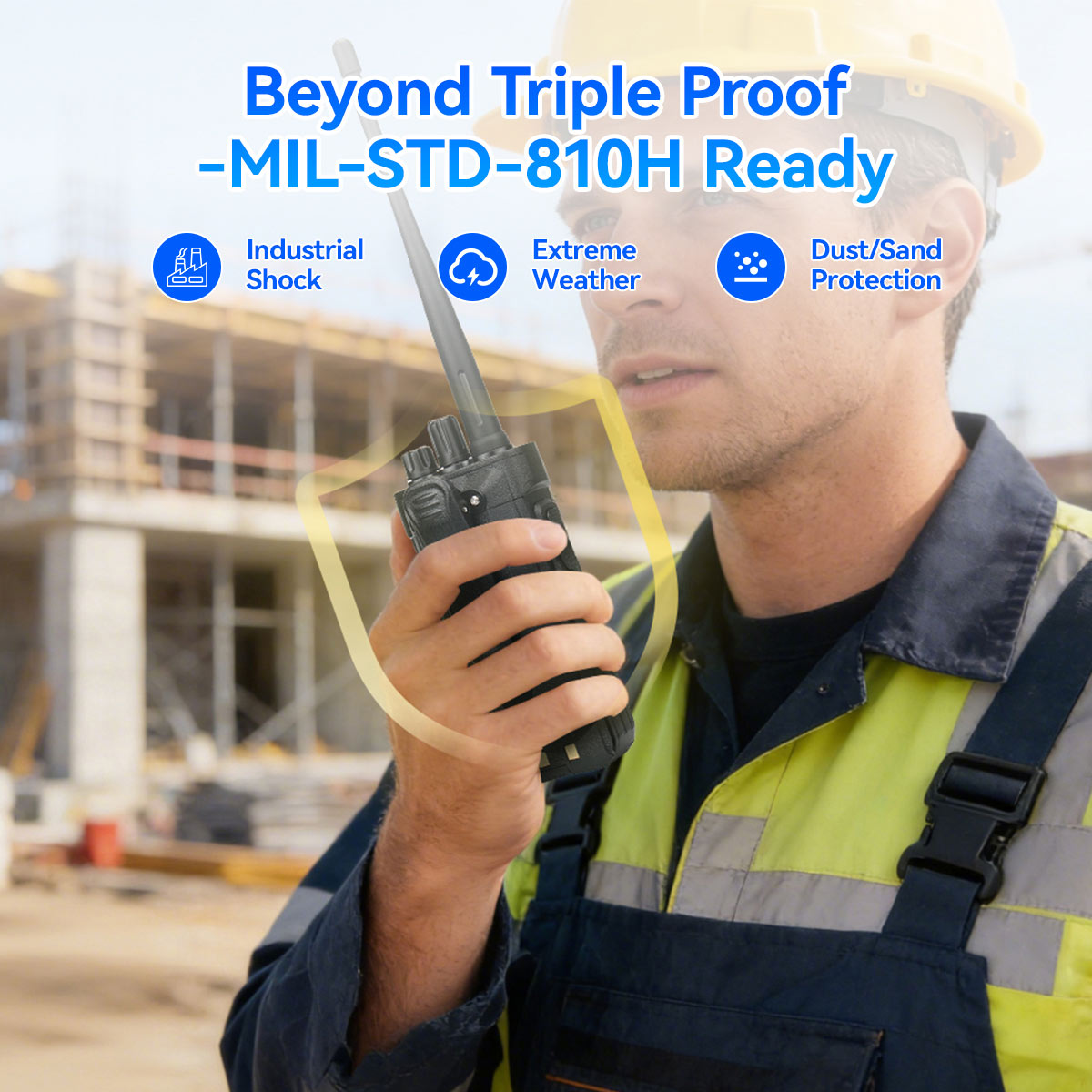
Handles dust, drops, moisture, and rough use |
|
Long battery life |
Supports full shifts and overtime |
|
PPE compatibility |
Works with hard hats, gloves, and hearing protection |
|
Reliable range |
Maintains communication through concrete, steel, and multi-floor layouts |
If you are looking for the best two way radio for construction site audio quality, focus on clarity and usability first — not just range claims.
Best Device Types for Noisy Jobsites
A common question is: What is the best device to cancel out construction noise?
The answer depends on the work environment.
Best options by use case
|
Device Type |
Best For |
Main Benefit |
|
Standard two-way radio with noise-canceling mic |
General site communication |
Simple and cost-effective |
|
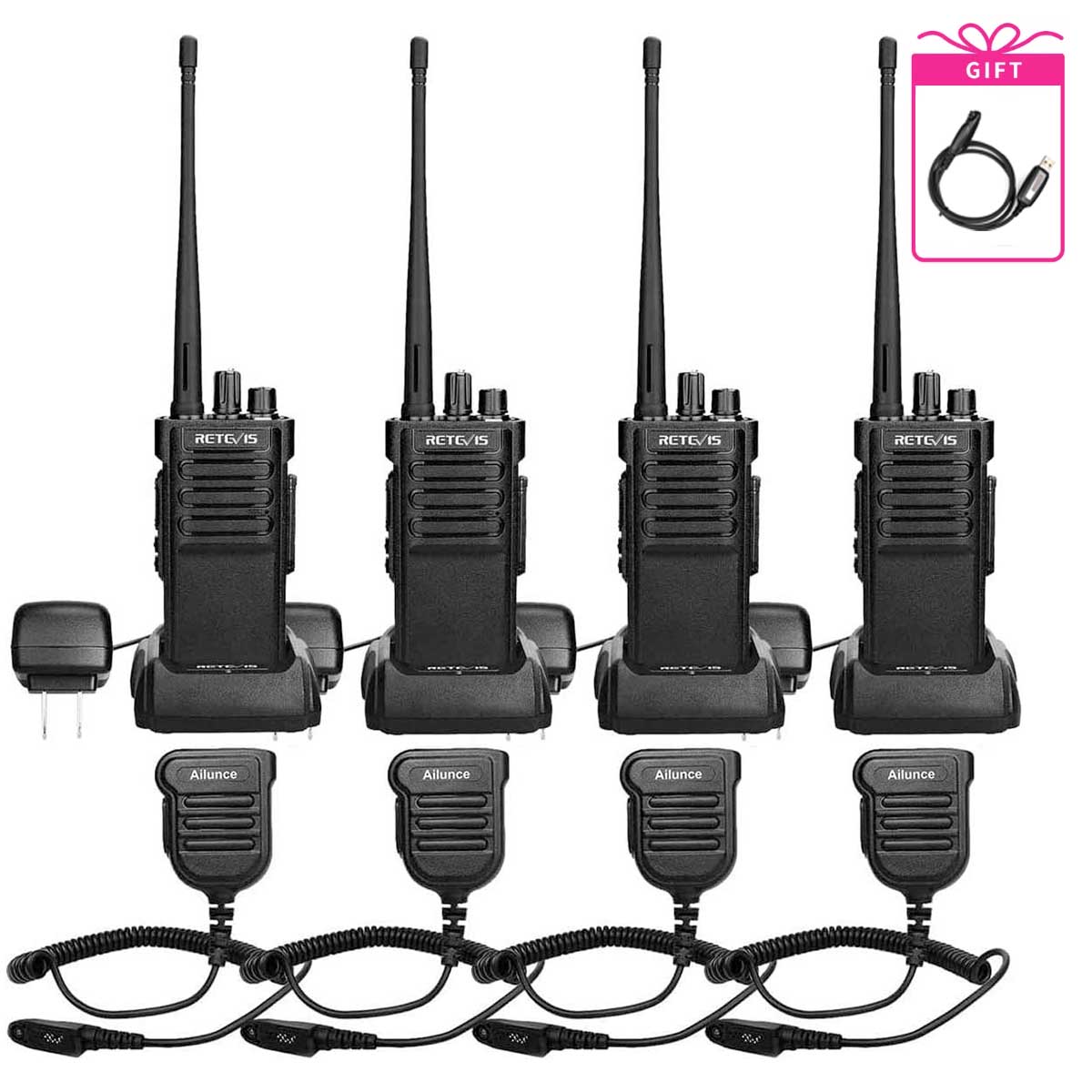
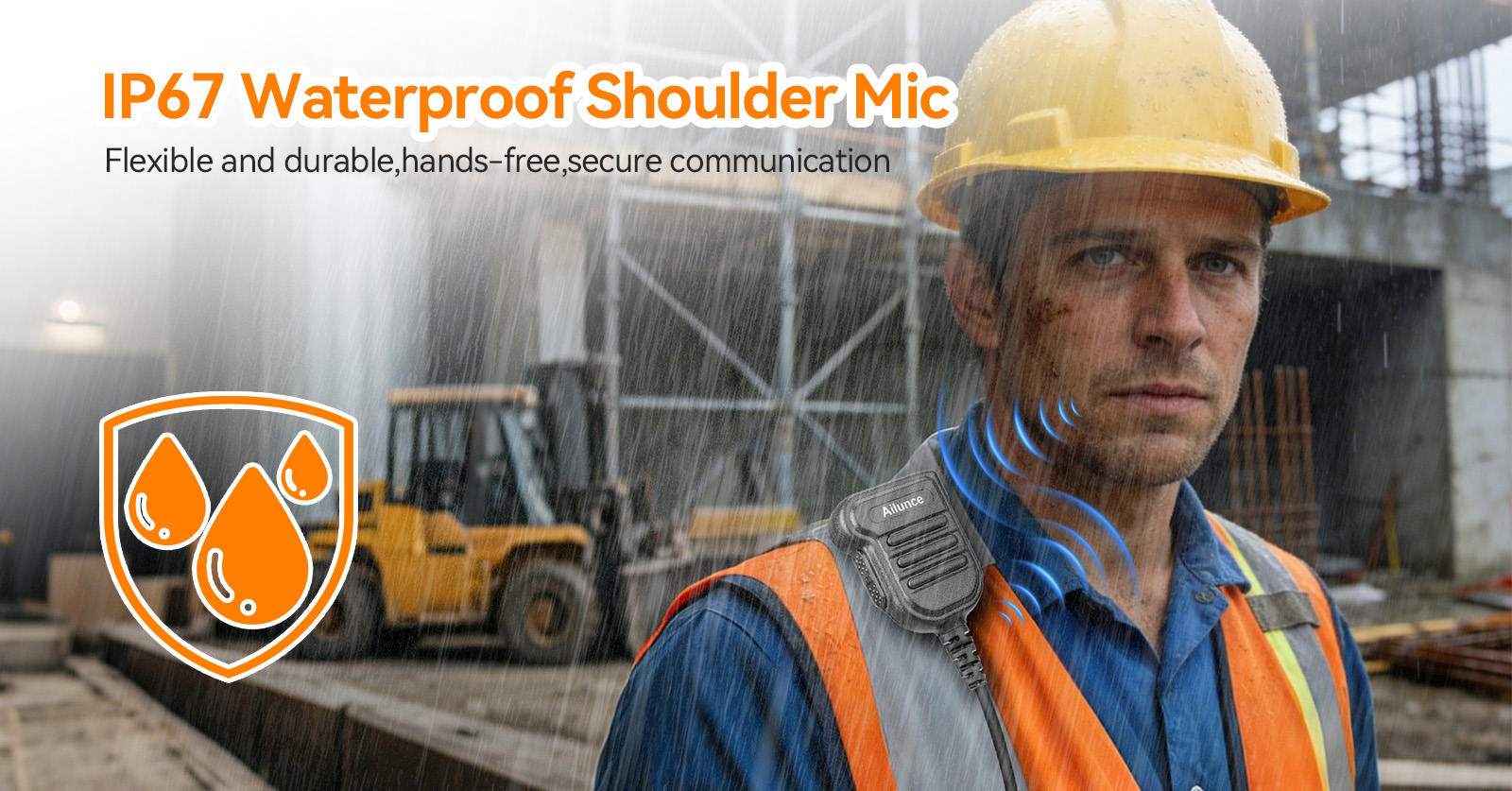
Radio with remote speaker mic |
Supervisors and mobile workers |
Better mic placement and easier access |
|
Headset-based radio system |
Demolition, roadwork, industrial sites |
Better send/receive clarity in extreme noise |
|
Full-duplex intercom |
Lift teams and constant coordination tasks |
Natural real-time conversation |
For many crews, a commercial walkie talkie with noise canceling is enough. But in very loud environments, a radio paired with a headset often delivers much better results.
Common Buying Mistakes to Avoid
Many teams choose radios based on specs that look good on paper but do not help much on site.
Avoid these mistakes:
- Buying based only on advertised range
- Assuming louder always means clearer
- Ignoring microphone quality
- Forgetting PPE and accessory compatibility
- Using consumer radios on demanding jobsites
- Skipping real-world testing
The best two way radio for construction site audio quality is usually the one that performs best under actual site noise, not the one with the biggest marketing numbers.
How to Test a Radio Before You Buy
A short field test can save a lot of time and money later.
Test checklist:
- Use the radio near real equipment noise
- Check both transmit and receive clarity
- Test while wearing PPE
- Try enclosed and open areas
- Evaluate ease of use with gloves
- Confirm battery performance over a full shift
If possible, request a demo with accessories such as speaker mics or headsets. In many cases, the accessory setup is what determines whether you get truly clear audio even in high-noise industrial environments.
Final Thoughts
On construction sites, clear communication supports safety, speed, and better coordination. That is why choosing the right construction site two-way radio with clear audio matters more than many teams realize.
The best solution is not simply the loudest radio. It is the one that delivers understandable speech in real-world noise, works with PPE, and holds up throughout the workday.
If you are comparing options, start with the basics:
Can crews hear clearly? Can they be heard clearly? And will the system work reliably under actual jobsite conditions?
That is what defines the best wireless two way radio for construction site audio quality.
FAQ
What is the best walkie talkie with noise canceling for construction?
A commercial-grade two-way radio with a noise-canceling mic, clear speaker output, rugged design, and PPE-friendly accessory support is usually the best choice.
Do noise-canceling radios help in loud industrial environments?
Yes. Radios with strong microphones, DSP, and headset compatibility can provide clear audio even in high-noise industrial environments.
What is the best device to cancel out construction noise?
For most crews, a professional radio with a noise-canceling mic works well. For extreme noise, a radio plus headset or full-duplex intercom may be the better option.
Why is my radio loud but unclear?
Because volume alone does not guarantee intelligibility. Distortion, poor mic pickup, and background noise can all make speech hard to understand.



 Google
 Amazon
Comments
No data Yet