

Table of Contents
Can Retevis RT22 Radios Work with a Repeater? What FRS Users Need to Know
- Posted by:Retevis
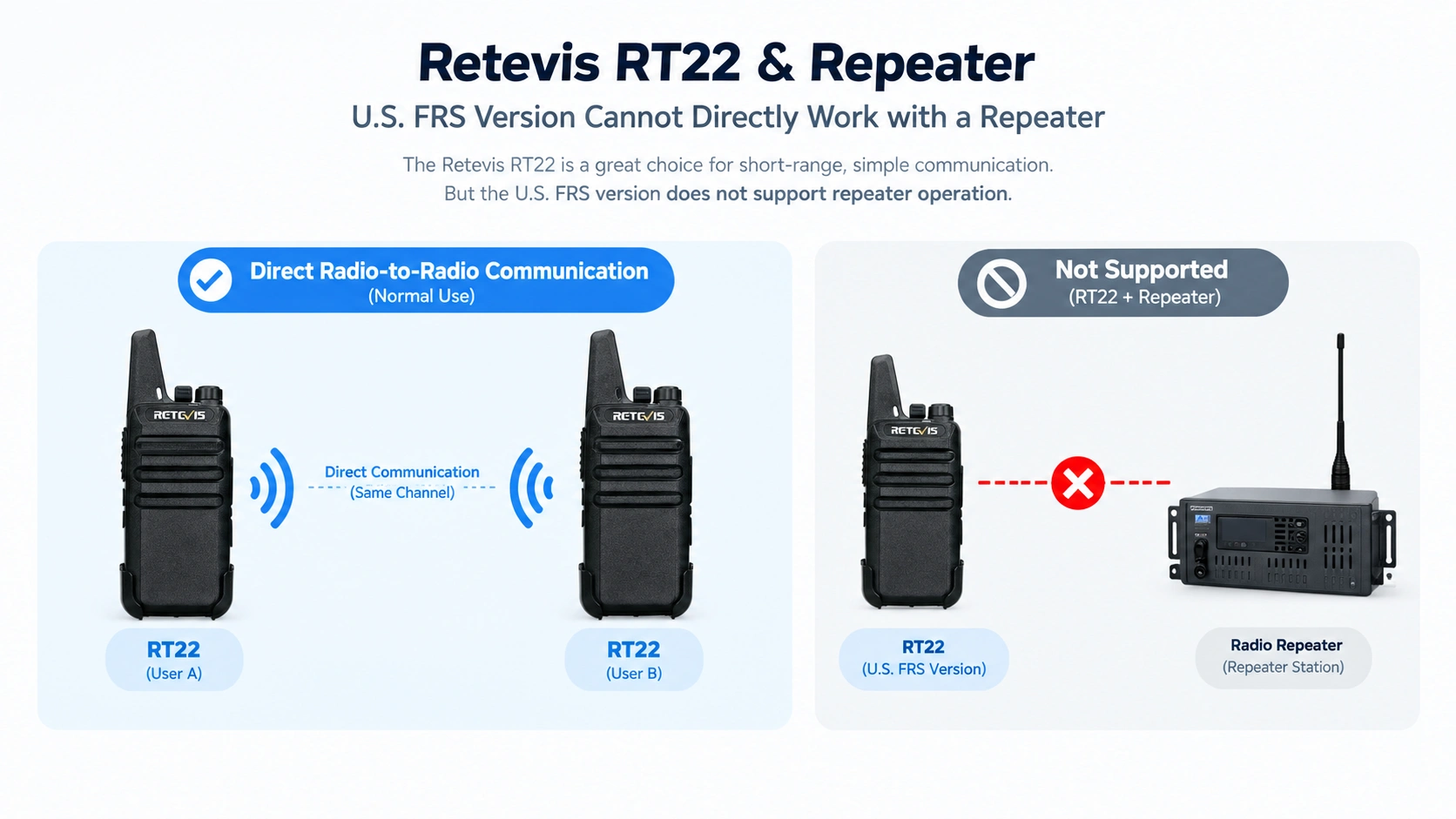
If you already use a Retevis RT22 and need more range, you may wonder: Can RT22 use a repeater?
The short answer is no. The U.S. FRS version of the Retevis RT22 does not support repeater use.
The RT22 is made for simple, short-range communication. It is easy to use and works well for many small teams. But if you need to cover a large building, several floors, or a wide outdoor area, you may need a different radio system.
In this guide, we will explain how a repeater works, why the U.S. RT22 cannot use one, how to improve Retevis RT22 range, and when you may need to upgrade.
Can the Retevis RT22 Use a Repeater?
For the U.S. FRS version of the Retevis RT22, the answer is no.
The RT22 is an FRS (Family Radio Service) two-way radio. It is made for direct radio-to-radio communication. It is not made to connect to a standard repeater.
This simple design makes the RT22 useful in many places, including:
- Retail stores
- Restaurants
- Hotels
- Schools
- Small warehouses
- Churches
- Events
- Small business teams
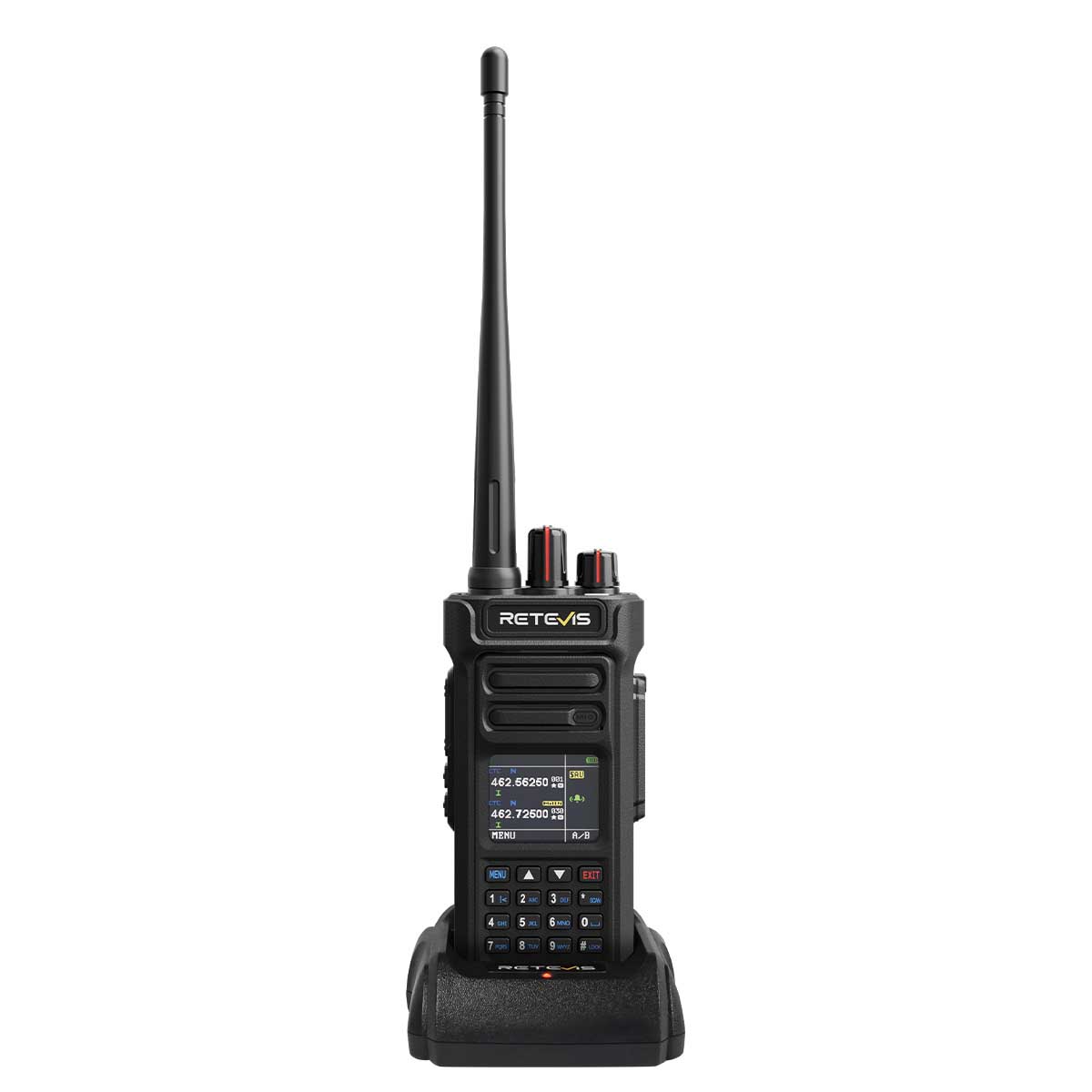
The RT22 is small, light, and easy to use. It also provides license-free FRS communication in the U.S.
These features make it a good fit for local communication. But they also show its limits. If users need to talk across several floors or between separate buildings, a basic FRS radio may not provide enough coverage.
So, if you are searching for a Retevis RT22 repeater, the key point is simple: the U.S. FRS version cannot directly work with a repeater.
Why Do Users Want to Extend RT22 Range?
The range shown for a radio does not always match the range you get in real use.
Many things can affect a radio signal. These include:
- Concrete walls
- Steel structures
- Elevators
- Trees
- Hills
- Other radio signals
- Building layout
- Radio position
For example, an RT22 may work well across an open parking lot. But the same radio may have trouble reaching another floor inside a concrete building.
A warehouse can also create problems. Metal shelves, equipment, and walls can block or weaken the signal.
This can lead to common problems such as:
- Weak signals between floors
- Dead zones inside buildings
- Poor outdoor coverage
- Missed calls on large work sites
- Trouble communicating through thick walls
When this happens, users often look for ways to extend Retevis RT22 range. A repeater may seem like the obvious answer.
However, a repeater only works when the radio system supports it.
What Does a Radio Repeater Do?
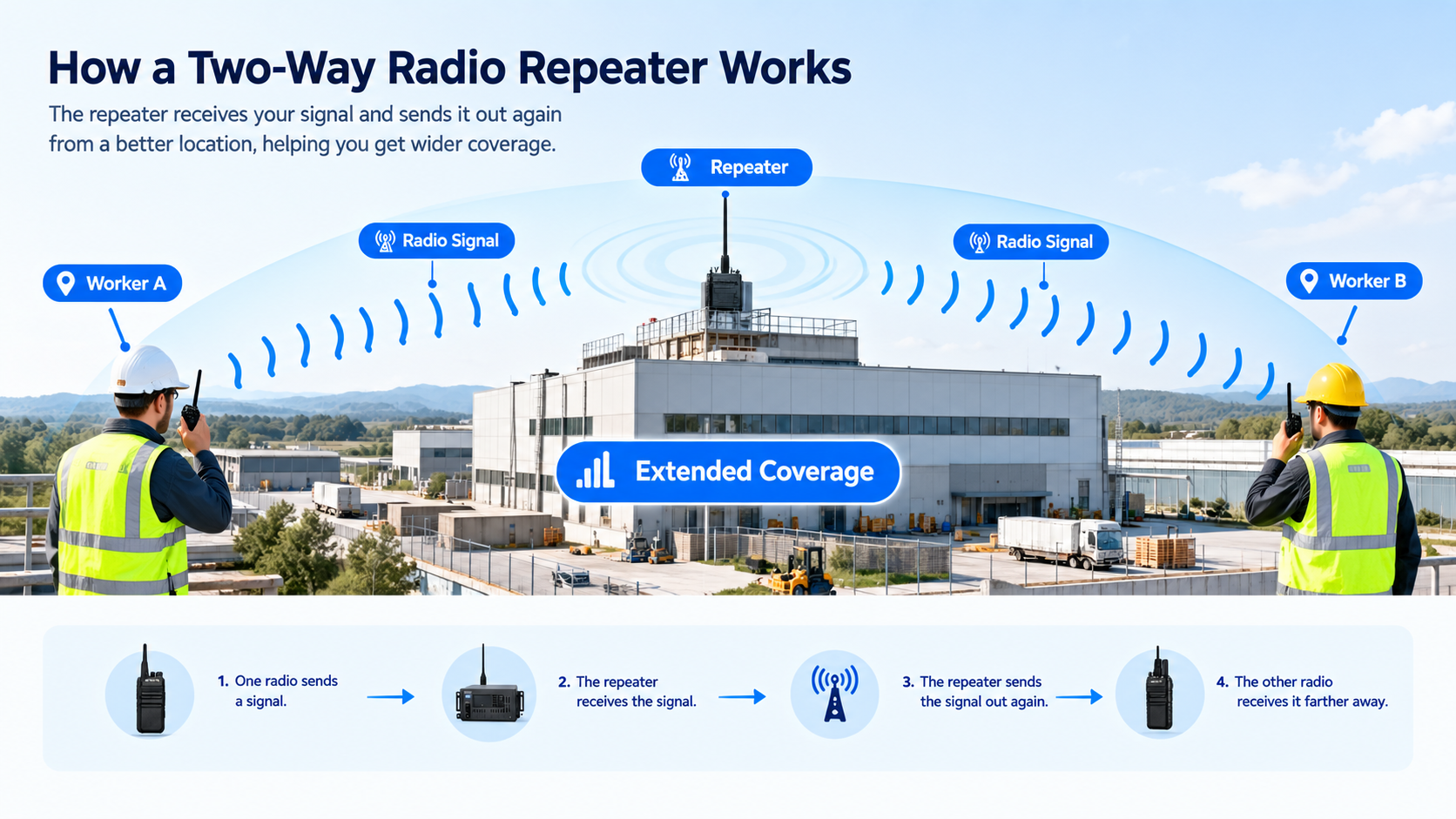
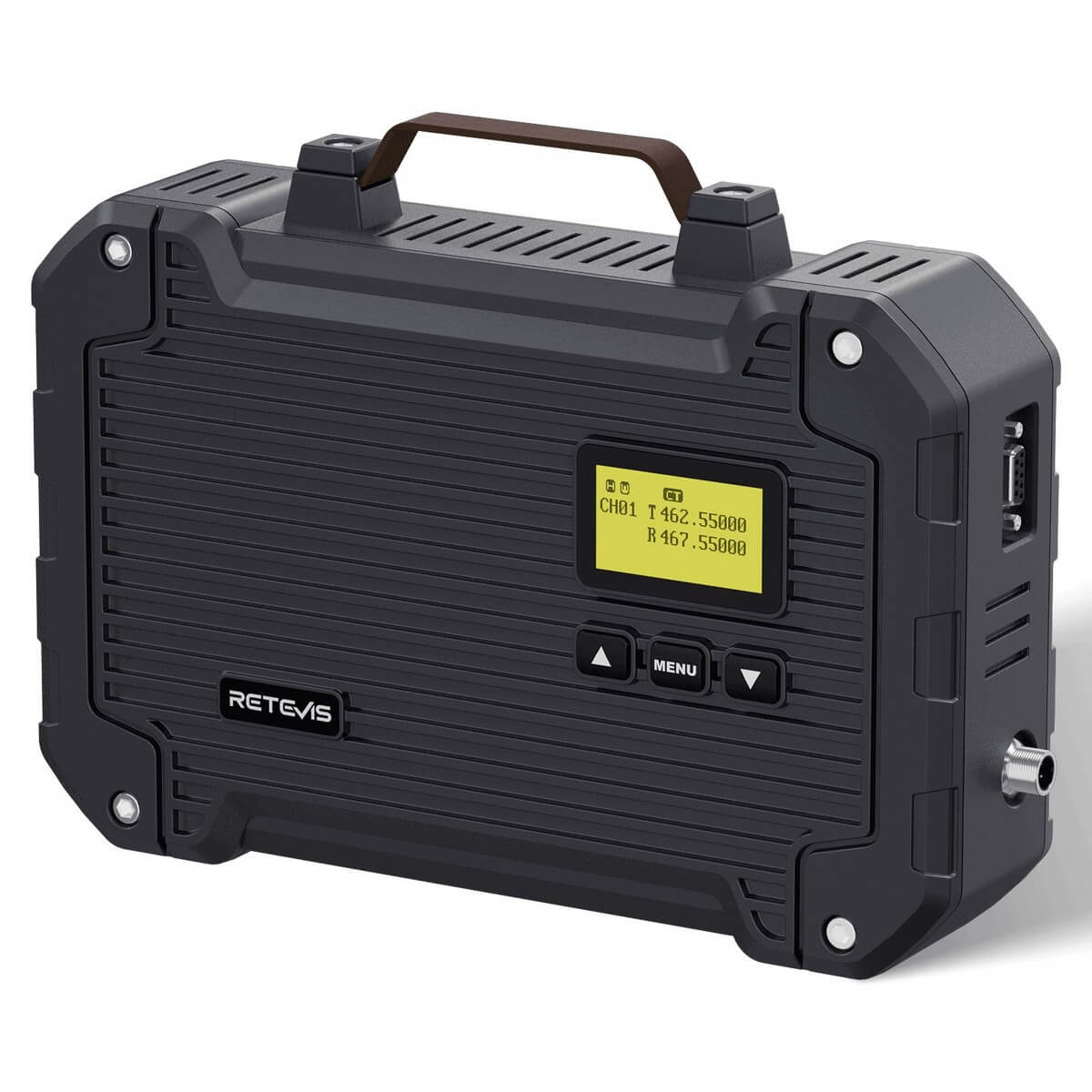
A repeater helps radios communicate over a larger area.
Without a repeater, two radios need to reach each other directly. If they are too far apart or something blocks the signal, the call may fail.
A repeater works as a link between the two radios.
For example, imagine two workers on opposite sides of a large property. They may not be able to reach each other directly. But if both radios can reach a repeater in a good location, the repeater can receive the signal and send it back out.
This can help extend the communication area.
Repeaters are often used in:
- Large buildings
- Industrial sites
- Campuses
- Outdoor work areas
- Business radio systems
- Some emergency communication systems
- Amateur radio networks
But a repeater cannot work with every radio.
The radio must support the right channels, frequencies, and settings. It may also need special programming.
This is why an RT22 repeater setup is not possible with the U.S. FRS version.
Why the U.S. RT22 Cannot Use a Repeater
There are several reasons for this.
1. The RT22 Is an FRS Radio
The U.S. RT22 is an FRS radio.
FRS stands for Family Radio Service. It gives users a simple way to communicate without a complicated radio setup.
FRS radios are popular because they are easy to use. You can select a channel, press the push-to-talk button, and talk to another compatible radio.
But FRS radios are designed for direct communication. They do not offer the same features as professional radio systems.
This is an important reason why FRS radio repeater compatibility is limited.
2. A Repeater Needs Special Radio Settings
A repeater system needs more than a normal radio channel.
Depending on the system, a radio may need to:
- Send and receive on different frequencies
- Use a repeater offset
- Use CTCSS or DCS tones
- Store repeater channels
- Support special channel programming
The U.S. RT22 does not provide the settings needed for standard repeater operation.
So if you are asking how to connect RT22 to a repeater, there is no standard setup that can make the U.S. FRS model work as a repeater radio.
Adding a repeater to your site will not change the radio's basic capabilities.
3. The RT22 Is Designed for Simple Operation
One of the main strengths of the RT22 is its simple design.
A manager can give the radios to staff and get a team communicating quickly. Users do not need to learn complex radio settings.
This works well for:
- Retail staff
- Restaurant teams
- Hotel staff
- Event workers
- Small business teams
But simple operation also means fewer advanced features.
The RT22 is designed for quick and easy communication, not for building a complex repeater network.
4. FRS Rules Also Matter
Radio use in the U.S. depends on the radio service and its rules.
FRS is intended for simple, direct communication. It has its own operating requirements.
So FRS radio repeater compatibility is not only a question of hardware. The radio service also matters.
If repeater use is a key requirement, an FRS radio such as the U.S. RT22 is not the right starting point.
How Can You Improve RT22 Range Without a Repeater?
If you only have a small coverage problem, you may not need to replace your radios right away.
Try these simple steps first.
Use More Open Areas
Radio signals usually work better when there are fewer obstacles.
If possible, move to an open area, doorway, hallway, or higher position. A small change in position may improve the signal.
Reduce Obstacles
Concrete walls, steel structures, elevators, and heavy equipment can weaken radio signals.
If one area always has a weak signal, check what is between the users. The building or equipment may be causing the problem.
Keep the Battery Charged
Make sure your radios have enough battery power before use.
A charged battery helps the radio work as expected and avoids simple power-related problems.
Check Channels and Privacy Codes
Not every communication problem is a range problem.
Two radios may fail to communicate because they are using different channels or privacy-code settings.
Before trying to improve range, check that all radios use the correct settings.
Test the Site
Test your radios before you start daily operations.
Walk through the building or work area and check communication from the places where staff will actually work.
This helps you find dead zones early. It also tells you whether your current radios are enough for the job.
When Should You Upgrade from the RT22?
The RT22 can work well when your communication needs are simple.
But you may need a different system if your coverage needs have grown.
You Need Coverage Across Multiple Floors
Concrete floors, walls, elevators, and other building materials can weaken radio signals.
If your team needs to talk across several floors, an FRS radio may not provide enough coverage.
You Work Across Multiple Buildings
A radio may work well inside one building but struggle when users are in separate buildings.
If your team works across a campus, warehouse complex, or large property, consider a system designed for wider coverage.
You Need Repeater Support
This is one of the clearest reasons to choose a different radio.
If your communication plan depends on a repeater, select radios that support repeater operation.
Do not try to build a repeater system around a radio that was designed only for direct FRS communication.
Your Work Environment Is Difficult for Radio Signals
Some locations are harder for radio communication than others.
Examples include:
- Concrete buildings
- Metal warehouses
- Industrial sites
- Underground areas
- Large construction sites
- Areas with heavy RF interference
If your team often works in these environments, a more advanced radio system may be a better fit.
Your Team Has Grown
Your communication needs may change as your business grows.
A small team may start with a few simple radios. Later, employees may work across larger buildings, outdoor areas, or several locations.
At that point, it is useful to review your whole communication setup.
Consider your coverage area, number of users, work environment, and future needs before choosing new radios.
What Should You Look for in an RT22 Upgrade?
If your current radios no longer provide enough coverage, first find out why.
Do not choose a new radio based only on its advertised range.
Look at:
- Coverage area
- Number of users
- Building size
- Indoor and outdoor use
- Walls and other obstacles
- Current dead zones
- Repeater needs
- Future growth
Different work environments may need different solutions.
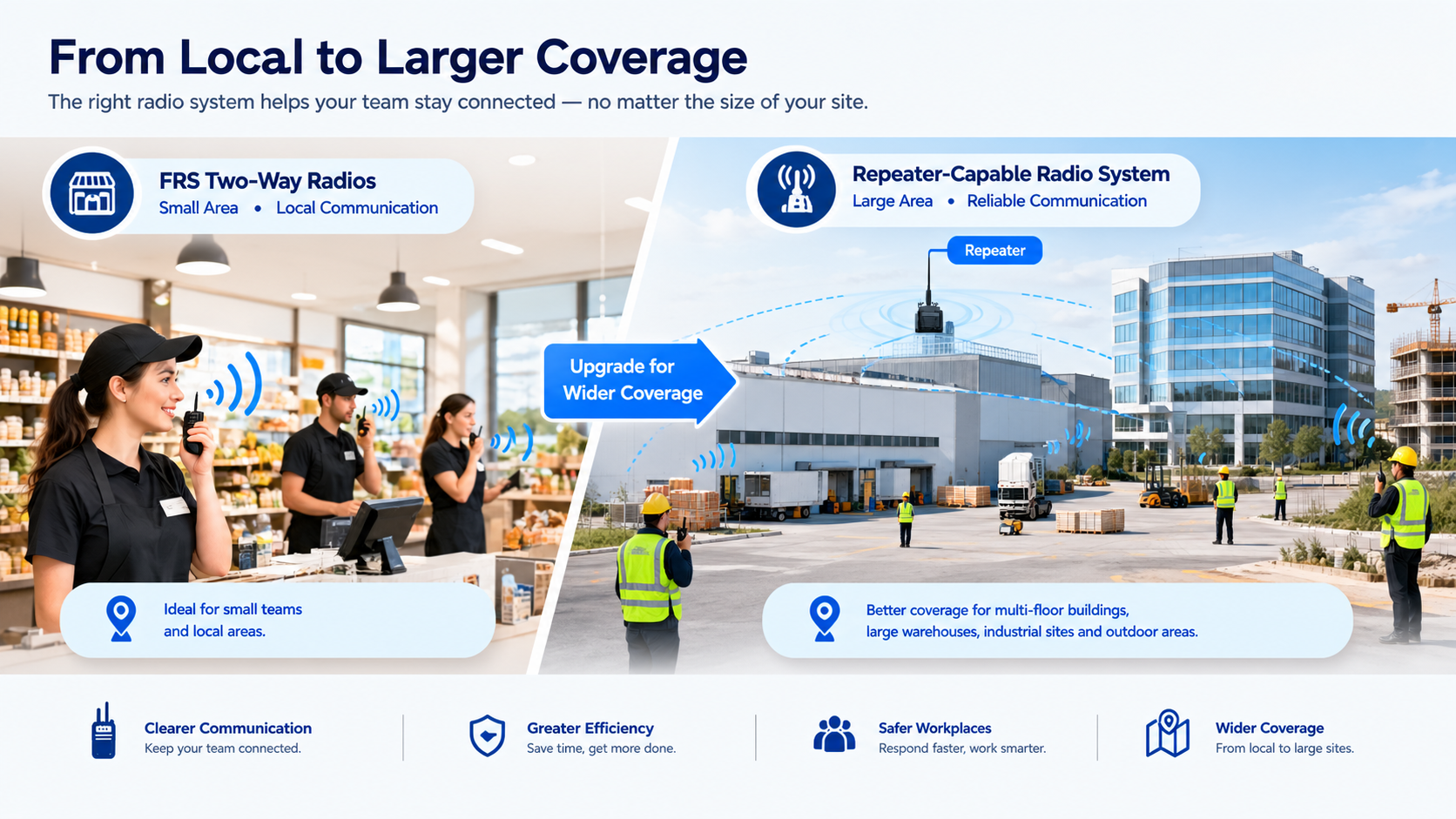
A small retail store may only need simple local communication. A warehouse may need wider coverage. A large campus may need a repeater-capable radio system.
The goal is to choose a system that fits the way your team works.
Is the Retevis RT22 Still a Good Choice?
Yes. The fact that the RT22 cannot use a repeater does not mean it is a poor radio.
It is still a practical choice when users need simple local communication.
The RT22 offers:
- Simple operation
- Compact size
- Lightweight design
- License-free FRS communication in the U.S.
- Easy deployment
- Convenient local communication
It can be a good fit for small teams, retail stores, restaurants, events, and other places where users stay relatively close to each other.
The key is to match the radio to the job.
The RT22 is designed for simple communication. A repeater-capable radio system is designed for a different level of coverage and control.
Final Answer: Can Retevis RT22 Radios Work with a Repeater?
No. The U.S. FRS version of the Retevis RT22 cannot directly work with a repeater.
The main reasons are:
- It is an FRS radio designed for direct communication.
- It does not support the settings and programming needed for standard repeater use.
- FRS has its own operating rules and is not designed as a conventional repeater-based service.
- Users who need wider coverage should consider a radio system that supports their coverage needs.
If your RT22 works well in your current area, you can continue using it.
But if your team has dead zones, needs to cover several floors or buildings, or plans to use a repeater, it may be time to look at a different system.
Before you upgrade, check your site, coverage needs, number of users, and future plans. This will help you choose the right radio instead of simply choosing one with a higher range number.
Need Help Choosing the Next Step?
Leave a Reply





 Google
 Amazon
Comments
No data Yet