

Table of Contents
Ham Radio: The Unbreakable Communication Lifeline in Disasters
- Posted by:Retevis
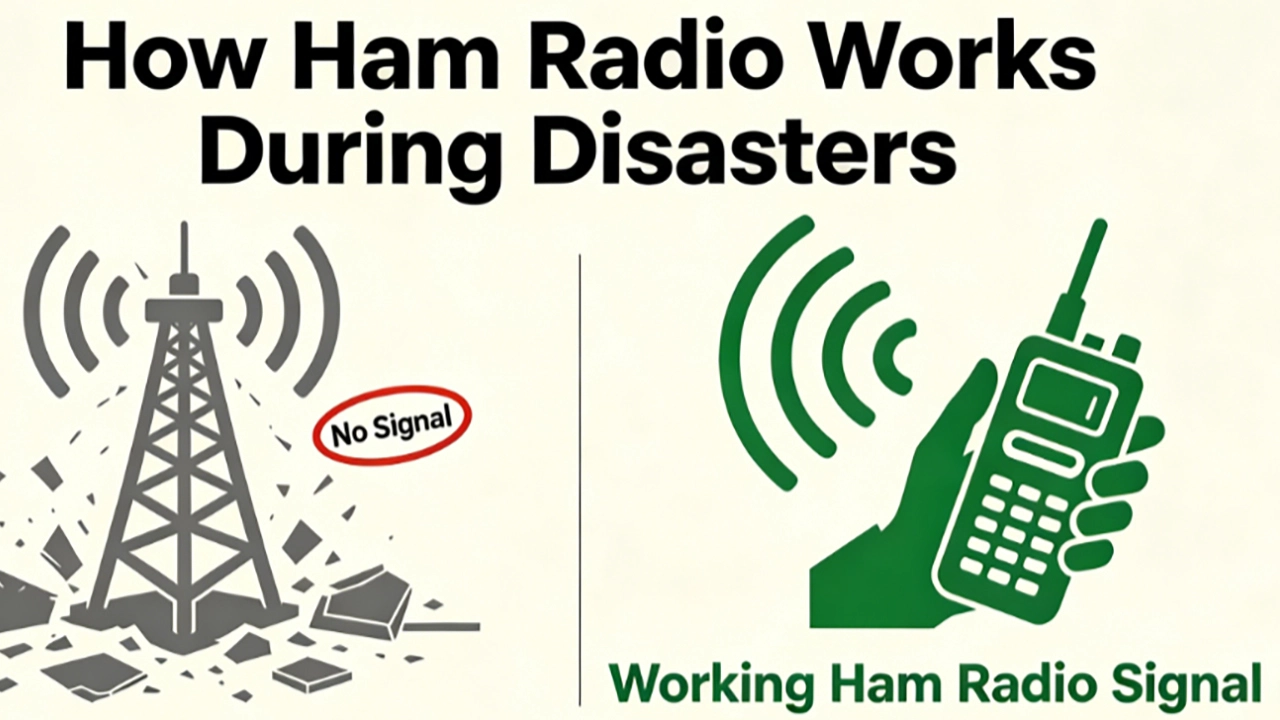
When natural disasters strike—hurricanes, floods, earthquakes, or wildfires—modern communication infrastructures collapse instantly. Cell towers get damaged, internet lines cut out, and power grids go dark, leaving trapped communities, rescue teams, and ordinary people isolated and blind. In these critical life-or-death moments, ham radio communication during disaster scenarios emerges as the most reliable, fail-proof communication backbone that never goes offline. Unlike mainstream digital networks dependent on centralized infrastructure, amateur radio delivers stable, independent connectivity to support disaster management, rescue coordination, and emergency alert dissemination.
How Does Ham Radio Work During Disasters?
The core strength of ham radio in disaster management lies in its infrastructure-independent operation mechanism. Different from cell phones and internet services that rely on towers, fiber optics, and power supplies, ham radio transmits and receives signals directly via radio waves between devices, with no intermediate servers or switching centers required. Even when all public communication systems fail, a battery-powered ham radio with a simple antenna can build up effective communication channels instantly.
Equipped with multi-band frequency coverage and flexible transmission modes, ham radios adapt to diverse disaster environments. HF signals can bounce off the ionosphere to achieve long-distance cross-region communication, while UV dual bands support short-range high-precision team coordination. Amateur radio operators can quickly set up temporary relay stations in disaster zones, bridging isolated areas with external rescue command centers, collecting on-site disaster data, and delivering rescue demands in real time. This unique working principle makes ham radio disaster communications irreplaceable in emergency response.
Key Advantages & Benefits of Ham Radio in Disaster Management
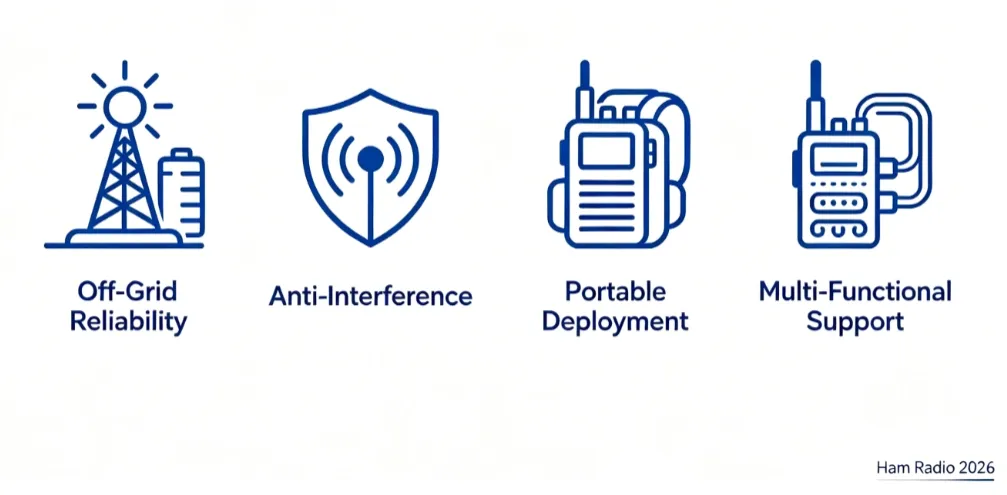
The widespread use of ham radio during disaster responses stems from its unmatched practical advantages, which fill the gaps of modern communication systems in extreme scenarios:
100% Off-Grid Reliability:
Ham radios run on independent power sources like removable batteries, completely free from power grid and internet restrictions. They maintain full functionality in blackouts and infrastructure collapse, ensuring unbroken communication in the worst-hit areas.
Anti-Interference & Uncongested Channels:
Public communication networks are easily overloaded and congested during disasters. In contrast, ham radio boasts abundant independent frequency resources, avoiding signal blockage and ensuring clear, stable voice and data transmission for emergency commands.
Portable & Rapid Deployment:
Compact handheld ham radios require no complex installation. Rescuers and amateur operators can carry them to rugged terrains, flood zones, or mountainous disaster areas to launch communication services in seconds.
Multi-Functional Emergency Support:
Beyond basic voice communication, premium ham radios support real-time positioning, weather alerts, aviation signal monitoring, and customized channel scanning, providing comprehensive data support for scientific disaster rescue and risk prediction.
Retevis Ailunce HA2: The Ultimate Ham Radio for Disaster & Outdoor Emergency Scenarios
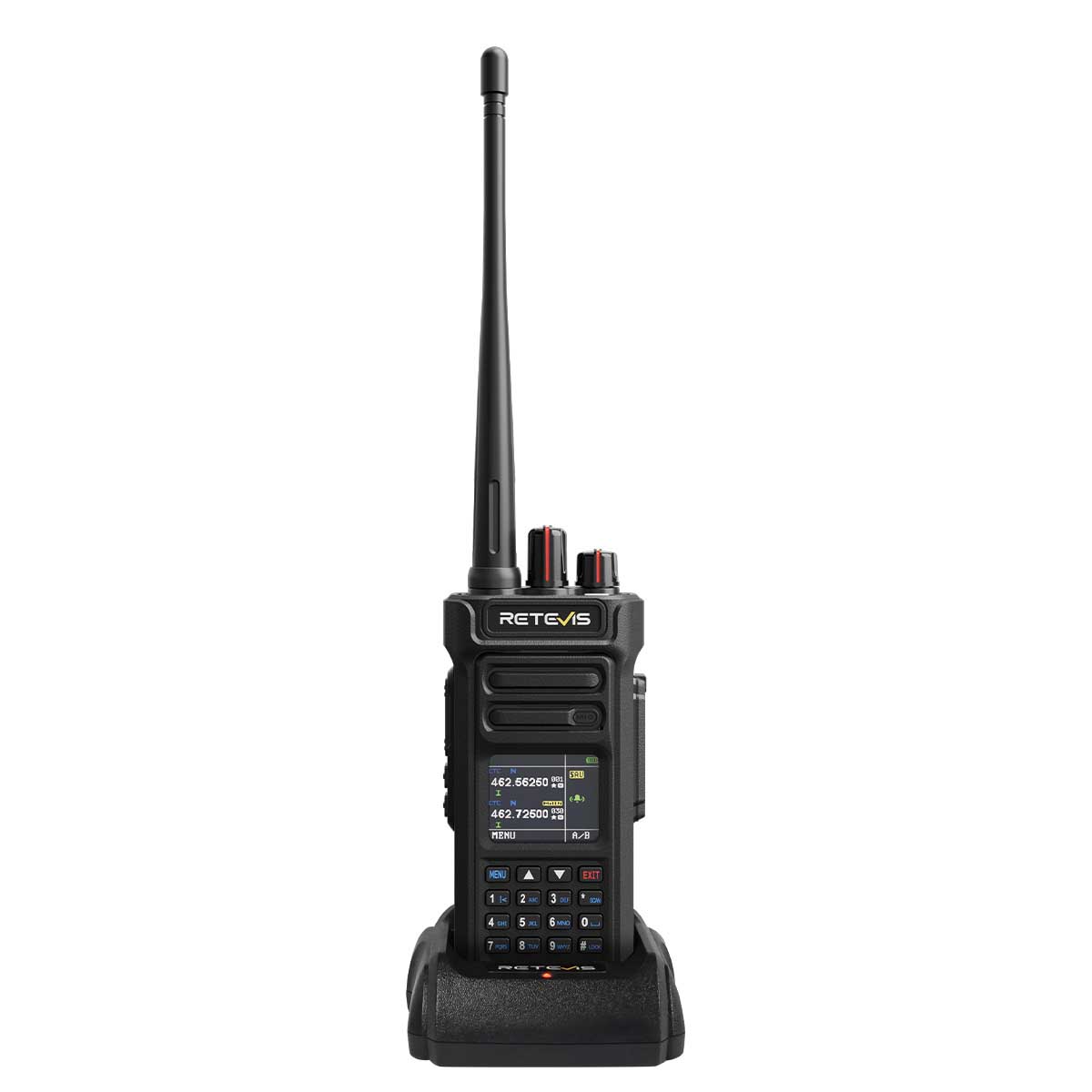
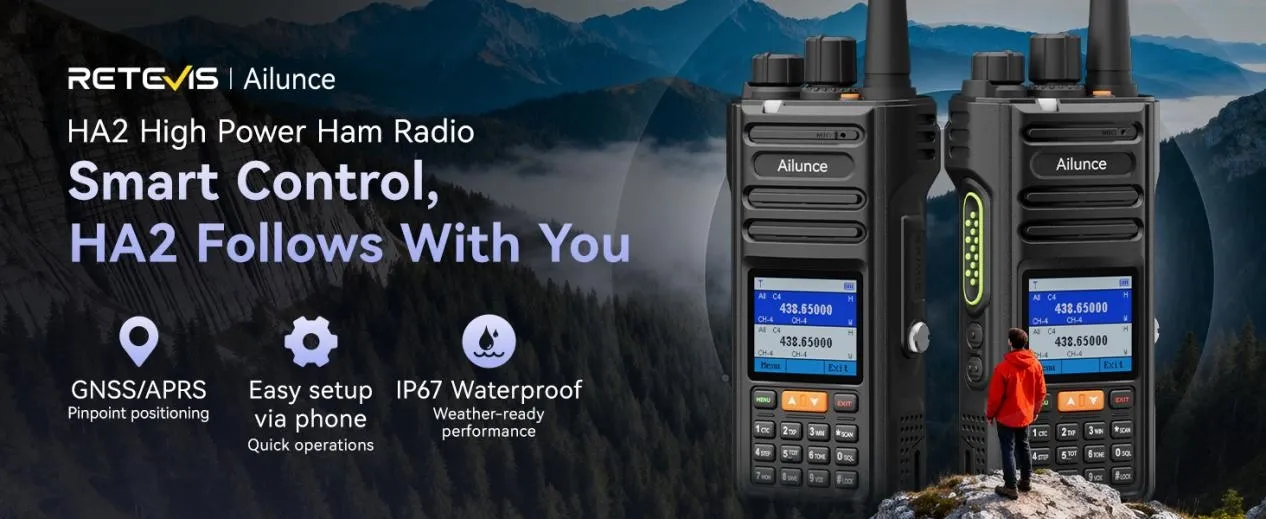 To maximize the value of ham radio in disaster management, you need a professional, durable, and full-featured handheld device—the Ailunce HA2 Bluetooth APP Programming UV Dual Band Ham Radio with GPS/APRS. Engineered for extreme environments and high-intensity emergency missions, the Retevis HA2 breaks the limits of ordinary ham radios, integrating wireless intelligence, rugged durability, and all-round emergency functions to become the top choice for rescue teams, amateur operators, and outdoor enthusiasts.
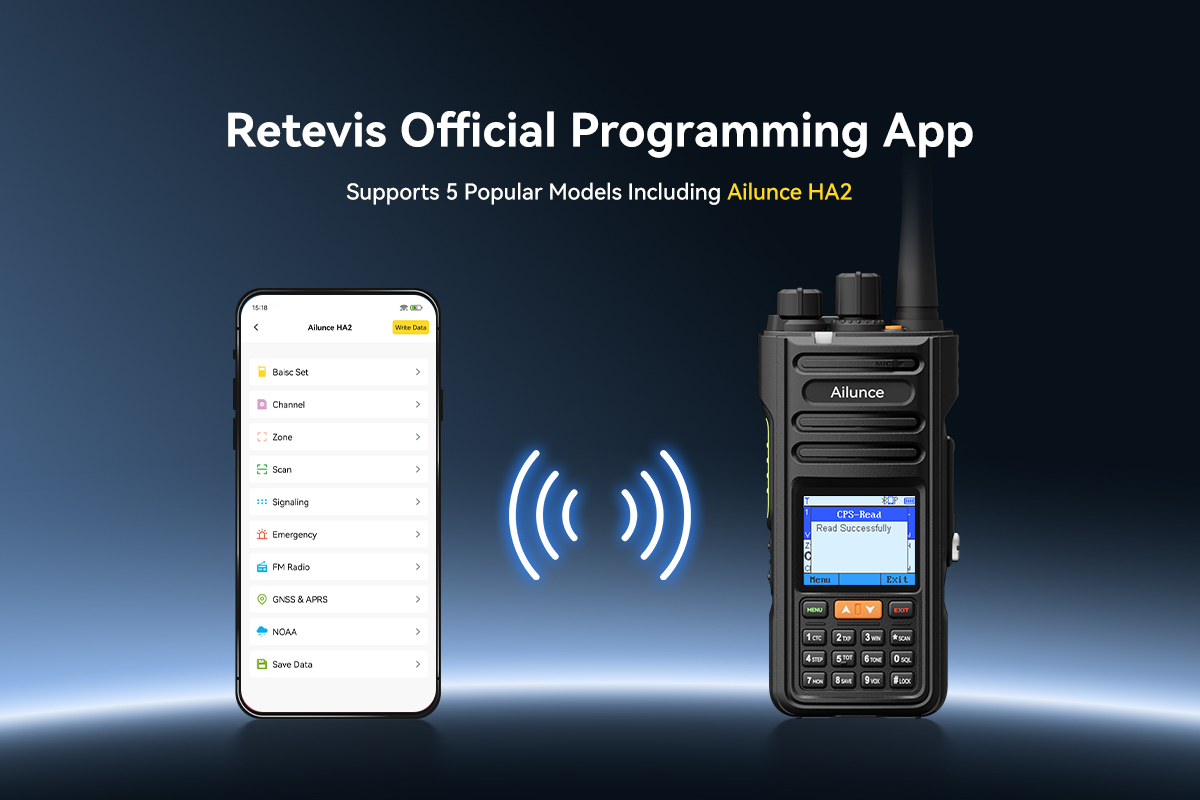
Wireless Bluetooth APP Programming & Smart Control
Traditional ham radio setting relies on cumbersome cable connection and complex manual operation, which is extremely inconvenient in urgent disaster scenarios. The HA2 innovates wireless Bluetooth smart control, allowing users to connect smartphones to the radio wirelessly. You can adjust device settings, manage channels, sync data, and complete firmware updates in seconds without any cables.
Compatible with CHIRP programming, it supports one-click rapid configuration for various emergency scenarios, freeing hands for rescue operations and greatly improving on-site communication efficiency.
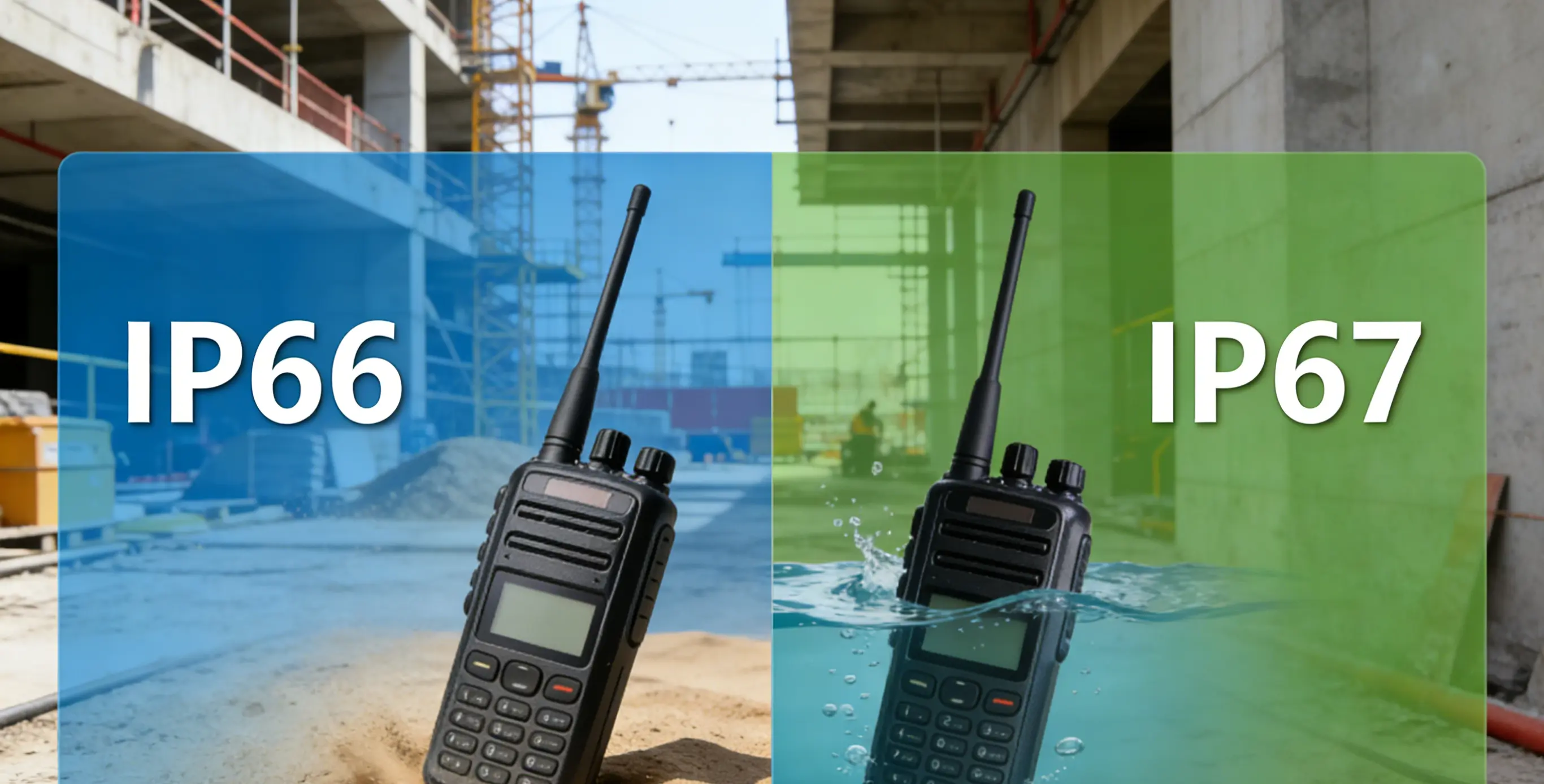
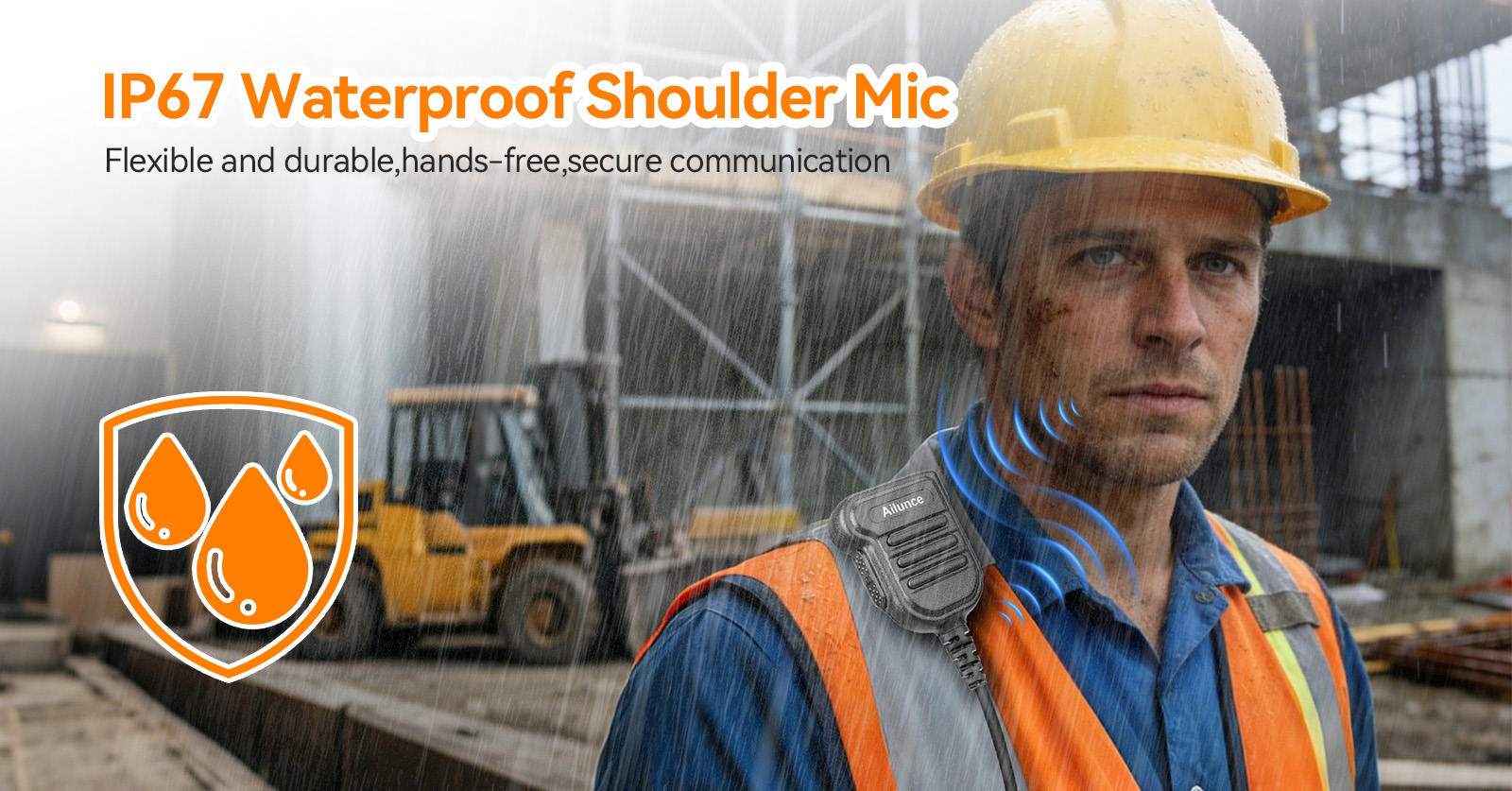
IP67 Fully Waterproof & Dustproof Rugged Build
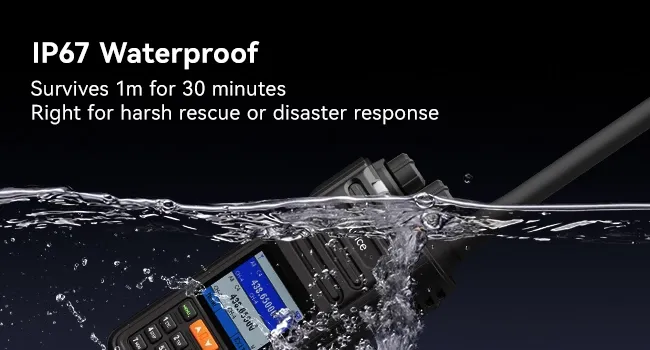
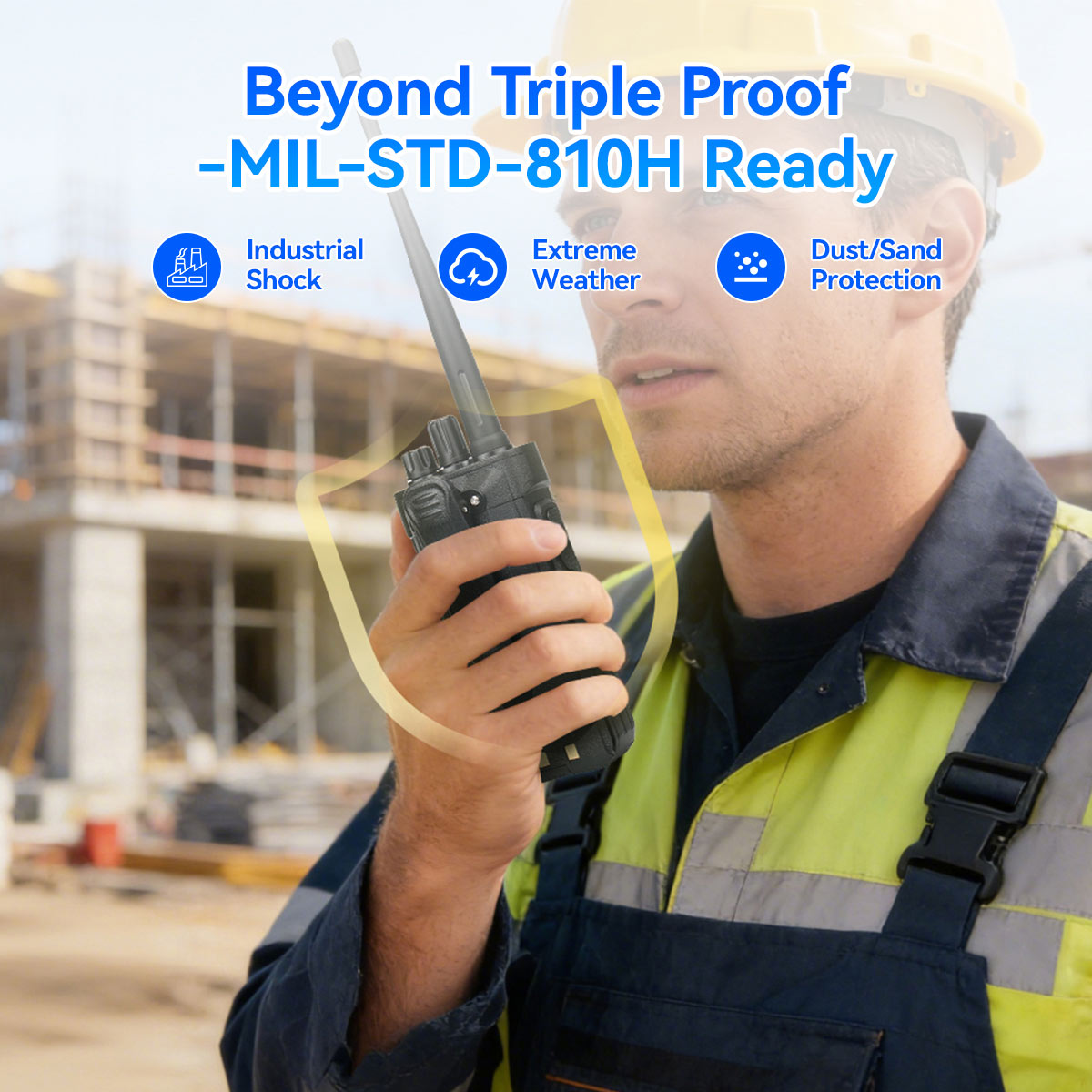
Disaster rescue scenarios are always harsh and unpredictable—heavy rain, mud, dust, and stagnant water can easily damage ordinary communication devices. Built with industrial-grade durability, the HA2 features IP67 full waterproof and dustproof protection. It can resist heavy rain erosion, dust intrusion, and mud pollution, and even withstand 1-meter underwater submersion for 30 minutes. Whether trekking through storm-hit terrains, working in muddy flood zones, or operating in dusty earthquake ruins, the HA2 maintains stable performance when ordinary radios fail.
Advanced GPS/APRS Tracking & Built-In Compass
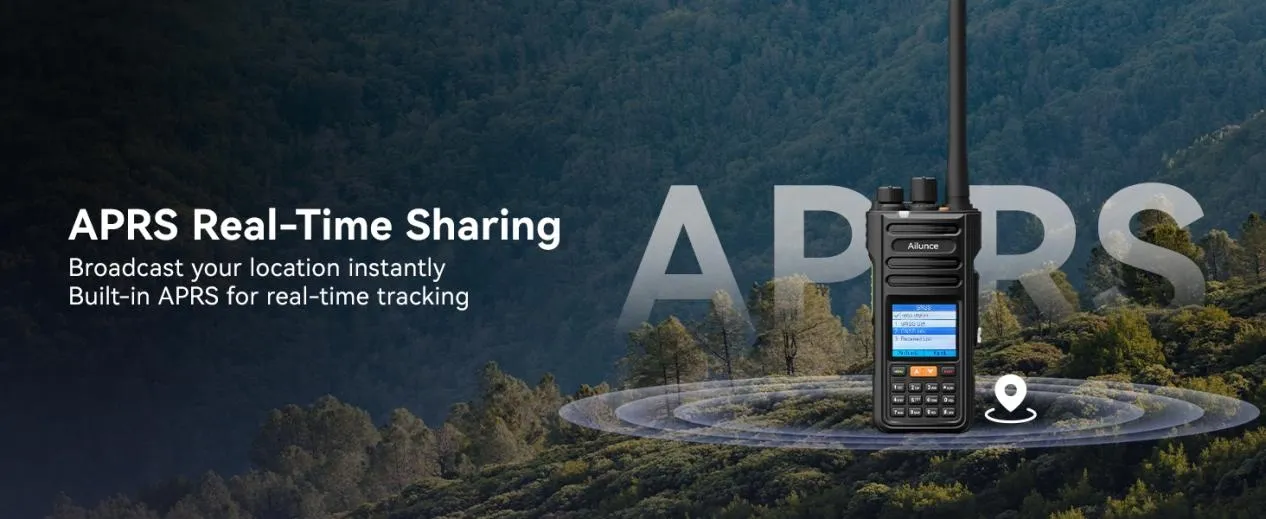 Positioning confusion and team disconnection are major risks in disaster rescue. The HA2 is equipped with integrated high-precision GPS, APRS real-time tracking system, and built-in compass, delivering accurate positioning and direction navigation. In search-and-rescue missions, convoy coordination, and remote terrain exploration, it supports real-time location sharing of team members, allowing commanders to grasp the distribution of rescue forces and trapped personnel at all times. This core feature solves the pain point of blind rescue in complex disaster zones and greatly improves rescue success rates.
Full-Coverage Communication & Monitoring Capabilities
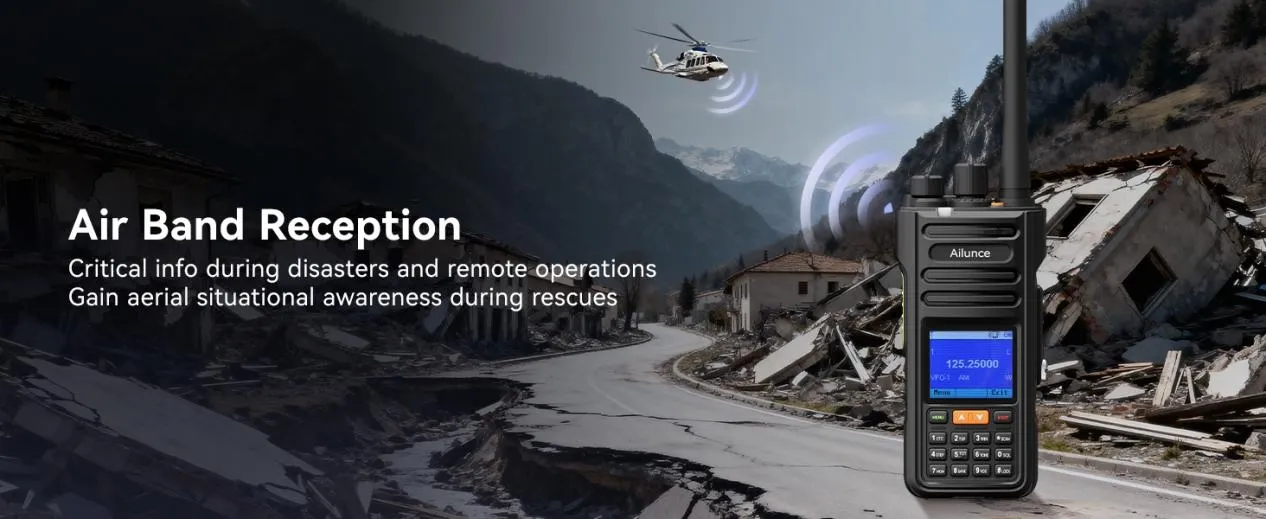 To meet diverse emergency information acquisition needs, the HA2 supports multiple practical functions for disaster scenarios. Its professional airband reception captures clear and stable aviation frequency signals, helping users obtain real-time aviation rescue information and grasp the overall progress of regional emergency operations. The US version is equipped with NOAA real-time weather alerts, which instantly push extreme weather forecasts and early warnings, enabling users to adjust rescue plans and avoid secondary disasters in advance.
Meanwhile, the HA2 comes with 1024 uncrowded channels, effectively avoiding frequency congestion in high-intensity team coordination. It supports flexible custom scanning modes including channel scan, VFO scan, limited-range scan, and CTCSS scan, allowing users to freely monitor required frequencies and ensure unobstructed emergency command transmission.
Long-Endurance Battery & Adaptive Power Control
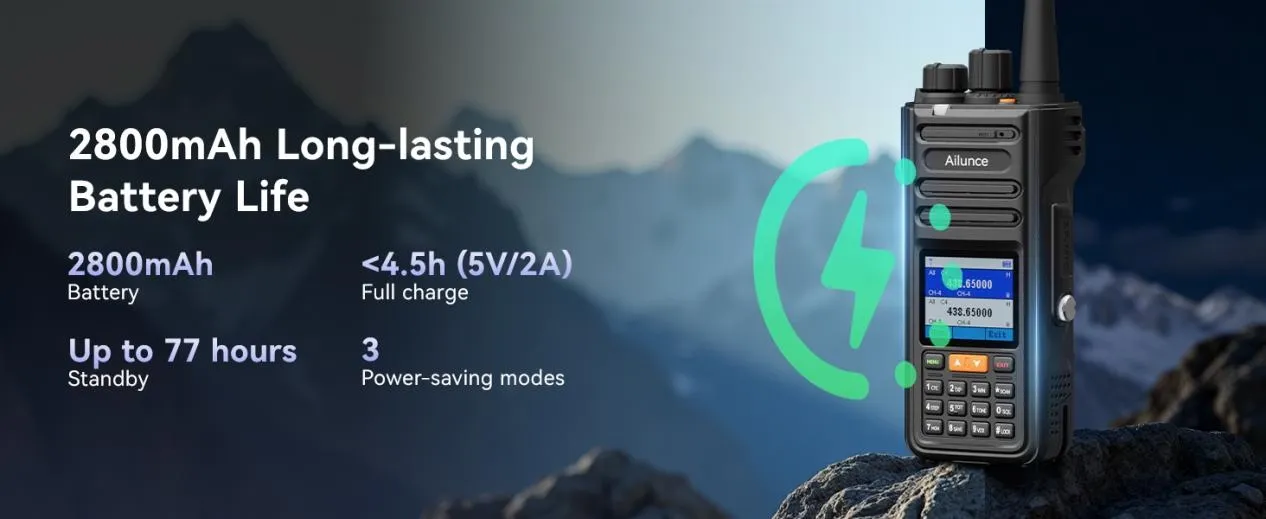
Long-term standby and continuous operation are essential for cross-day disaster rescue. The HA2 is fitted with a 2800mAh removable high-capacity battery, supporting up to 77 hours of ultra-long standby time. It only takes less than 4.5 hours to fully charge, and is equipped with three smart power-saving modes to adapt to different power consumption needs. In addition, three adjustable power levels (High/Medium/Low) allow flexible switching: high power ensures maximum communication range for long-distance rescue coordination, while low/medium power optimizes battery efficiency for close-range continuous operation, perfectly balancing communication effect and endurance.
Humanized Design for All Scenarios
The HA2 focuses on practical operation details in extreme environments. Its high-definition LCD screen with adjustable backlight ensures clear reading under strong sunlight and comfortable viewing at night, adapting to all lighting conditions. The built-in FM radio also provides entertainment relaxation during long-hour rescue shifts, relieving operational fatigue while maintaining communication readiness.
Final Thoughts: HA2 Empowers Reliable Disaster Communication
As the most reliable emergency communication guarantee in the absence of mainstream network infrastructure, ham radio in disaster management plays an irreplaceable life-saving role. The use of ham radio during disaster responses determines the efficiency and safety of rescue operations. The Ailunce HA2 integrates wireless intelligent control, industrial ruggedness, precise positioning, full-frequency monitoring, and ultra-long endurance, perfectly matching all core demands of disaster emergency communication.
For amateur radio enthusiasts, emergency rescue workers, and outdoor adventure lovers, the HA2 is not just a communication device, but a reliable safety lifeline. When disasters come and modern networks collapse, this powerful dual-band ham radio will always keep you connected, informed, and in control.
Leave a Reply





 Google
 Amazon
Comments
No data Yet