
Table of Contents
Hidden Costs Caused by Poor Communication on Construction Projects
- Posted by:Retevis
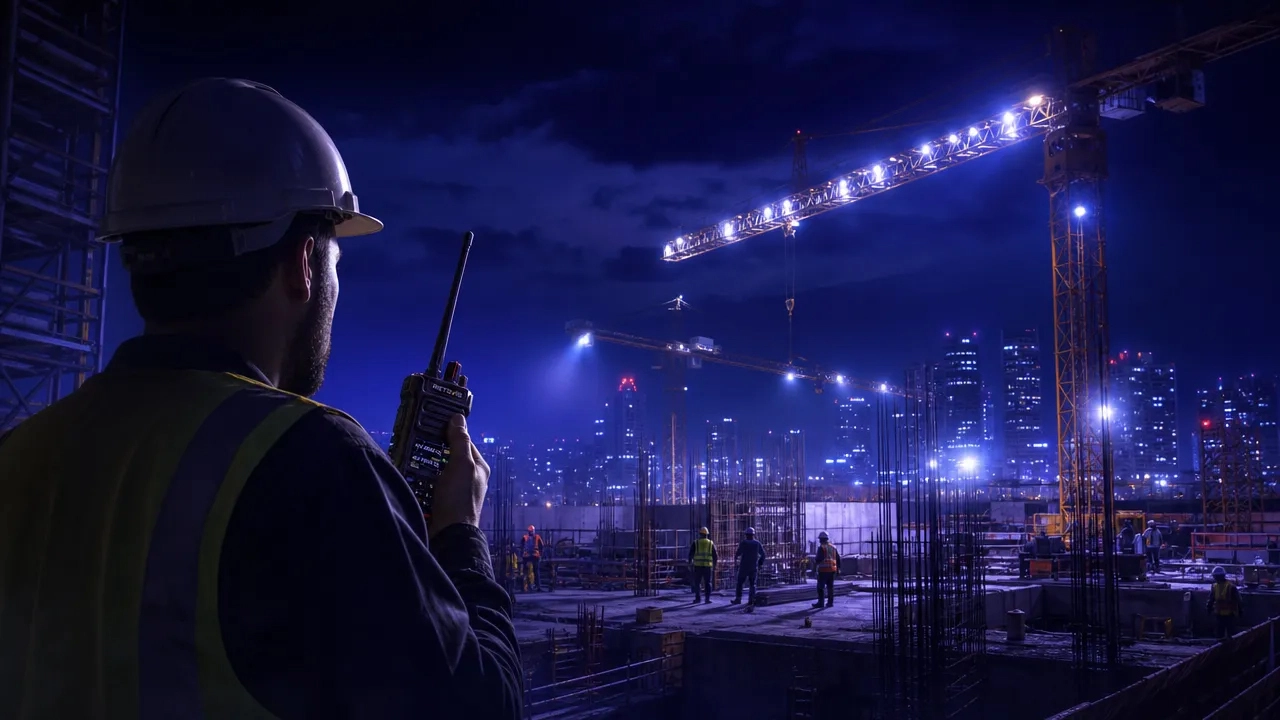
Every construction project carries a baseline risk of cost overrun. What many project managers fail to account for is how much of that risk stems from communication failure. The Project Management Institute's 2013 Pulse of the Profession report found that out of every $1 billion invested in projects, $135 million was at risk, and 56% of that risk—approximately $75 million—was directly attributable to ineffective communications.
This is not a theoretical concern. In construction, communication gaps translate into rework, schedule delays, safety incidents, and equipment downtime. The following sections break down five specific hidden costs of poor job site communication and how a purpose-built two-way radio for construction addresses each one.
Rework and Material Waste: When Instructions Get Lost in Translation
The Construction Industry Institute (CII) documented in its IR-153 research that direct field rework averages 5% of total project cost, with observed cases ranging from 2% to 20%. A 2018 joint study by FMI and PlanGrid attributed $31.3 billion in annual rework costs across U.S. construction to poor communication and inaccessible project information.
Much of this stems from high-noise environments. OSHA standard 29 CFR 1926.52 sets a permissible exposure limit of 90 dBA over an 8-hour shift for construction workers, yet actual job site noise frequently exceeds 100 to 115 dBA from heavy equipment, concrete cutting, and steel fabrication. In these conditions, verbal instructions are misheard, hand signals are misinterpreted, and changes to drawings or specifications arrive too late to prevent incorrect installation.
A construction walkie talkie with active noise cancellation and high-output audio cuts through this ambient noise. Noise reduction walkie talkies are engineered for exactly these conditions, delivering clear voice transmission without requiring workers to leave their stations or repeat messages multiple times.
Schedule Overruns: The Domino Effect of Delayed Information
Research across multiple jurisdictions identifies communication breakdown as a primary driver of construction delay. Studies in Jordan, Malaysia, Ghana, and Nigeria consistently rank factors such as slow information flow, inappropriate communication channels, and message misinterpretation among the top causes of project schedule slippage.
On a multi-story or large-footprint site, a foreman on the fourth floor may need to confirm a material delivery with a superintendent at the gate. Without real-time job site communication, that confirmation travels through runners, phone calls to voicemail, or text messages that go unread for hours. Each delay cascades into the next trade's start time, compressing schedules and inflating labor costs.
Schedule compression also triggers premium labor rates. When a project falls behind, contractors pay overtime or bring in additional crews to recover lost days. The original delay may have been minutes, but the financial impact compounds into thousands of dollars per day.
Equipment Downtime: When Radios Die Before the Shift Ends
Standard commercial walkie talkies offer 4 to 6 hours of battery life under typical use. A construction shift runs 8 to 12 hours. The gap between those two numbers creates a daily operational problem: devices pulled off the line for charging, workers left without communication links, and administrative overhead spent tracking which unit is charged and which is not.
The hidden cost extends beyond the device itself. A crew member without a functioning radio reverts to less efficient communication methods—walking to find a supervisor, shouting across a noisy floor, or delaying a decision until the next break. The labor cost of these workarounds exceeds the cost of a device that lasts the full shift.
For sites running multiple shifts, the problem multiplies. Each handover requires charged devices ready for the incoming crew. A battery that dies at hour seven forces the night shift to start with partial communication coverage, or requires the purchase of additional units to maintain redundancy.
Safety Risks and Compliance Exposure: Communication Gaps That Violate OSHA Standards
OSHA standard 29 CFR 1926.52 requires employers to implement a hearing conservation program when noise exposure reaches 85 dBA and mandates engineering or administrative controls at 90 dBA. Beyond hearing protection, OSHA standard 29 CFR 1926.200 requires clear safety signage and communication protocols on all construction sites.
Failure to maintain effective communication during emergencies exposes contractors to penalties of $16,550 per serious violation and up to $165,514 per willful or repeat violation [7]. More critically, delayed emergency response—whether to equipment failure, structural collapse, or worker injury—amplifies the severity of the incident.
The construction industry accounts for approximately 20% of all worker fatalities in the United States despite representing less than 8% of the workforce. A significant portion of these incidents involve delayed or failed communication during critical moments. The cost of a single serious injury—medical expenses, legal liability, project shutdown, and reputational damage—far exceeds the investment in reliable communication infrastructure.
Team Productivity and Retention: The Human Cost of Communication Friction
The same FMI/PlanGrid study that quantified rework costs also found that construction teams waste nearly 35% of their time on non-productive activities, including searching for project information, resolving conflicts, and dealing with mistakes caused by poor communication.
Workers in high-noise environments spend additional minutes on every exchange—repeating instructions, walking to find a colleague, or waiting for a callback. These minutes compound into hours of lost productivity per week. Over time, the daily friction of unreliable communication contributes to job dissatisfaction and turnover, adding recruitment and training costs to the project's bottom line.
The construction industry already faces a labor shortage. Replacing a skilled worker costs between 50% and 200% of annual salary when factoring in recruitment, onboarding, and lost productivity during the transition. Communication friction accelerates this churn.
What to Look for in a Construction Walkie Talkie
Not every heavy-duty walkie-talkie suits construction work. The following criteria separate purpose-built units from consumer-grade alternatives:
Signal penetration in complex environments: Multi-floor buildings, steel structures, and underground levels demand stronger transmission power than retail-grade radios provide. A two-way radio for construction must maintain clear contact across vertical distances and through physical barriers.
Audio clarity above 100 dBA: Standard speakers fail in high-noise environments. High-wattage audio output and noise-suppression technology are essential for a walkie-talkie for noisy environments.
Full-shift battery life: 8 hours is the minimum; 12+ hours eliminates mid-shift charging and supports overtime without device swaps.
Instant group coordination: One-to-many broadcast capability keeps entire crews synchronized without individual calls. This is critical for real-time job site communication during fast-moving operations.
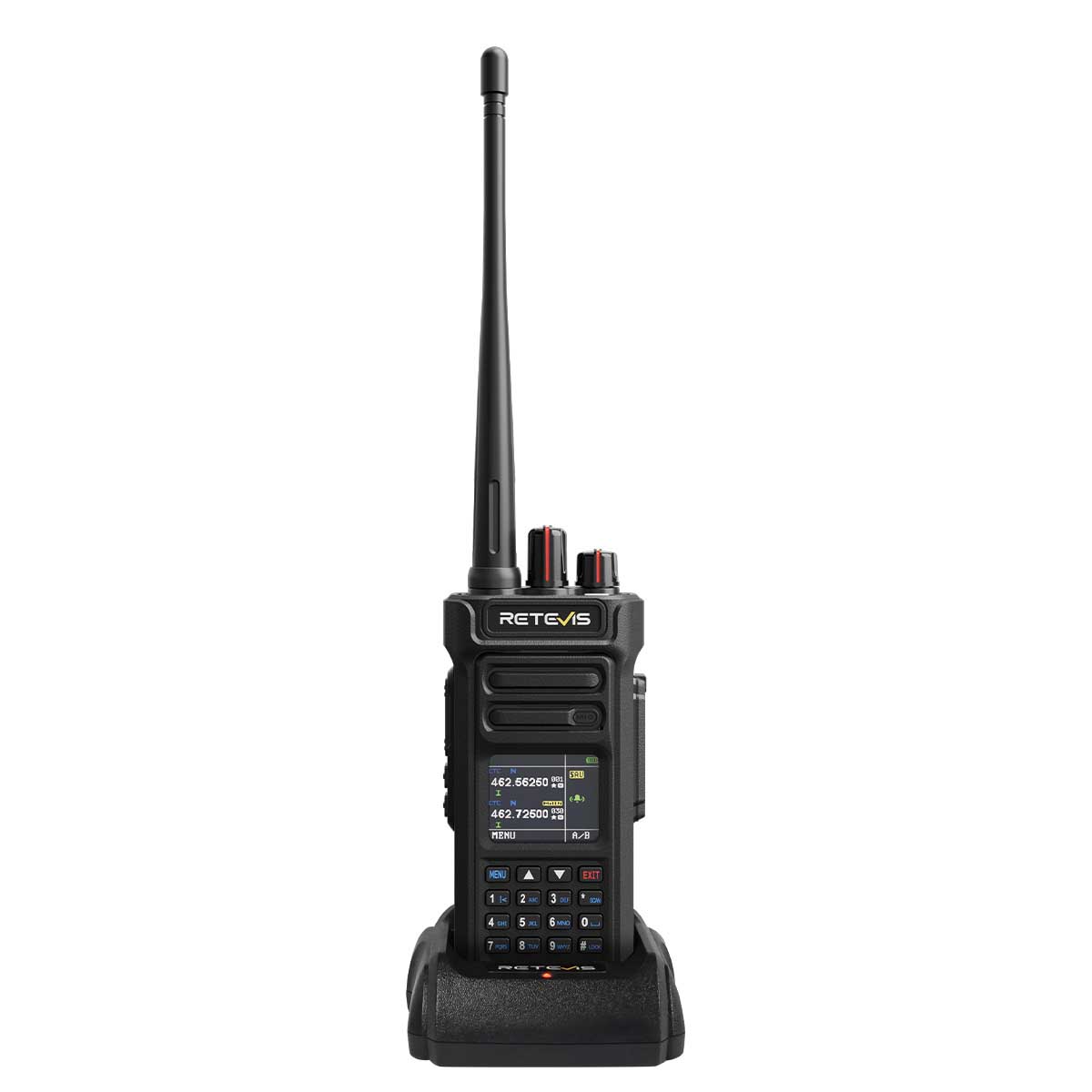
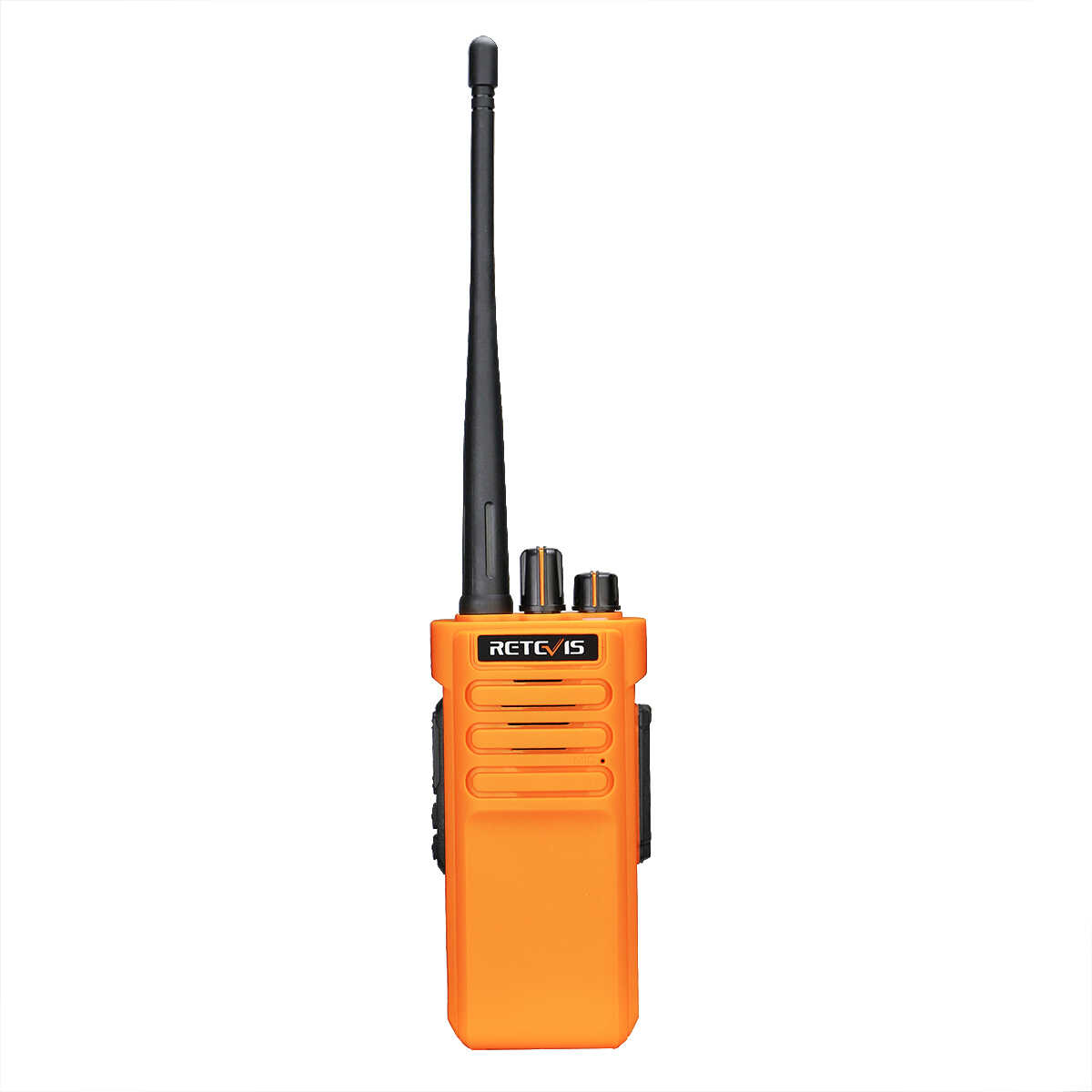
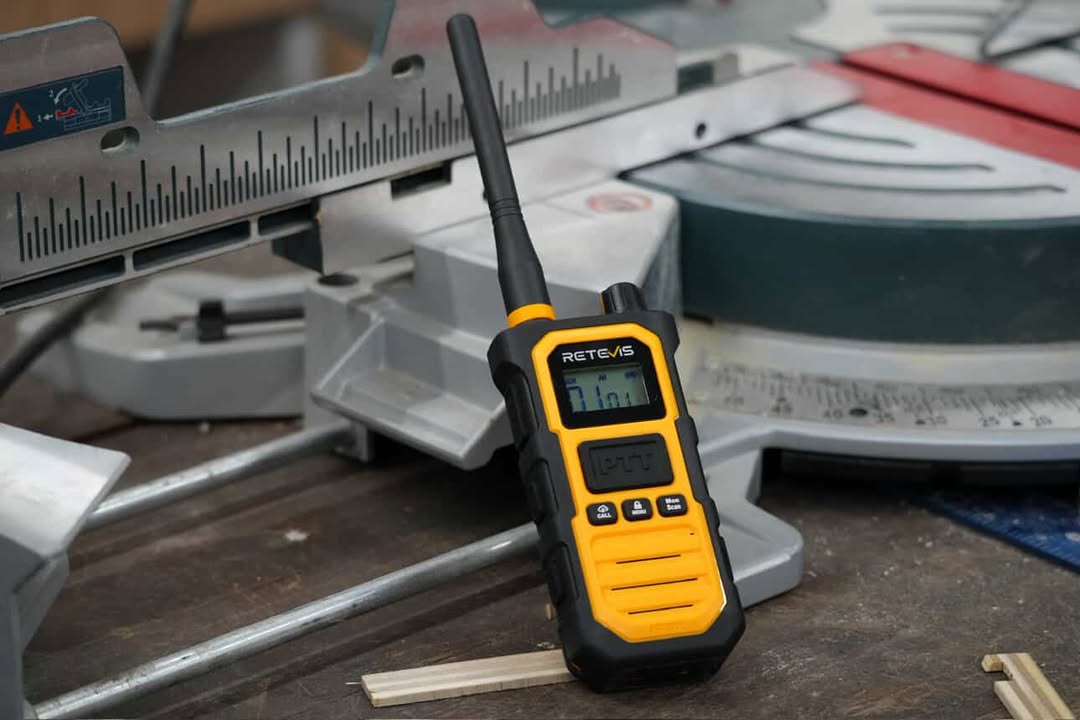
The Retevis RT29S meets each of these requirements. It delivers stable coverage across multi-floor and large-area sites, clear audio in industrial noise above 100 dBA, all-day battery life for continuous shifts, and instant push-to-talk coordination that reduces response time from minutes to seconds.
Reduce Communication Costs on Your Job Site
Rework, delays, safety fines, equipment management, and lost productivity are not separate problems. They share a common root: communication systems that were not built for construction environments.
A purpose-built construction walkie talkie converts these hidden costs into protected budget. The RT29S construction two way radio is designed for the conditions that drive communication costs upward—noise, distance, physical barriers, and long shifts..
Reference
- Project Management Institute. (2013). Pulse of the Profession 2013: The Essential Role of Communications. PMI. https://www.pmi.org/learning/library/en-2013-pulse-high-cost-low-performance-13512
- Construction Industry Institute. (2004). CII IR-153: Quantifying the Cost of Rework in Construction. https://reworkcost.com/cost-of-rework-in-construction
- FMI & PlanGrid. (2018). Construction Disconnected: The High Cost of Ineffective Communication in Construction. https://smartbarrel.io/blog/the-real-cost-of-poor-communication-on-construction-sites/
- U.S. Department of Labor, Occupational Safety and Health Administration. (n.d.). Noise in Construction. 29 CFR 1926.52. https://www.osha.gov/noise/construction
- The impact of poor communication on construction delay. Civil and Environmental Engineering https://reference-global.com/download/article/10.2478/cee-2023-0014.pdf
- Effects of communication on construction project performance. International Journal of Scientific and Research Publications, . https://www.ijsrp.org/research-paper-0324/ijsrp-p14738.pdf
- Construction Site Signage Requirements. https://redsafetyids.com/feeds/blog/construction-site-signage-requirements









 Google
 Amazon
Comments
No data Yet