North American manufacturing facilities face growing communication challenges: reinforced concrete structures, 90+ dB production lines, and extended shift schedules all strain standard two-way radio performance. OSHA data links poor communication to nearly 20% of industrial workplace incidents, driving both safety risks and costly unplanned downtime.
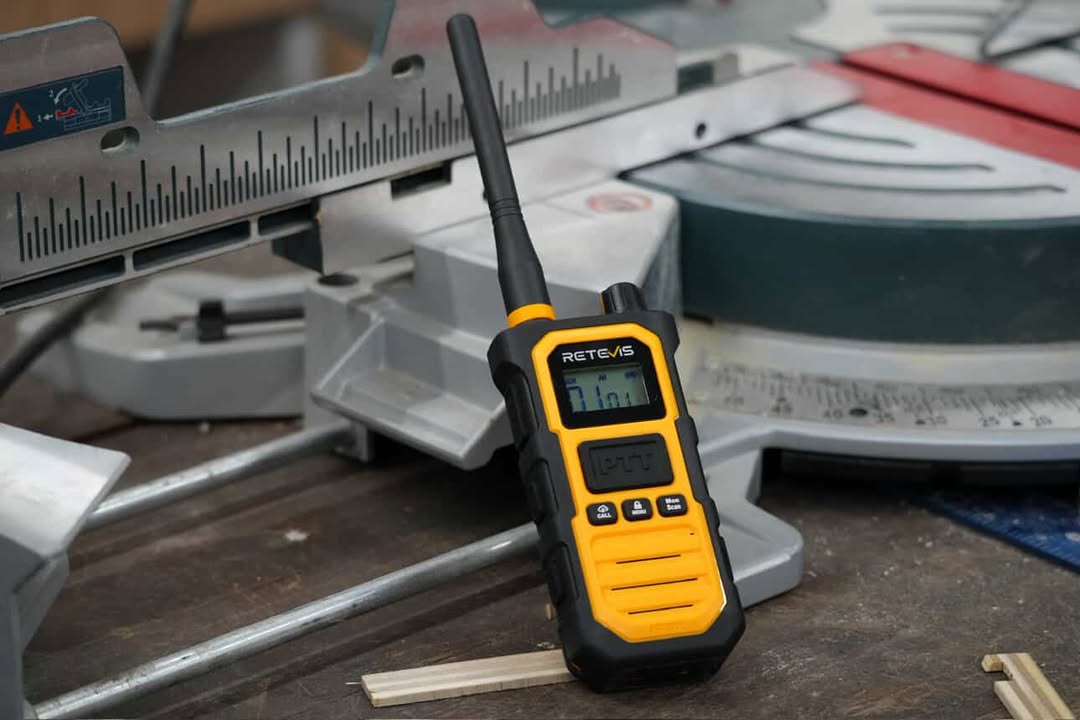
Ahead of NSC Congress & Expo 2026 in Orlando, where EHS and operations leaders will benchmark workplace safety standards, industrial walkie talkie selection has emerged as a high-priority initiative for plant teams. This guide breaks down a 5-point checklist to help you evaluate factory-grade radios against real-world manufacturing conditions, and benchmarks three Retevis RB48 series models as reference solutions.

Steel framing, concrete cores, and high-voltage automation equipment create signal dead zones across multi-story facilities, forcing workers to leave their posts to relay messages and delaying emergency response. Choosing the right power class directly impacts coverage reliability and long-term infrastructure costs.
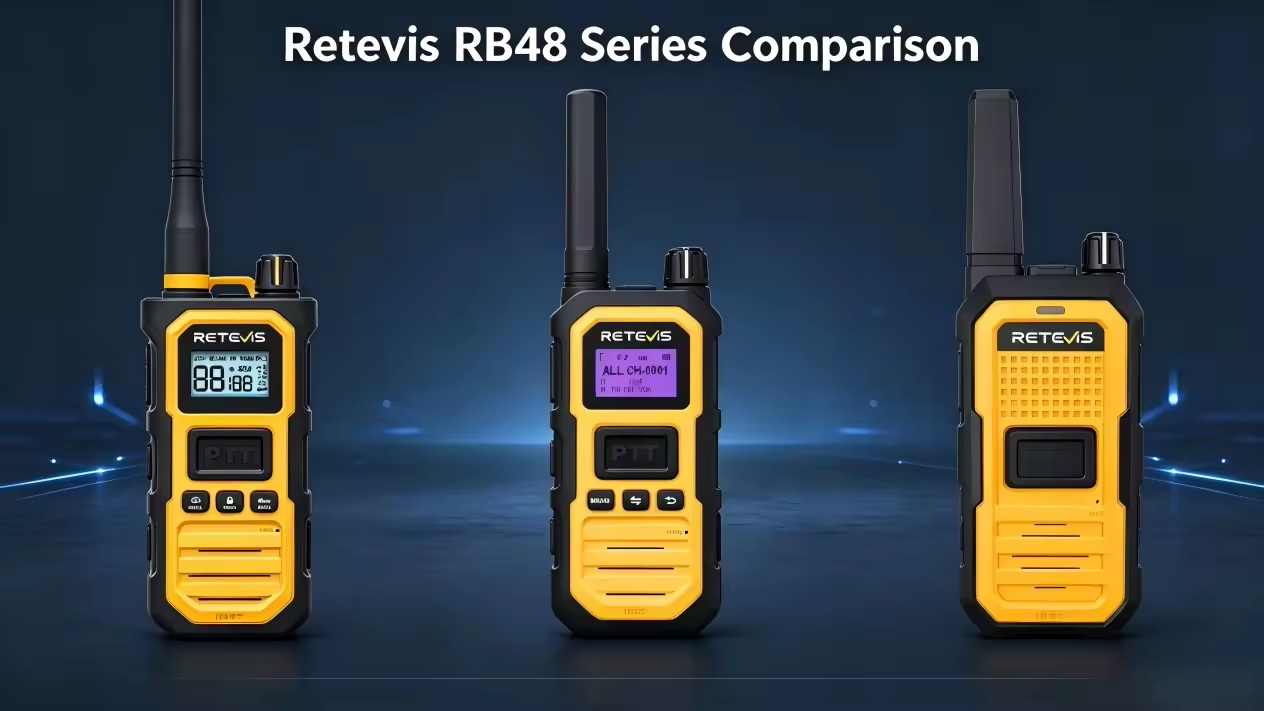
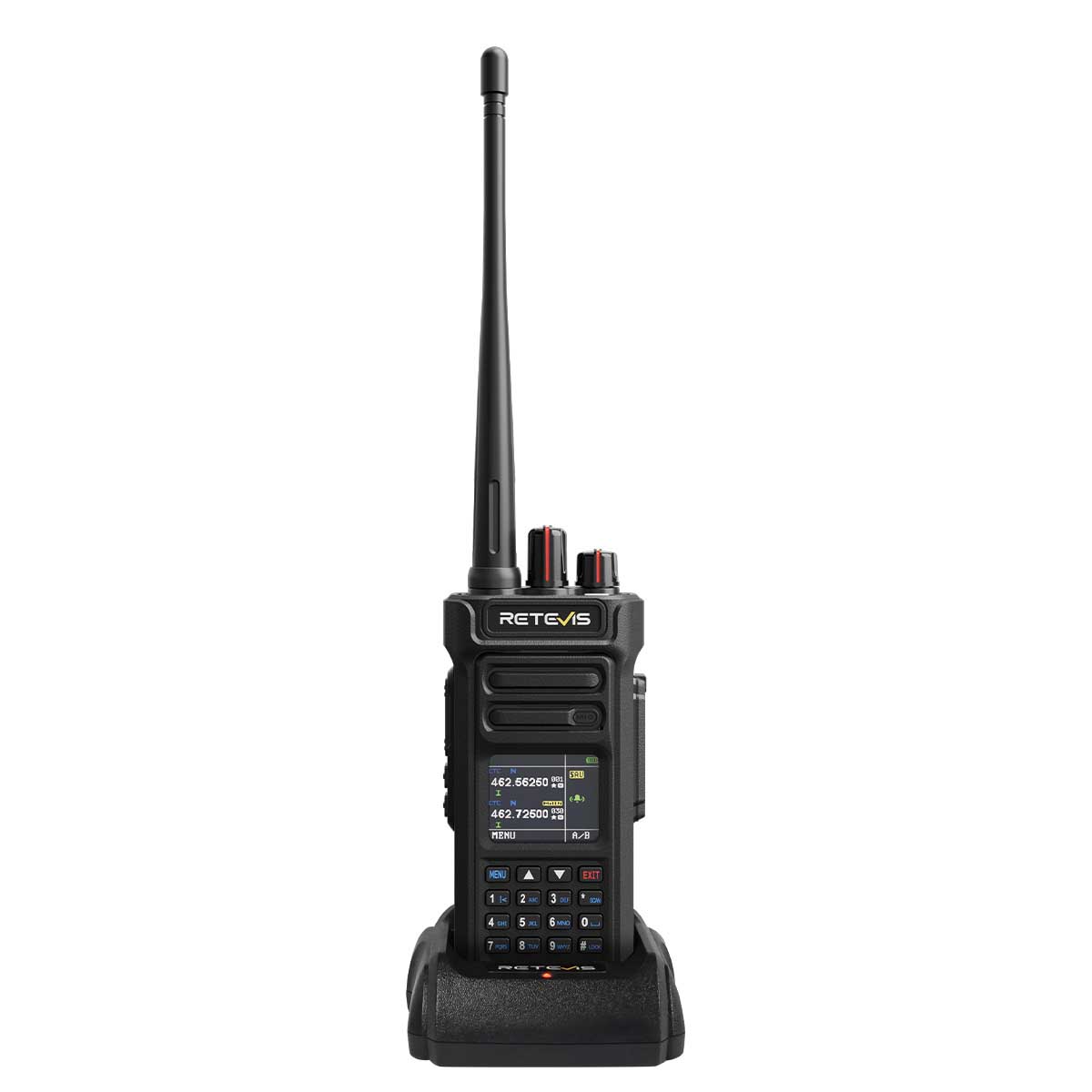
For massive 50+ floor manufacturing campuses and steel mills, the Retevis RB48 Pro delivers 10W of high-power output, penetrating thick structural barriers to cover up to 700,000 square feet without costly repeaters. For multi-zone regulated facilities, the RB48D’s 5W DMR digital walkie talkie for manufacturing supports 512 channels across 16 zones, with AES256 encryption interoperable with Motorola devices for secure, spectrum-efficient communication. For quick-deploy contract teams and medium facilities, the RB48A’s 2W FRS license-free design delivers instant out-of-the-box coverage with zero FCC licensing hurdles.
Stamping presses, milling machines, and conveyor systems create 90–110 dB ambient noise on production floors. Standard consumer radios muffle both background noise and human speech, forcing workers to remove hearing protection to communicate—a major OSHA safety hazard.
The RB48 Pro and RB48D feature AI deep neural network (DNN) noise cancellation trained on over 400 million voice samples, isolating human speech from heavy machinery noise even in 100+ dB stamping bays. This IP67 noise cancelling two way radio preserves natural voice clarity, so workers receive instructions correctly on the first attempt. For general assembly and yard operations, the RB48A’s two-way intelligent noise reduction delivers a 25dB SNR boost on both transmit and receive ends, ensuring clear communication across high-traffic loading docks.
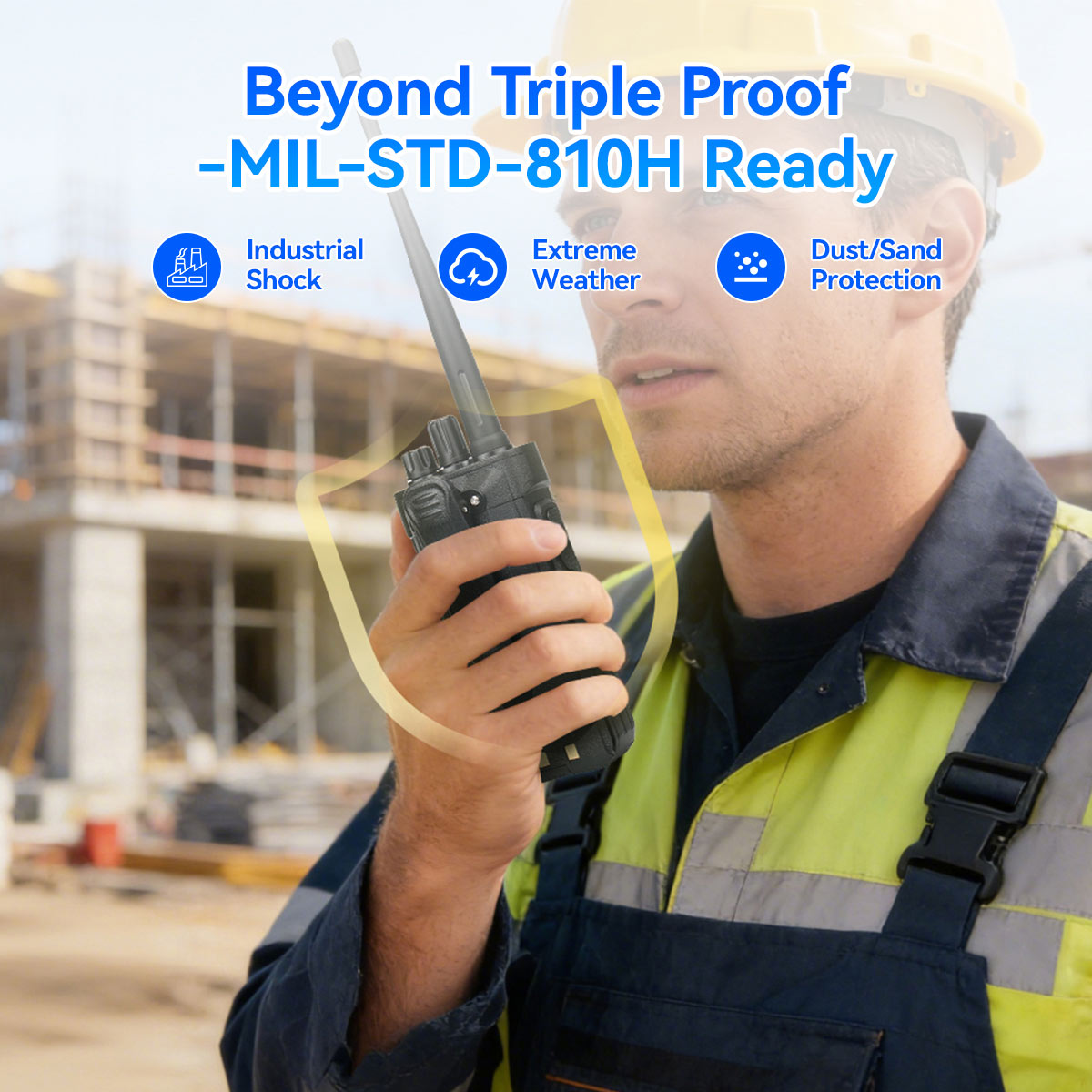
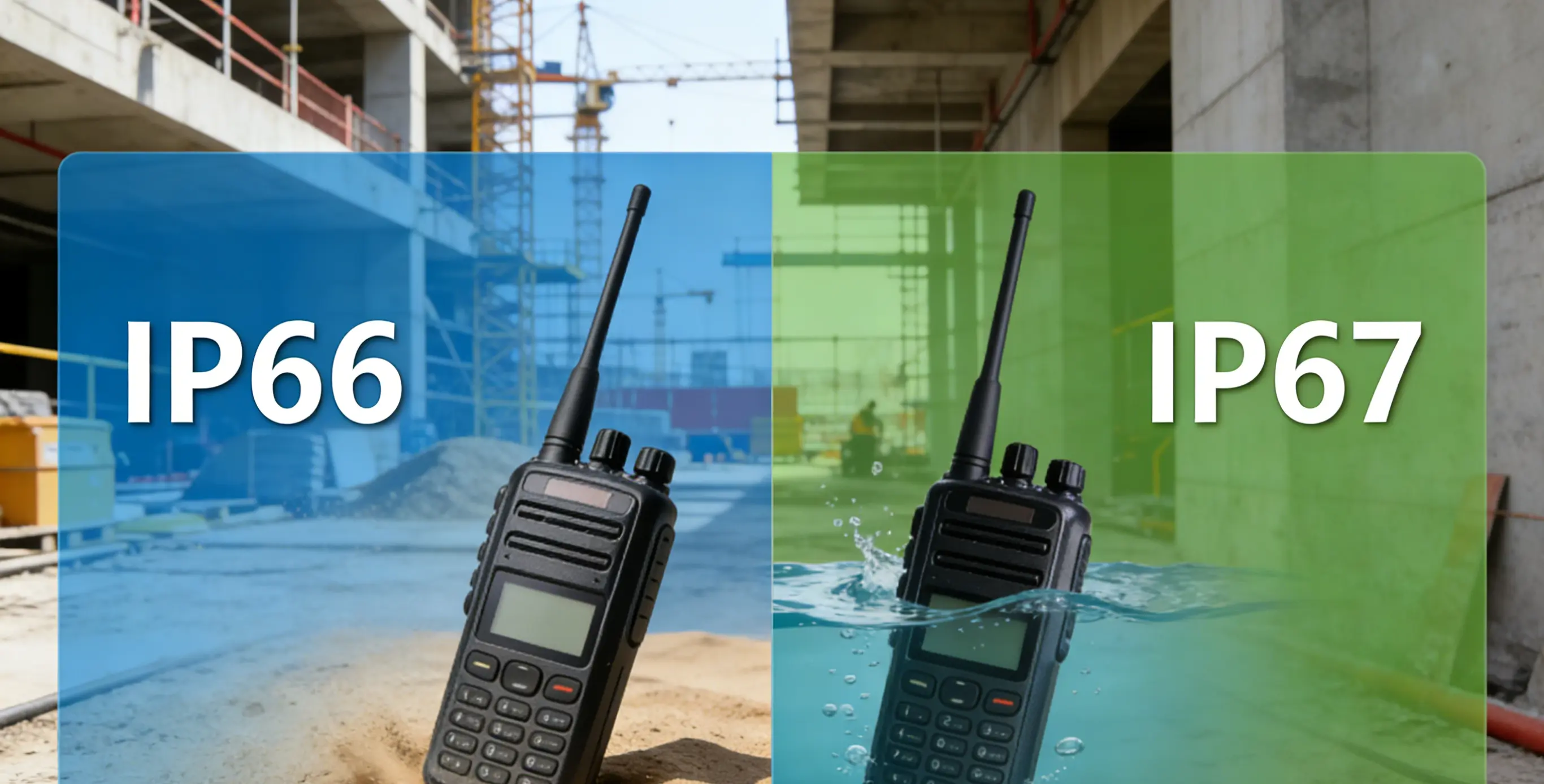
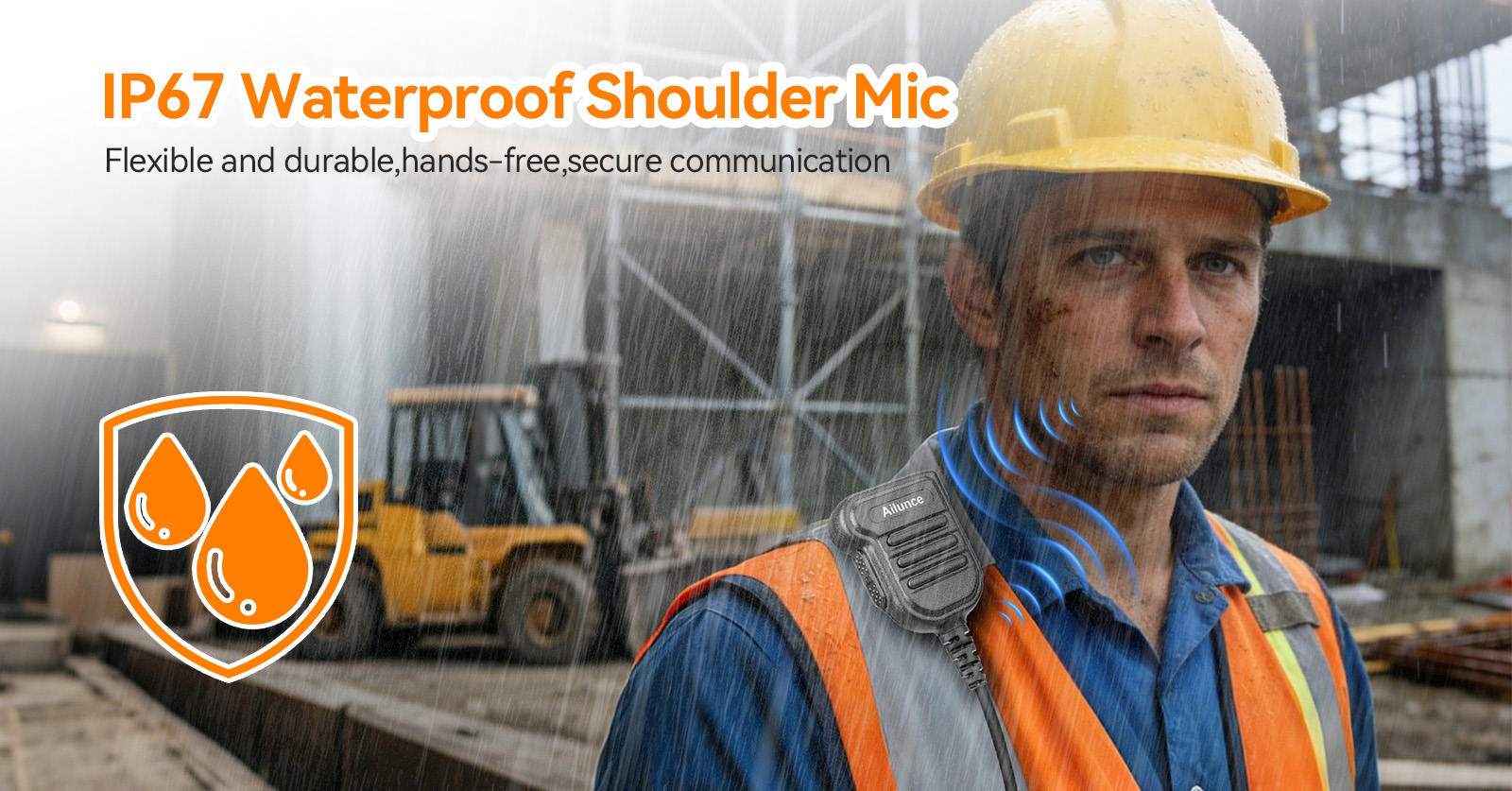
Many radios market “rugged” builds, but IP67 is the baseline for manufacturing environments. The rating means complete dust-tight protection for fabrication shops and foundries, plus 30-minute immersion in 1 meter of water for facilities with daily washdowns or spill-prone production areas.
The RB48A withstands 1,000 consecutive 2-meter drops onto concrete and features a floating design, so it remains functional if dropped into water tanks or cooling ponds. The RB48D operates reliably across -30°C to 60°C, with PC+TPE casing and built-in charging protection for extreme temperature environments from cold storage to foundry floors. The RB48 Pro’s fully sealed IP67 housing resists cutting fluids, lubricants, and dust for 24/7 heavy manufacturing use.
12-hour shifts, double shifts, and unplanned overtime are standard across North American manufacturing. A radio that dies mid-shift creates communication gaps during handoffs and increases risks for lone workers. Fleet managers also need scalable charging solutions that avoid cable clutter and electrical safety hazards.
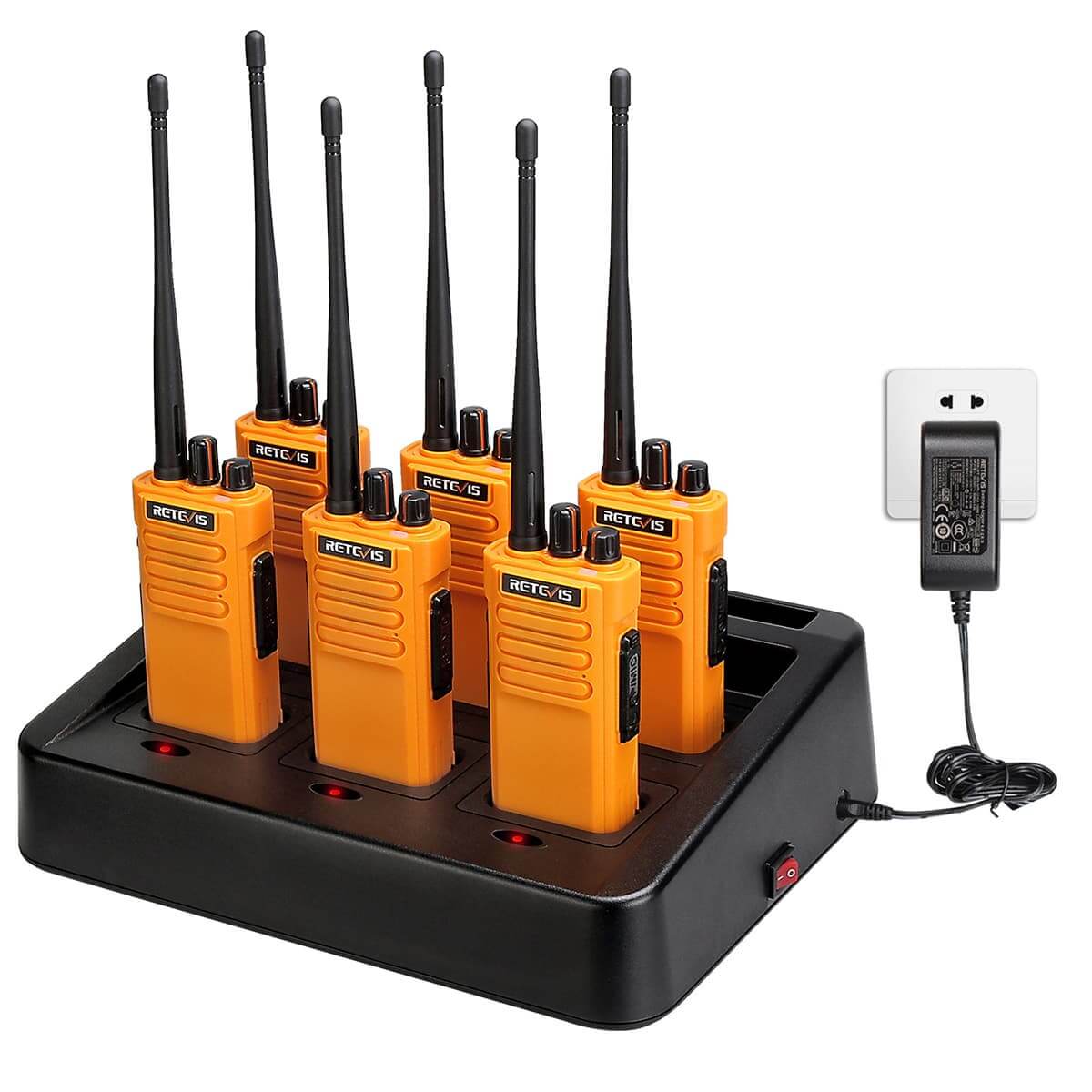
The RB48A delivers 23 hours of active use under standard duty cycles, ideal for double shifts with no mid-shift battery swaps. The RB48 Pro’s 2800mAh battery provides 18+ hours of active runtime and 70 hours of standby, with multi-unit charging banks that streamline shift handoffs by charging six+ radios simultaneously. The RB48D’s 2000mAh battery delivers 14 hours of continuous use, with protected charging circuitry that prevents overheating during extended charging periods.
OSHA’s lone worker guidelines and NSC’s emergency response best practices depend on immediate, reliable communication. Industrial radios with integrated safety features turn everyday communication tools into life-saving devices that support compliance and reduce incident response time.
The RB48D’s Man Down fall detection uses precision angle sensing to trigger automatic alerts if a worker in a high-risk zone (confined spaces, elevated platforms) falls or becomes unresponsive, directly supporting OSHA lone worker requirements. Both the RB48 Pro and RB48A include one-touch emergency sirens and group alerting for plant-wide emergencies such as fires or chemical spills. The RB48A adds NOAA weather channels for real-time severe weather alerts for outdoor yard teams.
|
Model |
Best For Scenario |
Power / Mode |
Noise Cancellation |
IP Rating & Build |
Battery Runtime |
|
RB48 Pro |
Large multi-story heavy manufacturing |
10W High-Power |
AI DNN (400M+ samples) |
IP67 fully sealed |
18h active / 70h standby |
|
RB48D |
High-risk multi-zone regulated facilities |
5W DMR Digital + Analog |
AI Reduction + DSP |
IP67 PC+TPE (-30°C to 60°C) |
14h continuous / 30h standby |
|
RB48A |
Contract crews & quick-deploy teams |
2W FRS License-Free |
25dB Two-Way SNR |
IP67 floating (1000 x 2m drops) |
23h active |
Effective frontline communication is foundational to both worker safety and operational uptime. This 5-point framework gives plant leaders a structured, use case-based approach to industrial walkie talkie selection, focused on real manufacturing conditions rather than generic marketing claims.
For teams attending NSC 2026 in Orlando October 19–22, visit the Retevis showcase to see the full RB48 lineup in action, speak with industrial communication specialists, and test performance in simulated manufacturing environments. If you cannot attend the expo, request an on-site facility trial to test these radios in your own plant, or download the full product catalog and custom fleet quote to start upgrading your communication system.
No data Yet






 Google
 Amazon