

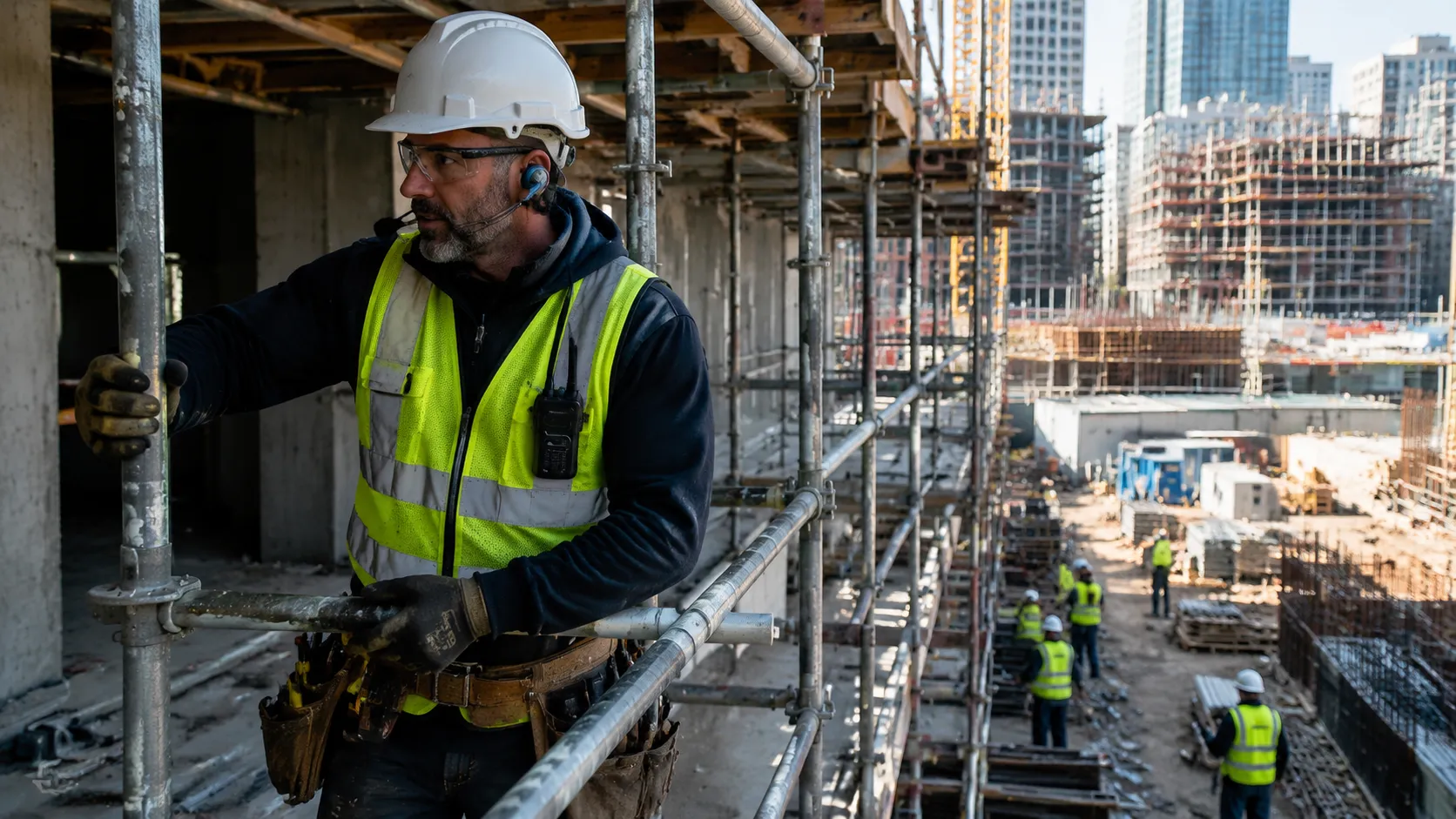
On a busy construction site, communication often happens in the middle of action—while climbing scaffolding, guiding a load, or carrying materials with both hands occupied. In these moments, stopping to press a radio button is not always practical. That is where VOX (voice-activated transmission) for hands-free communication becomes especially useful.
With the right setup, workers can speak naturally into a headset and the radio transmits automatically. For crews working at height, moving materials, or wearing full PPE, a hands-free walkie-talkie for busy workers can improve both convenience and coordination. More importantly, it can help communication fit the job instead of interrupting it.
What Is VOX and How Does It Work?
VOX (voice-activated transmission) for hands-free operation is a radio feature that starts transmitting when the user speaks. Instead of pressing push-to-talk, the radio detects speech through the microphone and opens the channel automatically.
In simple terms, VOX works like this:
|
Step |
What Happens |
|
1 |
The radio listens through the mic or headset |
|
2 |
It detects the user’s voice above a set sensitivity level |
|
3 |
The transmission starts automatically |
|
4 |
The transmission ends shortly after the user stops speaking |
This is why VOX is popular in hands-busy work environments. A walkie-talkie headset for hands-free use allows workers to stay connected while climbing, lifting, or handling tools.
Quick takeaway: VOX is best understood as “speak to transmit” instead of “press to transmit.”
Why Hands-Free Communication Matters in Construction
Construction teams work in constantly changing conditions. Workers may be:
- climbing scaffolding or ladders
- handling long materials
- guiding hoists or deliveries
- wearing gloves and hard hats
- moving across wide or elevated work areas
In these situations, reaching for a handheld radio can break workflow and sometimes reduce safety. A hands-free communication device for workers helps crews communicate while keeping attention on the task.
Typical construction scenarios where VOX helps:
- Scaffold installers coordinating from different levels
- Roofers speaking across a large roof deck
- Ground crews and elevated crews managing material movement
- Maintenance teams working in tight industrial spaces
- Foremen communicating while inspecting active work areas
Where VOX Makes the Biggest Difference
Not every role on a jobsite needs voice activation, but some benefit from it more than others.
1. Scaffolding and Elevated Access
Workers on scaffolding often need both hands for climbing, balance, and tool handling. A hands free radio for helmet setup can make communication easier without interfering with movement.
2. Material Handling and Lifting
When crews are guiding loads, passing materials, or coordinating deliveries, speed matters. A hands-free radio for busy workers can reduce delays caused by reaching for a radio.
3. Roofing and Exterior Work
Roofing crews often cover large spaces and work in wind-exposed areas. A hands free walkie talkie for helmet can help maintain communication while workers stay focused on movement and footing.
4. Industrial Construction and Maintenance
In industrial environments, workers may wear hearing protection, hard hats, and other PPE for long periods. That is where headsets for industrial two-way radios can play an important role.
Benefits of VOX Radios for Construction Workers
A properly configured VOX system offers more than convenience. It can improve the way crews communicate throughout the day.
Key benefits at a glance
|
Benefit |
Why It Matters on Site |
|
Hands-free operation |
Workers do not need to press a radio button |
|
Faster coordination |
Messages can be sent immediately |
|
Better workflow |
Less interruption during active tasks |
|
PPE compatibility |
Easier use with gloves, helmets, and safety gear |
|
Practical for work at height |
Supports communication without sacrificing grip or balance |
A closer look at the benefits
Improved safety habits
If a worker is climbing or stabilizing themselves, keeping both hands available is important. A hands free two way radio for helmet can support safer communication while working at height.
Better productivity
Quick communication reduces repeated instructions and keeps teams moving efficiently. On active jobsites, even small communication delays can create larger workflow problems.
Less radio handling
A hands-free walkie-talkie for busy workers reduces the need to constantly grab, unclip, or reposition a radio.
VOX Is Useful—But Not Perfect
To make the article credible and helpful, it is important to be realistic: VOX is not the best fit for every environment.
Common challenges on jobsites:
- loud equipment noise
- wind exposure
- cutting and grinding sounds
- false triggering from background noise
- poor mic placement
- unclear speech in high-noise zones
If VOX sensitivity is set too high, the radio may open from machinery noise. If it is set too low, it may miss the worker’s voice.
Important: VOX performance depends heavily on the headset, microphone placement, and the actual noise conditions on site.
That is why a quality walkie talkie headset for construction is often just as important as the radio itself.
VOX vs Push-to-Talk: Which One Should Construction Teams Use?
Many buyers ask whether VOX is better than traditional push-to-talk. The answer depends on the task.
Quick comparison
|
Feature |
VOX |
Push-to-Talk |
|
Hands-free use |
Excellent |
Limited |
|
Control over transmission |
Moderate |
High |
|
Performance in very noisy areas |
Can vary |
Usually better |
|
Ease during climbing or carrying |
Excellent |
Less convenient |
|
Learning curve |
Slightly higher |
Easy |
|
Best for |
Busy hands, elevated work, active coordination |
High-noise zones, precise radio discipline |
Practical conclusion
For many teams, the best solution is not choosing one over the other—it is using radios that support both. VOX works well when hands-free communication matters most, while push-to-talk remains useful in very loud environments.
How to Choose the Right Hands-Free Radio Setup
A successful VOX setup includes the radio, the headset, and the way they fit into PPE use on site.
What to look for
1. VOX-compatible radios
Choose radios with:
- adjustable VOX sensitivity
- transmission delay settings
- rugged construction
- clear audio output
2. The right headset
A walkie-talkie headset for site use should be selected based on the actual work environment, not just price.
Common options include:
- in-ear earpieces
- over-the-head headsets
- helmet-compatible accessories
- boom microphone systems
- headsets for construction two-way radios
3. Helmet and PPE compatibility
A hands free walkie talkie for helmet should fit comfortably with:
- hard hats
- eye protection
- ear protection
- gloves
- dust masks or face coverings
4. Noise management
In high-noise environments, look for:
- noise-reducing microphones
- secure mic placement
- stable earpiece fit
- wind protection
Best Practices for Setting Up VOX on a Jobsite
Even the best equipment needs the right setup. VOX should always be tested in real field conditions.
VOX setup checklist
|
Checklist Item |
Why It Matters |
|
Test sensitivity on site |
Indoor tests do not reflect real jobsite noise |
|
Position mic correctly |
Poor placement reduces voice pickup |
|
Check fit with helmet and PPE |
Comfort and stability affect real-world use |
|
Train workers to speak clearly |
VOX performs better with short, direct messages |
|
Keep push-to-talk available |
Useful as a backup in loud conditions |
Field tip
A radio setup that works during early framing may need adjustment later when saws, grinders, or heavy equipment become more active on site.
What Makes a Good Walkie-Talkie Headset for Construction?
A walkie-talkie headset for construction should be designed for more than just audio clarity. It has to survive the jobsite and stay comfortable through a full shift.
Essential features
- hard-hat compatibility
- secure fit during movement
- clear incoming audio
- durable cable design
- noise-reducing microphone
- comfort for long wear
- connector reliability
- support for rugged site use
Construction buyers should prioritize:
- durability
- PPE compatibility
- microphone quality
- comfort over long hours
- reliable connection to the radio
For teams in industrial settings, headsets for industrial two-way radios may offer better long-term performance than basic light-duty accessories.
Is VOX Right for Your Crew?
If your team works at height, carries materials, climbs regularly, or needs fast coordination during active tasks, VOX may be a very practical choice. A hands free radio for helmet setup can help make communication more natural for workers who do not have a free hand available.
Still, the right answer depends on your site conditions.
Ask these questions first:
- Is the work area moderately noisy or extremely noisy?
- Do workers wear hard hats and hearing protection full-time?
- Are both hands often occupied?
- Does the crew need frequent short communication?
If the answer is yes to most of these, a hands-free communication device for workers could be a strong fit—especially when paired with the right headset and tested properly on-site.
Final Thoughts
On scaffolding, roofs, lifts, and active work zones, communication needs to be fast, simple, and practical. VOX (voice-activated transmission) for hands-free communication gives construction crews a way to stay connected without constantly reaching for the radio.
It is not a perfect solution for every environment, especially in extreme noise. But when matched with a quality walkie talkie headset for construction, proper VOX settings, and helmet-compatible gear, it can be a valuable tool for modern jobsites.
For contractors looking for a hands-free walkie-talkie for busy workers, the smartest approach is to think beyond the radio alone. Focus on the full system: radio, headset, helmet fit, noise level, and daily work habits. That is what turns a VOX feature into a communication advantage.
FAQ
What does VOX mean on a two-way radio?
VOX stands for voice-activated transmission. It allows the radio to transmit automatically when the user speaks.
Are VOX radios good for construction sites?
Yes, especially for workers who need both hands free. They are particularly useful on scaffolding, roofs, and active material-handling tasks.
Can I use a helmet headset with a VOX radio?
Yes. Many crews use a hands free two way radio for helmet or other helmet-compatible headset systems.
Does VOX work in noisy construction environments?
It can, but results depend on headset quality, microphone placement, and the correct sensitivity settings.
What is the best headset type for construction radios?
The best option depends on the job, but many crews look for headsets for construction two-way radios that are rugged, helmet-compatible, and designed for noisy environments.



 Google
 Amazon
Comments
No data Yet