

Table of Contents
Overcoming Concrete and Steel: Two-Way Radios for Multi-Floor Construction
- Posted by:Retevis
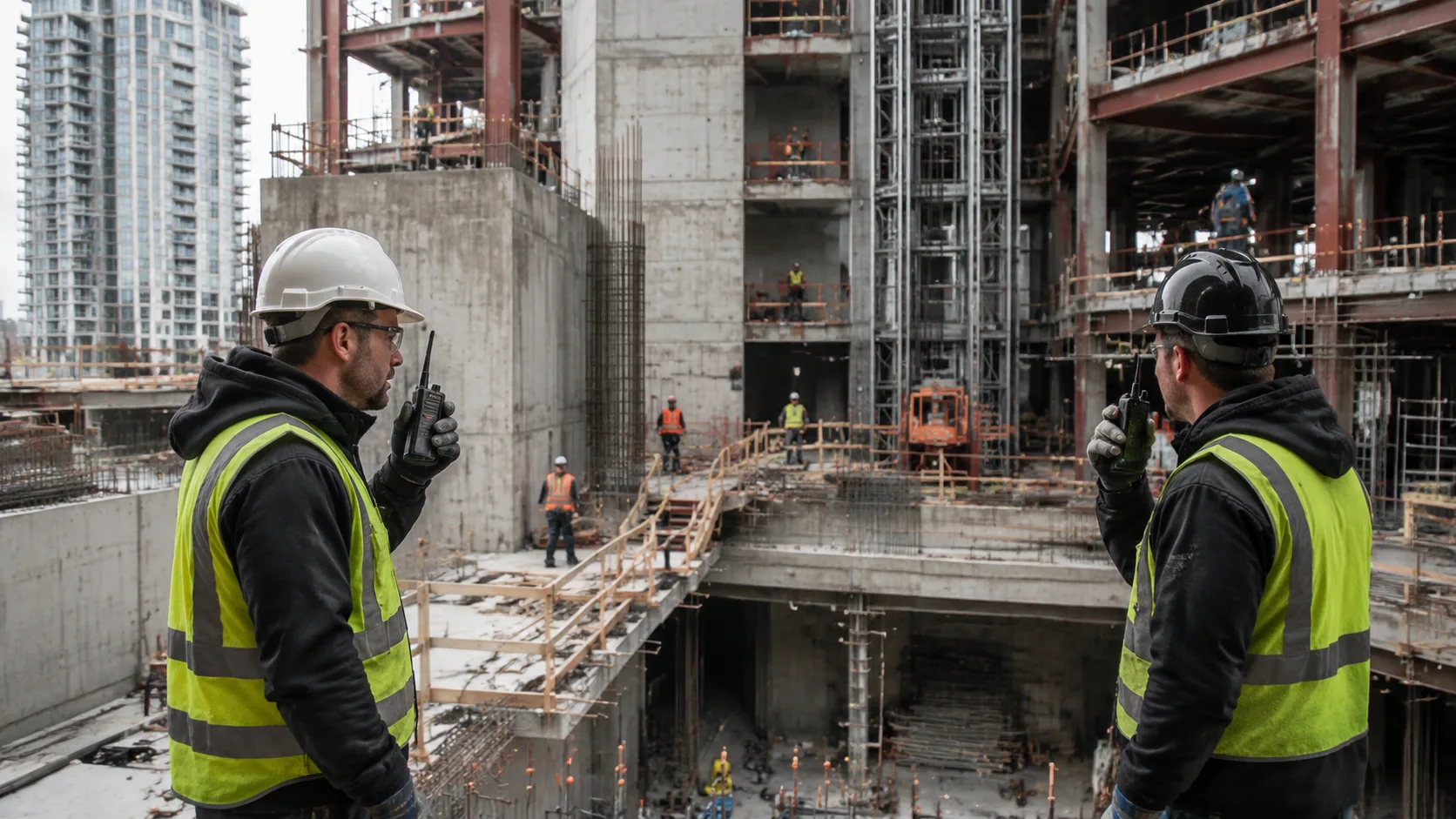
Choosing the right multi floor building walkie talkies is critical for modern construction projects. In high-rise buildings, communication affects safety coordination, lifting operations, material movement, and daily workflow between different crews.
A radio that performs well in an open field may struggle inside buildings when signals must pass through concrete walls, reinforced slabs, steel structures, and multiple floors.
For contractors and site managers, the key challenge is not the advertised mileage on a radio package. The real question is:
Can the radio maintain clear communication across multiple floors, through concrete barriers, and in the areas where workers actually operate?
This is why selecting the right two way radios for high rise buildings requires understanding building materials, frequency selection, and system design.
Why Are Two-Way Radios Difficult to Use in Concrete and Steel Buildings?
A walkie talkie for multi story buildings faces different challenges compared with outdoor communication environments.
Modern buildings contain many materials that weaken or reflect radio signals.
Concrete Walls and Rebar Reduce Signal Strength
Concrete is one of the biggest obstacles for radio communication. Thick walls, floor slabs, and structural cores absorb signal energy.
Reinforced concrete creates additional challenges because metal rebar can reflect and scatter radio waves, reducing communication reliability.
This is why many users find that walkie talkies through concrete walls do not achieve the same range as open-area testing.
Steel Structures Create Reflection and Dead Zones
Steel framing, elevator shafts, metal equipment, and mechanical rooms can cause signal reflections. These conditions may result in:
- Weak audio
- Intermittent communication
- Dead zones
- Reduced range between floors
For buildings with heavy steel structures, radio range for steel buildings depends on the actual layout rather than the radio’s maximum distance rating.
Common problem areas include:
- Underground parking areas
- Stairwells
- Elevator shafts
- Mechanical rooms
- Concrete cores
- Interior service corridors
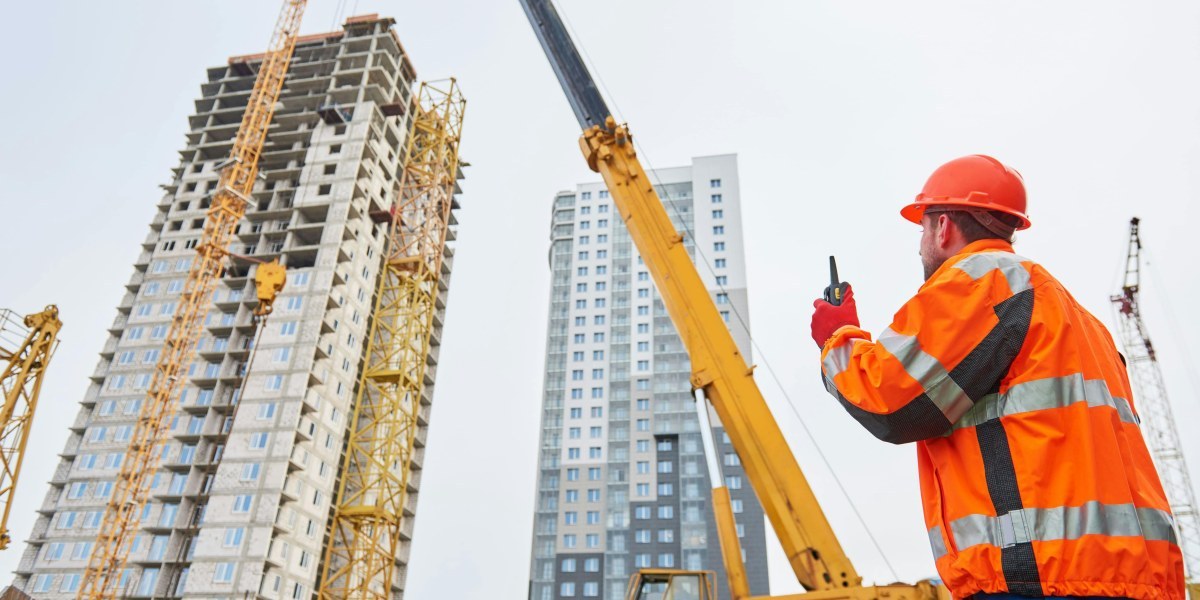
UHF vs VHF Radios: Which Is Better for Multi-Floor Construction?
One of the most common questions from construction teams is UHF vs VHF radios: which option works better inside buildings?
The answer depends on the environment.
UHF Radios for Indoor Construction and High-Rise Buildings
For most high-rise and multi-floor construction projects, UHF radios are usually the preferred choice.
UHF signals generally perform better around obstacles and inside buildings because they are better suited for environments with:
- Concrete walls
- Steel structures
- Multiple floors
- Dense interior layouts
UHF radios are commonly used for:
- High-rise construction sites
- Warehouses
- Factories
- Hospitals
- Commercial buildings
When choosing the best walkie talkie for inside buildings, UHF is often the first option to consider.
VHF Walkie Talkies for Open Areas
A VHF walkie talkie can be effective in open environments where there are fewer physical barriers.
VHF may work well for:
- Large outdoor construction areas
- Rural projects
- Long line-of-sight communication
However, for steel and concrete buildings, the discussion of VHF vs UHF radio should focus on actual site conditions instead of theoretical range.
Frequency alone does not determine performance. Antenna design, radio power, building structure, and repeater support also influence coverage.
What Features Should Construction Teams Look for in Multi-Floor Building Radios?
The best construction site radios are not simply the highest-powered models. They should match the challenges of the project environment.
1. Strong Indoor Signal Performance
Professional two-way radios designed for industrial use provide more reliable communication than basic consumer radios.
For projects involving concrete, steel, and multiple floors, choose radios that support stable communication in challenging environments.
2. Clear Audio in Noisy Construction Areas
Construction sites include heavy machinery, generators, drilling, and equipment movement.
Important features include:
- High-volume speakers
- Noise reduction technology
- Compatible audio accessories
- Clear microphone performance
3. Long Battery Life for Full Work Shifts
Large projects often operate with multiple teams and extended shifts.
Consider:
- High-capacity batteries
- Spare batteries
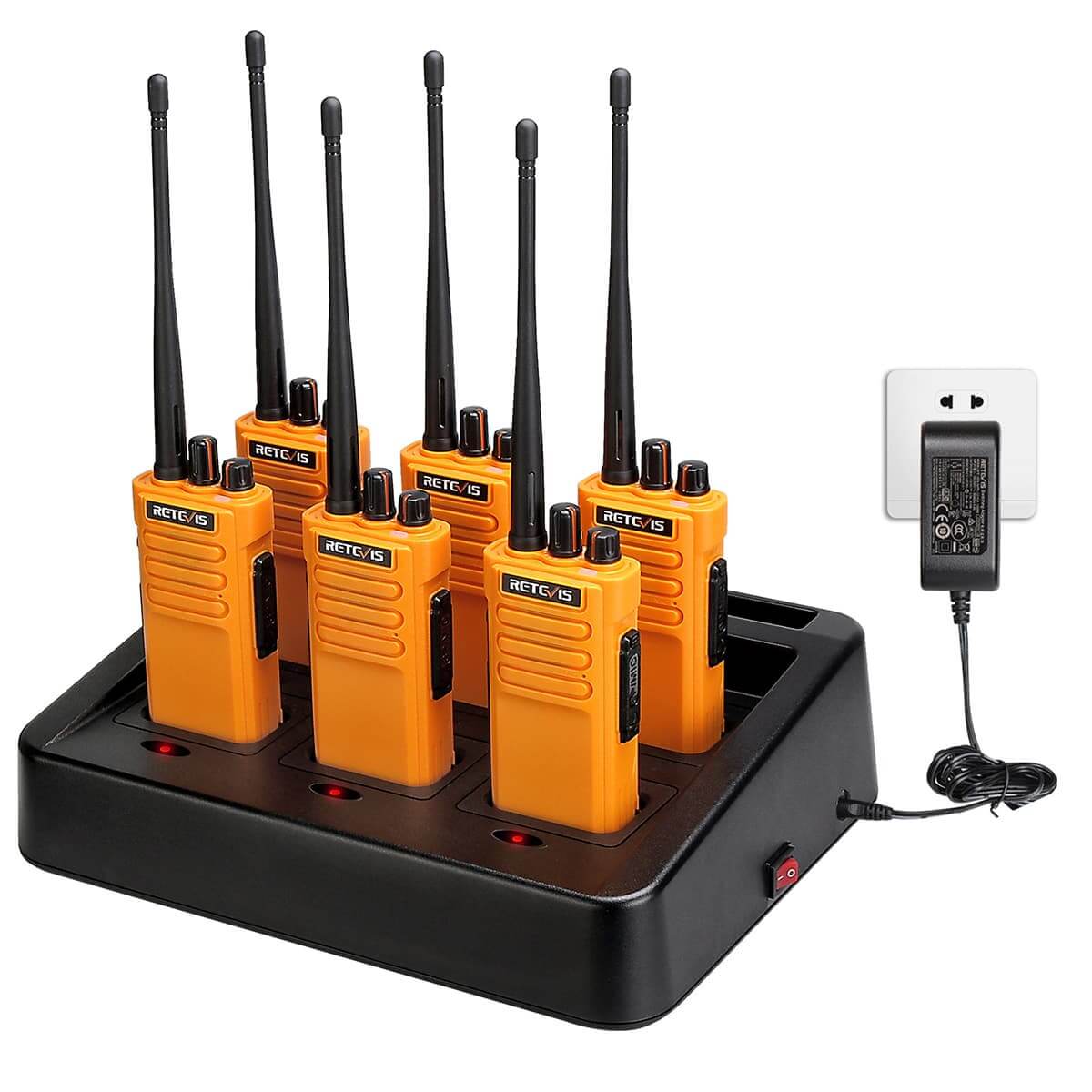
- Fast charging options
Reliable power is essential because communication failure during critical operations creates unnecessary delays.
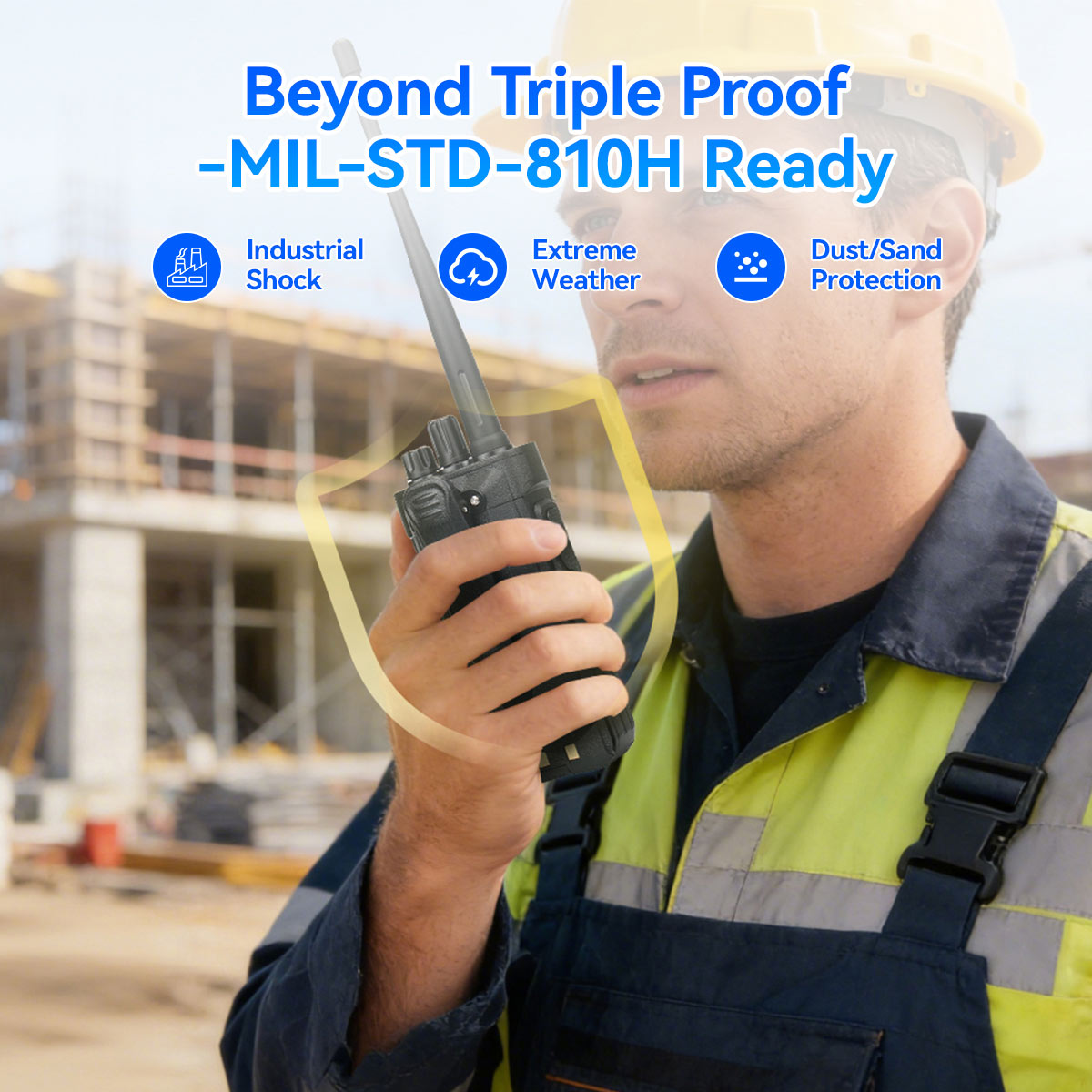
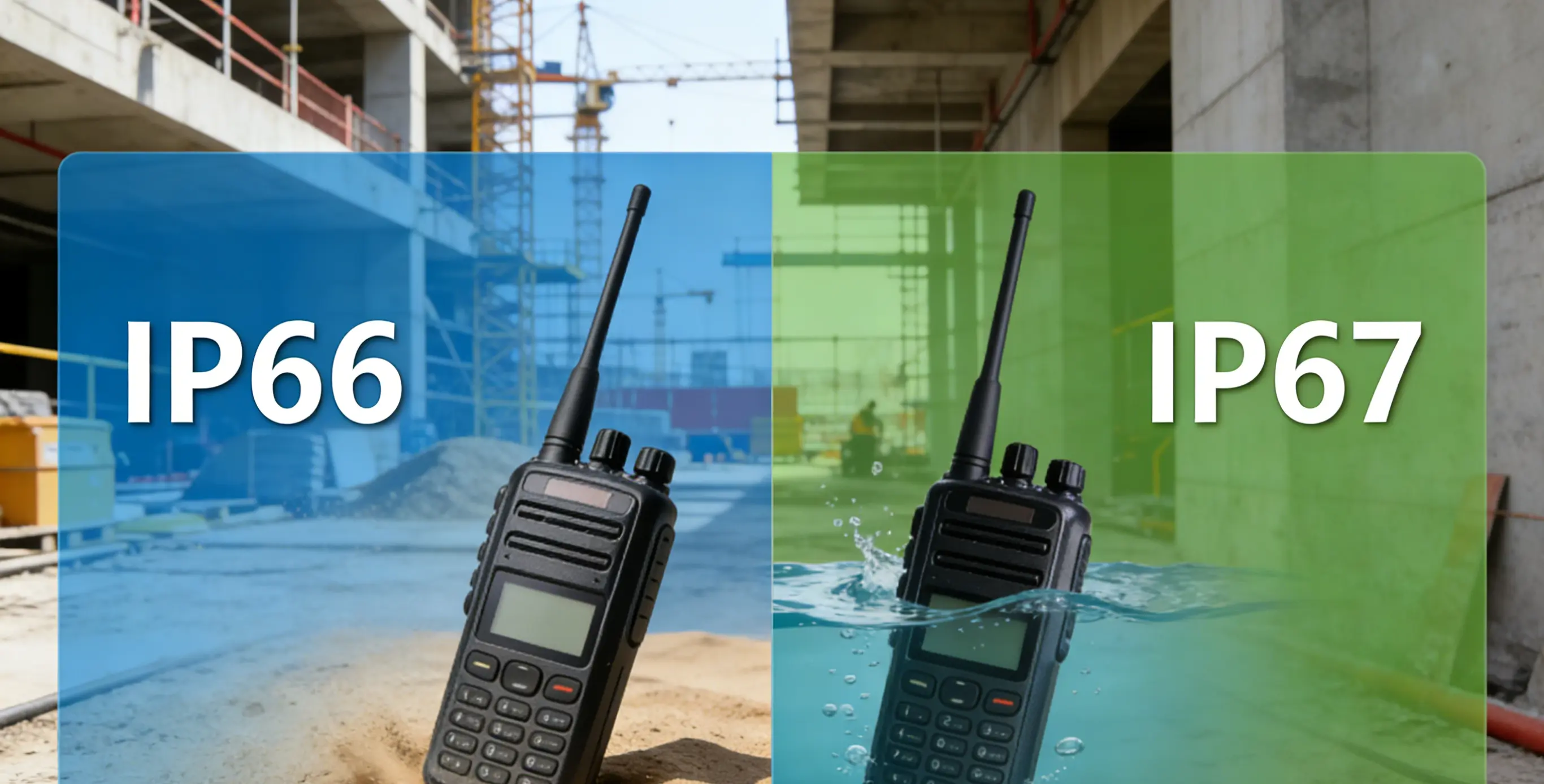
4. Durable Design for Jobsite Conditions
Construction radios should handle:
- Dust
- Water exposure
- Drops
- Daily transportation
Durability reduces replacement costs and keeps teams connected.
5. Channel Management for Multiple Teams
Large construction projects often require separate communication groups:
- Crane operators
- Concrete crews
- Safety teams
- Site supervisors
- Material handling teams
- MEP contractors
Proper channel organization reduces interference and improves coordination.
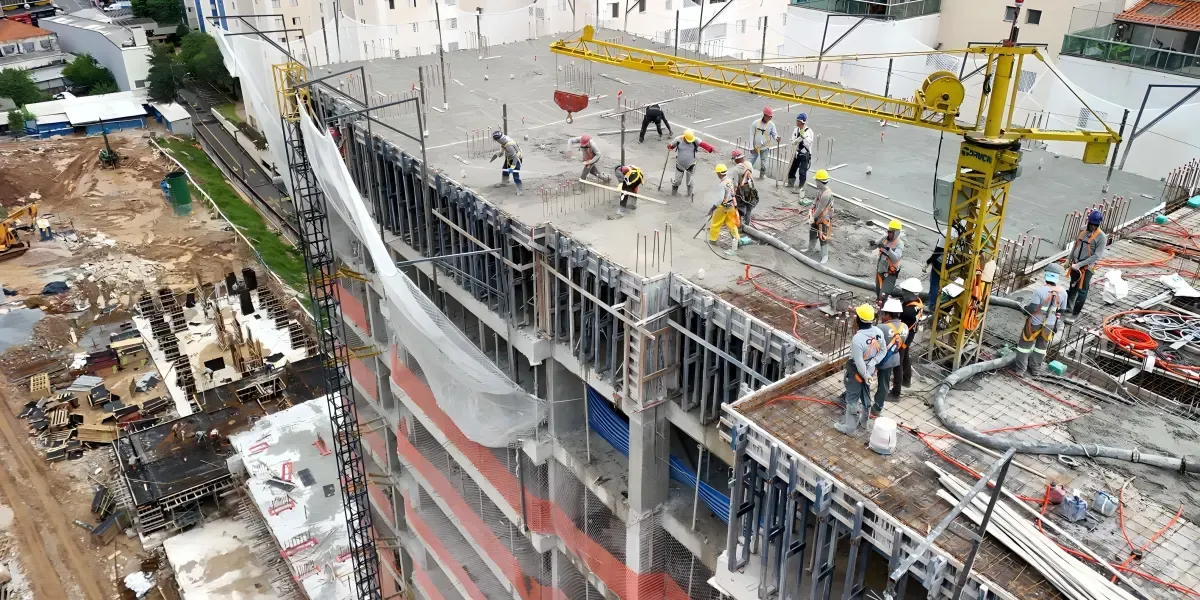
Understanding Two-Way Radio Range Inside Buildings
Many customers ask:
“How far can a two-way radio work inside a building?”
There is no universal answer.
The two way radio range inside buildings depends on:
- Building height
- Number of floors
- Concrete thickness
- Steel density
- Floor separation
- Interior layout
- Underground depth
- Electrical interference
For example, a radio may communicate easily across an open floor but struggle between a basement and upper floors because of reinforced concrete barriers.
This is why long range two way radios without repeater cannot always solve every building communication challenge.
The correct question is:
“Can the radio provide reliable coverage between the areas where my teams work?”
Do You Need a Repeater for a Multi-Floor Building?
Handheld radios can work well for many construction projects. However, larger buildings may require a repeater system.
A repeater can improve communication when teams need coverage:
- Across many floors
- Between underground and upper levels
- Around concrete cores
- Inside large factories or warehouses
For example, projects such as high-rise buildings, factories, and large commercial facilities often use repeater-supported systems because building structures change as construction progresses.
A communication plan should be reviewed during different stages:
- Structural construction
- Steel installation
- Interior finishing
- Final building completion
The radio environment may change significantly as new materials are added.
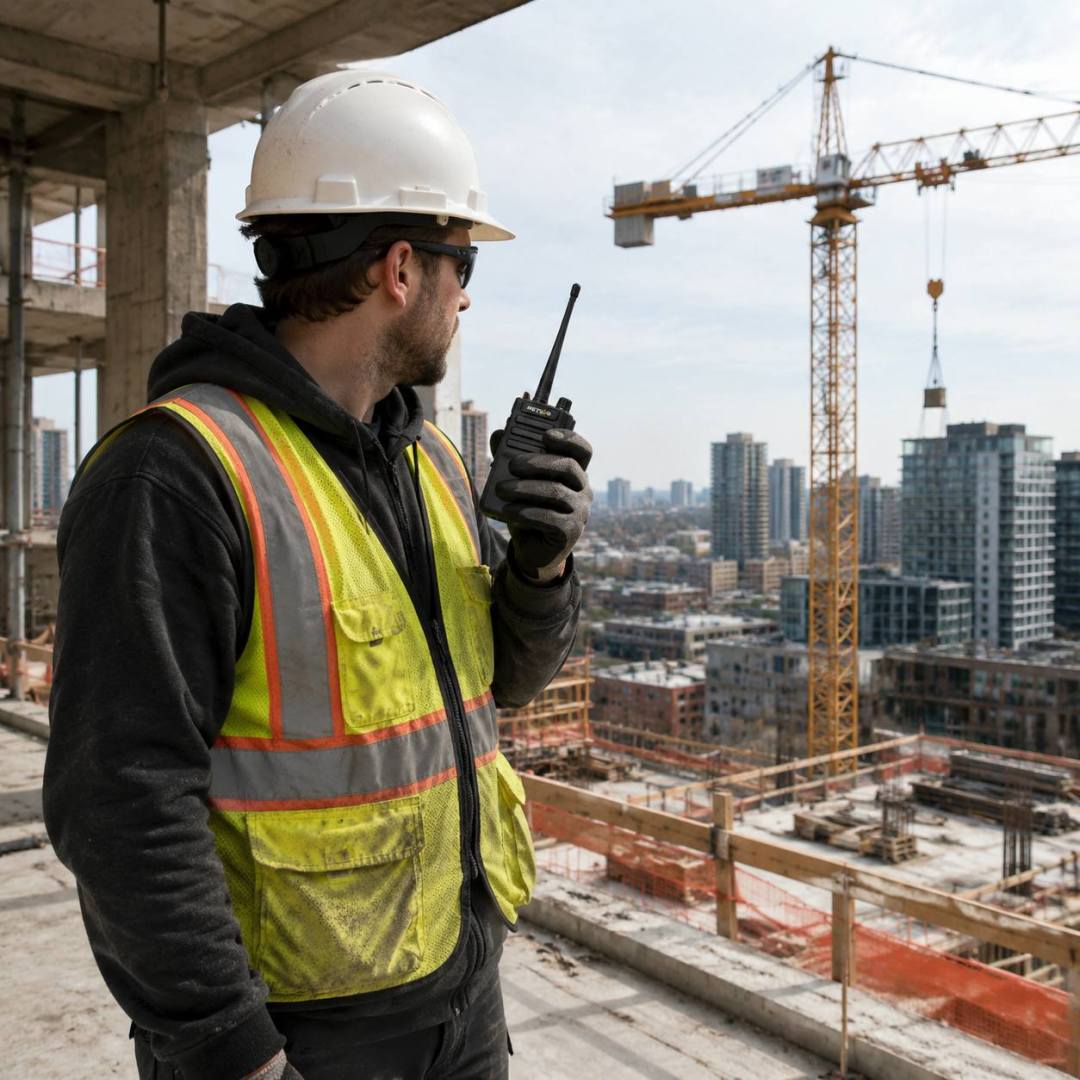
How to Improve Radio Communication Across Multiple Floors
To achieve reliable communication inside buildings and across multiple floors, follow these steps:
Test Radios in Real Construction Conditions
Avoid relying only on outdoor demonstrations.
Test communication in:
- Basements
- Elevator areas
- Stairwells
- Mechanical rooms
- Upper floors
Choose the Correct Frequency
For most indoor construction applications:
- UHF is generally preferred for dense buildings
- VHF may be suitable for open areas
Plan Coverage Before Full Deployment
A proper radio system evaluation should consider:
- Building structure
- Worker locations
- Communication groups
- Future construction stages
Final Thoughts: Selecting the Right Two-Way Radio for Multi-Floor Buildings
A reliable two-way radio for multi-floor buildings is more than a communication tool. It supports safety, productivity, and coordination throughout complex construction projects.
Concrete, steel, and building height can significantly affect radio performance. For most indoor construction environments, UHF radios provide a strong starting point, while larger projects may benefit from repeater solutions.
The best radio system is not the one with the biggest advertised range. It is the system that keeps workers connected across floors, through concrete walls, and in the difficult areas where communication matters most.
FAQ
What is the best walkie talkie for inside buildings?
For most commercial and construction buildings, professional UHF two-way radios are a practical choice because they generally perform better around concrete and steel obstacles.
Do walkie talkies work through concrete walls?
Yes, but range can be reduced by concrete thickness, rebar, and building design. Reinforced concrete areas may require repeaters for improved coverage.
UHF vs VHF radios: Which is better for high-rise construction?
UHF is usually better for indoor and high-rise environments because it performs more effectively around physical obstacles. VHF can be useful in open areas.
How far can two-way radios reach inside a steel building?
Range varies depending on steel density, floor layout, building height, and whether a repeater system is used.
Which two-way radios offer the best range for factory floors?
Factory floor communication depends on the size and structure of the facility. Professional UHF radios with proper channel planning and repeater support are commonly used for large industrial spaces.



 Google
 Amazon
Comments
No data Yet