

Table of Contents
What is DXing in Ham Radio? | DX Definition, Fundamentals & Beginners Guide
- Posted by:Retevis
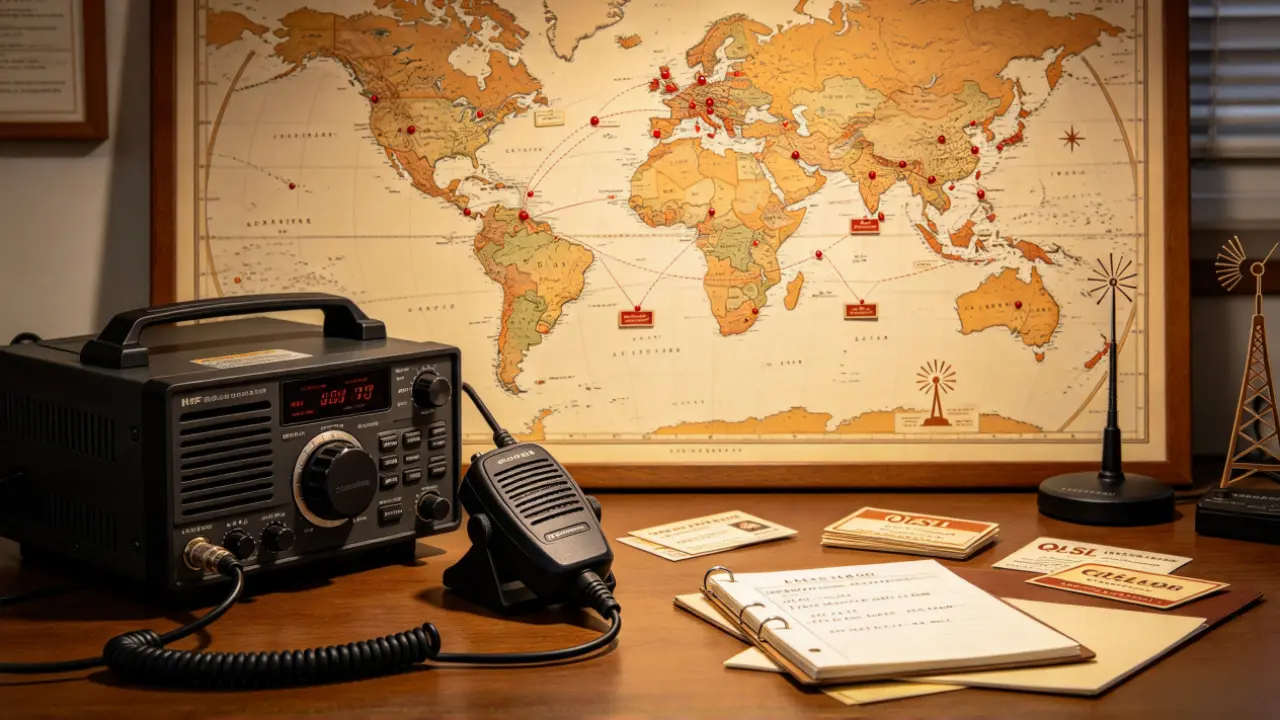
If you’ve been around amateur radio operators for very long at all, you’ve probably heard the term “DXing” tossed around. To new hams just getting their General Class licence and trying out HF bands, it can sound like a mysterious, exclusive activity. In fact, dxing is one of the most accessible and rewarding parts of the hobby. This guide explains what dxing in ham radio is, where the term dxing came from, how it works and how you can get started with little equipment.
DXing Explained The Definition at the Core
What is dxing? Answering the most common question beginners ask. The term goes back to the early days of wireless telegraphy, when operators used "DX" as Morse code shorthand for "distant exchange," or just "distance," to save time over slow telegraph links. The abbreviation was adopted by amateur radio operators in the 1920's and has stuck ever since.
The word describes the hobby of making two-way contact with stations in other countries, distant territories, or rare geographic entities (in modern ham radio dxing practice, There is not a hard and fast rule but the consensus in the community is that a contact is DX when it crosses a continent or reaches a location thousands of kilometres away. Contacts to Europe, Asia, Africa, South America or Pacific island nations all qualify as DX for operators in the United States.
Crucially, dxing isn’t just about distance, it’s about rarity. Most dedicated DXers find chasing stations in remote locations with very few active operators most exciting, e.g. small Pacific atolls, Antarctic research outposts, rarely active African countries. The search for rare entities is formalised by the ARRL DX Century Club (DXCC) award, which is awarded to operators who confirm contacts with at least 100 different DXCC entities worldwide. Today there are more than 340 recognised DXCC entities, a lifetime list of DX stations for DXers to chase.
DXing’s Role in the Ham Radio Experience
Millions of operators stay in the hobby for decades because of ham radio dxing. It combines technical skill, scientific knowledge, patience and a dash of luck to create a uniquely rewarding challenge.
DXing is not working local repeaters that are in your city or area. DXing means you can talk to people all over the world using only radio waves and your station set up. Under good propagation conditions even a small 100 watt station can still reach operators on the other side of the world. What drew the early hams to the airwaves, the ability to cross great distances with simple technology, still has a certain magic today.
DXing also builds a tight-knit international community. Operators exchange QSL cards, printed or digital confirmation cards, as proof of contact and many develop lifelong friendships with hams they first meet over a weak HF signal. There are also regular DX contests , DXpeditions to rare places and online spotting networks that keep the community connected and active.
How Ham Radio DXing Works: The Science of Propagation
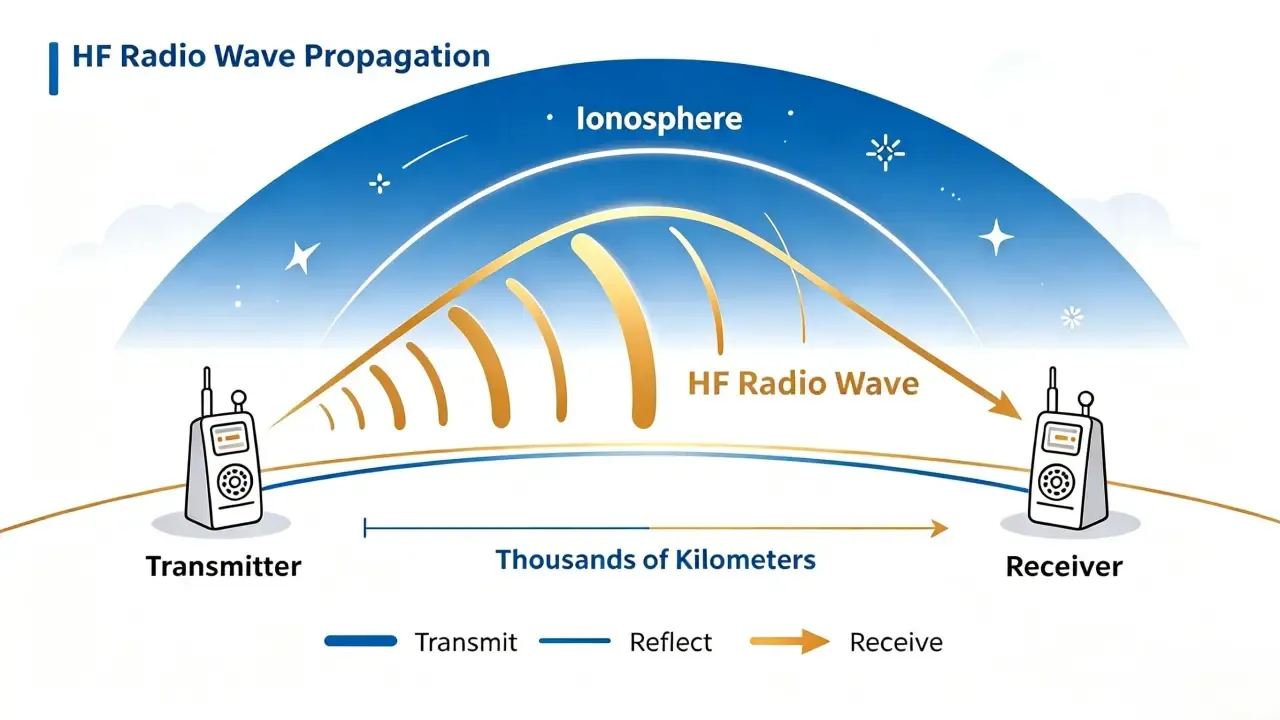
Understanding dxing also means understanding the basic science that makes long distance radio possible. Most DX contacts happen on the high frequency, or HF, bands, about 3 MHz to 30 MHz. This is different from VHF / UHF signals which travel in straight lines and are limited to line-of-sight range. HF signals bounce off layers of charged particles in the upper atmosphere called the ionosphere.
This ionospheric refraction bends radio signals back toward Earth so they can bounce thousands of kilometres at a time. Propagation quality varies all the time with solar activity, time of day, season and the 11 year sunspot cycle. In times of high solar activity, the higher bands like 10m and 15m open up for world-wide DX. During minimum solar activity, the lower bands like 40m and 80m are better.
One of the best times for DXing is along the "grey line" – the narrow transition zone between daylight and darkness that rolls around the planet each day. Signals propagate very well along this boundary and it is a favourite window for DX chasers.
Essential Equipment for Getting Started with DXing
You don't need a fancy, top-of-the-line station to get into ham radio dxing. Many operators with modest setups make hundreds of DX contacts. Here’s the basic gear you need:
First an HF transceiver. The heart of any DX station is a good all mode HF radio with good receiver sensitivity. Modern software-defined radios (SDRs) are excellent for beginners and even used 100 watt transceivers will work just fine for beginners. For digital DX modes such as FT8 any modern HF radio will suffice.
Secondly, an effective antenna. The most important part of your DX station is a good antenna, which will always outperform a more powerful radio with a poor antenna. For the beginner a simple dipole antenna as high as possible or an end-fed half-wave (EFHW) antenna for small spaces will give good DX results. You can get better gain and pull in weaker signals with directional beam antenna like Yagi-Uda, but you don't need them to begin with.
Thirdly, basic accessories. An antenna tuner helps you match your antenna to your radio across bands. The most popular digital mode among beginner DXers is FT8. You can work FT8 with a digital mode interface and free software such as WSJT-X. You will also need a logbook to record your contacts, either on paper or digitally.
Your First DX Contacts—Beginner Tips
If you want to try dxing in ham radio, here are some practical tips to help you get on your way to success faster:
Begin with the 20 metre band. The 14 MHz band is the most reliable DX band for most of the year with good propagation both day and nite. Many consider it the best DX band for the beginner.
Try FT8 first and foremost. This digital mode has democratised ham radio dxing, allowing one to work long distance stations with low power and simple antennas. WSJT-X is a software package that will automatically decode weak signals, so you can make contacts even when you're barely hearing the audio.
Use a DX-Cluster. You can check out what stations are active right now, their frequency and signal strength through these online networks. It’s like a real-time map of DX activity, perfect for beginners to learn where to look.
And finally, be patient. DXing is a game of patience. Some days the bands are wide open and other days you will hear very little. Stick with it learn the propagation patterns and you'll be making your first DX contact before you think.
Conclusion
In its simplest form, dxing meaning is simple, the science and art of communicating with far away places using radio waves. It is the original long distance social network and one of the most compelling aspects of amateur radio today. The world of ham radio dxing is one of endless exploration and connection, whether you are chasing the DXCC award, collecting QSL cards or just wondering who you can reach around the world. All you need to begin is a General Class licence, a little basic HF equipment, and curiosity.






 Google
 Amazon
Comments
No data Yet