

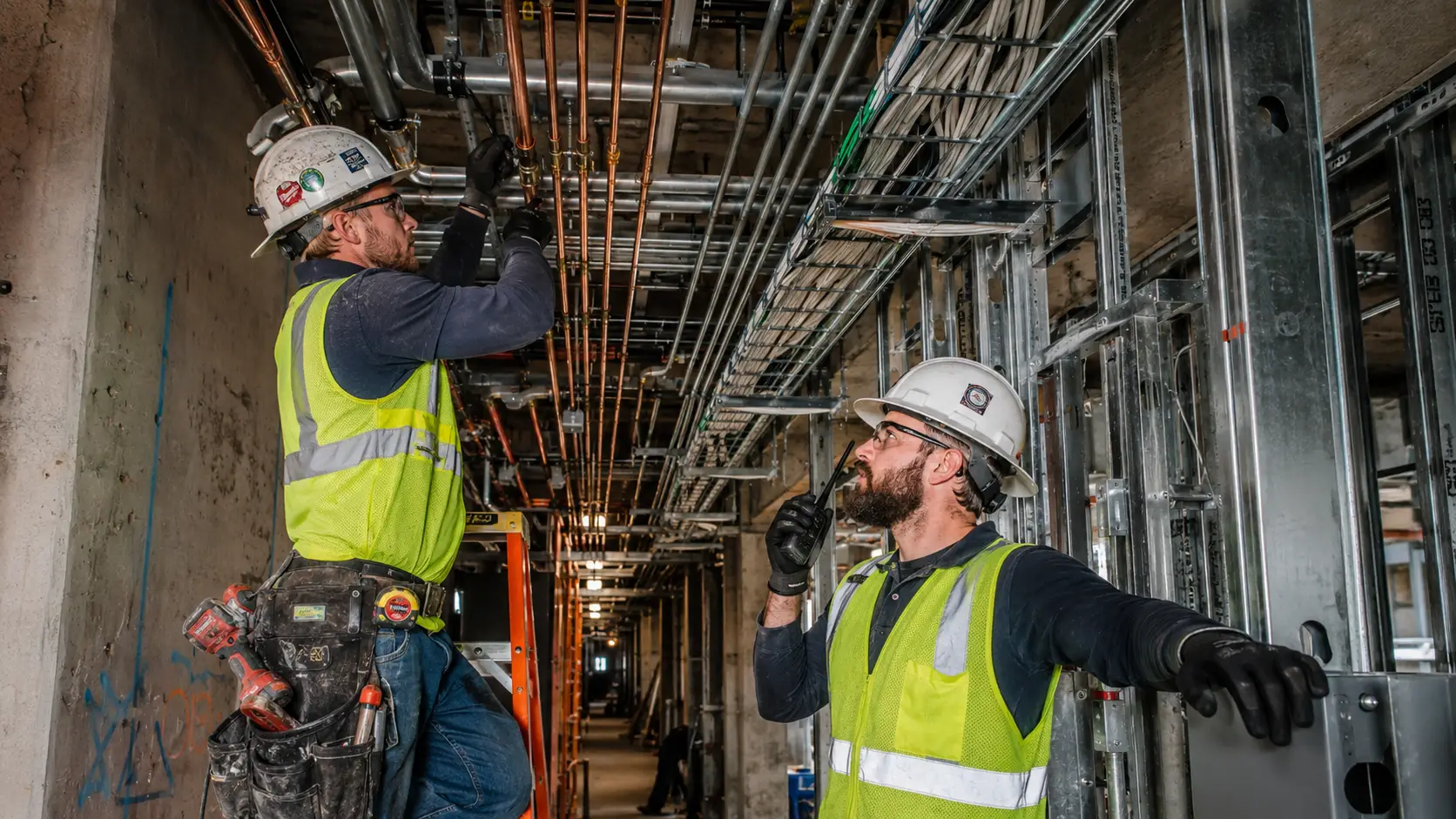
On busy construction sites, plumbing and electrical crews often work in the same crowded areas—above ceilings, inside risers, in plant rooms, or along narrow service corridors. In these spaces, coordination is not just a convenience. It directly affects productivity, safety, and rework.
A quick verbal update that does not reach the right person can lead to pipe and conduit clashes, blocked access, delayed inspections, or wasted labor. That is why many contractors are rethinking site communication and turning to compact two-way radios. For teams working in confined, noisy environments, the right two way radio for electricians and plumbers can make a measurable difference.
Why Tight Work Areas Create Communication Problems
Plumbing and electrical installations are closely linked in most commercial and residential projects. These trades often compete for the same pathways, ceiling space, penetrations, and equipment clearances. Even when the drawings are coordinated, field conditions change quickly.
A few common examples include:
- A plumbing crew reroutes pipe because of an unexpected obstruction
- Electricians need immediate confirmation before fixing conduit supports
- One team blocks access to a shaft while another is waiting to enter
- A foreman needs to stop installation before a clash turns into rework
In theory, crews can use mobile phones. In practice, phones are often too slow and too awkward for active jobsite use. Workers may be wearing gloves, climbing ladders, moving materials, or working where noise makes calls difficult. Signal quality can also be inconsistent in concrete and steel structures.
That is where a walkie talkie for contractors becomes much more practical.
Why Two-Way Radios Work Better Than Phones on Site
The main advantage of a radio is simple: instant communication. Instead of unlocking a phone, selecting a contact, and waiting for a connection, workers can press one button and speak to the right team immediately.
For plumbing and electrical coordination, that speed matters.
A reliable handheld radio for contractors helps crews:
- Communicate in real time during installations
- Alert nearby trades before access routes are blocked
- Confirm sequencing changes without leaving the work area
- Reach supervisors quickly when field conditions change
- Reduce unnecessary walking back and forth across the site
This is especially useful in jobs where several subcontractors overlap in a small footprint. In confined work zones, every interruption creates inefficiency. Radios reduce that friction.
Why Compact Size Matters in Construction
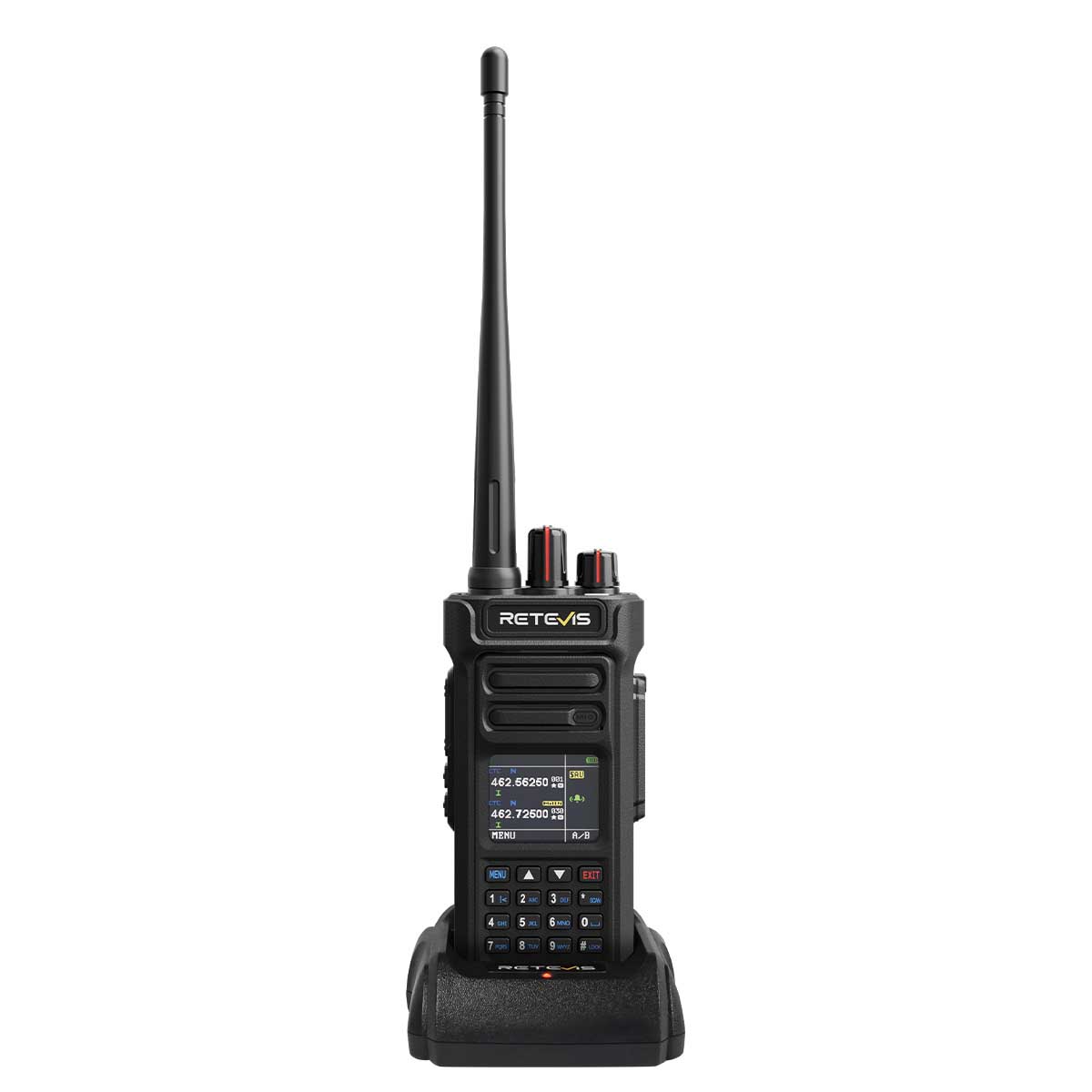
Not every radio is suitable for modern trade work. Large, heavy units may be durable, but they are not always comfortable for electricians and plumbers who spend the day climbing, bending, reaching, and working in restricted spaces.
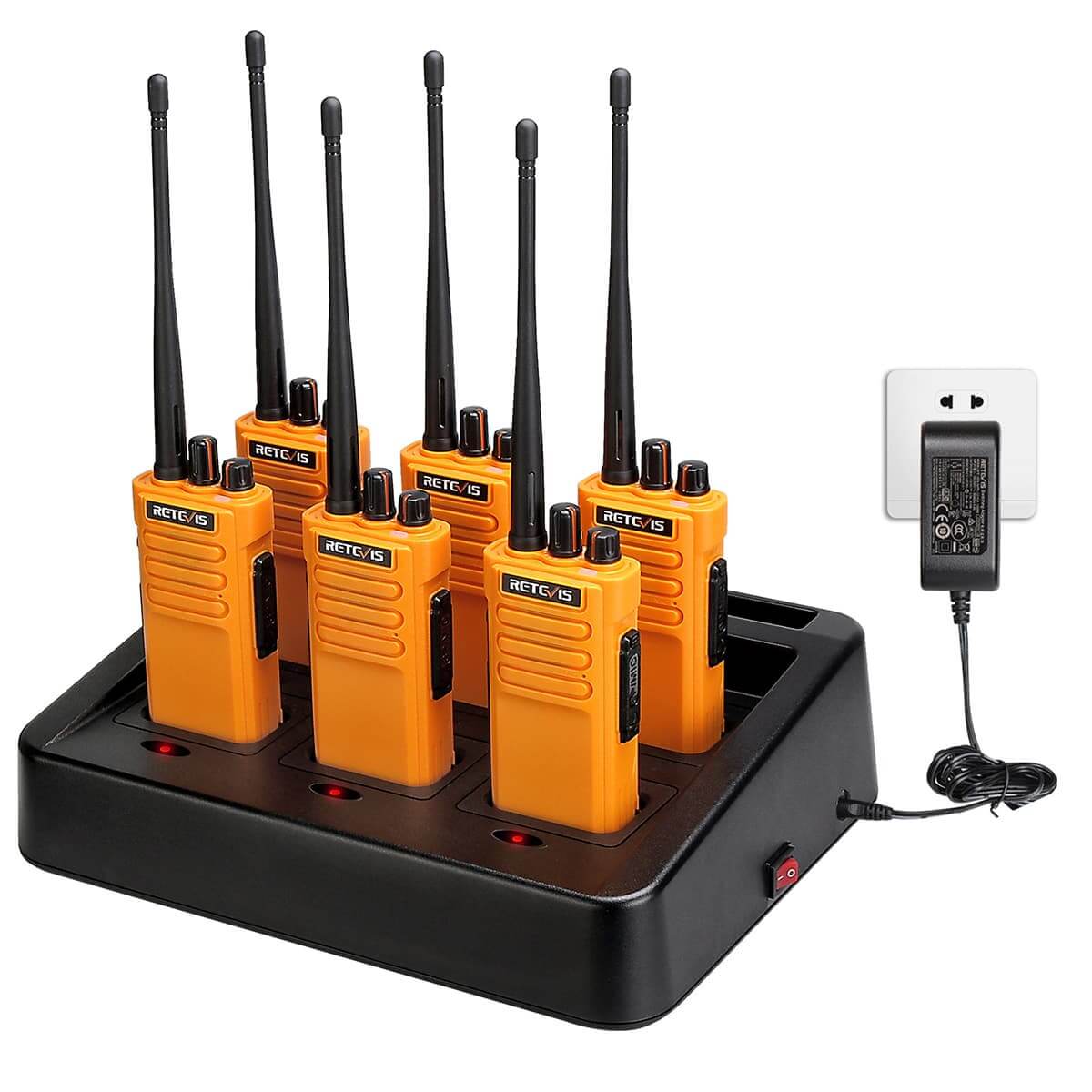
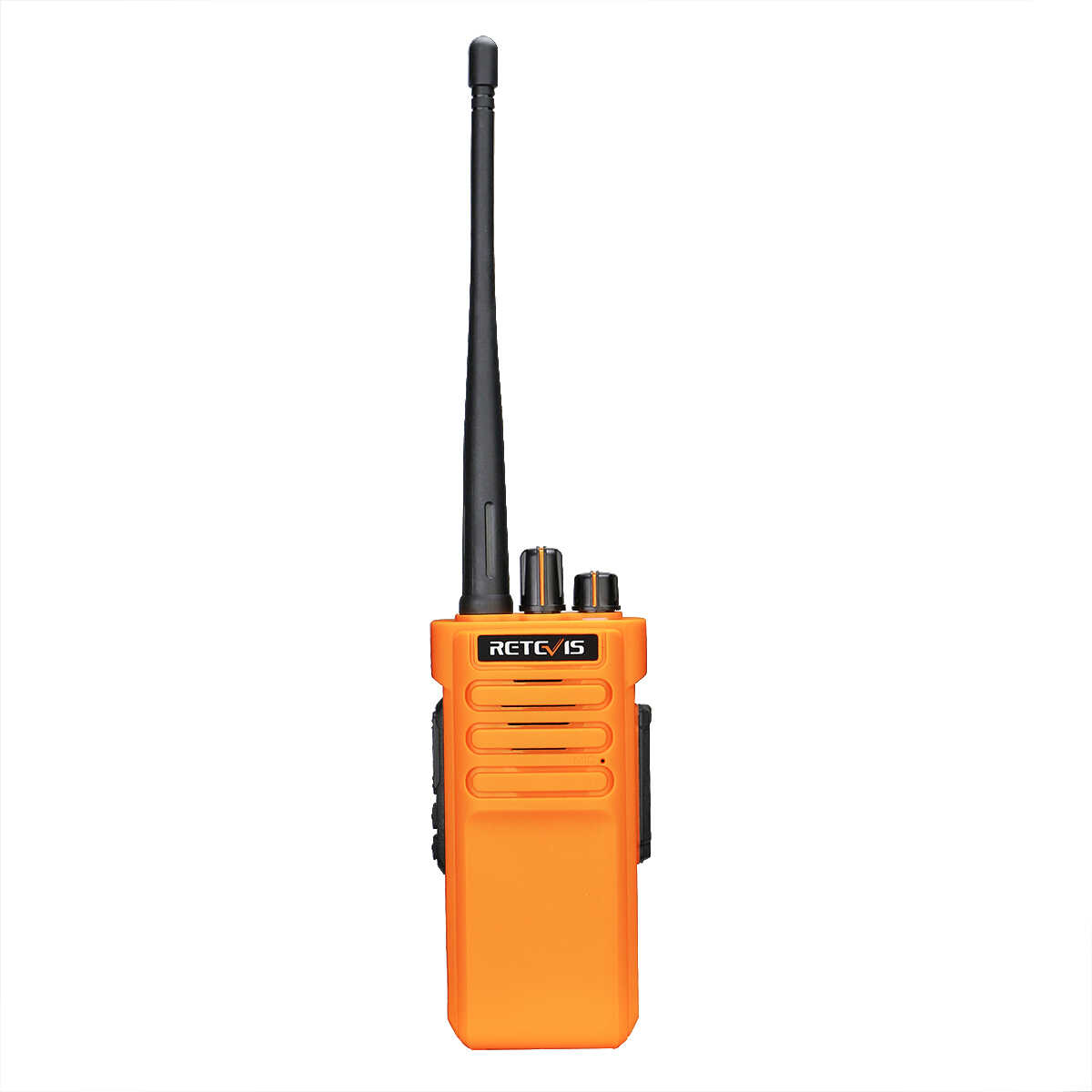
A compact lightweight walkie talkie for construction is often a better fit because it is:
- Easier to clip onto a belt or vest
- Less likely to catch on ladders, tools, or framing
- More comfortable for all-day wear
- Better suited to ceiling voids, crawl spaces, and shafts
This matters more than it may seem. If a radio is bulky or inconvenient, workers are less likely to carry it consistently. On a construction site, communication tools only help when they are actually being used.
What Electricians and Plumbers Need in a Jobsite Radio
Choosing a professional construction site radio is not just about range claims on a spec sheet. The real question is whether the device matches the working conditions of the crew.
Here are the features that matter most.
1. Clear Audio in Noisy Environments
Construction sites are full of background noise: drilling, cutting, ventilation systems, lifts, and general trade activity. A walkie talkie for electricians should deliver clear audio that can cut through noise without forcing users to repeat every message.
For plumbing teams working in plant rooms or service areas, the same applies. A good radio for plumbing crew should make communication easier, not harder.
2. Reliable Performance in Concrete and Steel Structures
Modern buildings can challenge communication. Reinforced concrete, steel framing, and multiple floors can interfere with signals, especially in enclosed areas. For that reason, a two way radio for plumbing crew or electrical teams should be chosen based on actual jobsite conditions, not ideal outdoor marketing numbers.
On high-rise, hospital, renovation, and commercial fit-out projects, indoor performance is often more important than maximum advertised range.
3. Durability for Real Site Conditions
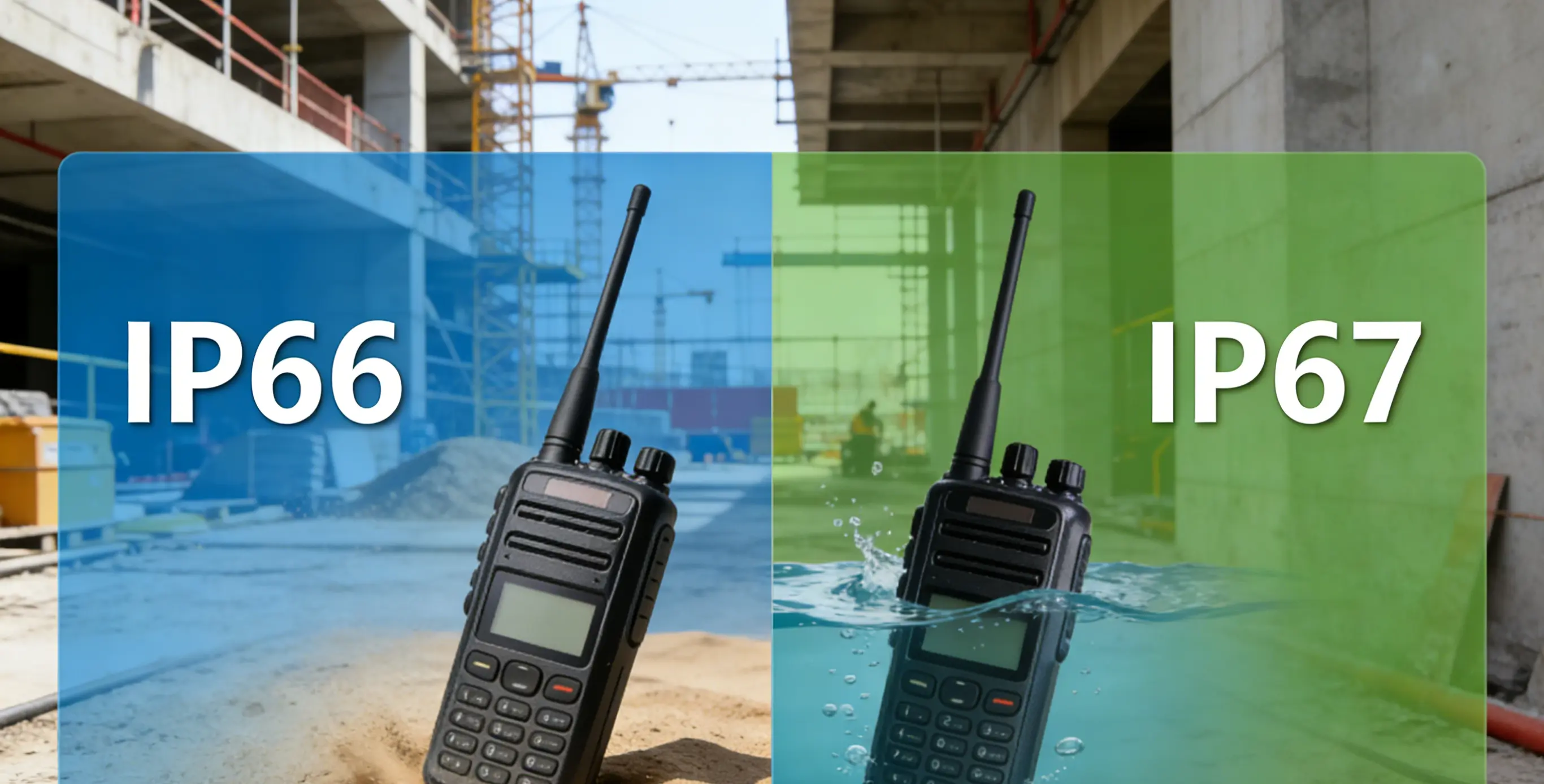
Trade radios are exposed to dust, minor drops, moisture, and rough daily handling. A fragile consumer device may not hold up. A professional construction site radio should be rugged enough for daily field use while still being compact.
4. Long Battery Life
Crews do not want communication devices failing in the middle of a shift. Whether it is rough-in, pressure testing, cable pulling, or punch-list work, battery reliability matters. A walkie talkie for plumbing crew or electrical teams should support full-day use without constant charging or battery swaps.
5. Easy Push-to-Talk Operation
On site, simplicity is a major advantage. Workers may be using gloves, carrying tools, or moving quickly between tasks. A radio with easy push-to-talk operation is usually more effective than a device that requires too much setup or screen navigation.
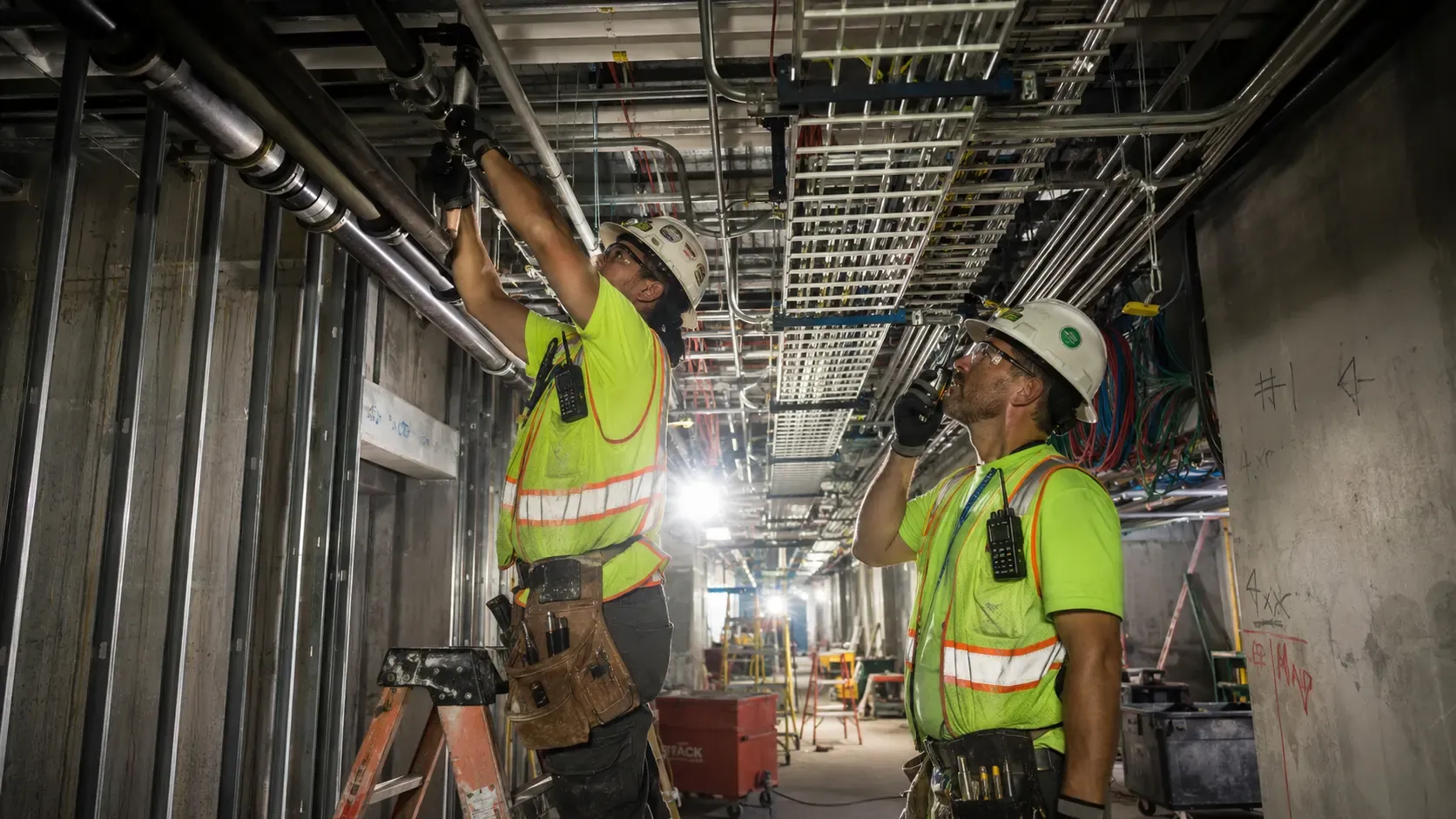
Practical Use Cases on Real Jobsites
Compact radios are most valuable when they solve specific coordination problems. Here is how they help in day-to-day field operations.
Electricians
A walkie talkie for electricians is useful when crews need to:
- Confirm conduit routes before installation
- Coordinate with lift operators or helpers
- Report blocked access above ceilings
- Check readiness for shutdowns or energized work procedures
- Communicate across floors during rough-in and fit-out
Instead of walking back to the foreman or trying to hear shouted instructions, the crew can stay connected while continuing work safely and efficiently.
Plumbing Crews
A dedicated radio for plumbing crew supports tasks such as:
- Coordinating pipe routing in congested ceiling spaces
- Confirming sleeve and penetration locations
- Managing material movement through narrow corridors
- Communicating during testing and commissioning
- Updating supervisors about access restrictions or clashes
For larger teams, a two way radio for plumbing crew can also improve coordination between installers, helpers, and foremen across different zones of the building.
General Contractors and Trade Supervisors
A walkie talkie for contractors is valuable when managing multiple trades in overlapping spaces. Site supervisors can use radios to:
- Sequence plumbing and electrical access
- Respond faster to field conflicts
- Reduce downtime caused by waiting for updates
- Keep work moving without constant physical check-ins
This is especially important on fast-track projects where several crews are working in the same area at the same time.
Safety Benefits Often Overlooked
Most people think of radios as productivity tools first, but they also support safer work.
When electricians and plumbers can communicate clearly, they can:
- Report hazards faster
- Confirm restricted-area access
- Support lockout/tagout coordination
- Alert others before moving materials or equipment
- Reduce confusion during urgent situations
In tight spaces, where visibility is limited and crews may be separated by walls, floors, or equipment, timely communication can prevent small problems from becoming serious ones.
Common Mistakes When Choosing Construction Radios
One common mistake is buying consumer-grade units based only on price. Low-cost radios may seem attractive at first, but they often struggle with audio clarity, durability, and battery life in demanding trade environments.
Another mistake is focusing too much on advertised distance. Jobsite performance depends on the building, the layout, and the working environment. A compact radio that performs well through concrete corridors and mechanical rooms may be far more useful than a larger model chosen only for theoretical range.
It is also important not to ignore comfort. The best handheld radio for contractors is one crews are willing to carry all day. Size, weight, clip design, and ease of use all affect real adoption on site.
Final Thoughts
Plumbing and electrical coordination is one of the most important moving parts on any construction project, especially in cramped and fast-changing work areas. When teams cannot communicate quickly, delays and rework follow. When they can, installation becomes smoother, safer, and more efficient.
That is why many firms are investing in compact communication tools that match the reality of modern trade work. The right two way radio for electricians and plumbers is not just a gadget—it is a practical site coordination tool. Whether you need a walkie talkie for electricians, a walkie talkie for plumbing crew, or a lightweight walkie talkie for construction supervisors, choosing the right radio can help keep tight jobsites under control.



 Google
 Amazon
Comments
No data Yet