

Table of Contents
How to Choose the Right Retevis Rugged Two Way Radio for Your Worksite
- Posted by:Retevis
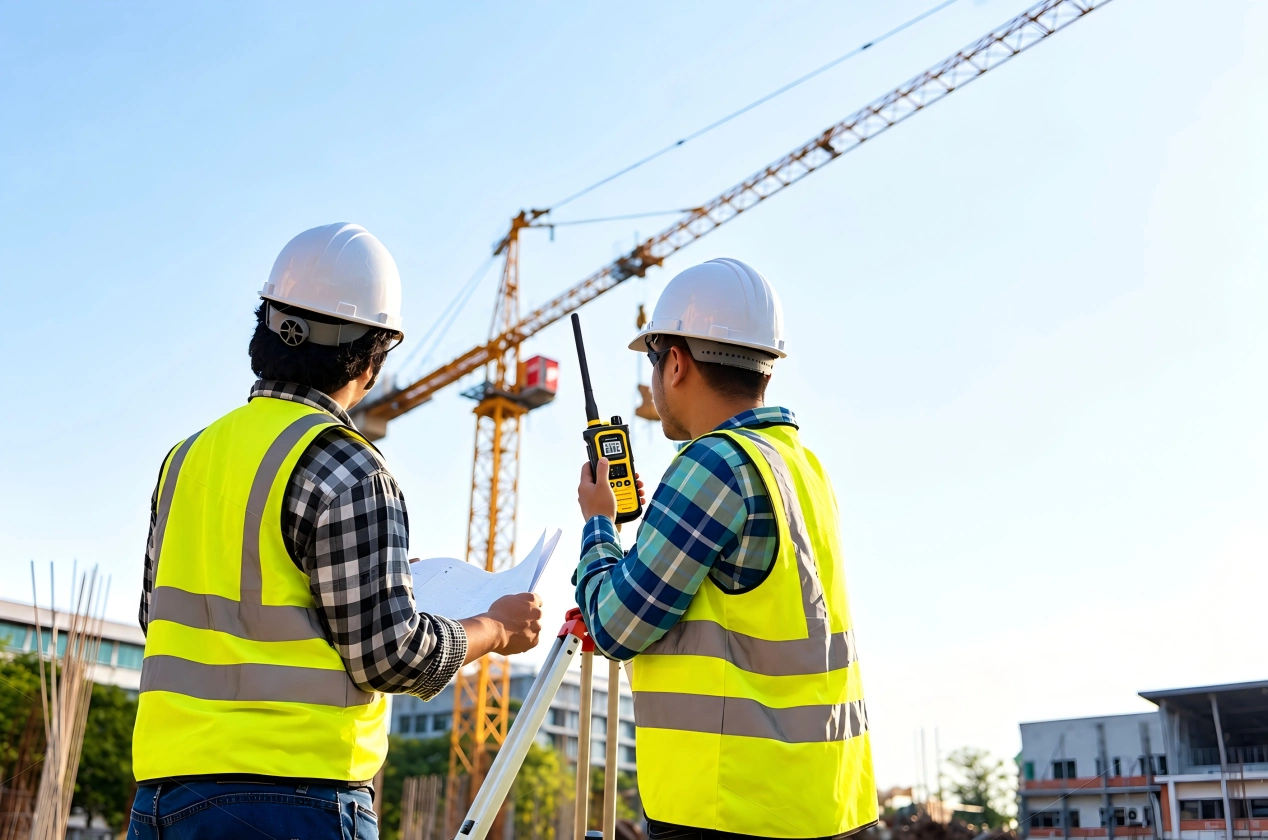
On construction sites, factory floors, and outdoor job locations, clear and reliable communication directly impacts work efficiency and worker safety. A Retevis rugged two way radio built for industrial conditions is not just a tool—it’s essential equipment for keeping teams connected in harsh environments. This guide breaks down what to look for in an industrial walkie talkie and how to match your needs with the right device.
Why Industrial-Grade Protection Matters for Job Sites
Many worksite managers first try consumer-grade radios, only to find they break quickly in rough conditions. Industrial two way radios are built specifically to handle the unique challenges of industrial work.
Consumer vs. Industrial Radios: The Performance Gap
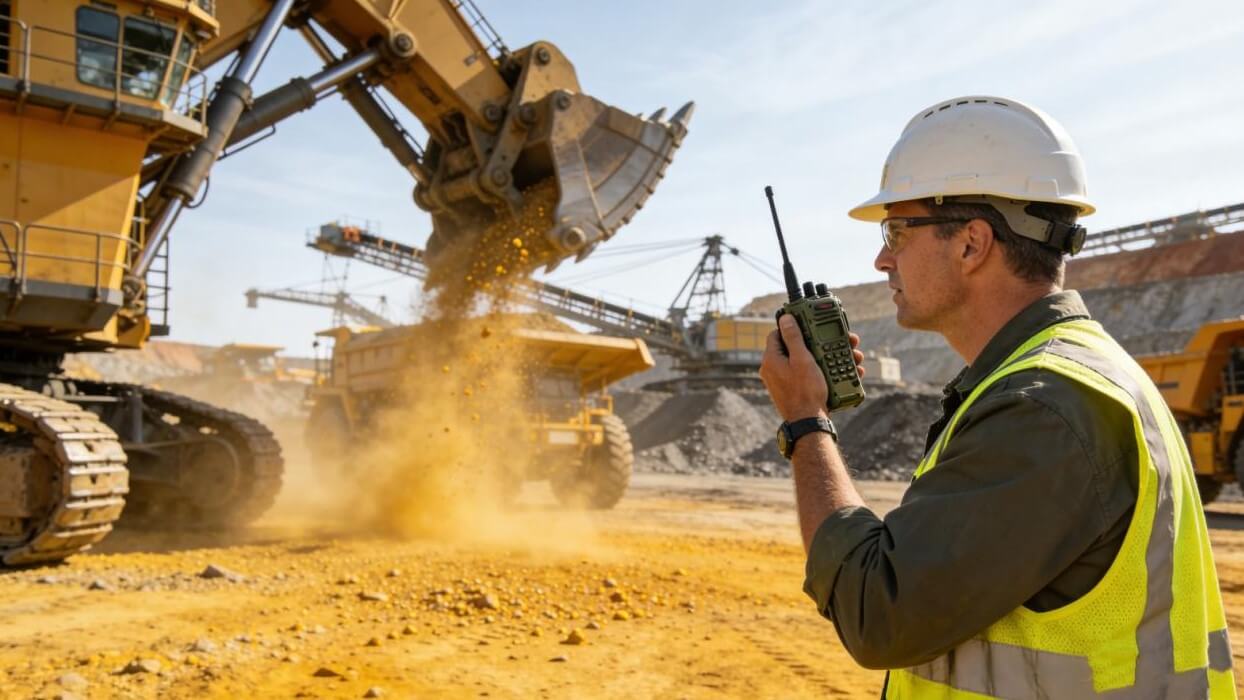
Consumer walkie talkies are designed for casual use like hiking or mall trips. They have thin casings, low water resistance, and little drop protection. On an industrial site, a single drop from a ladder, a day of concrete dust exposure, or an unexpected rainstorm can render them useless. Industrial radios use reinforced bodies and sealed components to avoid these failures, keeping teams connected through daily wear and tear.
Why IP67 and Drop Resistance Are Construction Must-Haves
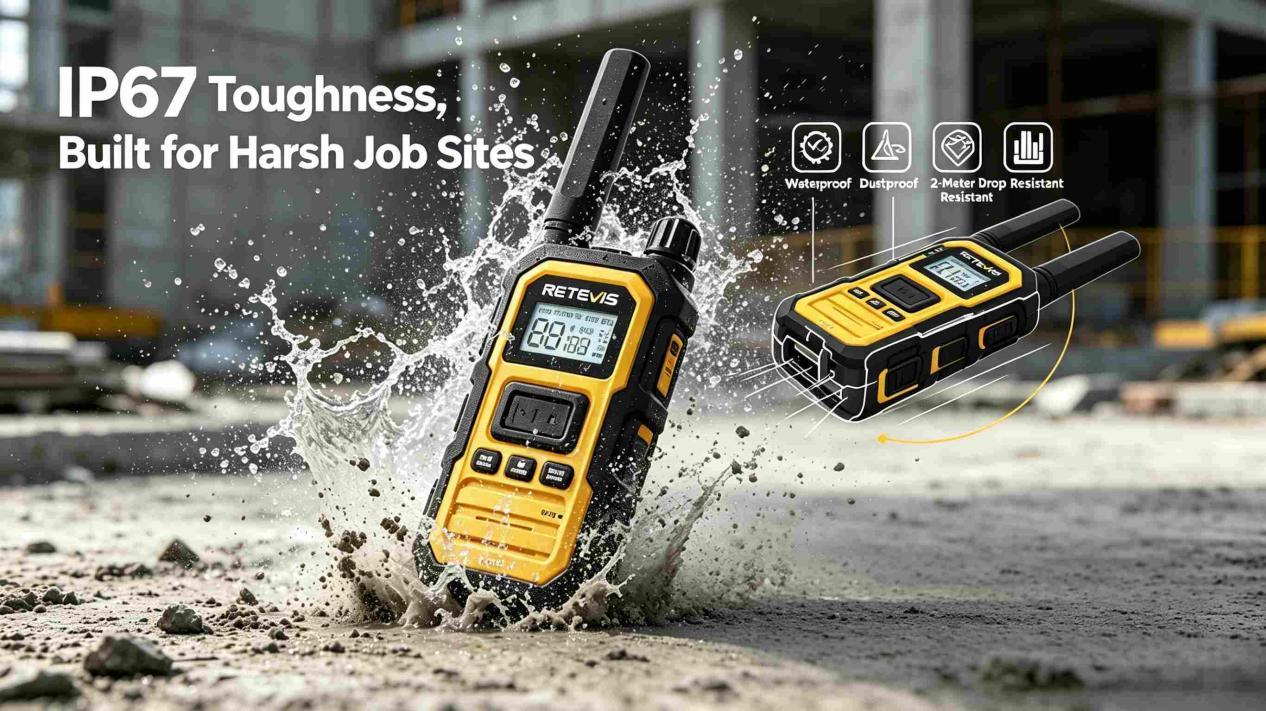
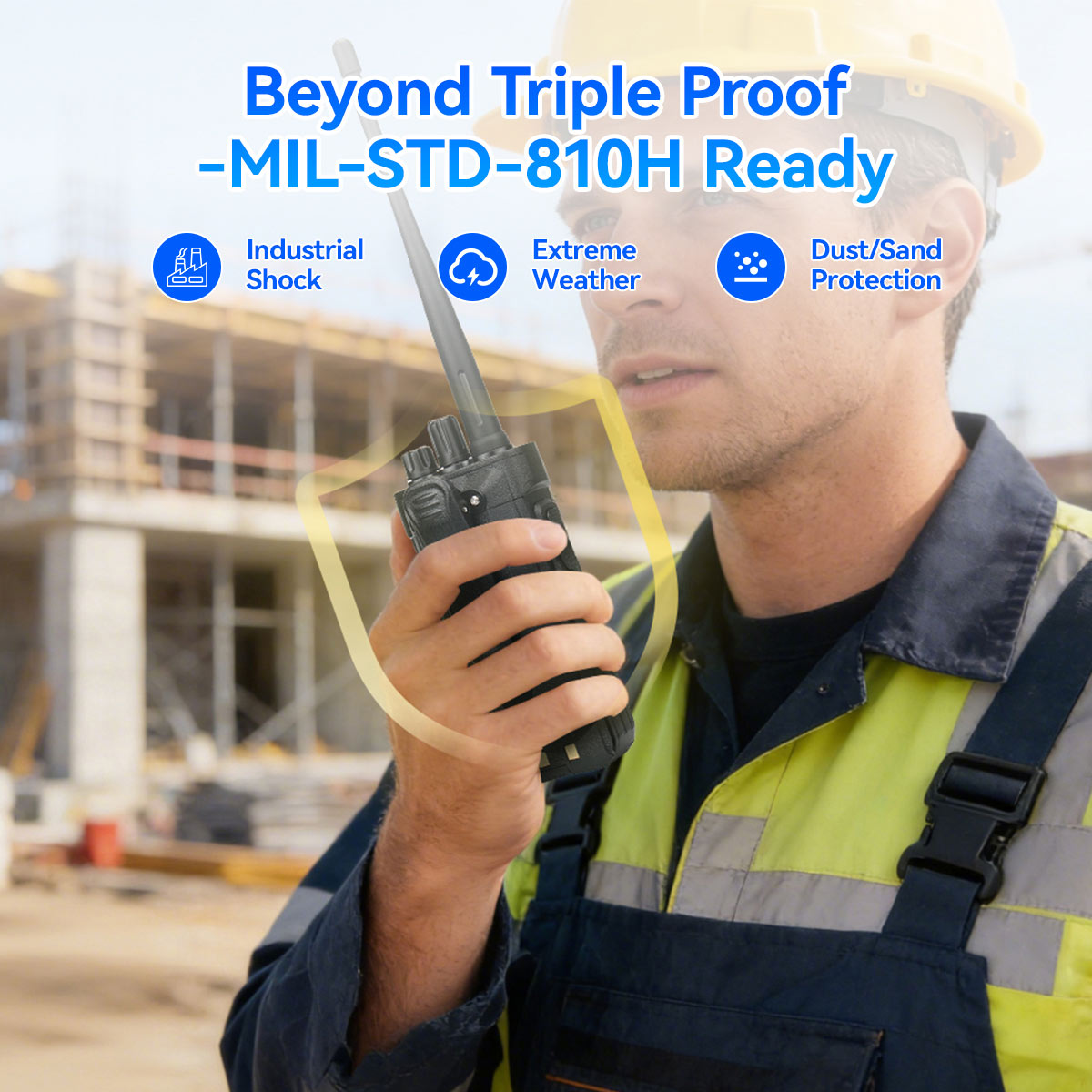
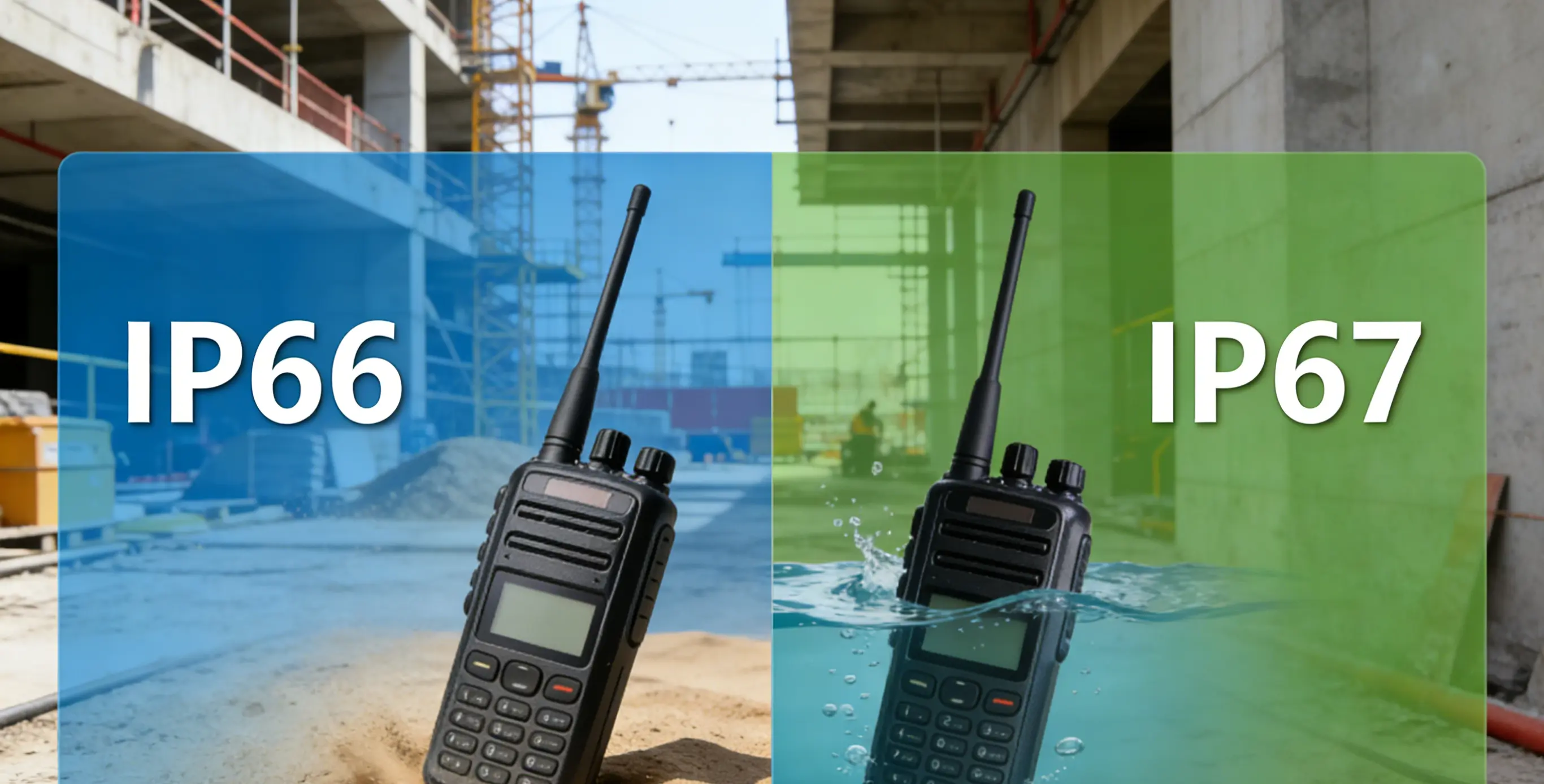
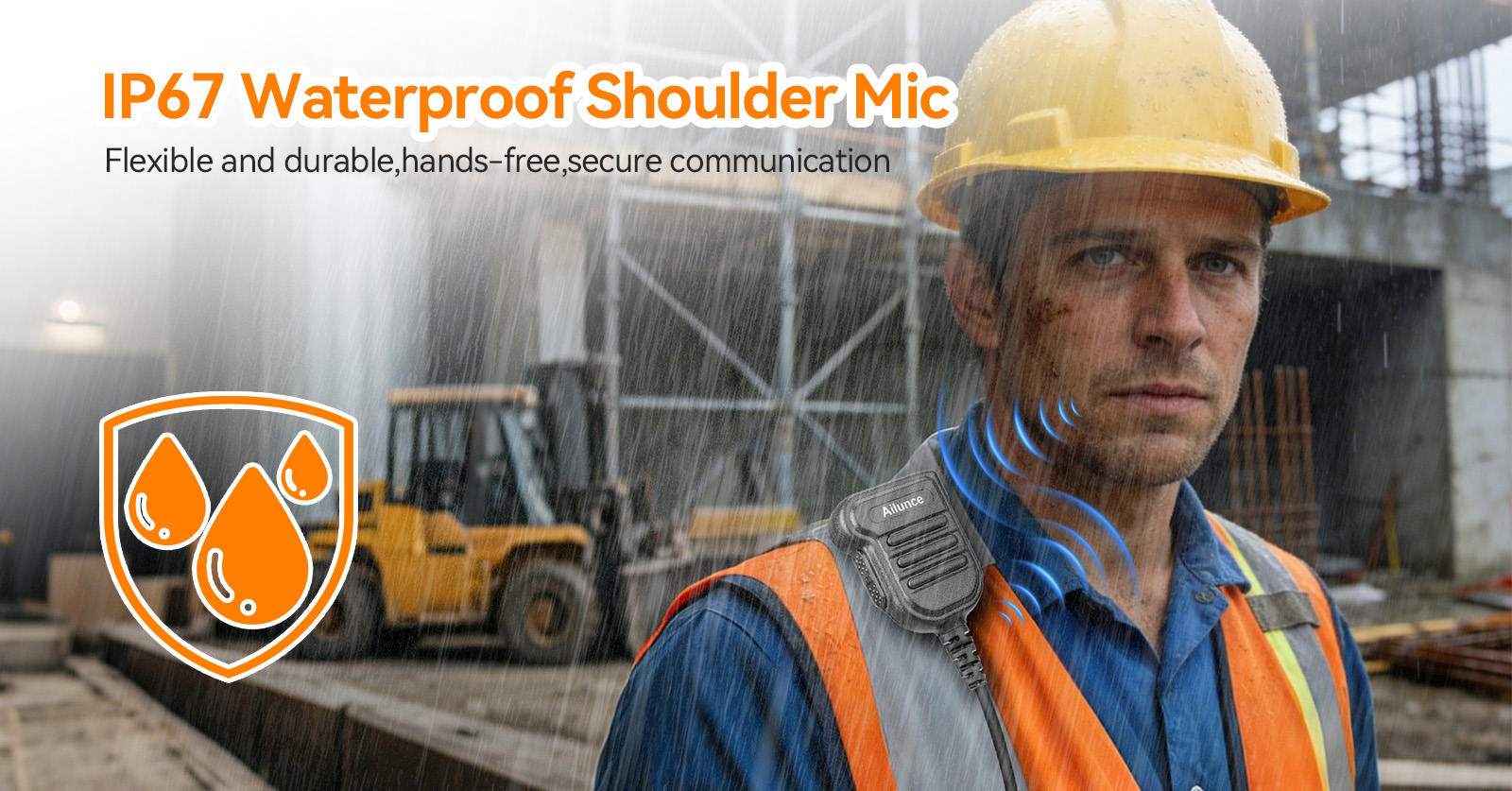
For building and construction sites, an IP67 waterproof and dustproof rating is the baseline standard. IP67 means the device is fully protected against dust particles and withstands immersion in 1 meter of water for 30 minutes. This is critical because construction sites are full of fine dust that damages internal circuits, and outdoor work often continues through light rain. Drop resistance is equally vital. A 2-meter drop test standard ensures the radio survives falls from ladders, scaffolding, or work trucks. For workers who handle tools and move constantly, accidental drops are unavoidable—an industrial walkie talkie must keep working after impact.
7 Key Criteria for Choosing an Industrial Walkie Talkie
Not all industrial radios deliver the same performance. Use these 7 factors to evaluate options based on your specific worksite conditions.
1. Dust & Waterproof Rating
Look for at least IP67 certification. This level of protection keeps dust out of internal components and prevents water damage from rain, splashes, or temporary submersion. For sites with regular water exposure or very dusty conditions, do not settle for lower ratings like IP54.
2. Shock and Drop Durability
Choose a radio tested for drops from at least 2 meters. High-quality industrial radios use PC + TPE housing that absorbs impact and resists cracking. Top models pass hundreds of drop tests without functional failure, so they last for years of daily use.
3. Noise Cancellation Performance
Loud machinery, construction noise, and wind make standard radios hard to hear. Look for noise cancellation technology—especially AI noise reduction—that filters out background sounds and isolates human speech. Clear audio prevents miscommunication that causes mistakes or safety incidents.
4. Battery Life and Charging Flexibility
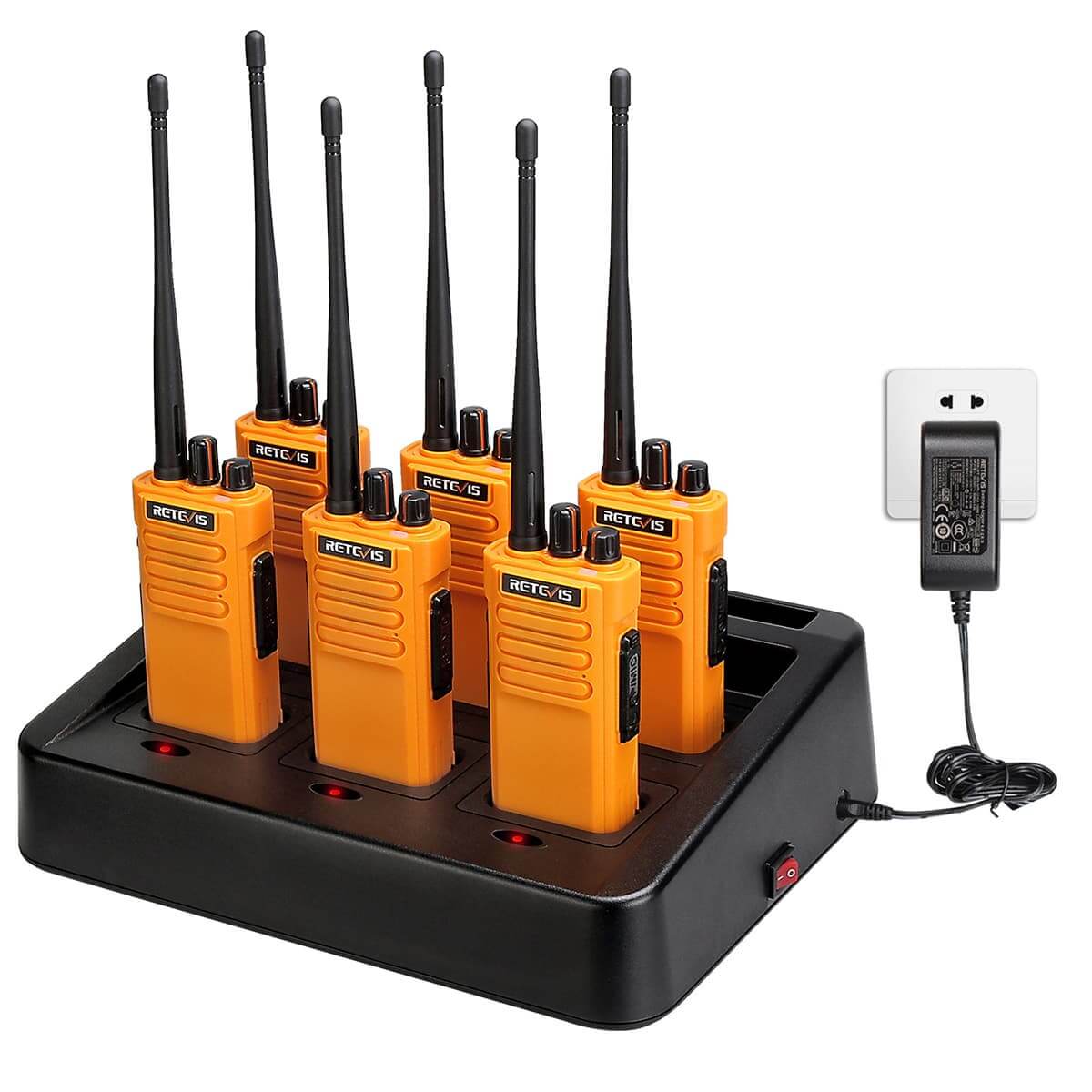
A dead radio mid-shift creates dangerous communication gaps. Aim for at least 12 hours of continuous use on a full charge, with 18+ hours for teams working double shifts or overtime. Flexible charging options like Type-C ports, car charging, and multi-unit stations make it easy to keep radios powered between shifts.
5. Ease of Operation
Workers often wear gloves or have hands full of tools. Large, easy-to-press PTT buttons are a must. Dual PTT buttons add flexibility for different holding positions. VOX hands-free operation lets workers speak without pressing a button, which is critical when operating heavy machinery or handling materials.
6. Communication Stability and Range
The right range depends on your site size. Small yards may only need short-range radios, while large factories or high-rise sites need strong signal penetration through steel and concrete. Digital industrial two way radios offer more stable voice quality and better interference resistance than analog models in complex environments.
7. Safety and Team Management Features
Advanced features improve both safety and coordination. Emergency alarms let workers call for help instantly. Group call functions allow supervisors to reach entire teams at once. For high-risk sites, man-down alerts that trigger automatically if a worker falls provide an extra layer of protection.
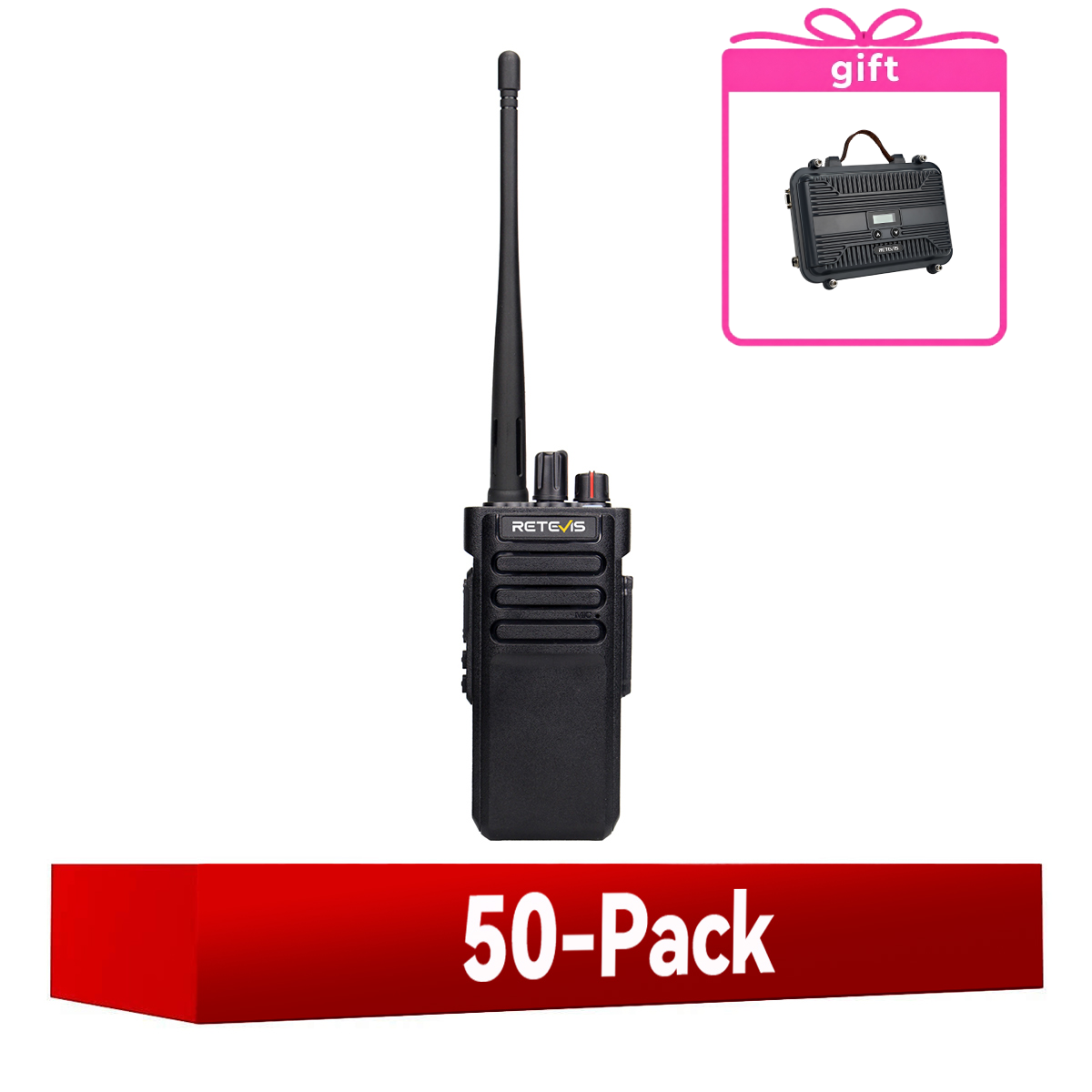
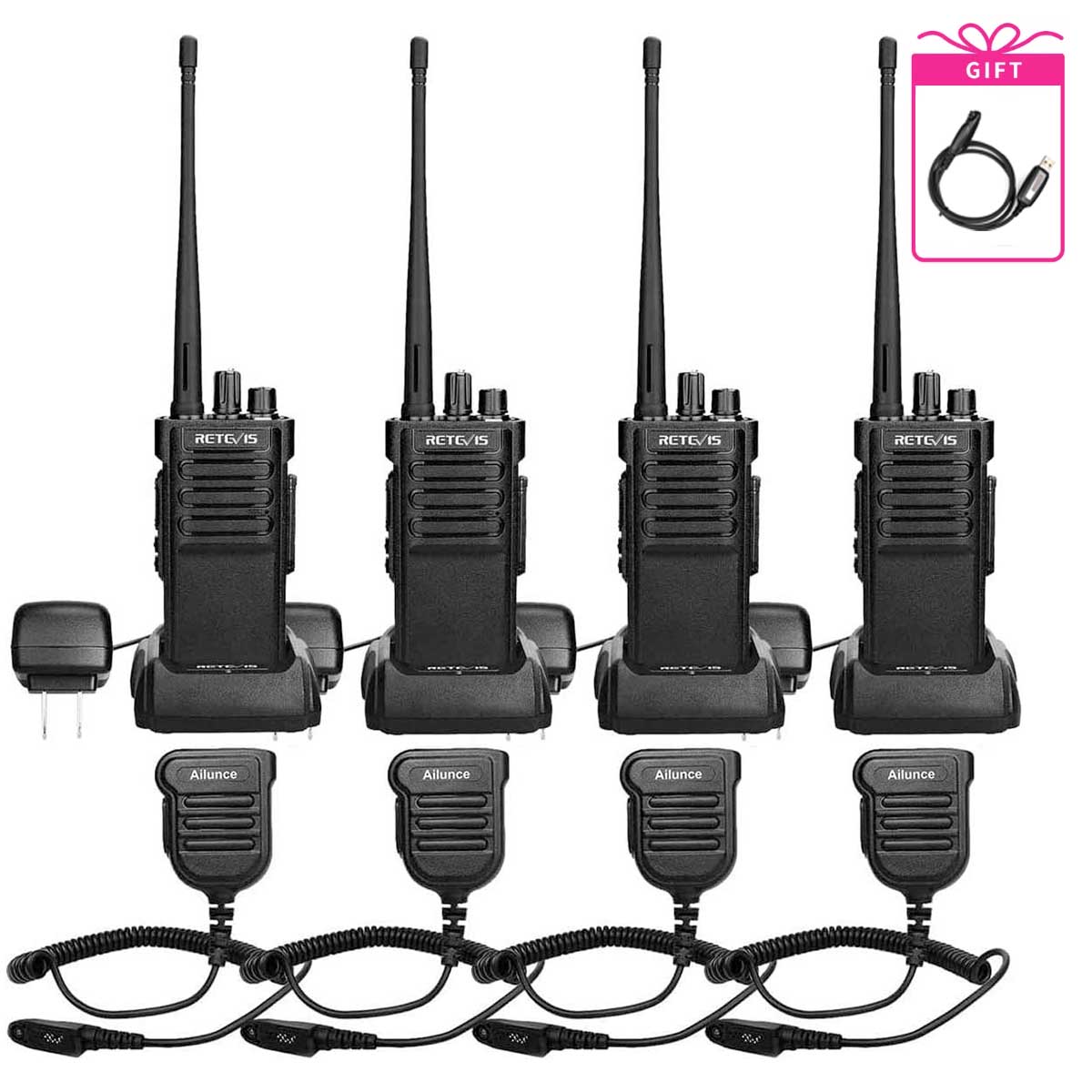
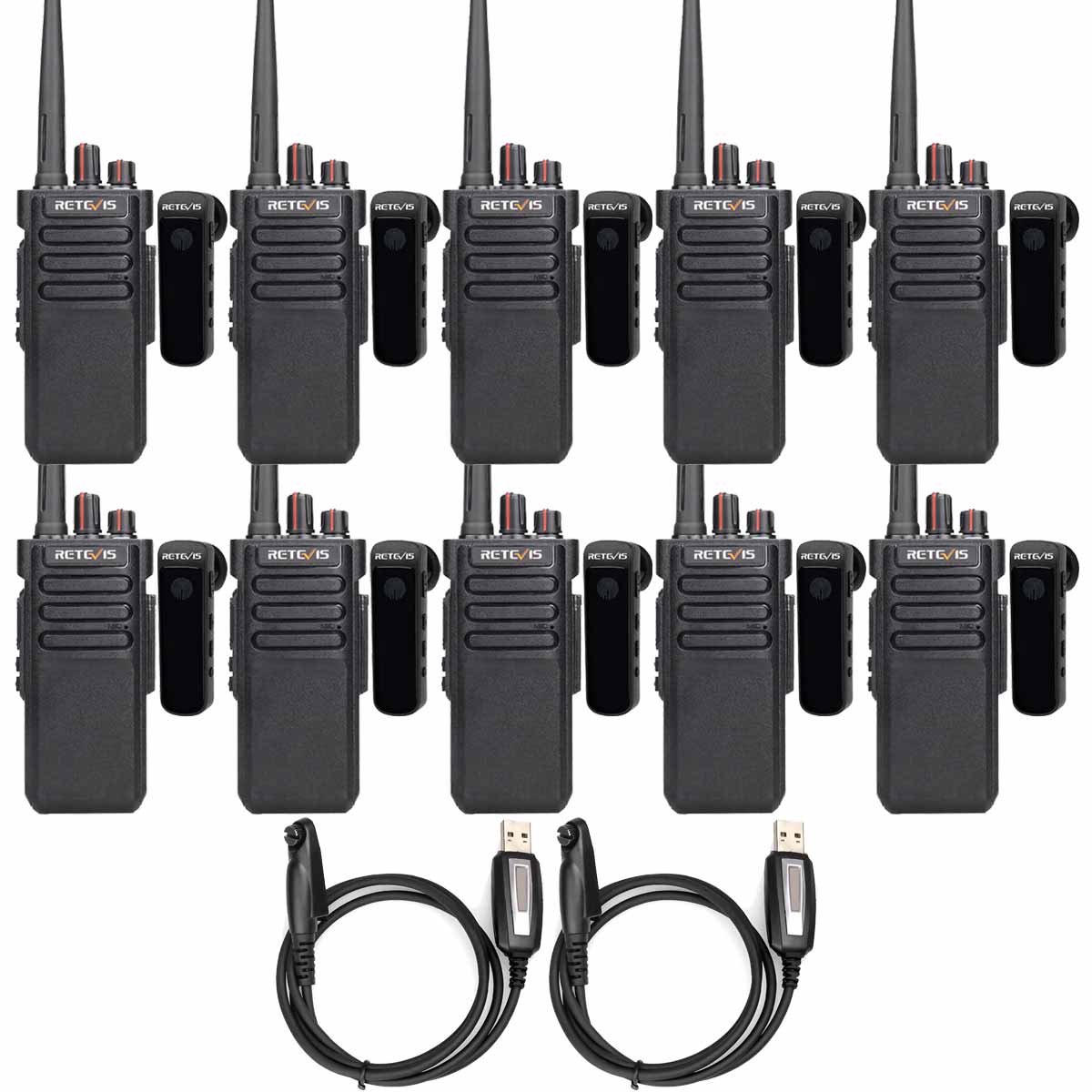
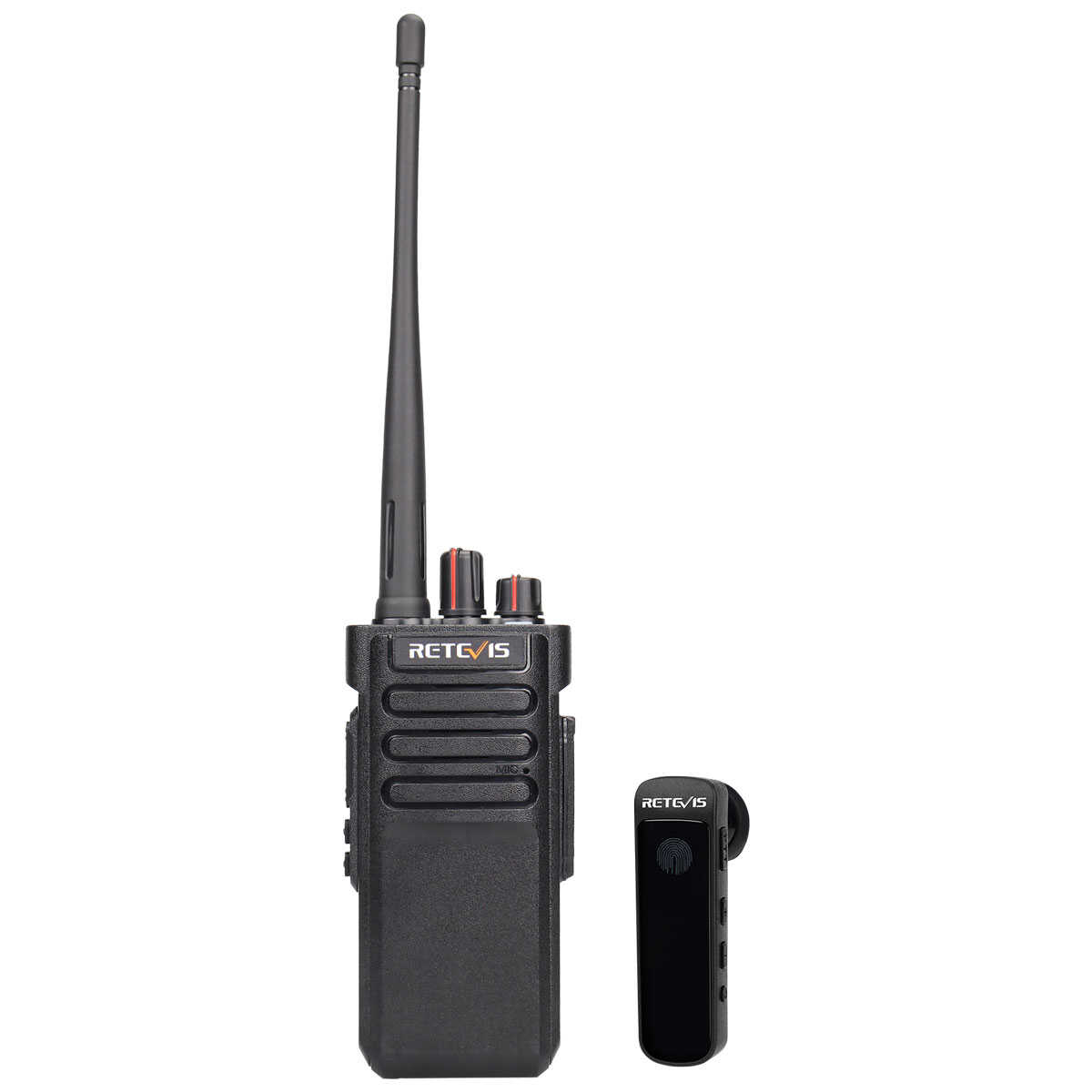
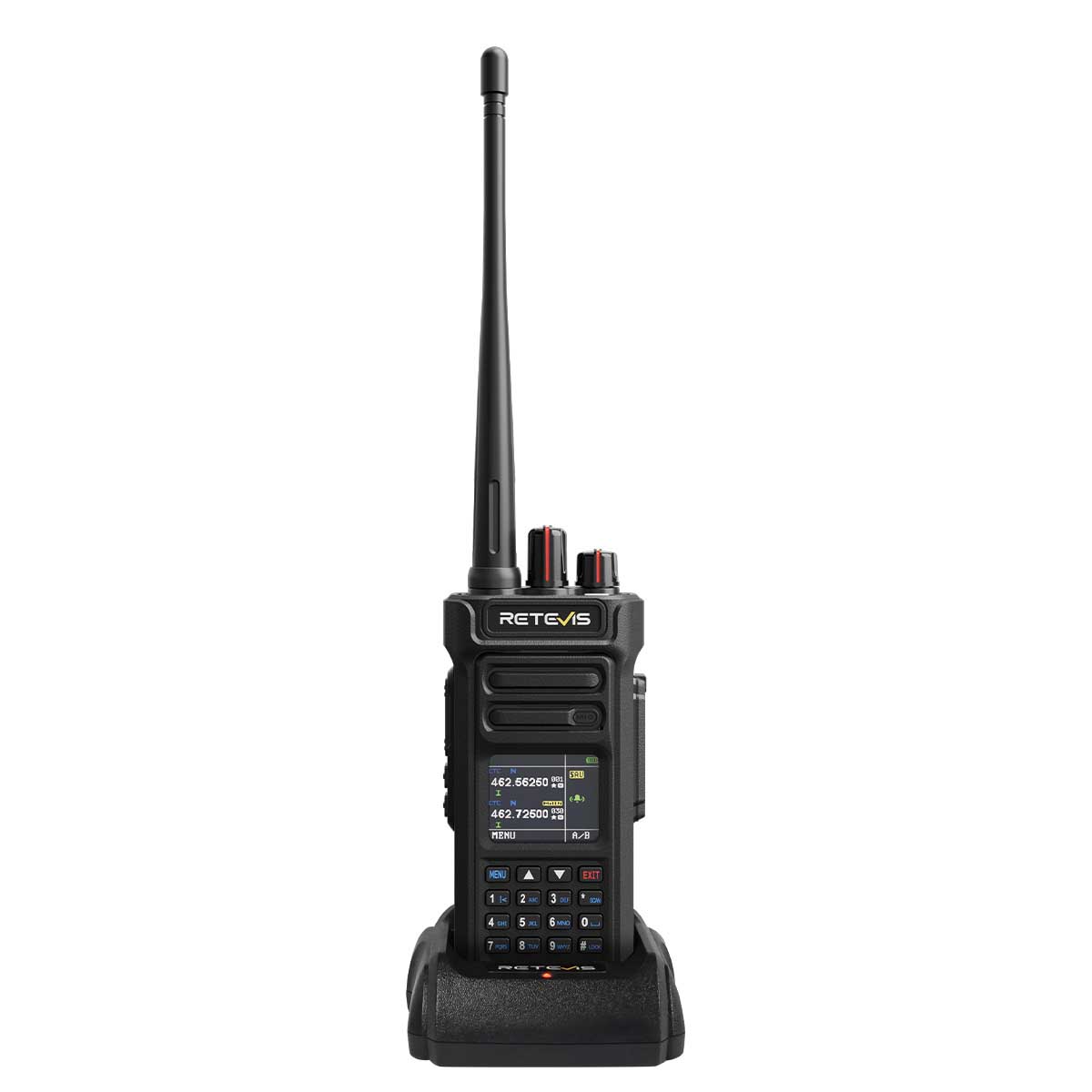
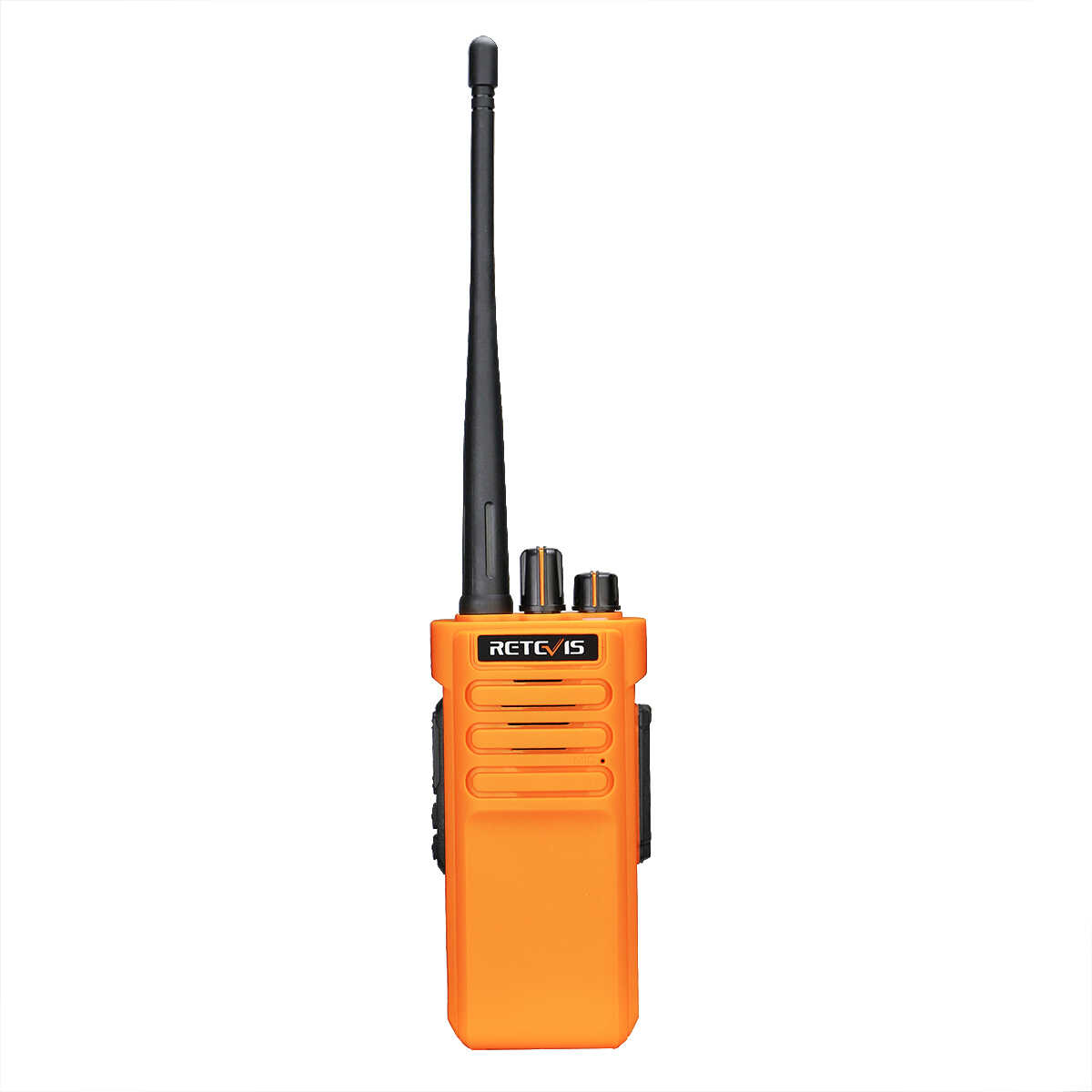
Match Your Worksite Needs to the Retevis Rugged Two Way Radio RB48 Series
The RB48 lineup covers every level of industrial demand, from basic entry-level protection to advanced digital communication. The table below breaks down core specifications and use cases for each model to help you match your worksite requirements directly.
|
Model |
Core Protection |
Communication Performance |
Battery&Charging |
Operation Convenience |
Key Features |
|
RB48 |
IP67 waterproof & dustproof; 2m drop resistance |
FRS platform; 2W output; 2.3km range |
2000mAh battery; 12h continuous use; Type-C charging |
Oversized PTT button; glove-friendly operation |
NOAA weather channels; call vibration reminder |
|
RB48 Pro |
IP67 triple protection (drop-proof, dustproof, waterproof) |
10W high power; covers 65,000㎡ / 50 floors; no signal dead zones |
2800mAh battery; 18+h working time; multi-unit charging station |
VOX hands-free; dedicated team channels |
AI noise cancellation (3-layer DNN); emergency alarm; adjustable power modes |
|
RB48 Plus |
IP67 waterproof & dustproof; 2m drop test (1000 cycles); PC+TPE rugged housing |
GMRS platform; 3-5km range; 30-floor penetration; relay channel support |
2000mAh battery; 18h continuous use; Type-C + desktop dual charging |
Dual PTT buttons (front + side); glove-friendly |
One-key group call; VOX hands-free; LCD status display; vibration reminder; emergency alarm |
|
RB48D |
IP67 waterproof & dustproof; PC+TPE impact housing; -30℃ to 60℃ wide temperature tolerance |
DMR digital + analog dual mode; 5W output; 512 channels / 16 zones |
2000mAh battery; 14h continuous use; 30h standby; built-in charging protection |
Dual PTT buttons; VOX hands-free; one-touch calling |
AI noise reduction; AES encryption; man-down alert; CPS software support |
Quick Pick Cheat Sheet
- For budget-friendly basic rugged walkie talkie for small crews: Go with RB48
- For noisy factories with strong wall penetration needs: Go with RB48 Pro
- For large outdoor sites requiring long-range GMRS industrial walkie talkie: Go with RB48 Plus
- For high-risk projects needing digital clarity and safety encryption: Go with RB48D
Conclusion
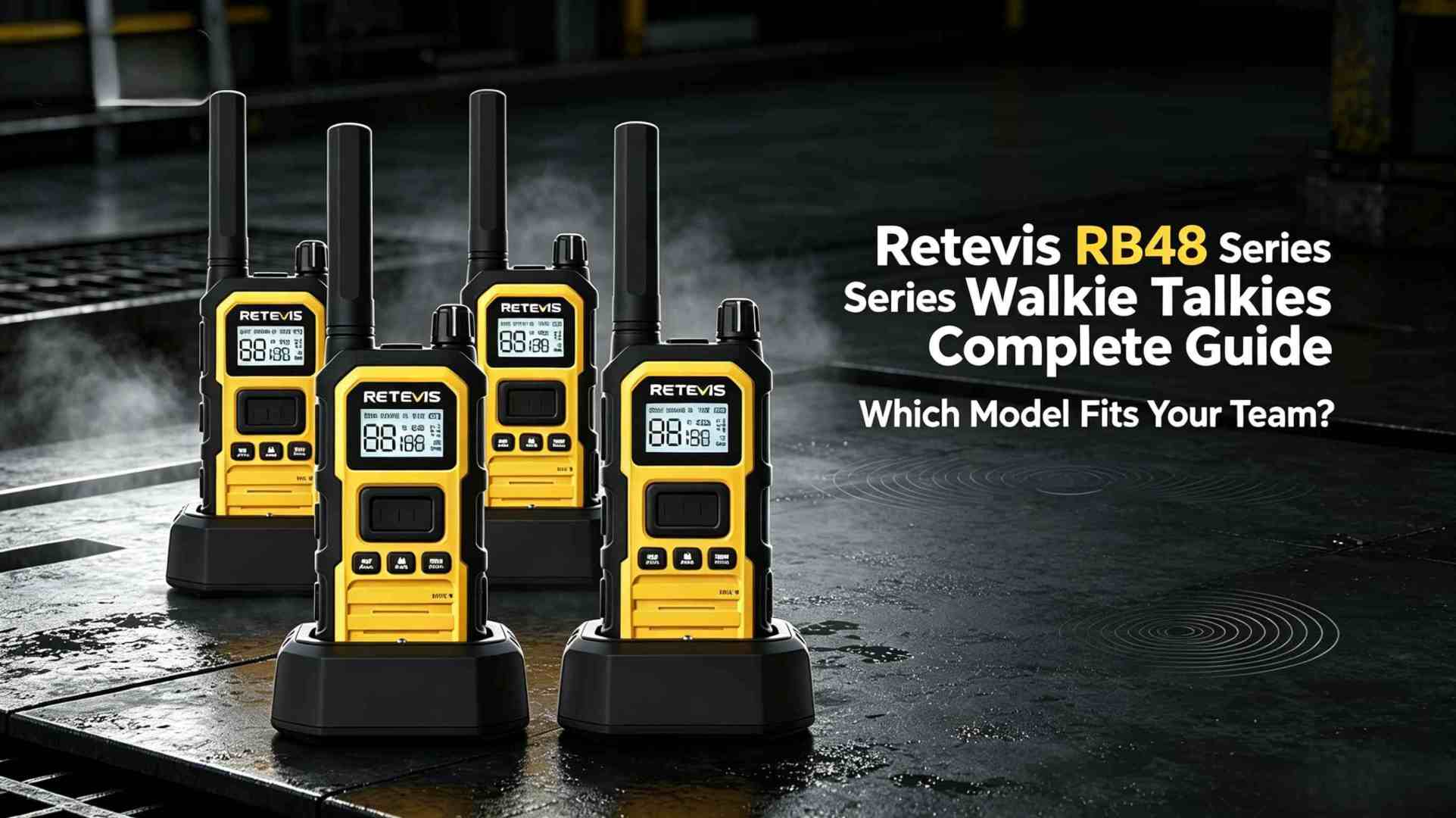
Choosing the right industrial walkie talkie starts with understanding your worksite’s unique challenges, from dust and drops to noise and distance. The Retevis rugged two way radio RB48 series covers every level of industrial need, from basic entry-level protection to advanced digital communication. By matching features to your daily operations, you can keep your team connected, efficient, and safe on every job.
Leave a Reply



 Google
 Amazon
Comments
No data Yet