

Table of Contents
What Makes a Walkie Talkie Reliable? 7 Things to Check Before You Buy
- Posted by:Retevis
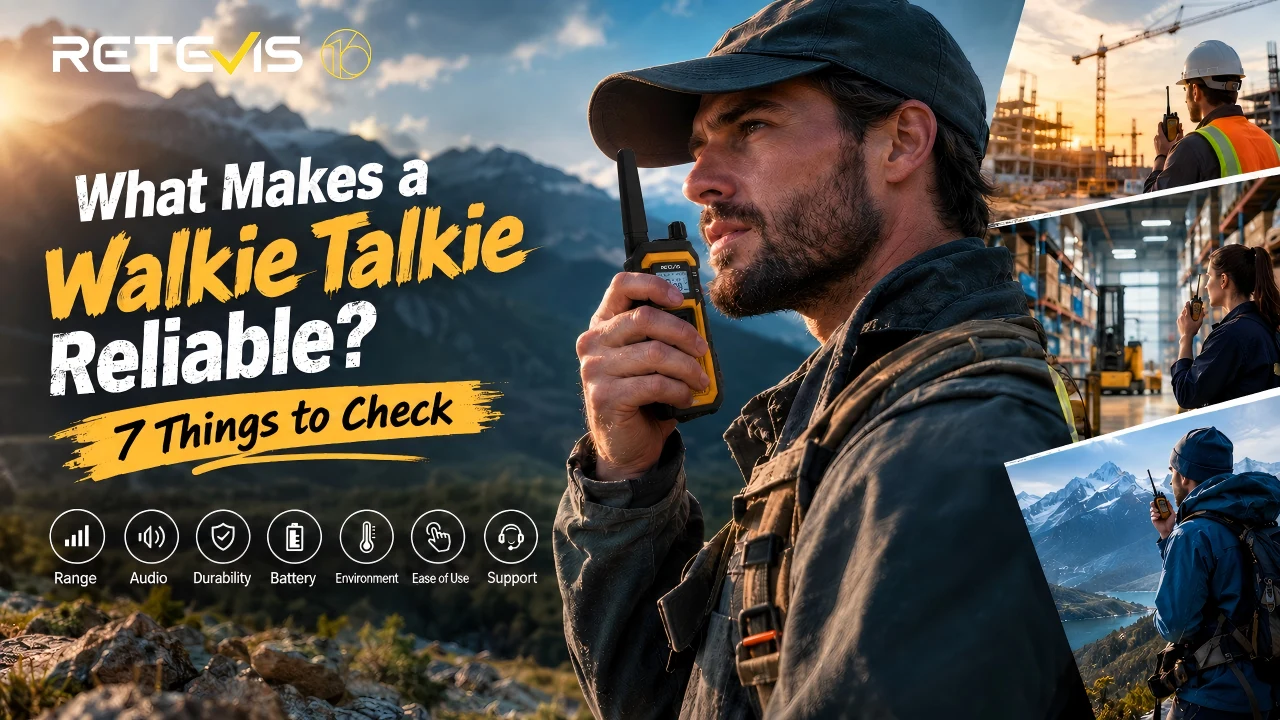
"Reliable" is one of the most overused words in two-way radio marketing. Every brand prints it on the box. Few define what it actually means.
When a radio fails on a construction site, in a warehouse, or on a hiking trail, "reliable" stops being a marketing word and starts being a safety issue. So what actually makes a walkie talkie reliable? It comes down to seven things you can check before you buy — not seven things a brand tells you to trust.
This guide walks through each one, using Retevis rugged walkie talkie products as a reference for what verifiable reliability looks like.
1. Range: It Works Where You Actually Use It
Advertised range numbers are measured in ideal conditions — flat ground, clear line of sight, no obstacles. That is not where most people use radios.
The real question is not "how many miles?" but "does it work in my space?"
Real range depends on your environment and your frequency band. UHF signals (400–520 MHz) penetrate buildings, metal racks, and urban clutter better than VHF. VHF signals (136–174 MHz) travel farther over open ground and flat terrain. In a warehouse with metal racks, a UHF radio might cover 100,000 square feet. In a downtown area with buildings, it might cover a few blocks.
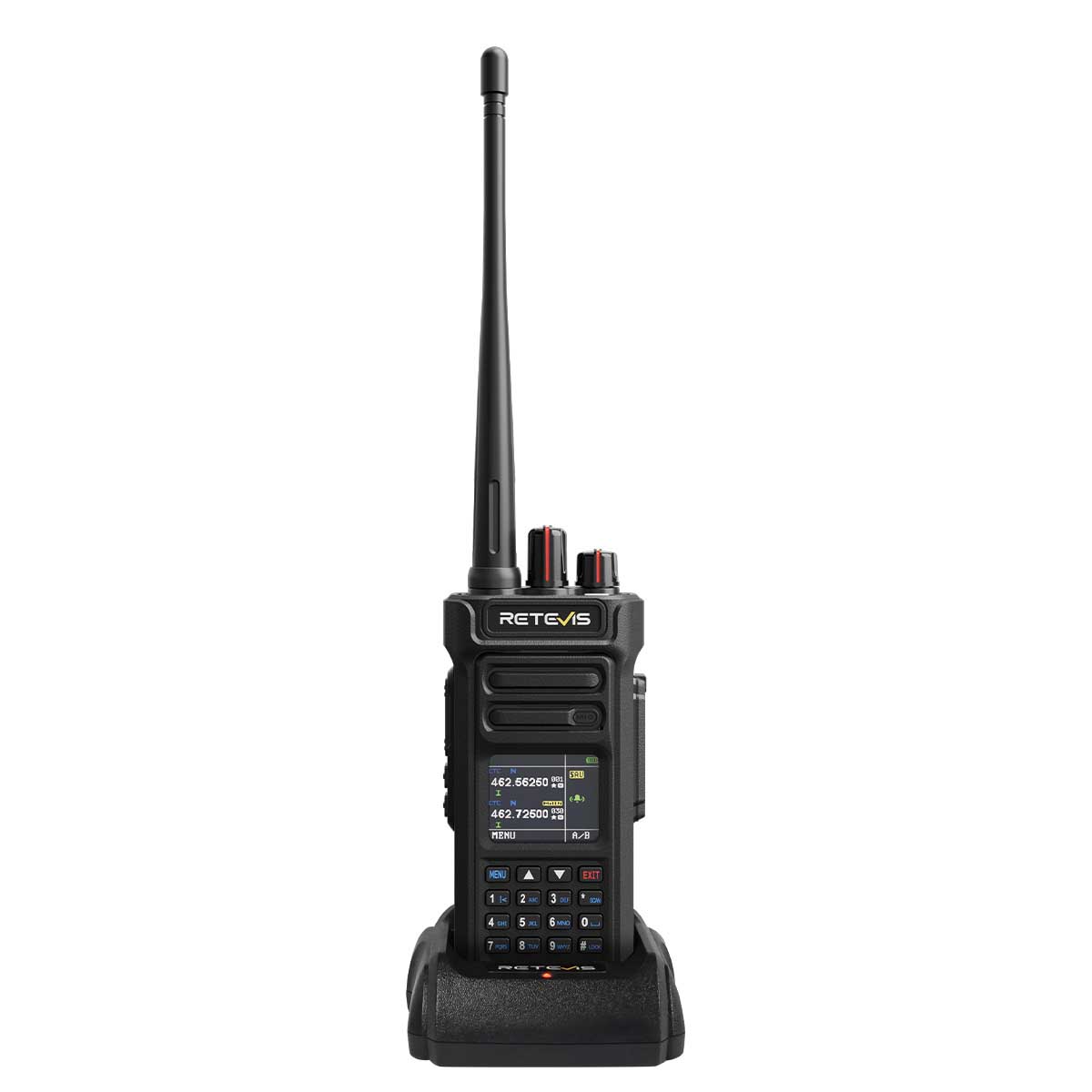
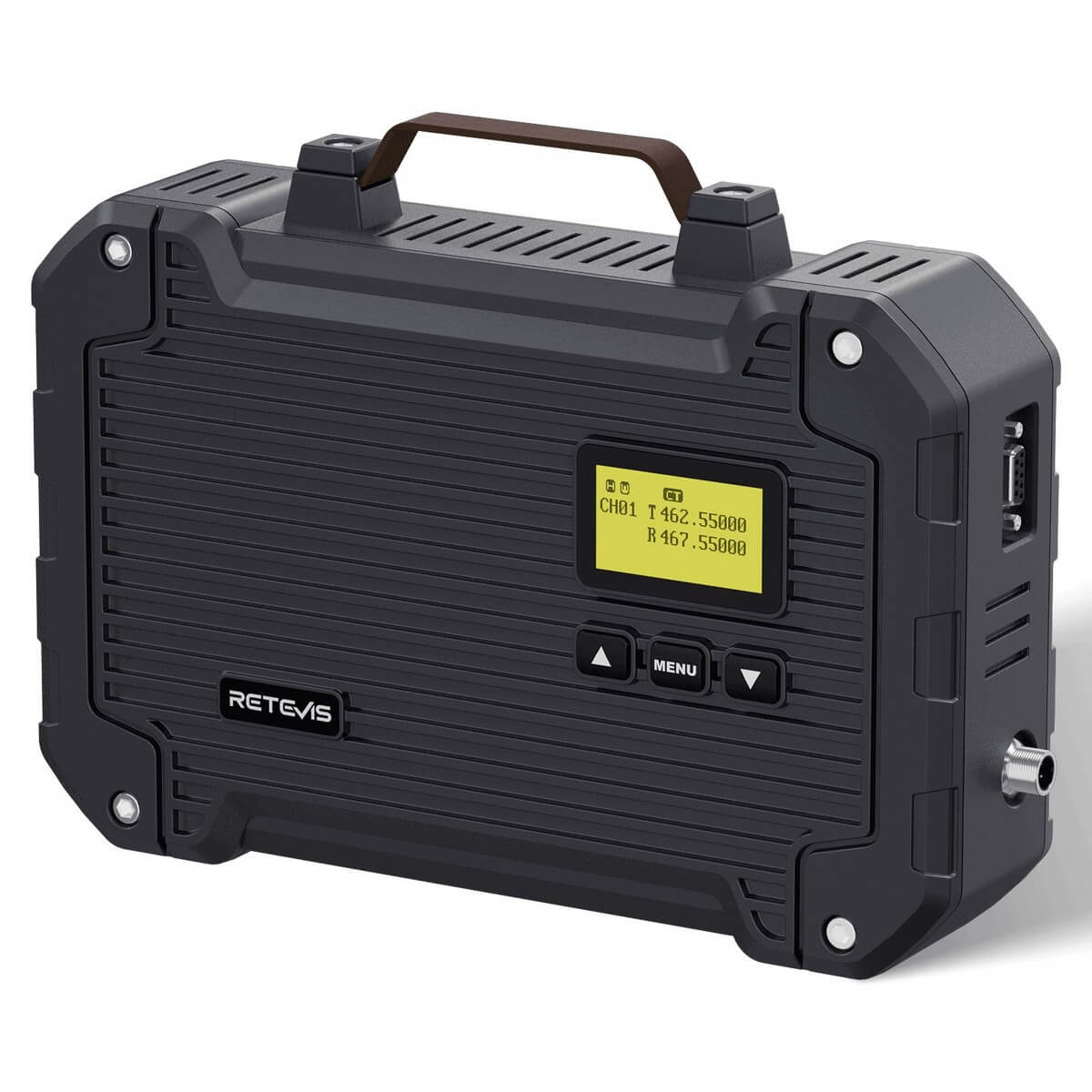
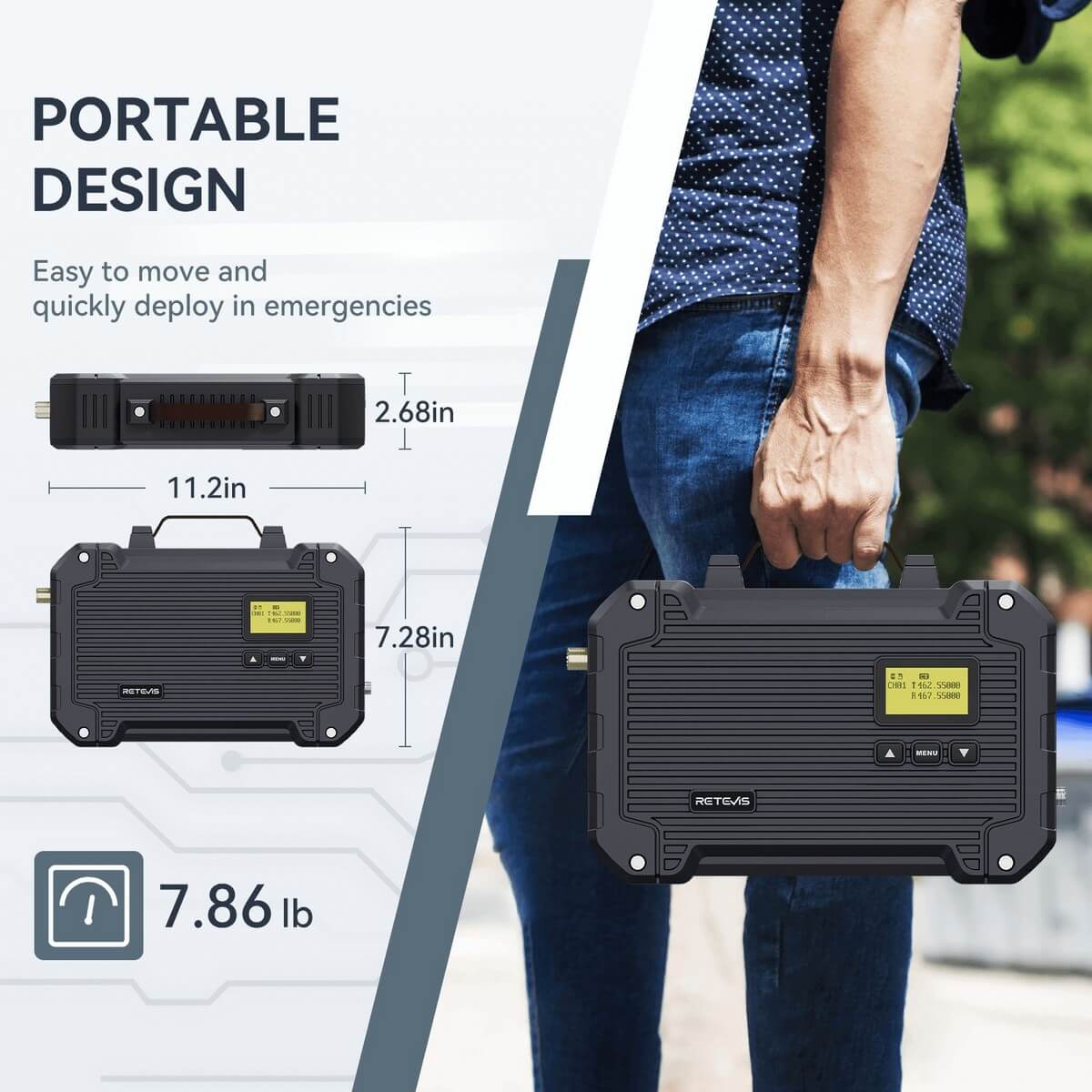
Retevis RB48 radios cover up to 300,000 square feet indoors — roughly 25 floors. For larger sites, the RT97L repeater extends coverage across an entire construction site, manufacturing floor, or warehouse complex.
One Retevis customer put it simply: "We are working in a downtown area, and even with buildings all around us, we can still hear each other."
2. Audio: Clear Enough to Understand the First Time
A radio that transmits but cannot be understood is not reliable. Repeating yourself wastes time. On a job site, a misheard instruction can cause a mistake or an injury.
You want a radio that sounds clear in a noisy environment, not just in a quiet room.
On a construction site, background noise from heavy equipment can make a weak speaker unintelligible. In a warehouse, forklift alarms and conveyor belts compete with your transmission. A reliable radio cuts through that noise the first time, every time.
Independent reviewers rate Retevis radios highly for audio. Best Choice gave the RT22 a 9.9 out of 10 for audio quality. User reviews across retail sites repeatedly mention "clear sound" and "excellent audio clarity" as standout features.
3. Durability: Tested, Not Just Advertised
Every radio claims to be "rugged." A thick-looking shell is not the same as tested durability.
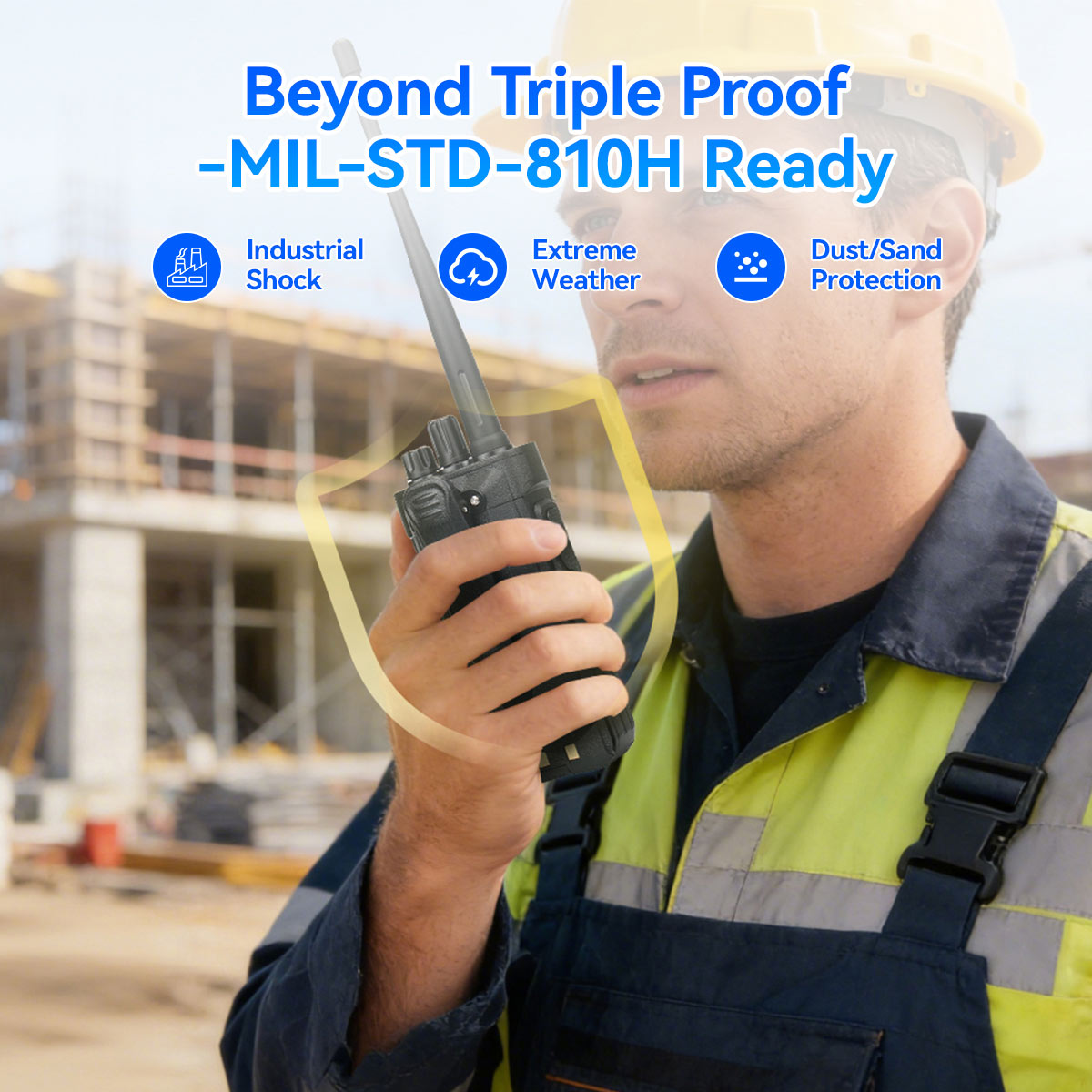
Verifiable durability means three things: an IP rating, a military standard certification, and actual drop test results.
The Retevis RB48 delivers on all three:
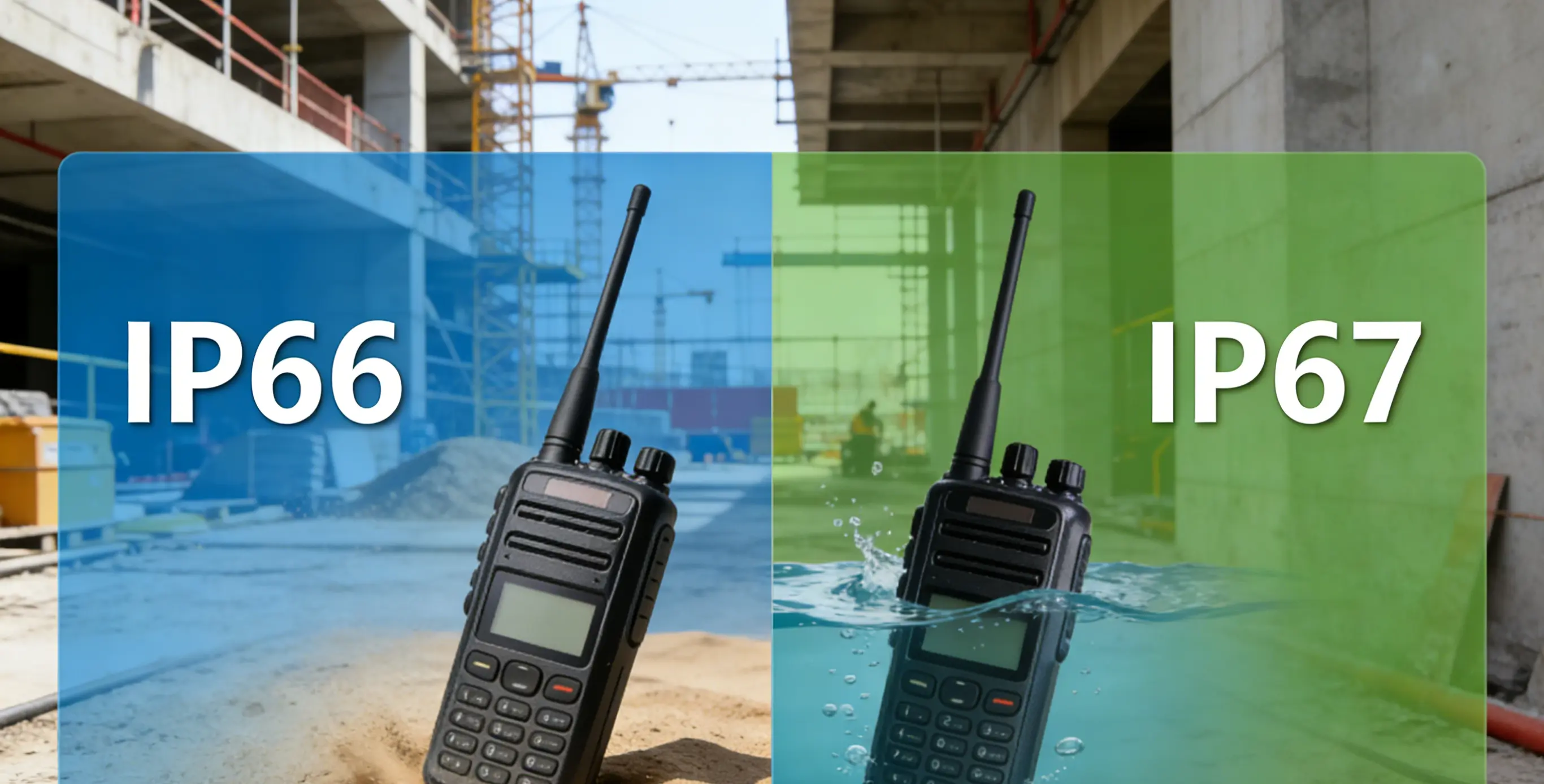
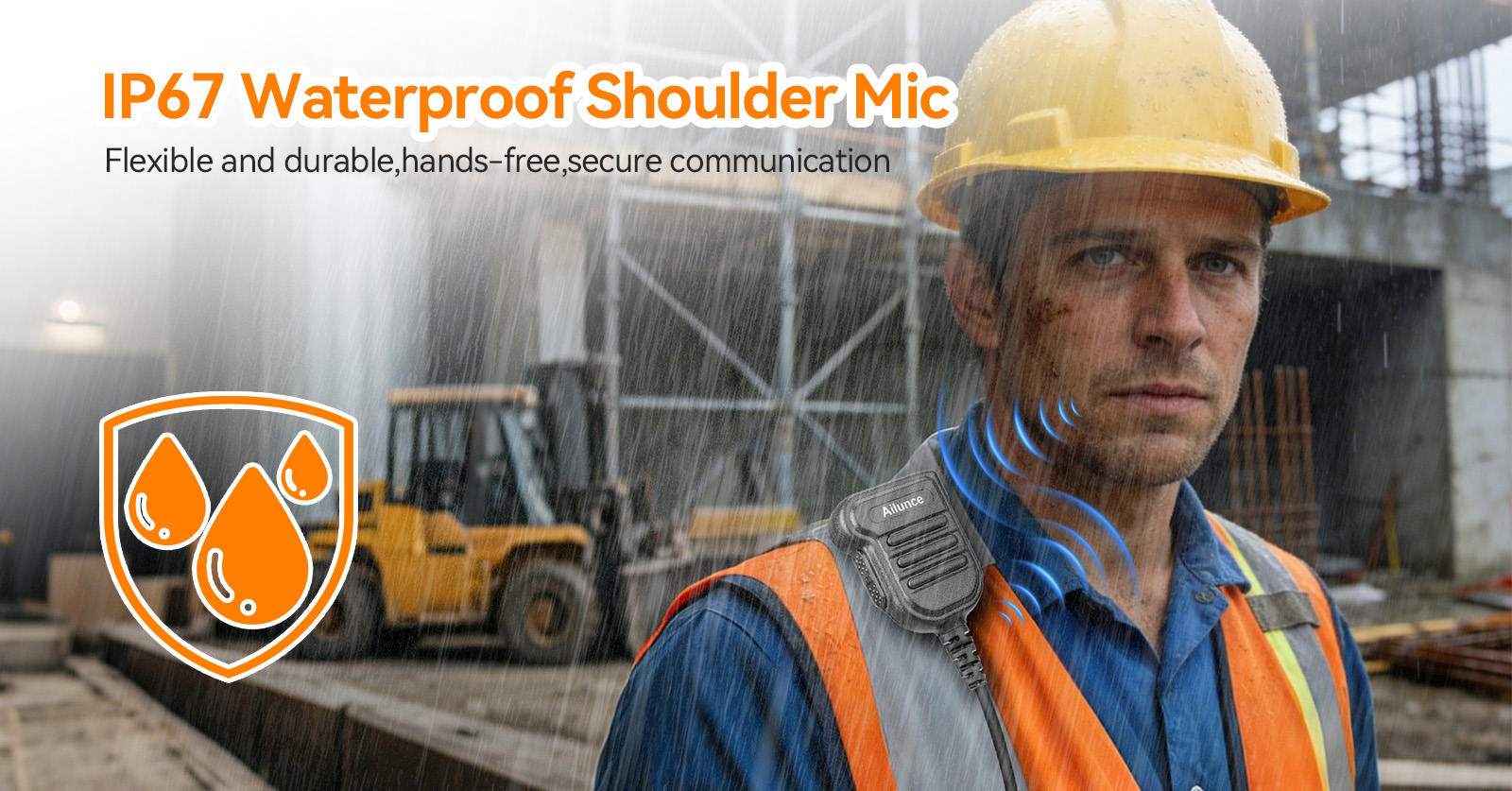
l IP67 rating—fully dustproof and submersible in one meter of water for 30 minutes
l MIL-STD-810H—military standards for shock, vibration, temperature, and humidity
l 1,000 consecutive drops from two meters onto concrete without failing
Independent reviewers have noticed. The Wearify called the RB48 "a genuinely tough and well-rounded pick" after verifying its 1,000-cycle drop test. Active Gear Advisor noted that its "MIL-STD 810H standard drop resistance surpasses many competitors."
This is what durable walkie talkies and waterproof walkie talkies should mean — tested performance, not a label. A rugged two way radio should earn that description, not print it.
4. Battery: Measured in Real Use, Not Standby
"100-hour standby" sounds impressive. It is also meaningless for anyone who actually uses a radio.
The industry standard for real-world testing is the 5-5-90 cycle: 5 percent of time transmitting, 5 percent receiving, 90 percent standing by. That matches how most teams use radios through a shift.
A reliable battery should last a full workday on a single charge under that cycle. It should also be removable so you can carry a spare for double shifts or emergency deployments, and charge via USB-C so you do not need a proprietary charger. A non-removable battery that dies after two years turns the whole radio into e-waste.
The Retevis RB48 uses a 2000 mAh battery that delivers up to 20 hours under the 5-5-90 cycle. The battery is removable, and the radio charges via USB-C.
5. Environment: It Works in Heat, Cold, Rain, and Dust
A radio that works at room temperature but fails in January or July is not reliable for outdoor work.
Environmental reliability means a rated operating temperature range and sealed construction.
The RB48 operates from -20°C to +60°C (-4°F to 140°F). Its IP67 seal keeps out concrete dust, rain, and accidental submersion. For fixed-site equipment like the RT97L repeater, Retevis adds automatic heating below -15°C and a fanless aluminum housing that dissipates heat without moving parts that can fail.
6. Ease of Use: It Works the Moment You Pick It Up
A radio that requires a training session before use creates a reliability problem every time you hire a new employee or rotate a shift. In industries with high turnover — restaurants, retail, construction — the cost of training every new hire on a complex radio adds up fast.
A radio that works the moment you pick it up eliminates that cost.
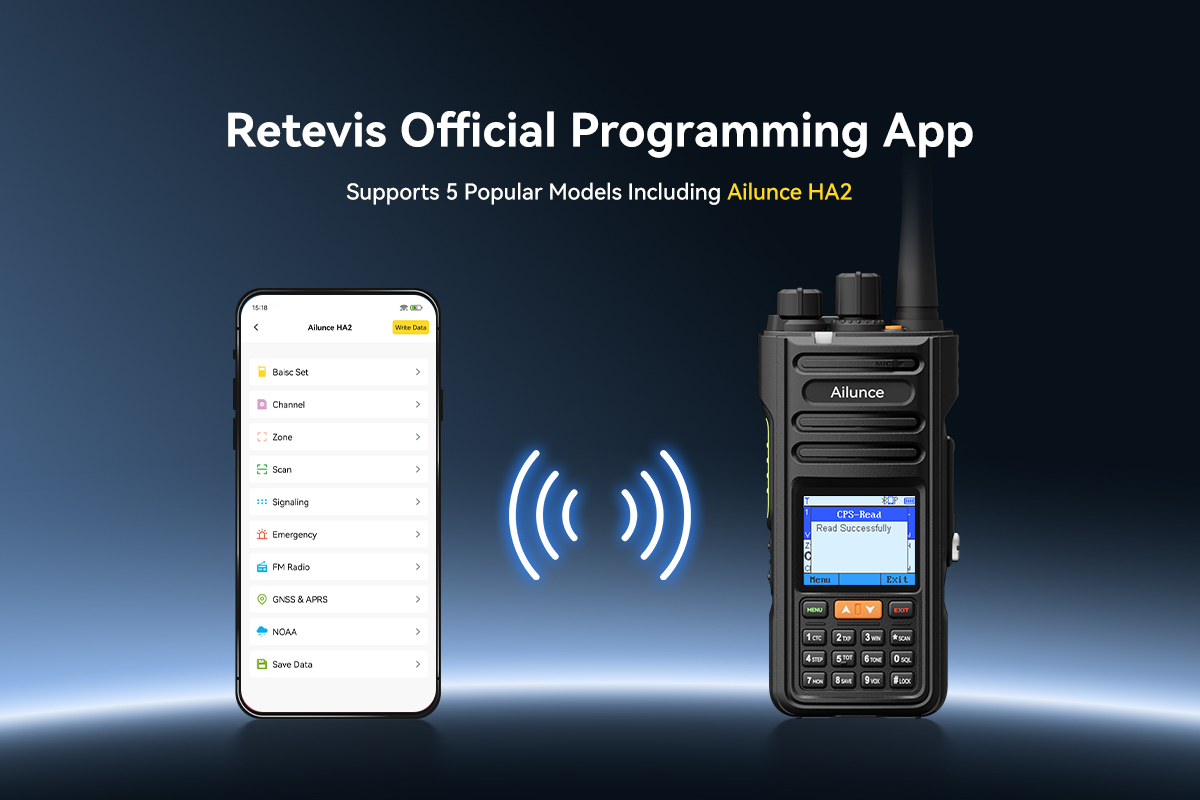
Retevis FRS models work right out of the box — no license, no programming, no setup. For models that do require programming, Retevis offers Bluetooth app programming on several units, so you can configure channels from a phone without a cable or computer. Best Choice rated the RT22 9.8 out of 10 for simplicity of use.
7. Support: It Works Even When Something Goes Wrong
Even the most reliable radio can have a problem. What matters is what happens next.
Support reliability means four things: a warranty that lasts, a return policy that lets you test risk-free, a support team that responds quickly, and technical help that does not expire.
Retevis offers a two-year warranty on the radio body and one year on accessories for most models — some carry a three-year warranty. Every purchase includes a 30-day no-reason return policy. Support is available 24/7, with a target response time of 12 hours on Amazon. Technical assistance continues for the life of the product.
This is also where the "are Retevis radios illegal" question gets answered directly. Retevis radios are not illegal. Every unit carries FCC certification, and the FCC ID is printed on the radio itself — you can look it up in the FCC database. The only legal consideration is licensing: FRS models require no license at all, while GMRS models require an FCC GMRS license that costs $35 for 10 years and covers the licensee plus immediate family members. The product is legal. The license requirement depends on which band you use.
Are Retevis Walkie Talkies Any Good?
This is the other question people ask before they buy. The answer shows up in third-party reviews and user feedback, not just in Retevis's own marketing.
l Nerd Techy named the RB48 the most durable option for warehouse use.
l Cherry Picks gave Retevis GMRS radios a 9.2 expert score.
l Best Choice rated the RT22 9.9 for audio and 9.8 for ease of use.
l The Wearify and Active Gear Advisor both verified the RB48's 1,000-cycle drop test in independent reviews.
User reviews across retail platforms consistently cite clear audio, long battery life, and tough construction as the reasons they buy a second or third set.
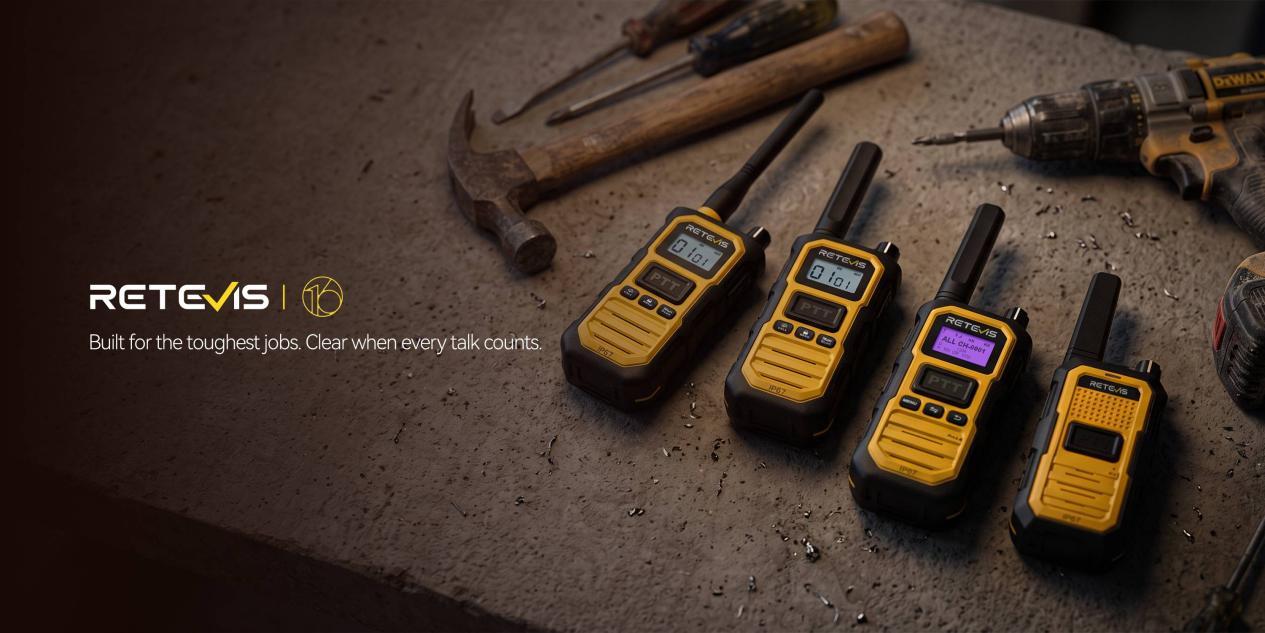
No brand is perfect for every use case. But the pattern across independent testing and real customer feedback is consistent: Retevis radios deliver verifiable performance at a price that does not require a corporate budget.
16 Years of Reliable Connections
Reliable is not a word you print on a box. It is something you earn.
Retevis has been building two-way radios since 2010. In that time, the company has shipped more than 40 million radios to customers in over 170 countries. More than 3.5 million users rely on Retevis for daily communication.
Those numbers matter because reliability is a record, not a promise. Sixteen years of product testing, customer feedback, and iterative design means the seven things outlined in this guide — range, audio, durability, battery, environment, ease of use, and support — are not theoretical. They are built into products that have been used and tested by millions of people across every environment you can imagine.
When you check those seven things before you buy, you are not just comparing specs. You are comparing records. And 16 Years of Reliable Connections is a record that speaks for itself.
Leave a Reply





 Google
 Amazon
Comments
No data Yet