
Table of Contents
APRS for Hurricane Season: Ham Radio Emergency Guide
- Posted by:Retevis
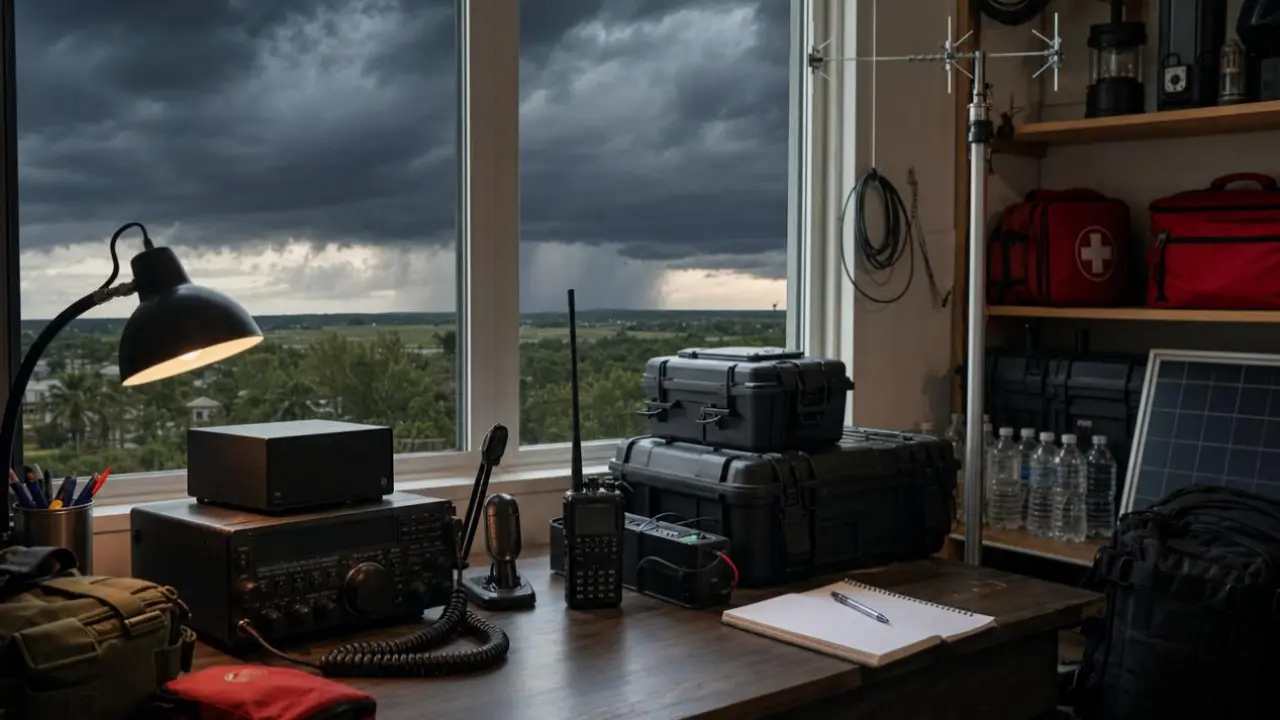
APRS for Hurricane Season: Build a Station That Works When the Grid Goes Down
APRS (Automatic Packet Reporting System) is not a satellite system. Instead, APRS is a radio-based data communication protocol used mainly by amateur radio users. Most APRS stations stop working within four hours of a hurricane landfall. The issue is not the APRS protocol itself. It is that most stations are built for casual daily use, with full reliance on grid power and home internet. When those systems fail, standard APRS setups lose most of their utility.
This guide reframes APRS as a disaster communication tool, with actionable steps for every phase of a hurricane. It covers pre-season upgrades, last-minute configuration changes, and a tiered operating plan that scales down as infrastructure fails. All settings and practices align with ARRL emergency communication standards.
Pre-Season Hardening: Build a Storm-Ready APRS Station
Preparation done before hurricane season starts has the biggest impact on storm-time reliability. Complete these steps well before any storm forms in the Atlantic.
- Power backup built for 72+ hours
Fixed stations need a minimum 72-hour battery backup, paired with a small solar panel for extended outages. Lithium iron phosphate or sealed lead-acid batteries work best for this use case. Portable and handheld APRS units should carry spare batteries rated for at least 24 hours of continuous transmit.
- Antenna reinforcement
Secure fixed outdoor antennas with heavy-duty mounting hardware. Antennas rated for 120+ mph wind resistance are preferred for hurricane zones. Keep a compact emergency whip antenna stored indoors. If the main antenna fails, this backup can be deployed quickly for basic operation.
- Map your local resilient nodes
Use APRS tracking tools to identify which local digipeaters (Digital Repeater) and iGates (Internet Gateway) have backup power. Mark these nodes on a local map. These are the stations most likely to stay online through a storm. Note coverage gaps in your area. Plan for direct radio-to-radio operation in zones with no reliable repeater coverage.
- Save emergency configurations
Program one dedicated memory profile in your radio for hurricane mode. Pre-set the correct path settings, beacon intervals, and message templates so no last-minute tuning is required. The standard hurricane path setting is WIDE1-1,WIDE2-1. This balances reach and network load, and prevents unnecessary traffic congestion.
48 Hours Before Landfall: Final Configuration Shifts
When a hurricane watch is issued and landfall becomes likely, make these targeted changes to optimize your station for storm conditions.
- Adjust beacon intervals
Reduce unnecessary beacon frequency to ease network load. Fixed stations should send position beacons every 5 to 10 minutes, down from the usual 1 to 2 minute interval. Mobile units in active service can keep 1 to 2 minute intervals. Casual mobile stations should shift to 5 minute intervals.
- Run a full offline test
Disconnect your station from home internet. Confirm you can still decode local APRS packets using standalone software such as Dire Wolf. Verify direct message delivery between two local stations without relying on iGates. This confirms your equipment works in pure RF mode.
- Coordinate with local operators
Agree on standard message formats for status updates, welfare checks, and damage reports. Standardized formats reduce confusion and speed up information sharing. Confirm which frequencies and paths will be used for primary emergency traffic.
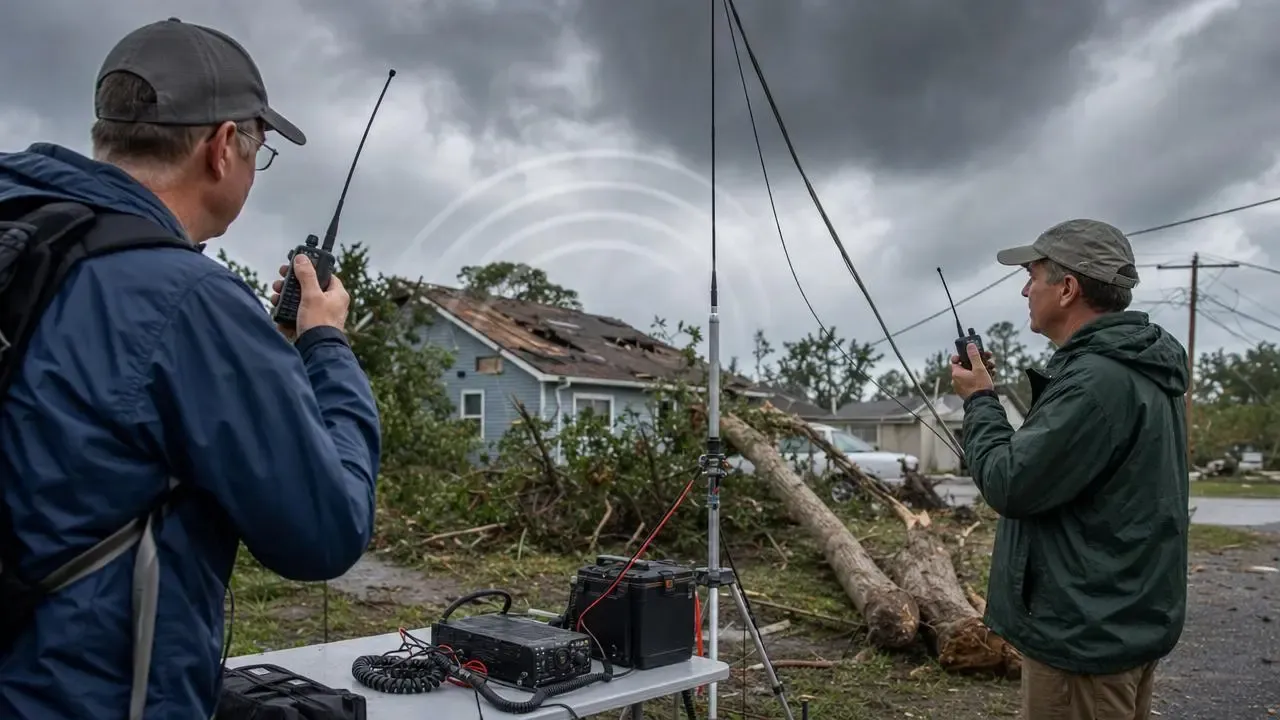
During the Storm: Three-Tier Degraded Operation
As infrastructure fails through the storm, shift your operation down one tier at a time. Focus on preserving core communication capability, even as supporting systems go offline.
Tier 1: Full Network Mode
Applies when power and internet remain intact, usually in the early pre-landfall phase. Core functions include wide-area position tracking, damage reporting to regional emergency operation centers, and coordination across multiple response teams. Send only structured damage and welfare messages. Avoid casual traffic. All reports must include exact location and time in UTC. Data routed through iGates can feed into official emergency management systems.
Tier 2: Local RF Only Mode
Applies when internet goes down but some battery-backed digipeaters remain active. This is the most common operating state during the peak of a hurricane strike. Core functions include community-level position sharing, local welfare checks, and shelter and supply point status updates. Disable iGate connections on all stations. Rely only on local RF digipeaters. Keep messages under 40 characters for highest delivery rate. Prioritize traffic for emergency response teams and official welfare messages.
Tier 3: Direct Peer-to-Peer Mode
Applies when all local repeaters go offline and only end-user stations remain functional. This is the worst-case scenario for heavily damaged areas. Core functions include small team position tracking and short emergency messages between nearby stations. Disable all digipeater paths. Transmit beacons directly. Reduce beacon rate to once every 10 minutes to save battery. Send only critical status information. Longer messages will have very low delivery rates in this mode.
Post-Storm Recovery and Follow-Up
Work does not end when the storm passes. Proper recovery improves network performance for future events.
First, export and share all locally logged APRS data. Position tracks and damage reports support local damage assessment and recovery planning. Local emergency management teams often rely on this data to prioritize response resources.
Second, inspect all antennas, cables, and power equipment for storm damage. Repair or replace damaged parts before returning to normal operation. Water damage to coax cables often shows up weeks after a storm, so test every connection thoroughly.
Third, document coverage gaps and node failures observed during the storm. Share this information with local ham radio groups to guide network improvements before the next storm. Communities often upgrade backup power for key digipeaters after identifying weak points.
Finally, reset equipment to standard daily settings once normal power and internet service are fully restored.
Five Core Rules for Hurricane APRS Operation
- Never increase beacon frequency for non-emergency use. Extra traffic clogs the network for everyone.
- Send only structured, fact-based damage reports. Do not relay unconfirmed rumors or secondhand information.
- Keep welfare messages short. Include only name, location, and basic status.
- Yield channel access to official emergency response and search traffic.
- Do not transmit on emergency frequencies if you are not part of an active response effort.
APRS is more than a casual tracking tool. When configured correctly, it becomes one of the most reliable communication systems available during a hurricane. The value of the system comes not from fancy equipment, but from pre-planning and familiarity with degraded operating modes. Operators who test and prepare before storm season deliver the most value to their communities when disaster hits.
73!






 Google
 Amazon
Comments
No data Yet