

Table of Contents
Best Ham Radio Antennas: 10 Types Compared, Pros, Cons & Best Uses
- Posted by:Retevis
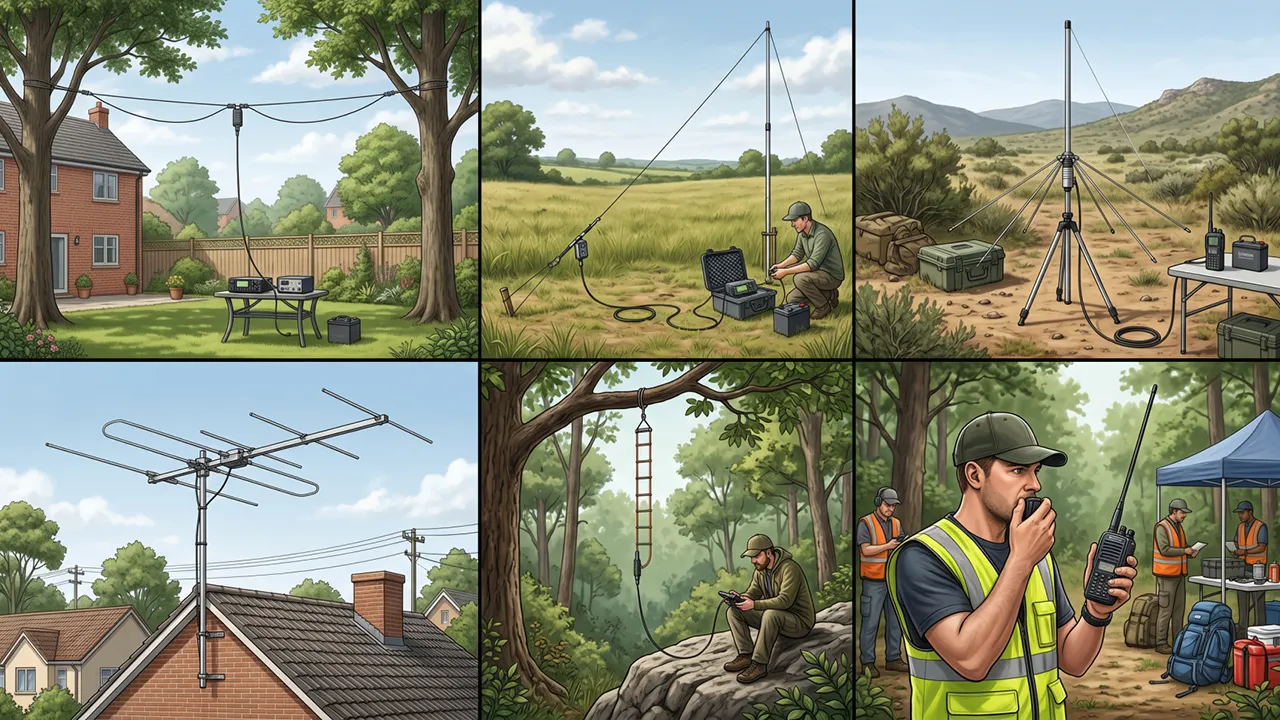
A high-quality antenna is the core factor that determines ham radio communication performance. The right antenna improves signal reception, transmission range, and communication stability. Many new ham radio operators struggle to choose the right antenna because of the variety of types, installation methods, and frequency bands.
This guide covers 10 mainstream ham radio antennas, explains their features, pros and cons, and provides scenario-based recommendations. Beginners can quickly learn how to select the right antenna for home, mobile, portable, or long-distance use.
1. What Makes a Good Ham Radio Antenna?
A good antenna should balance several factors:
- Frequency coverage: Match the antenna to the bands you plan to operate on.
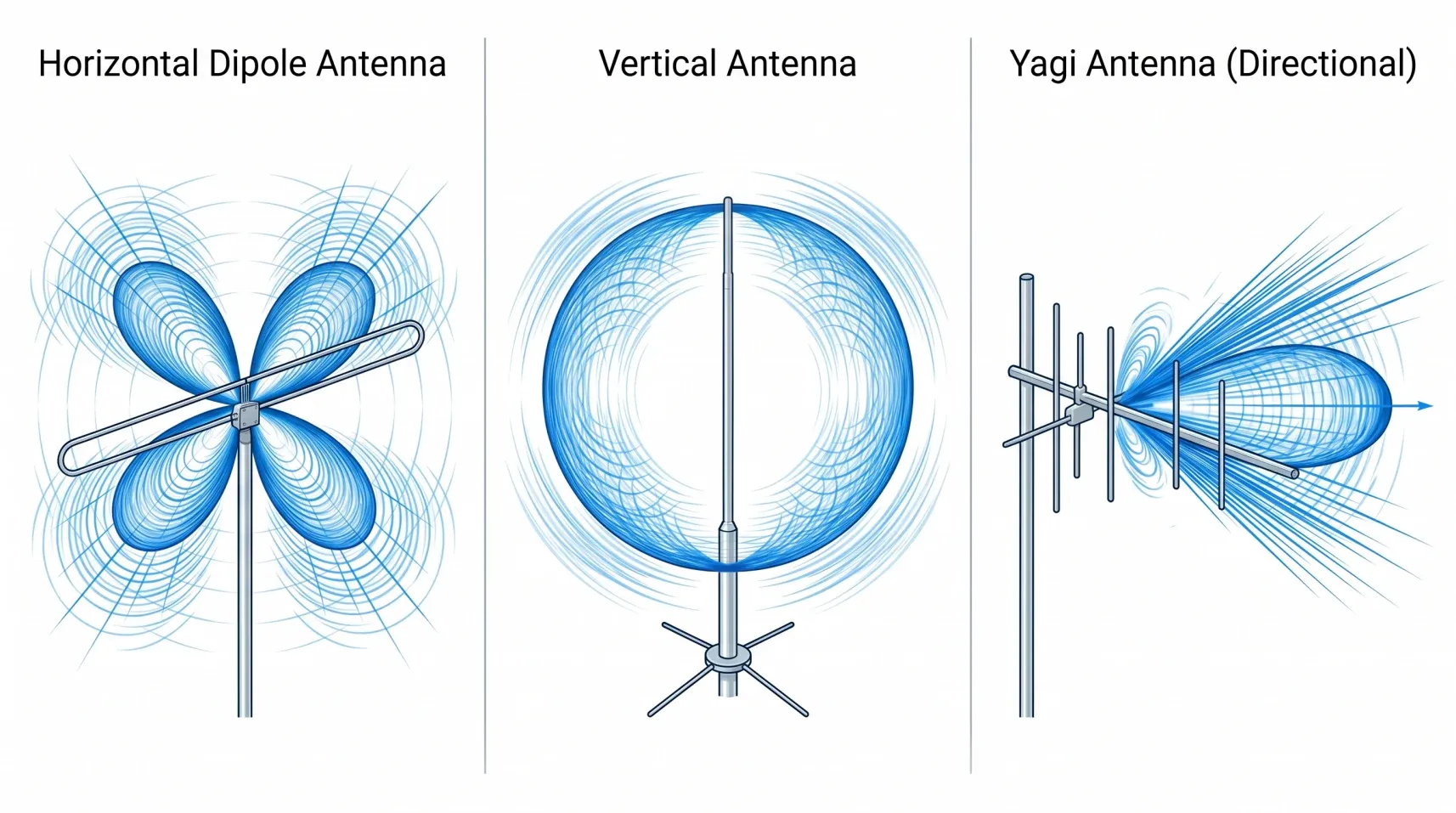
- Gain & Radiation pattern: High-gain antennas extend communication range; directional antennas improve long-distance performance.
- Noise resistance: Low-noise antennas improve signal clarity.
- Ease of installation: Some antennas require significant space or supports; others are compact and portable.
- Durability & Cost: Outdoor antennas must withstand weather, and cost should fit your budget.
Understanding these factors first makes antenna selection much easier.
2. Ham Radio Antenna Basics
2.1 Core Parameters
Band classification:
- HF: Long-distance communication
- VHF/UHF: Local and medium-range communication
Single-band vs. Multi-band: - Single-band antennas: Simple, stable performance
- Multi-band antennas: Cover several bands for versatile use
SWR & Impedance:
- Most radios match 50Ω
- Low SWR reduces signal loss; high SWR can damage equipment
Gain & Noise Resistance:
- High-gain antennas focus energy for longer range
- Some antennas reduce environmental noise for clearer reception
2.2 Common Installation Configurations
- Inverted V: One high center point, two low ends; omnidirectional coverage with a single support
- Inverted L: Vertical plus horizontal; space-saving for narrow areas
- Sloper: One high and one low end; improves long-distance radiation
- Flat-top: Fully horizontal; stable radiation pattern
2.3 Core Accessories
- Tuner: Matches antenna to radio, reduces SWR, enables multi-band operation
- Radials: Provide an effective ground plane for vertical antennas, improving efficiency
- Balun: Balances current, reduces RF interference, protects equipment
3. 10 Common Ham Radio Antenna Types
Each antenna is presented with frequency range, build difficulty, cost, pros, cons, and recommended installation.
3.1 End Fed Half Wave (EFHW) – Beginner & Portable Friendly
- Frequency: 10m–80m (multi-band)
- Build Difficulty: 2/5
- Pros: Multi-band, one support point, flexible layouts, lightweight, portable
- Cons: Unbalanced feed increases noise, needs choke or counterpoise, SWR affected by rain/temperature
- Best Installation: Sloper or inverted L for limited space; horizontal for stable home use
3.2 Center-Fed Half-Wave Dipole – Classic Home Antenna
- Frequency: 10m–80m
- Build Difficulty: 1/5
- Pros: Simple, efficient, low signal loss, predictable performance
- Cons: Single-band, needs enough horizontal space, performance depends on height
- Best Installation: Inverted V (single support), flat-top (optimal signal)
3.3 Off-Center-Fed (OCF) Dipole
- Frequency: HF multi-bands
- Build Difficulty: 2/5
- Pros: Stable multi-band operation, lower interference than EFHW
- Cons: Requires precise cutting, professional impedance matching recommended
- Best Installation: Horizontal flat-top
3.4 Vertical & Ground Plane – DX & Mobile Use
- Frequency: 10m–80m
- Build Difficulty: 3/5
- Pros: Low-angle radiation, omnidirectional, space-saving, good for DX
- Cons: Ground-mounted requires many radials; elevated verticals need fewer; higher noise than wire antennas
- Best Installation: Vertical with complete radials or vehicle ground plane
3.5 Hamstick / Trapped Dipole – Compact Mobile
- Frequency: 6m–80m (single-band per unit)
- Build Difficulty: 2/5
- Pros: Compact, portable, quick band switching, easy vehicle installation
- Cons: Narrow bandwidth, lower efficiency, low-band tuning challenging
- Best Installation: Vertical mobile; paired units for portable dipole
3.6 G5RV – Cost-Effective Multi-Band Home Antenna
- Frequency: 10m–80m
- Build Difficulty: 2/5
- Pros: Multi-band, no traps, beginner-friendly, smaller than full-size dipoles
- Cons: Tuner required for most bands, unstable SWR on some bands
- Best Installation: 30+ ft high flat-top or wide inverted V
3.7 ZS6BKW – Upgraded G5RV
- Frequency: Stable 10m/12m/17m/20m/40m; expandable with tuner
- Build Difficulty: 2/5
- Pros: No tuner needed on 5 bands, more stable SWR, better DX performance
- Cons: Requires 40+ ft height, ladder line affected by rain, tuner required for low/high bands
- Best Installation: High flat-top layout
3.8 Yagi-Uda – Directional Long-Distance & Satellite
- Frequency: Commonly 20m, 15m, 10m, 6m, 2m, 70cm
- Build Difficulty: 3/5
- Pros: High gain, directional, rejects rear interference, excellent for DX and satellite
- Cons: Narrow bandwidth, precise aiming required, sensitive to wind
- Best Installation: Rotatable mast for directional alignment
3.9 Roll-Up J-Pole – Ultra-Portable Emergency
- Frequency: VHF/UHF (2m/70cm)
- Build Difficulty: 3/5
- Pros: Lightweight, foldable, no radials needed, quick deployment
- Cons: Performance affected by nearby objects, dual-band compromises UHF, rain affects SWR
- Best Installation: Vertical suspension for outdoor/emergency use
3.10 Rubber Duck – Handheld Temporary
- Frequency: VHF/UHF (2m/70cm)
- Build Difficulty: 1/5
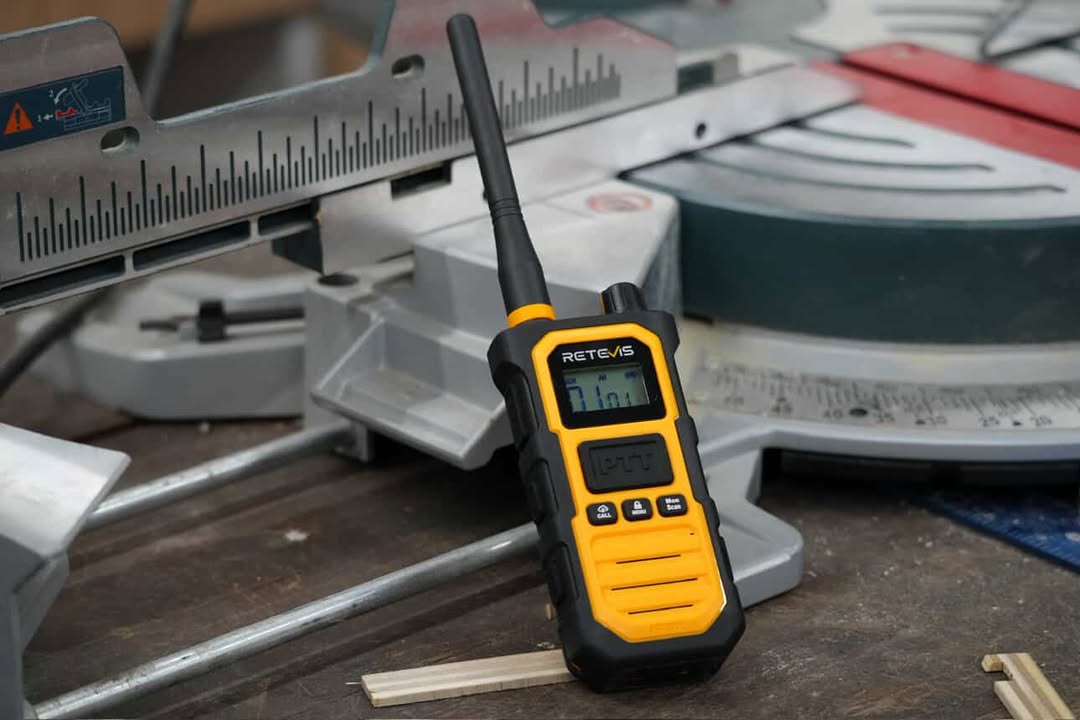
- Pros: Compact, durable, included with handheld radios, omnidirectional
- Cons: Low gain, narrow bandwidth, poor long-distance performance
- Best Installation: Direct plug-in for local use
4. Ham Radio Antenna Comparison Table
|
Antenna |
Frequency |
Build Difficulty |
Noise Resistance |
Directivity |
Core Advantages |
Main Defects |
|
EFHW |
10m–80m |
2/5 |
Average |
Omnidirectional |
Multi-band, portable, easy installation |
RF feedback, weather sensitive |
|
Wire Dipole |
10m–80m |
1/5 |
Good |
Bidirectional |
Efficient, easy to build |
Single-band, space dependent |
|
Vertical/Ground Plane |
10m–80m |
3/5 |
Fair |
Omnidirectional |
Excellent DX performance, space-saving |
Requires radials, higher noise pickup |
|
Hamstick |
6m–80m |
2/5 |
Average |
Omnidirectional |
Compact, easy mobile use |
Narrow bandwidth, lower efficiency |
|
G5RV |
10m–80m |
2/5 |
Good |
Bidirectional |
Affordable multi-band operation |
Requires tuner on most bands |
|
ZS6BKW |
10m–80m |
2/5 |
Good |
Bidirectional |
Better SWR than G5RV |
Height dependent |
|
Yagi-Uda |
HF to UHF |
3/5 |
Excellent |
Highly Directional |
High gain, ideal for DX and satellites |
Requires rotator and aiming |
|
Roll-Up J-Pole |
VHF/UHF |
3/5 |
Average |
Omnidirectional |
Lightweight, portable |
Sensitive to nearby objects |
|
Rubber Duck |
VHF/UHF |
1/5 |
Poor |
Omnidirectional |
Compact and durable |
Lowest efficiency |
5. Wire Antenna vs Vertical Antenna
Many operators eventually face a common question: should they choose a wire antenna or a vertical antenna?
|
Feature |
Wire Antenna |
Vertical Antenna |
|
Space Requirement |
Large |
Small |
|
Noise Pickup |
Lower |
Higher |
|
Installation Cost |
Low |
Moderate |
|
Local Communication |
Excellent |
Good |
|
DX Performance |
Good |
Excellent |
|
HOA-Friendly |
Usually No |
Often Yes |
|
Maintenance |
Low |
Moderate |
5.1 Choose a Wire Antenna If:
- You have trees, a yard, or open space.
- You want lower noise levels.
- You mainly operate HF from home.
- You prefer simple and inexpensive installations.
5.2 Choose a Vertical Antenna If:
- Space is limited.
- HOA restrictions prevent large wire antennas.
- You focus on long-distance DX contacts.
- You need omnidirectional coverage.
Neither design is universally better. The best choice depends on your operating goals and available space.
6. Best Ham Radio Antennas for Beginners
6.1 Best Overall Beginner HF Antenna
Center-Fed Dipole
Why it stands out:
- Lowest cost
- Easy to build
- Predictable performance
- Excellent learning platform
6.2 Best Portable HF Antenna
EFHW
Why it stands out:
- Lightweight
- Fast deployment
- Multi-band operation
- Minimal support requirements
6.3 Best Beginner VHF/UHF Base Antenna
J-Pole
Why it stands out:
- No radials required
- Simple construction
- Reliable local coverage
6.4 Best Mobile Antenna
Hamstick or Mobile Vertical
Why it stands out:
- Compact size
- Easy installation
- Proven mobile performance
7. Scenario-Based Ham Radio Antenna Selection Guide

7.1 Home Base Station
Plenty of Space
Choose a ZS6BKW or Dipole.
Benefits:
- Excellent HF performance
- Stable operation
- Low operating cost
Limited Backyard or Balcony
Choose an EFHW.
Benefits:
- Flexible installation
- Multi-band capability
- Minimal space requirements
Lowest Budget
Choose a DIY Dipole.
Benefits:
- Lowest cost
- High efficiency
- Easy maintenance
7.2 Mobile Vehicle Operation
Best Overall Choice
Choose a Vertical Mobile Antenna.
Benefits:
- Compact footprint
- Omnidirectional coverage
- Strong DX capability
Small Vehicle Installation
Choose a Hamstick.
Benefits:
- Easy installation
- Quick band changes
- Compact design
7.3 Portable Operations (POTA, SOTA, Emergency)
VHF/UHF Operations
Choose a Roll-Up J-Pole.
Benefits:
- Lightweight
- Packs into a backpack
- No radials required
HF Field Operations
Choose an EFHW.
Benefits:
- Fast deployment
- Multi-band support
- Works with a single support point
7.4 DX and Satellite Communication
HF DX Contacts
Choose a Vertical Antenna or ZS6BKW.
Benefits:
- Low-angle radiation
- Strong long-distance performance
Satellite Communication
Choose a Yagi-Uda Antenna.
Benefits:
- High gain
- Excellent directivity
- Better weak-signal reception
If you're still deciding which antenna best fits your operating style, there is no better place to compare solutions in person than HAM RADIO 2026 in Friedrichshafen, Germany.
As Europe's largest amateur radio exhibition, HAM RADIO brings together radio enthusiasts, antenna manufacturers, equipment developers, and amateur radio organizations from around the world. Visitors can explore a wide range of HF, VHF, and UHF antenna designs, compare installation options, and learn from experienced operators through live demonstrations and technical discussions.
The event will take place from June 26–28, 2026 in Friedrichshafen, Germany. The RETEVIS team will also be attending, and we look forward to meeting amateur radio operators, field-communication enthusiasts, and outdoor radio users from around the world.
8. Common Ham Radio Antenna Mistakes to Avoid
8.1 Installing the Antenna Too Low
Antenna height often affects performance more than antenna price.
8.2 Ignoring SWR Measurements
High SWR reduces efficiency and can stress the transmitter.
Always check SWR after installation.
8.3 Using Poor Feed Line
Low-quality coaxial cable can waste signal power before it reaches the antenna.
8.4 Skipping Common-Mode Chokes
This is especially important for EFHW antennas.
A choke helps reduce RF feedback and unwanted noise.
8.5 Expecting One Antenna to Do Everything
Every antenna design involves compromises.
A portable antenna, a DX antenna, and a mobile antenna are often very different solutions.
Final Conclusion
There is no perfect ham radio antenna. Every design involves trade-offs between size, cost, bandwidth, gain, and ease of installation.
For most beginners, a center-fed dipole remains the best starting point because it is inexpensive, efficient, and easy to understand. Operators with limited space often prefer EFHW or vertical antennas, while portable operators benefit from lightweight EFHW and roll-up J-pole designs.
Regardless of antenna type, installation quality has a greater impact on performance than price. A properly installed entry-level antenna will often outperform an expensive antenna installed too low or in a poor location.
Start by choosing an radio antenna that matches your operating goals and available space. Once you gain experience, you can experiment with more specialized designs to improve performance for specific applications.
Leave a Reply





 Google
 Amazon
Comments
No data Yet