

Table of Contents
Best Walkie Talkie for Winter Construction Freeze-Thaw Guide
- Posted by:Retevis
The best walkie talkie for winter construction is not the unit carrying the biggest cold-weather label. Two way radio battery performance in cold weather changes the moment a unit crosses the freezing point, and a radio on a construction site in Berlin, Manchester or Rotterdam crosses it several times every shift. A rugged radio for extreme temperatures helps, but most winter radio failures start with summer-style management. The damage builds up crossing by crossing.
The lowest temperature a walkie talkie meets rarely decides its fate. What matters is the number of times it crosses freezing. This guide explains how winter construction runs on a temperature window, what the daily crossings do to lithium batteries and seals, and how to match three Retevis two way radios to the three winter climates found across Europe.
Winter construction in Europe runs on a temperature window
The main winter construction markets — the UK, Germany, northern France, the Benelux, Poland — share a specific pattern. Daytime temperatures on a building site often climb to +2 to +5°C. Night temperatures fall to -2 to -5°C. Berlin and Brandenburg record 60 to 80 frost days in an average winter, and each frost day means one more freeze-thaw cycle for every radio on the job site.
Crew leads do not ask whether the construction site runs at all. They work out how many usable hours the day holds:
- Early morning, at the lowest temperature: frozen-ground excavation, rebar tying, mechanical work and material preparation
- Late morning, as the window opens: masonry, concrete placement and mortar work
- Afternoon, as temperature drops: covering, curing and interior finishing
- Late afternoon: tools and walkie talkies back into the warm cabin
The temperature limits behind this schedule are well known across European winter construction:
- EN 13670 requires concrete to stay above +5°C until it reaches 5 MPa
- German practice works in stricter bands: between +5°C and -3°C air, fresh concrete must arrive at no less than +5°C; below -3°C, it must reach +10°C and be kept warm for three days
- British NHBC standards stop masonry and paint work once air temperature falls below +2°C
The window for a concrete pour can be only three or four hours. Mixer trucks, pumps, the pour crew, the temperature checker and the covering team all relay inside that window. One person out of contact can cost a full truck of concrete and a re-pour the next day. A winter construction site depends on reliable two way radios more than a summer site does.
Cold weather sends a radio through four crossings a shift
A walkie talkie on a winter construction site goes through four distinct temperature changes. Each one creates a specific failure.
Crossing 1: Morning, warm charging box to frozen ground
The radio leaves a +15°C cabin and reaches ambient temperature within about twenty minutes. Cold weather raises the internal resistance of lithium cells, and the battery can no longer deliver its full rated capacity. This is the core reason two way radio battery performance in cold weather drops hard. At 0°C, available capacity falls by 20 to 40%. Below freezing, a fully charged walkie talkie battery may deliver only half of its stated run time. The loss starts in the morning and keeps growing through the day.
Crossing 2: Lunch break, cold site to warm cabin
Workers bring radios into a heated cabin or truck cab at around +15°C. Cold casings meet warm, humid air and condensation forms, both on the surface and inside the housing. It settles on the speaker mesh, in the gaps around buttons and inside the battery compartment.
Crossing 3: Afternoon, warm cabin back to the job site
The condensation freezes within half an hour. Thin ice blocks the speaker and microphone, freezes buttons in place and forms a film over battery contacts. This happens at the exact time the temperature window closes and coordination on the construction site is heaviest.
Crossing 4: Evening, back to the charging room
Residual ice melts in the +20°C room, creating a second round of condensation that works its way into seals and gaps overnight.
The damage accumulates the same way a paper clip breaks after repeated bending. A single cold weather crossing does not kill a radio. Sixty to eighty freeze-thaw cycles do:
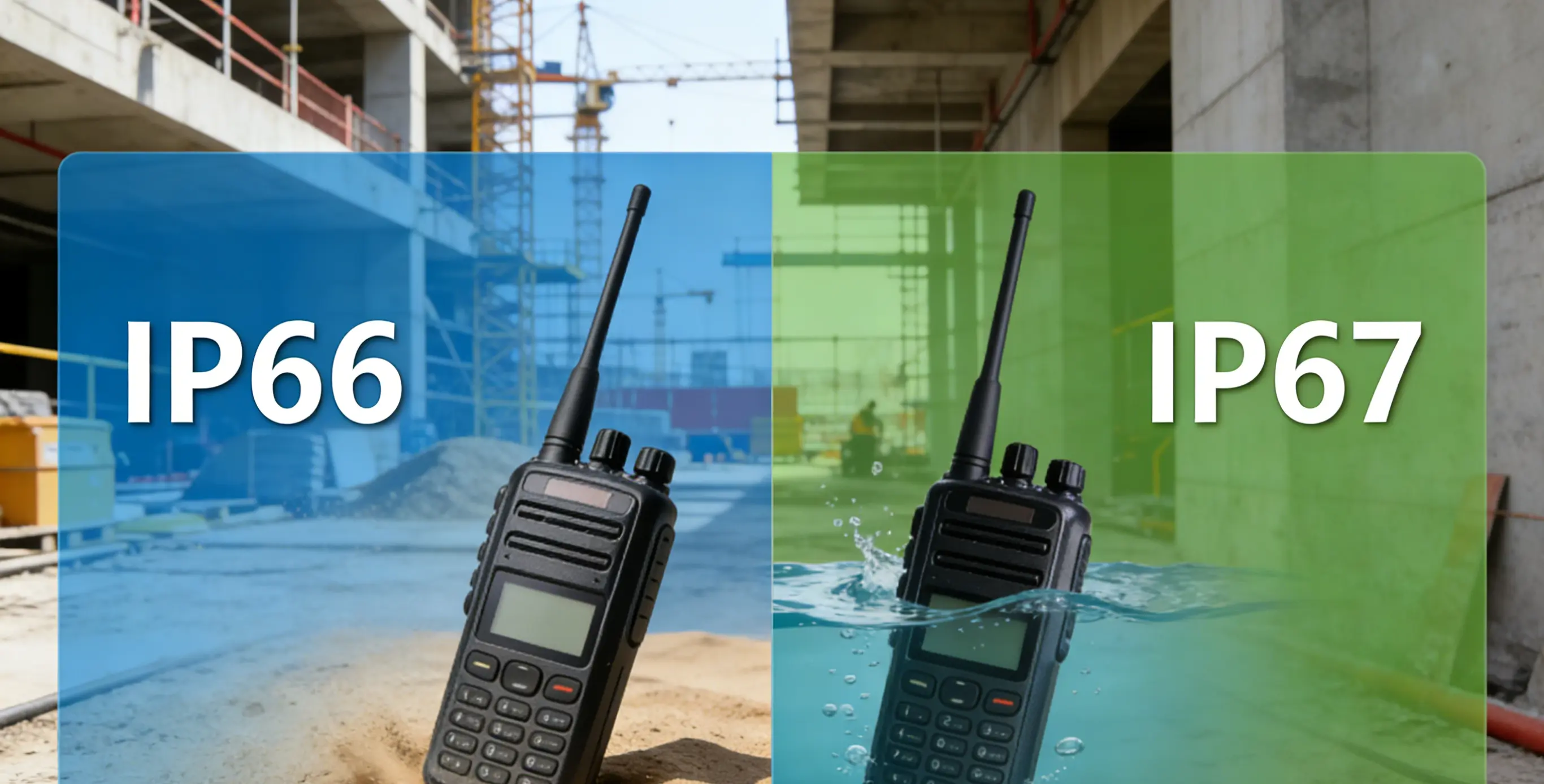
- Rubber seals compress a little more with every cycle. Sealing force drops, and the IP67 rating becomes a paper figure.
- Solder joints and internal contacts take repeated micro-stress from different materials expanding at different rates.
- Lithium battery cells swell and lose cycle life under repeated cold and warm swings.
- Plastic housings turn brittle in cold weather and crack more easily on frozen ground.
Nordic construction sites follow a different pattern. In Sweden, Norway and Finland, winter makes up roughly half the construction year rather than a pause. Equipment stays at -15°C or below for long periods, and the problem is sustained cold, not cycling. Northern crews need a rugged radio for extreme temperatures with a confirmed low temperature range, power control and battery insulation rather than condensation management.
Choose the best walkie talkie for winter construction by climate
Three European winter profiles call for three different setups.
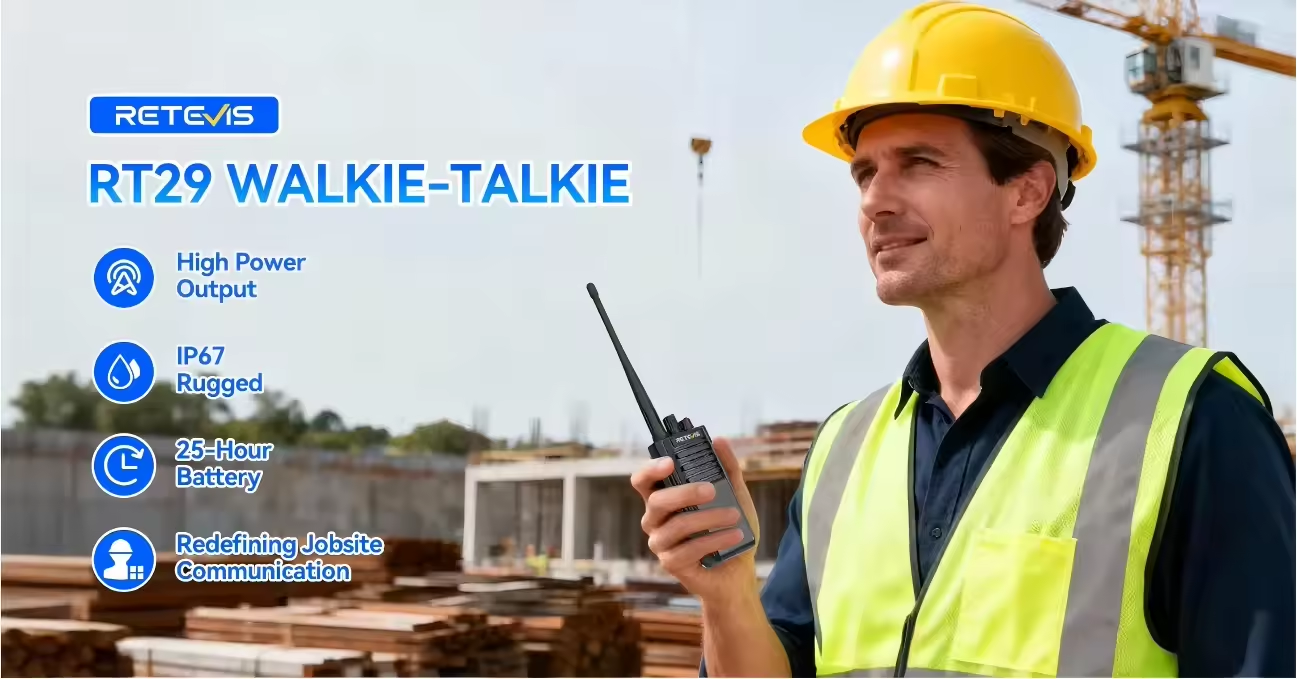
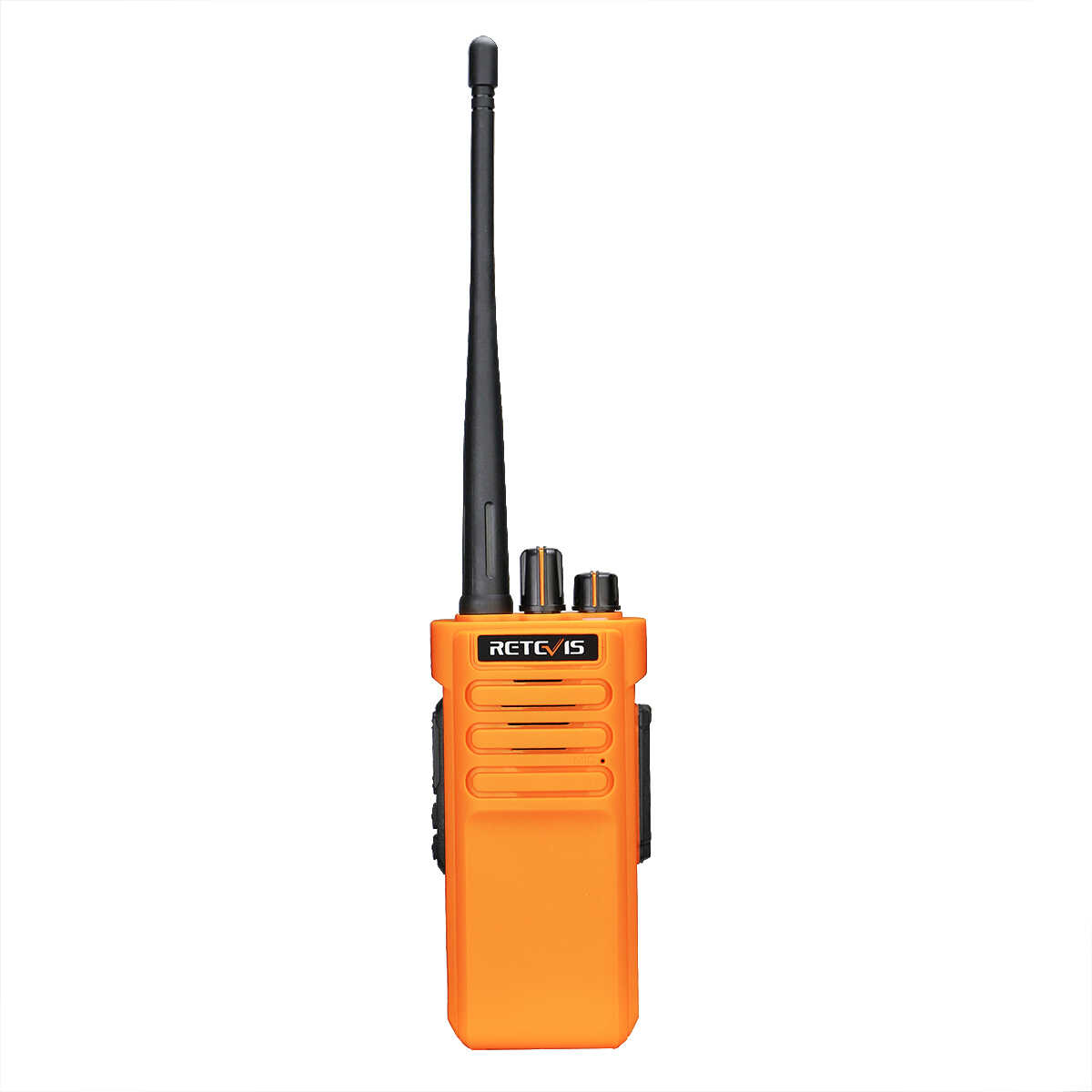
RT29 for Western European freeze-thaw sites
The UK, Benelux, northern France and northern Germany need a cold weather walkie talkie that survives repeated crossings, not one that only carries a winter label.
- 3200mAh battery, the largest of the three, protects run time after the winter de-rating
- IP67 sealing and a military-grade aluminum alloy body handle drops on frozen ground
- Rated operating temperature: -10°C to +50°C
- 16 channels, a channel knob and a large PTT keep the radio simple for new hires
- VOX hands-free and an emergency alarm are built in
The RT29 is the safest choice for standard residential construction crews and concrete pour teams in the main Western European markets.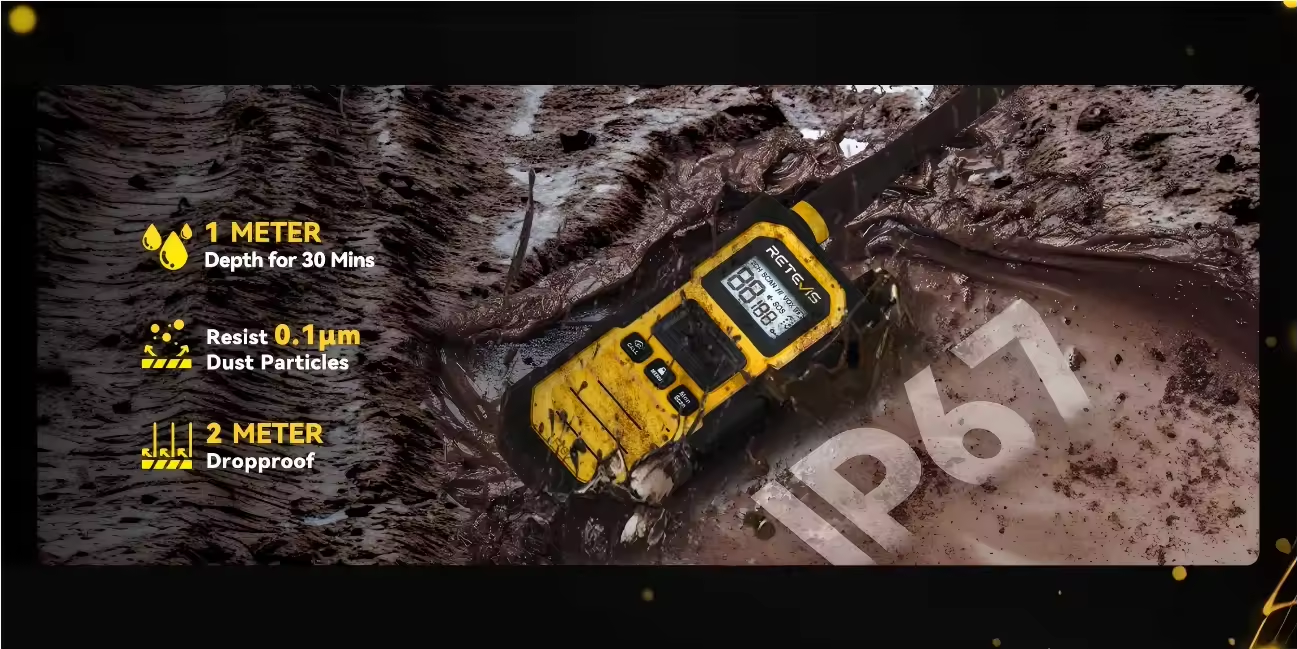
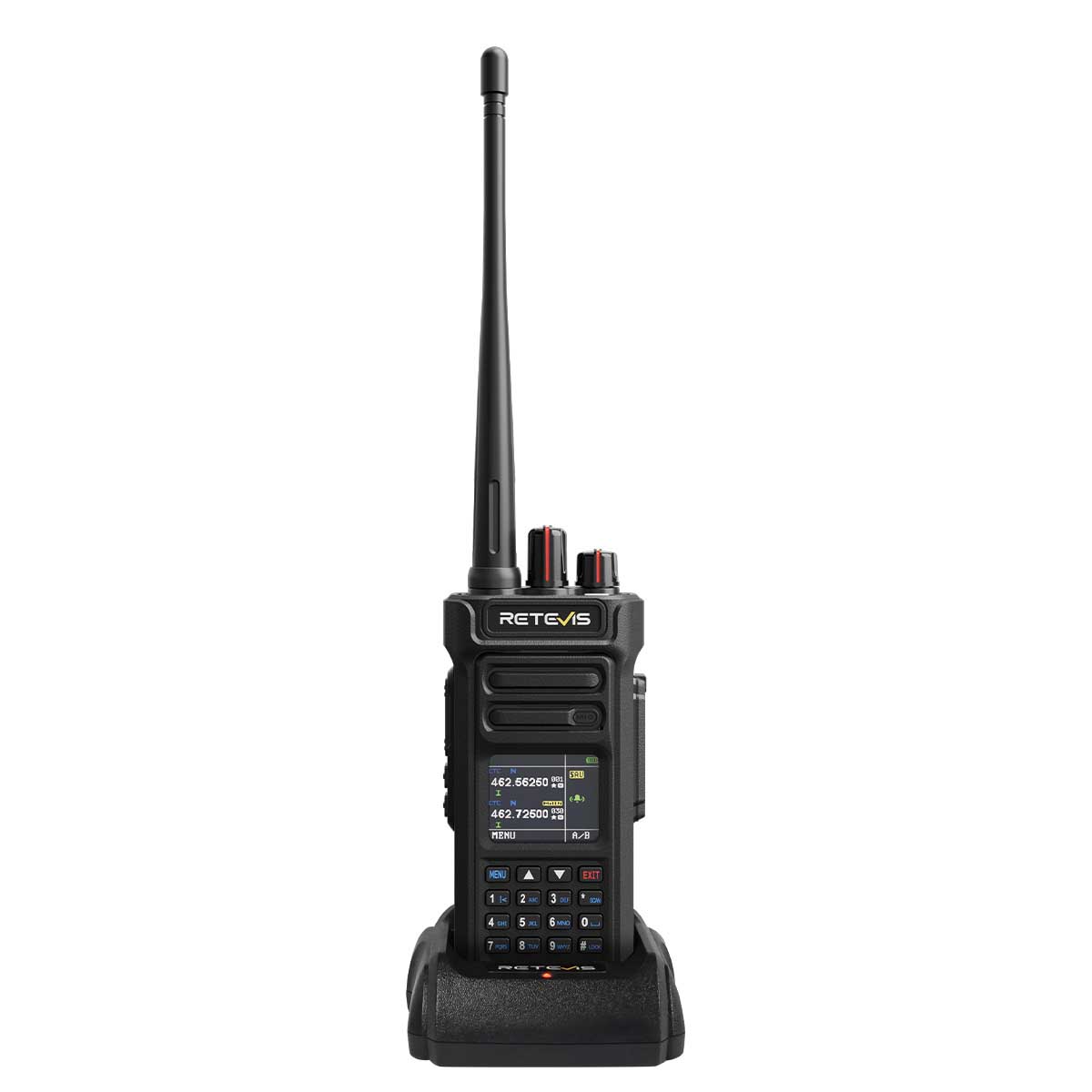
RB48 Pro for mixed Central European sites and coordination roles
Southern Germany, Poland, Czechia and Alpine forelands shift between wet cold and sharp freezes, with heavy coordination loads on the construction site.
- 10W high power keeps transmission margin when battery voltage falls
- Double PTT buttons work accurately with thick winter work gloves
- AI noise cancellation, trained on a 400M+ sample neural network, keeps speech clear through wind, snow, pumps and cutting tools
- 32 channels with 16 preset handle multi-trade crews
- High, medium and low power settings balance range and battery
- IP67 sealed against dust, water and drops
The RB48 Pro fits crew leads, signalers and lifting coordinators whose calls cannot fail.
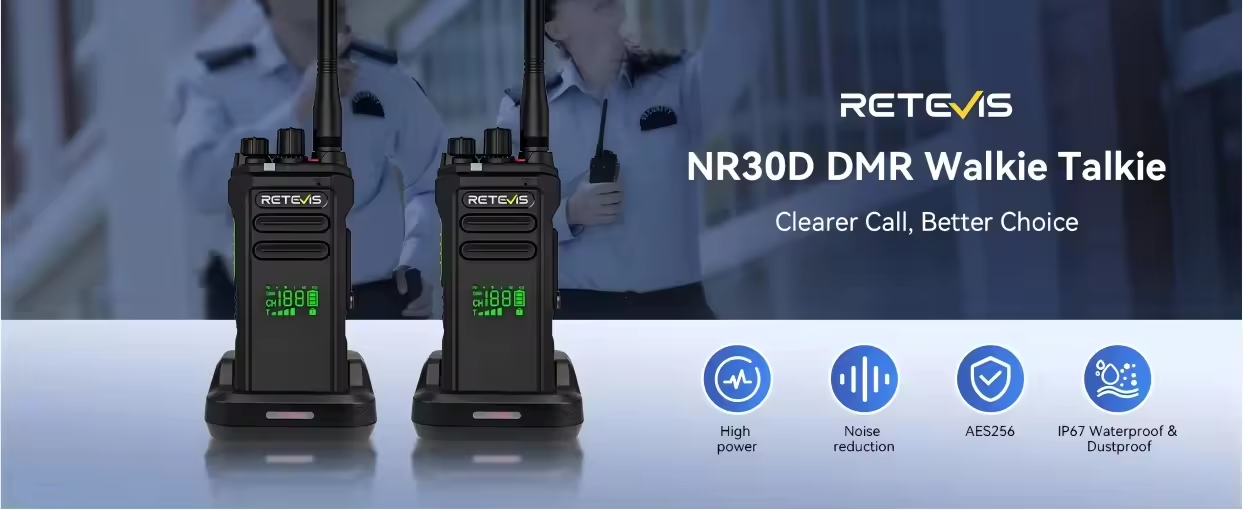
NR30D for sustained Nordic cold and larger crews
Sweden, Finland and Norway keep walkie talkies below freezing for weeks at a time, making this a true rugged radio for extreme temperatures.
- Confirmed operating temperature: -20°C to +50°C
- 10W / 5W / 1W power levels let teams use low power on the same floor, the single most effective way to save battery in extreme cold
- DMR digital mode delivers clearer audio in weak signal and uses power more efficiently
- 64 channels across two zones support multi-trade commercial construction projects
- VOX for roofing and scaffold work, plus AES256 encryption for private calls
- IP67 sealed with a 2800mAh battery and Type-C charging
A typical European build mixes these roles: standard crews on RT29, leads on RB48 Pro, and Nordic or large multi-trade teams on NR30D.
Manage winter radios around the temperature curve
Protecting cold weather walkie talkies follows the same daily rhythm as the pour.
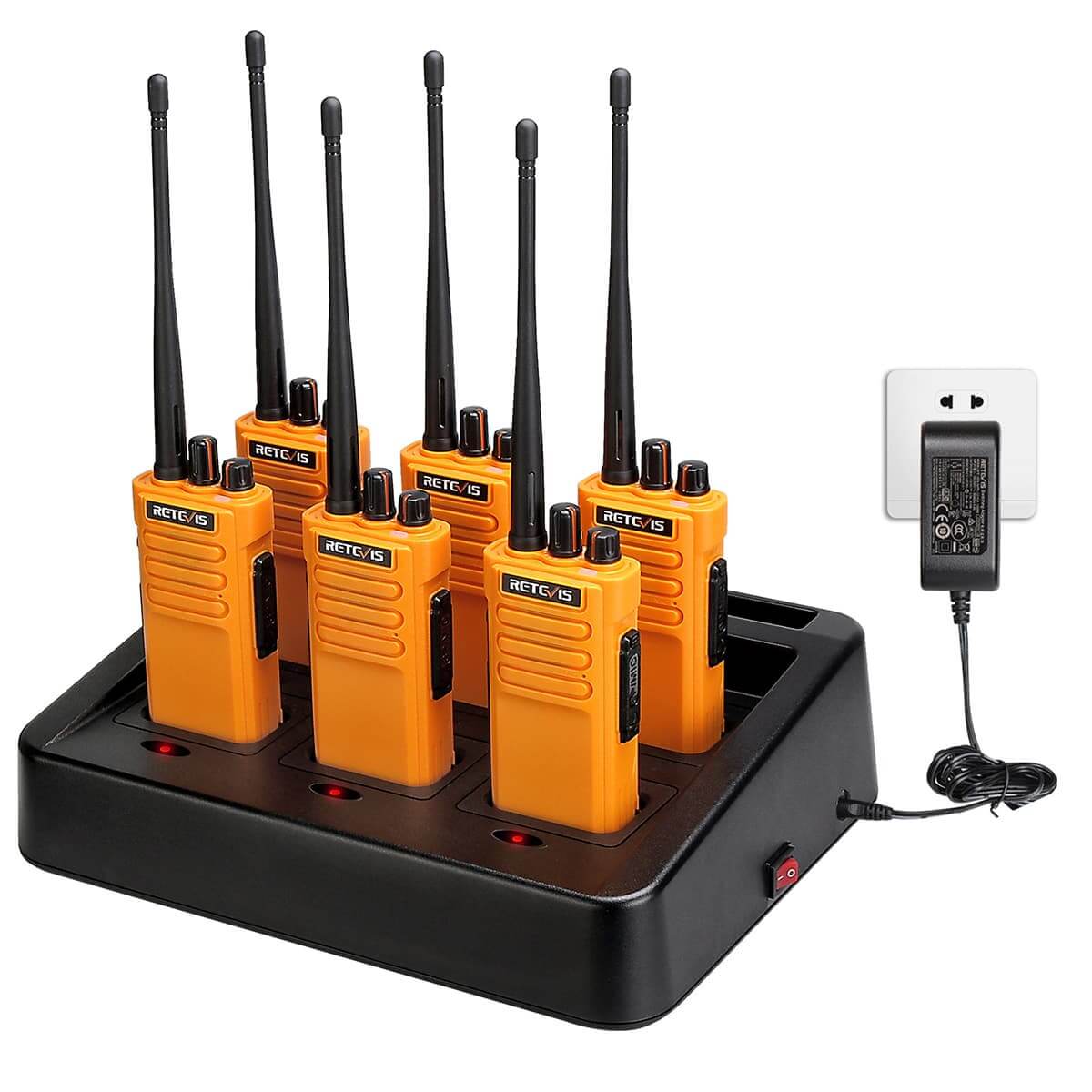
- Morning: distribute two way radios from the charging box without delay. Check seals and battery covers before the first crossing.
- Lunch: put radios in a sealed bag before entering the warm cabin. Slow warming inside the bag prevents condensation.
- Around 2 p.m.: run the daily battery check. Carry spare batteries in an inner pocket against the body, and rotate low-battery units out.
- Evening: let cold radios return to room temperature before charging. Charging a lithium battery below 0°C risks lithium plating and permanent cell damage.
- Replacement batteries: from 18 August 2026, new EU battery labeling requirements apply under Regulation 2023/1542. Specify labeled, compliant replacement batteries rather than unmarked generic packs.
Final word
Winter construction in Europe is a race against the temperature window. The best walkie talkie for winter construction is one chosen for the local climate and managed around the temperature curve. Two way radio battery performance in cold weather stays predictable when crews rotate batteries, use low power and charge indoors. A rugged radio for extreme temperatures, from the freeze-thaw sites of the West to the sustained cold of the Nordic region, runs from the first frost to the final thaw.
Leave a Reply



 Google
 Amazon
Comments
No data Yet