

Table of Contents
Construction Waste Management: How Better Crew Communication Reduces Material Waste
- Posted by:Retevis
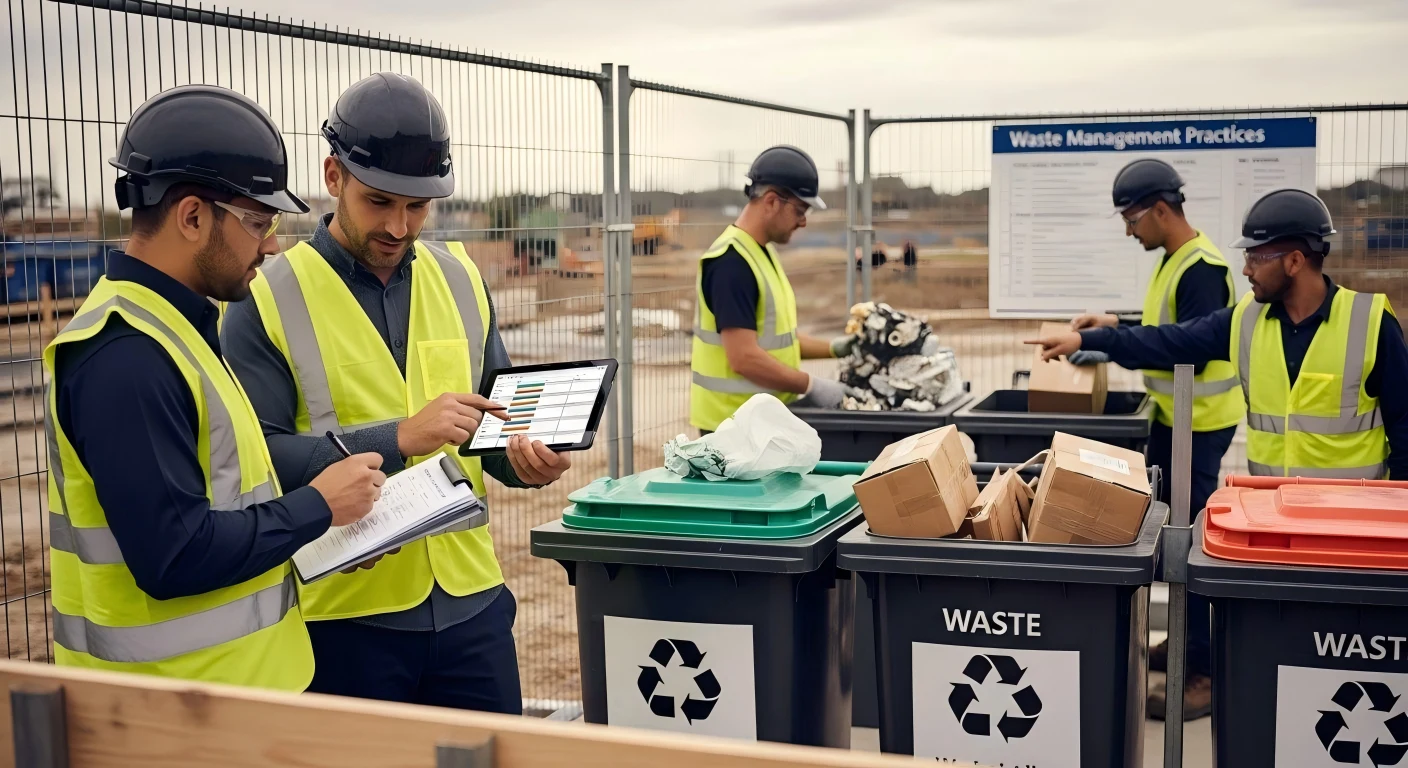
Construction waste management is usually associated with material planning, recycling, disposal, and site logistics. But there is another source of avoidable waste that is easy to overlook: poor communication.
A missed message can send materials to the wrong location. A delayed equipment request can leave crews waiting. A coordination error between contractors can result in rework and wasted materials.
For construction companies looking to improve construction industry waste management, reliable communication should therefore be considered part of the overall site efficiency strategy.
How Poor Communication Creates Construction Waste
Construction projects involve multiple crews, contractors, equipment operators, and delivery teams working simultaneously. When communication is slow or unreliable, small mistakes can quickly become expensive.
Common examples include:
- Materials delivered to the wrong floor or work area
- Workers waiting for equipment or supplies
- Duplicate material requests
- Poor coordination between trades
- Delays in moving materials between work zones
- Installation mistakes that require rework
- Equipment and delivery vehicles waiting for instructions
These problems do not always appear as “communication costs” on a project report. Instead, they show up as material waste, labor downtime, schedule delays, and unnecessary transportation.
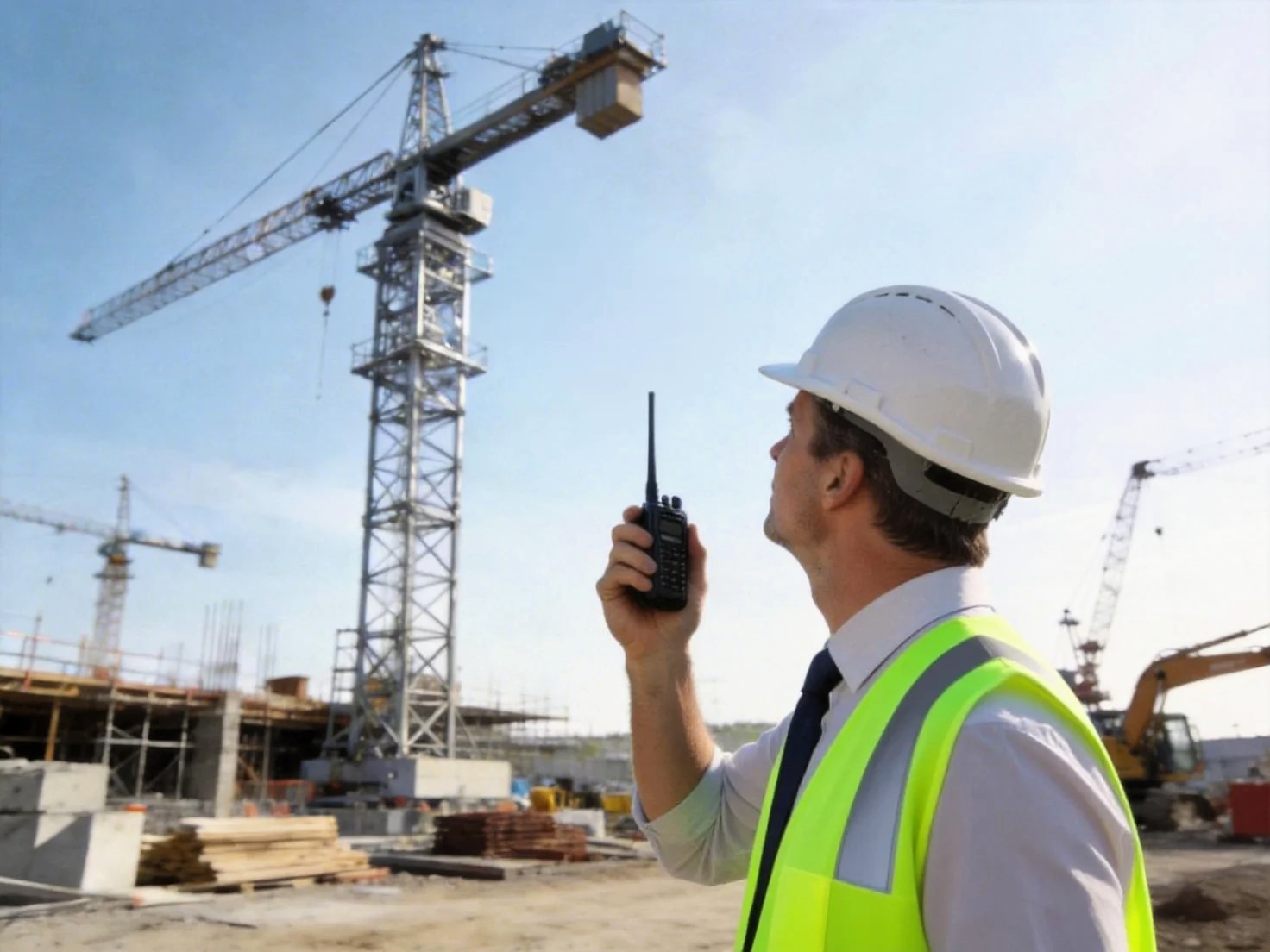
A reliable construction site two-way radio can help crews exchange instructions instantly, especially when mobile phones are inconvenient or cellular coverage is unreliable.
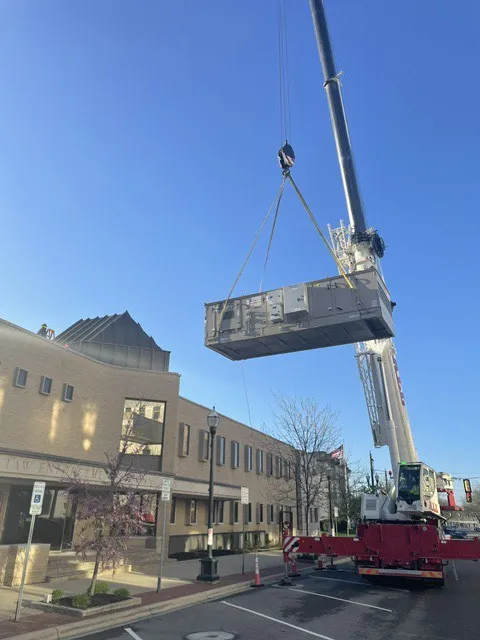
What Should a Two-Way Radio for Construction Sites Offer?
Choosing the right construction communication radios is not simply about finding the radio with the longest advertised range. Jobsite conditions should determine the features that matter most.
1. Clear Audio in Noisy Jobsites
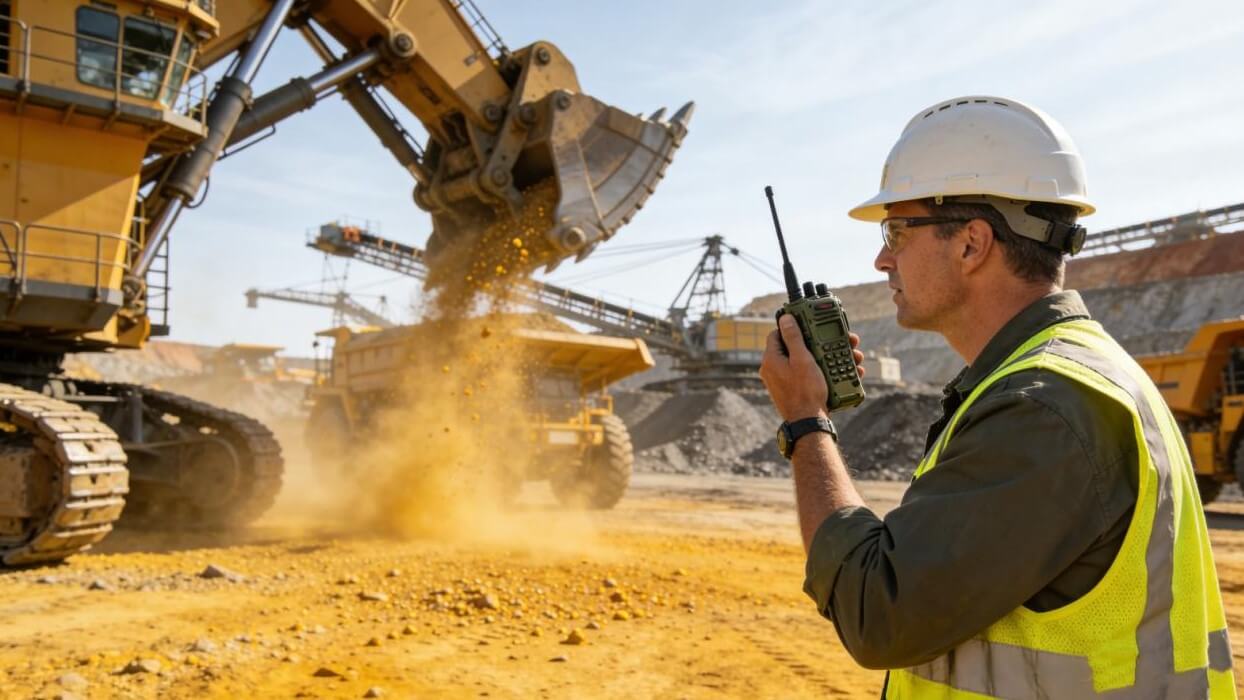
Construction sites are rarely quiet. Heavy machinery, concrete equipment, trucks, generators, and power tools can make normal communication difficult.
A useful construction site radio with clear audio should provide strong speaker output and effective noise reduction so workers can understand instructions without constantly repeating messages.
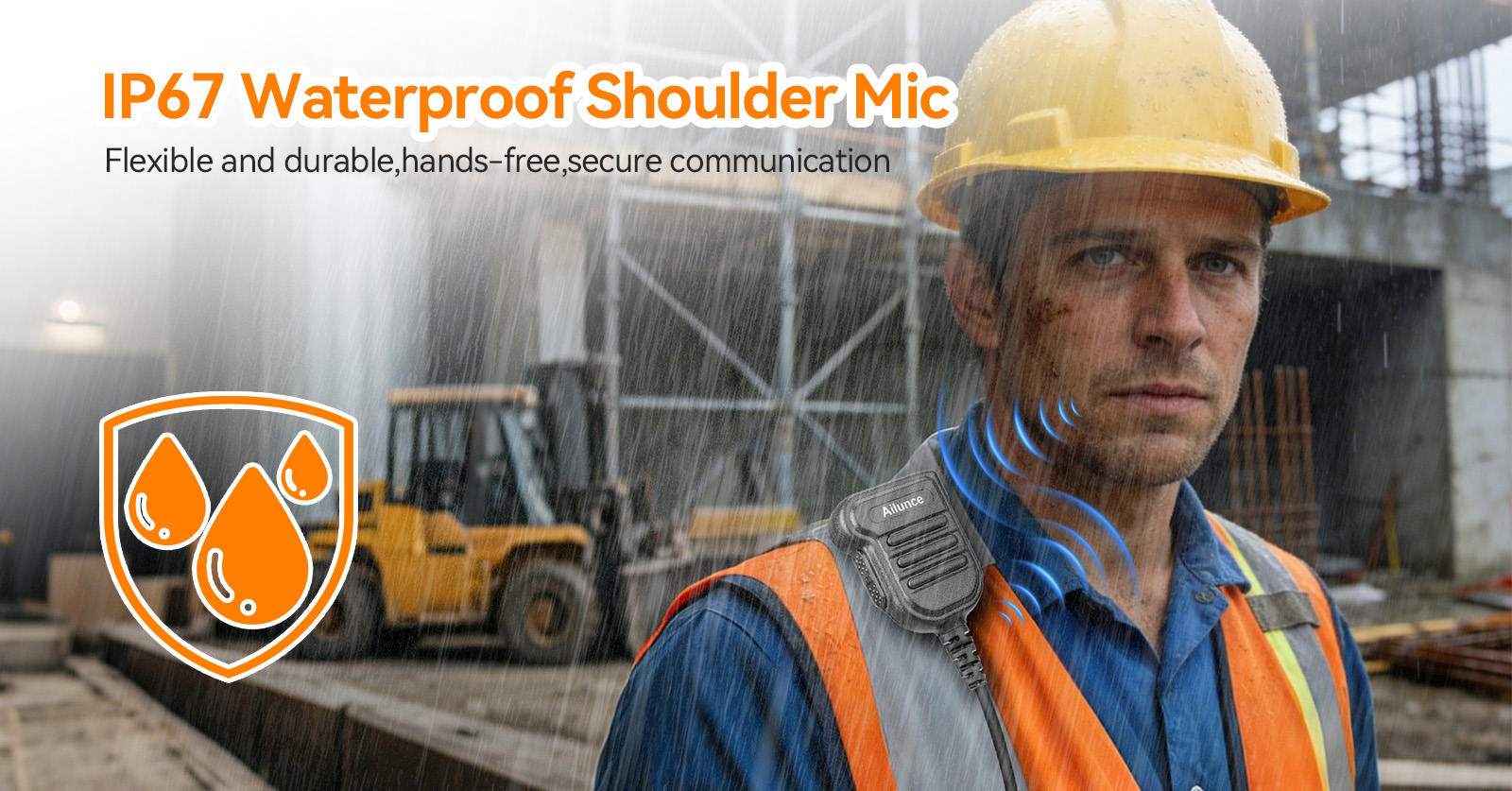
For particularly noisy environments, headset compatibility can also provide a more practical communication method for equipment operators and busy workers.
This makes features such as:
- Noise reduction
- Clear audio
- High-volume speakers
- Headset compatibility
important considerations when choosing a best two way radio for construction site.
2. Rugged Protection for Harsh Conditions
Construction radios are exposed to conditions that ordinary consumer electronics are not designed to handle.
Dust, rain, accidental drops, vibration, mud, and changing weather can all affect communication equipment.
A construction grade two way radio should therefore be evaluated for:
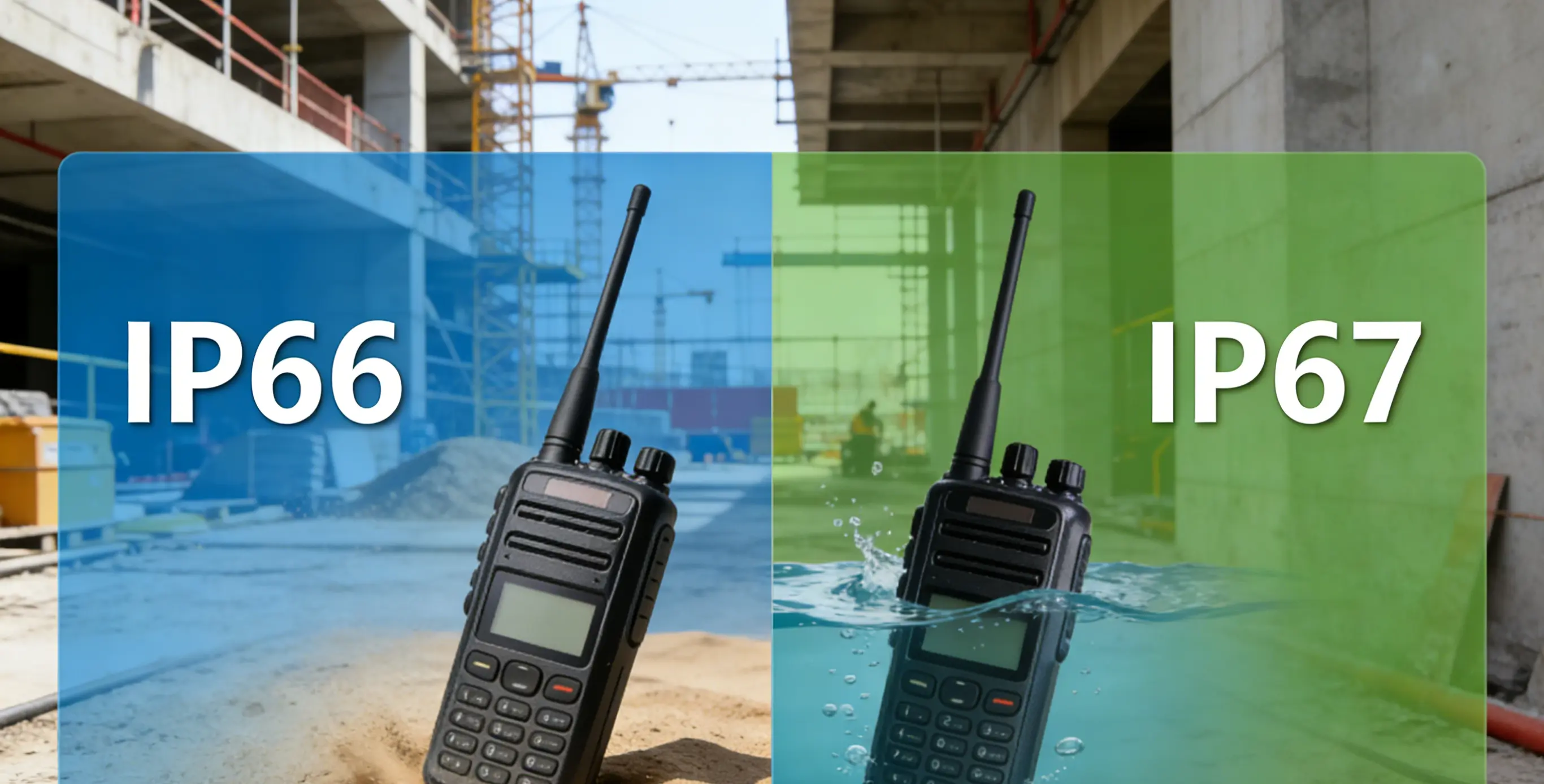
- Water and dust resistance
- Drop resistance
- Rugged housing
- Outdoor operating capability
- Battery reliability
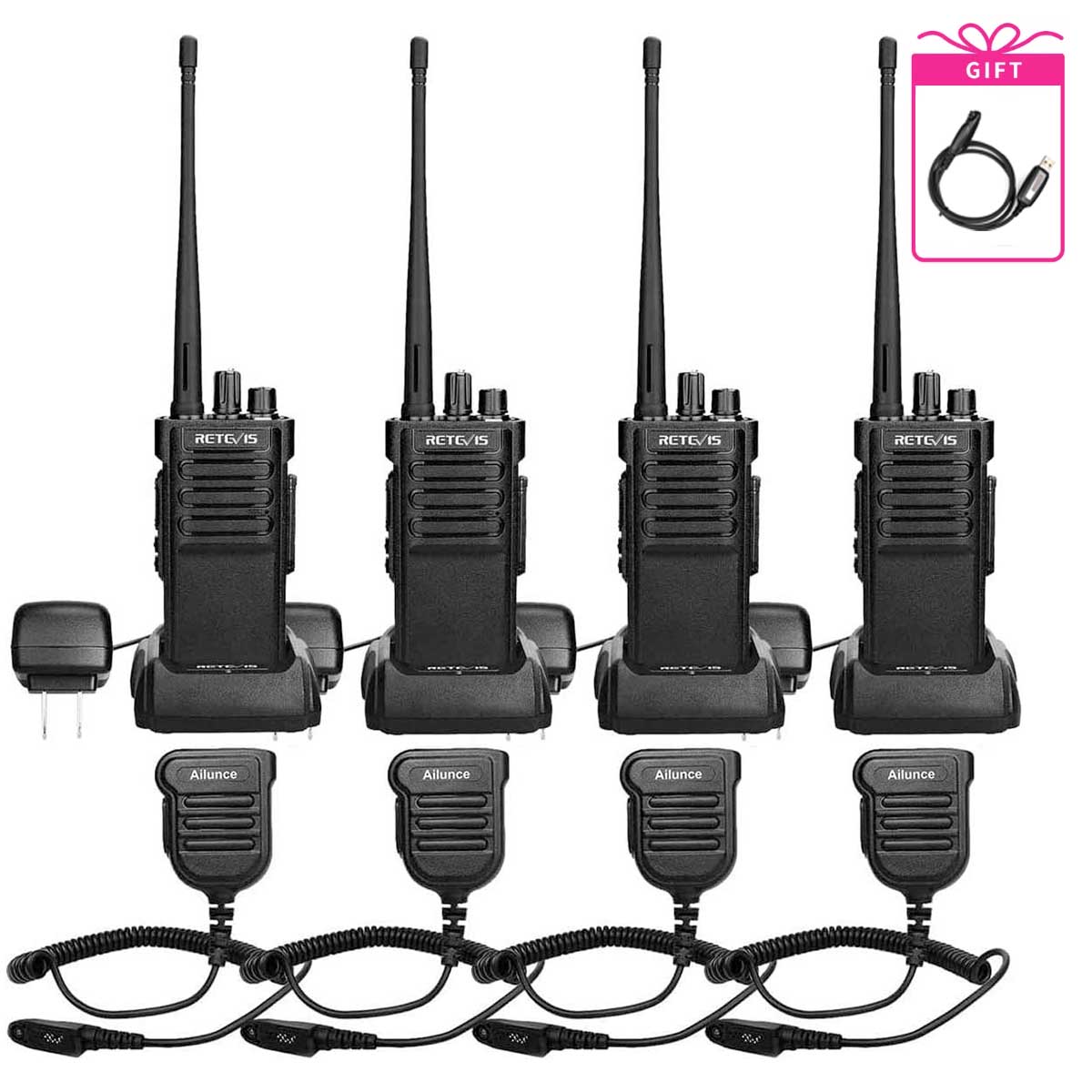
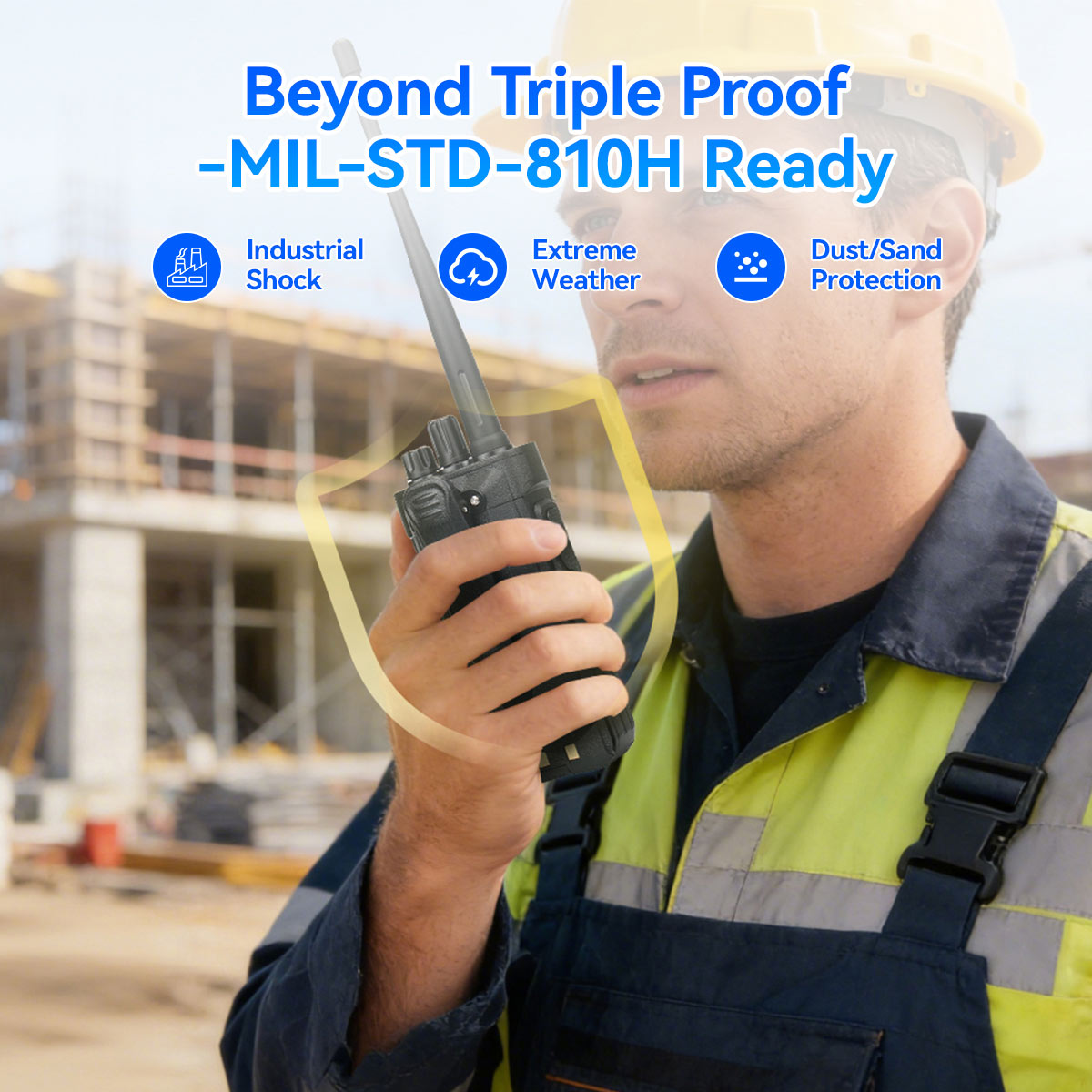
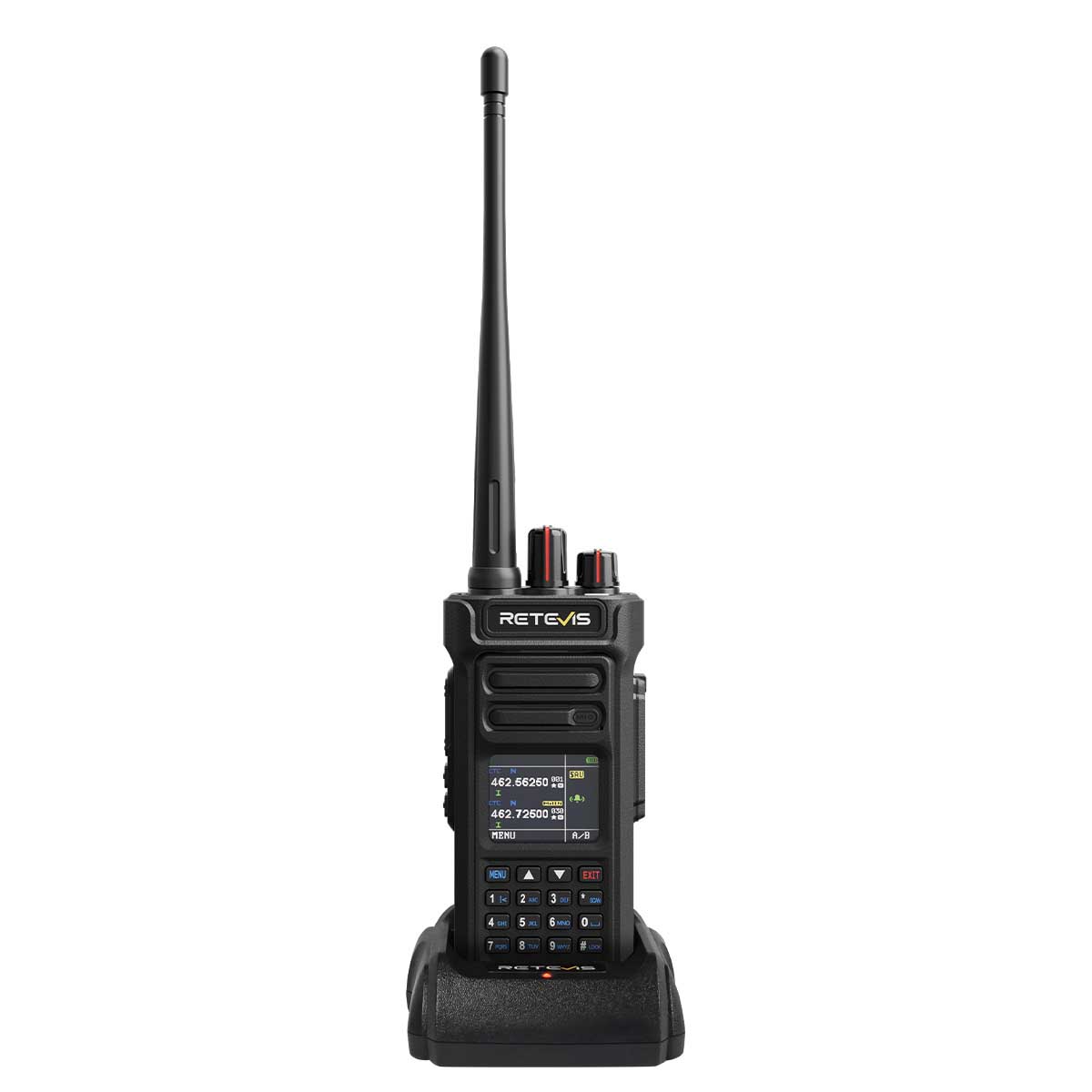
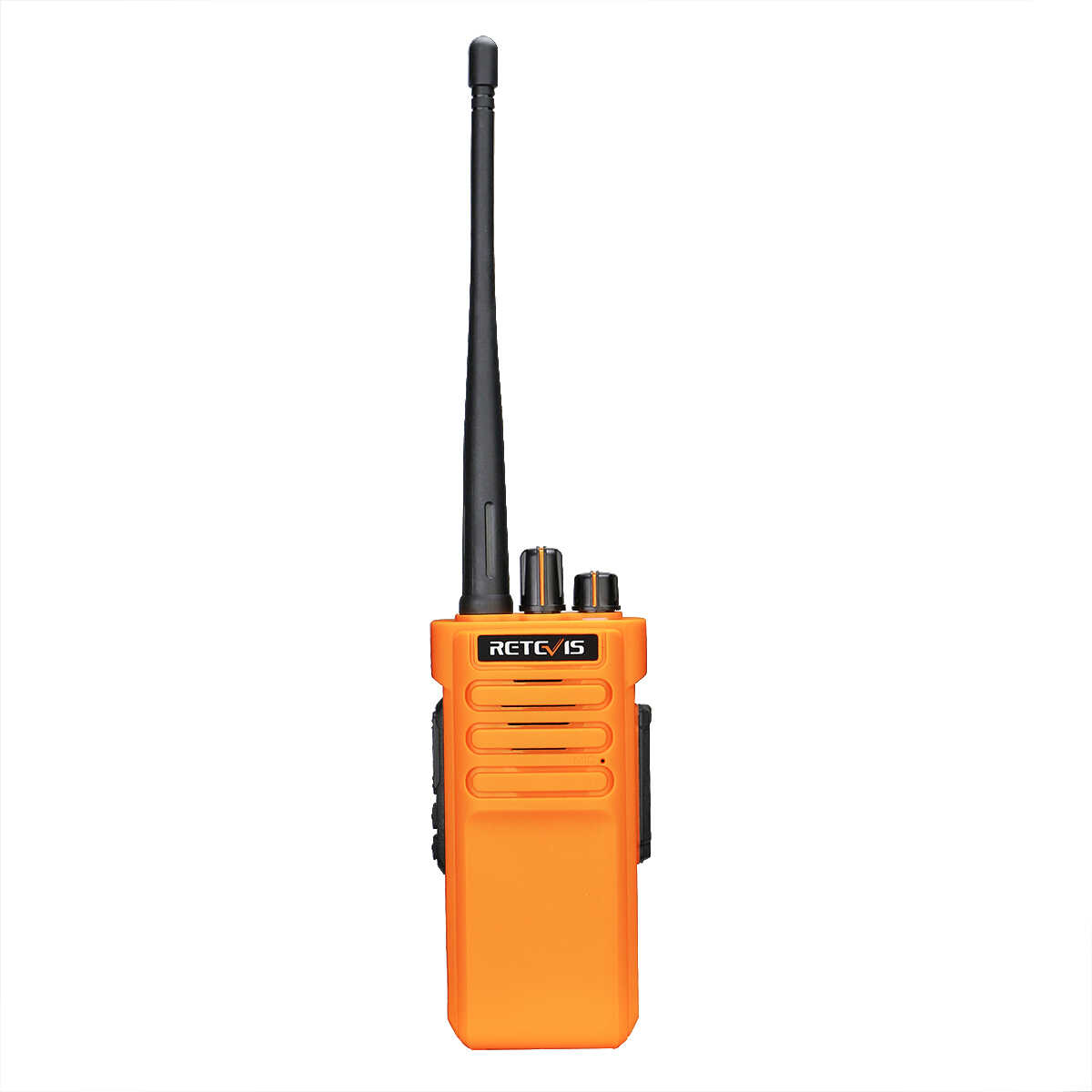
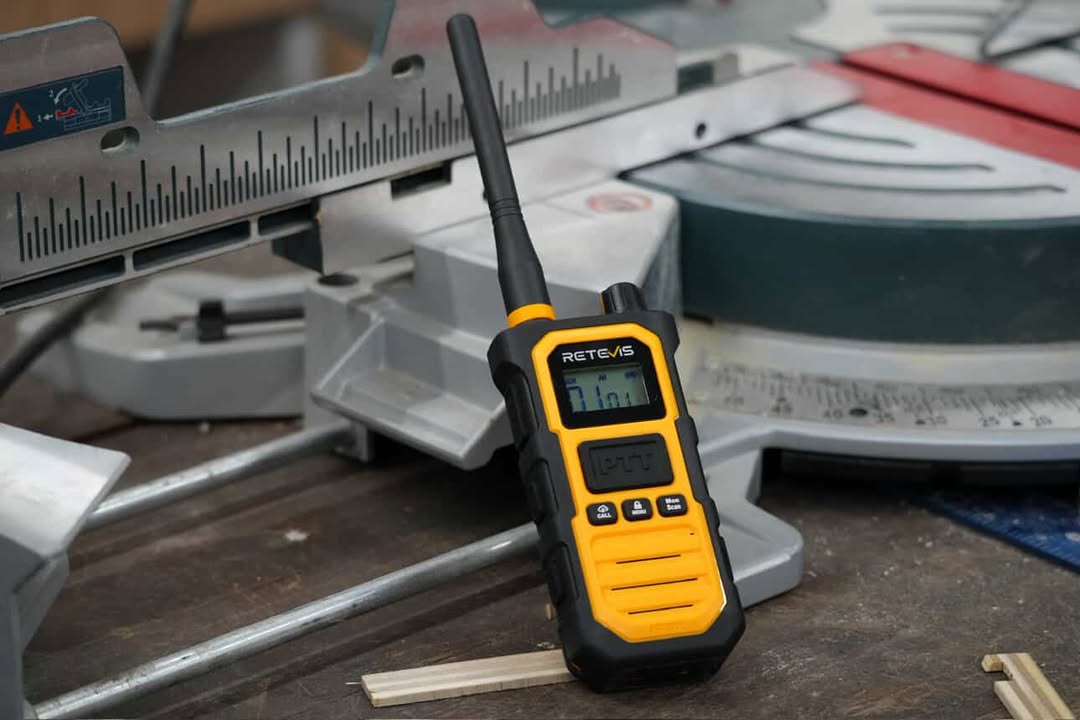
For general contractors and crews working in demanding environments, a rugged handheld such as the Retevis RT29 can fit the need for durable jobsite communication, with features designed around demanding outdoor work rather than casual personal use.
3. Long Battery Life
Communication is only useful when the radio is powered on.
For crews working full shifts, 2 way radios for construction sites with long battery life can reduce interruptions caused by frequent charging or battery changes.
When comparing radios, consider:
- Expected operating time per shift
- Battery capacity
- Replaceable battery options
- Charging requirements
- Actual usage patterns
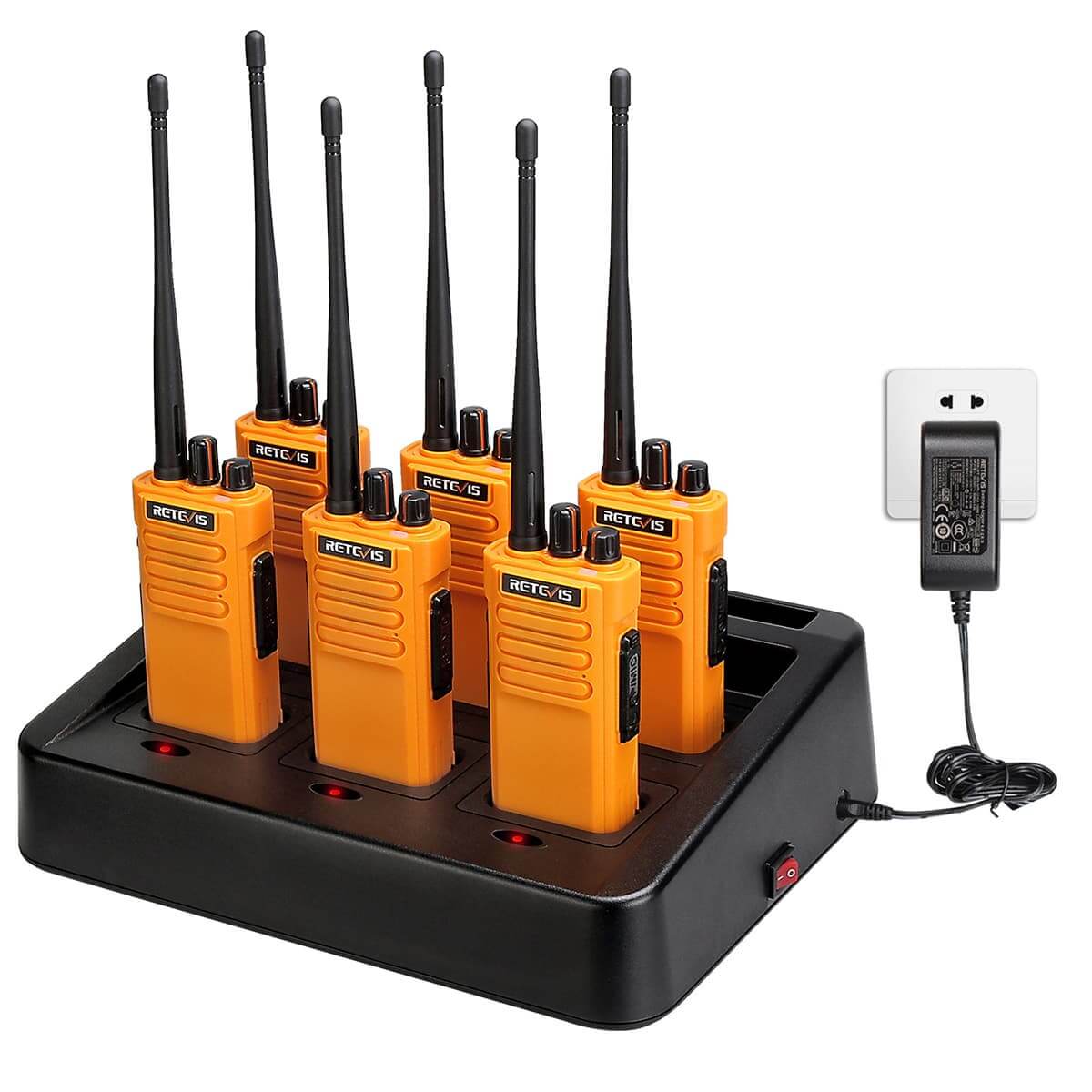
For larger teams, spare batteries and centralized charging can also help keep communication equipment available throughout the workday.
4. Coverage That Matches the Jobsite
“Long range” sounds attractive, but real-world coverage depends on buildings, concrete structures, terrain, antennas, frequency, power, and system design.
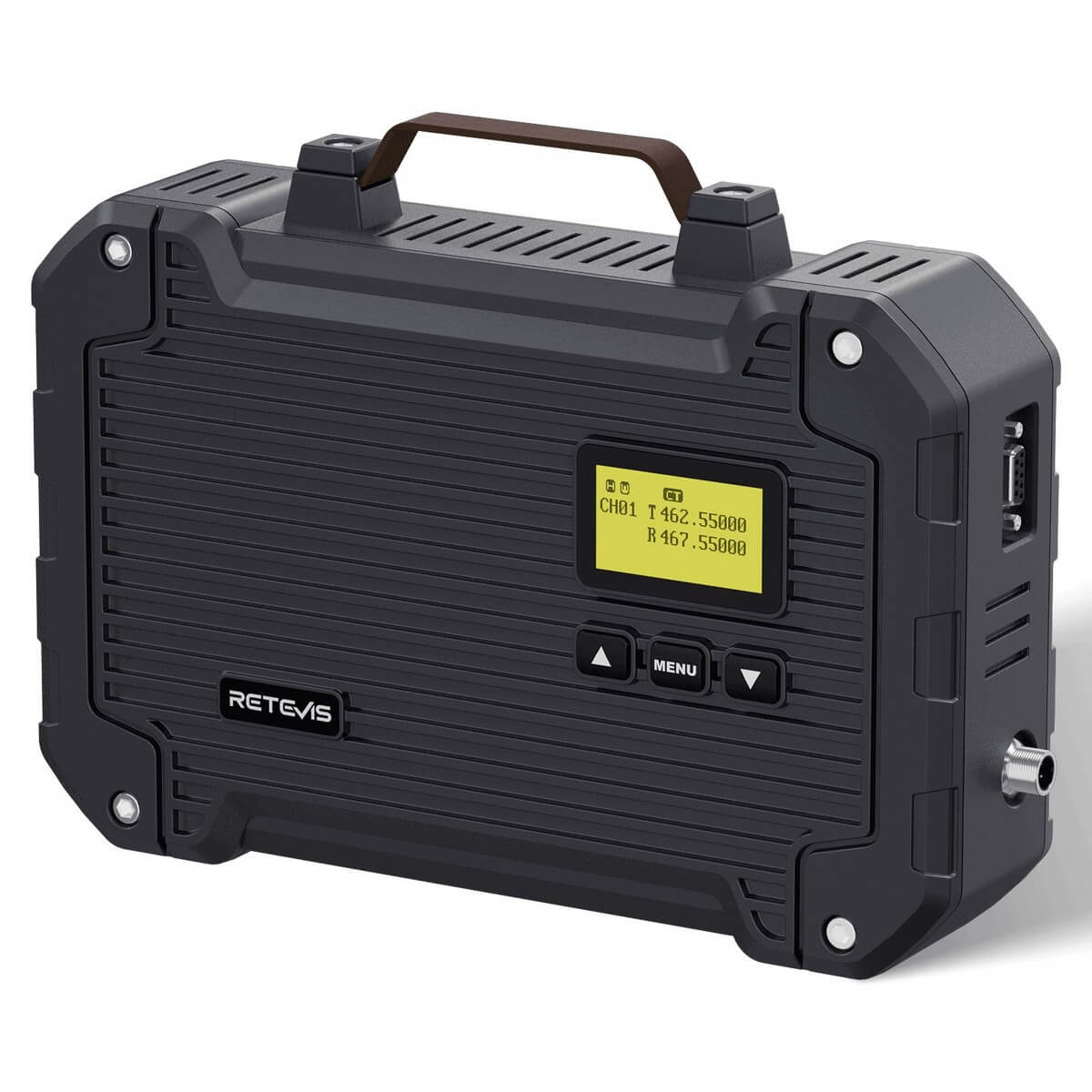
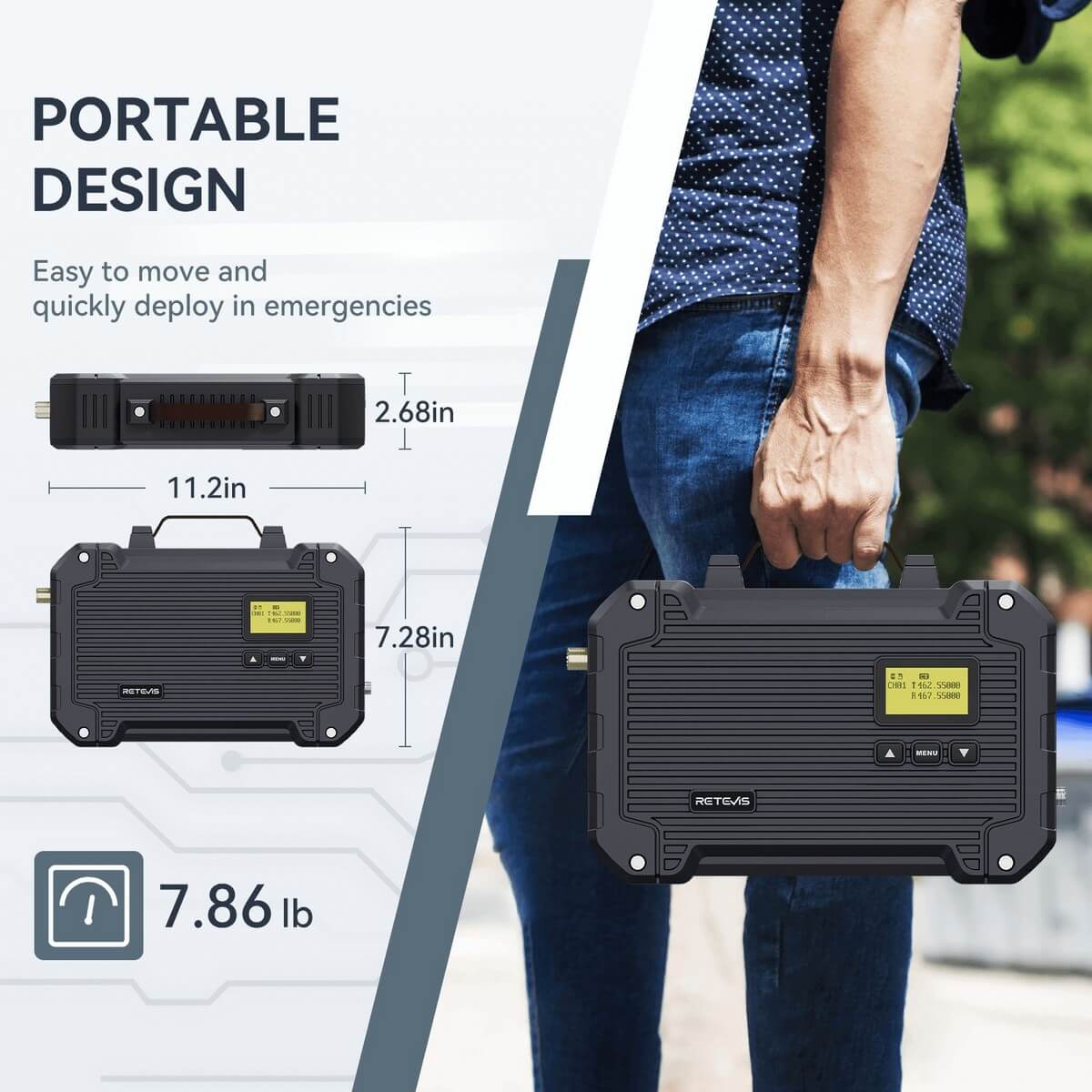
For a small outdoor project, a handheld radio may provide sufficient coverage. A high-rise or large construction project may require a repeater or another coverage solution.
The goal should be reliable communication across the areas where crews actually work, rather than simply choosing the highest advertised range.
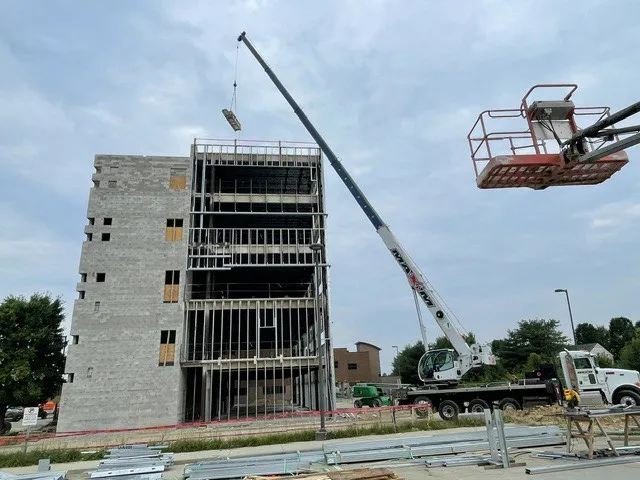
Choosing the Right Radio for Different Construction Projects
Different construction environments require different communication approaches.
|
Construction Environment |
Key Communication Requirements |
|
Small or medium jobsite |
Rugged design, clear audio, long battery life |
|
High-noise work areas |
Noise reduction, loud audio, headset support |
|
High-rise construction |
Reliable indoor coverage, extended range |
|
Large outdoor projects |
Wide-area coverage, durable handheld radios |
|
Heavy equipment operations |
Clear audio, hands-free communication |
|
Multi-crew projects |
Group communication and centralized coordination |
|
Multi-site operations |
Network communication, location and dispatch capabilities |
This is why there is no single best radio for job site for every project. The right choice depends on the site's size, construction environment, number of workers, and communication workflow.
When a Basic Radio Is Enough, and When You Need More
For a small or medium construction site, a reliable handheld 2 way radio for construction sites may be all that is needed. Simple communication between supervisors, workers, drivers, and equipment operators can eliminate many unnecessary delays.
As a project grows, however, communication requirements become more complex.
A large construction project may involve:
- Multiple work zones
- Several contractor teams
- Large geographic areas
- Mobile crews
- Equipment coordination
- Safety personnel
- Site managers who need an overview of operations
In these environments, a construction radio system can provide more than voice communication.
Network-based radios and dispatch platforms can support functions such as group management, GPS/location visibility, and centralized communication. For example, a PoC radio such as the Retevis L71 can be considered when a project needs wider-area communication and more centralized team coordination.
The important point is that a more advanced system should be introduced because the project requires it, not simply because it has more features.
A Practical Construction Radio Buying Checklist
Before buying professional radio solutions for a construction project, ask:
- How large is the jobsite?
- Are workers mainly indoors, outdoors, or both?
- Is the environment extremely noisy?
- Do workers operate heavy equipment?
- How long is a typical work shift?
- Are multiple contractors sharing the site?
- Do you need extended coverage or a repeater?
- Is GPS or centralized dispatch important?
- Do workers need hands-free communication?
- What level of durability is required?
Answering these questions first makes it easier to determine whether you need basic rugged handheld radios, digital radios, a repeater-supported system, or network-based communication.
Better Communication Is Part of Better Waste Management
Construction waste management is not only about what happens to materials after they become waste. It is also about preventing unnecessary waste before it happens.
Better communication can help crews coordinate material deliveries, equipment movement, work sequences, and urgent changes more efficiently. That can reduce avoidable waiting, transportation, errors, and rework.
For construction companies evaluating best two-way radios for construction teams, the right approach is to start with the jobsite problem rather than the radio specification sheet.
Reliable communication helps keep people, materials, and equipment moving in the right direction, which is exactly what efficient construction waste management is supposed to achieve.



 Google
 Amazon
Comments
No data Yet