

Table of Contents
Two Way Radios for Warehouse: How to Choose a Hands-Free Forklift Communication System
- Posted by:Retevis
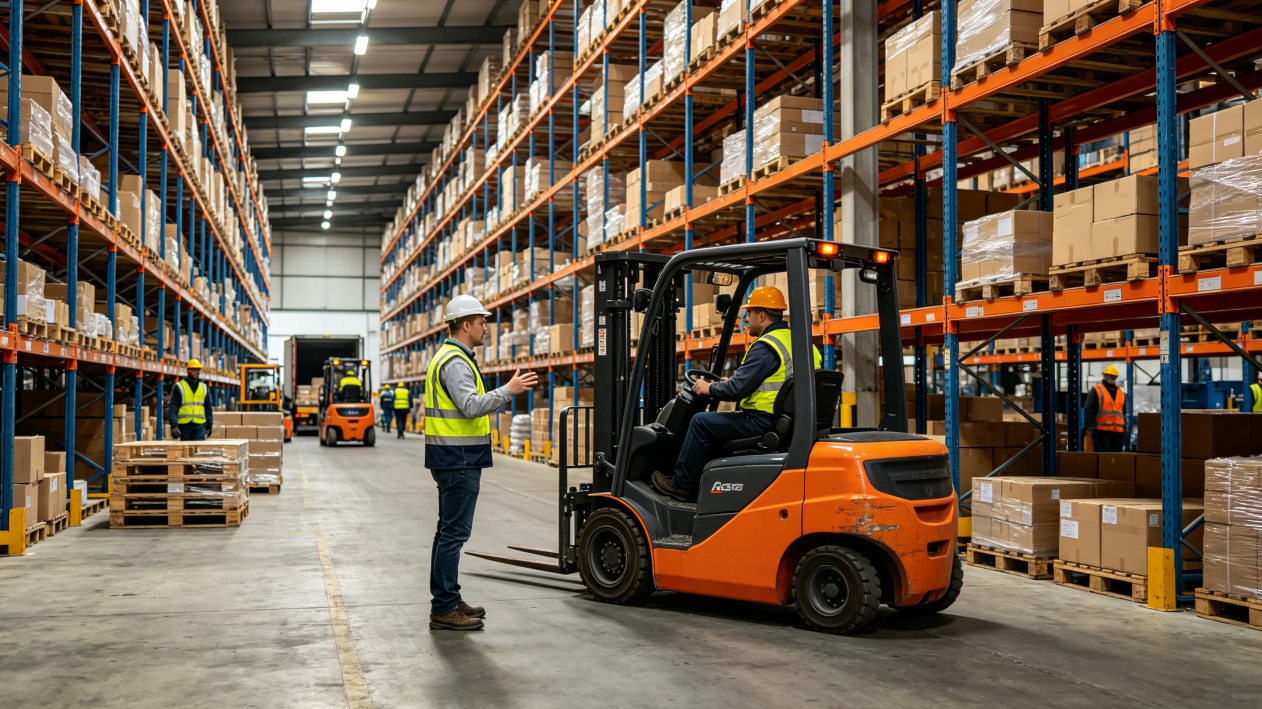
While moving through warehouse aisles, the operator may be steering, controlling the forks, watching the load, checking for pedestrians, and responding to changing conditions around the vehicle. At the same time, they may need to receive instructions from a supervisor or quickly report their location.
This creates a communication challenge that is easy to overlook: how can a forklift operator stay connected without adding another task to an already busy workflow?
That is where the right Two Way Radios for Warehouse setup becomes important. The goal is not simply to find a radio with the longest range or the loudest speaker. A practical forklift communication system should make short messages easy to hear and send, minimize unnecessary interaction, work throughout the facility, and remain comfortable during a full shift.
The Real Communication Challenges of Forklift Operations
Limited Hands and Attention
Forklift operation requires continuous attention. The operator may need to steer, control the forks, monitor the load, and watch for people or vehicles nearby.
Reaching for a handheld radio or repeatedly adjusting controls can add unnecessary interaction to the job.
This is why hands-free communication matters. But the real objective is broader: communication should require as little additional attention as possible.
PTT and VOX provide different ways to achieve this. PTT gives the operator deliberate control over transmission, while VOX can reduce the need to press a button. The right choice depends on the work environment and how the team communicates.
Noise Affects Both Listening and Speaking
Warehouses can include forklift engines, reversing alarms, conveyors, pallet handling, loading equipment, and other sources of background noise.
In this environment, simply increasing radio volume is not always the best solution. A louder signal does not necessarily make speech easier to understand.
There are two sides to consider.
Outgoing communication: Can the operator's voice be understood clearly by coworkers?
Incoming communication: Can the operator distinguish a short instruction from the surrounding noise?
This means noise management should be considered across the communication system, from the radio microphone and voice processing to the earpiece used by the operator.
Coverage Is About Dead Zones, Not Just Distance
A warehouse does not need to be extremely large to create communication challenges.
Tall storage racks, metal structures, concrete walls, multiple floors, loading areas, and cold-storage rooms can all affect radio performance. An operator may have good communication in one part of the facility but experience weaker coverage somewhere else.
For this reason, the advertised maximum range should not be the only consideration when choosing Two Way Radios for Warehouse use.
A more useful approach is to identify where operators actually need to communicate and test those areas, especially locations where racks, walls, or other structures may interfere with the signal.
What Should a Forklift Communication System Actually Do?
Once the operational challenges are clear, radio selection becomes easier. Instead of starting with specifications, start with the job.
Hands-Free Communication
Look at how operators will send and receive messages during normal work.
PTT can provide controlled, intentional transmission, while VOX can reduce physical interaction when hands are occupied. In noisy environments, however, voice activation may require more careful consideration.
The goal is to match the communication method to the task rather than choosing a feature simply because it is available.
Voice Clarity
Do not evaluate a radio only by speaker volume or transmission power.
For warehouse communication, short instructions need to be understood the first time. Consider how the system handles background noise during transmission and how clearly incoming audio can be heard through the selected earpiece.
Coverage and Battery Life
Coverage should match the actual warehouse layout. Test aisles, loading docks, receiving areas, outdoor yards, and other locations where operators regularly work.
Battery life should also match the work schedule. If radios are used throughout a full shift, sufficient runtime can reduce charging interruptions and simplify fleet management.
Comfort, Durability and PPE
An earpiece may be worn for several hours every day, so comfort is part of the communication system—not an afterthought.
Consider fit, weight, cable placement, PTT accessibility, and compatibility with helmets, eye protection, hearing protection, and other required PPE.
Durability also matters. The radio and accessories may encounter dust, moisture, impacts, temperature changes, and frequent movement. The connector, cable, PTT control, and earpiece should therefore be considered along with the radio itself.
Think of the Radio and Earpiece as One System
It is tempting to purchase a radio first and select an earpiece later. For forklift operations, it is often more useful to evaluate them together.
The communication chain looks something like this:
Operator → Microphone → Radio → Wireless Signal → Earpiece → Operator
Each part serves a different purpose.
The radio handles transmission, reception, coverage, and voice processing. The earpiece determines how incoming communication is delivered to the operator. PTT or VOX determines how the operator responds.
A strong radio paired with an unsuitable earpiece can still create a poor user experience.
For example, a headset may provide good audio but have an awkward PTT position. Another may be comfortable but offer insufficient noise management for a particularly loud work area.
The right combination depends on the warehouse, the task, and the operator.
Choosing the Right Earpiece for the Working Environment
There is no need for every forklift operator in every warehouse to use the same headset configuration.
A quieter warehouse with straightforward communication needs may prioritize simplicity and comfort. A high-noise environment may place greater emphasis on headset-side noise management and rugged construction.
Two configurations illustrate this difference.
Option 1: RB48 Pro + Acoustic Tube Earpiece
For everyday warehouse communication
For standard warehouse operations, an acoustic tube earpiece provides a straightforward way to keep incoming radio audio close to the operator's ear without requiring them to hold the radio.
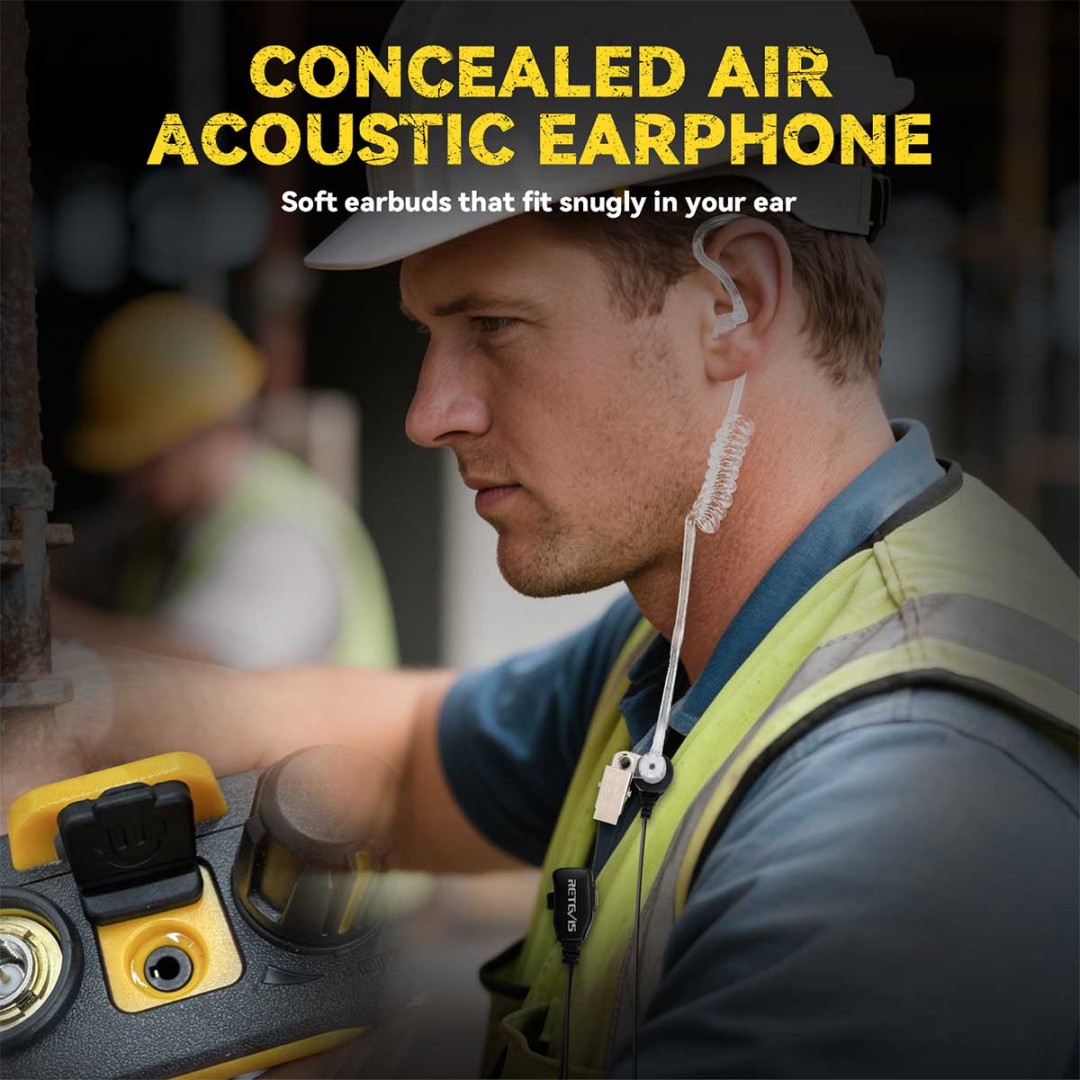
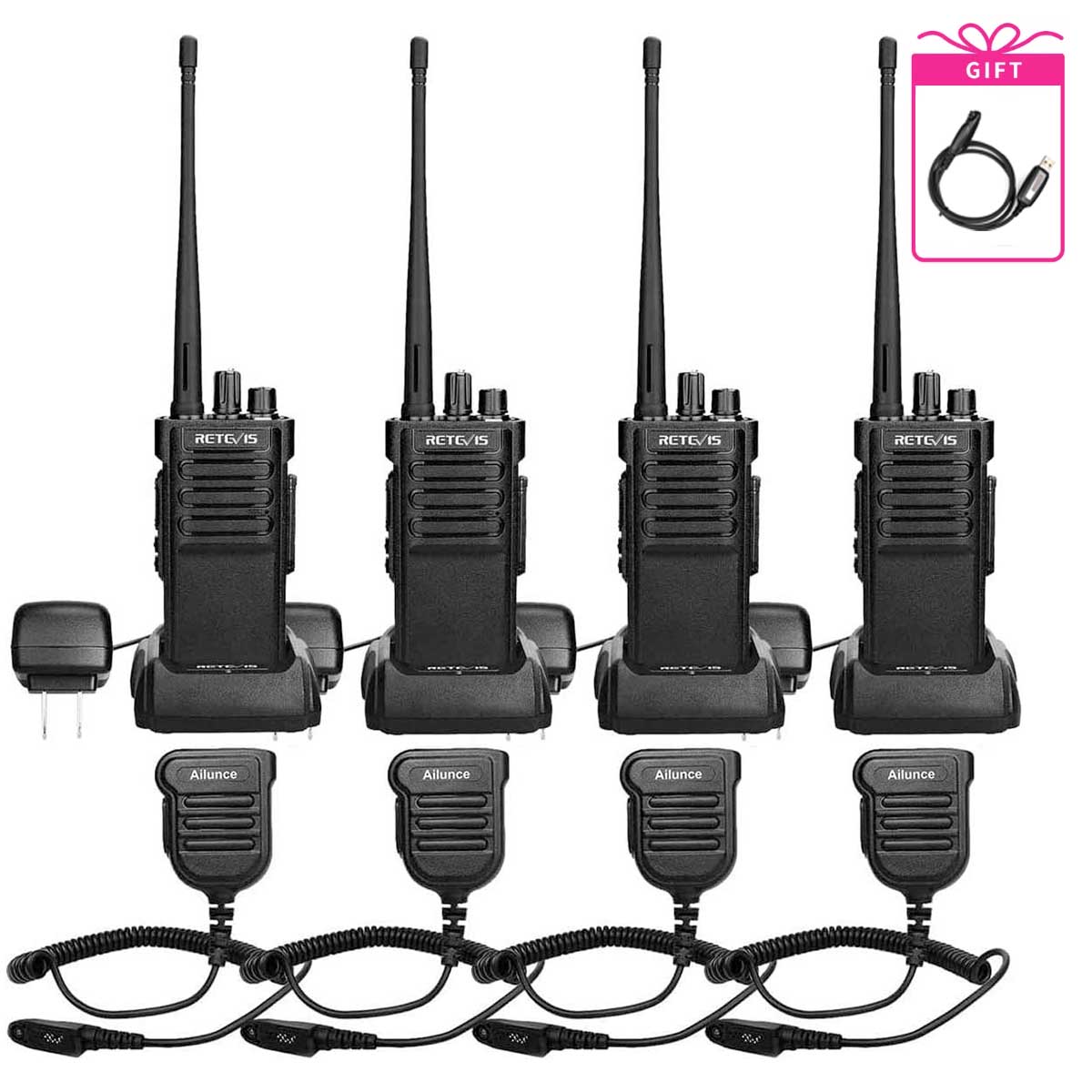
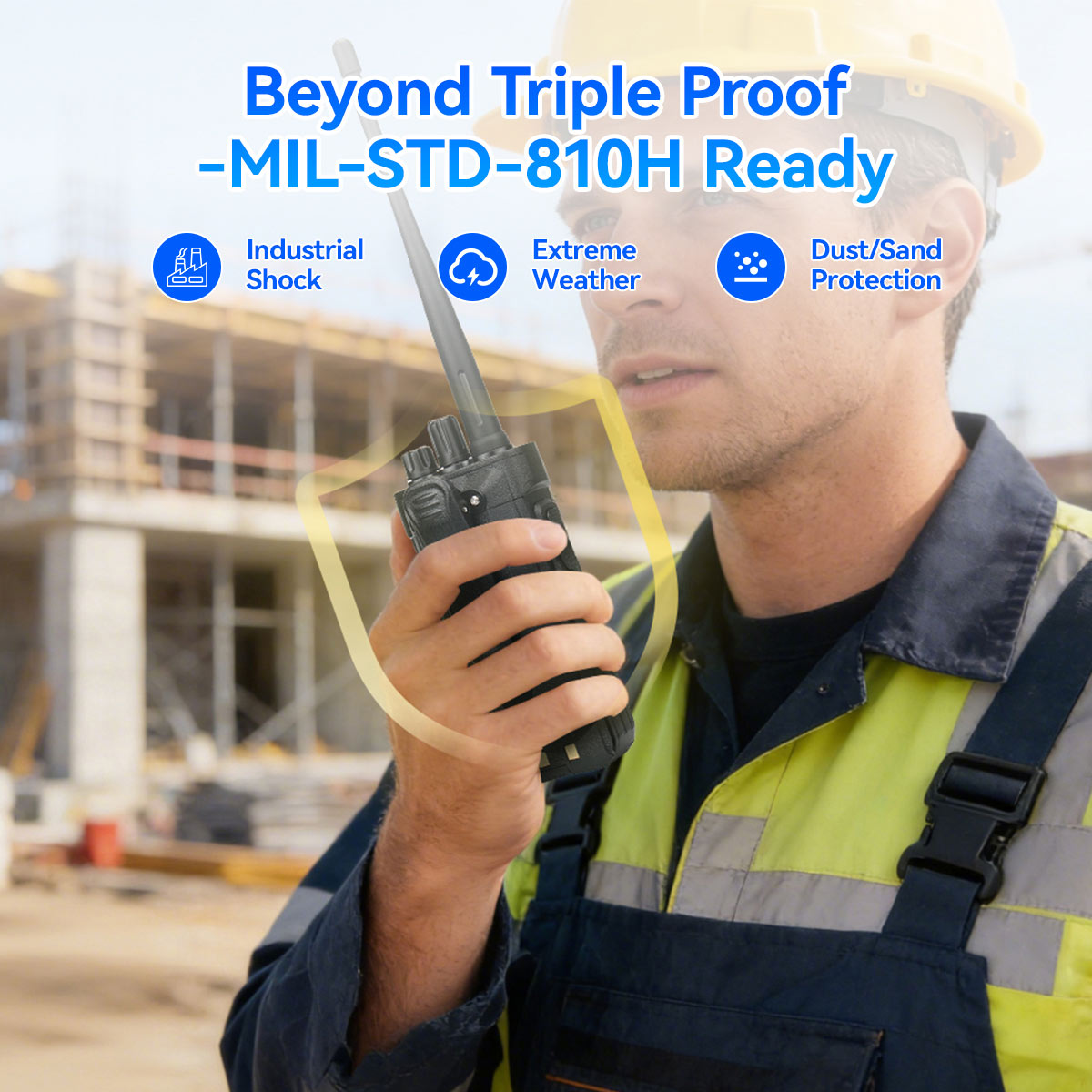
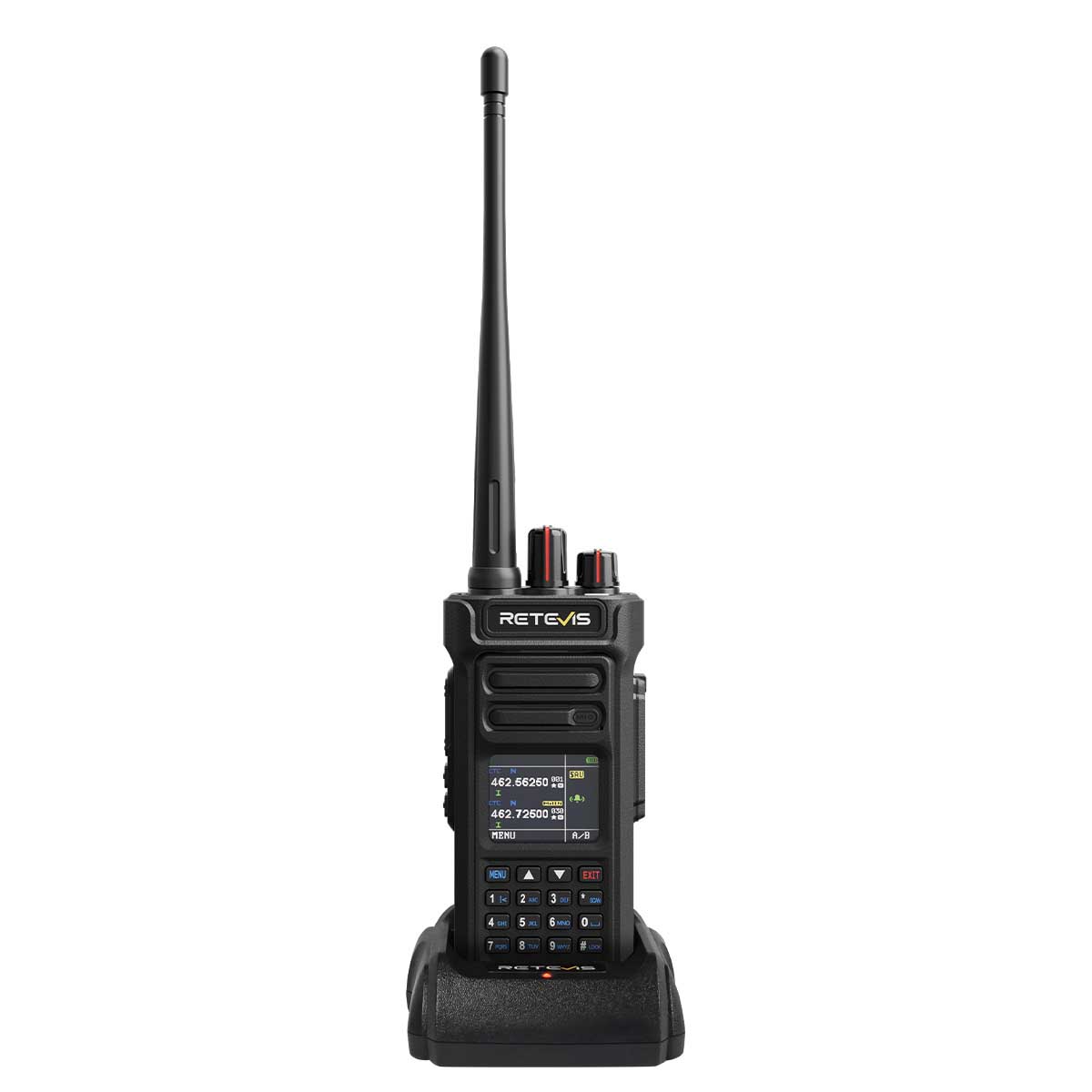
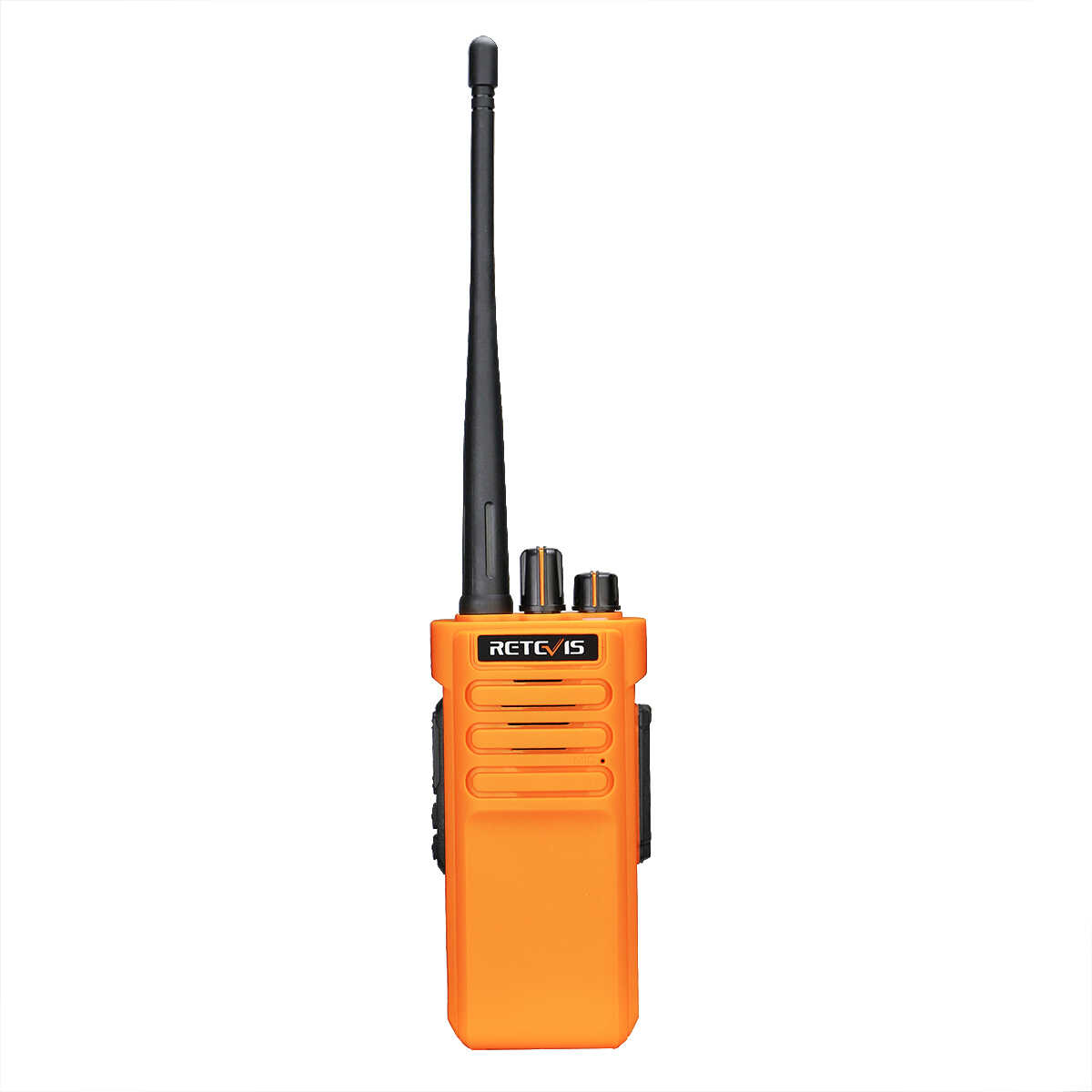
The RB48 Pro provides a 10W radio platform with AI noise cancellation, a 2800mAh battery rated for more than 18 hours of continuous use, and IP67 protection. Retevis RB48 Pro
Rather than focusing on every available feature, the value of this configuration is its straightforward workflow: the operator can keep the radio available while using the earpiece for incoming communication.
l General warehouse operations
l Forklift and material-handling teams
l Routine logistics communication
l Normal-to-moderate noise environments
Option 2: RB48 Pro + EES048 Industrial Noise-Cancelling Earpiece
For higher-noise or more demanding environments
When background noise becomes a constant part of the job, the earpiece itself becomes more important.
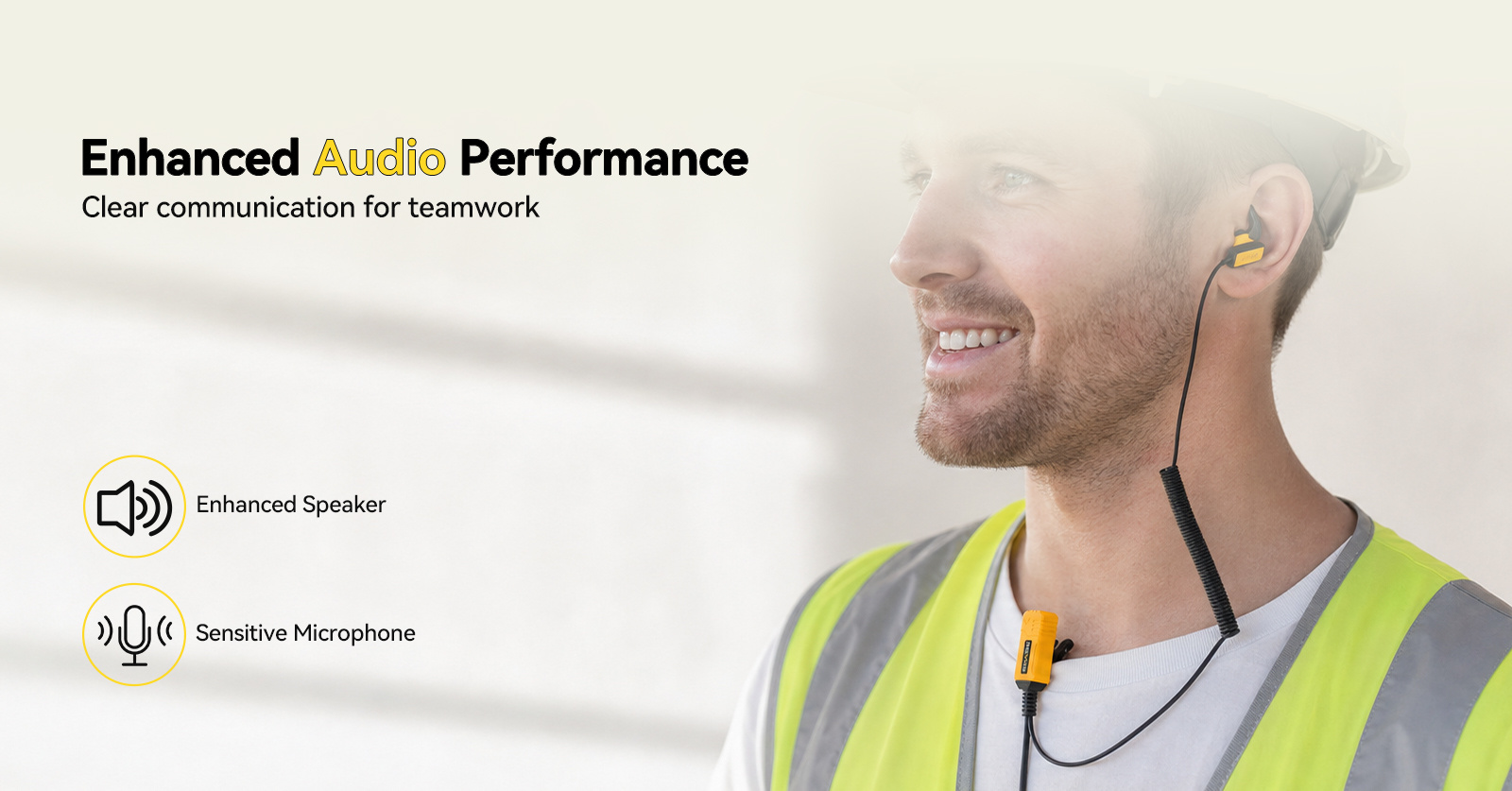
The EES048 is designed as an industrial noise-cancelling earpiece for demanding workplaces. It is compatible with the RB48 Pro and includes noise reduction, inline volume control, integrated PTT and microphone, IP54 water resistance, and a Kevlar-reinforced coiled cable. Retevis EES048 Industrial Noise-Cancelling Earpiece
This configuration is more appropriate when the working environment creates additional demands on the headset, such as continuous machinery noise, frequent movement, or longer shifts.
The inline volume control and integrated PTT also put commonly used controls closer to the operator, reducing the need to handle the radio itself.
This should not be viewed simply as a "better" headset. It is a more industrial configuration for environments where noise management, control accessibility, and ruggedness are higher priorities.
How to Test Two Way Radios for Warehouse Use Before Buying
Before purchasing a complete radio fleet, testing the system in the actual warehouse can reveal problems that specifications cannot.
Test Coverage
Check high-rack aisles, loading docks, corners, different floors, receiving areas, and outdoor spaces. Focus on potential weak spots rather than only open areas.
Test Communication During Operation
Have forklift operators follow their normal routes while exchanging short instructions. Check whether messages can be understood without repeated communication.
Test the Headset with PPE
Use the same helmets, eye protection, hearing protection, and other equipment operators normally wear. Check comfort, fit, cable position, and PTT accessibility.
Test a Full Shift
A short demonstration may show whether the system works. A full-shift trial reveals whether the headset remains comfortable, whether battery life matches actual usage, and whether operators are willing to use the system consistently.
Forklift Radio Buying Checklist
|
What to Check |
Why It Matters |
|
Hands-Free Operation |
Reduces unnecessary interaction while operating the forklift |
|
Speech Clarity |
Helps operators understand short instructions in noisy areas |
|
PTT / VOX |
Allows the communication method to match the workflow |
|
Coverage |
Ensures communication reaches actual working areas |
|
Dead Zones |
Identifies problem areas before full deployment |
|
Headset Comfort |
Important for long shifts |
|
Control Accessibility |
Makes PTT and volume adjustments easier |
|
Durability |
Supports daily use in demanding warehouse conditions |
|
PPE Compatibility |
Helps communication equipment work alongside required protective gear |
|
Battery Runtime |
Reduces charging interruptions during shifts |
Conclusion: Build Communication Around the Operator
Choosing Two Way Radios for Warehouse operations should start with the operator, not the specification sheet.
For everyday warehouse communication, an RB48 Pro with an Acoustic Tube Earpiece provides a straightforward configuration. For environments where higher noise levels and more demanding working conditions make the headset more critical, an RB48 Pro with the EES048 Industrial Noise-Cancelling Earpiece provides a more rugged, noise-focused option.
Ultimately, the most useful communication system is one that fits naturally into the forklift workflow—clear enough to understand, simple enough to use, and unobtrusive enough to let the operator stay focused on the job.





 Google
 Amazon
Comments
No data Yet