
Table of Contents
Mobile Phone vs PC Radio Programming: Which is Easier? – A Complete Guide to Programming Walkie Talkie from Mobile Phone
- Posted by:Retevis
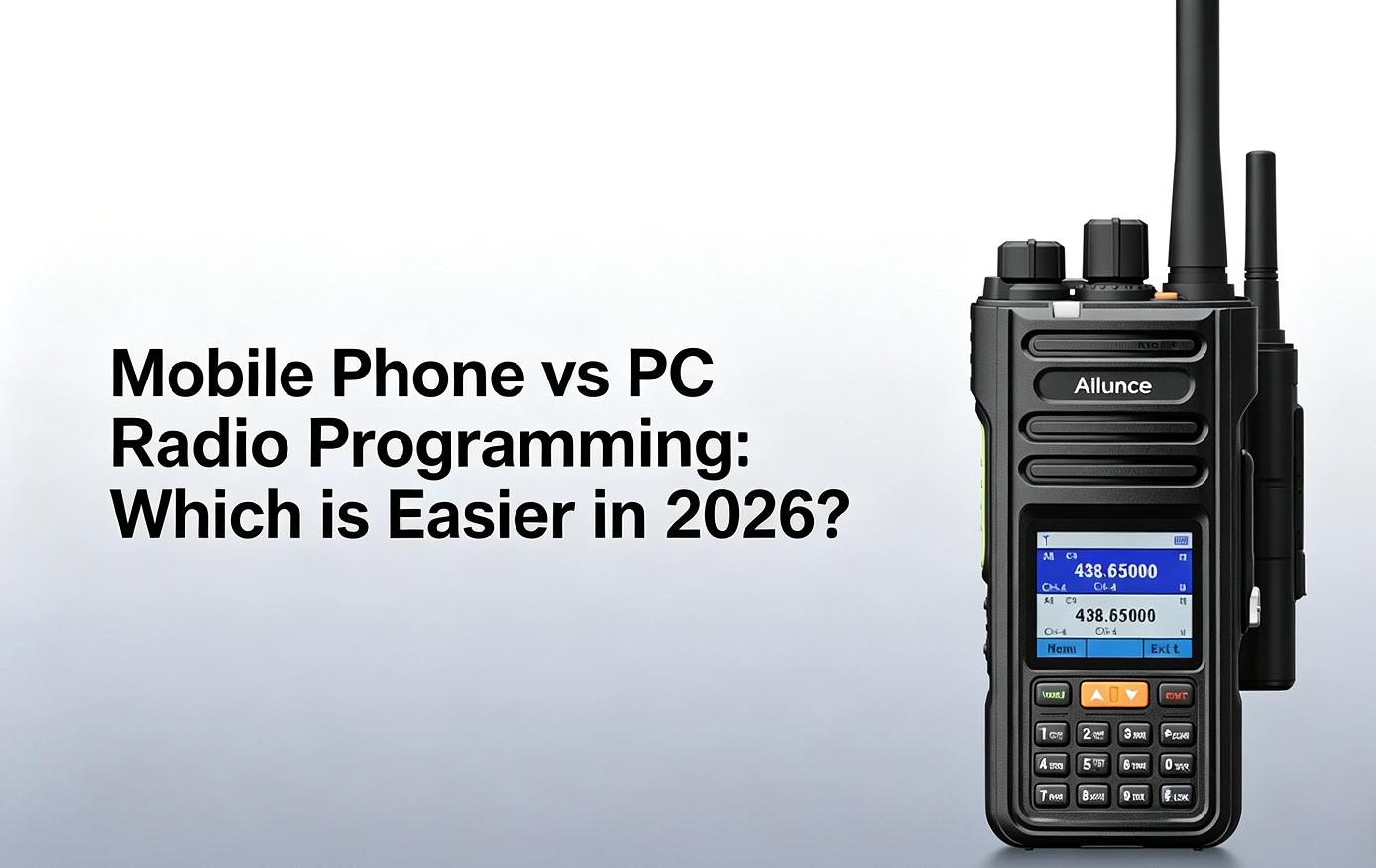
For years, programming a two-way radio meant sitting at a Windows PC, fumbling with a proprietary programming cable, and navigating clunky, outdated software. In 2026, that paradigm is shifting. The ability to program a walkie talkie from an Mobile Phone is no longer a futuristic concept—it is a practical reality that is changing how outdoor enthusiasts, rescue personnel, and amateur radio operators use their radios.
This article provides an objective comparison between traditional PC-based radio programming and modern smartphone-based programming, using the RETEVIS Ailunce HA2 as an example of what is now possible. The focus is on real-world outdoor scenarios: backcountry exploration, overlanding, wilderness search and rescue, and HAM operations.
Traditional PC Programming: Strengths and Limitations
PC programming has been the industry standard for decades. The typical process involves installing manufacturer-specific software on a Windows computer, connecting a programming cable between the radio and a USB port, and manually configuring frequencies, privacy codes, power levels, and other parameters.
Strengths of PC Programming
- Familiarity: Many technicians and experienced HAMs have used PC programming for years
- Batch processing: Multiple radios can be programmed at once before departure
- Logging: PC software often provides detailed change logs and backup features
Limitations of PC Programming
Hardware dependency: Each radio model requires a specific programming cable. Losing one means no programming capability in the field
Driver issues: USB-to-serial drivers frequently cause compatibility problems, especially on Mac computers
No field adjustments: Once in the outdoors, there is no way to modify settings if frequency issues arise
Steep learning curve: Each manufacturer's software has a different interface, requiring dedicated training
Poor multi-team coordination: No flexibility to adapt frequencies on-site when working with other groups
For scenarios where radios are programmed at home or at a base camp before departure, PC programming remains functional. However, for the unpredictable nature of outdoor activities—which is the norm—the limitations of PC programming become critical.
Smartphone Radio Programming: The RETEVIS Ailunce HA2 Alternative
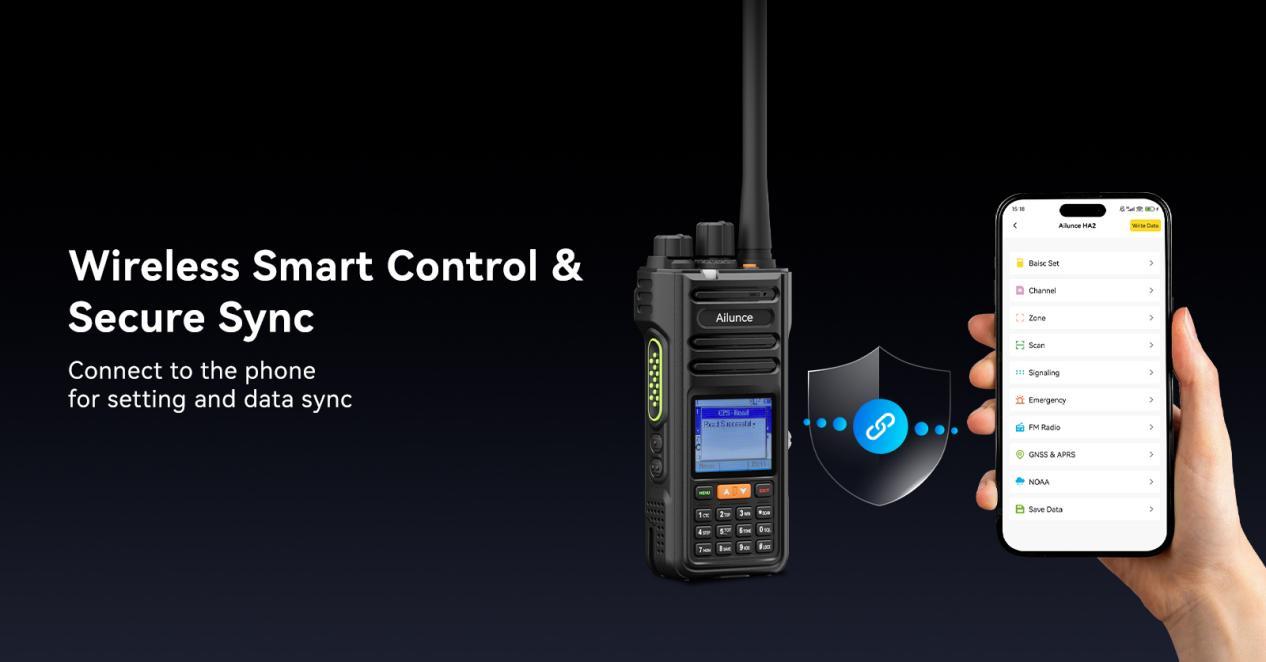
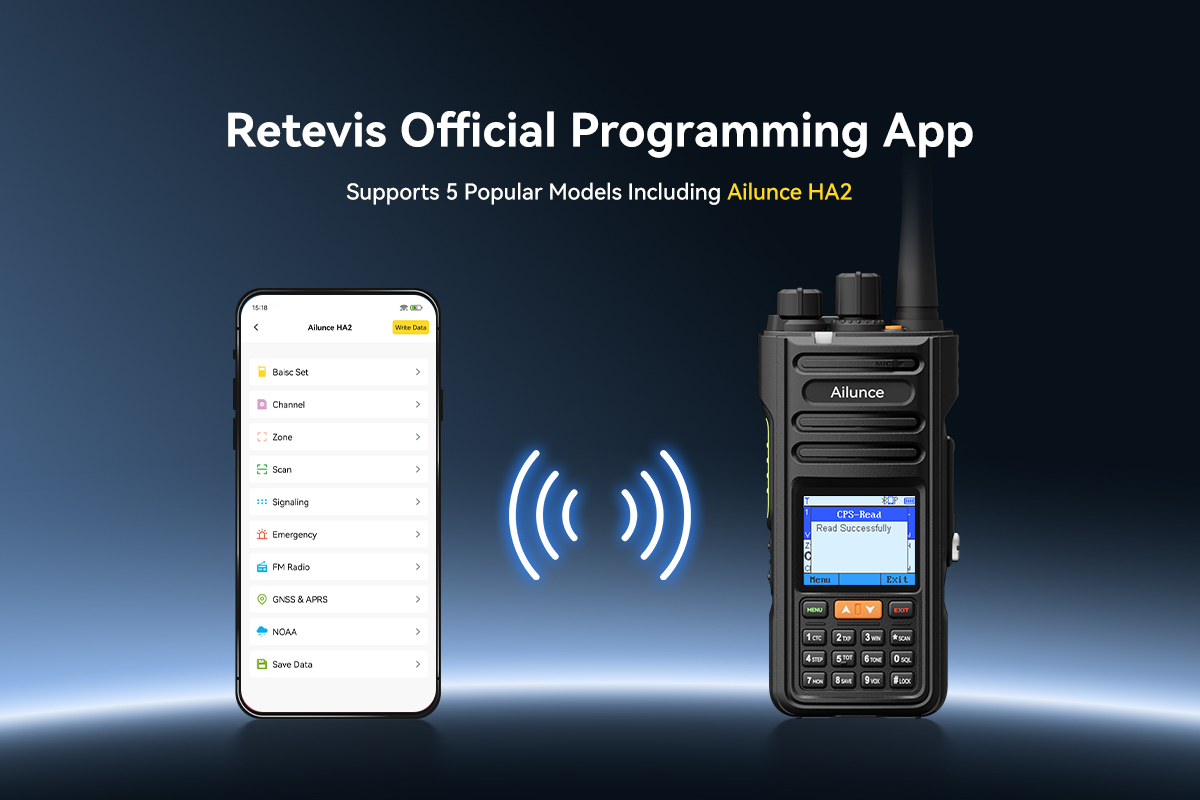
The RETEVIS Ailunce HA2 embodies a different design philosophy: programming should happen where the work happens, not tethered to a desk. By integrating Bluetooth connectivity and a dedicated mobile application, the RETEVIS Ailunce HA2 allows users to program a walkie talkie from an Mobile Phone—no programming cable and no computer required.
How Smartphone Radio Programming Works
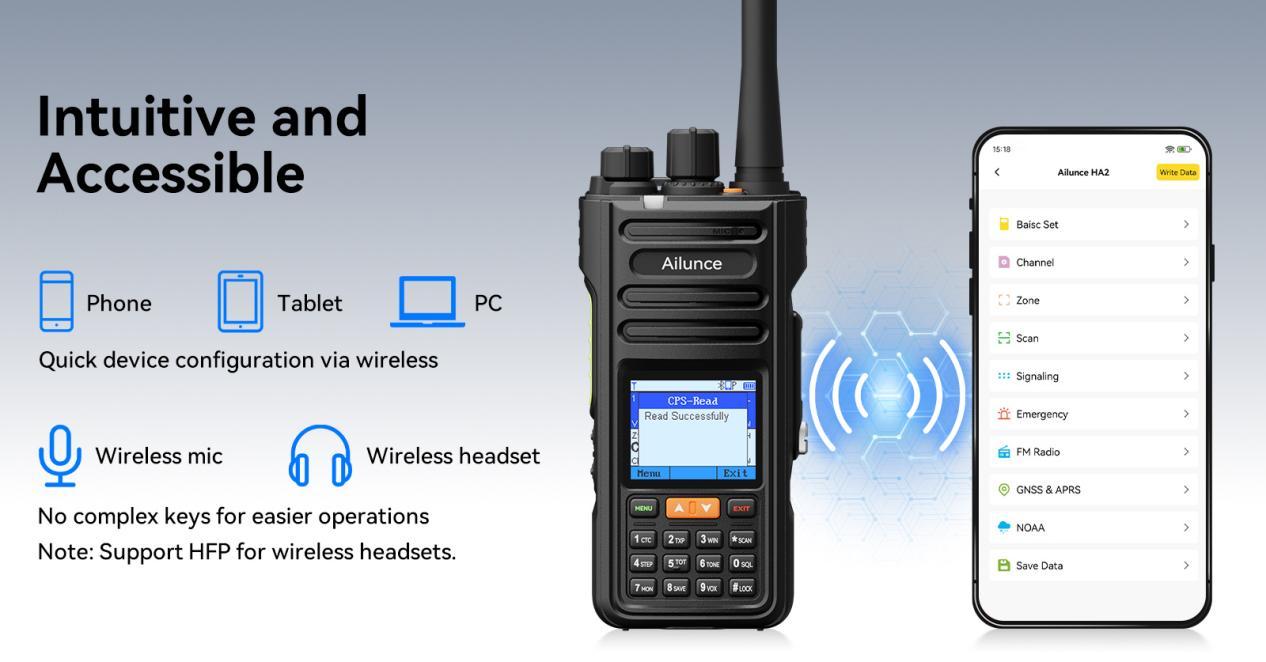
The RETEVIS Ailunce HA2 uses a Bluetooth connection between the radio and a smartphone, working with the RETEVIS programming app. Once paired, the app provides access to all programmable parameters, including channel frequencies, privacy codes, power levels, and advanced features.
The step-by-step process:
- Power on the RETEVIS Ailunce HA2 and enable Bluetooth pairing mode
- Open the RETEVIS programming app on an Mobile Phone
- Select the RETEVIS Ailunce HA2 from discovered devices
- Read the current configuration, make changes, and write them back to the radio
- Complete configuration of one RETEVIS Ailunce HA2 takes approximately two minutes.
Download Retevis Official App
Android download click here:
RETEVIS Android APP download link
iOS download click here:
Scan the QR code below


Core Technical Advantages
No Programming Cable Required
The RETEVIS Ailunce HA2 eliminates the need for a proprietary USB programming cable. In outdoor environments, this means carrying one less item that could be lost or damaged. There is no need to find a USB port inside a tent or worry about a cable snagging on branches.
Cross-Platform Compatibility
The RETEVIS programming app works on both iOS and Android devices. Whether a team uses Mobile Phones or various Android phones, as long as one person has the app installed, they can help reconfigure the entire team's RETEVIS Ailunce HA2 units.
Real-Time Reading and Writing for Unexpected Situations
This is the most critical advantage for outdoor scenarios. When an overlanding convoy discovers frequency interference after entering the mountains, when a search and rescue team arrives on-site and needs to coordinate with other agencies, or when a HAM finds an active frequency they want to join in the field—in all these situations, the RETEVIS Ailunce HA2 can be reconfigured on-site within minutes.
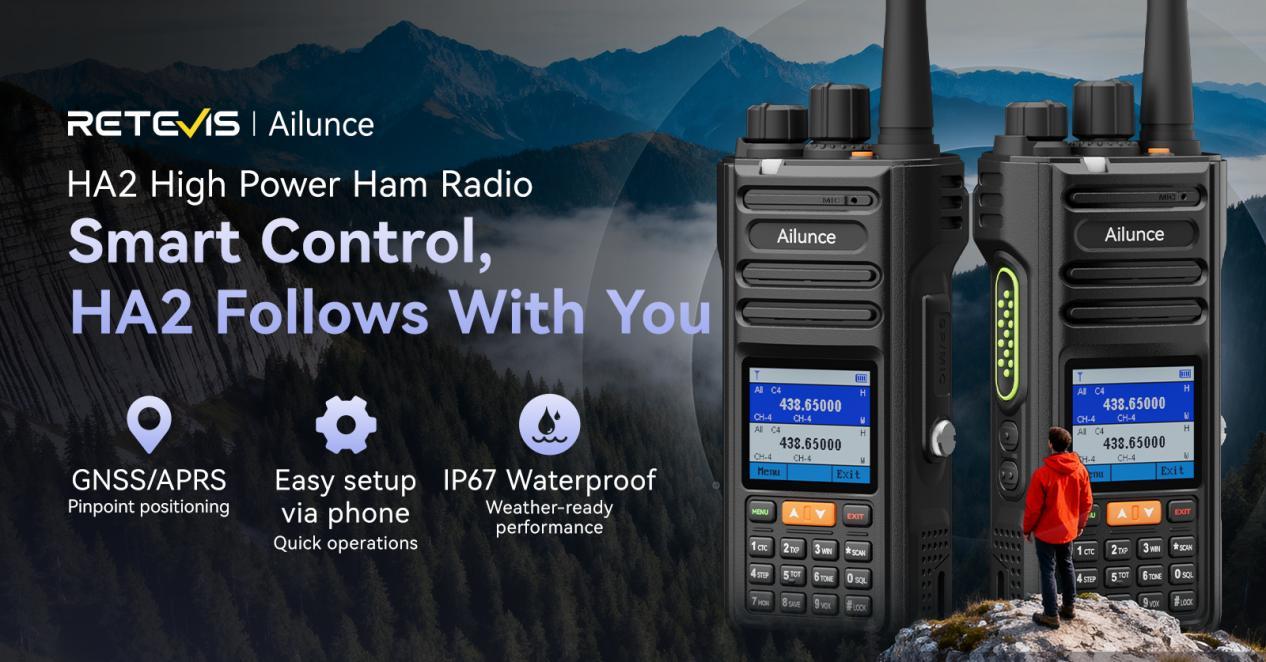
Comparative Analysis: Mobile Phone Programming vs PC Programming
|
Comparison Point |
PC Programming |
Mobile Phone Programming (RETEVIS Ailunce HA2) |
|
Pre-trip preparation |
Computer + cable + software installation |
Download the app only |
|
Equipment weight |
Extra laptop and cables |
Zero additional weight |
|
On-site adjustment capability |
None |
Anytime, anywhere |
|
Multi-team coordination |
Cannot adapt to other teams' frequencies on-site |
Read and write to other HA2 frequencies on-site |
|
Battery impact |
Laptop drains quickly, difficult to recharge in the field |
Less than 1% per programming session |
|
Failure handling |
Broken cable means no programming |
No cable, no such concern |
|
Beginner-friendliness |
Requires learning specialized software |
Intuitive mobile app interface |
In outdoor scenarios, the pre-trip batch programming advantage of PC programming still holds if the trip involves absolutely no frequency conflicts or coordination needs. But the reality is that uncertainty is the norm in outdoor activities. The flexibility of Mobile Phone programming is decisive in wilderness environments.
Real-World Outdoor Scenarios
The following four typical outdoor scenarios clearly demonstrate how programming the RETEVIS Ailunce HA2 from an Mobile Phone solves real communication pain points in the field.
Scenario One: Frequency Coordination in Multi-Vehicle Overlanding
A convoy of six overland vehicles is crossing a remote area. Before departure, all radios were preset to a common convoy frequency. Midway, they encounter another convoy traveling in the opposite direction. Both want to coordinate communications while passing through a narrow section, but their frequencies are different.
PC Programming Dilemma: No solution. Neither group carries a laptop and programming cables. Even if they did, connecting cables inside bouncing vehicles is impractical.
RETEVIS Ailunce HA2 Solution: As long as one person in either group has an Mobile Phone with the RETEVIS app installed, they can read the current frequency from their own RETEVIS Ailunce HA2 in minutes, negotiate a common frequency with the other group, and then write the new frequency to all HA2 units in their convoy via Bluetooth. The entire process happens inside the vehicle.
Scenario Two: Multi-Agency Coordination in Wilderness Search and Rescue
A hiker is missing in a remote mountain area. The search team consists of local fire department, forest rangers, a volunteer rescue group, and support staff. Each agency uses different radio brands and frequencies. The on-site command post needs all searchers to communicate on a common frequency as quickly as possible.
PC Programming Dilemma: Different radios require different programming cables and software. The command post cannot possibly have programming equipment for every brand.
RETEVIS AILUNCE HA2 Solution: If the rescue team is equipped with RETEVIS Ailunce HA2 units, the on-site commander can read the current frequency from any HA2, use that as a baseline, and then write the common frequency to all HA2 radios via Bluetooth using a single phone inside the command tent. When a frequency change is needed later due to a signal shadow in a particular valley, the commander can guide team members to make the adjustment on their own phones.
Scenario Three: Frequency Hopping During HAM Field Operations
An amateur radio operator takes a RETEVIS Ailunce HA2 to a remote summit for a SOTA (Summits On The Air) activation. Upon arrival, they find that the preset frequencies are either heavily interfered or already in use by other HAMs. There are several active frequencies on the summit worth trying.
PC Programming Dilemma: HAMs rarely carry laptops up a mountain. Even if one did, finding a flat surface to set up a computer and connect a programming cable on a rocky summit is highly inconvenient.
RETEVIS Ailunce HA2 Solution: The HAM sits on a rock, checks active frequency information on APRS via their phone, and directly modifies the RETEVIS Ailunce HA2 frequency through the RETEVIS app. Trying a new frequency takes only seconds. When they find the optimal frequency, they can save the configuration as a template and share it with other HAMs on the summit.
Scenario Four: Team Separation During Long-Distance Trekking
A trekking group plans to cross a national park in stages. For the first half, the entire group travels together on a common frequency. Midway, some members need to exit early, while the rest continue. The exiting members need to contact their support vehicle, which uses a different frequency.
PC Programming Dilemma: There was no way to know before departure which members would exit early or what frequency the support vehicle would be using. Therefore, the exiting members' radios could not be pre-programmed.
RETEVIS Ailunce HA2 Solution: When the decision to separate is made, the exiting members simply use their phones to read the frequency from the support vehicle's radio, then use Bluetooth to switch their own HA2 units to that frequency. The entire process happens on the trail with no additional equipment.
User Feedback from Outdoor Enthusiasts
"Before every overlanding trip, I used to spend the night before checking all the radios, terrified that a frequency was set wrong. Now with the RETEVIS Ailunce HA2, I just bring my phone. When we meet another convoy, we align frequencies in two minutes. This thing is a lifesaver in remote areas."
"Frequency coordination used to be our rescue team's biggest headache. Every joint exercise, we would waste half a day just aligning frequencies. Now that we are gradually switching to the RETEVIS Ailunce HA2, the on-site commander configures the entire team's frequencies with a single phone. The time saved means we can search one more square kilometer."
"As a Amateur, the thing I hated most about SOTA was lugging a laptop up the mountain. The RETEVIS Ailunce HA2 has freed me from the programming cable for good. On the summit, I can adjust frequencies anytime based on propagation conditions and try any frequency I want. This is the freedom amateur radio should have."
Usage Considerations for Outdoor Scenarios
Every piece of outdoor gear has its operational boundaries. When using the RETEVIS Ailunce HA2 programming function in the field, the following points are recommended.
Download the App Before Departure: Outdoor areas often have no cellular signal. It is recommended to download the RETEVIS programming app over WiFi before leaving and perform one test pairing to ensure everything works.
Bluetooth Range: Programming requires the Mobile Phone to be within approximately 10 meters of the RETEVIS Ailunce HA2. In open terrain this is not an issue, but if the radio is deep inside a backpack, it is advisable to take it out before programming.
Carry a Backup Phone: It is recommended that at least two people in each team have the programming app installed. If the primary phone fails, the backup can still handle programming tasks.
Save Common Frequency Templates in Advance: The RETEVIS app supports saving configuration templates. It is recommended to pre-save frequently used frequency sets for one-tap use in the field.
The Wireless Programming Era for Backcountry Communications
The ability to program a walkie talkie from an Mobile Phone is transforming how outdoor enthusiasts, rescue personnel, and amateur radio operators use their radios in the field. The RETEVIS Ailunce HA2 demonstrates that app-based wireless programming is not a compromise—it is a superior solution specifically optimized for outdoor scenarios.
PC programming still has value for pre-trip batch configuration. But once you are in the outdoors—whether overlanding, conducting a search and rescue, or activating a summit for HAM contacts—situations change constantly. Frequency interference, impromptu coordination, team separation, propagation shifts. None of these can be anticipated from a desk.
In these real-world scenarios, the ability to adjust frequencies on-site with an Mobile Phone is more than a convenience feature. In overlanding, it means smooth coordination between convoys. In search and rescue, it means faster response times. In HAM activities, it means more contacts and better outcomes. The programming cable is no longer needed in the outdoors.




 Google
 Amazon
Comments
No data Yet