

Table of Contents
OSHA Standards for Construction and General Industry: How Better Communication Improves Jobsite Safety
- Posted by:Retevis
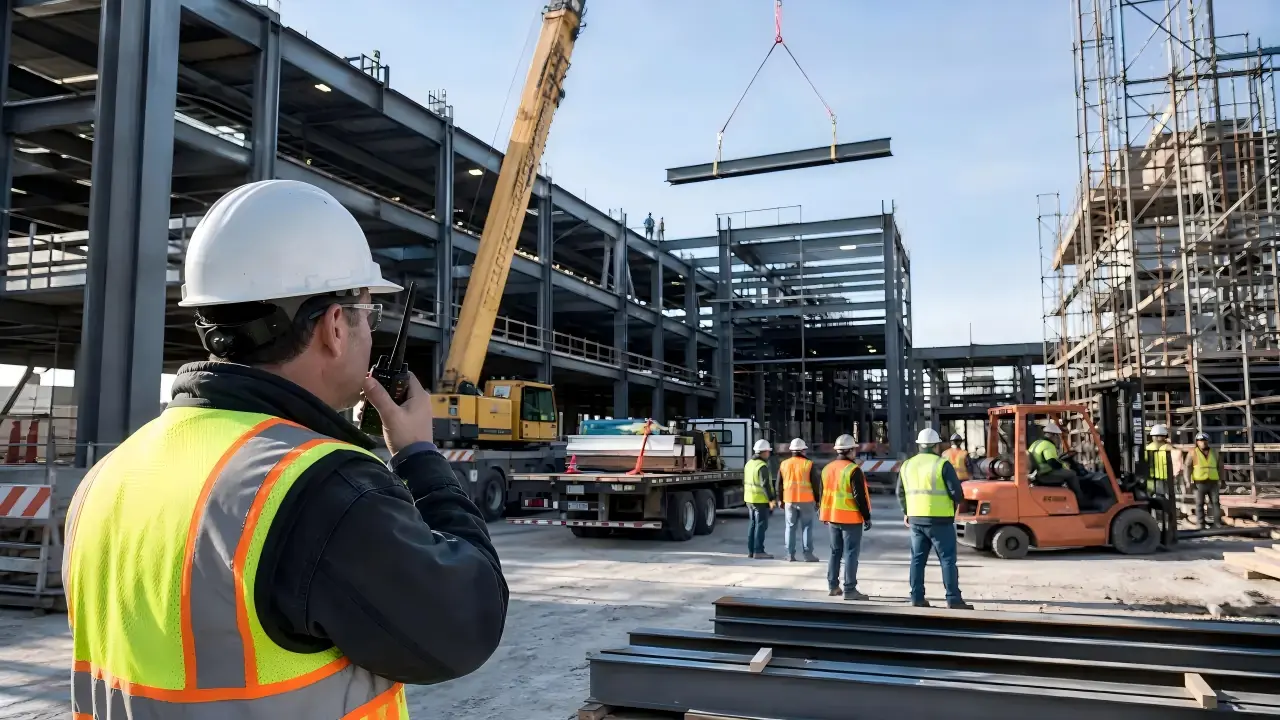
On a busy jobsite, safety problems often start with a simple issue: someone misses a message.
A worker does not hear a warning. A spotter cannot reach an operator in time. One crew changes access, but the next crew does not get the update. These are common problems on construction sites, in warehouses, and in manufacturing plants.
This is why communication matters when companies look at OSHA standards for construction and general industry. Rules, PPE, and training all matter. But workers also need clear, fast, and reliable communication to do the job safely.
For contractors, foremen, safety managers, and industrial supervisors, the question is simple: how do you keep people connected when the site is noisy, spread out, and always changing? In many cases, the answer starts with better jobsite communication, stronger construction site communication, and the right tools for the field.
What Are OSHA Standards for Construction and General Industry?
OSHA standards for construction and general industry are safety rules for different types of workplaces.
- Construction standards usually apply to building, demolition, renovation, excavation, and temporary project work.
- General industry standards usually apply to warehouses, manufacturing plants, processing facilities, and similar fixed sites.
The work is different, but the safety need is the same: workers must share information clearly and quickly.
Why this matters in real work
A written rule does not stop an incident by itself. People still need to:
- get instructions,
- report hazards,
- warn others,
- coordinate tasks,
- respond in an emergency.
That is why construction communication is not just about convenience. It supports safer work.
Why Communication Is a Safety Issue
Many companies think of radios as tools for productivity. That is true, but it is only part of the picture.
On a construction site, communication affects:
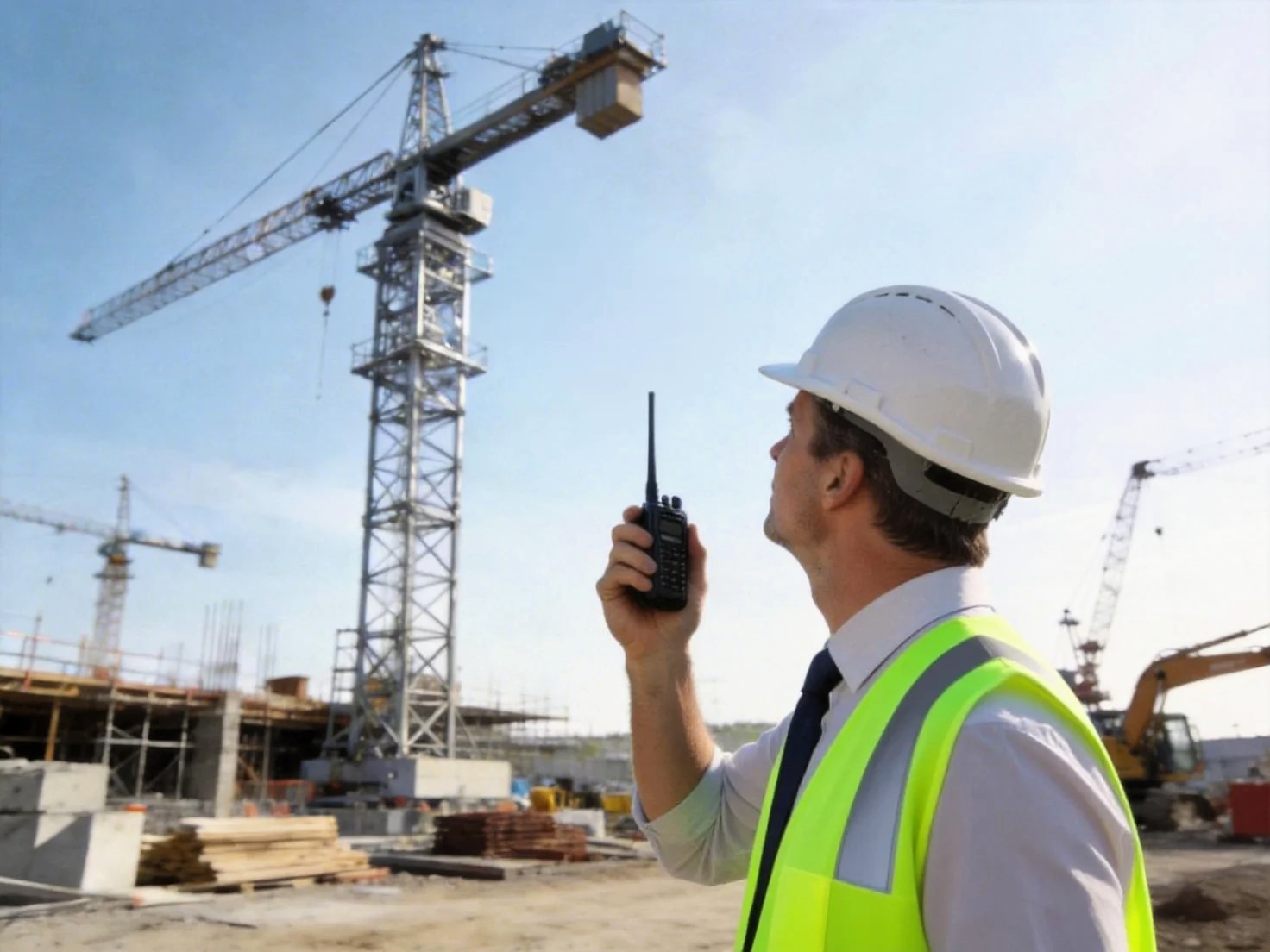
- crane and lifting work,
- heavy equipment movement,
- spotter-to-operator coordination,
- access control,
- multi-contractor work.
In industrial settings, it affects:
- maintenance shutdowns,
- forklift traffic,
- loading docks,
- restart procedures,
- emergency response.
If one person misses a key message, the risk can rise fast. A delayed warning can lead to a struck-by incident, a lifting problem, or someone entering the wrong area.
Quick answer: Why does communication matter for OSHA-related safety?
Because workers cannot follow safe procedures if they do not get the right message at the right time.
Common Communication Problems on Construction Sites and Industrial Facilities
Many jobsites are hard places to communicate. That is why many companies use jobsite communication radios and other field-ready systems.
High noise
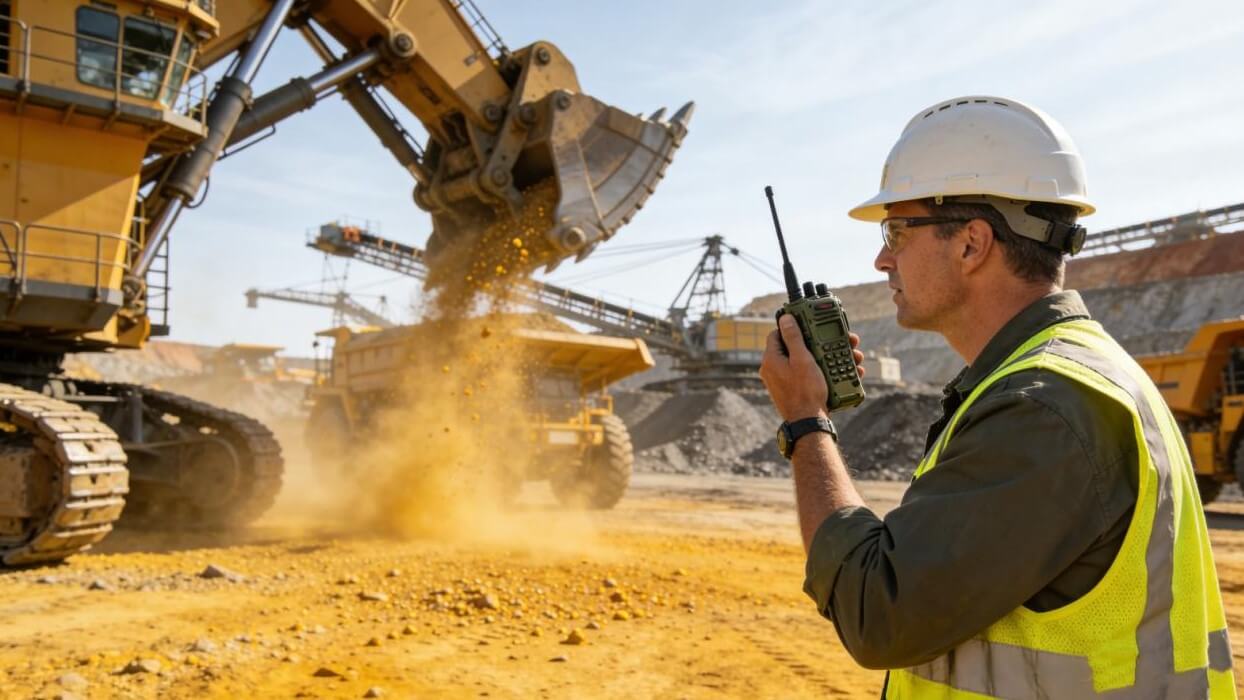
Power tools, engines, compressors, and production machines make it hard to hear normal speech.
A foreman may give a clear instruction, but the worker near a machine may only hear part of it. That is a real safety problem, especially during lifting work or equipment movement.
This is where strong construction site radio communication helps.
Large work areas
Teams often work across:
- several floors,
- large yards,
- tunnels,
- loading zones,
- warehouses,
- separate buildings.
Distance slows communication. Walls, steel, and concrete can make it worse. For big projects, many teams depend on radios for large construction sites to stay connected.
Multiple teams
A site may have general contractors, subcontractors, crane crews, maintenance teams, and safety staff working at the same time.
If one team changes a route, blocks access, or starts hot work, others need that update fast. Without good construction site communication, teams can miss critical information.
Changing hazards
Site conditions can change during the shift.
Examples include:
- a crane path changes,
- weather reduces visibility,
- a forklift reroute changes foot traffic,
- a shutdown area gets larger,
- new materials block an access path.
Workers need updates right away, not only at the morning meeting.
Emergency response
During an injury, fire, equipment problem, or chemical issue, every second matters.
Workers should not need to search for a number or guess who to call. Fast contact can reduce confusion and improve response.
How Two-Way Radios Support Safer Operations
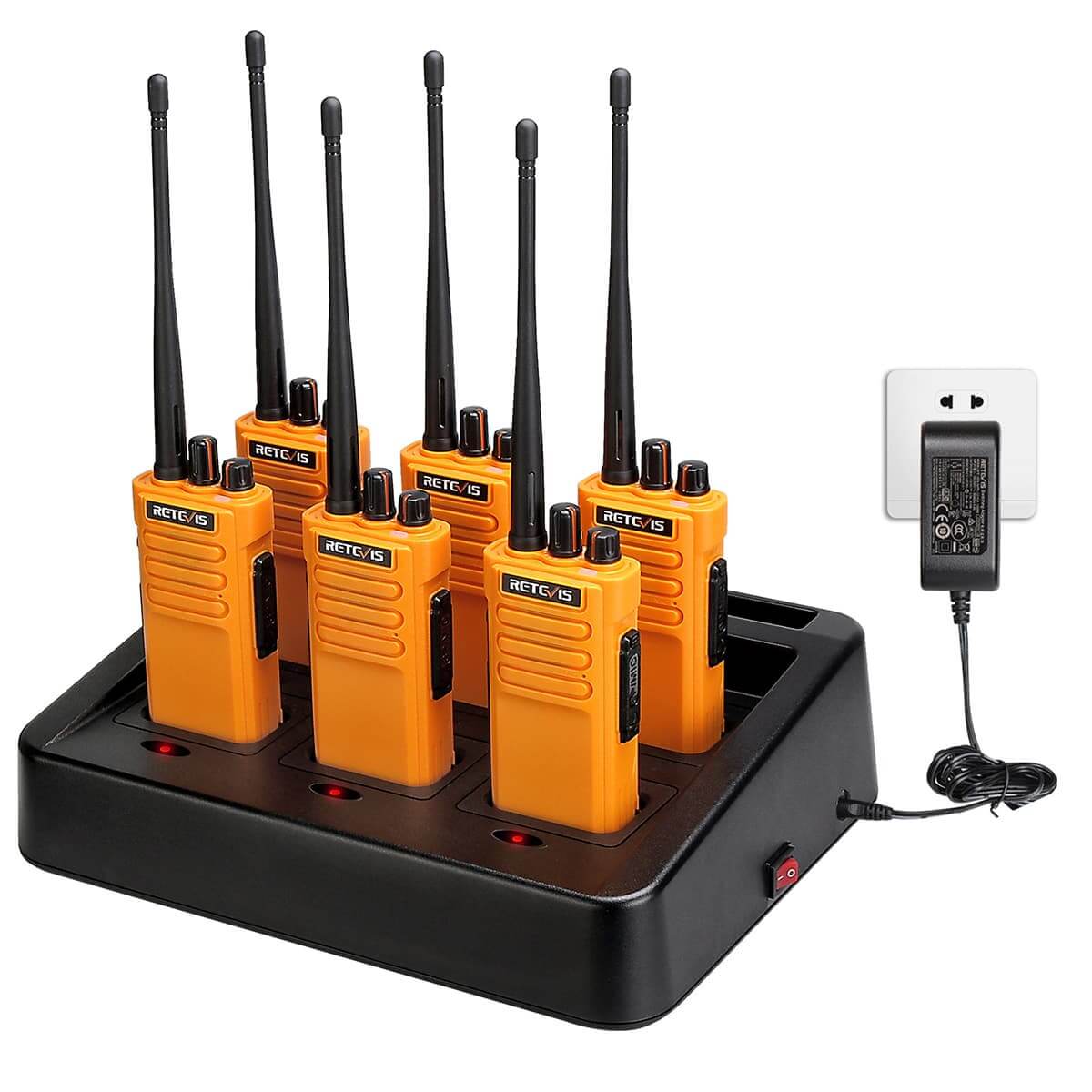
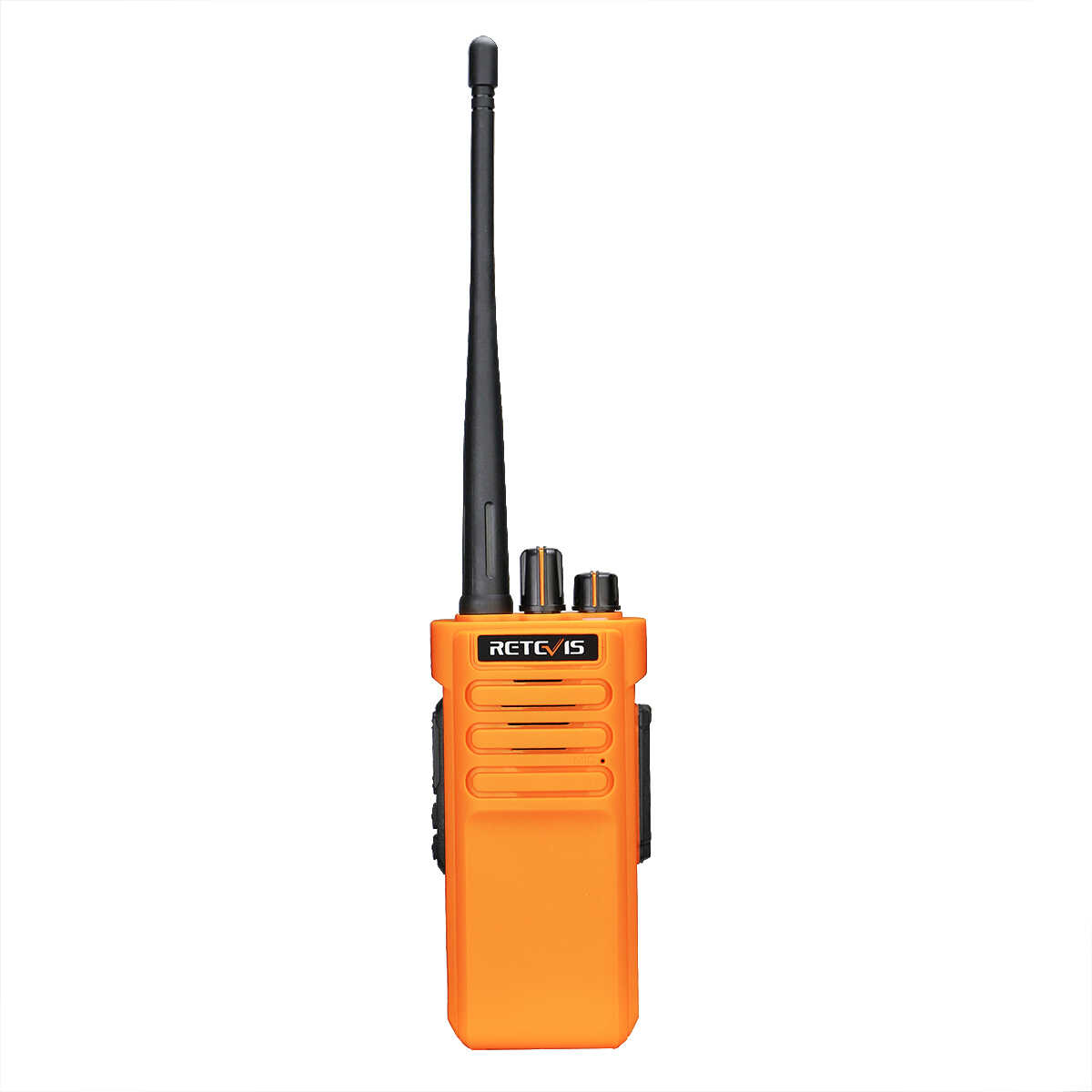
Many companies use construction two way radios because they fit real site conditions better than standard office communication tools.
They do not replace safety rules or training. They help workers follow those rules in the field.
Instant communication
A construction radio gives workers and supervisors direct contact. They do not need to dial, wait, or search for a contact.
This helps when:
- a spotter needs to stop a machine,
- a supervisor needs to clear an area,
- a worker needs to report a hazard,
- a crew needs an update fast.
For many teams, two way radios for construction are more practical than using only mobile phones.
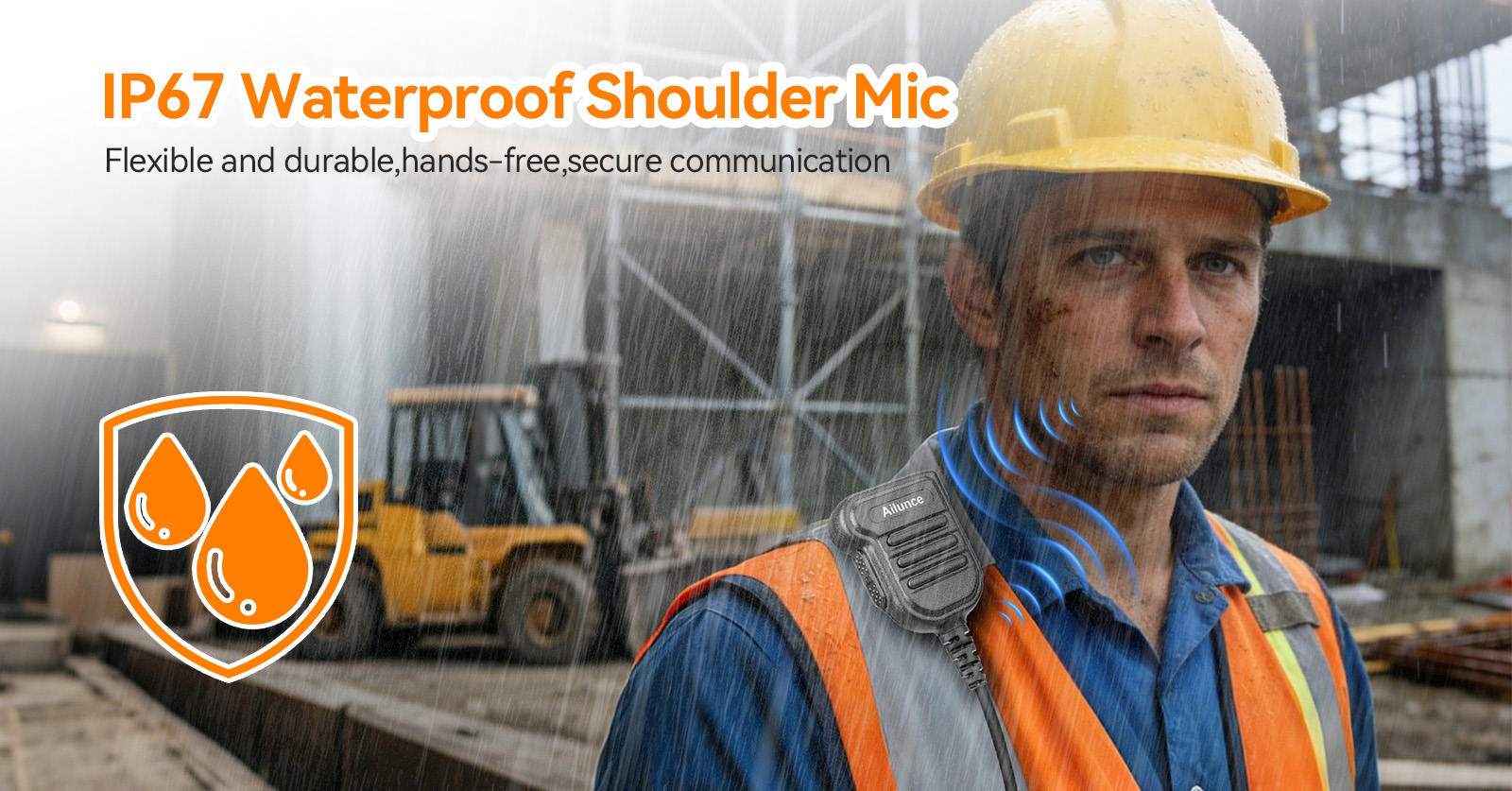
Hands-free use
Workers often need both hands for the job. This is common during climbing, inspections, rigging, and material handling.
With the right headset or speaker mic, two way radios for construction sites let workers stay in contact while keeping their hands free.
Better team coordination
A strong construction site communication system helps keep operators, foremen, riggers, and safety staff on the same page.
This is useful during:
- crane lifts,
- concrete pours,
- shutdown work,
- shift handovers,
- truck loading,
- restricted-area control.
Faster emergency response
Many radios for construction safety include emergency call features. These tools can help workers alert a supervisor or safety lead quickly.
Radios do not replace an emergency plan. But they can help teams act on that plan faster.
What to Look for in a Safety Communication System
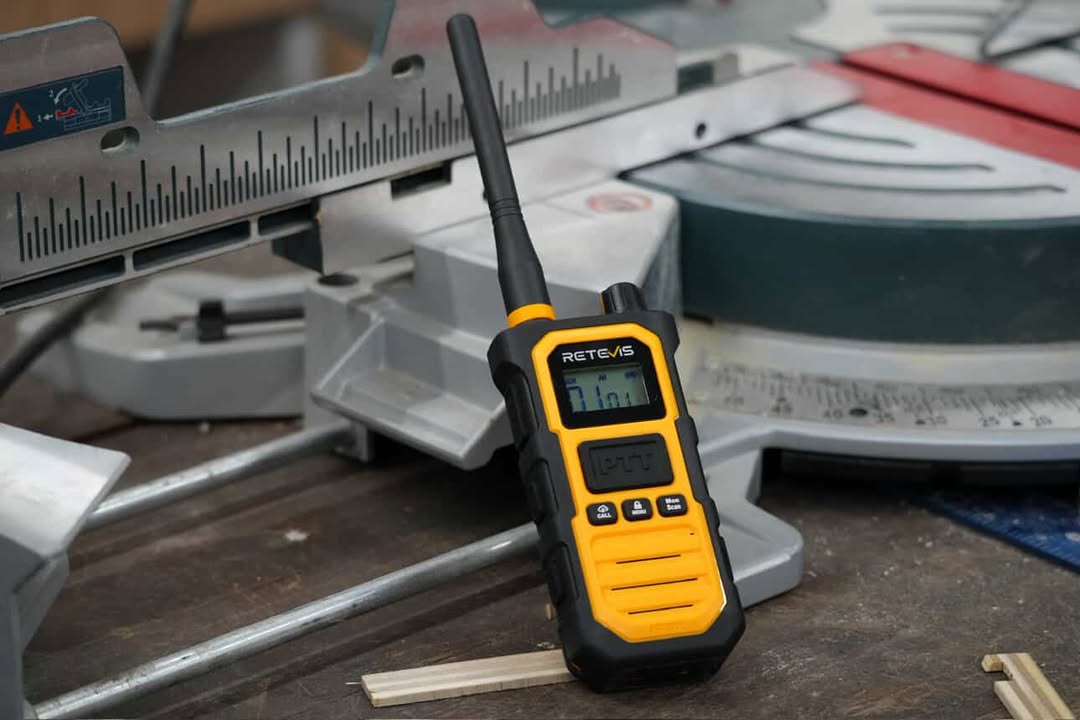
Not every radio works well on a real jobsite. If you are choosing two way radios for construction sites, focus on the basics first.
|
Feature |
Why It Matters |
|
Audio clarity |
Workers need to hear clearly in noisy areas |
|
Coverage |
The radio should work across the whole site |
|
Durability |
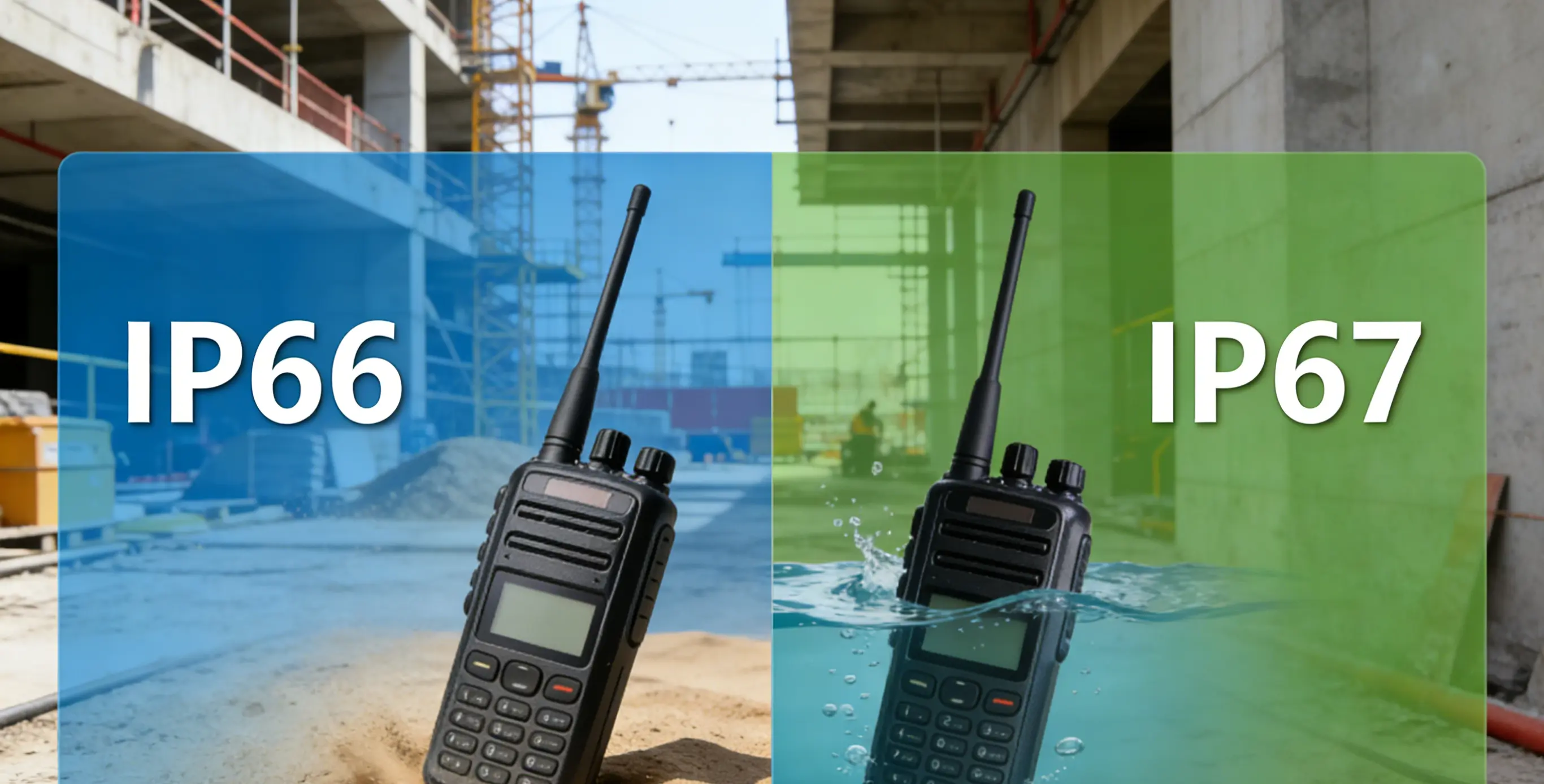
It should handle dust, drops, water, and rough use |
|
Battery life |
It should last through long shifts |
|
Ease of use |
Workers should use it fast, even with gloves |
|
Safety features |
Emergency alerts and accessory support can help |
Quick answer: What should buyers look for?
Choose a system with:
- clear audio,
- strong coverage,
- rugged design,
- long battery life,
- simple controls,
- useful safety features.
A walkie talkie for construction safety communication should work in the real conditions crews face every day.
Common Mistakes to Avoid
Good equipment alone is not enough. Safety managers should avoid a few common mistakes.
1. Using the same setup for every area
A loading dock, a tower floor, and a crane zone do not have the same communication needs.
2. Skipping site testing
A radio may look good on paper but fail around concrete walls, steel structures, basements, or machinery.
3. No radio rules
Workers need to know:
- which channel to use,
- how to report urgent issues,
- who needs to answer,
- how to confirm a message.
Without simple rules, the system can create confusion.
4. Ignoring accessories
In loud areas, the wrong mic or earpiece can make even a good radio hard to use.
5. Not reviewing incidents
Near misses often reveal weak communication. If teams do not review them, the same problem may happen again.
Best Practices for Safety Managers
If you want communication to support OSHA standards for construction and general industry, keep the process simple and practical.
Step 1: Find the risk points
Look for places where communication matters most:
- crane lifts,
- truck routes,
- shutdown zones,
- high-noise areas,
- shared contractor spaces,
- remote work areas.
Step 2: Match the tool to the site
Choose the right construction site two way radios or other systems based on:
- site size,
- noise level,
- building layout,
- mobility needs,
- emergency needs.
Step 3: Set clear radio rules
Create simple rules for:
- daily communication,
- urgent stop-work calls,
- emergency alerts,
- supervisor contact,
- channel use.
Step 4: Train workers
Training does not need to be long. Workers should know:
- how to speak clearly,
- what to say first,
- how to confirm a message,
- what to do if the radio fails.
Step 5: Test before critical work
Before a major lift, shutdown, or multi-team task, check:
- coverage,
- audio quality,
- battery charge,
- channel setup.
These steps can solve many jobsite communication problems before they create safety issues.
How This Helps Buyers Choose the Right Solution
Buyers should not ask only, “Which construction radio should we buy?”
They should ask:
- Where do crews lose contact now?
- Which tasks need instant updates?
- Is phone use too slow on site?
- Do workers need hands-free communication?
- Are there dead zones?
- Do different teams need separate channels?
These questions help companies choose better construction communication solutions for real site conditions.
A good construction site communication system should support daily work and help reduce safety risk.
Conclusion
When companies review OSHA standards for construction and general industry, they often focus on PPE, training, and written procedures. Those things matter. But communication matters too.
Construction sites and industrial facilities are noisy, large, and fast-moving. Crews often work around heavy equipment, cranes, vehicles, and other contractors. In these conditions, weak construction site communication can increase risk very quickly.
That is why many teams use jobsite communication radios, construction two way radios, and other radios for construction safety. The right system helps workers share updates faster, coordinate better, and respond sooner when conditions change.
Better communication will not replace a safety program. But it can help that program work better where it counts most—on the ground, during real work, in real time.



 Google
 Amazon
Comments
No data Yet