

Table of Contents
Quad Band Ham Radio: Is a Multi-Band HT Worth It?
- Posted by:Retevis
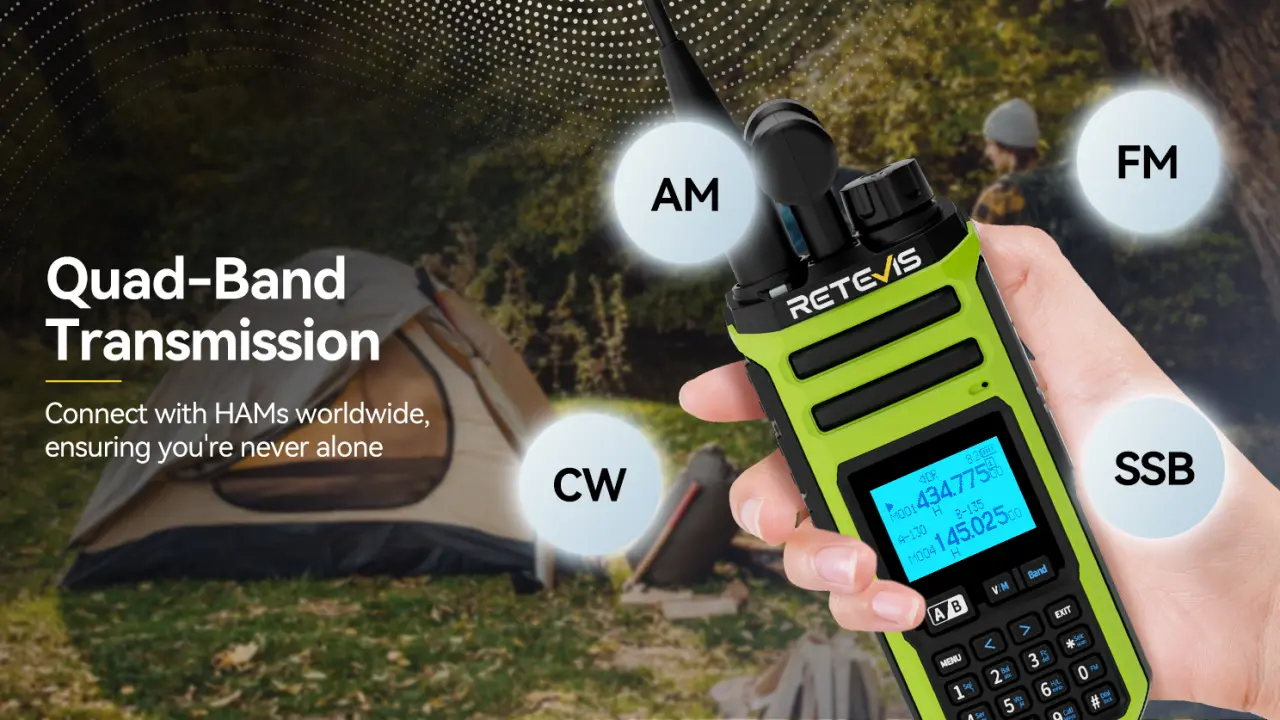
Is a Quad-Band Ham Radio Worth Upgrading To?
Most new hams start with a basic dual-band 2m/70cm handheld. It works for local repeaters, simplex contacts, and most casual operating. After six months to a year, many operators reach the same point: local contacts feel familiar, and they want to try longer-distance work without buying a full base station setup.
A quad-band handheld radio adds 10m and 6m bands to the standard 2m and 70cm coverage. This opens up entirely new operating modes while staying portable enough for field use. For many operators, it is the most affordable step into HF and VHF DX work. This guide covers what extra bands actually add to the amateur radio, what to look for in a good multi-band HT, and who gets the most value from upgrading.
What 10m and 6m Bands Actually Bring to Portable Radio Operation
Two extra bands do more than just add numbers to the spec sheet. They change what you can do with a handheld radio, especially outdoors.
The 10m radio band, at 28 MHz, opens the door to long-distance FM and SSB contacts. During solar peak years, 10m band radio signals travel thousands of miles via sporadic E and F-layer propagation. Amateur radio operators can work stations across continents with a simple handheld and a basic antenna. It is the easiest entry point into DX work without a full HF station. For SOTA and POTA activations, 10m lets activators work far more stations than 2m alone can reach.
The 6m radio band, at 50 MHz, is known as the magic band. It mostly acts like a VHF band for local work, but during sporadic E openings, signals bounce across hundreds or thousands of miles. These openings are unpredictable and often short-lived, which makes chasing them a popular hobby within the hobby. A portable 6m-capable radio lets operators take advantage of openings wherever they are, without being tied to a home station.
These 6m and 10m two bands turn a local communication tool into a DXing-capable station that fits in a pocket. For outdoor radio operators, the extra range and variety make every activation more interesting.
Three Key Criteria for a Good Multi-Band HT Radio
Not all quad-band radios deliver the same practical value. Prioritize these three points, and the radio will see regular use instead of becoming a shelf piece.
1. Full receive capability, not just transmit
Many cheap multi-band radios only transmit on the four ham bands and offer very limited receive options. A useful portable quad band or multi band radio should receive across a wide frequency range, including AM airband, shortwave broadcast, SSB, and CW signals.
Wideband receive turns the radio into a general-purpose listening tool. Operators can monitor air traffic, shortwave stations, weather frequencies, and SSB DX signals even when they are not transmitting. For camping, travel, and emergency preparedness, this adds a huge amount of utility with no extra equipment.
2. Proper antennas included for every band
A radio is only as good as its antenna. Many multi-band handhelds ship with a single dual-band antenna that performs poorly on 10m and 6m. Operators then have to buy separate antennas for each band, which adds cost and clutter to a field kit.
Look for a package that includes dedicated antennas matched to each band. This ensures good performance right out of the box, with no extra purchases required. For portable use, having correct, compact antennas for every band makes the radio much more useful in practice.
3. Usable field features
Built-in tools like a spectrum analyzer make multi-band radios much easier to find active signals on each band without tuning manually. This is especially valuable on 10m and 6m, where activity can pop up and disappear quickly during propagation openings.
Other practical field features include a Type-C charging port, long battery life, and dual watch or dual PTT controls. These small details add up to a much better operating experience in the field.
A Practical Entry-Level Option: Retevis A3 Quad Band Radio
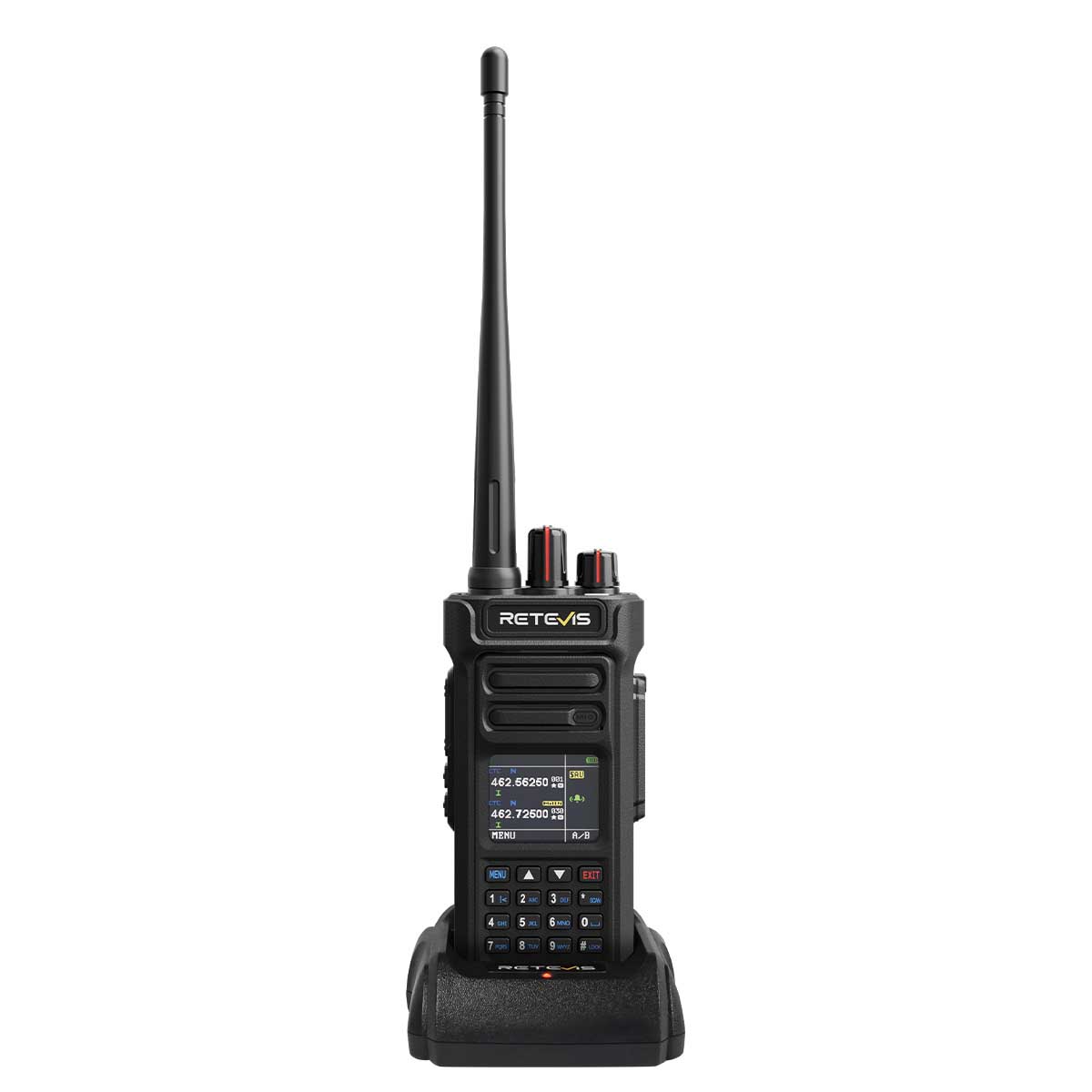
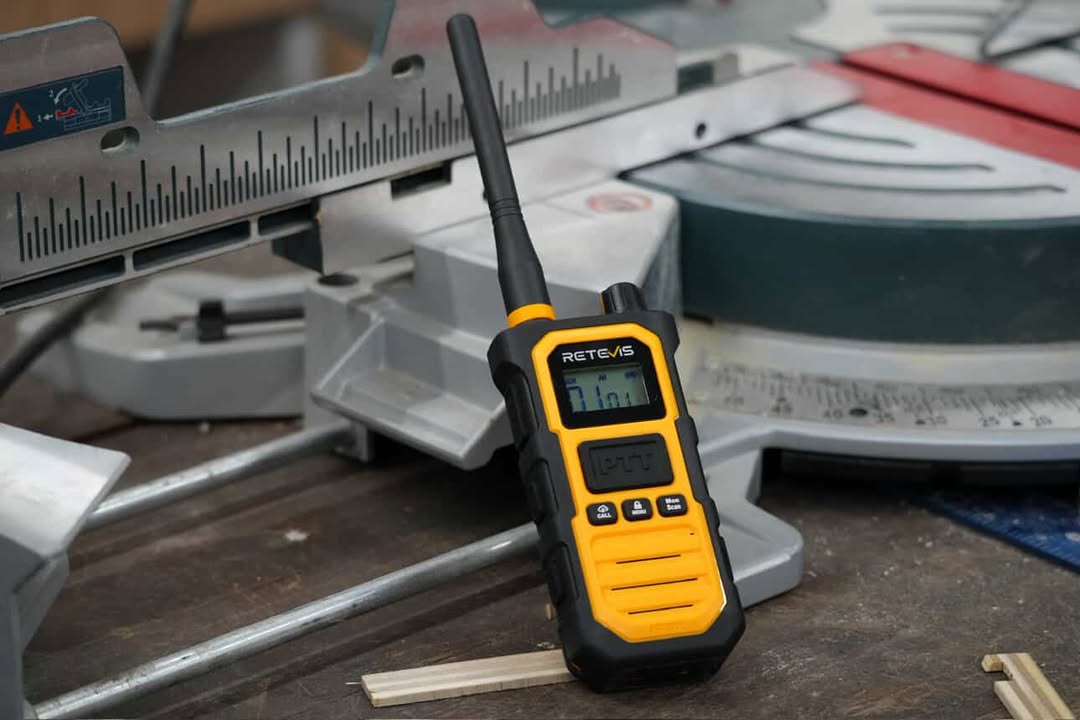
One multi band ham radio that aligns well with these three criteria is the Retevis A3 quad-band ham radio.
It transmits on 10m, 6m, 2m, and 70cm bands, with FM mode on all four. Receive coverage spans 0.5 to 1160 MHz, including AM airband, SSB, CW, shortwave broadcast, and NOAA weather channels. This wide receive range makes it useful as both a transceiver and a general-purpose scanner for travel and emergency use.
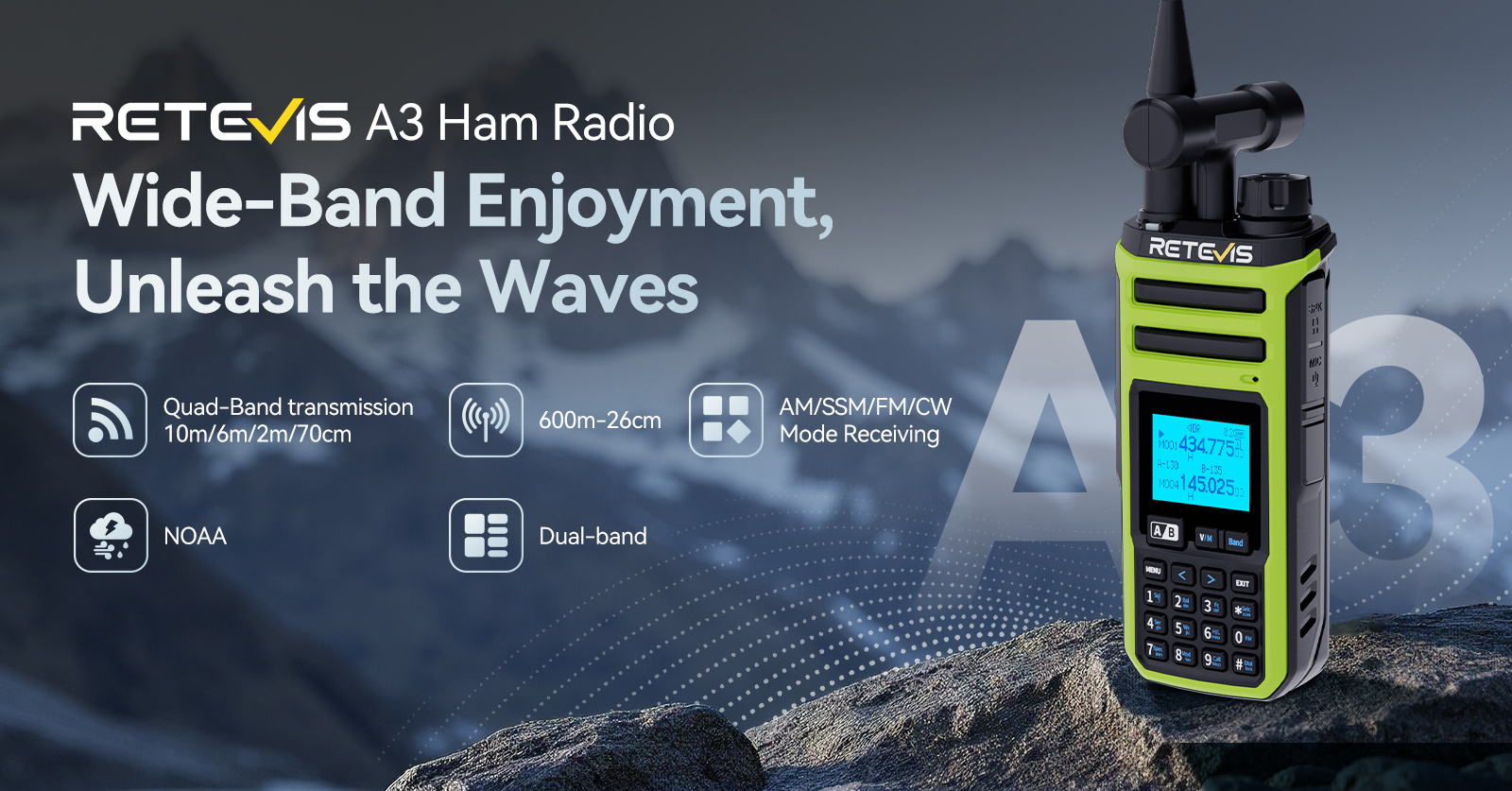 The package ships with multiple antennas matched to different bands, including a dedicated 28MHz antenna and a high-gain dual-band antenna. Operators can switch antennas for each band without buying extra accessories. It also includes a built-in spectrum analyzer for real-time band scanning, which helps find active signals fast during 10m and 6m openings.
Additional field-friendly features include a 2500mAh rechargeable battery with Type-C charging, dual PTT buttons for quick channel switching, and VOX hands-free operation. It also includes customization options such as custom boot screens and end-of-transmission tones, which let operators personalize the radio to their preferences.
For radio operators moving up from a basic dual-band HT, it offers a low-cost way to try 10m and 6m operating without investing in a more expensive multi-band radio. It works well for SOTA activations, casual DX chasing, and general portable use.
Who Should Upgrade to a Quad-band Radio
A quad-band handheld is not for everyone. Operators who only use local repeaters and have no interest in DX work will get little value from the extra bands. The upgrade makes the most sense for three groups.
First, operators who have used a dual-band radio for six months or more and want to try longer-distance contacts. The 10m band gives an accessible taste of DX work without the cost of a full HF station.
Second, regular SOTA and POTA activators who want to work more stations per activation. Extra bands mean more chances to make contacts, especially during good propagation conditions.
Third, operators who want one portable radio that works for both ham use and general listening. Wideband receive adds utility for travel, camping, and emergency preparedness.
Upgrading to a quad-band radio is not about having more features for their own sake. It is about opening up new parts of the hobby that stay hidden with a basic dual-band handheld. For operators ready to explore more of the radio spectrum, a well-chosen multi-band HT delivers a lot of new operating options in a small, affordable package.
73!






 Google
 Amazon
Comments
No data Yet