

Table of Contents
Where Should a Radio Repeater Be Installed in a Large Building?
- Posted by:Retevis
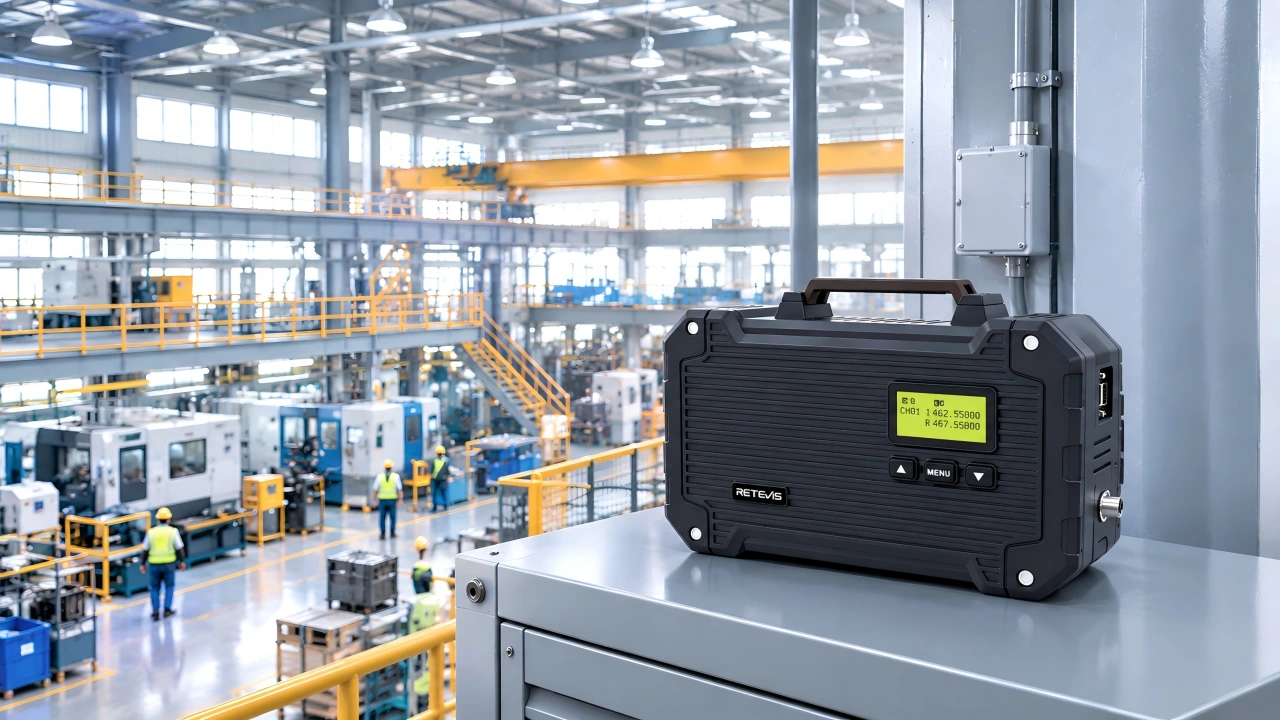
Installing a two-way radio repeater is not simply a matter of finding an empty equipment room and putting the radio there.
In a large industrial building, repeater and antenna placement can significantly affect coverage. Concrete walls, metal equipment, multiple floors, building height and cable routing all need to be considered.
For facilities such as power plants, factories and large construction projects, the objective is to place the repeater and antenna where they can support the required communication areas with practical installation constraints.
What Does a Radio Repeater Do?
A repeater receives a transmission from a handheld radio and retransmits it through the system, allowing users to communicate over a larger or more obstructed area than direct handheld communication may support.
This can be useful when workers operate across:
- Multiple floors
- Separate buildings
- Large production areas
- Equipment rooms
- Underground or enclosed spaces
- Outdoor service areas
However, a repeater does not automatically eliminate every coverage problem.
The antenna location remains critical.
Why Antenna Location Matters
The repeater itself may be installed in a convenient equipment room while the antenna is installed at a more advantageous location.
The antenna's height, surrounding structures and path toward the required coverage areas can affect system performance.
For example, a facility may have work areas at several elevations. One area could be near ground level while another is on an elevated platform. Large machinery and metal structures between these areas may make a low or poorly positioned antenna less effective.
Candidate Repeater Locations in Industrial Facilities
Several locations may be worth evaluating during initial planning:
1. Central Equipment Areas
A central location may provide practical access to multiple work areas and simplify equipment installation.
However, a geometrically central position is not automatically the best RF location. Building materials and equipment can create uneven coverage.
2. Elevated Locations
A higher antenna location may provide a better propagation path toward multiple areas.
This can be particularly useful when the facility includes several floors or elevated equipment platforms.
The installation must still account for structural access, grounding, power and cable routing.
3. Control or Communications Rooms
Control rooms may provide convenient power, equipment access and environmental protection.
However, if the room is surrounded by concrete, fire-rated walls or large metal equipment, the antenna may need to be positioned elsewhere.
Consider Feedline and Installation Constraints
A common mistake is to focus only on antenna height.
Long cable runs can introduce additional loss, so the distance between the radio equipment and antenna should also be considered.
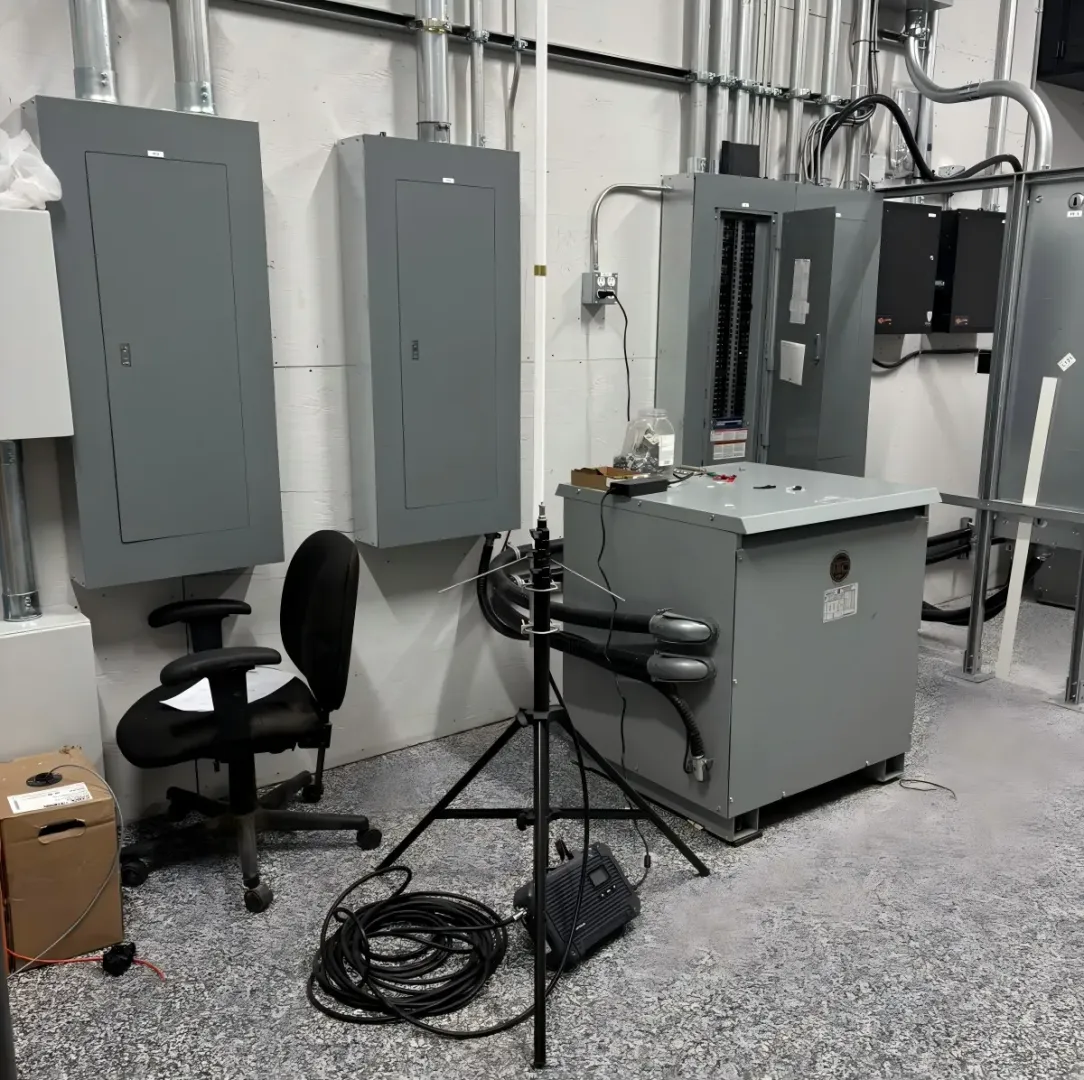
A practical system design therefore evaluates:
- Repeater location
- Antenna location
- Antenna height
- Feedline length
- Cable routing
- Power availability
- Equipment access
- Environmental conditions
- Grounding and installation requirements
Use Building Drawings Before the Site Visit
When a full RF survey cannot be completed before purchasing equipment, architectural drawings can still provide useful planning information.
For example, seven drawings for an industrial project may include:
- Enlarged site plan
- Level 01 floor plan
- Level 02 floor plan
- Level 03 floor plan
- Building sections
These drawings can reveal:
- Floor elevations
- Major structural barriers
- Equipment locations
- Cable chases
- Access areas
- Outdoor work zones
- Candidate antenna elevations
This does not replace an RF survey, but it can support an initial system design.
Always Validate the Final Installation
A practical approach is to use a two-stage process:
Stage 1: Initial Design
Use facility drawings and operating requirements to determine the candidate radio, repeater and antenna configuration.
Stage 2: Field Acceptance Test
Test the system at representative locations after installation.
If a coverage gap is identified, the solution may involve antenna relocation, antenna optimization, additional infrastructure or changes to the channel/system design.
This approach is often more practical than trying to predict every RF condition from drawings alone.
The Best Repeater Location Is a System Decision
The right repeater location depends on the complete communication system, not just the physical center of the building.
A good design considers:
Coverage requirements + building structure + antenna position + cable routing + power + field testing
That is why repeater planning should be treated as a communication-system design task rather than simply an equipment installation task.






 Google
 Amazon
Comments
No data Yet