With 16 years in the two-way radio industry, Retevis serves customers in more than 170 countries and regions, with more than 40 million units sold and over 10 million users worldwide. A large share of that work serves classified industrial sites, where every part of a radio, including the battery, is engineered around ignition risk.
Most of the attention in a hazardous-area radio goes to the handset. The battery is treated as a replaceable consumable, the same way it is on a consumer device. That assumption is where safety programs run into trouble, because the battery on an intrinsically safe radio is a certified component rather than a spare part.
Intrinsic safety is a design approach which limits the electrical energy and surface temperature of the equipment so that it cannot ignite the surrounding gas or dust (including under a defined fault condition). The energy in the battery is the point of departure for those limits. Every circuit on the radio is assessed in terms of what that pack can deliver and the pack and ht radio are therefore matched rather than selected independently.
This is why an explosion proof radio battery is certified in normal use. The ATEX and IECEx certification covers the radio, battery and accessories as a complete system (that's described on the Retevis E2 radio page). If you replace one of the elements in the assessed combination, this would changethe original certification status of the ht radio equipment.
A battery that physically fits is not in itself a certified battery pack. A different cell, a different capacity or a pack from a different manufacturer will result in a completely different energy level that the safety circuits have to cope with and that pack has never been tested against. The marking on the device and the documentation for the certified pack are the reference points. If you have an uncertified pack you have effectively removed the grounds for using the radio in a classified area even if the handset is genuine.
This answers the 'so what' in terms of why we certify intrinsic safety batteries. The certificate is for a particular battery in a particular radio under particular conditions. It allows a site to demonstrate that the equipment in use is the equipment that was actually assessed. A loose pack with no matching documentation can't make that case.
A general purpose power bank or a battery from another non-original radio is not part of the assessed combination. And using an uncertified energy source into an area where there is an active ignition risk control. Charging the radio in the field from such a source also circumvents the protection which is built into the approved charger (Using a battery that lacks certified protection poses unknown safety risks).
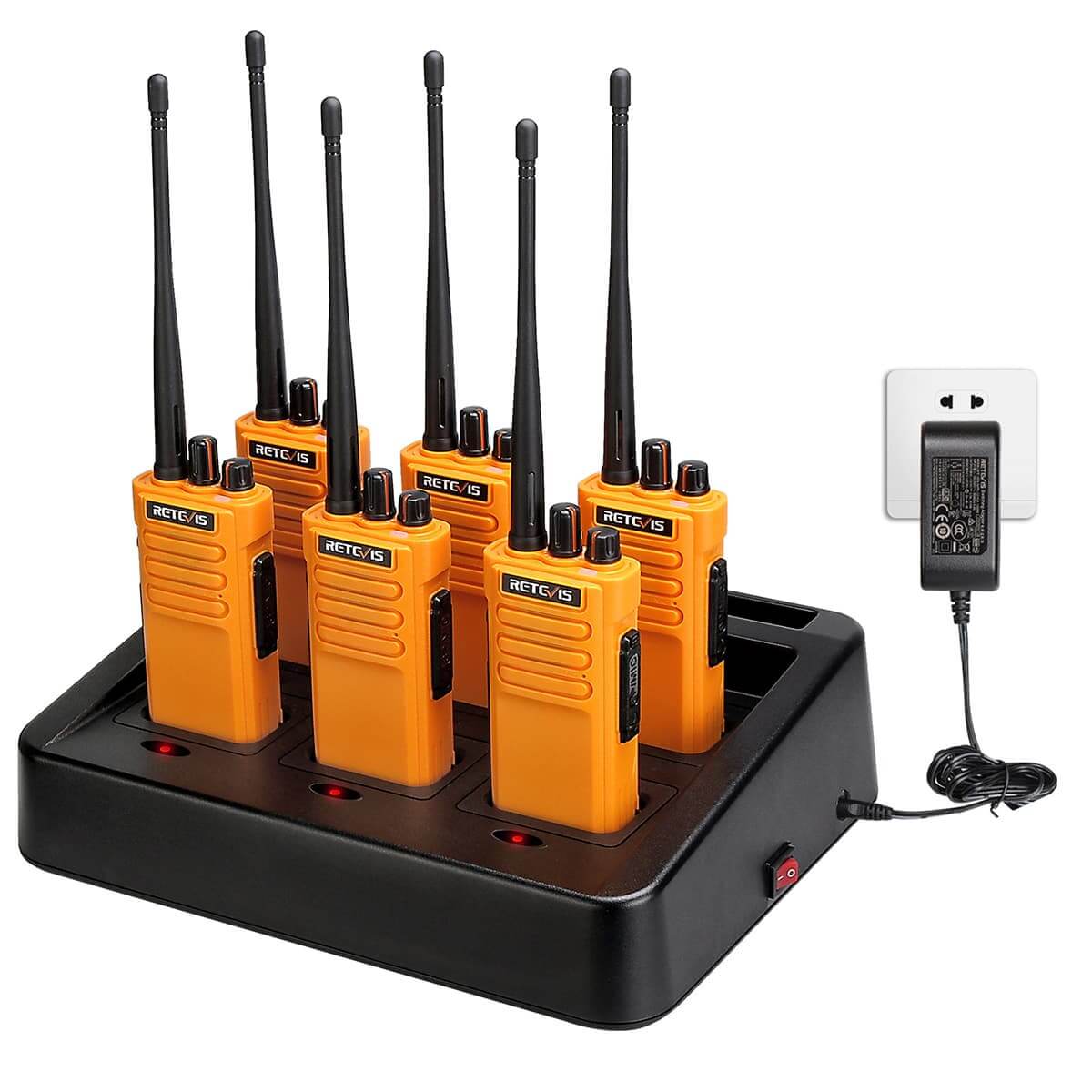
Furthermore, Charging should be in the safe (non-classified) area using either the charger supplied with the radio or the charger specified for the radio. An ATEX certified battery will only retain its protected status within the system for which it was certified; a generic charger or power bank will not.
Hazardous area radio battery life matters for a second reason: the radio has to run the full working period on one charge, and battery life for 12 hour shifts is a common planning requirement. The figures below are the manufacturer's published numbers.
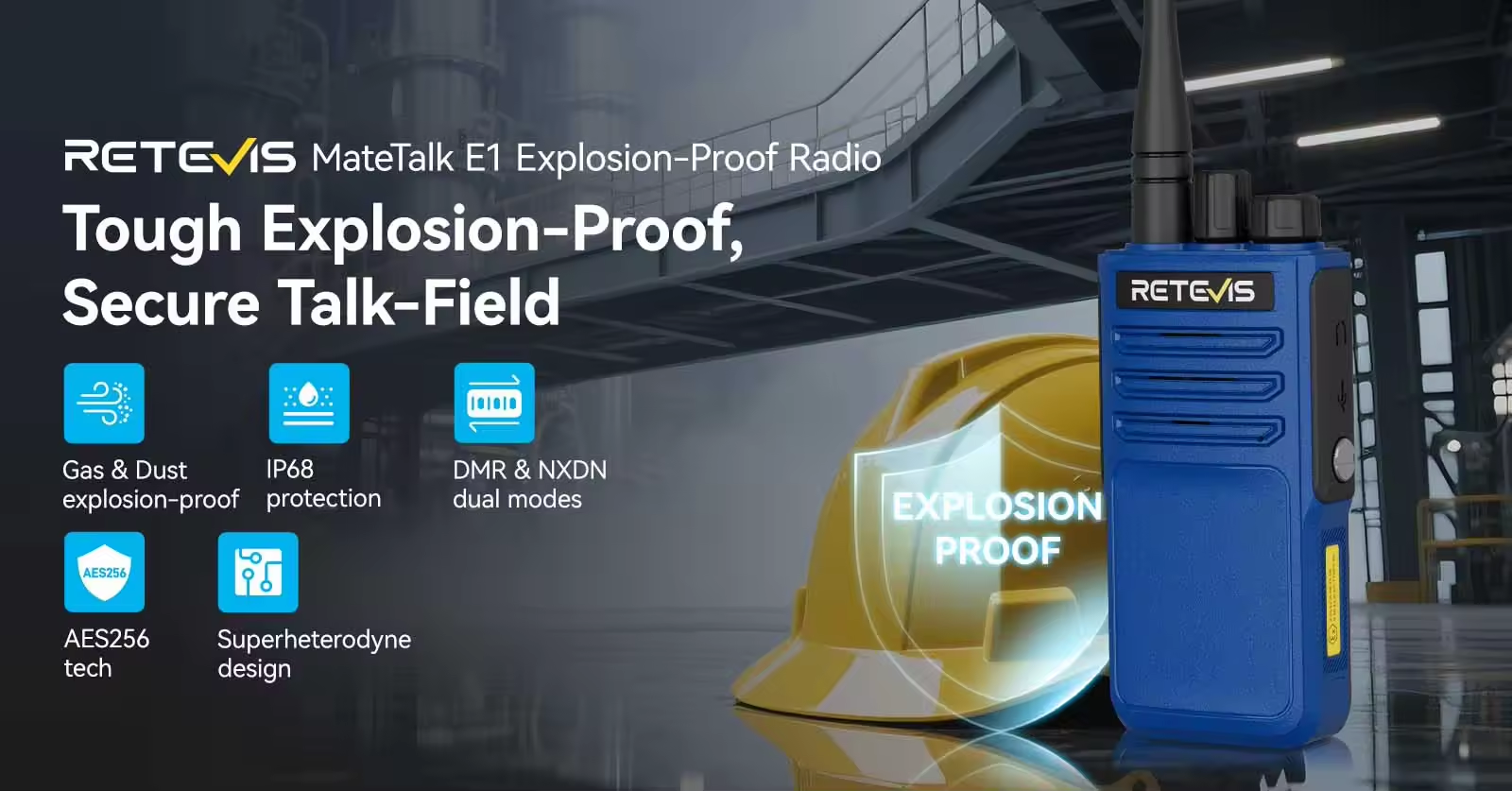
The Retevis MateTalk E1 uses a 2450mAh battery and delivers more than 24.5 hours of continuous use on a single charge, with a power-saving mode for quieter periods. That gives a 12-hour shift a working margin without a mid-shift recharge.
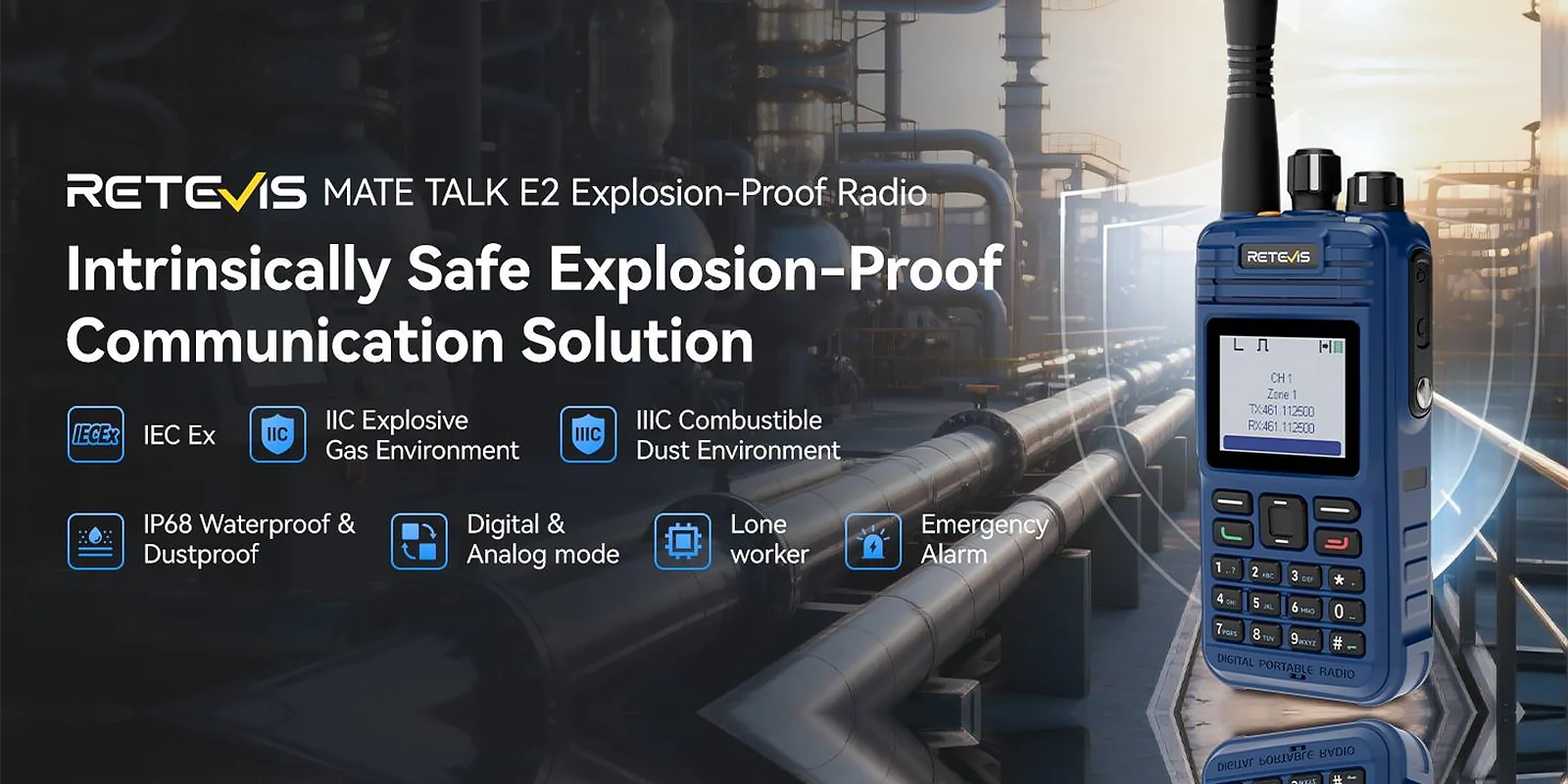
 The Retevis MateTalk E2 uses a 1500mAh battery rated for more than 20 hours in digital mode and more than 14 hours in analog mode, with up to 36 hours of standby, and a full recharge takes under 4.5 hours. Standby is not the same as active talk time; the talk-time figures are the ones to plan a shift around, while standby describes the pack at rest.
Battery management is part of operating the equipment correctly. The practical routine is to charge in the safe area with the certified charger, keep spare packs to the certified type rather than cheaper alternatives, rotate spares so every shift starts with a full pack, and remove any pack with a damaged case or connector. Spares carried into a controlled area still need to be the certified battery, because they are part of the same system once fitted.
The Retevis E2 page states this directly: the battery is part of the intrinsic safety certification, so the certified pack stays on the radio.
The two radios cover different conditions, and the boundary is set by the certificate rather than the size of the battery. The E1 is an intrinsically safe battery platform built for gas and dust hazardous areas up to Zone 1 and Zone 21, for IIB gases rather than hydrogen or acetylene. The E2 carries ATEX and IECEx certification (IECEx certificate IECEx CSAE 25.0058X; ATEX certificate CSANe 25ATEX1186X) and covers the IIC gas group including hydrogen and acetylene, but it is rated for gas Zone 2 and dust Zone 22 only and is not certified for Zone 1 or Zone 21. Full specifications are on the Retevis E1 and Retevis E2 product details.
A radio and its battery are in effect one unit in a hazardous area. The engineering side of the safety programme is to treat the pack as a certified component, charge it in the safe area and match its published endurance to the shift. The radio is still within the site's risk assessment, procedures and training rather than in any way replacing them. See the full explosion proof radio range or get in touch with Retevis to match a certified battery and radio to the site classification.
No data Yet





 Google
 Amazon