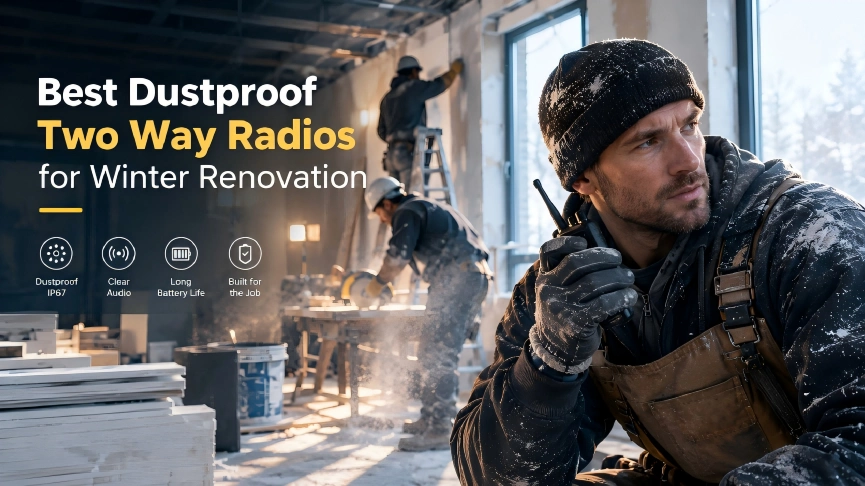
Winter indoor renovation sites destroy two-way radios faster than any other jobsite.
Closed windows trap silica dust. Multiple floors and basements create signal dead zones. Workers always have both hands full.
Most crews buy radios based on price alone. Then they watch half the fleet fail within three weeks.
This guide covers what actually kills radios on indoor sites, how to pick ones that last, which model fits which trade, and how to clean them the OSHA-compliant way.
Silica dust is how most job site radios die
Silica dust comes from cutting concrete, grinding tile, and demolishing drywall. OSHA limits exposure to 50 micrograms per cubic meter over an eight-hour shift. Winter sites keep windows closed for heat, so dust levels run even higher.
Dust attacks radios in five specific ways:
- Speaker grilles — Dust packs into the speaker mesh. Audio gets muffled. Workers cannot hear instructions and ask for repeats all day.
- PTT and side button gaps — Fine dust settles between buttons and the casing. Buttons stick. Some stop working entirely.
- Charging contacts — Dust coats the metal contacts between battery and radio. Connection weakens. Units fail to charge or shut off mid-shift.
- Microphone port — Dust clogs the microphone opening. The other side hears static instead of speech. Workers shout and still do not get through.
- Battery compartment seams — Dust works its way into the battery bay. Contact becomes intermittent. Radios cut out at the worst possible moment.
OSHA explicitly bans compressed air and dry sweeping for silica dust cleanup. That means you cannot blow dust out of a radio with an air compressor. You need the right tools and the right method.
One common mistake: crews buy cheap consumer radios for renovation work. Those units lack proper sealing. Dust gets inside within days. The whole batch dies within a month. The crew spends more money replacing them than they would have spent on proper gear the first time.
Five hard rules for buying radios that survive renovation
These five criteria separate radios that last from radios that die fast on indoor renovation sites.
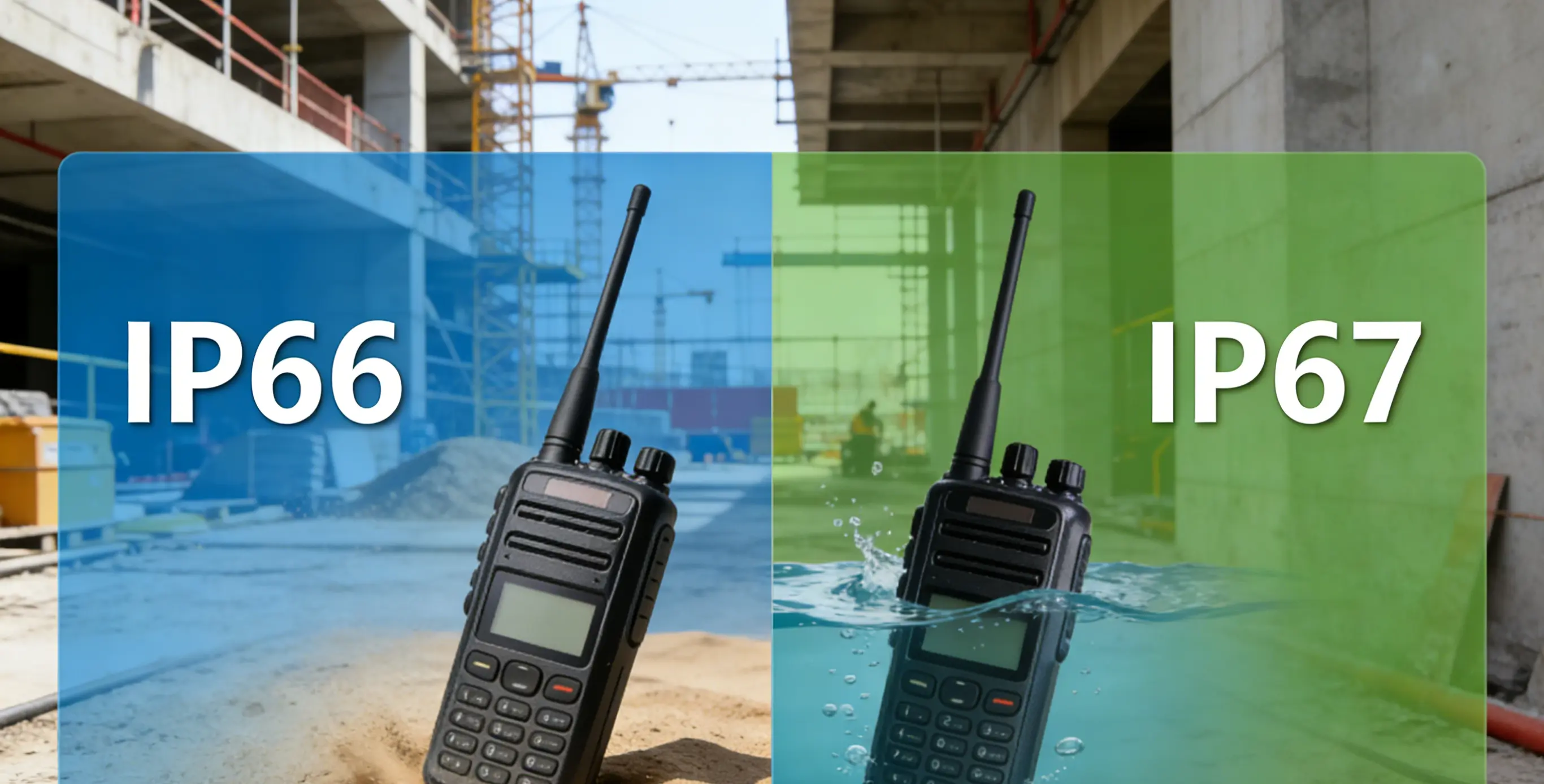
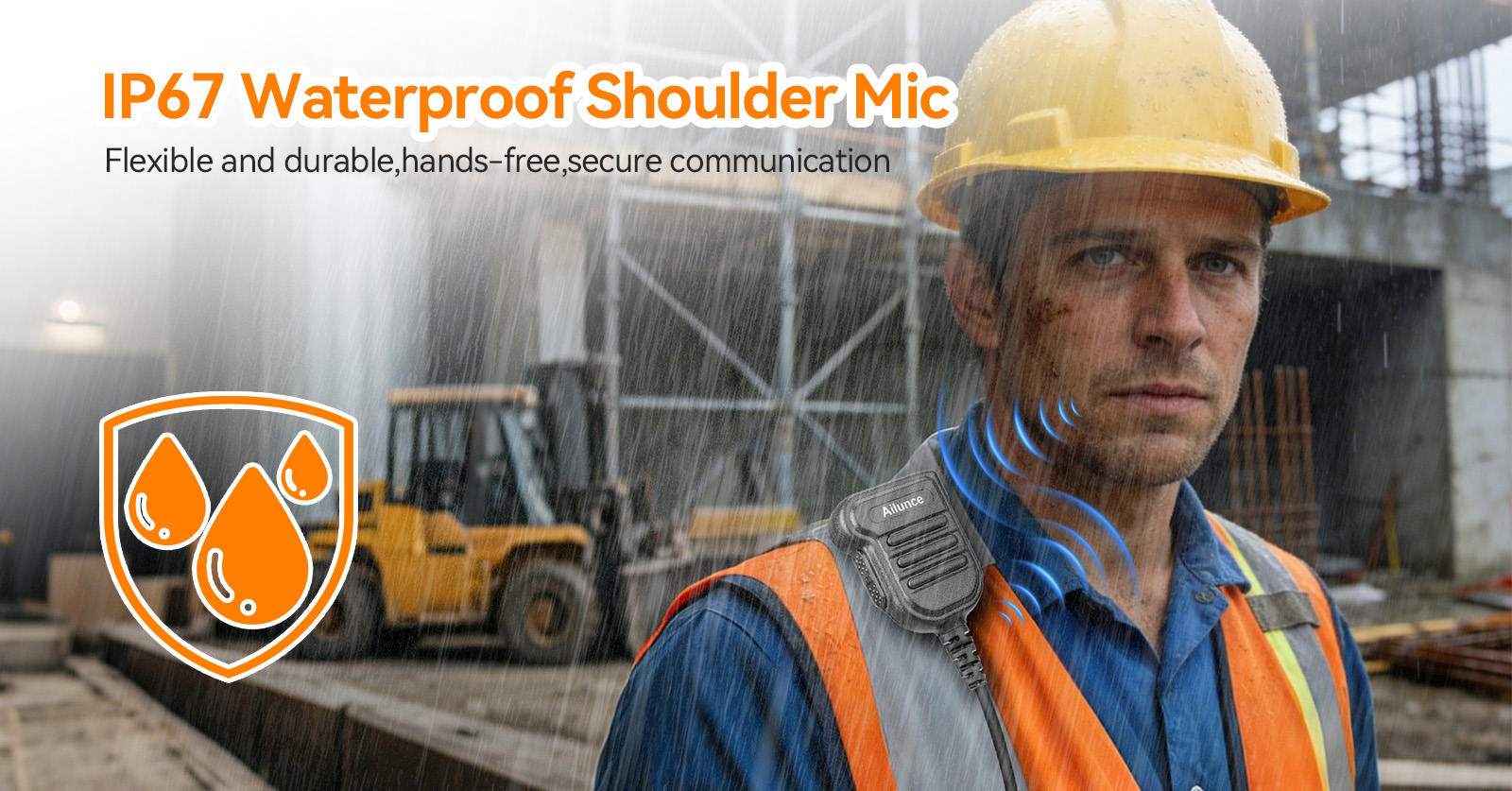
- IP67 dustproof rating is non-negotiable. IP67 means total protection against dust ingress. Nothing gets inside the casing. Skip anything rated IP54 or lower. Ignore vague terms like "weather-resistant." Look for the actual IP rating.
- Big buttons plus VOX support. Workers wear gloves. Their hands carry mortar, paint, and drywall mud. Small buttons are impossible to use accurately. VOX lets workers talk without pressing the PTT button. Painters, tile setters, and carpenters need this feature.
- Enough power to reach the basement and attic. A typical single-family home has a basement, main floor, upper floor, and attic. Low-power 2W or 4W radios lose signal after two floors. 10W high-power units cover basement to attic in most homes without a repeater.
- Simple enough for a new hire on day one. Crew turnover is high on renovation sites. Many workers use a professional radio for the first time. A channel knob and a PTT button are all they need. Complex menu systems cause mistakes and lost time.
- Battery life that covers a full workday. Renovation sites rarely have convenient charging spots. A radio needs to last eight hours minimum. Ten to twelve hours is better. Mid-shift battery swaps slow everyone down.
Four radios, four roles — match the tool to the trade
Different trades need different features. Here is how four popular models line up with common renovation roles.
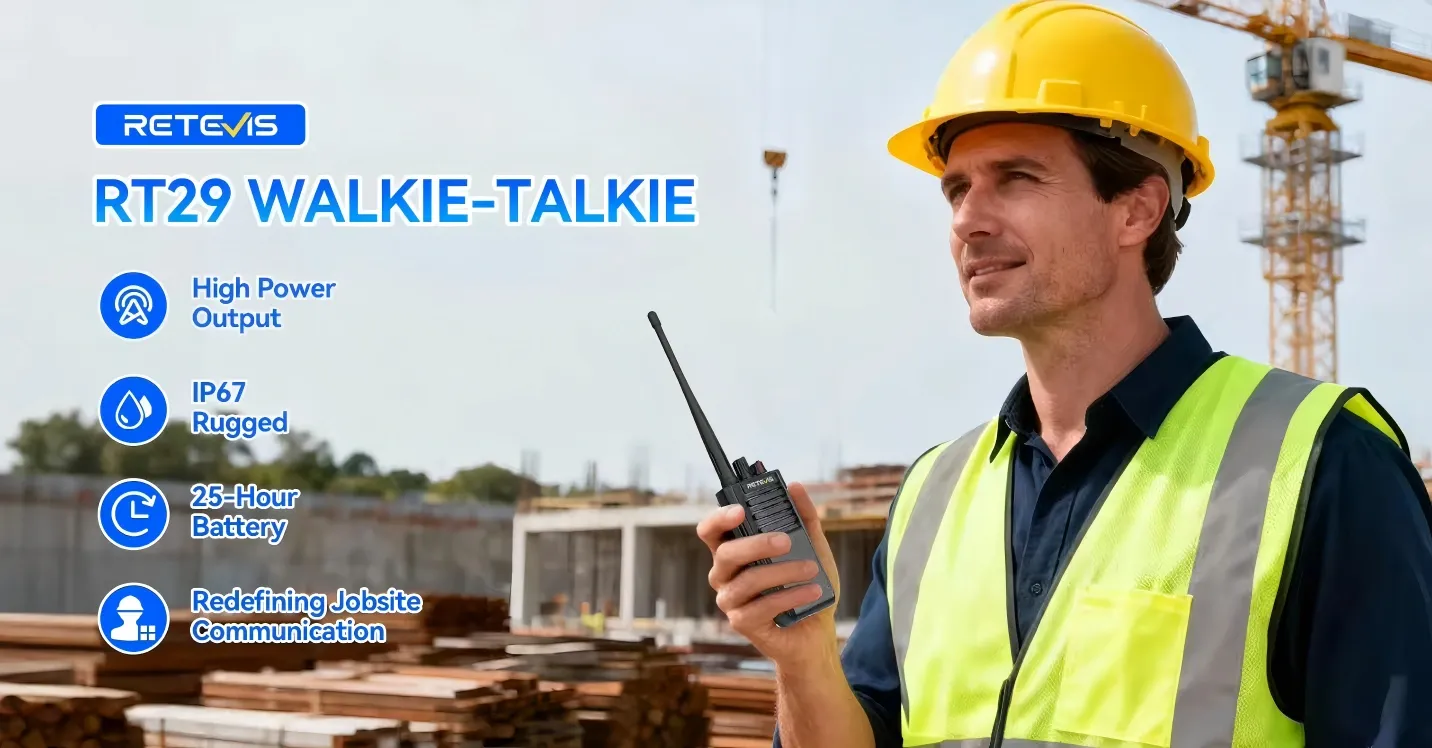
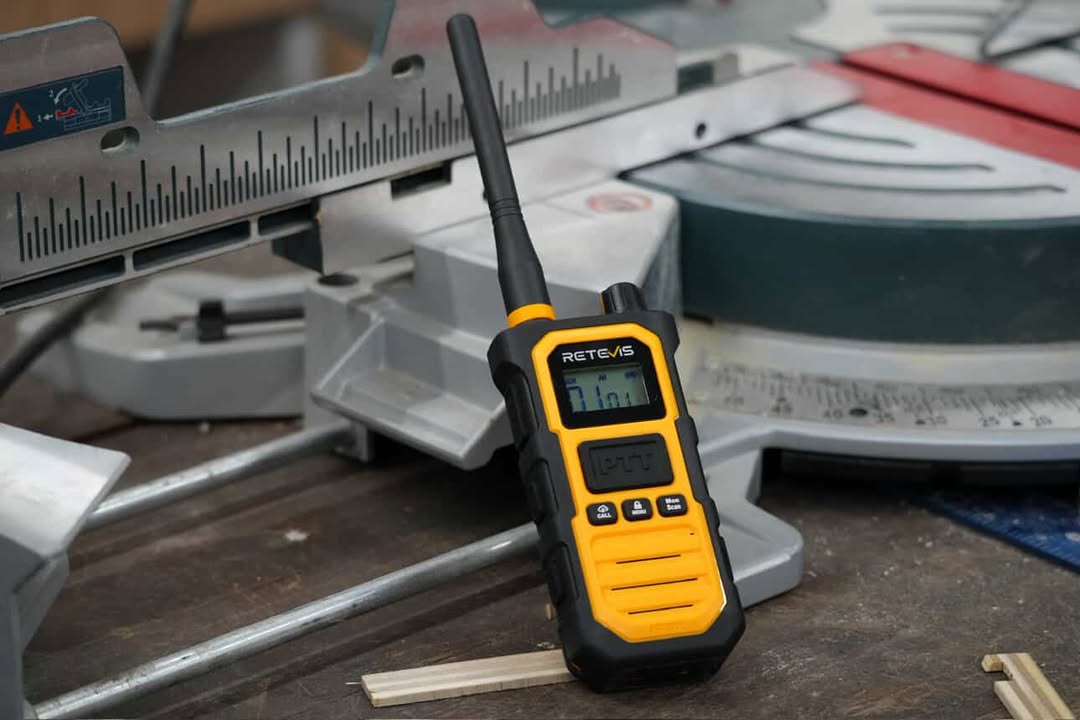
RT29 — The workhorse for frontline crews
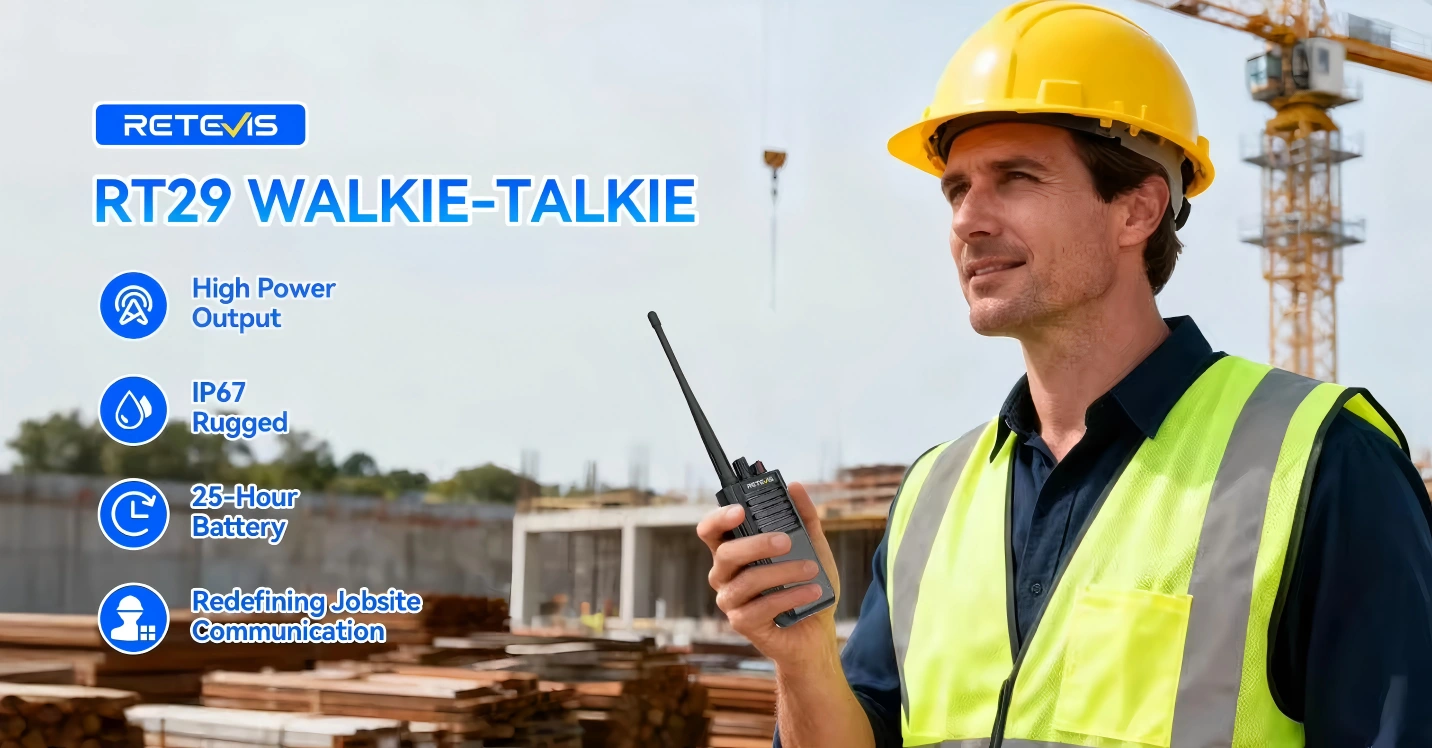
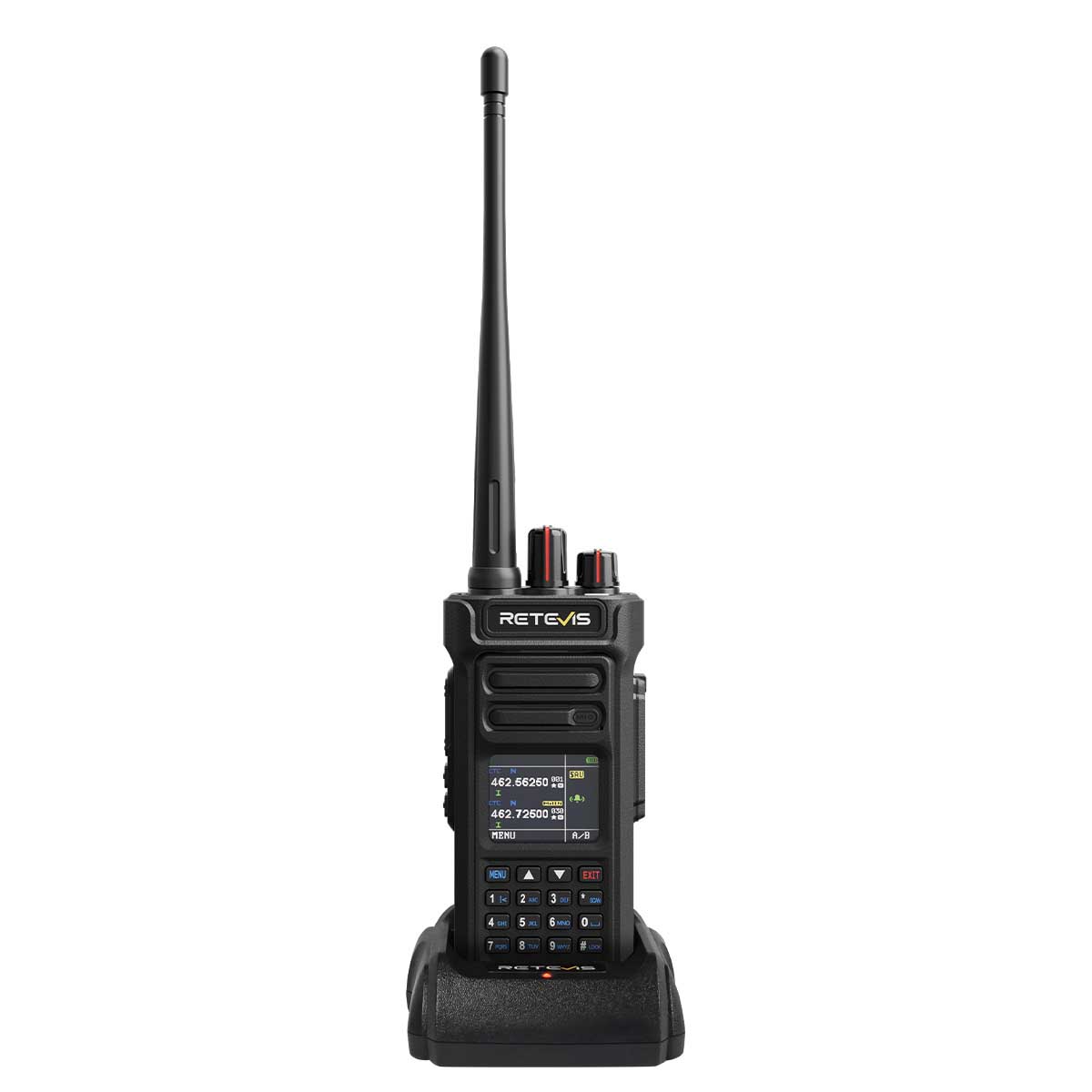
The RT29 is a High power analog radio built for rough use.
- High power reaches basement to attic
- IP67 fully dustproof and waterproof
- 3200mAh battery lasts a full workday
- 16 channels — simple, no menus
- Heavy, thick body absorbs drops and impacts
- Lowest price of the four models
This radio fits tile setters, carpenters, plumbers, and electricians. It takes abuse. Dust cannot get inside. A new worker learns it in thirty seconds.
For small crews on a tight budget, outfitting the whole team with RT29 units is the safest choice. Black Friday and Retevis 16th anniversary deals bring the price down even further.
RB48 Pro — For noisy trades and crew chiefs
The RB48 Pro adds noise reduction and larger controls to the same 10W power platform.
- High power for multi-floor coverage
- IP67 dustproof and waterproof
- 32 channels for larger crews
- AI noise reduction cuts through saw and sander noise
- Dual large PTT buttons work with gloves on
- 2800mAh battery
This radio fits painters, drywall sanders, and crew chiefs. The noise reduction makes voice clear over cutting tools. The large buttons work with work gloves. Crew chiefs use the extra channels to coordinate multiple trades at once.
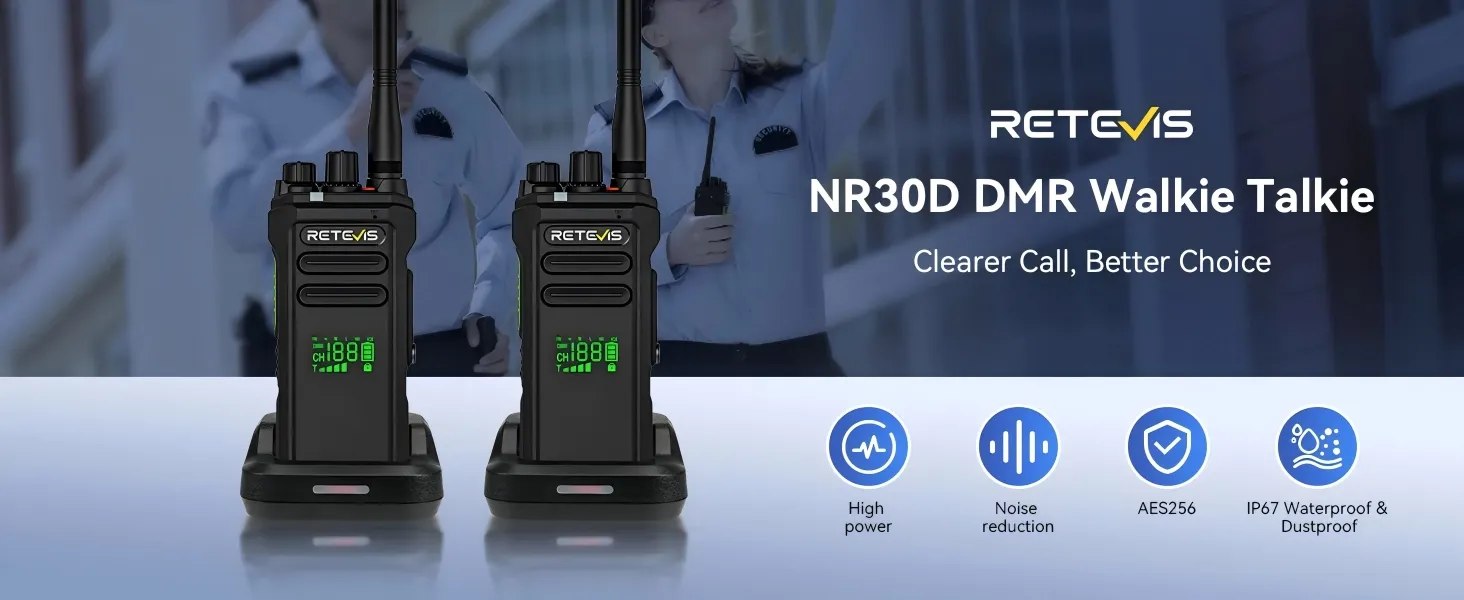
NR30D — For mid-size crews that need digital clarity
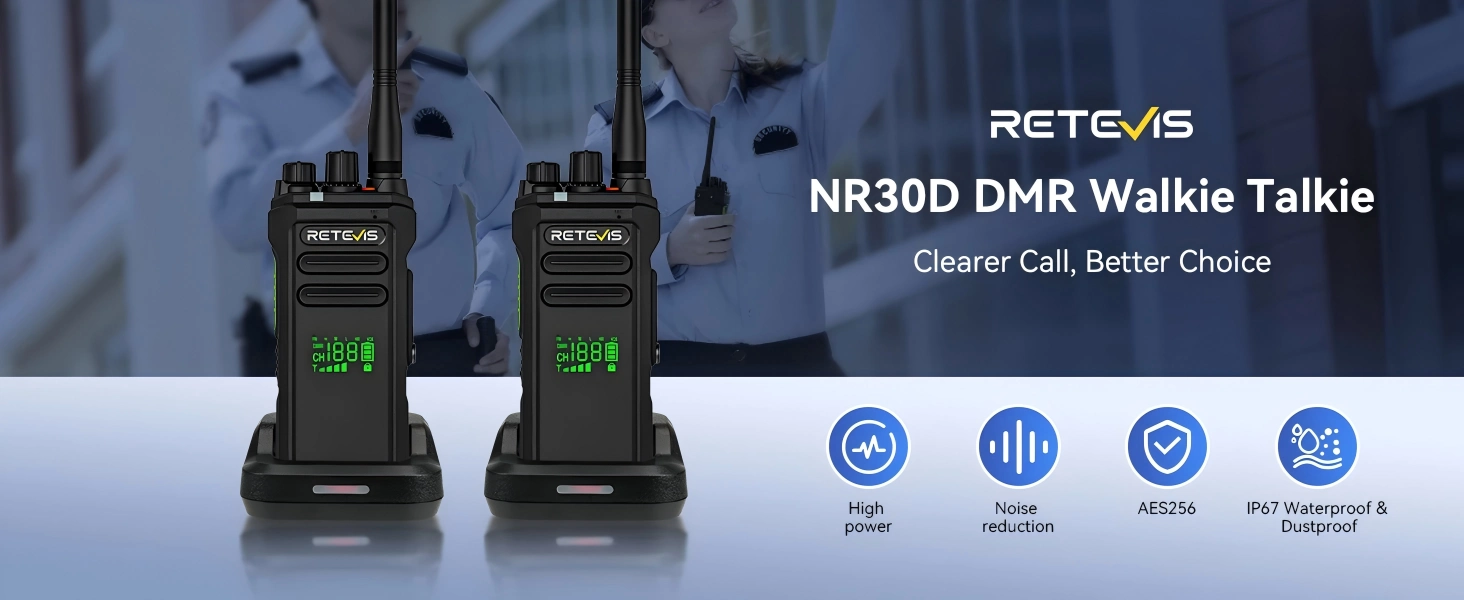
The NR30D is a DMR digital and analog dual-mode radio with adjustable power.
- DMR digital mode for clearer audio and less interference
- High / Middle /Low adjustable power — high for basements, low for same-room work
- 64 channels across 2 zones
- IP67 dustproof and waterproof
- AES256 encryption prevents other job sites from hearing your calls
- VOX hands-free operation built in
- Slim 126mm body fits a tool belt pocket
- 2800mAh battery
This radio fits crews of 8 or more workers running multiple tasks at once. Digital audio stays clear in high-interference environments. Group calling lets a crew chief reach only the workers he needs. The adjustable power saves battery on same-floor work and boosts signal for basement-to-attic calls.
RB48D — For solo workers and safety-focused crews
The RB48D is a DMR digital and analog dual-mode radio with built-in safety features.
- DMR digital mode for clear, secure audio
- 5W power covers typical residential sites
- 512 channels for complex team structures
- IP67 dustproof and waterproof
- AI noise reduction
- AES encryption
- Man-down alert — the radio triggers an alarm if a worker falls and does not move
- 2000mAh battery
This radio fits crew chiefs, safety officers, and workers who operate alone in basements or enclosed spaces. The man-down feature is the key selling point. Lone worker safety is a growing concern across North America and Europe. If a worker falls and cannot call for help, the radio does it automatically.
Quick team combinations
- Tight budget, small crew: all RT29
- Medium crew, mixed trades: RT29 for workers + RB48 Pro for crew chief
- Larger crew, multiple teams: RB48 Pro for workers + NR30D for leads
- Solo workers or safety requirements: add RB48D units
OSHA-compliant cleaning routine for dusty job sites
Regular cleaning is the single biggest factor in radio lifespan. OSHA bans compressed air for silica dust, so use these tools and steps instead.
Tools you need
- Soft-bristled old toothbrush
- Rubber bulb blower (not compressed air)
- Slightly damp microfiber cloth
- Dry microfiber cloth
- Cotton swabs
- Small amount of isopropyl alcohol
Weekly cleaning — 5 minutes per radio
- Power off the radio. Remove the battery.
- Use the toothbrush to clean dust from PTT button, side buttons, and channel knob gaps. Brush outward so dust falls away from the device.
- Use the rubber bulb blower to clear the speaker grille and microphone port. Hold the radio facing down so dust falls out. Do not blow upward.
- Dip a cotton swab in a small amount of isopropyl alcohol. Clean the battery contacts on both the radio and battery until they shine.
- Wipe the body with the slightly damp cloth. Dry immediately with the dry cloth.
- Reinstall the battery. Power on. Test the PTT and audio.
Monthly deep clean — 15 minutes per radio
Do everything in the weekly routine, plus:
- Wipe buttons and body with an isopropyl alcohol wipe. Do not let liquid run into gaps.
- Check the battery for swelling or damage.
- Check the antenna for looseness or cracks.
- Test every button for proper response.
- Inspect the belt clip for cracks or weak springs.
Daily habits that extend radio life
- Store radios in a dedicated tool bag compartment. Do not mix them with nails, screws, or wrenches.
- Never set a radio on the floor. It gets stepped on or covered in mortar.
- Store radios with the speaker grille facing down. Dust does not settle inside.
- Wipe the body with a dry cloth at every shift handover.
Three winter-specific communication tips
1. Closed windows create echo — keep calls short
Winter sites keep windows closed for heat. Sound bounces off hard surfaces. Long sentences get garbled.
Use short phrases and key words. Say "Basement, pipe leak" instead of a long explanation. The other worker gets the message faster and asks fewer questions.
2. Use high power for multi-floor, low power for same-room work
The NR30D and RB48 Pro both offer adjustable power.
Use high power when calling between floors or from basement to attic. Use low power when everyone works in the same room. Low power saves battery and reduces interference with other crews.
3. One channel per trade, not one channel for everyone
Tile setters, carpenters, plumbers, and electricians should each have their own channel. Add one coordination channel for the crew chief.
If everyone shares one channel, peak-hour calls overlap. Nobody hears anything. Separate channels keep each trade focused and reduce congestion.
Final takeaway
Winter indoor renovation sites are harder on radios than most crews realize. Silica dust, multi-floor signal loss, and constant hands-on work destroy cheap equipment fast.
Buy radios with IP67 dust protection, large buttons, VOX support, enough power for basements and attics, simple controls, and all-day battery life. Match the model to the trade. Clean every radio once a week using OSHA-compliant methods.
Do those three things and a set of radios lasts three to four years instead of three to four weeks. The Retevis 16th anniversary sale and Black Friday window are good times to stock up at a lower price.







 Google
 Amazon