

Table of Contents
Cleanroom Communication System for Food & Pharma Sites
- Posted by:Retevis
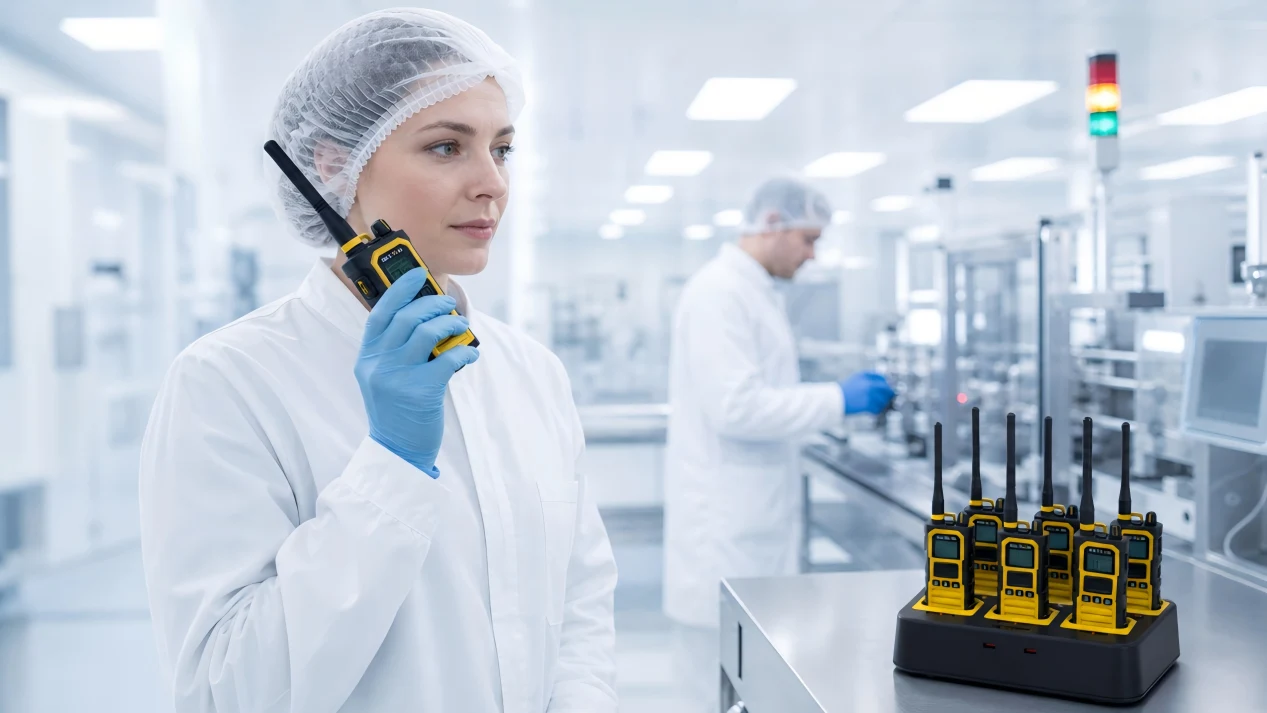
Food and pharmaceutical manufacturing sites require communication tools that work reliably without creating unnecessary hygiene or maintenance concerns. In controlled production areas, equipment selection should support the site's cleaning procedures, contamination-control strategy, and day-to-day operating needs.
A well-designed cleanroom communication system helps production, quality, maintenance, and safety teams coordinate without relying on loud public-address systems or handheld devices that are difficult to clean.
This guide explains what to look for in cleanroom communications, how to build a practical cleaning and disinfection routine, and how durable two-way radios can support cleanroom voice communication across production areas.
Why Communication Equipment Matters in Clean Production Areas
Communication equipment used inside a clean or controlled production area becomes part of the site's everyday hygiene routine.
Food-production guidance from the UK Food Standards Agency emphasises that equipment and surfaces should be maintained in a condition that allows effective cleaning and disinfection, with cleaning schedules and suitable products defined for the site.
Pharmaceutical manufacturing adds another layer of control. UK GMP requirements and related guidance place strong emphasis on preventing contamination through appropriately designed, maintained, and controlled facilities, equipment, and processes.
That makes radio selection more than a question of signal range.
A device used in a controlled production environment should be:
- Easy to wipe and inspect
- Resistant to dust and water where required
- Durable enough for repeated daily use
- Simple to maintain
- Reliable across the production area
- Suitable for the site's documented cleaning and contamination-control procedures
The goal is not to find a radio that automatically makes a site compliant. The goal is to choose communication equipment that fits the site's existing hygiene, cleaning, and risk-control requirements.
Why Standard Radios May Be a Poor Fit
Many general-purpose two-way radios are designed for warehouses, outdoor work, or conventional industrial environments. Their physical design may not be ideal for controlled production areas.
1. Complex surfaces can make cleaning harder
Buttons, seams, charging areas, and other exposed features can create places that are harder to wipe thoroughly.
A smooth outer design with fewer difficult-to-reach areas makes routine cleaning easier and helps operators inspect the device after disinfection. This is particularly useful where radios are handled throughout a shift.
For food-production environments, equipment should be designed and maintained so it can be effectively cleaned and disinfected without creating contamination risks.
2. Repeated cleaning can affect equipment
Radios used in clean production areas may be wiped and disinfected far more frequently than radios used in ordinary workplaces.
Repeated exposure to cleaning agents can affect buttons, seals, housings, and charging areas if the device is not designed for the environment or if unsuitable chemicals are used.
For this reason, the cleaning procedure should follow both the site's approved SOP and the radio manufacturer's instructions rather than relying on a generic cleaning method.
3. Communication gaps can affect production
Large manufacturing facilities can include enclosed rooms, partitioned production zones, machinery, storage areas, and other structures that affect radio coverage.
Reliable cleanroom voice communication helps supervisors and operators coordinate production, material movement, maintenance, and safety activities without leaving their work areas.
Clear voice audio is particularly valuable when workers are wearing masks, hearing protection, or other required PPE.
What to Look for in a Cleanroom Communication System
The best cleanroom communication systems are not necessarily the most specialised or expensive. Start with the operating conditions of the site and look for equipment that supports its hygiene and communication requirements.
1. Smooth, easy-to-clean housing
A radio with a relatively smooth exterior and limited exposed gaps is easier to wipe and inspect.
Look for:
- Fewer hard-to-reach surfaces
- Durable housing
- Easily accessible controls
- A design that supports routine wipe-downs
A cleanable exterior does not replace a validated cleaning process. It simply makes the routine easier to perform consistently.
2. Appropriate dust and water protection
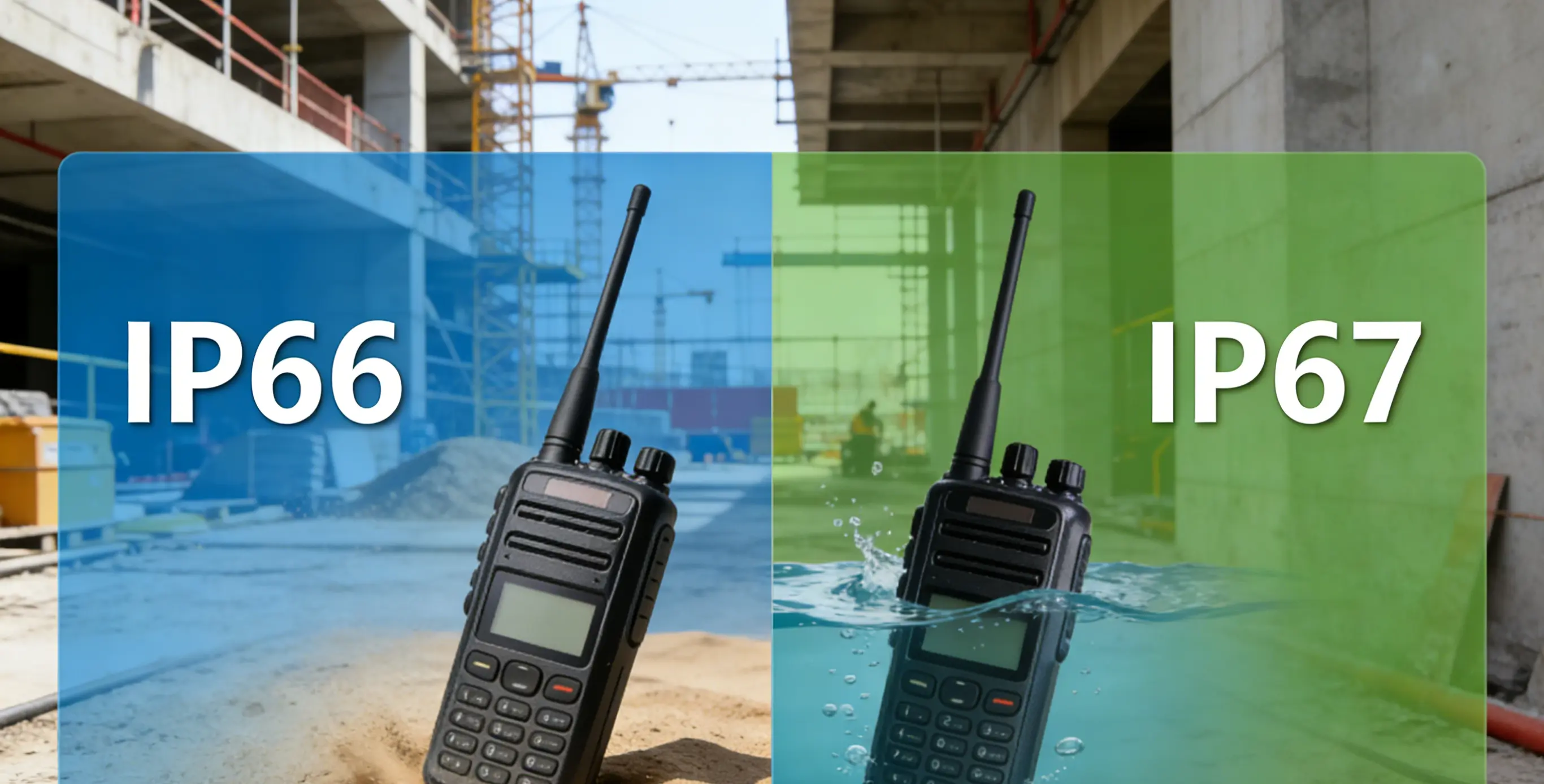
If radios will be exposed to frequent wipe-downs, moisture, dust, or washdown conditions, check the manufacturer's stated ingress-protection rating.
This is particularly important in food production, wet processing, and other environments where liquids are regularly present.
Do not assume that an IP rating automatically means a radio can be submerged or exposed to every disinfectant. The actual cleaning method should remain within the manufacturer's stated limits.
3. Reliable coverage across the facility
A clean room communication system needs enough coverage for the actual layout of the site.
Consider:
- Production rooms
- Processing areas
- Corridors and access points
- Storage areas
- Maintenance zones
- Loading and material-transfer areas
For larger manufacturing facilities, signal performance should be tested on site rather than estimated from a theoretical range figure.
4. Clear voice communication
A pharmaceutical cleanroom intercom may suit fixed communication points in some facilities, but mobile teams often need a portable option.
Two-way radios provide flexible cleanroom voice communication for operators who move between production, maintenance, quality, and material-handling areas.
Clear audio can reduce the need to move closer to another worker or remove required PPE simply to hear a message.
5. Battery life for full shifts
Production teams should not have to interrupt work repeatedly to recharge communication equipment.
Choose battery capacity based on the actual operating pattern, shift length, transmit time, and charging arrangements used on site.
For continuous operations, spare batteries or planned charging points may also be part of the site's communication strategy.
A Practical Cleaning and Disinfection Routine
Cleaning requirements should be defined by the site's own hygiene programme, risk assessment, approved SOPs, and the radio manufacturer's instructions.
For food operations, the UK FSA recommends using suitable cleaning and disinfection products, following manufacturer instructions, and maintaining a cleaning schedule that specifies what is cleaned, how often, and how the process is carried out.
A practical radio-cleaning routine can include the following steps.
Before Cleaning
Remove the radio from active use according to the site's procedure.
Check the housing, buttons, seals, charging area, and other exposed surfaces for cracks, damage, or excessive wear.
During Cleaning
Use only the cleaning or disinfecting products approved by the site and compatible with the radio.
Wipe the exterior carefully, paying attention to high-touch areas and surfaces around buttons and controls.
Avoid allowing liquid to enter charging ports, speakers, microphones, or other openings.
Do not immerse the radio unless the manufacturer explicitly states that the device and the specific use case support immersion.
After Cleaning
Allow the device to dry according to the cleaning procedure before returning it to service.
Store cleaned radios in their designated area to prevent recontamination.
Record cleaning activities where the site's hygiene or quality system requires documentation.
For pharmaceutical environments, cleaning and contamination-control activities should remain aligned with the site's GMP procedures and quality system rather than relying on a generic radio-cleaning checklist. UK and EU GMP guidance emphasises contamination control as part of the design and operation of facilities and equipment.
Recommended Radio for Clean Production Environments
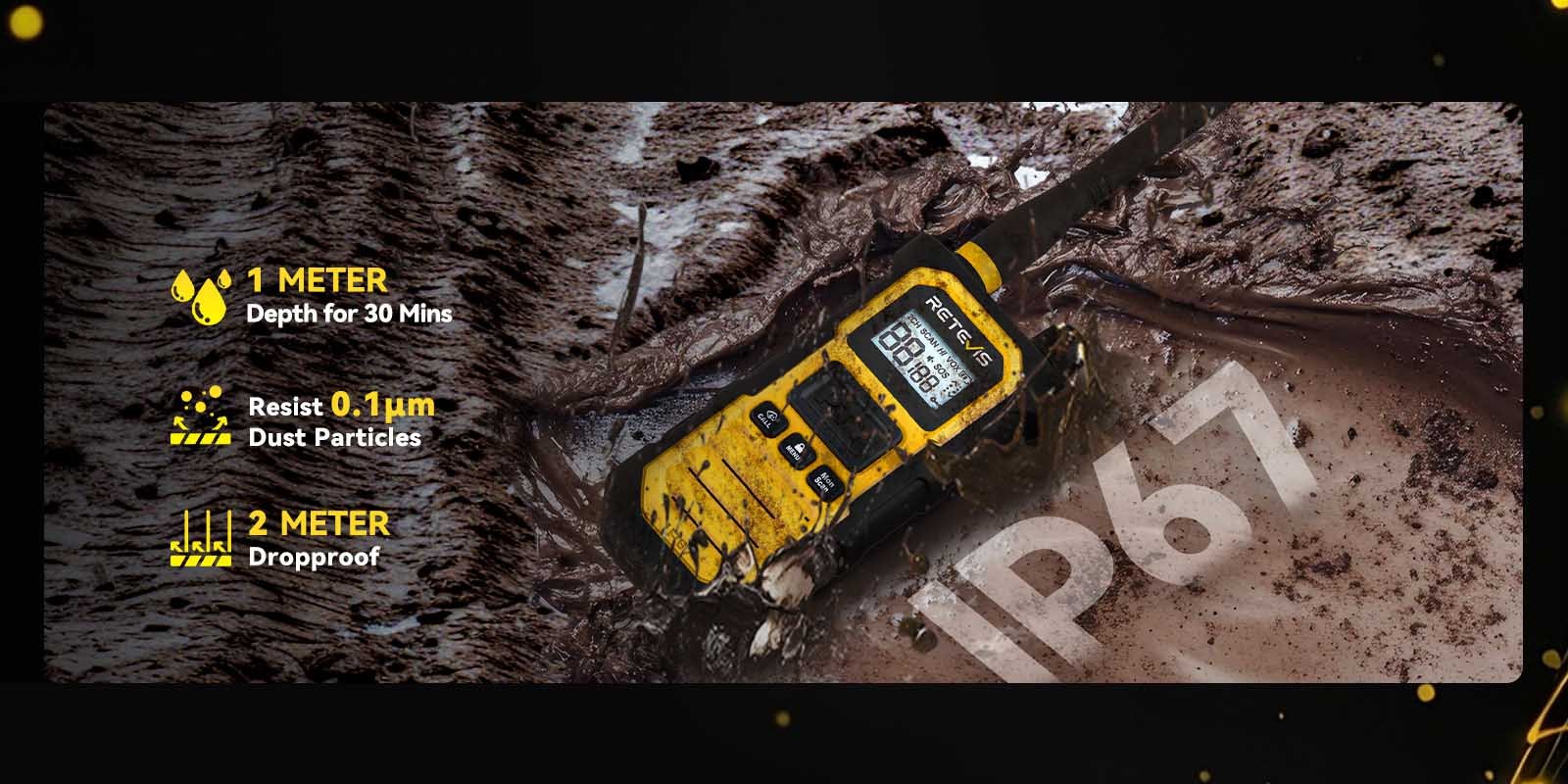
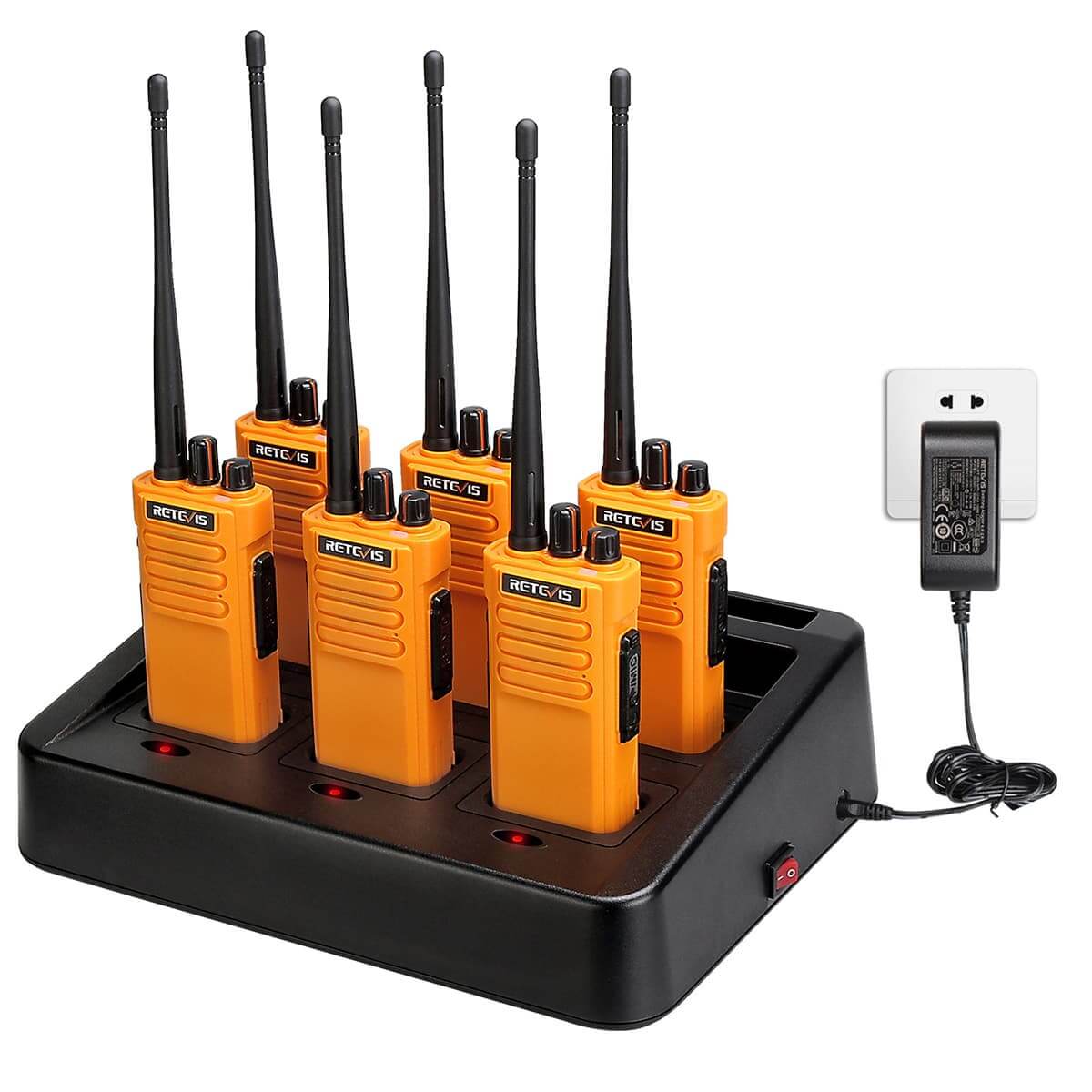
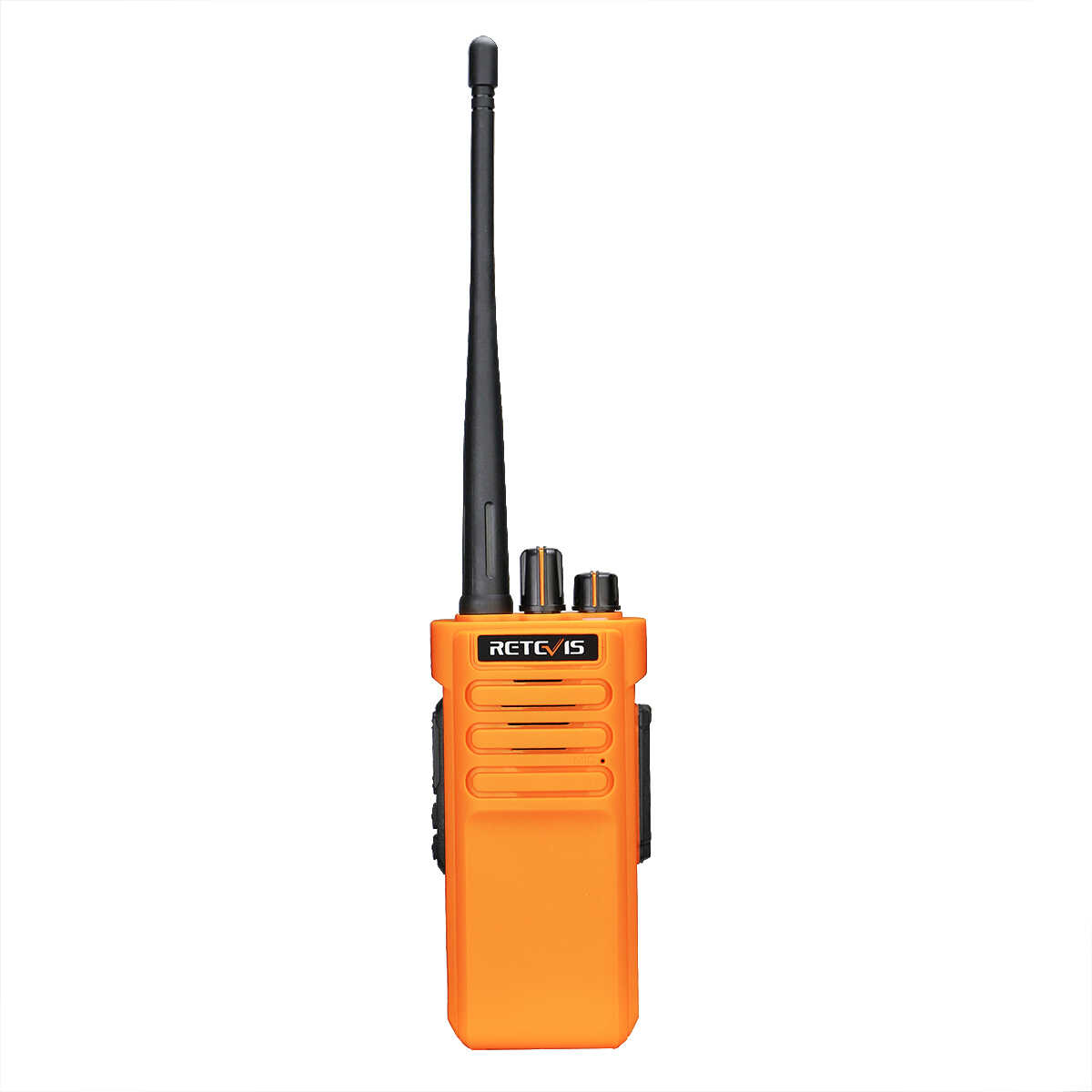
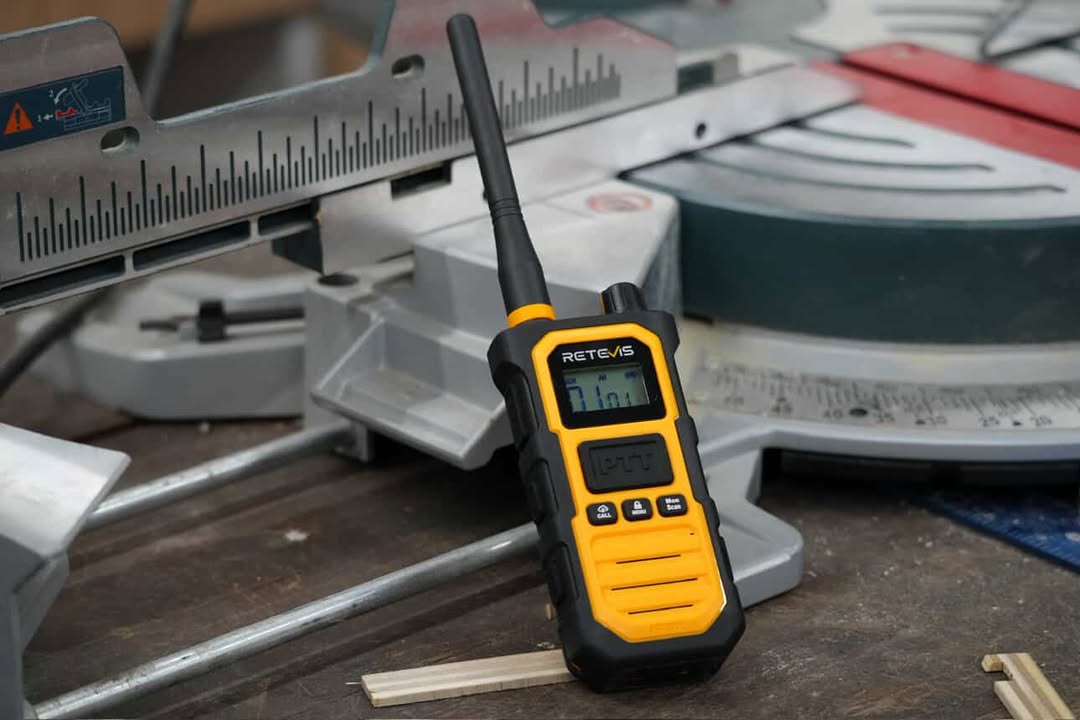
The RB48 Pro is designed for demanding workplace communication and can be considered for food, pharmaceutical, and other controlled production environments where the site requirements match the device specifications.
Its durable housing and dust- and water-resistant construction support regular handling in production areas. The external design is also relatively straightforward to wipe, making routine maintenance easier.
For facilities with large production floors or multiple work zones, reliable radio coverage helps teams coordinate production, maintenance, safety checks, and material movement without relying on fixed communication points.
Clear audio is useful in production areas where background machinery can make ordinary speech difficult to hear.
Long battery life can also support extended shifts, reducing the need for charging interruptions during active production periods.
For teams managing several communication groups, multi-channel support allows production, maintenance, safety, or logistics teams to organise communications according to their operational structure.
The right setup still depends on the site's layout, radio environment, cleaning procedure, and communication requirements. For controlled environments, equipment should be evaluated as part of the broader site risk assessment rather than treated as a standalone compliance solution.
Where Cleanroom Communications Can Help
A flexible cleanroom communication system can support a range of food and pharmaceutical operations, including:
Food processing facilities
Coordinate production, quality checks, material handling, and maintenance while keeping communication within designated work areas.
Pharmaceutical manufacturing areas
Support communication between production, quality, engineering, and maintenance teams within controlled environments.
Packaging and inspection areas
Keep operators connected while reducing the need to leave workstations to pass routine messages.
Industrial production facilities
Extend communication between production floors, maintenance teams, warehouse areas, and supervisors.
Multi-zone facilities
Support communication between separated work areas where mobile operators need to remain connected throughout a shift.
The exact radio specification and cleaning method should always be matched to the site's environmental conditions and documented operating procedures.
Frequently Asked Questions
Q: What is a cleanroom communication system?
A: A cleanroom communication system is a communication setup designed to support reliable voice coordination in controlled or hygiene-sensitive production environments. It may include two-way radios, fixed communication points, or a combination of both. The equipment should fit the site's cleaning, contamination-control, coverage, and operational requirements.
Q: Can two-way radios be used in pharmaceutical cleanrooms?
A: They may be used when the device, cleaning process, and site procedures are suitable for the specific cleanroom environment. Pharmaceutical facilities should evaluate communication equipment as part of their contamination-control and GMP procedures rather than assuming that a particular radio is universally suitable for every cleanroom classification.
Q: Can I use 70% isopropyl alcohol to clean a radio?
A: Only when it is permitted by the site's cleaning procedure and compatible with the radio manufacturer's instructions. Cleaning products should be selected based on the material, equipment design, contamination risk, and approved site SOP. The UK FSA also recommends following the manufacturer's instructions for cleaning and disinfection products.
Q: Is anti-static protection required for every pharmaceutical or food production site?
A: Not necessarily. Static-control requirements depend on the materials, processes, environment, and site risk assessment. Areas involving combustible dust or other specific hazards may have additional controls. Equipment selection should therefore be based on the site's documented hazard assessment rather than treating anti-static construction as a universal requirement.
Q: How long can cleanroom communication radios last?
A: Service life varies with usage, cleaning frequency, environmental exposure, battery condition, and maintenance. Instead of using a fixed replacement period, inspect radios regularly and replace equipment when damage, worn seals, degraded batteries, or other conditions affect safe and reliable use.
Final Thoughts
A cleanroom communication system should do more than provide clear voice communication. It should fit naturally into the site's hygiene, maintenance, contamination-control, and daily operating procedures.
For food and pharmaceutical facilities, practical equipment features such as a cleanable housing, appropriate ingress protection, dependable coverage, clear audio, and sufficient battery life can make cleanroom communications easier to manage across production shifts.
The RB48 Pro can be considered as a two-way radio option for sites whose environmental and cleaning requirements match its specifications.
The key is to treat communication equipment as one part of the overall site control strategy: select suitable devices, define a repeatable cleaning process, inspect equipment regularly, and align the system with the facility's own SOPs and risk assessments.







 Google
 Amazon
Comments
No data Yet