

Table of Contents
Full Lifecycle Cost Guide to the Best Two Way Radios to Buy for Factory Budgets
- Posted by:Retevis
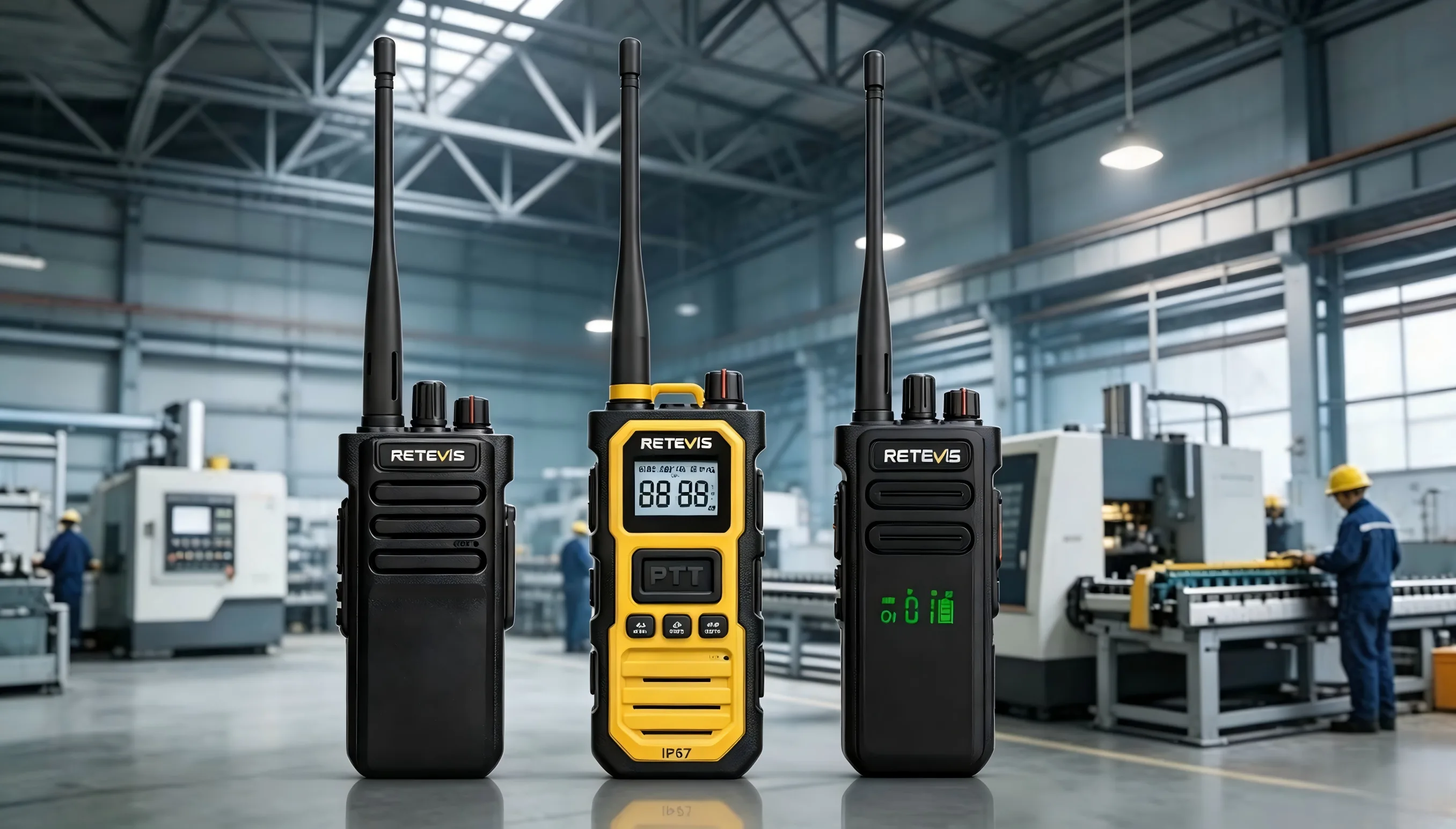
For manufacturing teams drafting annual budgets, choosing the right commercial walkie talkies is more than a purchasing decision—it’s a long-term investment that impacts daily efficiency, workplace safety and overall operational costs. Many procurement teams focus only on initial acquisition expense, but the best two way radios for business deliver the lowest total cost of ownership (TCO) over their entire service life, especially across demanding environments like heavy industrial construction sites, dusty production floors and warehouses with metal walls.
Why Lifecycle Cost Matters for Factory Annual Budget Planning
Too often, teams select business communication equipment based solely on the lowest initial outlay, only to face unexpected expenses from frequent repairs, battery replacements and early device failure down the line. For financial directors responsible for multi-year budget forecasting, these hidden costs can throw off annual spending plans and reduce overall operational ROI.
This is particularly true for full manufacturing scenarios, where devices are used daily across harsh conditions: from dusty manufacturing facility floors and outdoor industrial maintenance operations to large warehouse construction projects. Devices built for office use fail quickly in these settings, leading to unplanned replacement costs and costly communication downtime.
When commercial walkie talkies fail unexpectedly on a production line or during a factory construction site project, the costs go far beyond device replacement. Production delays, safety risks and disrupted coordination can add thousands of dollars in lost output for every hour of downtime. For teams managing multi-site operations, these costs can quickly add up over a year, making initial price savings negligible compared to long-term losses.
Full Lifecycle Cost Breakdown of Business Communication Equipment
To build an accurate annual budget for two way radios, you need to account for three core cost categories across the entire device lifecycle. This two way radio purchasing guide breaks down each category to help you forecast total expenses with precision.
Upfront Procurement Costs
The most visible cost is the initial purchase price of the devices, but it also includes supporting accessories and deployment costs. For standard operations, this includes spare batteries, charging stations, headsets and belt clips. For larger deployments across multi-level warehouse facilities or sites with concrete wall structures, you may also need to budget for signal repeaters and professional programming to ensure full coverage.
Bulk purchasing can reduce per-unit costs, but be sure to match device durability to your operating environment. Investing in properly rugged devices upfront can drastically reduce downstream costs for industrial operations.
Ongoing Operational & Maintenance Costs
After deployment, ongoing costs make up a significant portion of total lifecycle expense. The most recurring cost is battery replacement: standard commercial walkie talkie batteries last 12–24 months with daily use, while industrial-grade batteries can last 24–36 months. For a team of 50 users, replacing batteries every two years can add thousands of dollars to your annual budget.
Additional ongoing costs include device repairs, replacement of broken antennas or clips, and routine maintenance. Teams working in industrial maintenance operations or heavy industrial environments typically see higher repair rates due to dust, vibration and occasional drops, so these costs should be factored in more heavily for harsh work settings.
End-of-Life Replacement & Upgrade Costs
Every two way radio has a finite service life, and planning for replacement is a key part of annual budgeting. Consumer-grade devices typically last only 1–2 years in industrial settings, mid-tier commercial walkie talkies last 3–5 years, and heavy-duty industrial-grade models can last 5–7 years with proper care.
You should also account for technology upgrade costs. For example, if you plan to transition from analog to digital radio systems in the next 3–5 years, selecting devices that support dual-mode operation can eliminate the need for full fleet replacement down the line. This is especially relevant for teams expanding into new manufacturing facility construction or upgrading existing warehouse operations.
Comparing the Best Two Way Radios for Business: 3 Factory-Focused Options
Now that we’ve broken down lifecycle costs, let’s compare three industrial-grade options to see which offers the best fit for factory budgets. Each model is built for manufacturing environments, with different feature sets and performance strengths to match varying operational needs and budget priorities.
Option 1: Heavy-Duty Entry-Grade: Retevis RT29 VHF Two Way Radios
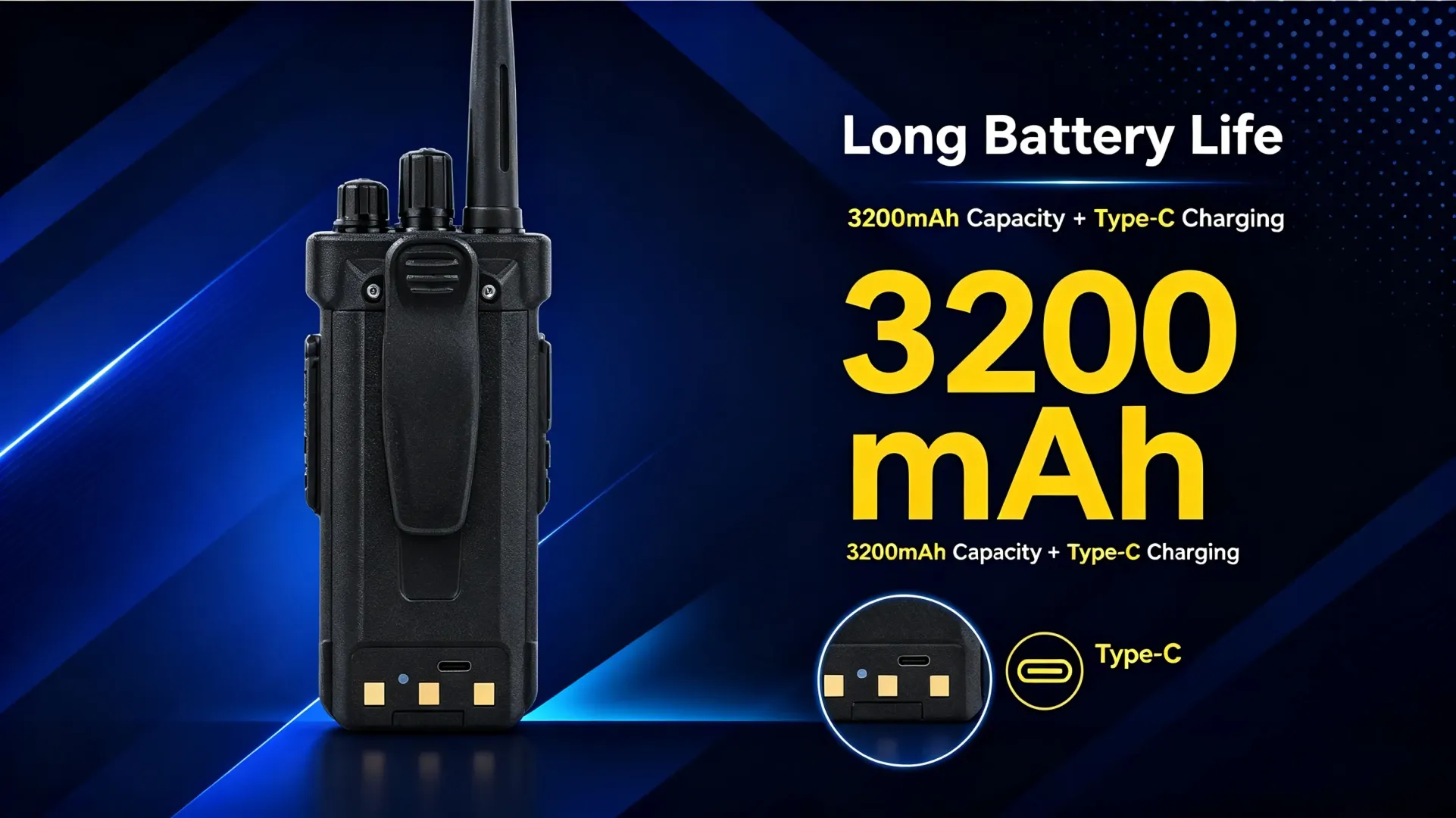
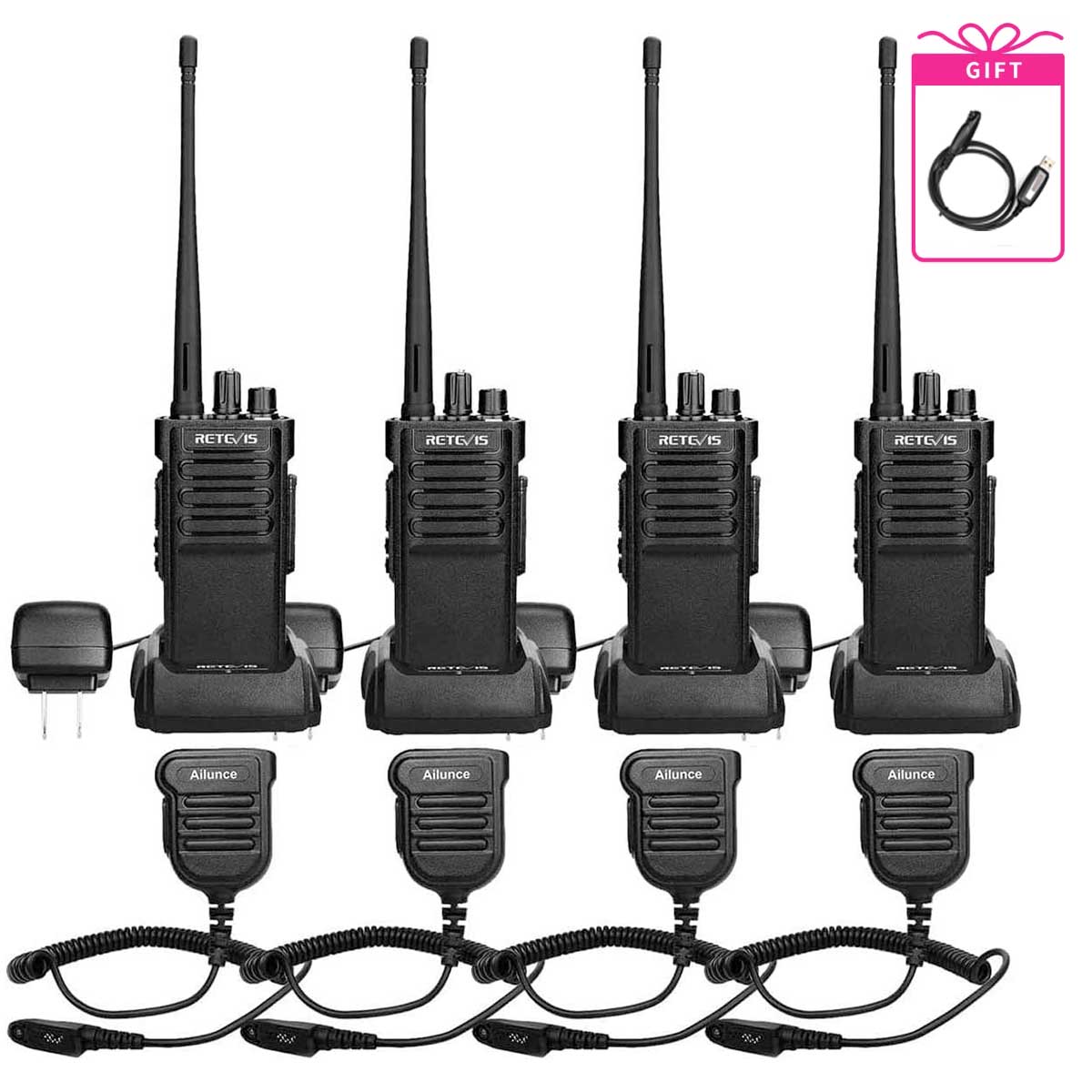
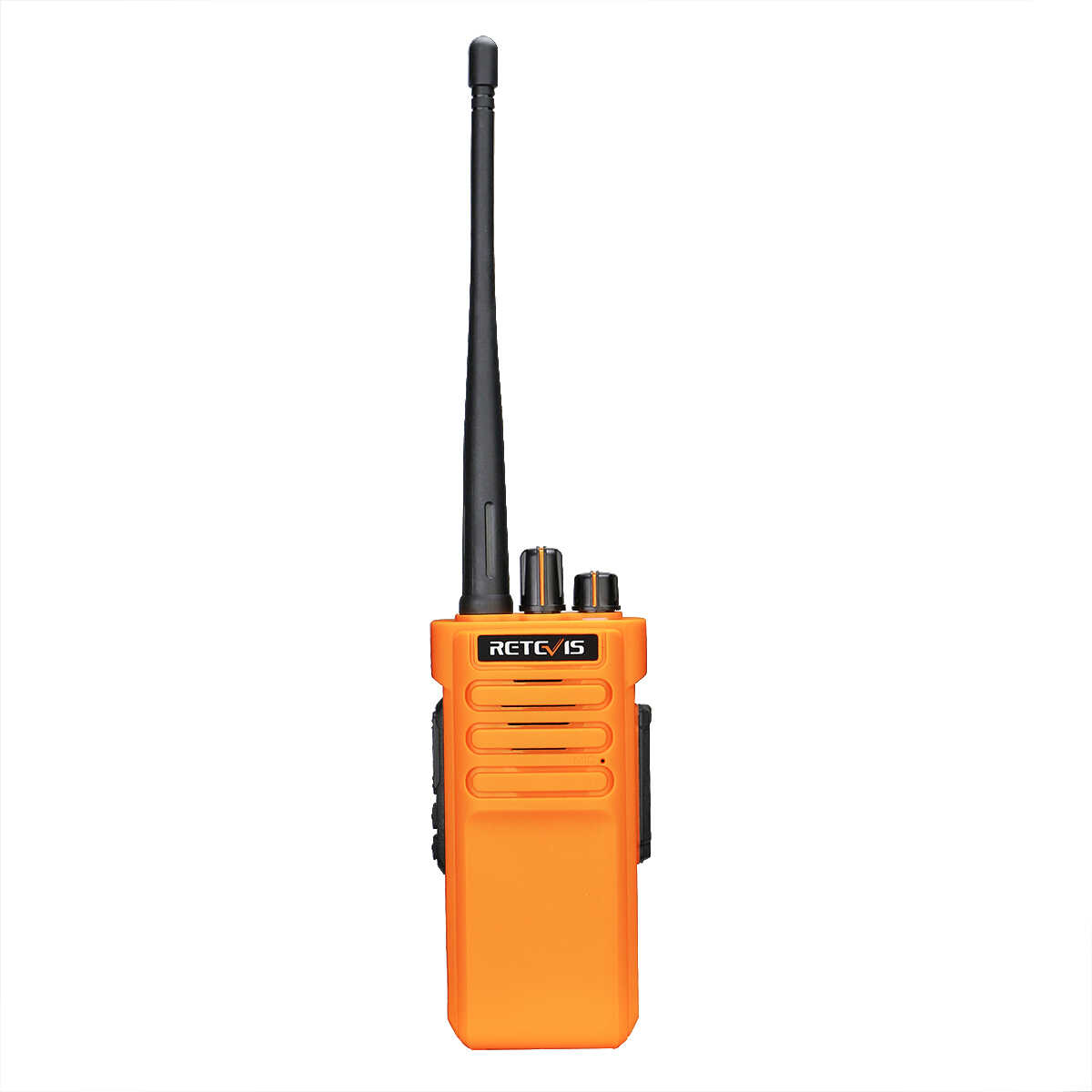
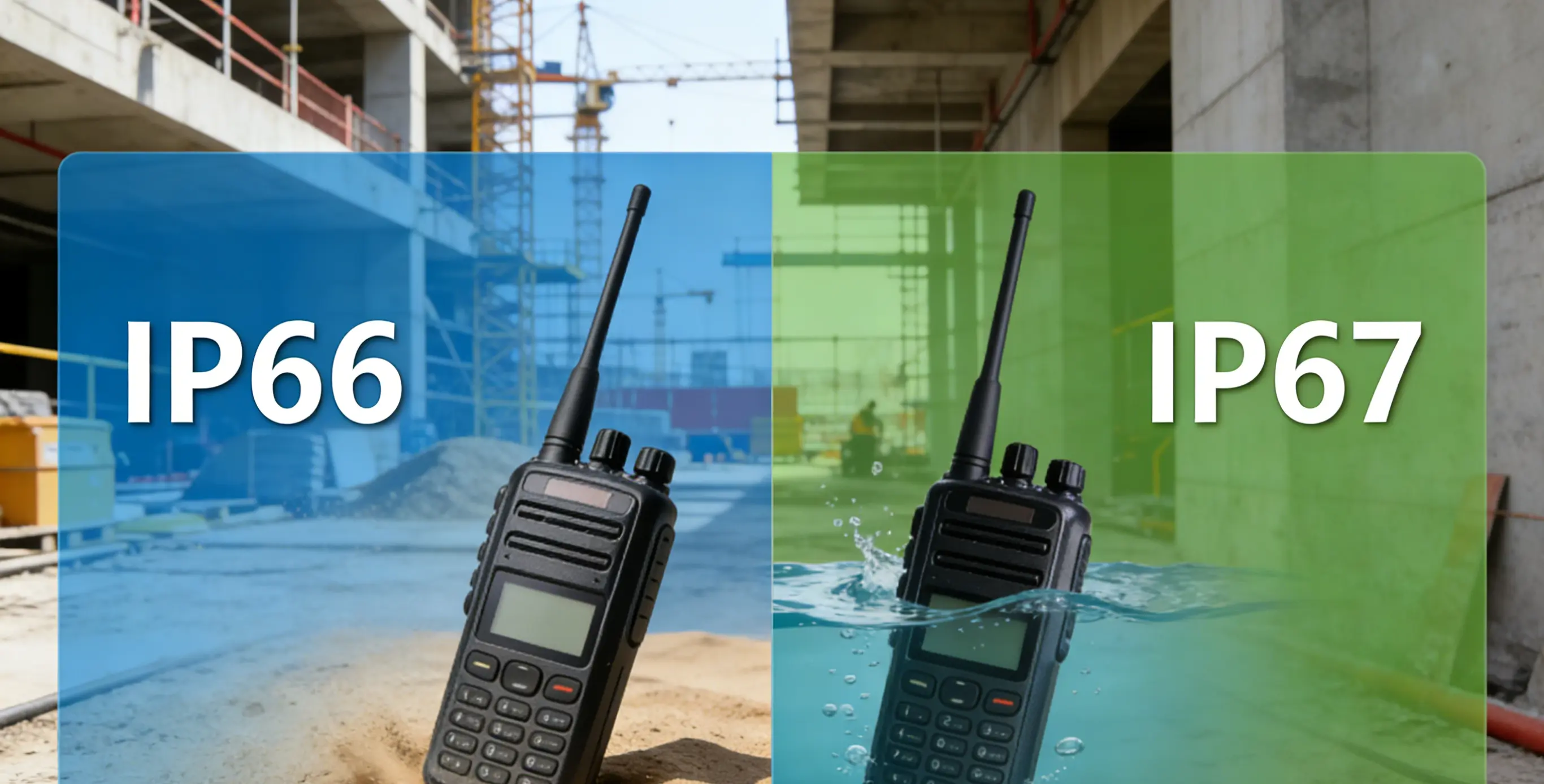
Ideal for outdoor factory construction sites, industrial warehouse communication and general production floor use, the Retevis RT29 delivers reliable daily performance and long-term value for routine manufacturing operations. Built with an IP67 dust and waterproof rating and reinforced cast aluminum frame, it survives 2-meter drops and constant vibration from heavy machinery, drastically reducing repair and replacement rates.
Its 3200mAh high-capacity battery delivers up to 28 hours of runtime for 3-shift working, cutting down on frequent battery purchases and charging downtime. With adjustable power levels and strong VHF signal penetration for open areas, it eliminates the need for extra repeaters in many mid-sized facilities, supporting steady cost control over its service life.
Option 2: High-Power Industrial Grade: Retevis RB48 Pro Heavy Duty Two Way Radios
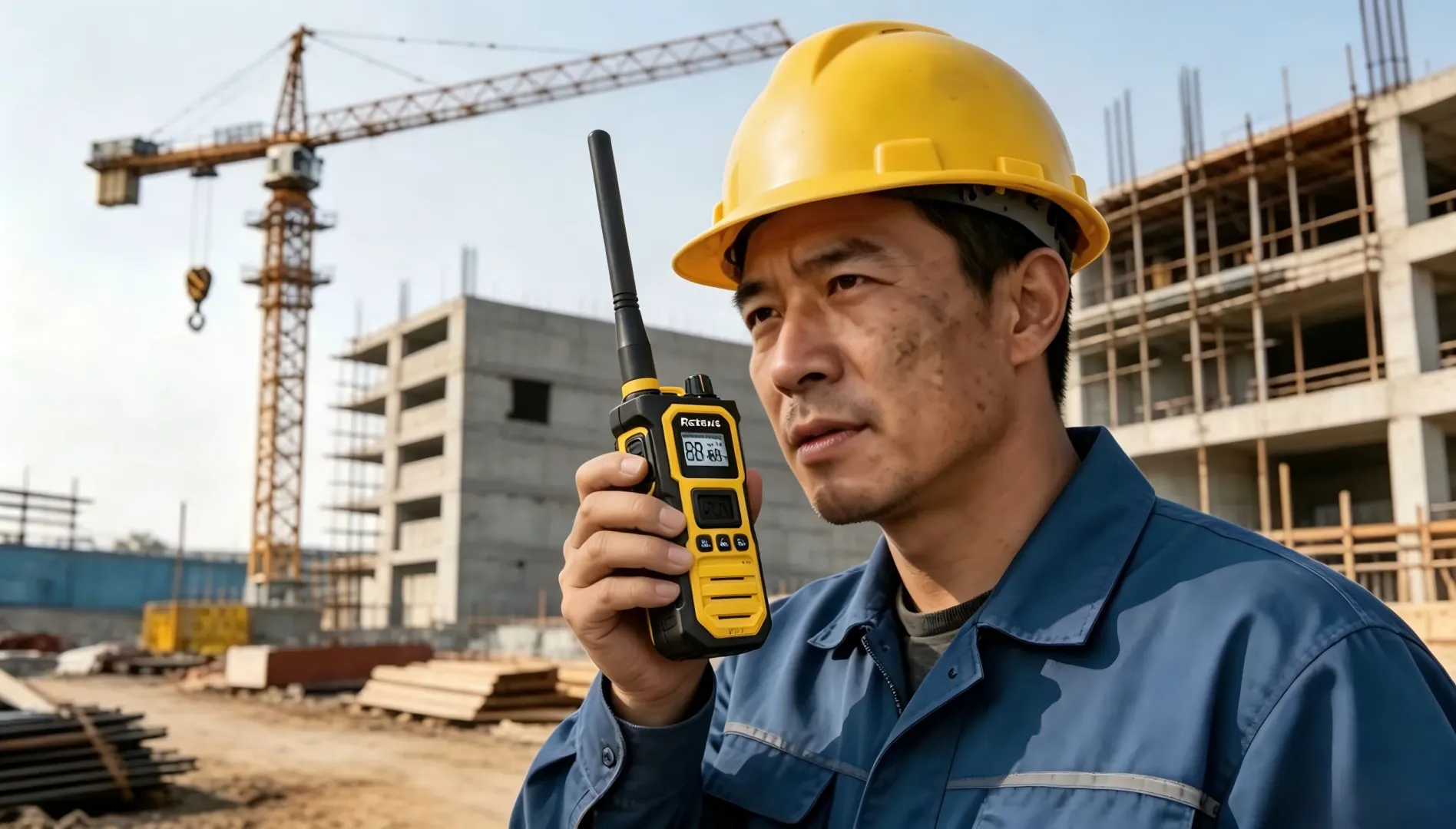
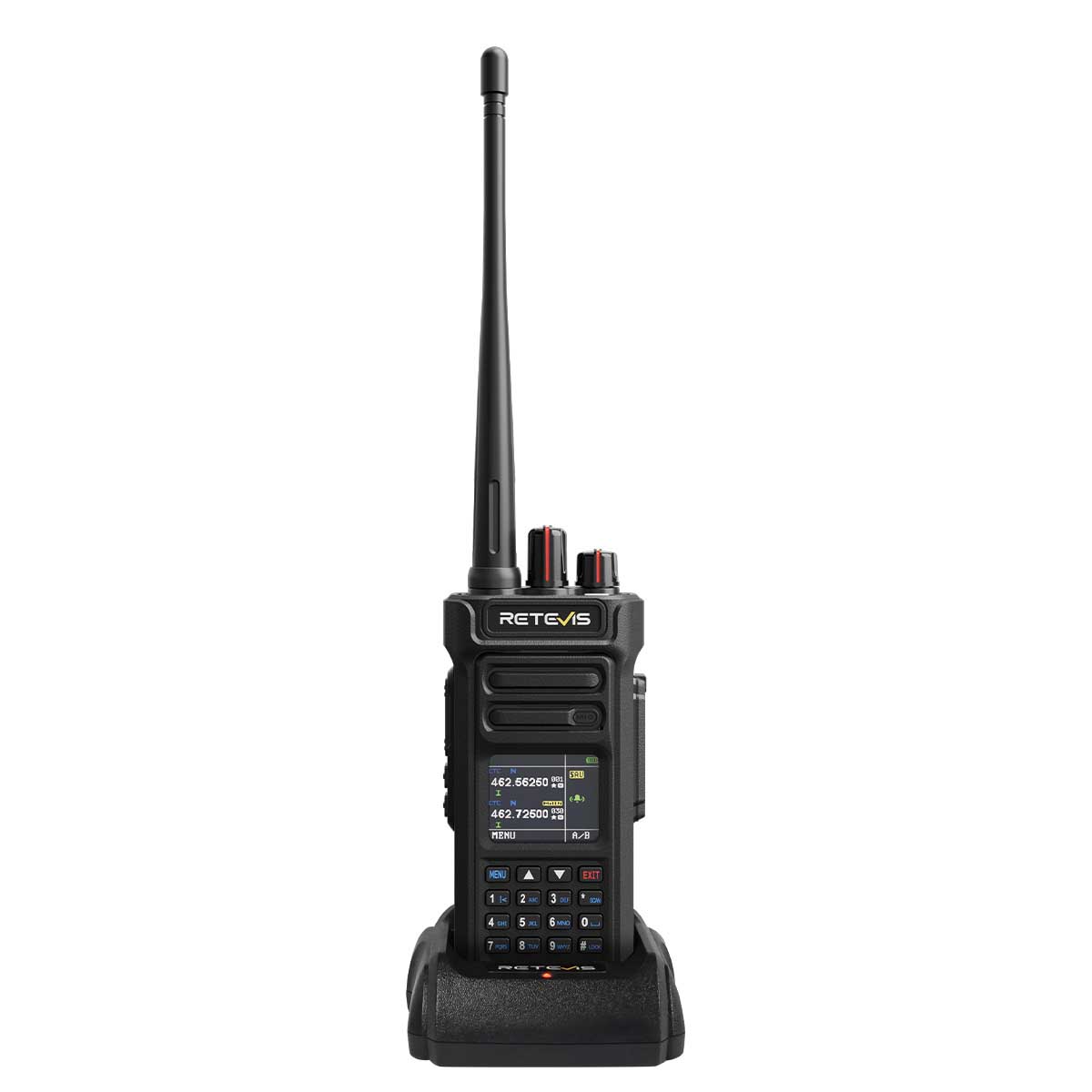
For large facilities with steel frame construction, concrete wall structures and 150,000 square foot warehouse spaces, the Retevis RB48 Pro is built for maximum coverage and communication clarity. Its 10W high-power transmission penetrates dense building materials, covering up to 700,000 square feet across 50 floors, often eliminating the need for expensive repeater installations entirely.
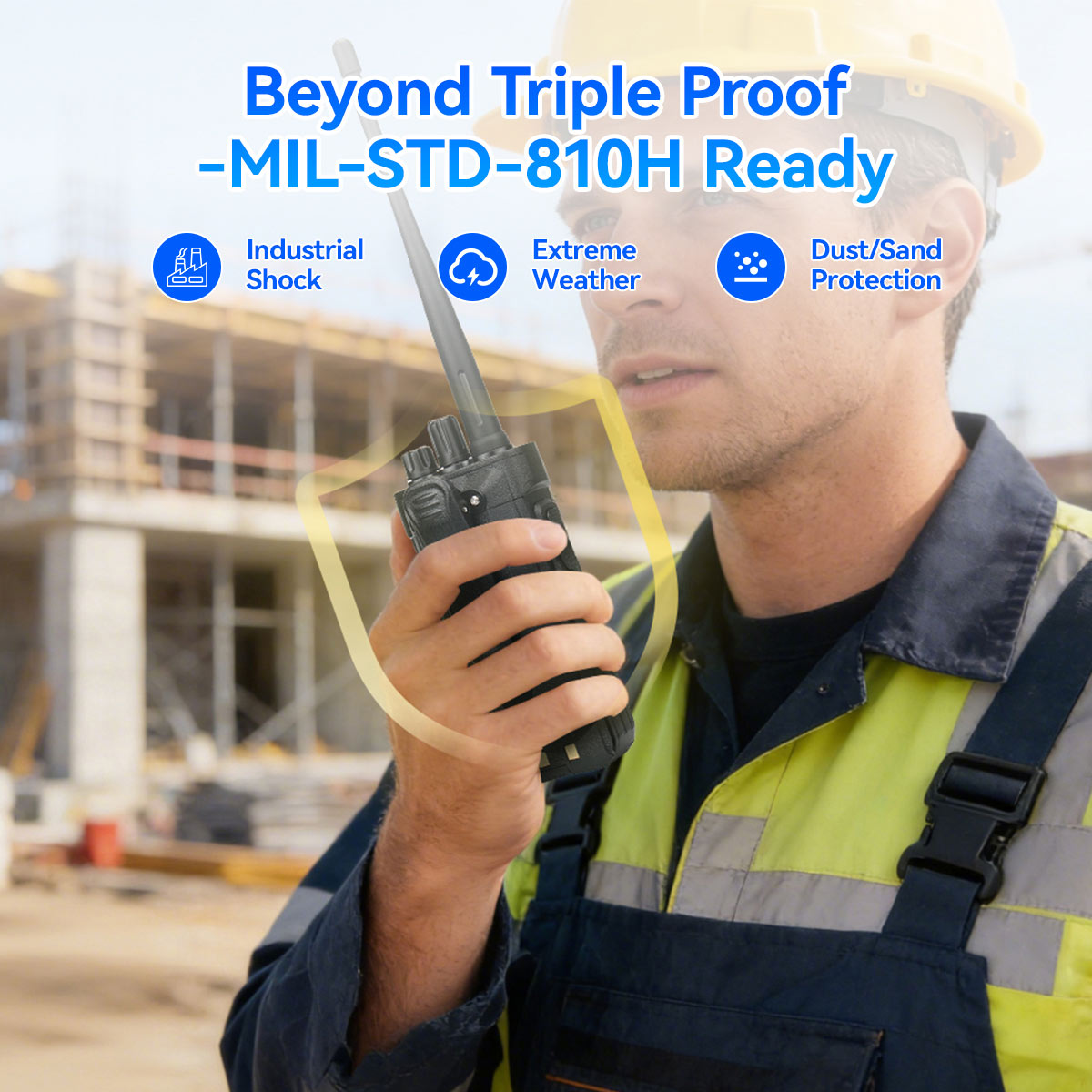
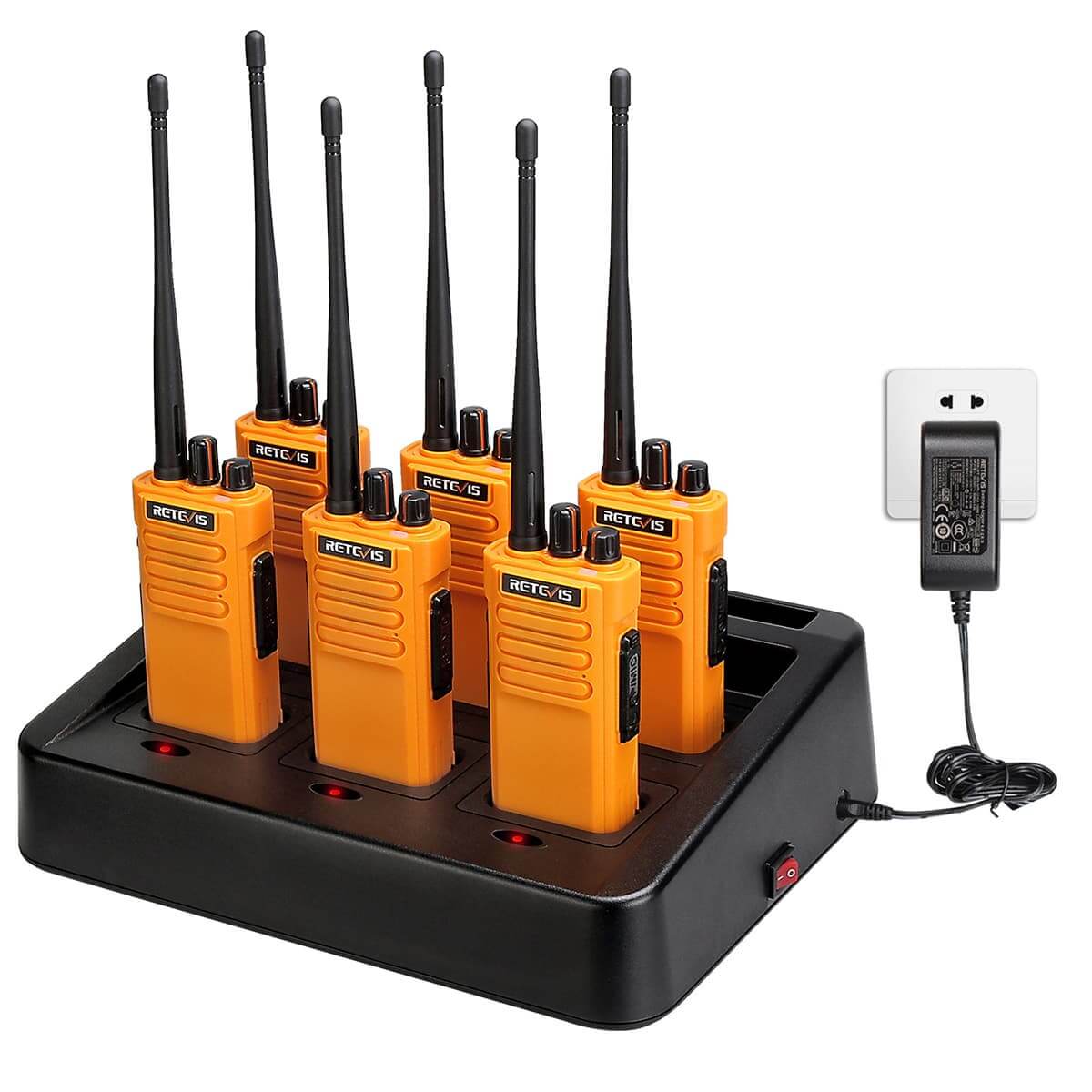
The IP67 triple-protection casing resists dust, water and drops, standing up to the toughest industrial maintenance operations and heavy industrial construction environments. Built-in AI noise cancellation filters out heavy machinery background noise, ensuring clear communication without repeated messages and reducing costly miscommunication on production lines. Additional features like multi-unit charging, emergency alarms and VOX hands-free operation improve both safety and shift efficiency, driving down long-term operational costs.
Option 3: Digital Secure Upgrade: Retevis NR30D DMR Two Way Radios
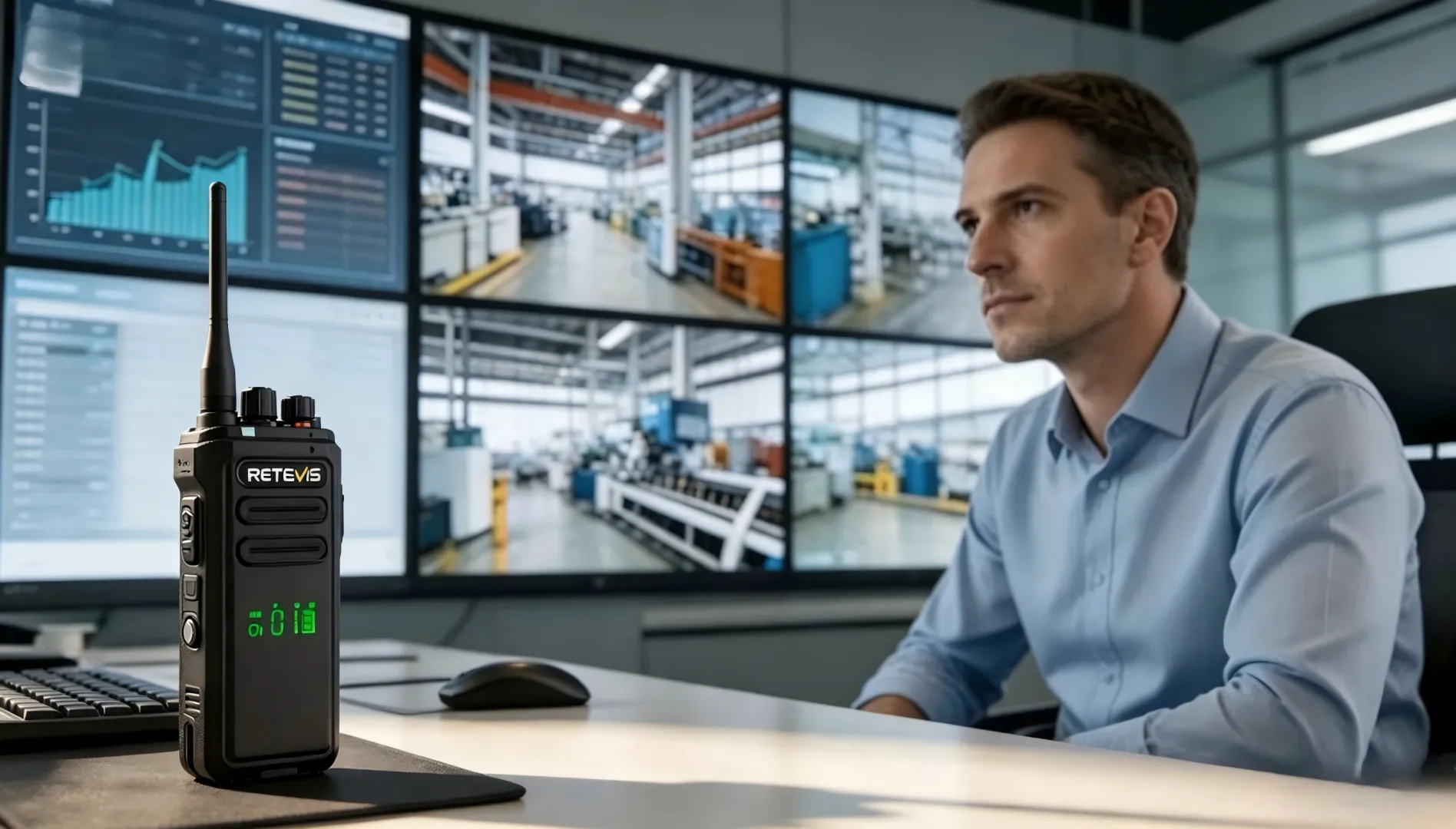
For teams managing multi-building construction projects or planning long-term digital communication upgrades, the Retevis NR30D balances advanced functionality with smooth migration capability. It supports both digital and analog dual modes, so it works seamlessly with your existing analog radio fleet, eliminating the need for full replacement all at once and spreading upgrade costs across budget years.
With AES256 encryption, it keeps sensitive production and operational communications secure, reducing the risk of information leaks. Additional features like bi-directional noise cancellation, lone worker safety alarms and Type-C charging support reliable, safe communication across all manufacturing scenarios. Its flexible upgrade path protects your existing investment, making it a cost-aligned choice for teams with long-term digital transformation plans and multi-year budget cycles.
Side-by-Side Scenario & Feature Comparison
To help you match each radio solution to your operational scenarios and budget priorities at a glance, here’s a structured breakdown of ideal use cases and core cost-optimizing features across all three models:
|
Radio Model |
Ideal Factory Scenarios |
Key Cost-Saving & Operational Features |
|
Retevis RT29 |
Factory construction sites, industrial warehouse communication, general production floors |
IP67 dust/waterproof build, 28h high-capacity battery, adjustable power levels, cast aluminum rugged frame |
|
Retevis RB48 Pro |
150,000 square foot warehouses, steel frame construction facilities, heavy industrial maintenance operations |
10W deep signal penetration, AI noise cancellation, IP67 triple protection, multi-unit charging, emergency alarm, VOX hands-free |
|
Retevis NR30D |
Multi-building construction projects, long-term digital upgrade plans, secure manufacturing facilities |
Dual digital/analog mode for phased upgrades, AES256 encryption, lone worker safety, bi-directional noise cancellation, Type-C charging |
Key Takeaways for Smarter Factory Budget Planning
The best two way radios for business don’t just keep your teams connected—they keep your annual budget on track by cutting unplanned repairs, reducing replacement cycles and eliminating costly communication downtime.
Whether you’re outfitting a large warehouse, managing industrial maintenance operations or overseeing factory construction site projects, choosing devices matched to your environment will deliver lower total cost of ownership year over year.
Align your communication budget with long-term value
Use this two way radio purchasing guide as your starting point, then explore our full lineup of industrial commercial walkie talkies to find the right fit for your operational needs and budget timeline. Need a personalized lifecycle cost projection for your facility? Our team can help you map out multi-year expense planning tailored to your specific scenarios.



 Google
 Amazon
Comments
No data Yet