

Table of Contents
Ham Radio Explained: What You Can Do, How It Works, and Why It Still Matters
- Posted by:Retevis
Why Ham Radio Still Matters in 2026: When Everything Else Fails
On May 29, 2024, Starlink went dark for 45 minutes. Millions lost internet access. ThousandEyes confirmed the outage came from Starlink's own infrastructure— just internal failure[1]. Six months later, Hurricane Helene destroyed cell towers across western North Carolina. For days, Thomas Witherspoon was one of the amateur radio operators coordinating helicopter rescues and supply drops from the Mount Mitchell repeater at 6,600 feet.
The value proposition is simple: ham radio is decentralized, user-owned, and subscription-free. You do not pay a monthly fee to use the ionosphere. You do not need a corporation's permission to launch a mesh node. Your equipment works whether or not the power grid is stable, especially with solar charging and battery systems.
That is why ham radio still matters in 2026. When the grid dies, a battery, a radio, and an antenna still work. Now let's look at what it actually is, how it works, and what you can do with it.
How Does Ham Radio Work? The Science Made Simple
The Basic Signal Path
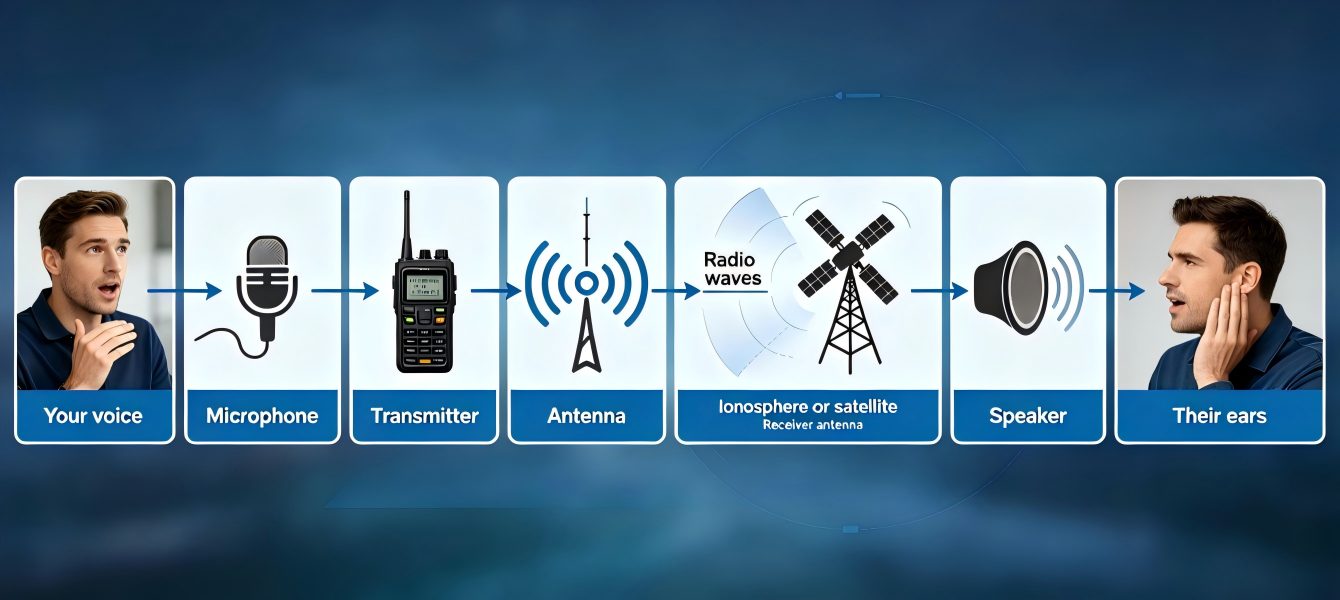
At its core, ham radio converts your voice or data into radio waves, sends them through an antenna, and lets nature—or satellites—do the rest. Here is the chain in plain English:
When you press the PTT button on a handheld radio, your voice is modulated onto a carrier wave, sent out through the antenna, and picked up by another ham’s receiver tuned to the same frequency.
Frequency Bands and Propagation
Ham operators use specific frequency bands allocated by international agreement. The two most important categories for beginners are:
|
Band Type |
Frequency Range |
Typical Use |
|
VHF/UHF (Very High / Ultra High Frequency) |
144–148 MHz (2m) / 420–450 MHz (70cm) |
Local communication, repeaters, satellite work |
|
HF (High Frequency) |
3–30 MHz |
Long-distance "DX" communication, global reach via ionospheric bounce |
VHF and UHF signals travel mostly in straight lines, making them ideal for city-wide coverage and repeater networks. HF signals, by contrast, can bounce off the ionosphere—a charged layer of the upper atmosphere—and return to Earth thousands of miles away. This is how a 5-watt handheld radio in Kansas can reach Japan on a good day.
What Can You Do With Ham Radio? 8 Practical & Exciting Uses
Ham radio’s versatility is what makes it a beloved hobby and a life-saving tool. Below are the most common (and rewarding) things you can do with a ham radio.
1, Local & Regional Communication (Everyday Use)
The most basic (and useful) use of ham radio is talking to other hams in your area. Using VHF/UHF bands and local repeaters, you can chat with fellow enthusiasts.
- Outdoor activities (hiking, camping, off-roading) to stay in touch with your team.
- Neighborhood communication during power outages or small emergencies.
- Joining local ham clubs for nets (scheduled group calls) and events.
2, Emergency and Disaster Communication
When hurricanes, wildfires, or earthquakes knock out cell towers and fiber lines, ham radio operators become the last line of communication. During Hurricane Helene, ham radio is the only reliable way[2].
- Report emergencies to local ARES (Amateur Radio Emergency Service) or RACES (Radio Amateur Civil Emergency Service) teams.
- Share critical information (e.g., power outages, shelter locations) with your community.
- Stay connected with family if you’re separated during a disaster.
3, Global Communication
With a General license (easy to upgrade to after Technician) and an HF radio, you can talk to ham operators across the globe.
- Make "contacts" with hams in other countries (called "DXing") and collect QSL cards (confirmation of your contact).
- Participate in global events (e.g., Field Day, a 24-hour emergency communication exercise).
- Listen to international ham nets and learn about different cultures.
4, APRS Tracking & Location Sharing
APRS (Automatic Packet Reporting System) is a digital mode that lets you share your real-time location with other hams. Using a GPS-enabled ham radio, you can:
- Track your hiking, camping, or off-roading route and let others follow along.
- Send short text messages (even without cell service) to other APRS users.
- Monitor the location of team members during group activities (e.g., search and rescue).
5, Satellite Communication (OSCARs)
Yes, you can talk through space with a handheld radio. Amateur satellites—called OSCARs (Orbiting Satellites Carrying Amateur Radio)—act as repeaters in the sky. Organizations like AMSAT design, build, and launch these satellites.
The "Easy Sats" are FM voice satellites accessible with minimal equipment. Current operational FM satellites include:
|
Satellite |
Uplink |
Downlink |
Notes |
|
AO-91 (RadFxSat/Fox-1B) |
435.250 MHz (67 Hz CTCSS) |
145.960 MHz |
Do not use during eclipse due to battery status |
|
SO-50 (SaudiSat-1C) |
145.850 MHz (74.4 Hz to arm) |
436.795 MHz |
Requires 10-minute timer arming |
|
ISS Crossband Repeater |
145.990 MHz (67 Hz CTCSS) |
437.800 MHz |
International Space Station |
6, Portable Operations: POTA and SOTA
Parks on the Air (POTA) and Summits on the Air (SOTA) combine ham radio with outdoor adventure. Operators set up portable stations in parks or on mountain peaks, often using battery power and temporary antennas. These programs have exploded in popularity, turning radio into a hiking companion.
7, Technical Experimentation & Learning
Ham radio is a great way to learn about electronics, radio waves, and communication technology. You can:
- Build your own antennas to improve signal strength and range.
- Try digital modes (e.g., FT8, DMR) for clearer communication and long-distance contacts.
- Modify and customize your radio (within FCC rules) to fit your needs.
8, Community Service and Public Events
Hams volunteer at marathons, parades, and search-and-rescue operations where cell coverage is spotty. The 52 Week Ham Radio Challenge encourages operators to try new activities weekly—whether using Echolink to connect distant repeaters, experimenting with unfamiliar digital modes, or studying antenna theory.
How to Get Started: Choose the Right Radio for Your Goals
Every beginner asks the same question: "Which radio should I buy?" The honest answer depends on what you want to do. Here is a practical breakdown based on real use cases.
For Rugged Outdoor and Emergency Use
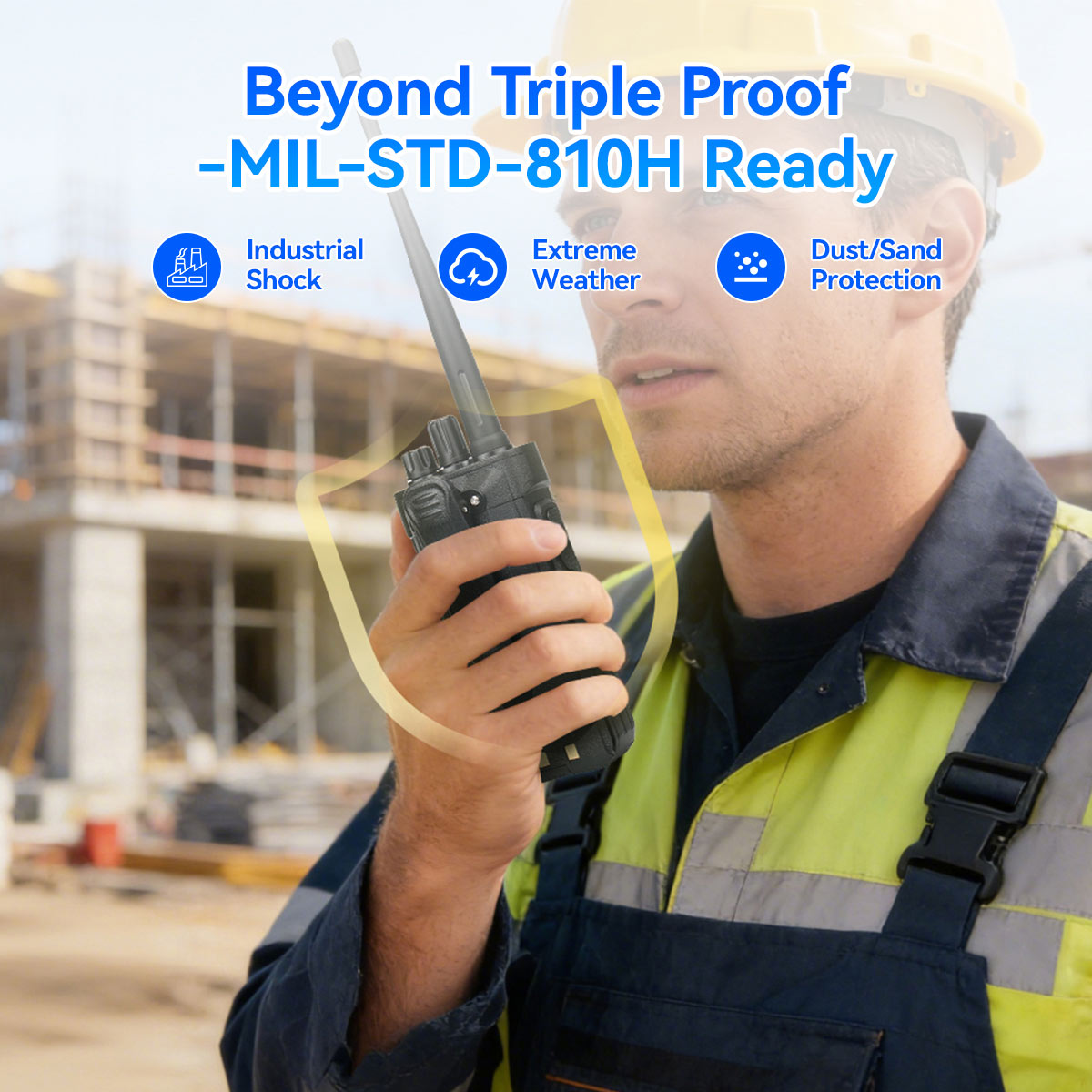
If your priority is durability, waterproofing, and reliable communication in harsh environments, look for three things: ingress protection rating, transmit power, and battery flexibility.
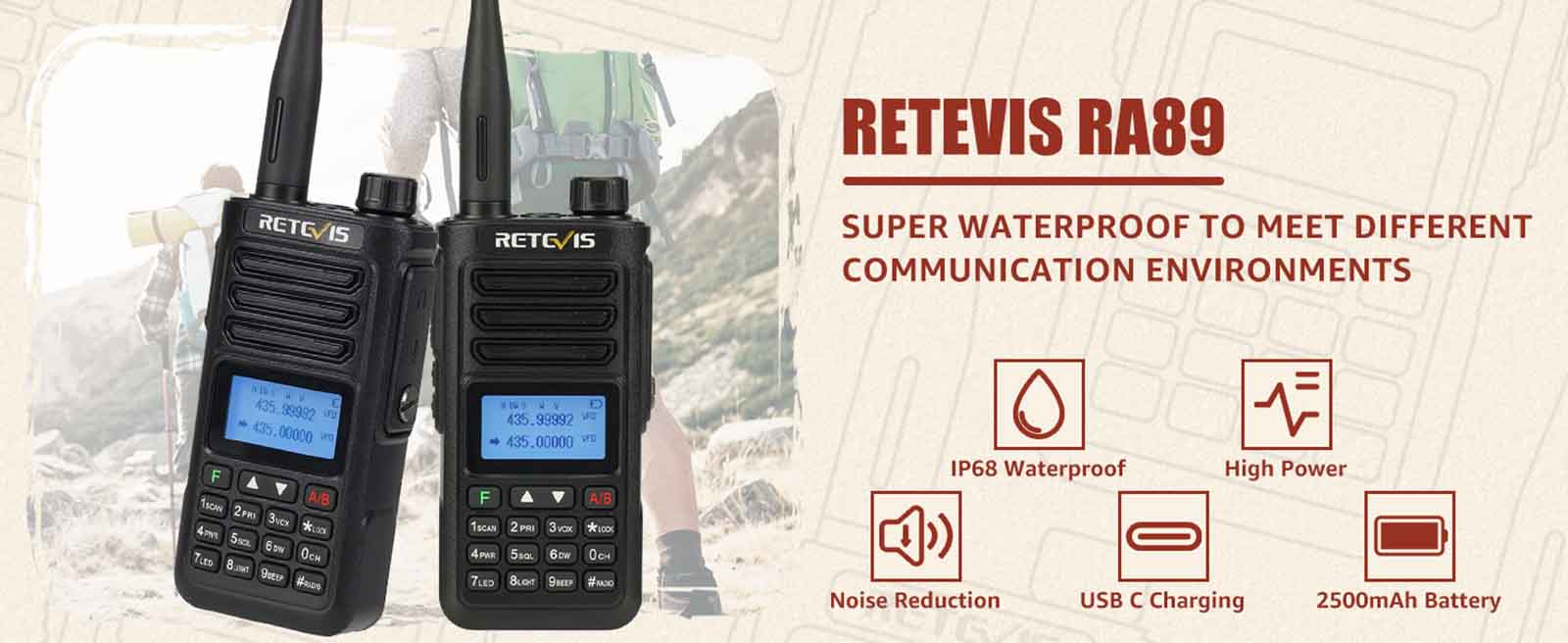
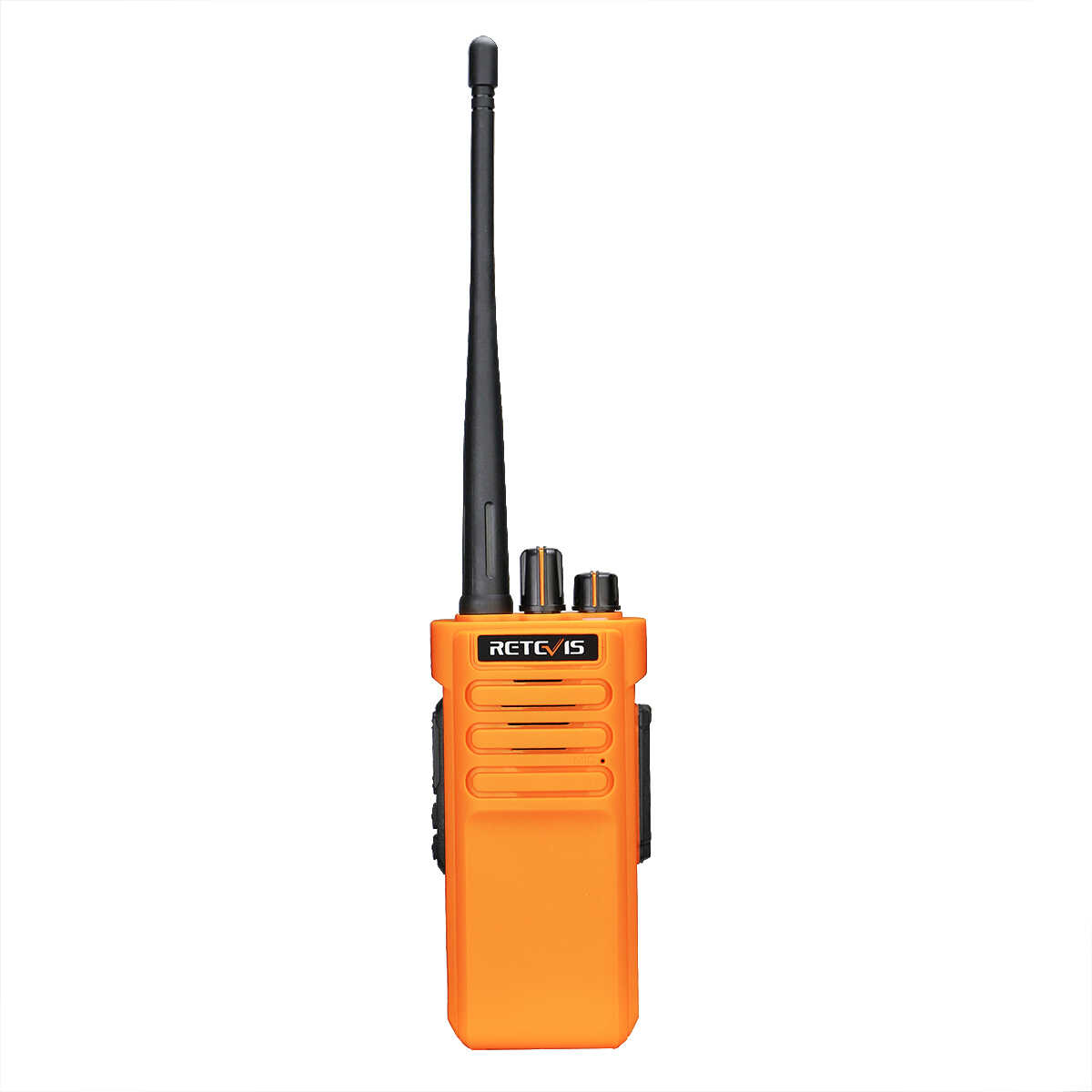
The Retevis RA89 is engineered for exactly these scenarios.
|
When This Happens |
The RA89 Delivers |
|
You drop it in a stream or a dust storm hits |
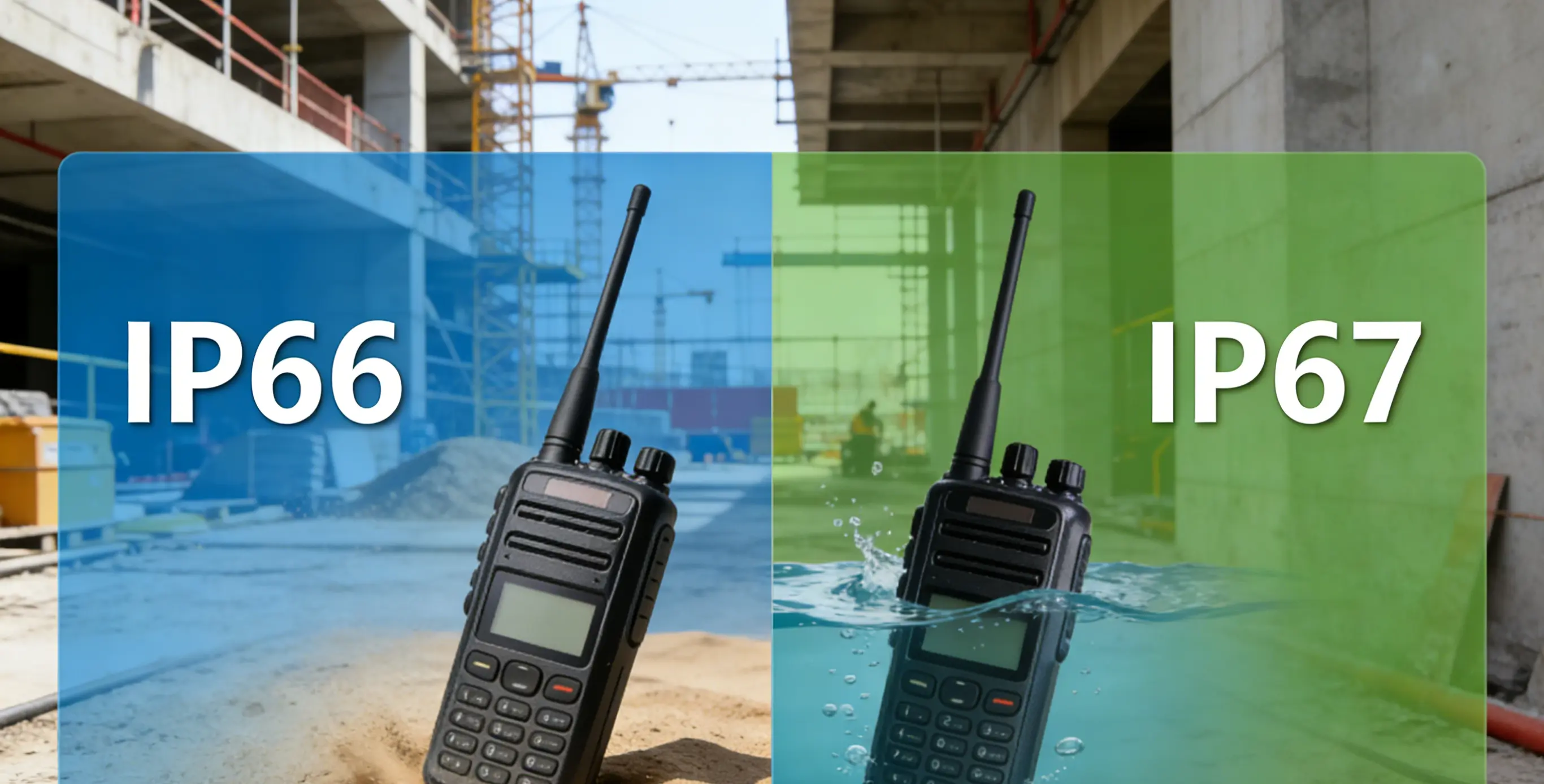
IP68: 1.5 meters underwater for 30 minutes, complete dust sealing[3] |
|
You are in a canyon or a noisy vehicle |
10W/5W/1W adjustable power: Punch through terrain on high, save battery on low. 2500mAh battery, USB-C field charging from solar or power bank |
|
Wind and engine noise drown you out |
Intelligent noise reduction + dual-band monitoring: Your voice cuts through; track emergency freq while staying on team channel |
|
You need to connect with a partner fast |
One-key pairing: Hold A/B button, link two RA89s instantly |
|
You operate near public safety bands |
FCC/EU certified: Spectral purity and harmonic distortion meet standards—no interference, no legal risk |
For Tech-Forward Operators and APRS Users
If you want integrated GPS, APRS position reporting, and wireless programming convenience, you need a radio that bridges analog reliability with digital workflow.
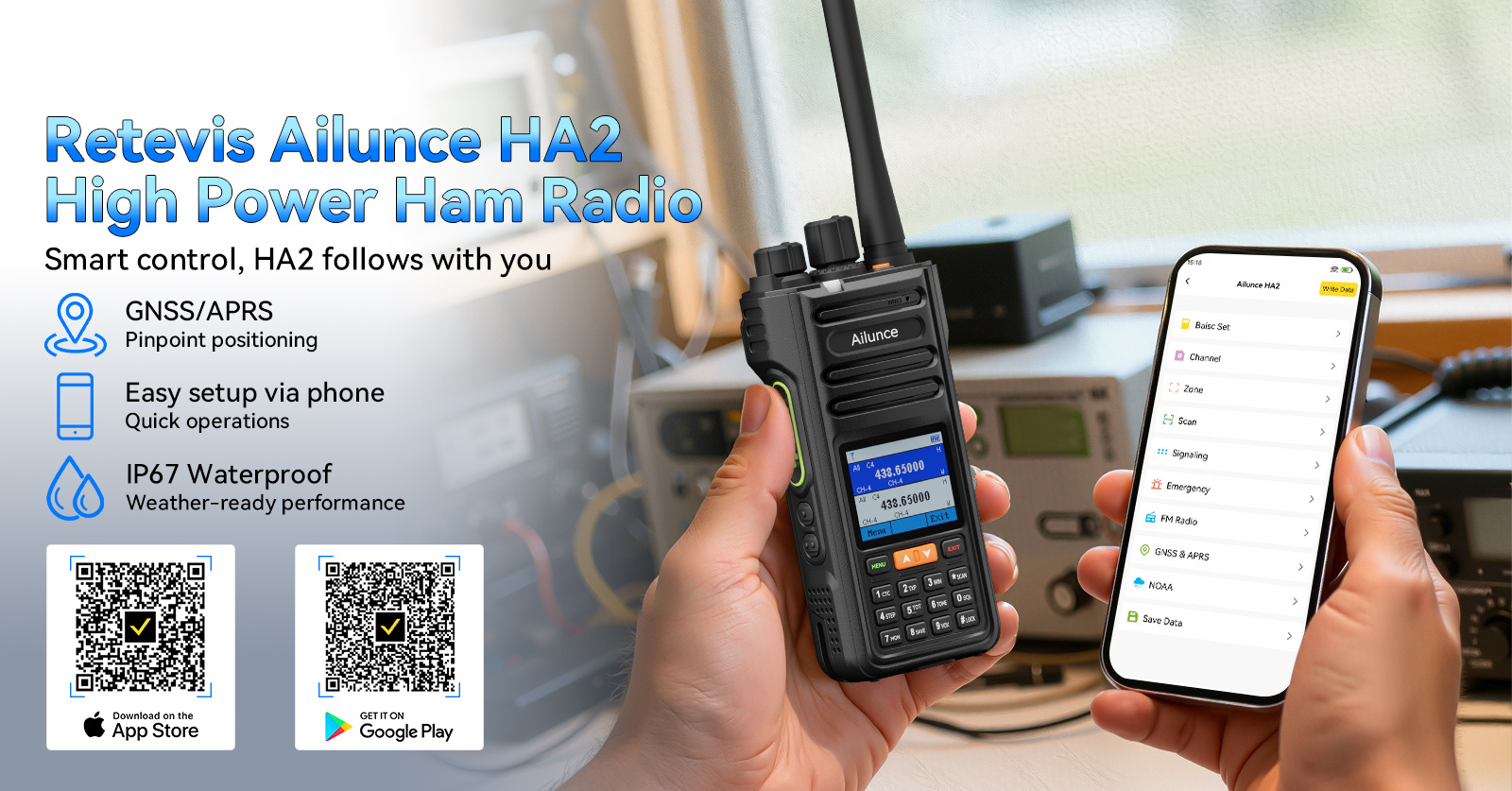
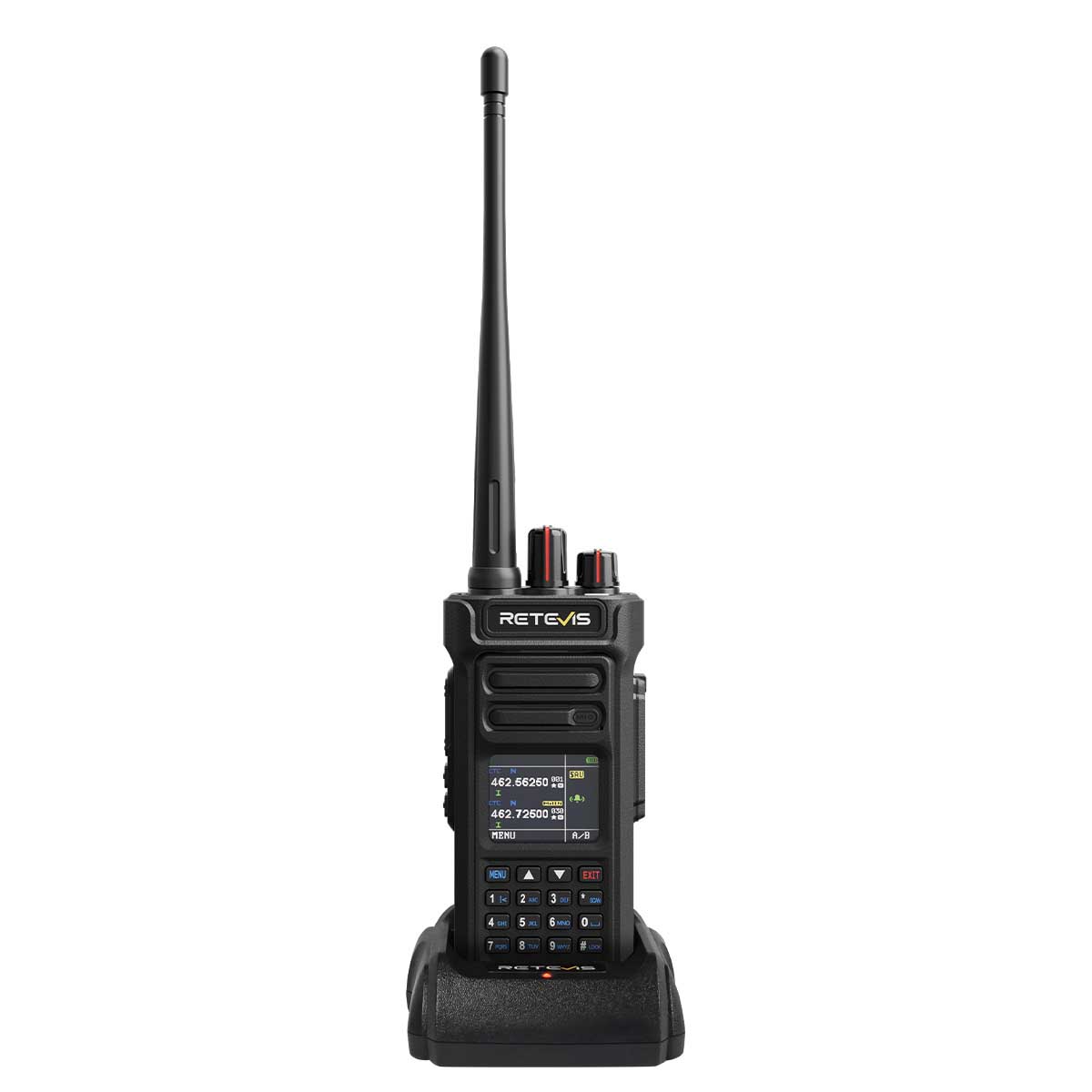
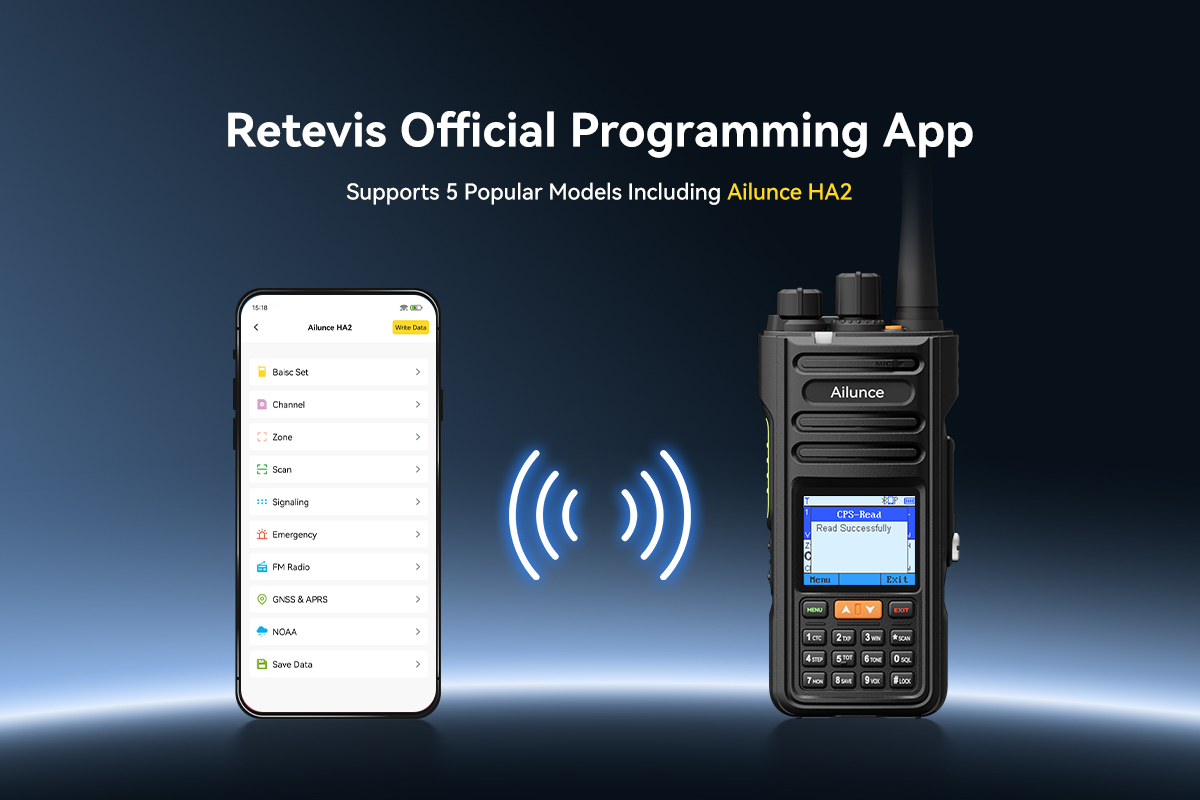
The Retevis Ailunce HA2 is is built for operators who want analog reliability with digital workflow.
|
When This Happens |
The HA2 Delivers |
|
You need to program frequencies in the field without a cable |
Bluetooth App programming: Read/write frequencies, set squelch, name channels from your phone. Bind up to 5 devices, save configs for quick cloning |
|
Command needs to track your team in real time |
Integrated GPS + APRS: Real-time position beaconing for SOTA, storm chasing, or emergency response |
|
You need to operate in any lighting condition |
Adjustable Backlight: Tailor the screen's brightness to your environment |
|
You forgot the manual |
Online manual in App: Troubleshoot in the field, no paper needed |
|
You manage a club fleet |
Multi-device management center: Consistent programming across 10, 20, or 50 radios |
The Honest Comparison
|
Feature |
Retevis RA89 |
Retevis Ailunce HA2 |
|
Best For |
Rugged outdoor, survival, emergency |
Tech-forward, APRS, fleet management |
|
Waterproofing |
IP68 |
IP67 |
|
Power |
10W/5W/1W |
10W/5W/2W/1W |
|
Battery |
2500mAh, USB-C on battery |
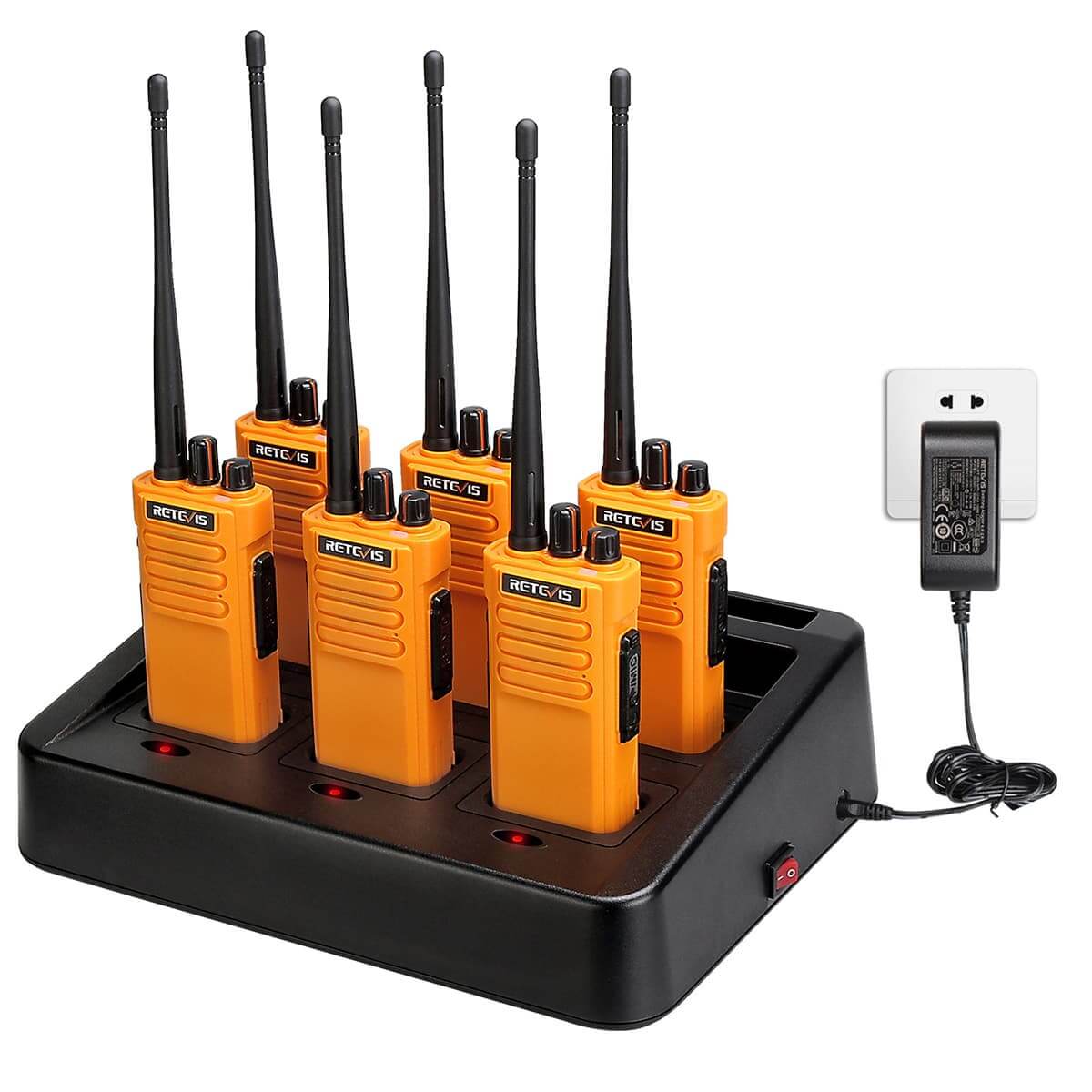
2800mAh, USB-C on battery, charger base included |
|
Screen |
Compact |
1.77" LCD with backlight |
|
Standout Feature |
Intelligent noise reduction, one-key pairing |
Bluetooth App programming, GPS/APRS |
|
Memory Channels |
200 |
1024 (16 zones) |
Neither radio tries to be everything. The RA89 prioritizes survivability in extreme conditions. The HA2 prioritizes operational efficiency and digital integration. Your choice should match your primary use case—not the longest feature list.
How to Get Started: Licensing and First Steps
Your 3‑step plan:
- Study for your FCC Technician license with free resources at HamStudy.org, ARRL manual
- Choose your first radio: Retevis Ailunce HA2 or Retevis RA89R.
- Join a local ham club to learn from experienced operators and make new contacts.
Ham radio is not a dying hobby — it’s a growing community of makers, preppers, students, and adventurers.
Whether you want to talk through a satellite orbiting at 17,000 miles per hour, build a data network that survives infrastructure collapse, or simply chat with a stranger in another country, the hobby has a place for you.
Get your license. Buy a radio. Your journey starts today.
73—"best regards."
References
[1] Starlink Outage Analysis: May 29, 2024, By Chris Villemez, May 30, 2024
[2] Post-Helene Update and the Importance of Radio After a Natural Disaster, By Thomas (K4SWL)
[3] Retevis RA89: The Must-Have IP68 Waterproof Ham Radio for Rugged Outdoor Adventures, By Retevis, Aug 15, 2025
[4] Everything You Need to Know About Retevis HA2: Bluetooth-Programmed HAM Radio with GPS & APRS, By Retevis, Dec 18, 2025




 Google
 Amazon
Comments
No data Yet