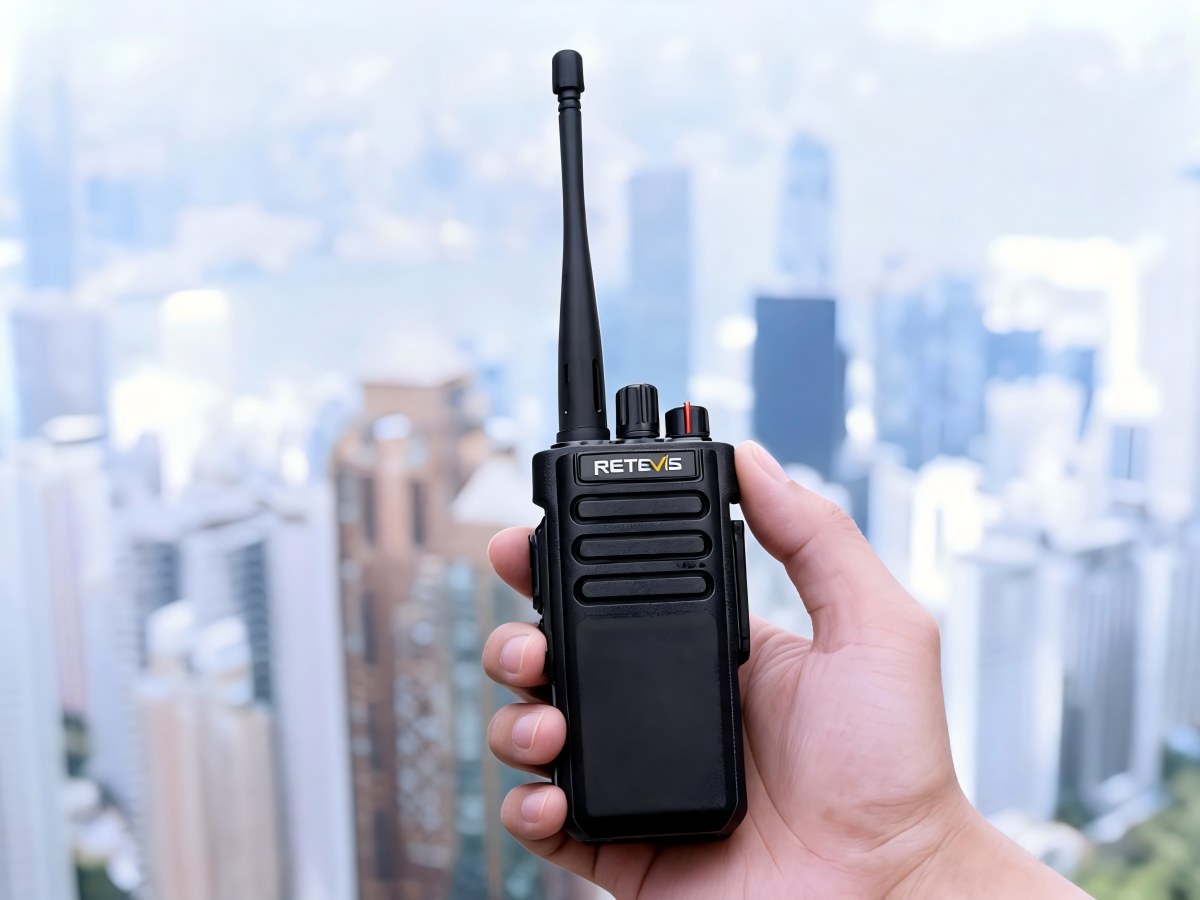
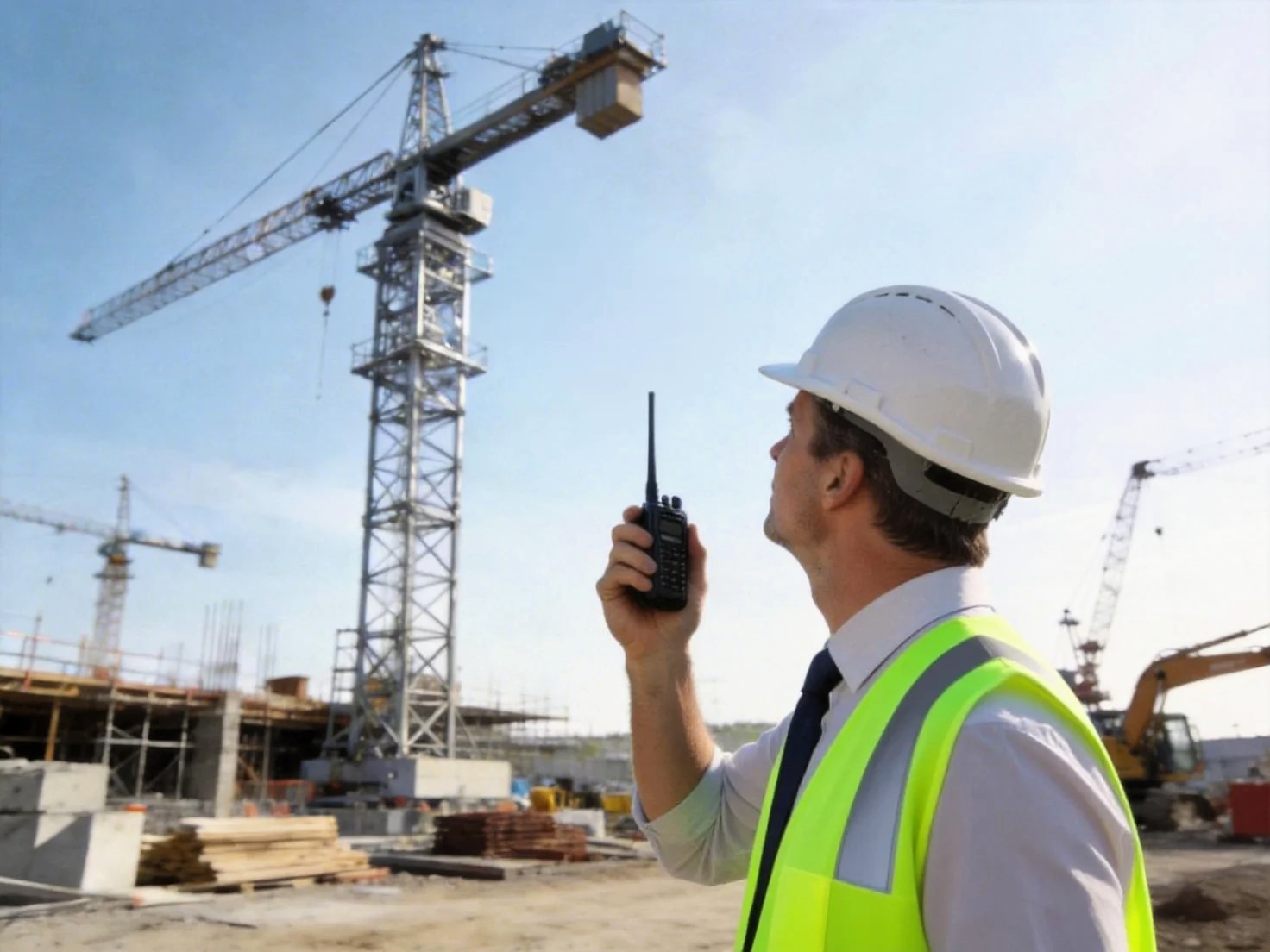
From rebar tying in deep foundations to waterproofing on the top floor, every stage needs reliable, real-time communication. From precise tower crane scheduling to high-altitude safety alerts, clear and efficient communication keeps work moving.
Compared with open-air projects, vertical structures and enclosed spaces create unique challenges. These issues include signal loss between floors. They also include weak connections between underground and ground levels. Other problems are frequency interference.
There can also be delays in emergency response. These issues not only slow down progress but also pose potential safety risks.
As the “communication lifeline” in construction, walkie-talkies are essential. Proper walkie-talkie selection and scenario-based use on multi-story sites improve efficiency. They also increase safety. They help manage and reduce project costs.
The communication needs vary across different stages of a multi-story construction project. Mastering scenario-specific techniques is key to getting the most from two-way radios on construction sites. It also helps solve vertical communication challenges with walkie talkies.
Foundation and Underground Structure Stage
The main challenge is communication gaps between underground enclosed spaces and aboveground teams. Use UHF walkie talkies on high-rise sites for better signal penetration.
Assign radios to underground and surface teams.
Use dedicated channels for foundation monitoring, material delivery, and safety reporting. This avoids delays caused by blocked signals and prevents safety incidents.
Main Structure Stage
Coordination between vertical floors is critical. Assign exclusive communication channels for rebar, formwork, and concrete teams to keep work running smoothly. Workers can promptly notify the upper-floor formwork team after finishing rebar work on lower floors.
High-altitude workers can use one-touch emergency and noise reduction features. These features update ground safety officers in real time.In case of emergencies, they can send instant alerts to speed up on-site response.
Interior Finishing and MEP Installation Stage
Multiple floors and overlapping disciplines increase the risk of interference. Assign channels by floor and trade (e.g., finishing, electrical, plumbing, HVAC, fire protection) and avoid shared channels. Enable anti-interference features to ensure smooth communication, solving common construction site radio frequency interference solution problems and improving overall work efficiency.
Commissioning and Maintenance Stage
Radios mainly support multi-department inspections and issue resolution. Inspectors can provide real-time feedback, and construction teams respond promptly. During post-handover maintenance, maintenance staff use radios to communicate with property management and owners, accurately locating issues and improving efficiency.
Optimizing High-Floor Signal Penetration
For mid-to-high-rise or super-tall buildings (10+ floors), standalone radio power may not cover all floors. Deploy temporary repeaters on middle floors. Use high-gain antennas to reduce blockage.
This improves walkie talkie signal penetration between floors. It also boosts vertical signal coverage.
Underground-to-Aboveground Coordination
Enclosed areas like basements or deep foundations suffer severe signal blockage. Deploy UHF radios with high penetration capabilities. Install repeaters at entrances. This ensures seamless radio communication between underground and aboveground construction teams.
Multi-Team Channel Management
Assign channels using a “floor + team” approach to ensure organized communication and reduce interference. Examples of channel classification below:
This prevents radio interference and gives priority to critical instructions.
Proper radio management ensures stable operation, and emergency protocols strengthen safety:
Daily Management
Assign clear communication roles: project managers manage channel use and dispatch. Safety officers monitor high-altitude and emergency staff. Equipment managers handle inspections, battery rotation, and fault reports. Follow local radio regulations to avoid compliance risks.
Emergency Scenarios
Pre-assign emergency channels and priority instructions. In incidents like falls, fires, or collapses, workers use emergency channels. They use one-touch calling to reach the emergency team.
They share clear details on location and personnel. Keep emergency radios on 24/7 to ensure smooth communication and rapid response.
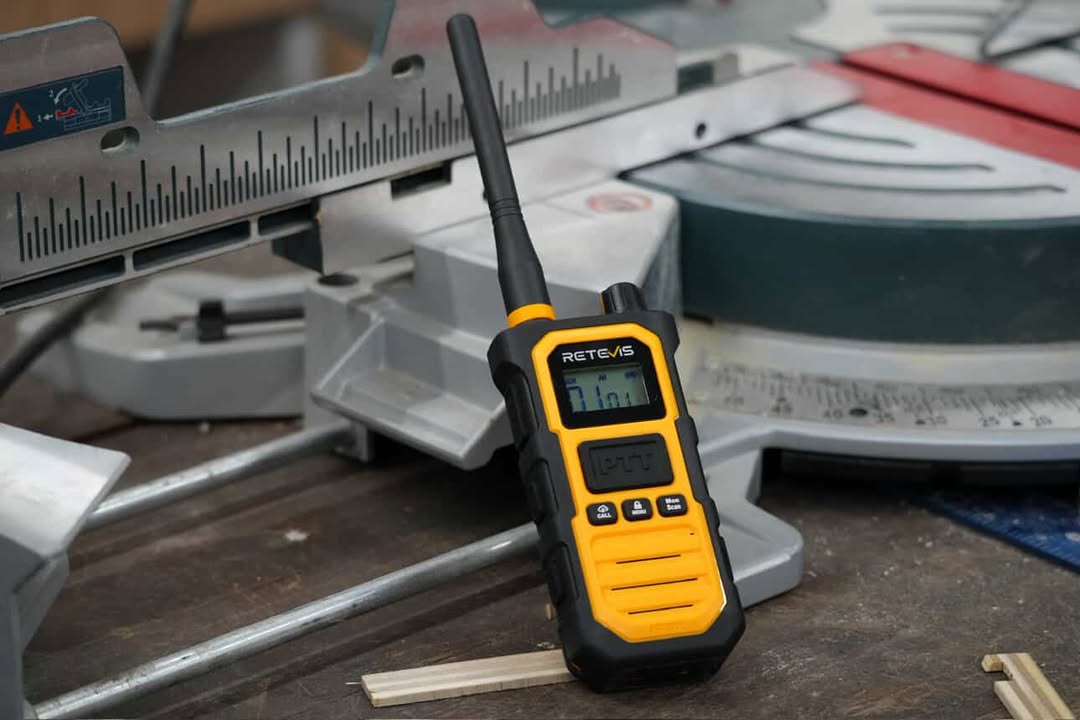
Selecting the proper radio is fundamental to stable communication on multi-story construction sites. This how to choose walkie talkie radio for multi-story building guide combines general criteria with multi-story-specific considerations.
Environmental and Expandable Features
Communication Performance
Transmission power and receiver sensitivity determine stability. For multi-story sites, choose 4-5W two-way radio for multi-story construction with ≥-118dBm sensitivity. UHF (400–470MHz) is ideal for enclosed vertical spaces, while VHF (136–174MHz) suits open-air areas.
Functional Adaptation
Focus on group communication, one-touch emergency, noise reduction, and long battery walkie talkie for construction workers (≥12 hours). Group communication supports many teams.
Emergency features protect high-altitude workers. Noise reduction filters job site noise. Long battery life covers many shifts.
Compliance and Expandable Features
Radios must follow local radio rules. They must also support repeaters or multi-device links as project needs change, like super-tall building coverage.
By roles
By Project Scale
Key multi-story requirements include vertical penetration and full-space coverage. Avoid selection mistakes when picking best two-way radio for construction site long range.
High-rise construction presents formidable communication challenges, particularly regarding signal strength fluctuations that vary with building height. Implementing advanced technical solutions can resolve these complex issues, enabling teams to collaborate and communicate rapidly and effectively.
|
Communication problem categories |
Core technology solutions |
Expected results |
|
Signal coverage |
Distributed Antenna System (DAS) with Trunking system |
Eliminate blind spots and achieve full building signal coverage |
|
Frequency interference |
Digital relay and frequency hopping technology |
Improve call clarity and confidentiality |
|
Physical occlusion |
Leaky feeder coaxial cable for radio repeater system |
Penetrate concrete walls to enhance signal propagation |
|
Equipment reliability |
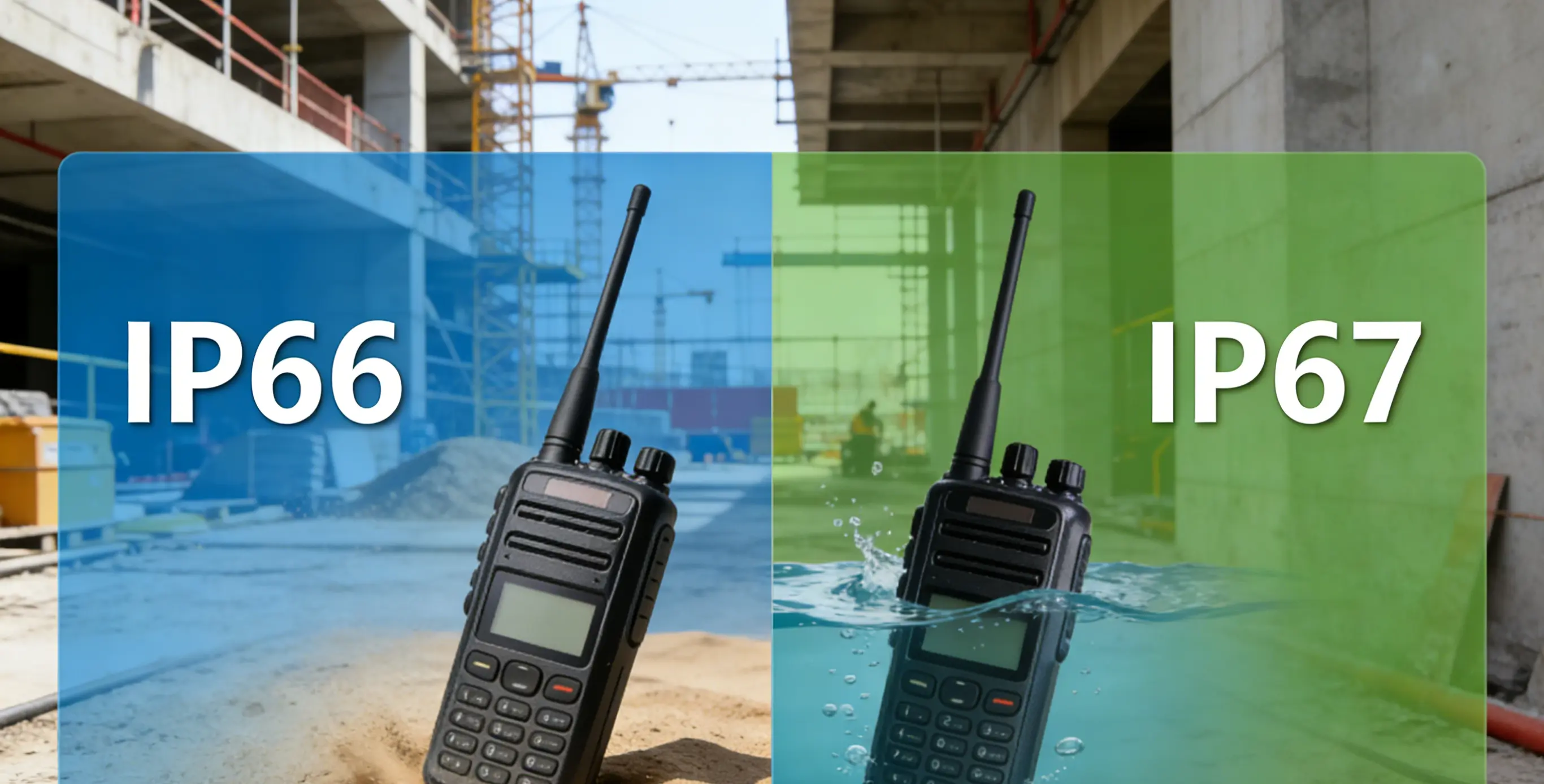
IP68 protection and large-capacity battery |
Adapt to harsh environments and extend working hours |
Q1: What the trategies for cost-effective coverage of buildings with more than 30 floors
A1: For buildings with more than 30 floors, use UHF radios equipped with high-gain antennas. Install one or two walkie-talkie repeaters on middle floors, and optimize channels to minimize interference.
Q2: How to avoid frequency interference among multiple teams?
A2: To avoid frequency interference among multiple teams, assign dedicated channels for each team, use CTCSS/DCS privacy codes, operate within legal frequencies, optimize transmission power, implement a clear channel plan, use programmable radios, and monitor channels regularly for cross-talk.
Q3: How to solve underground-to-aboveground communication gaps?
A3: Use high-penetration UHF radios and deploy repeaters at underground entrances with high-gain antennas for seamless connection.
Q4: Is the use of repeaters mandatory?
A4: For buildings up to 10 floors, repeaters are usually not required. For >10 floors or multi-basement projects, repeaters are necessary to prevent communication gaps.
Q5: How to find the right balance between cost and long-term requirements?
A5: Short-term, low-rise projects: basic radios suffice. Long-term, large-scale projects: advanced/professional radios reduce future replacement and maintenance costs.
In job sites, two-way radios aren’t just for communication—they keep work efficient and safe. Effective use depends on adapting to different scenarios and following standardized management. Choosing the right radio requires precise matching to project needs and avoiding common pitfalls. Think about the project scale, scenario needs, and cost-effectiveness to pick the right walkie-talkie for your site.
Need a communication solution for your multi-story project? We can help with system selection, full-floor coverage, and complete option lists. Contact us for expert guidance. We provide free project-specific consultation and radio testing services to solve communication challenges across the construction lifecycle and ensure safe, efficient project execution.
No data Yet




 Google
 Amazon