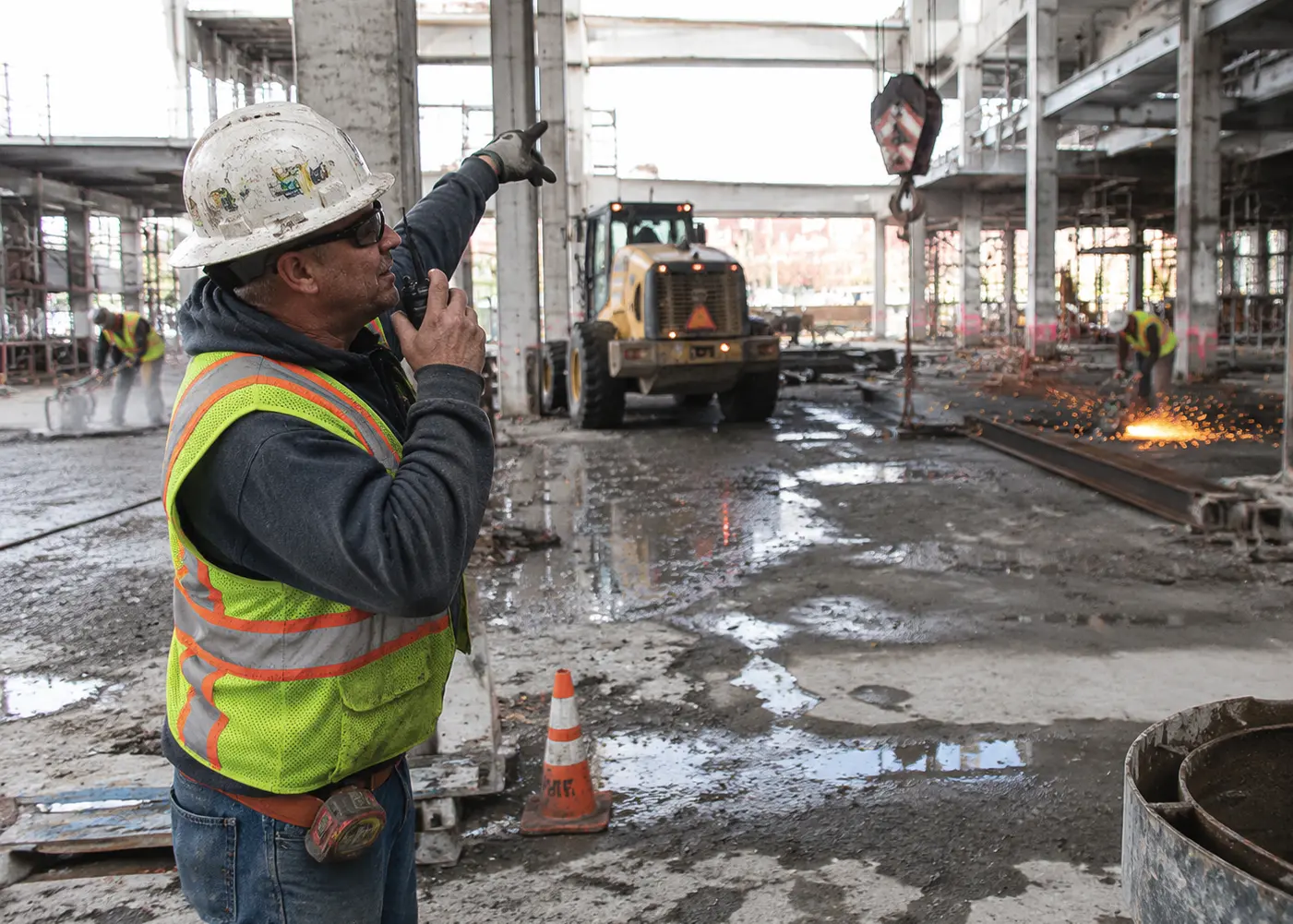
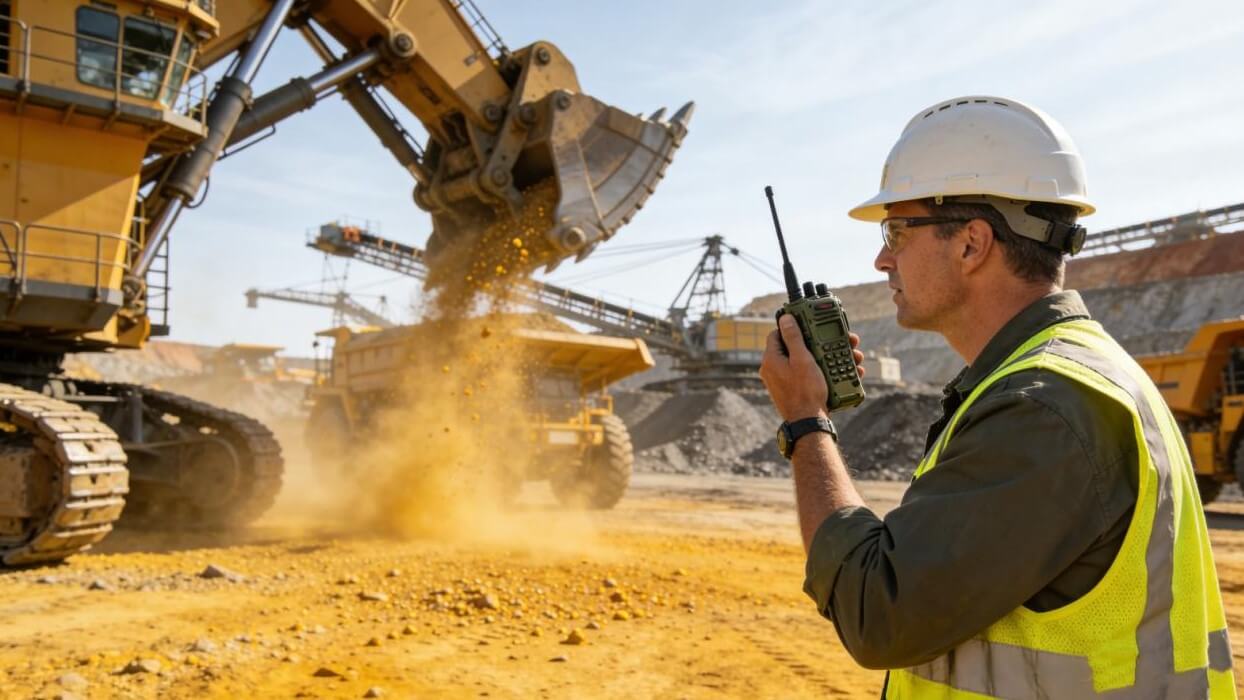
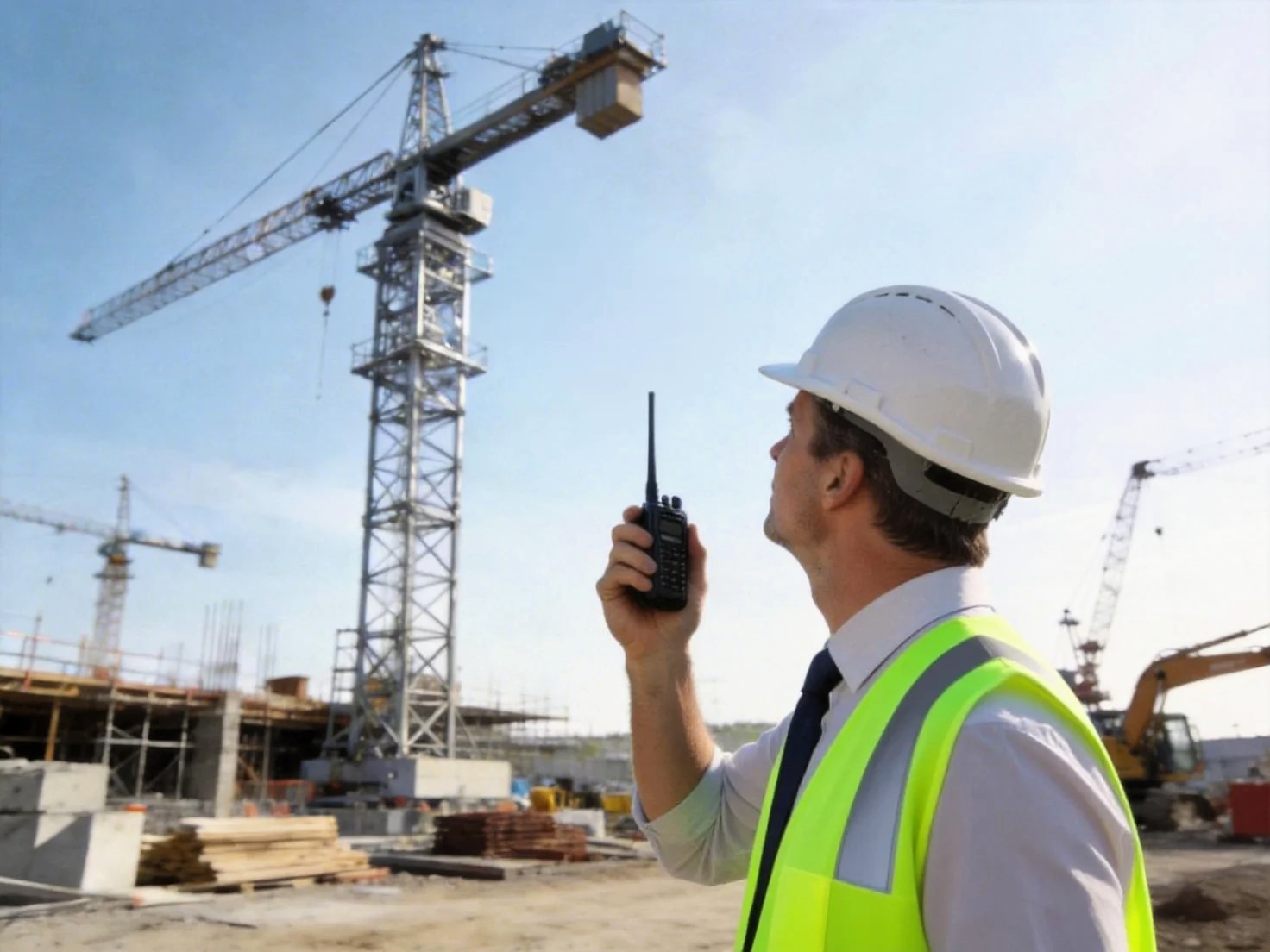
"A jackhammer rattles concrete twenty meters away, a loader backs up with its insistent beeps, and sparks fly from a grinder in the corner. Amid the chaos, a foreman tries to instruct a crane operator to lower the hook. He presses his walkie talkie—and only catches static and fragments." Scenes like this unfold daily on construction sites everywhere. Miscommunication isn’t just frustrating—it causes delays, mistakes, and sometimes safety hazards. From shouting to relying on smartphones, rarely cut through the constant noise, while the noise-reducing radios deliver clear, instant communication across busy sites.
In this guide, we’ll explore why effective communication matters on construction sites, and how the noise reducing radios can keep your team coordinated, safe, and productive.
Standard walkie-talkies treat all sounds equally. They amplify your voice and the jackhammer with the same intensity. The listener hears a muddy mix. Even turning up the volume does not help – it only makes the noise louder.
As for smartphones, trying to hold a phone to your ear while operating equipment is not only unsafe but also ineffective, a single drop or exposure to dust or water can render them useless, making smartphones a costly and unreliable option for on-site communication. What workers actually need is a device that separates speech from background rumble.
A radio noise reducer in a noise-reducing radio is a specific electronic feature that analyzes incoming sound and suppresses background static, wind, and heavy machinery, ensuring crystal-clear communication
Built specifically for the unique challenges of construction sites, noise-reducing radios are engineered to cancel out or suppress background noise, ensuring that every message is heard clearly—even over the loudest jackhammer. Most models feature noise-canceling microphones that filter out ambient sound, so your voice comes through crisp and distinct, and noise-isolating speakers (or compatible headsets) block out external chaos, letting you focus on the message.
Just reliable communication that keeps your team connected, safe, and productive.
To understand why noise-reducing radios work so well, it’s important to distinguish between two key technologies: noise cancellation and noise isolation.
Noise isolation (passive noise reduction) relies on physical barriers—such as thick, padded ear cups or sealed enclosures—to block external sounds. This is especially effective on construction sites, preventing loud machinery from interfering with radio communications.
Noise cancellation (active noise reduction) goes a step further: built-in microphones detect ambient noise and generate opposing sound waves that cancel it out, effectively reducing background distractions.
Many high-end construction radios combine both technologies, delivering maximum clarity even in the loudest environments. The result? You can hear your team’s instructions clearly without straining, and they can hear you without the need to shout.
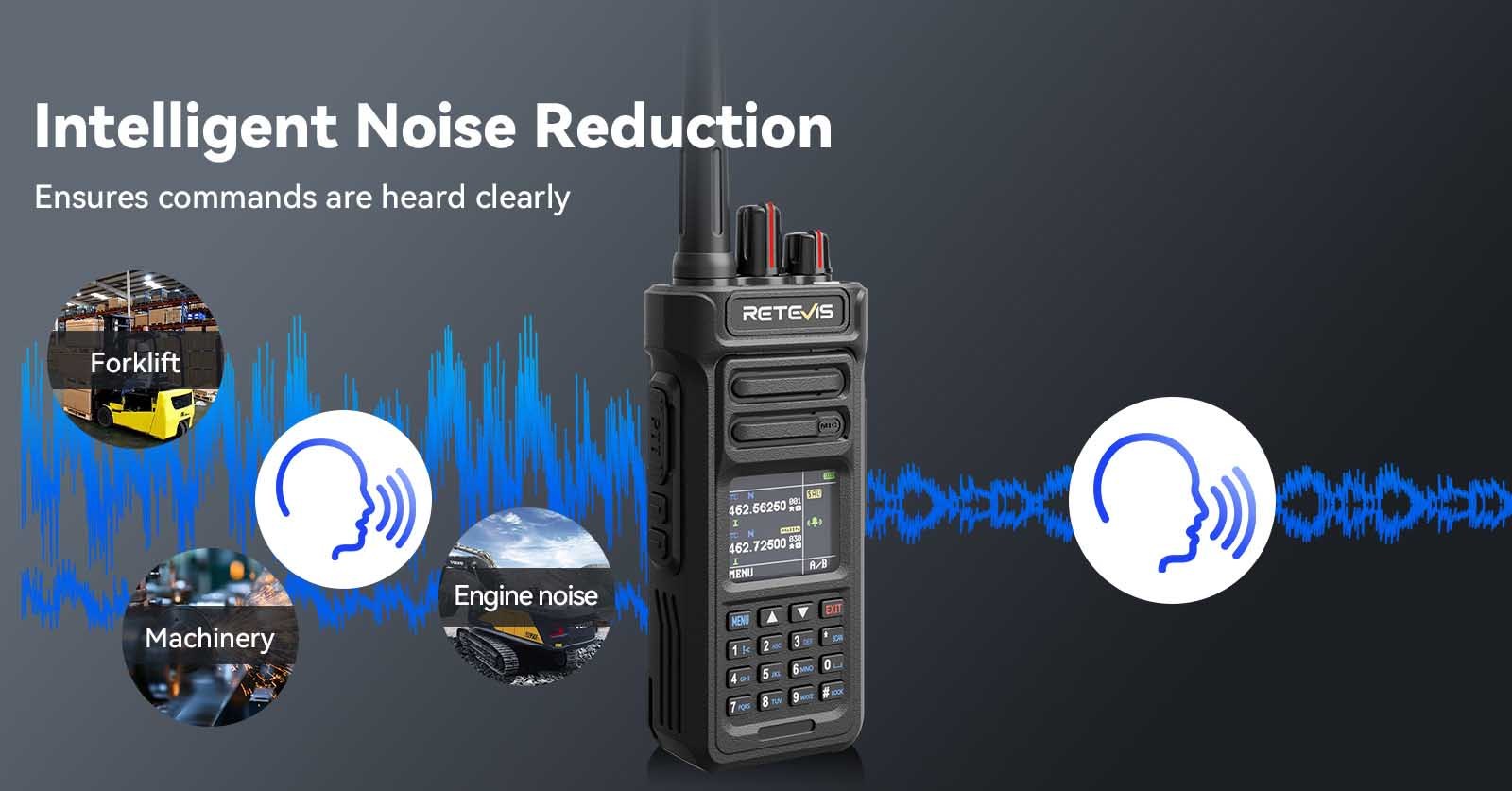
Most quality industrial walkie talkie radios with noise cancellation use a digital signal processor. This small chip examines the audio stream hundreds of times per second. It distinguishes between the sharp, changing patterns of speech and the steady rumble of equipment. Then it adjusts the output accordingly. The result is that a normal speaking voice becomes audible even when the user stands next to an excavator.
Buying the right equipment is only the first step. Maximizing construction site communication with noise-reducing radios requires attention to how crews actually use the devices.
● First, train workers to speak at a normal volume. Screaming into a noise-cancelling microphone can actually distort the signal. A calm, steady voice works best.
● Second, keep the radio within 30cm (12in) of the mouth. Clipping it to a collar or chest harness gives the microphone a clean line of sight.
● Third, perform a five-second sound check at the start of each shift. Have one worker talk while another listens from a noisy area. Adjust the radio settings if needed.
Proper placement and handling to maximize noise cancellation. Do not put the radio in a back pocket. The body blocks the signal, and sitting on it can crack the housing. Do not leave it on the ground near a concrete mixer. Dust and moisture will eventually enter the speaker grill. Instead, use a belt holster or a chest clip. Keep the microphone area facing outward, away from the body. Also, wipe the grill with a dry cloth at the end of each day. A layer of dried mud reduces audio quality dramatically.
A headset with a boom microphone positions the mic directly next to the user’s lips. That gives the noise reducer the strongest possible voice signal. An earpiece that seals inside the ear canal physically blocks ambient noise before it reaches the eardrum. When combined with an electronic radio noise reducer, the user hears only the conversation. Background machinery fades away.
Besides, matching accessories to job roles for best results. Try different configurations. The right accessory turns a useful radio into an essential tool.
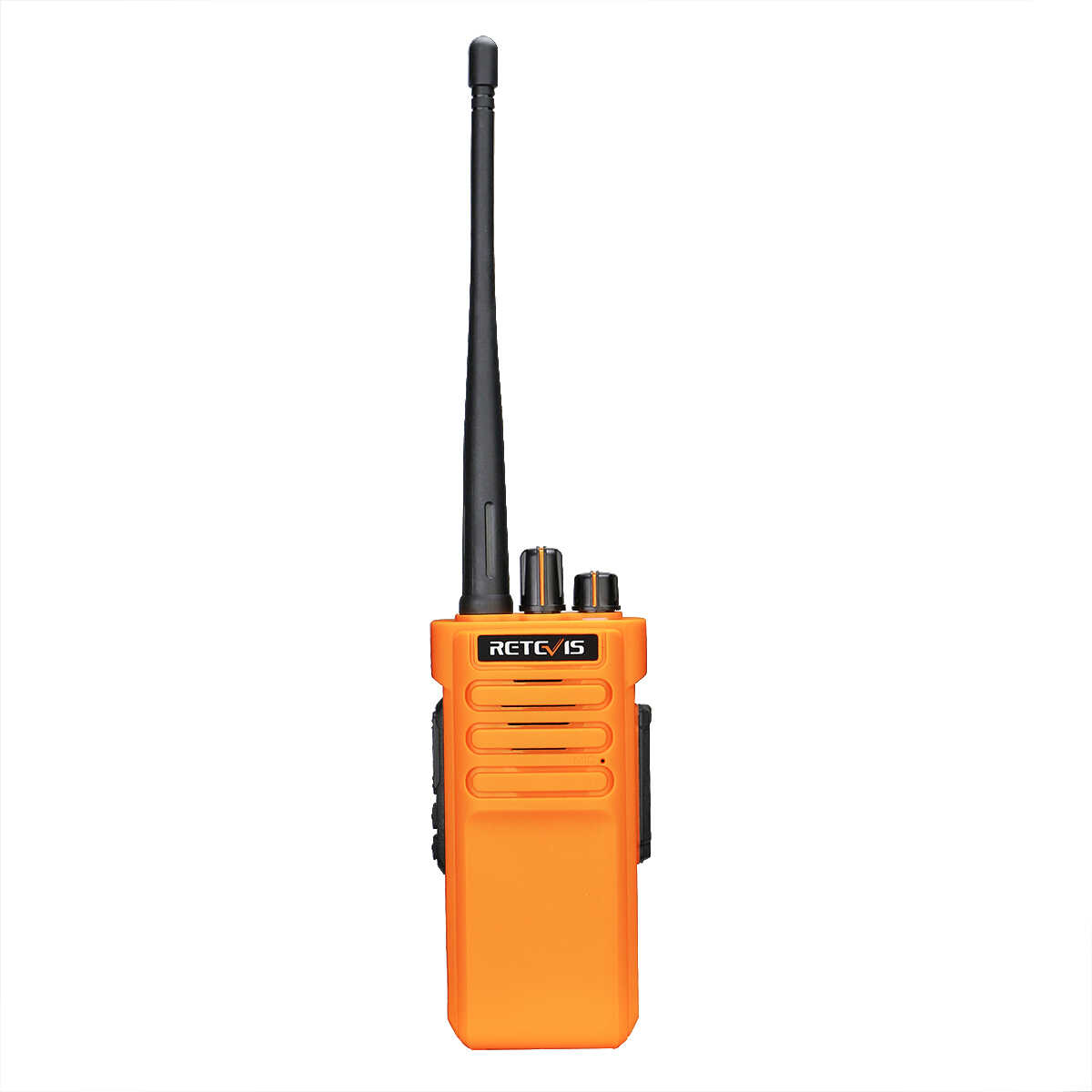
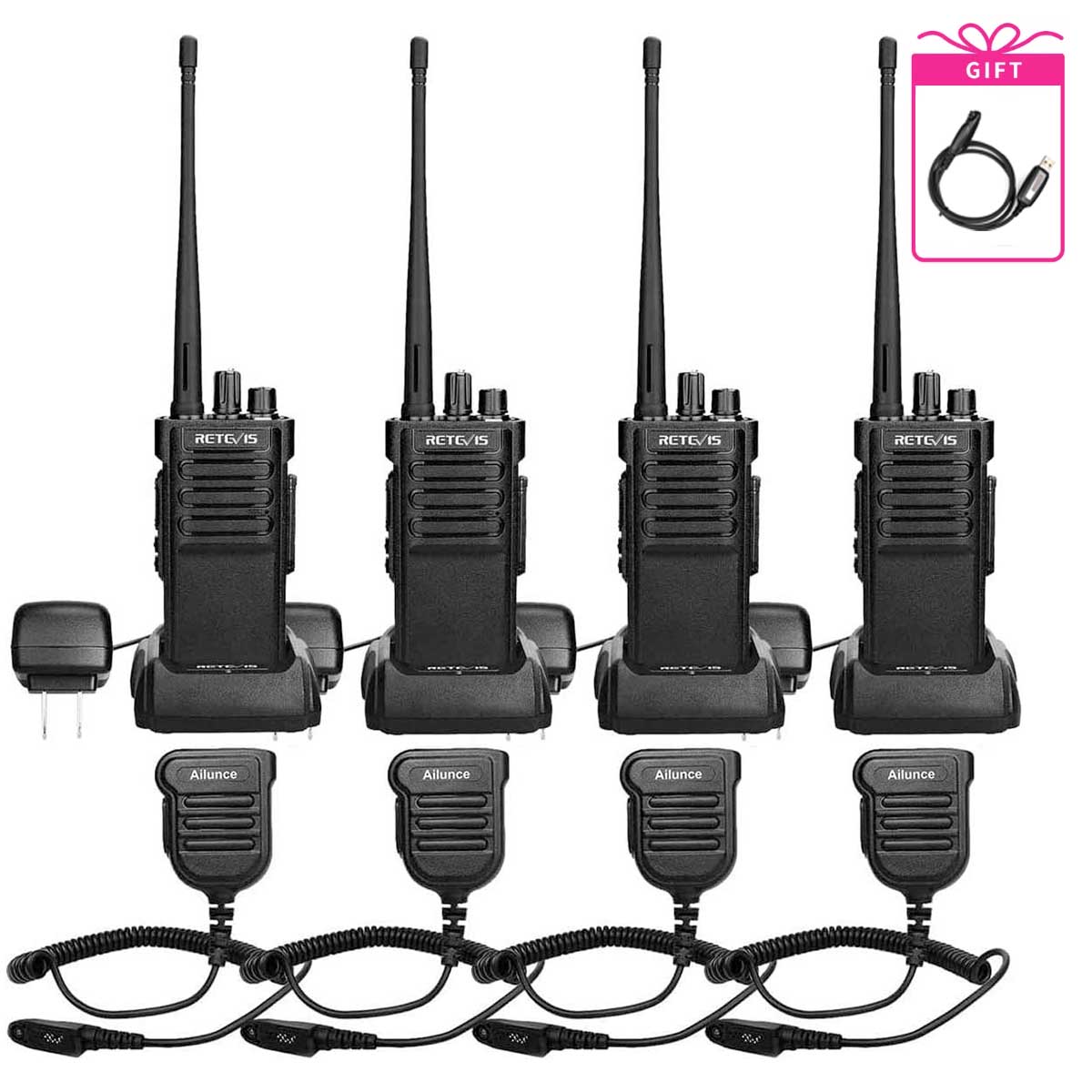
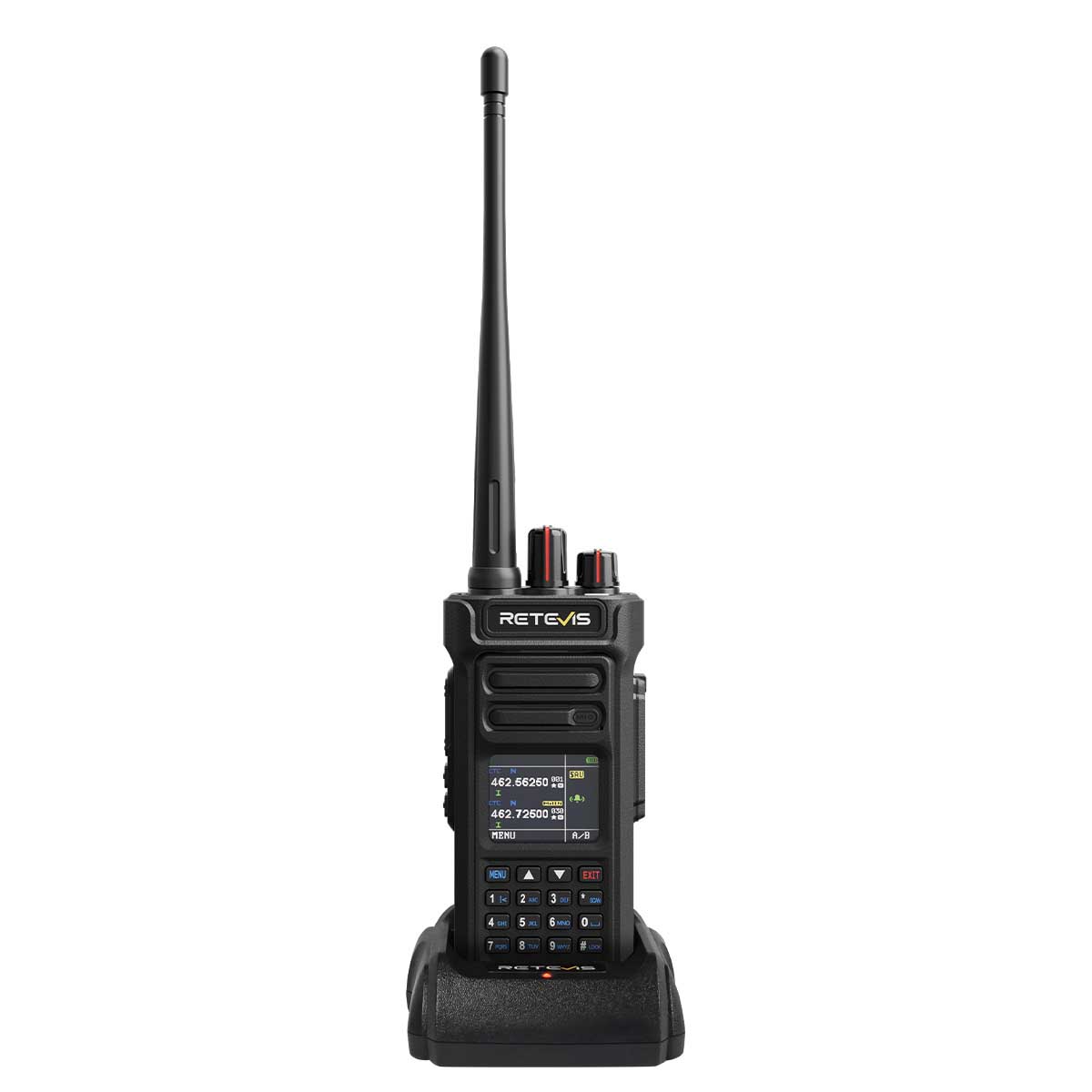
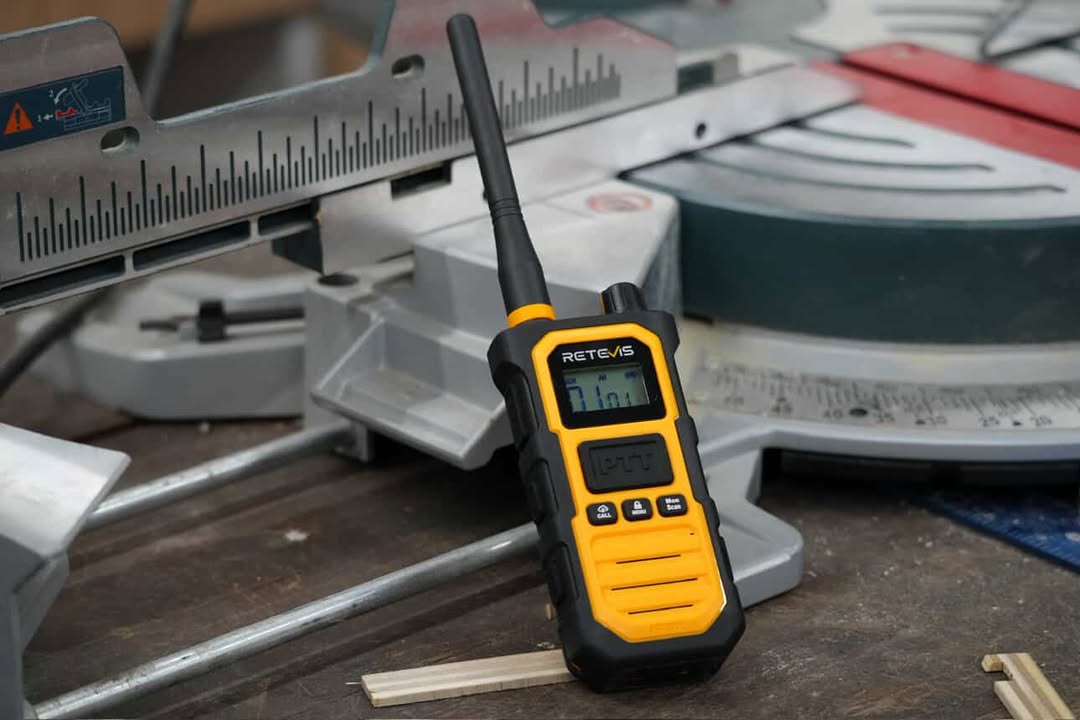
When it comes to choosing the right noise-reducing radio for your construction team, the Retevis RT29S stands out as a top choice, perfectly designed for harsh job site environments. It covers up to 700,000 square feet and spans 50 floors, delivering stable, seamless communication across large construction areas. Its core advantage lies in advanced AI noise-reduction technology. This intelligent system uses large-scale voice data to minimize background noise from tools and machinery, delivering clear, efficient communication that directly enhances on-site safety and productivity.
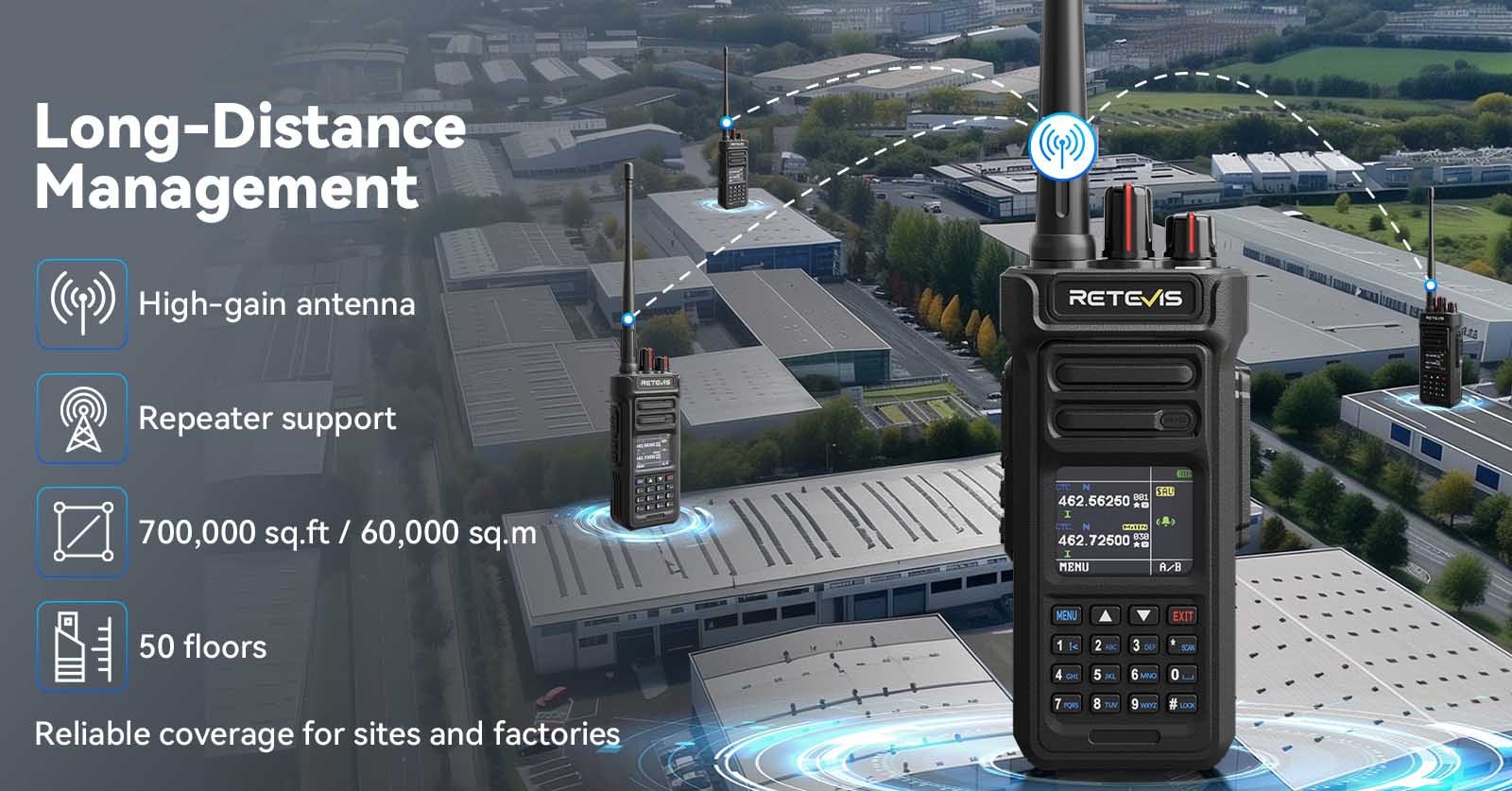
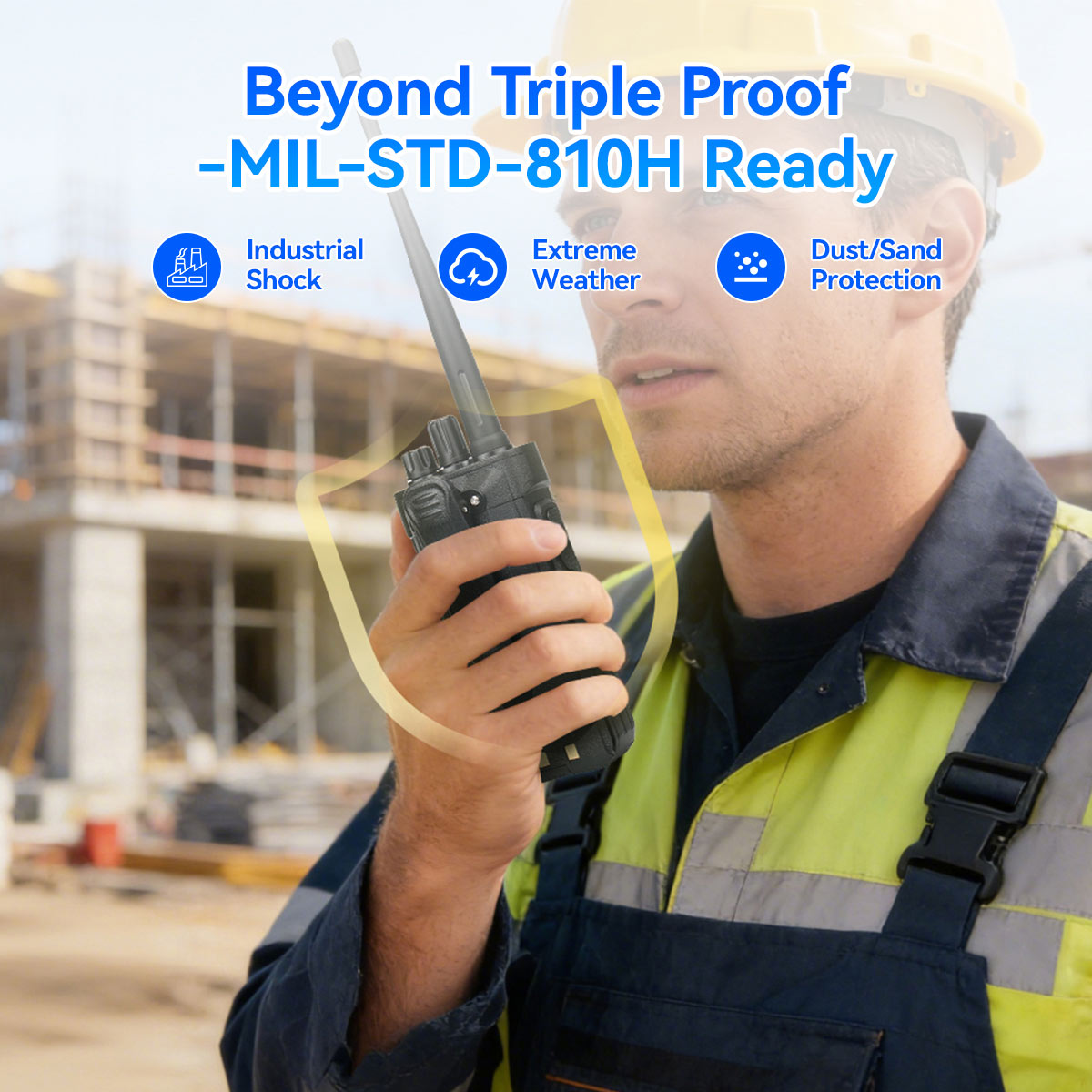
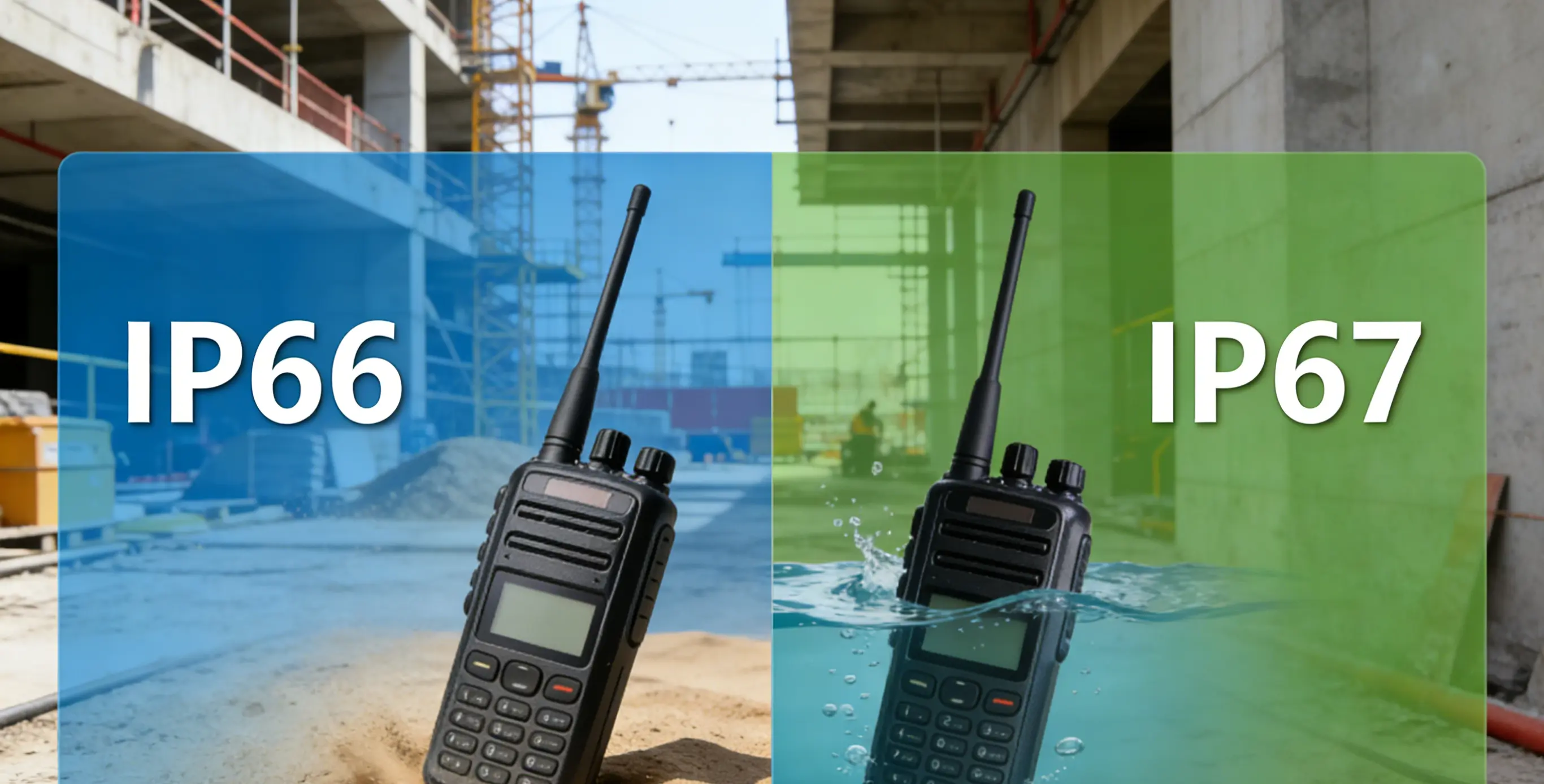
Additionally, with an IP67 waterproof and dustproof rating, it can withstand the harsh conditions of construction sites, including dust, rain, and accidental drops. Whether you are in the construction industry or manufacturing, the Retevis RT29s delivers unparalleled reliability, safety, and efficiency, making it the ideal noise-reducing radio to keep your team connected and aligned.
Clear Communication Leads to Safer, More Productive Sites. The Construction teams are more focused than ever on safety, efficiency, and cost-effectiveness—and noise-reducing radios deliver on all three. They solve the biggest communication challenge on construction sites (loud noise) with technology that’s built for the job.
Maximizing construction site communication with noise-reducing radios involves simple habits. Using noise-reduction radios on loud construction sites effectively requires proper placement, regular cleaning, and moderate volume settings.
The next time you walk onto a noisy site, take a moment to listen. If you hear workers shouting over each other and repeating every message twice, consider switching to noise-reducing radios. Clear communication is not a luxury. It is a safety tool, a productivity booster, and a simple way to make the workday less exhausting. Build smarter. Hear everything. Miss nothing.
Even the best noise-reducing radios can experience issues from time to time, but most problems are easy to fix.
1. If you’re not getting any sound, check the volume control first—make sure it’s turned up.
2. If the volume is fine, check the battery to see if it’s dead or low. If the radio has poor reception, move to a higher location (like a ladder or elevated platform) to improve signal strength.
3. If you’re using a headset, check the connection to make sure it’s plugged in securely.
4. If the radio is making static noise, try changing channels—there may be interference from other devices or nearby radios.
5. If all else fails, refer to the user manual or contact the manufacturer for support.
No data Yet






 Google
 Amazon