
Table of Contents
Powering Long-Distance Infrastructure Projects: Can UHF and VHF Still Work Together?
- Posted by:Retevis
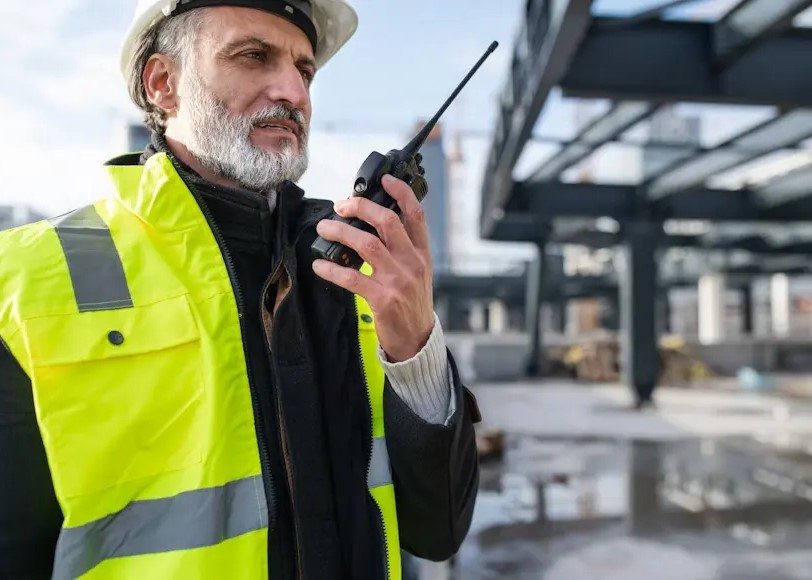
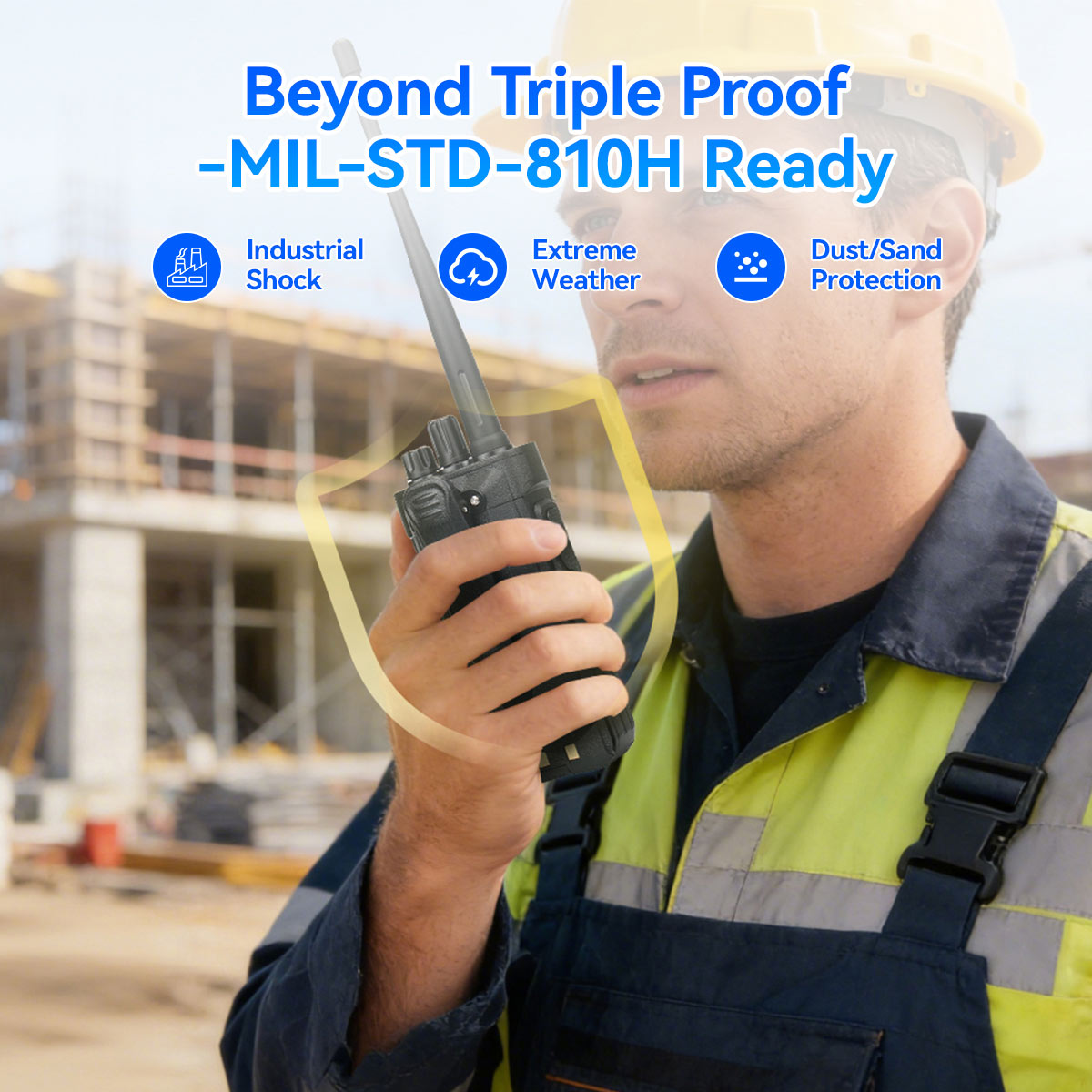
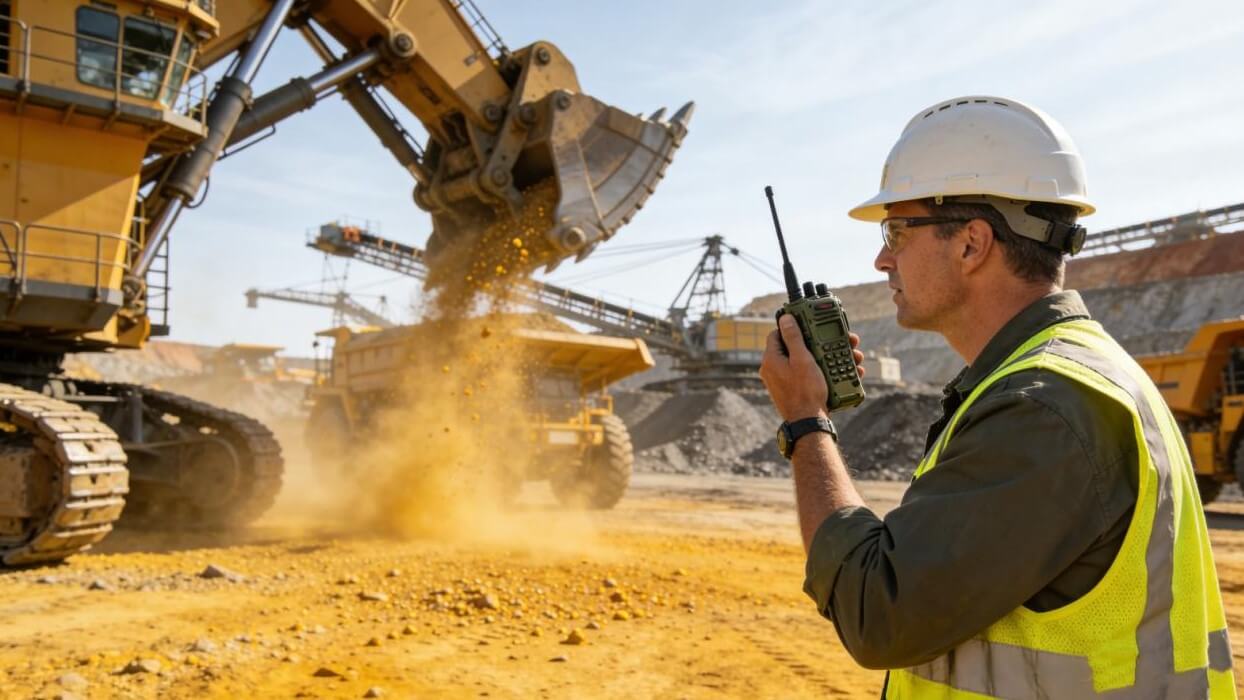
Managing large-scale infrastructure projects, whether rail networks, pipelines, or urban developments, reliable communication is essential for safe and efficient project construction. Project managers need to maintain contact with construction workers at remote locations, overcoming the limitations of reinforced concrete structures or rugged terrain. UHF and VHF radio bands are highly efficient communication technologies in industrial project construction.
Understanding how uhf and vhf work will help project managers optimize coverage and teamwork. This combination ensures reliable and continuous communication, whether in open areas, tunnels, or high-rise building sites. So, can VHF and UHF work together? In modern long-distance projects, do uhf and vhf still work? Can these uhf/vhf two radio types still complement each other? Let's explore these questions.
An Overview of VHF and UHF Radio
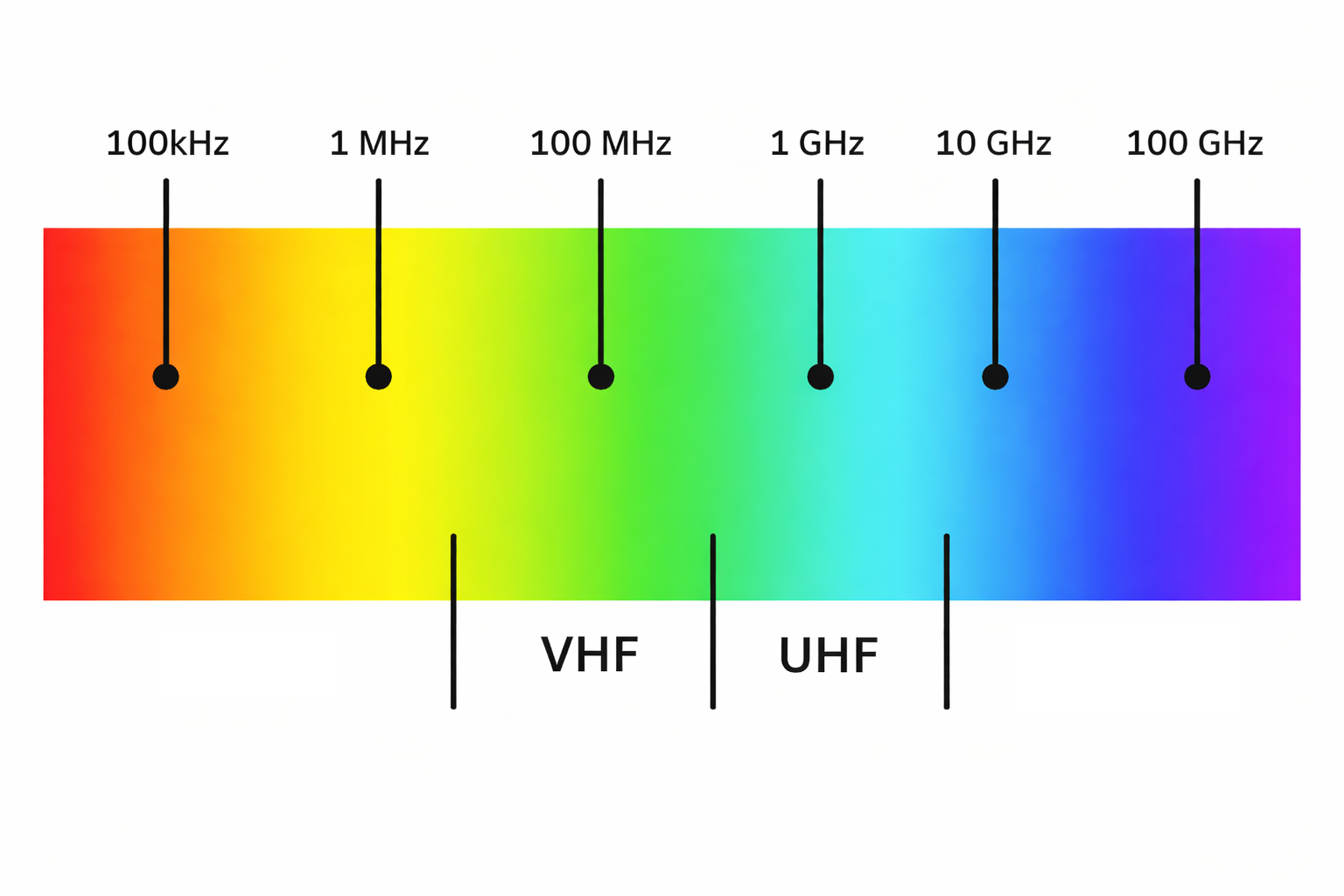
The Very High Frequency (VHF radio) and Ultra High Frequency (UHF radio) operate in different parts of the electromagnetic spectrum:
VHF (Very High Frequency): 30–300 MHz, commercial radios operate from 136–174 MHz, ideal for open spaces.
UHF (Ultra High Frequency): 300 MHz–3 GHz, the commercial radio band typically operates between 450–512 MHz, with a stronger ability to penetrate walls and buildings.
This frequency difference affects signal propagation. VHF waves travel farther in open terrain and vary slightly with the Earth's curvature, making them ideal for outdoor construction sites and large infrastructure projects. Ultra High Frequency (UHF) waves have shorter wavelengths, thus penetrating obstacles such as reinforced concrete or dense urban buildings with less loss.
VHF Radio: Superior Long-Range Communication in Open Terrain
VHF radio is the dominant force in long-range line-of-sight communication. Imagine building a railroad in a rural area: managers need to maintain constant contact with multiple construction teams within a radius of miles. VHF radio provides the necessary long-range coverage with minimal signal loss.
For example, a 20-mile-long pipeline project relies on VHF to maintain communication between inspection and construction teams, even across hills and fields.
While the VHF band performs well in environments with few obstacles, it becomes less effective indoors or when blocked by heavy objects. This is where UHF radio comes in handy.
UHF Radio: Penetrating Reinforced Concrete and High-Density Areas
UHF radio excels when communication needs to penetrate concrete, steel, or multi-story buildings. Its shorter wavelength allows for clear communication within densely packed buildings where VHF signals cannot reach.
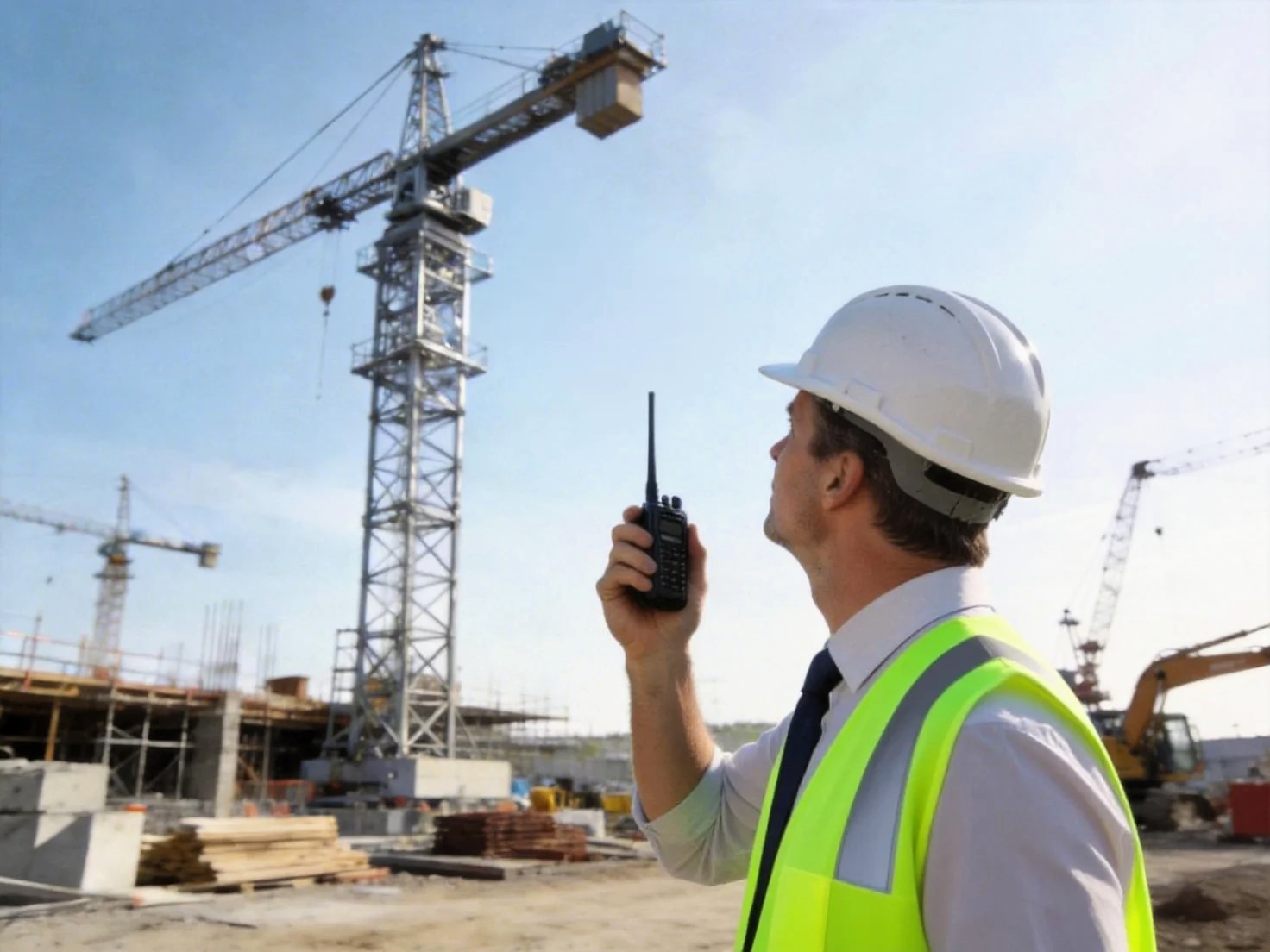
For example, in high-rise building projects, UHF radio ensures clear communication for crane operators, floor managers, and safety supervisors, even when signals are blocked by walls, floors, and machinery.
In tunnel or urban infrastructure projects, UHF radio offers a level of reliability that VHF radio cannot provide.
Dual-band radio: Can UHF and VHF radios work together?
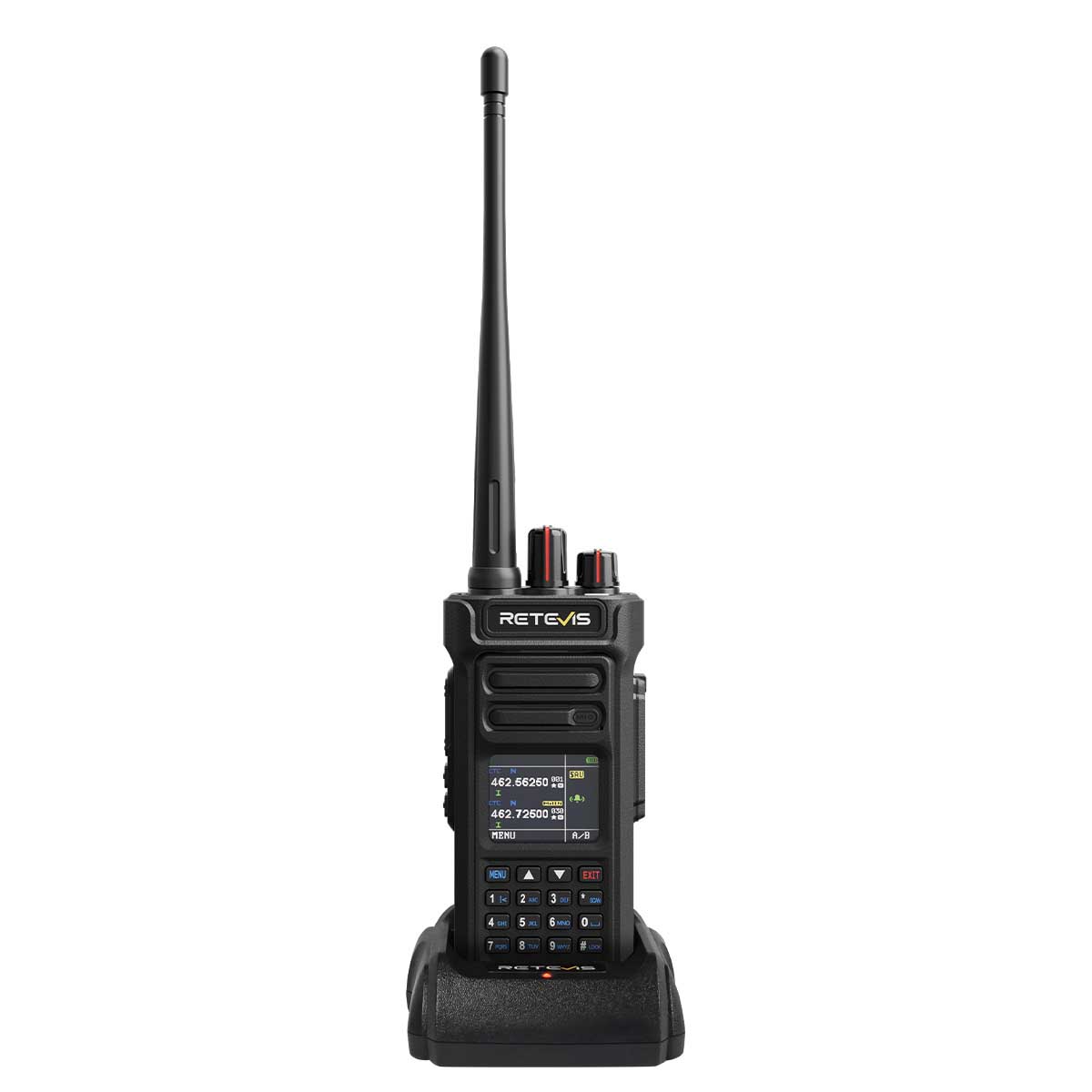
Dual-band radios are compatible with both UHF and VHF bands. These devices combine UHF and VHF frequencies, enabling team communications to flexibly adapt to various environments using a single tool.
Dual-band radios can use the UHF band in enclosed areas and the VHF band in open terrain, switching before use. Dual-band radios guarantee maximum coverage with minimal communication interruptions and fewer dropped connections. UHF and VHF frequencies have proven to work effectively together, enabling normal communication in complex construction environments.
Practical Considerations for Comms in Remote Construction Projects
- While dual-band radio offers flexibility, several factors can affect its performance:
- Environmental Conditions: Buildings, terrain, and vegetation can affect signal coverage.
- Interference: Proper channel planning can prevent frequency overlap interference.
- Licenses: When using UHF or VHF radio, ensure compliance with local regulations.
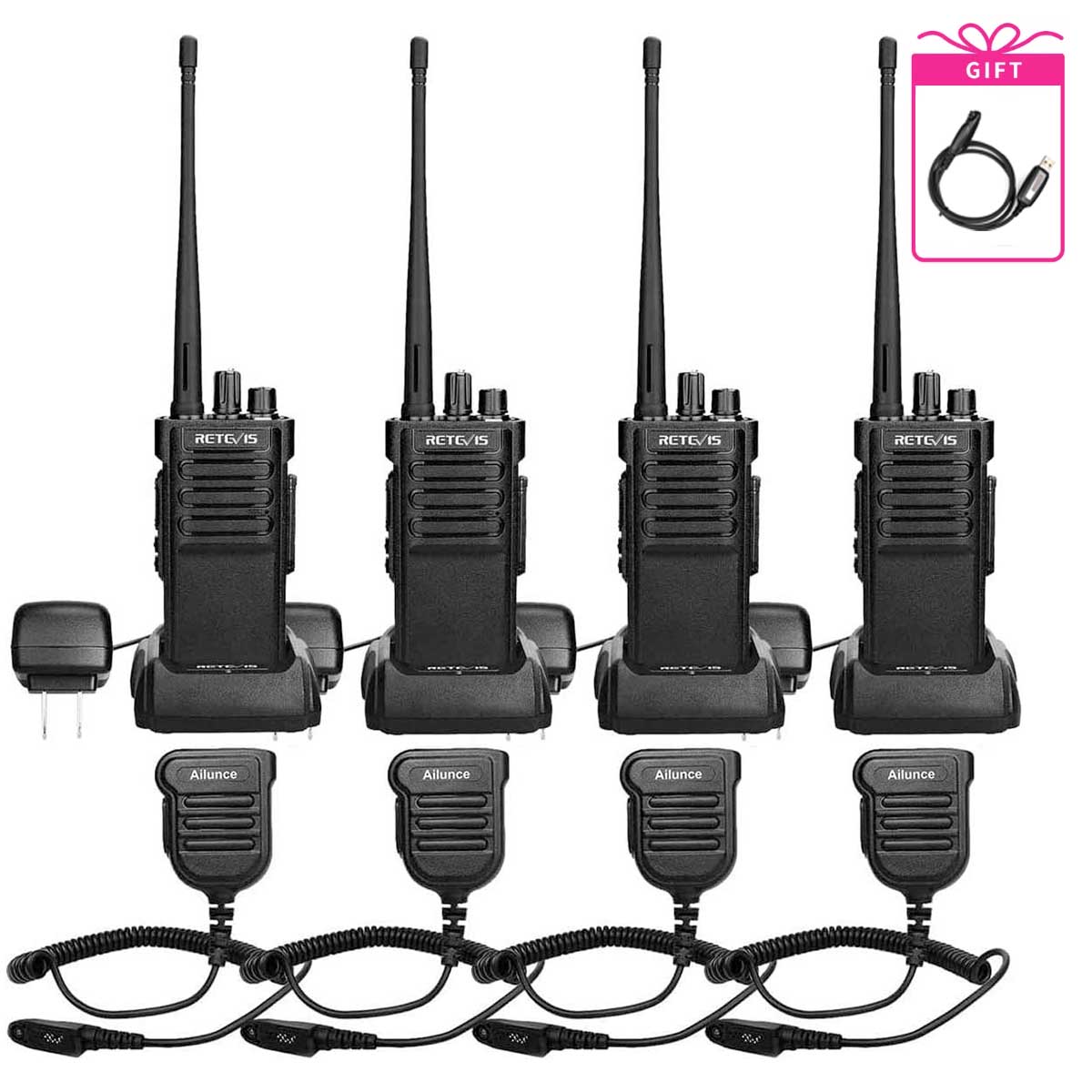
- Distance Range: Select the most practical high-power radio based on the actual communication range.
Maximize Efficiency with Dual-Band Communication
In long-distance infrastructure projects, both VHF and UHF radios play a crucial role. VHF radios offer wide coverage in open terrain, while UHF radios effectively penetrate concrete, steel, and dense structures. Using dual-band radios combines the advantages of both bands, creating a seamless communication channel for managers, engineers, and on-site construction personnel.
For contractors and procurement managers, this means safer operations, fewer errors, and smoother coordination. Understanding whether Very High Frequency (VHF) and Ultra High Frequency (UHF) can work together is not just a matter of technical curiosity, but a practical strategy for success. Adopting a dual-frequency solution ensures that your project communications are as robust and reliable as the infrastructure you build.



 Google
 Amazon
Comments
No data Yet