

Table of Contents
Heavy Dust & Pouring Rain: Rugged Radios for Concrete & Masonry Crews
- Posted by:Retevis
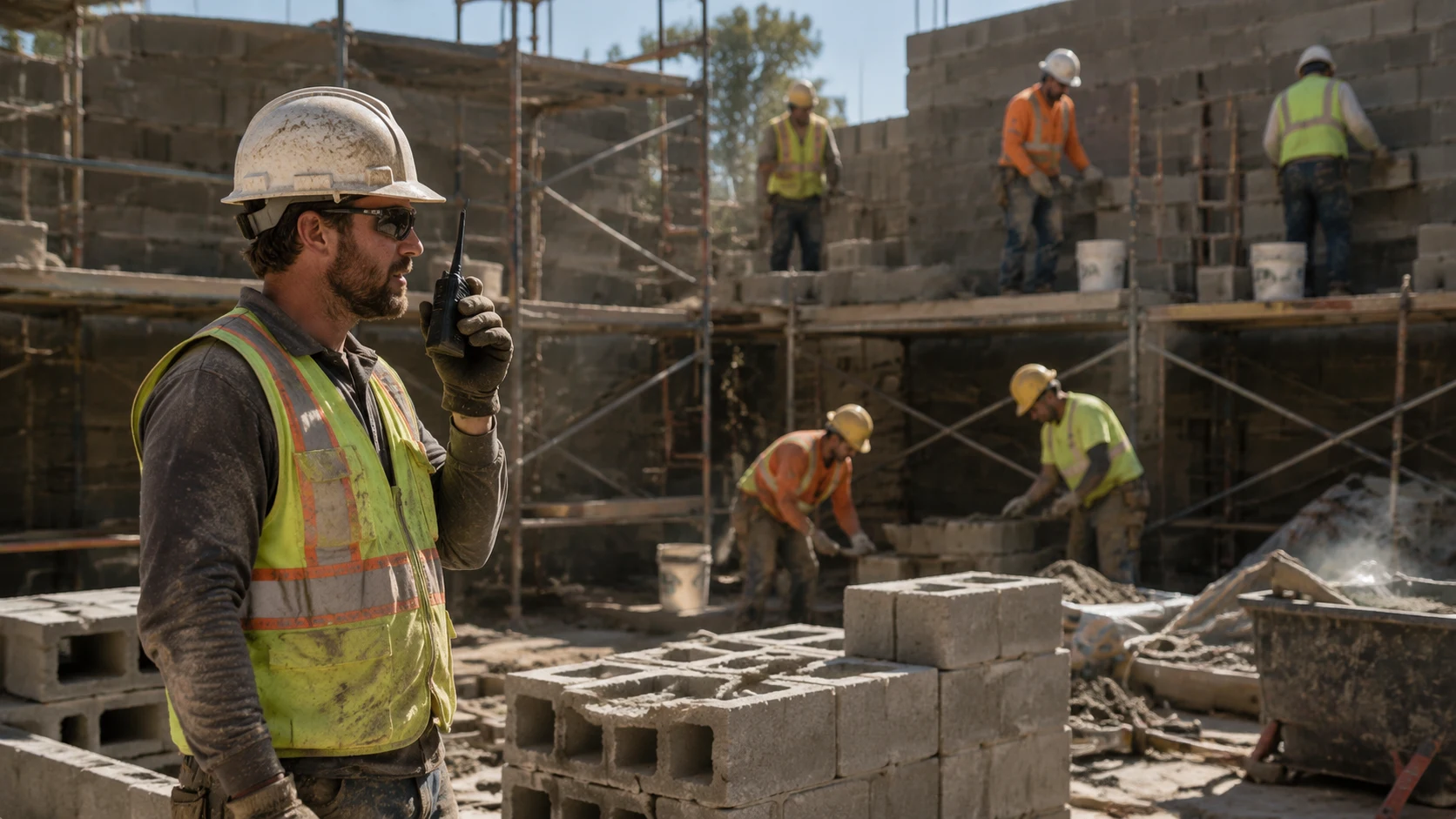
Concrete pours do not stop because the weather turns bad. Masonry crews do not get cleaner, quieter, or easier to coordinate as the day goes on. On real jobsites, workers deal with cement dust, wet surfaces, engine noise, gloves, mud, scaffold access, and constant movement. In that environment, communication has to be fast, simple, and dependable.
That is why a rugged walkie talkie for concrete team coordination or a reliable radio for masonry workers is still one of the most practical tools on site. While smartphones are useful for office calls and documentation, they are not always built for dusty, wet, high-noise work. A properly designed jobsite radio can help crews respond faster, reduce delays, and improve safety when timing matters.
In this guide, we will look at why communication is different on concrete and masonry projects, what features actually matter in the field, and how to choose a dustproof construction radio that can hold up to rough conditions.
Why Communication Is Different on Concrete and Masonry Jobsites
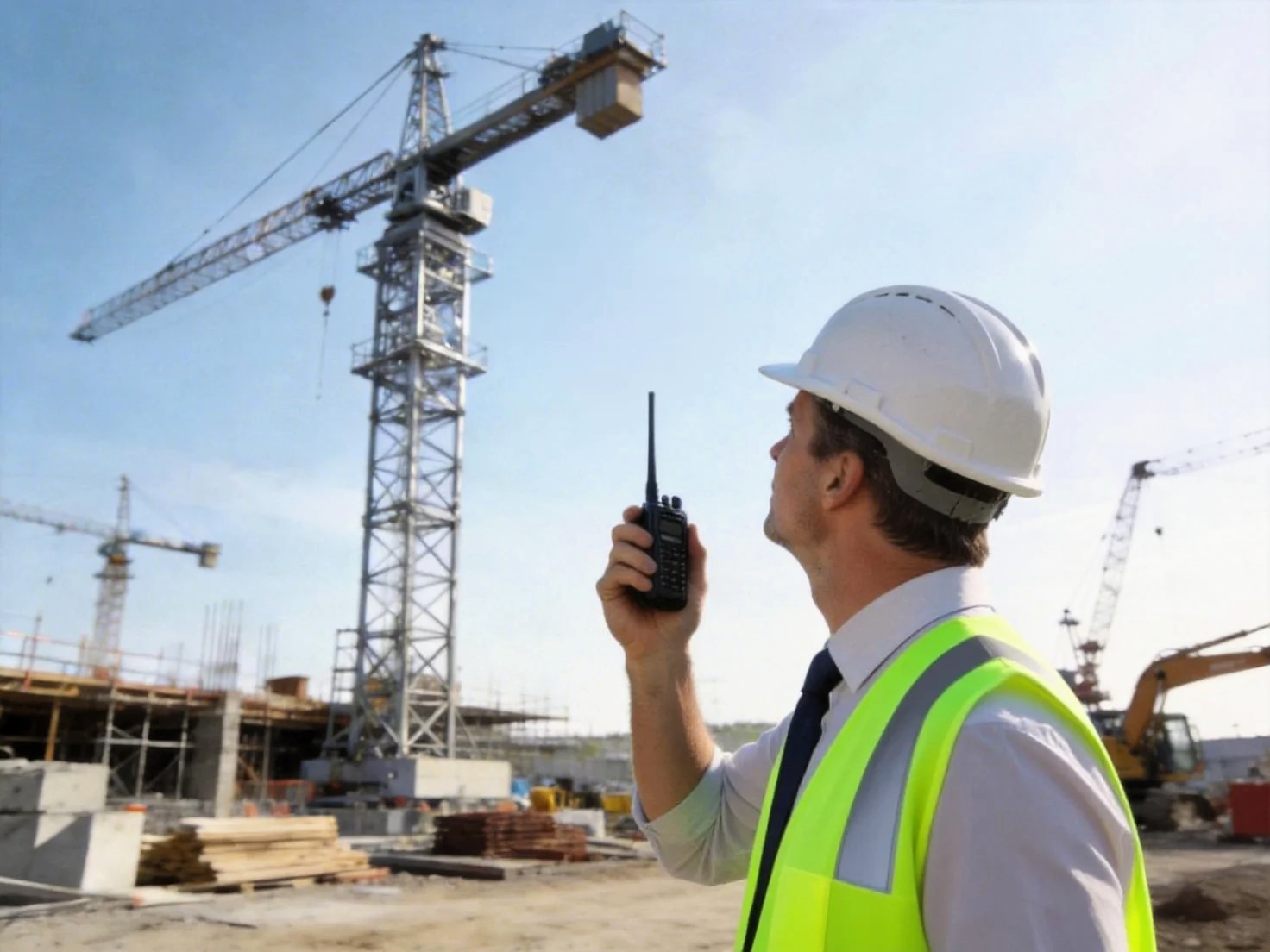
Concrete and masonry work is highly coordinated, but rarely done in one small, quiet space. A single pour may involve a pump operator, laborers, finishers, truck drivers, and a supervisor spread across different parts of the site. Masonry crews often work between ground level, scaffold platforms, material staging zones, and delivery access points.
That creates a simple challenge: instructions need to move quickly from one person to several others, often at the same time.
A cell phone can work for one-to-one communication, but it is usually a poor fit for active jobsite coordination. Workers may have wet or dirty gloves. Screens can be hard to use in rain or bright daylight. Calling multiple people takes more time than a single push-to-talk message. On top of that, consumer devices are not always ready for repeated drops, airborne dust, or splash exposure.
A walkie talkie for masonry workers or a walkie talkie for concrete team use is different because it is designed for immediate, group-based communication. One short transmission can alert the pump crew, call for more materials, warn about a safety issue, or coordinate movement around a busy slab or scaffold area. That speed matters when equipment is running and crews are waiting.
The Biggest Threats to Radios on Concrete and Masonry Sites
Not every radio that works on a general site will survive in concrete and masonry environments. These trades expose equipment to a specific mix of hazards that can quickly damage weak electronics.
1. Fine Dust and Abrasive Particles
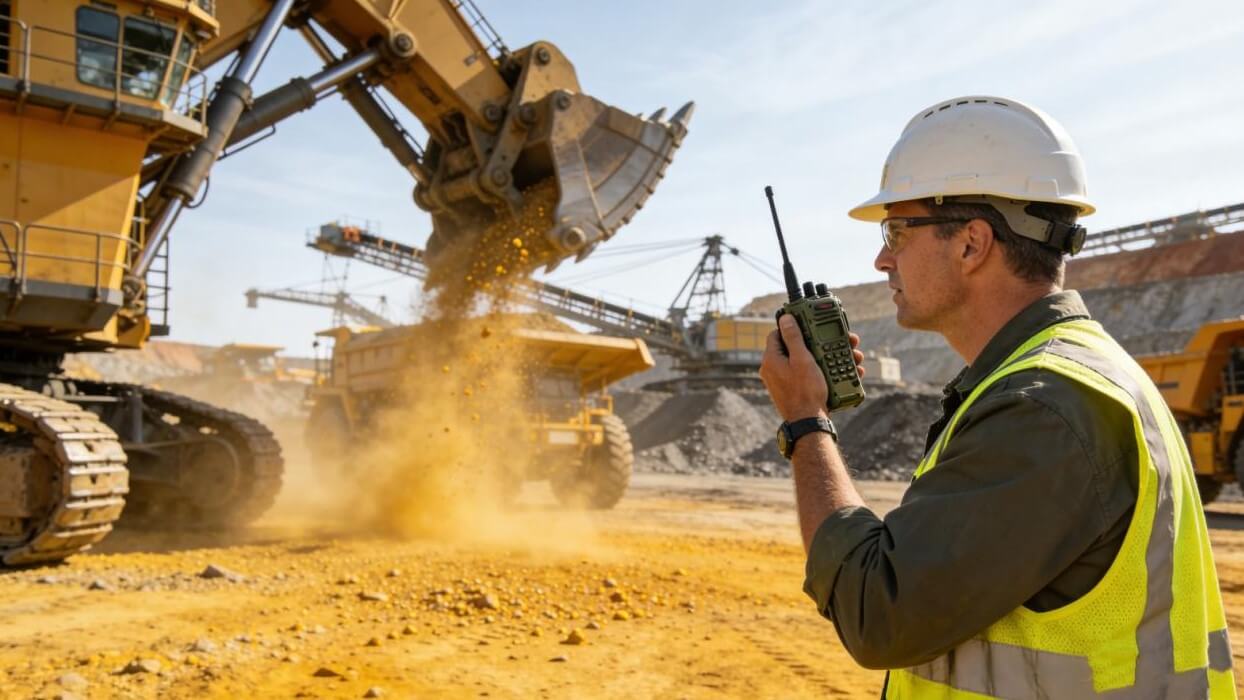
Concrete and masonry jobsites generate far more than ordinary dirt. Cement dust, silica-containing particles, mortar residue, cutting debris, and grinder dust can enter speaker grilles, buttons, charging contacts, and accessory ports. Over time, that buildup can reduce audio clarity, interfere with controls, and shorten device life.
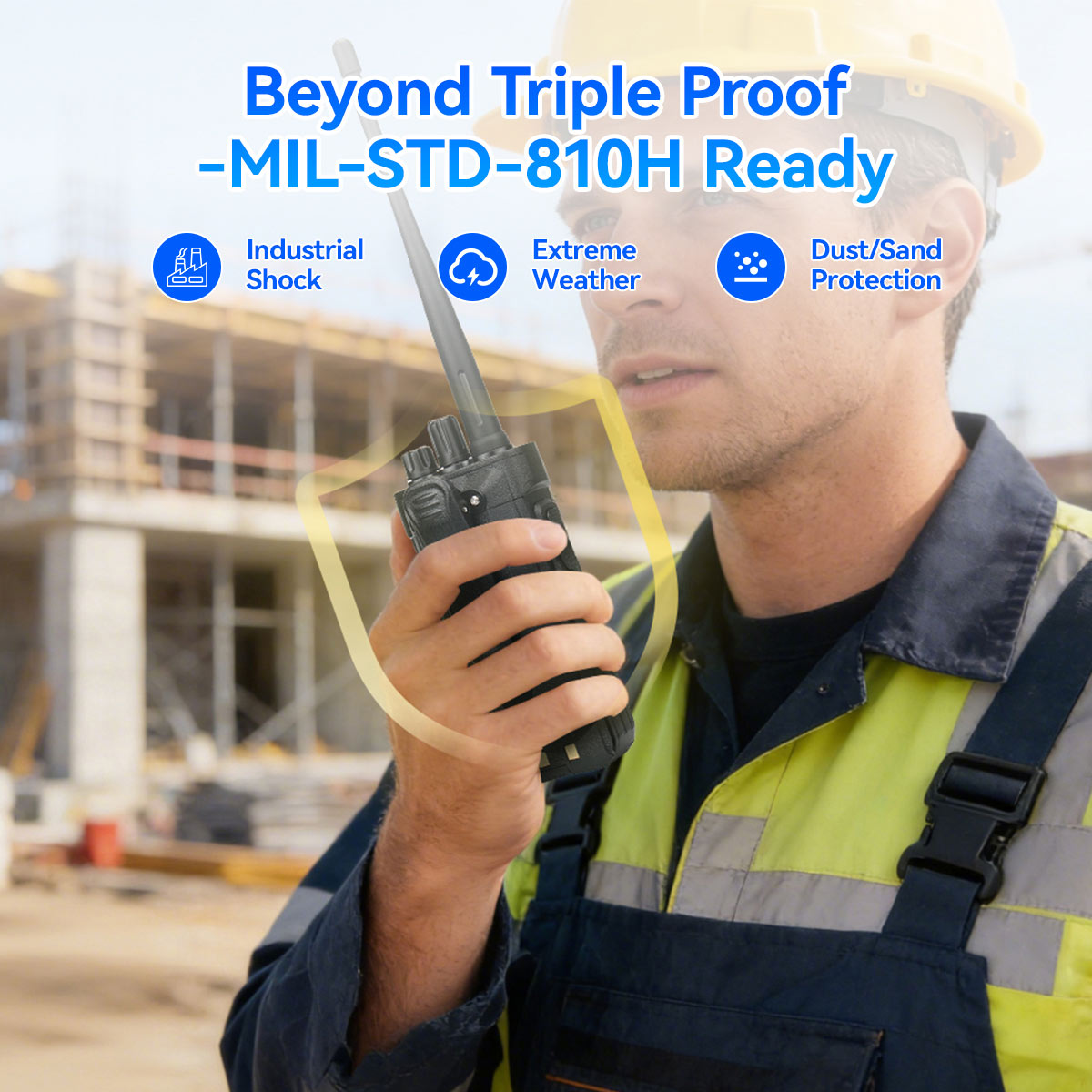
This is why a true dustproof job site radio matters. A dustproof job site two way radio should be built to resist fine particulate intrusion, especially if crews work around mixing, cutting, drilling, grinding, or cleanup operations.
2. Rain, Splash, and Wet Handling
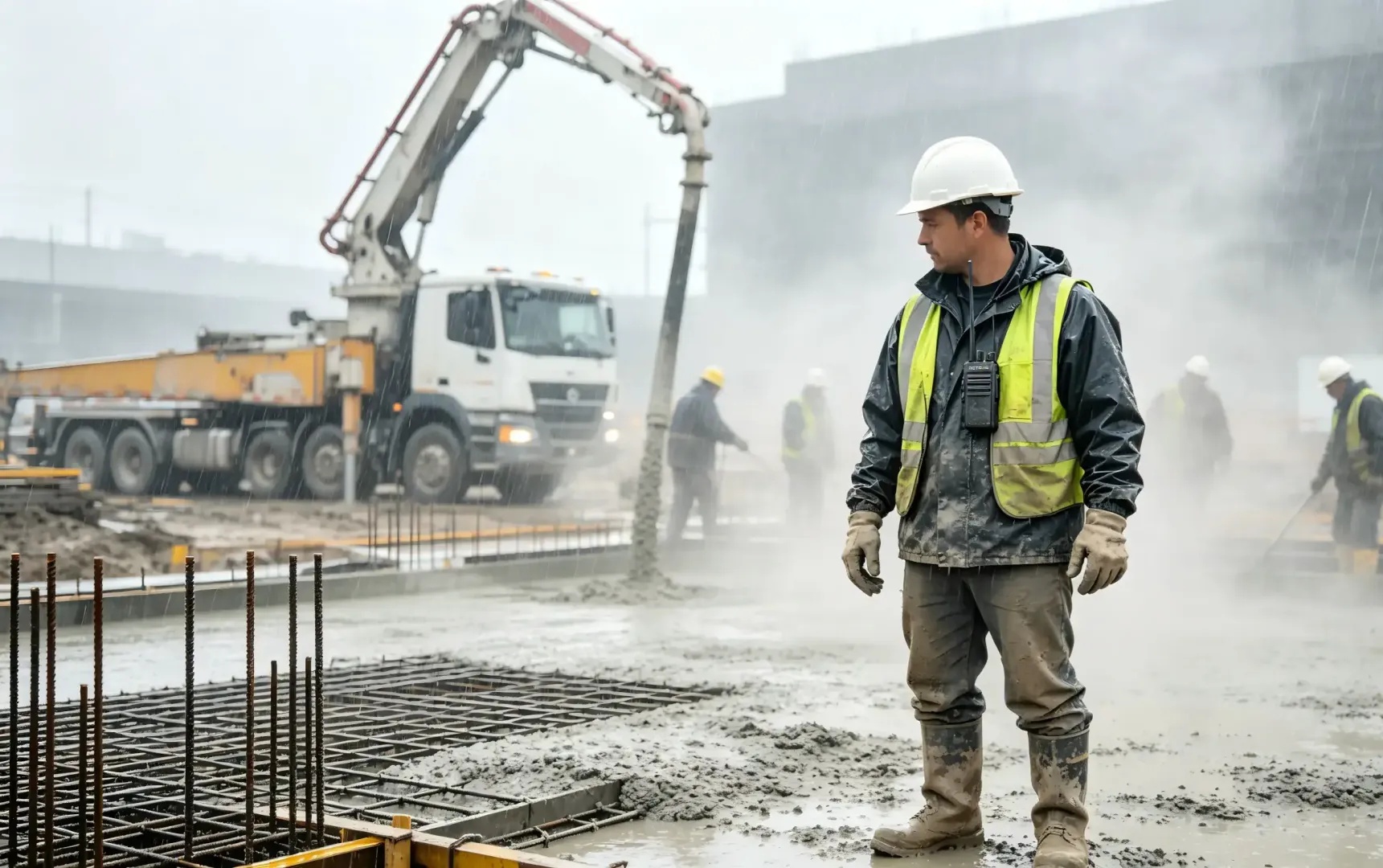
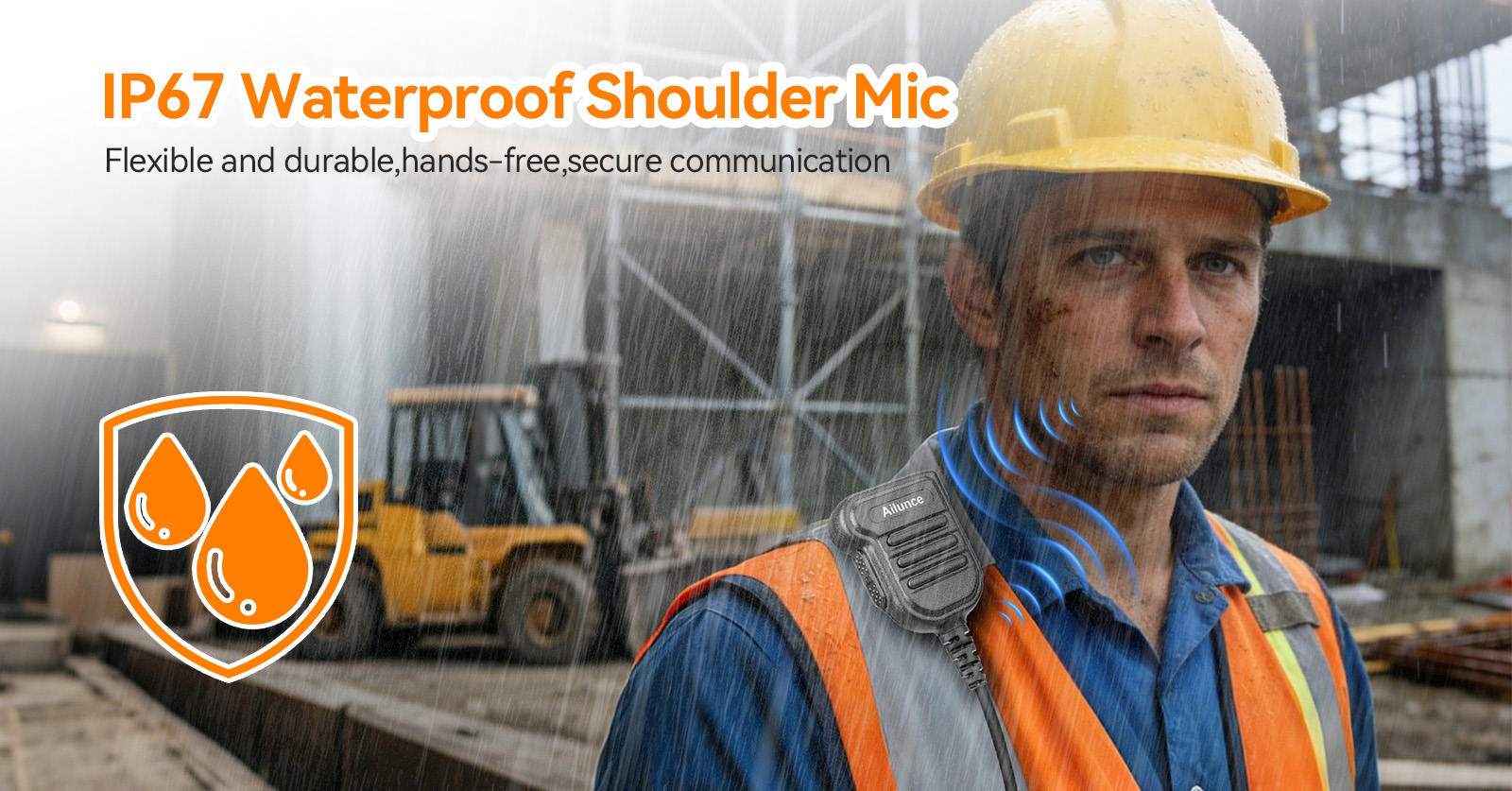
Outdoor pours continue through changing conditions. Masonry work often happens in rain, mist, muddy areas, or around wet mortar and wash water. Even if a radio is never submerged, it still needs to function when clipped to wet rain gear or handled with damp gloves.
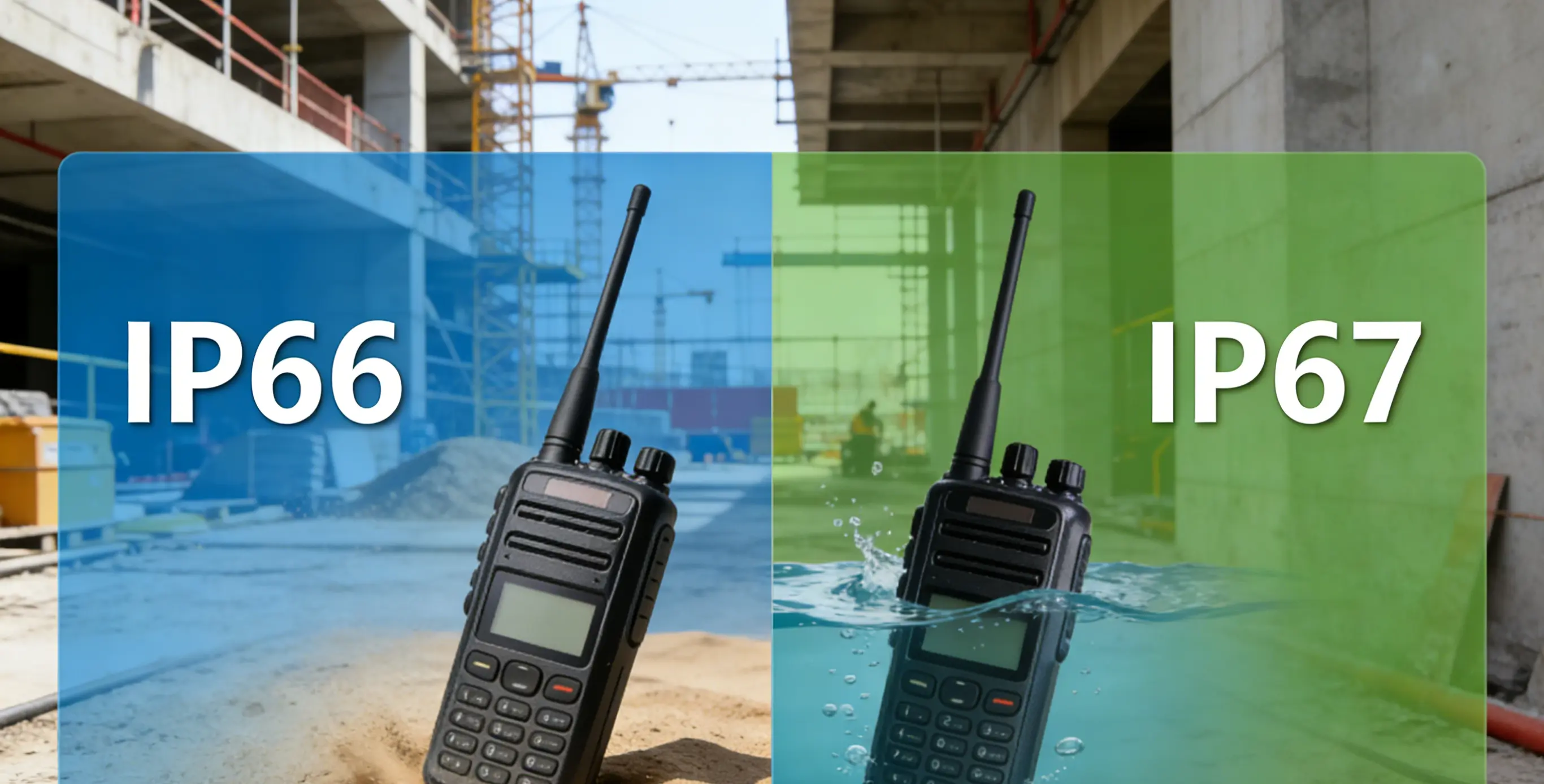
A dustproof and waterproof handheld radio offers a much better margin of safety than a basic consumer device. The difference is not marketing language alone. In the field, water resistance can mean the difference between a full shift of communication and a dead unit halfway through the day.
3. Drops, Impacts, and Vibration
Radios are knocked off truck steps, dropped from waist height, bumped against scaffolding, and exposed to vibration during transport. On a concrete or masonry crew, equipment is rarely handled gently for long. Housings, clips, batteries, and knobs all need to stay secure under repeated physical stress.
4. Constant Jobsite Noise
Concrete pumps, mixers, saws, telehandlers, compressors, and general site activity make speech harder to hear. A radio with weak audio may still “work” technically, but if workers cannot clearly understand instructions the first time, communication breaks down. In these trades, clear sound is not a convenience feature. It is essential.
What to Look for in a Rugged Jobsite Radio
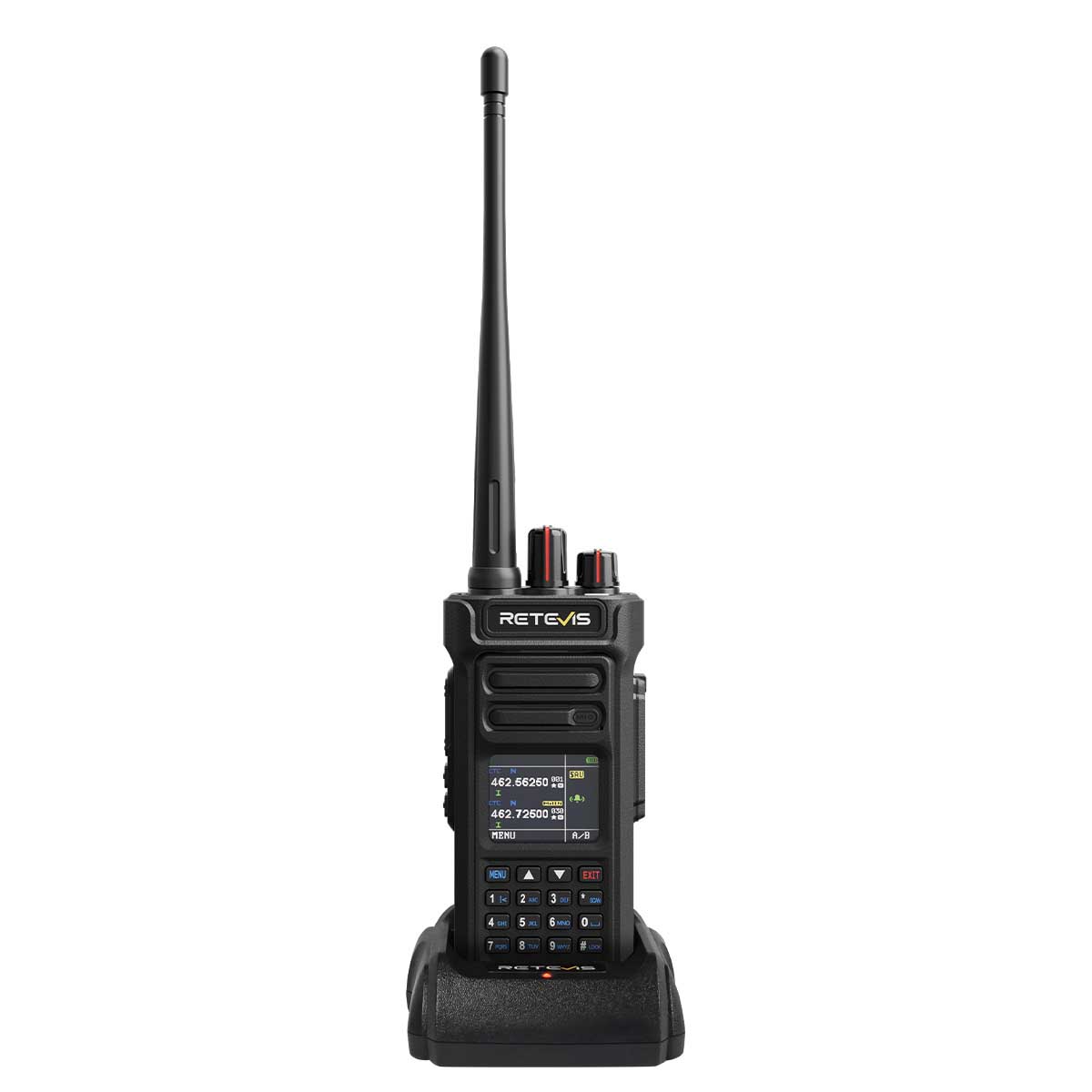
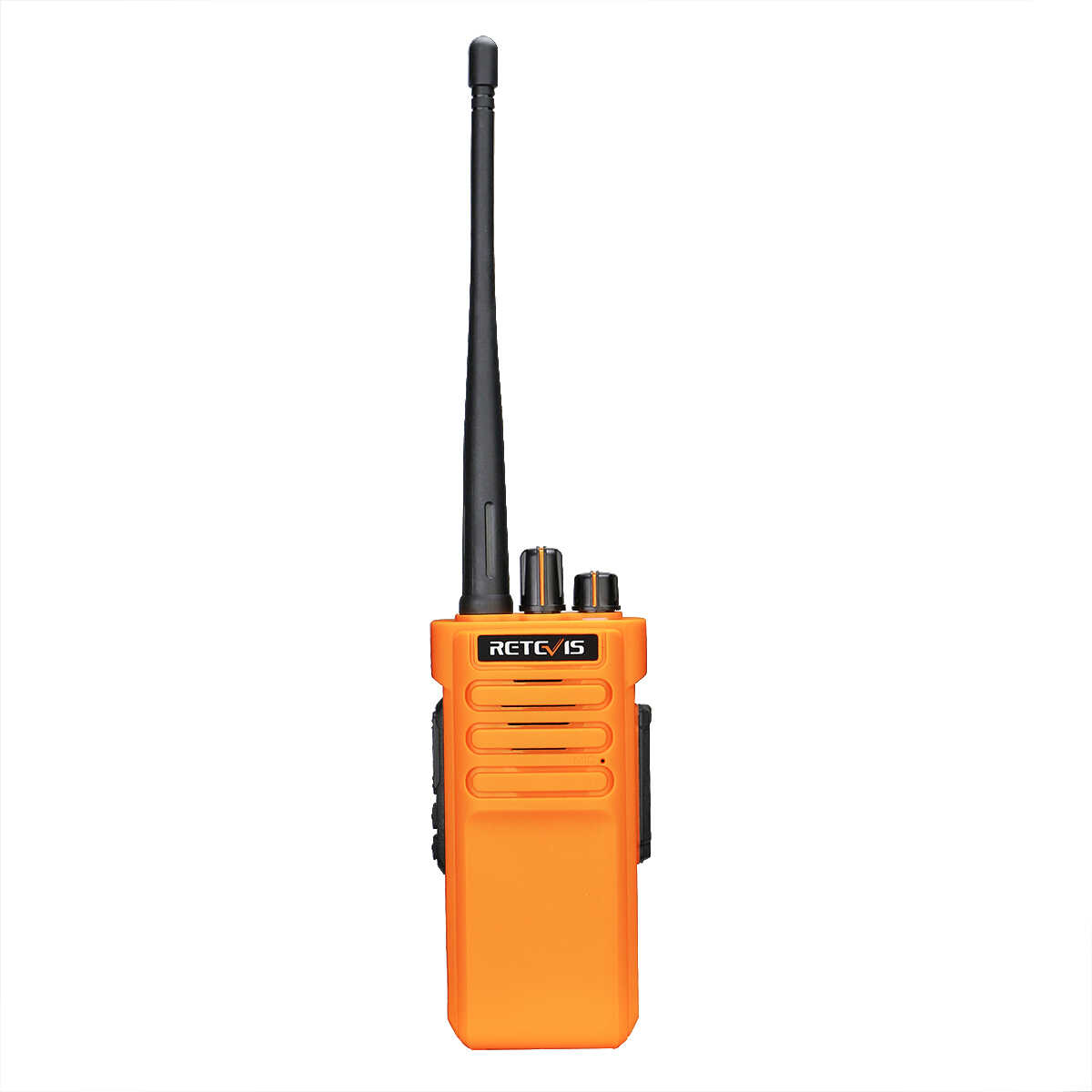
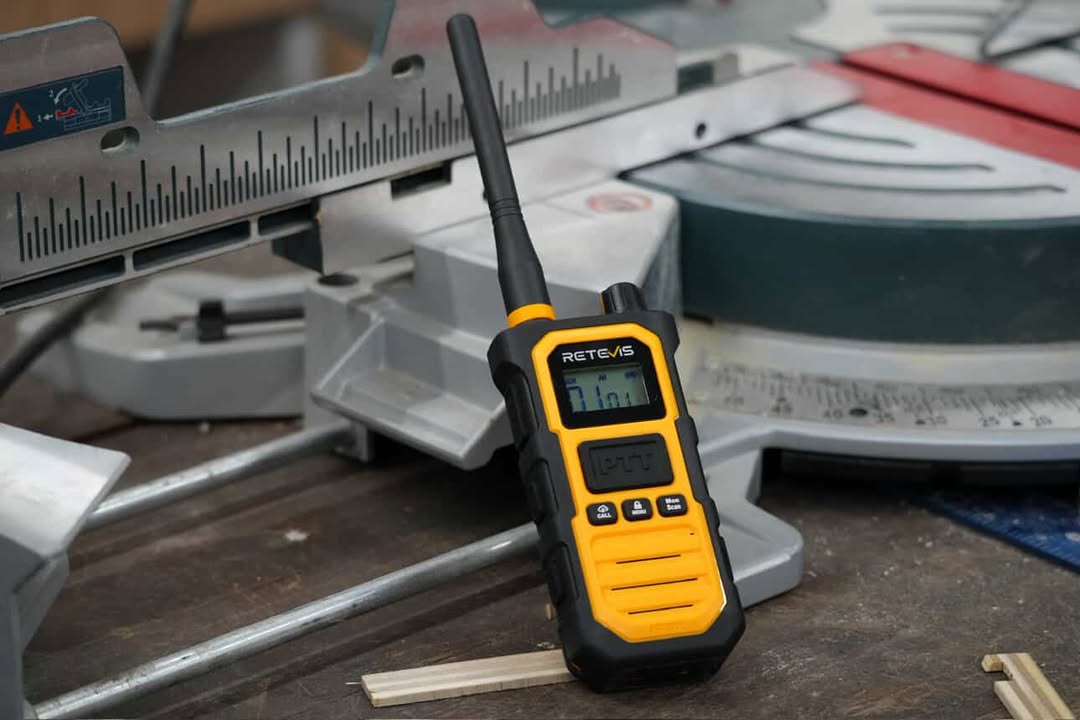
If you are choosing a radio for masonry workers or looking for a dustproof job site walkie talkie for a concrete crew, focus on the features that make a real difference in the field.
Dust Protection
Start with dust sealing. Fine particles are one of the biggest long-term threats to radio reliability. Look for models designed for heavy-duty construction use, with well-protected ports and a housing that can handle exposure to cement and masonry dust.
A dustproof construction radio is especially valuable on projects involving block cutting, dry mixing, drilling anchors, grinding joints, or cleanup around concrete debris.
Water Resistance or Waterproofing
Rain can arrive without warning, and some jobs simply stay wet. A radio should be able to handle splashes, wet PPE, and rough weather without becoming unreliable. For many crews, a dustproof and waterproof handheld radio is the safest choice because it protects against both of the most common environmental risks at once.
Loud and Clear Audio
Good range means very little if audio is hard to understand. A strong speaker, clean voice transmission, and good clarity in noisy environments are critical. For a two way radio for masonry workers, this is especially important when teams are spread across scaffold levels or separated by equipment noise.
Glove-Friendly Controls
Construction workers should not have to fight with tiny buttons. Large push-to-talk controls, easy channel selection, and a shape that is easy to grip with gloves can make daily radio use much smoother. A device that is hard to operate usually ends up being used less, even if it has solid technical specs.
Battery Life for Full Shifts
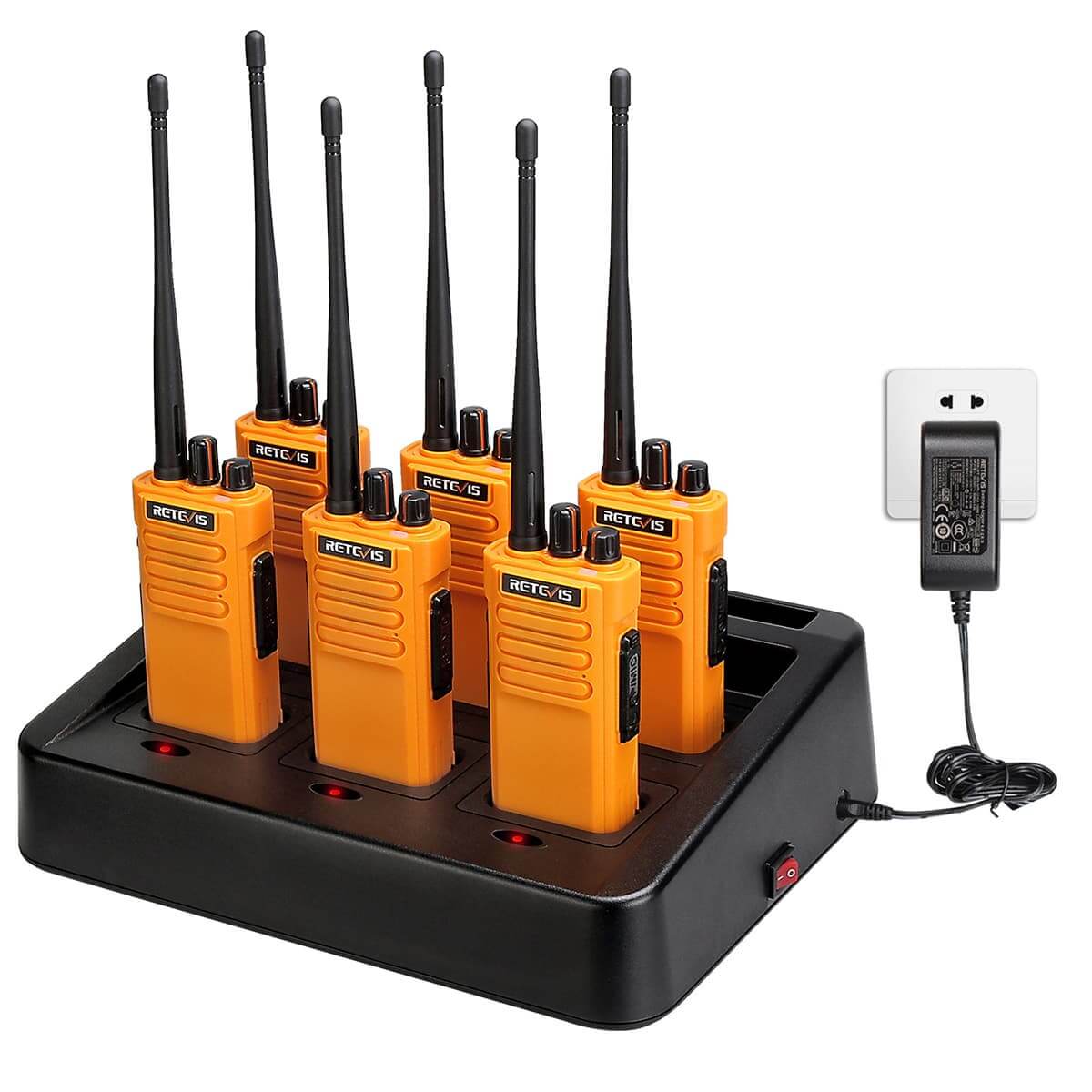
Concrete pours and masonry work can run long, and communication cannot stop because a battery ran out too early. A practical jobsite radio should support a full shift with confidence. For larger operations, replaceable batteries or charging spares can add useful flexibility.
Durable Carry Options
A rugged radio also needs a secure clip or carry setup. Workers bend, climb, kneel, and move materials all day. Weak belt clips and loose battery attachments are common failure points. Speaker mics and shoulder-mounted options may also help crews keep communication accessible without reaching under layers of gear.
Real-World Coverage
Range claims should always be treated carefully. Open outdoor space, reinforced concrete, steel structures, equipment, and site layout all affect performance. A radio that works well on one job may perform differently inside partially enclosed structures or across multiple levels. Choosing a radio based on realistic jobsite conditions is smarter than buying based on the highest advertised number.
How Radios Help Concrete Teams Work Better
A dependable walkie talkie for concrete team communication improves both coordination and timing. During an active pour, delays can affect quality, labor efficiency, and safety. Radios help crews stay aligned in real time.
Common concrete use cases include:
- coordinating the pump operator and placement crew
- calling for adjustments in pour speed or direction
- updating finishers on slab progress
- requesting tools, labor, or cleanup support
- alerting the team to changing weather or access issues
- managing truck arrival timing and site movement
Because push-to-talk communication is immediate, a single message can reach the right people without interrupting active work with multiple calls or repeated explanations.
Why Masonry Crews Benefit from Rugged Radios
For block, brick, and other masonry operations, communication is often spread vertically as well as horizontally. Workers on scaffolding need to stay connected with people on the ground. Material flow, mortar supply, tool movement, and safety updates all depend on timely coordination.
A reliable radio for masonry workers supports faster and clearer communication in situations such as:
- requesting more mortar or block to specific work areas
- coordinating scaffold-level support
- managing deliveries and material staging
- reporting access issues or safety concerns
- keeping foremen connected with dispersed crew members
In many cases, a two way radio for masonry workers is more efficient than phone-based communication because it allows quick, short instructions without forcing the user to stop work for long. For crews that move constantly between levels or zones, a walkie talkie for masonry workers can reduce unnecessary walking and waiting.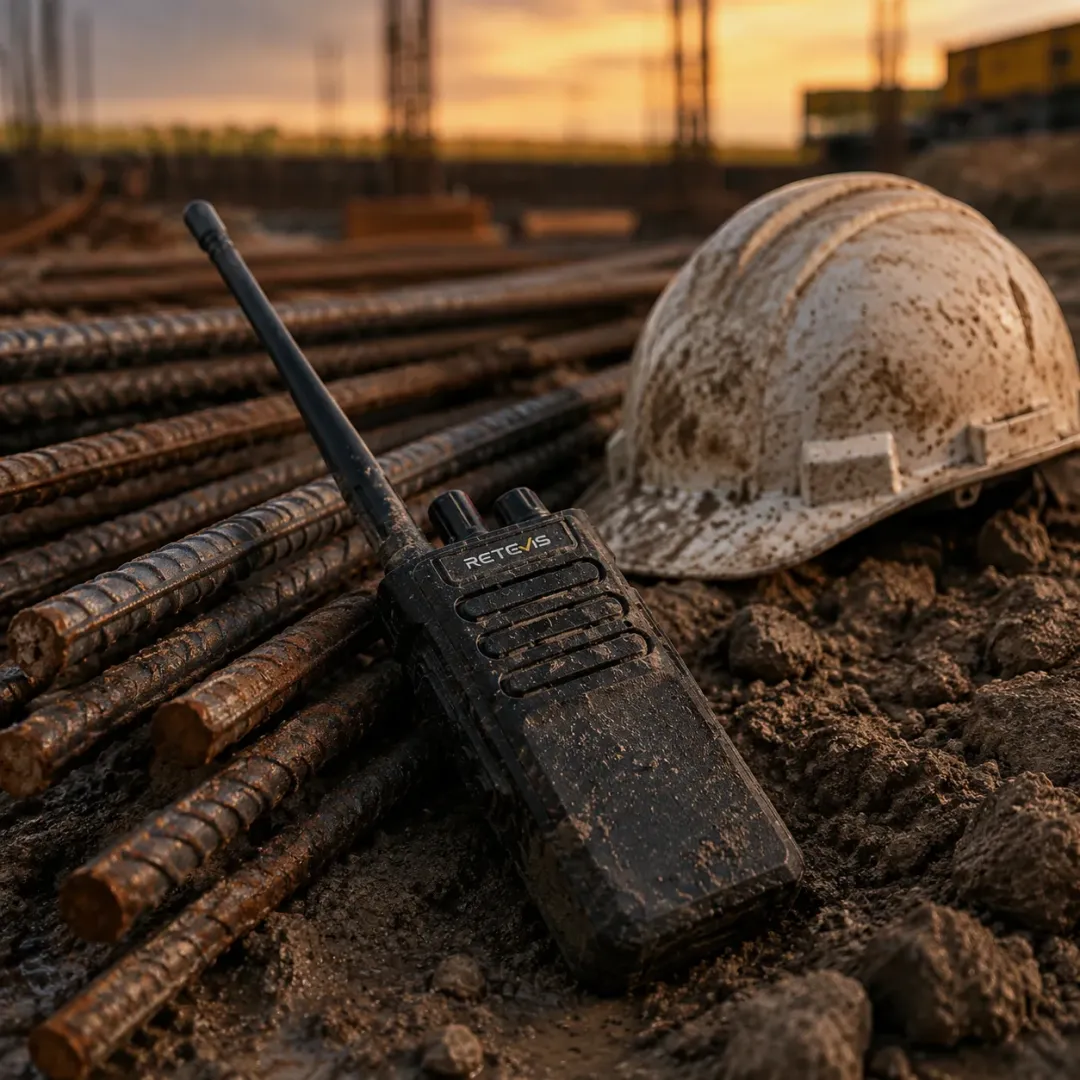
Common Mistakes When Choosing a Jobsite Radio
Many buyers make the mistake of focusing on the wrong specs.
Buying by Maximum Range Alone
Package claims often reflect ideal conditions, not noisy, reinforced, obstacle-heavy jobsites. Coverage should be judged by the environment where the radio will actually be used.
Underestimating Dust Exposure
A radio may survive occasional outdoor dirt but still fail in concrete and masonry dust. If crews work around fine particulate matter every day, a dustproof job site radio is not optional.
Choosing Weak Audio
If crews cannot hear the message over mixers, pumps, or saws, the radio will not solve the communication problem. Audio performance deserves as much attention as durability.
Ignoring Ease of Use with Gloves
Small controls may look sleek, but they slow workers down. Practical jobsite gear should be easy to use without removing gloves or stopping work.
Treating Waterproofing as a Premium Extra
For many contractors, water exposure is routine. Rain, wet PPE, muddy ground, and splash conditions are normal on active sites. A dustproof and waterproof handheld radio is often the more realistic choice, not the luxury option.
A Simple Buyer’s Checklist
Before choosing a dustproof job site walkie talkie or dustproof job site two way radio, ask:
- Can it handle fine dust from concrete or masonry work?
- Will it keep working in rain or wet conditions?
- Is the audio strong enough for high-noise environments?
- Can workers use it easily with gloves on?
- Will the battery last a full shift?
- Is the clip and body durable enough for rough handling?
- Does it provide reliable coverage across your typical jobsite?
- Can different crews or supervisors use separate channels if needed?
If the answer to several of these is no, the radio may not be a strong fit for concrete and masonry operations.
Basic Maintenance for Longer Service Life
Even the best dustproof construction radio benefits from routine care. A few simple habits can help extend service life:
- wipe down the radio at the end of the shift
- keep charging contacts clean
- inspect covers, clips, and antennas regularly
- store units in a dry, organized area
- replace damaged accessories before they become bigger problems
Maintenance does not need to be complicated, but regular cleaning matters when equipment is exposed to dust and moisture every day.
Final Thoughts
Concrete and masonry crews work in some of the toughest communication environments in construction. Dust gets into everything. Rain changes conditions fast. Noise never fully stops. Workers move constantly, often with gloves on and no time for long phone calls.
That is why a rugged walkie talkie for concrete team communication or a reliable radio for masonry workers remains such a valuable tool. The right dustproof job site radio can support faster coordination, fewer delays, and clearer communication across active work zones. And when the environment is both dirty and wet, a dustproof and waterproof handheld radio gives crews a better chance of staying connected from the first task to the last.
For contractors comparing options, the best choice is usually not the radio with the biggest advertised number or the flashiest design. It is the one built for real jobsite conditions: dust, water, noise, impact, and the daily demands of concrete and masonry work.
Leave a Reply




 Google
 Amazon
Comments
No data Yet